WRLD

Search

#Mura
iannzits 54m

iannzits presented the new Island of Crossed Bones from Fortnite: Treasure Hunters and said that the map was designed for matches with 80 players, with cannons that allowed players to traverse it quickly to reach the action. Among the described locations were Lanterns' Den, a maze of illuminated streets; Bustling Bay, featuring a floating restaurant and boardwalk; and Windmill Village, a coastal village inspired by One Piece. The author also mentioned Loguetown, a busy port city, and Arlong Park, a stronghold of the merfolk. iannzits further stated that in $.$ Rocky, players could face A$AP Rocky as a Boss and hunt for spoils on the deck. He also mentioned the Loot Cove, with a ship next to a waterfall; Pirate Port, where there were two ships; Lil' Uzi's Fortress, whose walls and bastions could be searched for upgrades; Rubber Resort, with a duck-shaped yacht; and Captain's Cenote, featuring a pool inside a sinkhole. #Fortnite #Jogos #Aventura (translated)


1292
Marc Vanguard 22h

Marc Vanguard mentioned a time when, according to him, one could wear a mask on Halloween, where it was not necessary to finance a riot tax of 400 million euros per year, and where it took ten days of riots to reach the human toll of just October 17, 2026. He also cited traders forced to barricade themselves on Saturdays, the protests capable of connecting Bastille to Nation, and the deployment of 22,000 police officers and gendarmes during an important PSG match. He recalled that it then seemed absurd to install metal detection gates at the entrance of high schools, concrete blocks around Christmas markets, or a wall of armored glass around the Eiffel Tower. He also wrote that people carrying pepper spray were considered paranoid. Vanguard believed that this period, where one could still question a possible intensification of violence, seemed to be over. According to him, violence had become a habit in France and people were more focused on adapting to it rather than fighting it. He urged not to get used to it or to resign oneself to a degradation of the country's situation. #France #Violence #Société (translated)

2562
Mediafax.ro 1d

Novaya Gazeta, one of the most important independent publications in Russia, is closing its editorial office after 30 years of activity, accusing the regime in Moscow of orchestrating its elimination through a series of repressive measures, while co-founder Dmitri Muratov states that they killed us. #libertateapresei #NovayaGazeta #DmitriMuratov (translated)

www.mediafax.ro
Novaya Gazeta, una dintre cele mai importante publicații independente din Rusia, își închide redacția după 30 de ani / Cofondatorul Dmitri Muratov: „Ne-au ucis”
2331
Onet.pl 1d

Prof. Dawid Murawa announced his resignation from the position of director of the Provincial Hospital in Poznań, citing increasing debt and financial difficulties related to the insolvency of the National Health Fund. #szpital #finanse #NFZ (translated)

www.medonet.pl
"Taką decyzję podjąłem". Dyrektor poznańskiego szpitala rezygnuje
2228
Łukasz Kohut 🇪🇺 2d

The author of the entry informed that the Russian independent "Novaya Gazeta" was shutting down. According to a statement he cited, the editorial team claimed that the authorities of Russia and security services forced them to cease operations, and their employees found themselves in a "death zone" and lost their workplace. The entry stated that the editor-in-chief of the newspaper was Nobel Prize laureate Dmitry Muratov. #Rosja #wolnośćprasy #NowaGazieta #RU (translated)

3669
Onet.pl 2d

In Krakow, a civil war is underway, in which President Murat Colak and owner Robert Platek are struggling for their positions, and internal tensions are manifested, among other things, in firings and conflicts with fans. #Cracovia #Ekstraklasa #RobertPlatek (translated)

www.onet.pl
Wojna domowa w Cracovii. Prezes i trener walczą o posady
2617
newsORF.at 2d

The Russian newspaper "Novaya Gazeta," founded by Peace Nobel Prize winner Dmitry Muratov and a critical voice for more than 30 years, is ceasing its work after massive pressure from the Russian authorities. #NowajaGaseta #Pressefreiheit #Russland (translated)

orf.at
Aus für kremlkritische Zeitung „Nowaja Gaseta“
2623
newsORF.at 2d

The Russian newspaper "Novaya Gazeta," founded by Nobel Peace Prize laureate Dmitry Muratov, is suspending its operations after more than 30 years and strong pressure from the authorities, announcing that it will shut down its servers on November 9. #NowajaGaseta #Pressefreiheit #Russland (translated)

orf.at
Behördendruck: Russische „Nowaja Gaseta“ schließt
2522
24sata 3d

A mural of war criminal Ratko Mladić has appeared in East Sarajevo, which provoked condemnation from the European Union for glorifying war criminals and denying genocide. #RatkoMladić #genocid #Srebrenica (translated)

www.24sata.hr
FOTO U Sarajevu osvanuo mural genocidašu Ratku Mladiću
2563
eldiario.es 6d

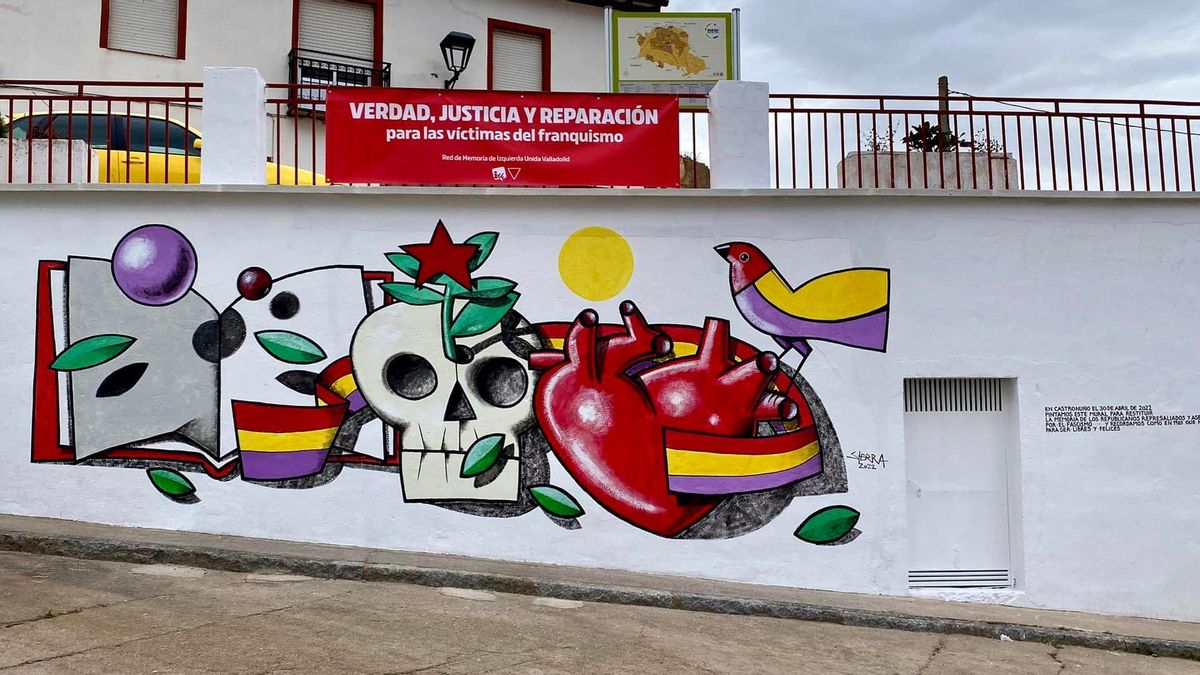
Four people, including the deputy mayor of Castronuño, have been sentenced to compensate the artist Manuel Sierra with 5,000 euros for destroying an anti-Franco mural that commemorated the victims of the Civil War and Francoism. (translated)

www.eldiario.es
Condenadas cuatro personas, entre ellas el teniente de alcalde de Castronuño, por destruir un mural antifranquista de Sierra
2941
Luciano Magaldi Sardella (PhD) 7d

THE "BATTLE OF CERIGNOLA (1503)" ON "POPULAR ARCHAEOLOGY USA" (by LUCIANO MAGALDI SARDELLA) SOURCE 1: https://popular-archaeology.com/author/sardella/ SOURCE 2: https://popular-archaeology.com/article/the-2026-battlefield-archaeology-of-the-battle-of-cerignola-1503/ -------------------------------------------------------------------- CERIGNOLA (FG) — On April 28, 1503, at sunset, a shallow trench cut between the vineyards outside Cerignola rendered heavy cavalry obsolete. For five centuries, its exact location has only been conjectured, its archaeology ignored, its most important sources never translated into English. We are on the Tavoliere of Puglia, a corridor of battles for two thousand years: from Cannae in 216 BC to the falcon hunt of Frederick II from Torre Alemanna. Cerignola, at that time, was not a city but a rural village of 350 families at 120 meters above sea level, custodian of the Mena della Dogana delle Pecore, the great pastoral system of transhumance that financed the Kingdom of Naples. Its possession was fiercely contested. Facing each other were two worlds. Louis d’Armagnac, Duke of Nemours, Viceroy of Naples for Louis XII, in his thirties, splendidly armored, confident of victory. On the other side was Gonzalo Fernández de Córdoba, the Gran Capitán, who on April 27-28 marched from Barletta with about 9,000 exhausted men and decided to settle on a low ridge. He deepened what was already there: not an invention, but an agricultural ditch. The French gendarmes, the last heirs of the medieval knight, lowered their lances and never reached the line. From behind a parapet reinforced with vine stakes, over 1,000 Spanish arquebusiers opened fire. Nemours fell, almost certainly the first European army commander to die from a portable firearm. With him, the charge of cavalry as a dominant tactic died. And here is the scandal denounced by the article: no cartographer of the 17th-18th centuries ever mapped the battlefield. No monument commemorates it. It is not protected as a cultural landscape under the Code of Cultural Heritage. Every deep plowing of the Tavoliere, standard practice since the Bourbon reforms, destroys an archaeology never recorded. Yet the perimeter can be reconstructed. By cross-referencing the 16th-century descriptions of "vine-covered slopes fifteen miles north of the Ofanto" with the Via Traiana, the engagement area is a rectangle of 3-4 square kilometers northeast of the current settlement. With the 1m LiDAR DTM from ISPRA, it could reveal anomalous linear depressions, and the lower filling of a ditch 2-3 meters deep, under the plowed layer, is still readable with magnetometry and ground radar. Why did we arrive late? Not for lack of sources, but for lack of translation. The Municipality of Cerignola and the Torre Alemanna Research and Study Center of Prof. Matteo Stuppiello, who in 1978 obtained the first monumental protection for Torre Alemanna, have digitized a corpus that has never entered Anglophone historiography. Here are the 3 pillars: 1. The letter that still smells of gunpowder. The “Letter from Consalvo de Córdoba to the Spanish royals dated April 29, 1503,” edited by Stuppiello in 2003 and updated to 2025 on comune.cerignola.fg.it/biblioteche-digitali. A handwritten page written in Cerignola the day after the battle, “rich in flashes, twilight lights, and gunfire.” Not a polished chronicle like that of Giovio, but a field dispatch: the fatigue of the night march, the decision to entrench upon arrival, the recovery and honorable burial of Nemours, the intact capture of the French artillery. 2. The graffiti, a monument inside the monument. In the 14th-century church of Santa Maria delle Grazie, known as the Incoronatella, on the Via Trinitapoli Vecchia, where tradition holds that the body of Nemours was brought. On the triumphal arch, a 1503 graffiti gives, in almost notarized form, the date, sixth indiction, Friday at the hour XXIII-XXIIII. It was indeed Friday, as confirmed by the perpetual calendar of Cappelli. Decoded in 1995 by Prof. Francesco Magistrale, Latin paleographer at the University of Bari, in *The Battle of Cerignola (1993)* and in the municipal monograph *S.M. delle Grazie (1999)*. Today it is fading due to humidity and neglect. 3. The land registry that explains the ditch. The Survey of 1672 preserved at the State Archive of Naples, Pignatelli Aragona Cortes fund, Scanzia 63, fasc.1: “At the time of the battle, thick vineyards covered the hill reaching to the plain, and were distinctly separated from the rest of the countryside by a not very deep ditch.” Córdoba did not improvise; he adapted. This is confirmed by the catasti of the Giustiniani: 277 households in 1532, 699 in 1595. The landscape of 1503 was intensely horticultural, not the deeply plowed monoculture of today. In addition to these, there is the first monograph by Vincenzo Buonassisi, *The Battle of Cerignola* (1908, died in Via Fanfulla 10 on June 27, 1928), and the first modern military analysis by Piero Pieri, “Consalvo de Córdoba and the Battle of Cerignola,” Archivio Storico Pugliese 1952, which 30 years before the Anglophone rediscovery of the “pike-and-shot” defined Cerignola as an engineered killing ground. While Cerignola forgot, others remembered. The “Regimiento de Infantería Cerinola n.42”, later “Fuerteventura n.56”, carried the name of Cerignola until the 20th century. The coat of arms, described in *Heraldica e Historiales del Ejercito, Tomo V” (Madrid, 1981): silver field, dying white swan entangled in a hedge, golden wall crown, with the scroll “Cerignola.” Dossier officially transmitted on April 30, 1986, prot. 4565/509, from the Servicio Histórico Militar of Madrid to the Torre Alemanna Center thanks to Col. Alessio Antonutti and Gen. José Cifuentes. And in Amsterdam, at the Rijksmuseum, the anonymous bronze commemorative medal: Hercules with lion skin and club and Janus with the keys next to an eagle-armed coat of arms, legend “Consalvus Agidarius… Janum clausit,” on the reverse a battle scene “Consalvi Agidari Victoria de Gallis ad Cannas,” an artist's mistake that confuses Cerignola with Cannae. It belonged to Mrs. J.M. van Gelder-Nijhoff, donated in 1885. The author's conclusion is clear: Gonzalo's ditch is the most consequential earthwork in European military history. It inaugurates the infantry armed with firearm and conditions the Mediterranean for 160 years. It may still be there, filled, plowed, invisible to the naked eye but accessible to a magnetometer. It is not a matter of medieval archaeology but of the will to protect. (translated)

681
Luciano Magaldi Sardella (PhD) 7d

THE “BATTLE OF CERIGNOLA (1503)” ON “POPULAR ARCHAEOLOGY USA” (by LUCIANO MAGALDI SARDELLA) SOURCE 1: https://popular-archaeology.com/author/sardella/ SOURCE 2: https://popular-archaeology.com/article/the-2026-battlefield-archaeology-of-the-battle-of-cerignola-1503/ __________________________________________________________________ CERIGNOLA (FG) — On 28 April 1503, at sunset, a shallow trench cut through the vineyards outside Cerignola rendered heavy cavalry obsolete. For five centuries its exact position has been merely conjectured, its archaeology ignored, its most important sources never translated into English. We are on the Puglian Tablelanda, a corridor of battles for two thousand years: from Cannae in 216 BC to Frederick II’s falconry from Torre Alemanna. Cerignola, at that time, was not a town but a rural hamlet of 350 families at 120 metres above sea level, guardian of the Mena of the Dogana delle Pecore, the great customs system of transhumance that financed the Kingdom of Naples. It was for its possession that the battle was fought. Opposed, two worlds. Louis d’Armagnac, Duke of Nemours, Viceroy of Naples for Louis XII, thirty years old, splendidly armed, certain of victory. On the other side, Gonzalo Fernández de Córdoba, the Great Captain, who on 27–28 April marches from Barletta with some 9,000 exhausted men and decides to entrench himself upon a low ridge. In front of it he has deepened what was already there: not an invention, but an agrarian ditch. The French gendarmes, the last heirs of the mediaeval knight, lower their lances and never reach the line. From behind an embankment reinforced with vine stakes, more than 1,000 Spanish arquebusiers open fire. Nemours falls, almost certainly the first European army commander to die by a portable firearm. With him dies the cavalry charge as a dominant tactic. And here lies the scandal denounced by the article: no cartographer of the seventeenth or eighteenth century ever mapped the field. No memorial stone recalls it. It is not protected as a cultural landscape under the Code of Cultural Heritage. Every deep ploughing of the Tavoliere, standard practice since the Bourbon reforms, destroys an archaeology never recorded. Yet the perimeter is reconstructable. By cross-referencing sixteenth-century descriptions of “slopes covered with vineyards fifteen miles north of the Ofanto” with the Via Traiana, the engagement zone is a rectangle of 3–4 sq km to the north-east of the present settlement. With ISPRA’s 1m DTM LiDAR, anomalous linear depressions could be revealed, and the lower fill of a 2–3 metre ditch, beneath the ploughed layer, is still legible by magnetometry and ground-penetrating radar. Why have we arrived so late? Not for lack of sources, but for lack of translation. The Comune di Cerignola and the Centro Studi e Ricerche Torre Alemanna of Prof. Matteo Stuppiello, who in 1978 obtained the first monumental protection for Torre Alemanna, have digitised a corpus that has never entered Anglophone historiography. Here are the 3 pillars: 1. The letter that still smells of powder. The “Letter of Consalvo da Cordova to the Sovereigns of Spain of 29 April 1503,” edited by Stuppiello in 2003 and updated in 2025 on comune.cerignola.fg.it/biblioteche-digitali. A manuscript page written at Cerignola the day after the battle, “rich in flashes, twilight gleams, and gunfire.” Not a polished chronicle à la Giovio, but a field dispatch: the exhaustion of the night march, the decision to entrench upon arrival, the recovery and honourable burial of Nemours, the intact capture of the French artillery. 2. The graffito, a monument within the monument. In the fourteenth-century church of Santa Maria delle Grazie, known as the Incoronatella, on the Via Trinitapoli Vecchia, where tradition holds the body of Nemours was taken. On the triumphal arch, a graffito of 1503 gives in quasi-notarial form the date, sixth indiction, Friday at the twenty-third to twenty-fourth hour. It truly was a Friday, as confirmed by Cappelli’s perpetual calendar. Deciphered in 1995 by Prof. Francesco Magistrale, Latin palaeographer at the University of Bari, in La Battaglia di Cerignola (1993) and in the municipal monograph S.M. delle Grazie (1999). It is now fading through damp and neglect. 3. The cadastre that explains the ditch. The Apprezzo of 1672 preserved in the Archivio di Stato di Napoli, fondo Pignatelli Aragona Cortes, Scanzia 63, fasc.1: “At the time of the battle, dense vineyards covered the hill reaching down to the plain, and were clearly separated from the rest of the countryside by a not very deep ditch”. Córdoba did not improvise; he adapted. This is confirmed by the Giustiniani cadastres: 277 hearths in 1532, 699 in 1595. The landscape of 1503 was one of intensive horticulture, not the deep-ploughed cereal monoculture of today. To these are added the first monograph by Vincenzo Buonassisi, La Battaglia di Cerignola (1908, died at Via Fanfulla 10 on 27 June 1928), and the first modern military analysis by Piero Pieri, “Consalvo di Cordova e la battaglia di Cerignola”, Archivio Storico Pugliese 1952, which 30 years before the Anglophone rediscovery of “pike-and-shot” defined Cerignola as an engineered killing ground. While Cerignola forgot, others remembered. The “Regimiento de Infantería Cerinola n.42”, later “Fuerteventura n.56”, bore the name of Cerignola until the twentieth century. Its coat of arms, described in Heráldica e Historiales del Ejército, Tomo V (Madrid, 1981): argent field, a dying white swan entangled in a hedge, a gold mural crown, with scroll “Cerignola”. Dossier officially transmitted on 30 April 1986, prot. 4565/509, by the Servicio Histórico Militar in Madrid to the Centro Torre Alemanna through Col. Alessio Antonutti and Gen. José Cifuentes. And in Amsterdam, in the Rijksmuseum, the anonymous commemorative bronze medal: Hercules with lion-skin and club and Janus with keys beside an eagled coat of arms, legend “Consalvus Agidarius… Janum clausit”, on the reverse a battle scene “Consalvi Agidari Victoria de Gallis ad Cannas” — an error by the artist who confuses Cerignola with Cannae. It belonged to Mrs J.M. van Gelder-Nijhoff, donated in 1885. The author’s conclusion is unequivocal: Gonzalo’s ditch is the most consequential earthwork in European military history. It inaugurates the infantryman armed with a firearm and conditions the Mediterranean for 160 years. It may still be there, infilled, ploughed over, invisible to the naked eye but accessible to a magnetometer. It is not a question of mediaeval archaeology but of the will to protect.

907
HotNews.ro 1w

Energy expert Corina Murafa warns that the Niculescu Government's program, which proposes assistance for energy payments based solely on income, risks affecting vulnerable households and directing funds to those who do not need support. #GuvernulNiculescu #SărăcieEnergetică #PoliticiEnergetice (translated)

hotnews.ro
INTERVIU Guvernul Niculescu e pe cale să facă o mare greșeală, avertizează un expert în energie. Soluția propusă pentru a evita „o risipă de bani publici”
3068
Jana Černochová 1w

The author of the article referred to the time before dawn as the "wolf hour," associated by him with fear and nightmarish visions. He wrote that at 4:36 they were supposed to vote on the future of Czech Television and Czech Radio, and that the proceedings were very tense. He thanked the people who were with them during the night, as well as those who came to Malostranská. https://t.co/hD8gIju4wM #ČeskáTelevize #ČeskýRozhlas #Hlasování #CZ (translated)

2732
eldiario.es 1w

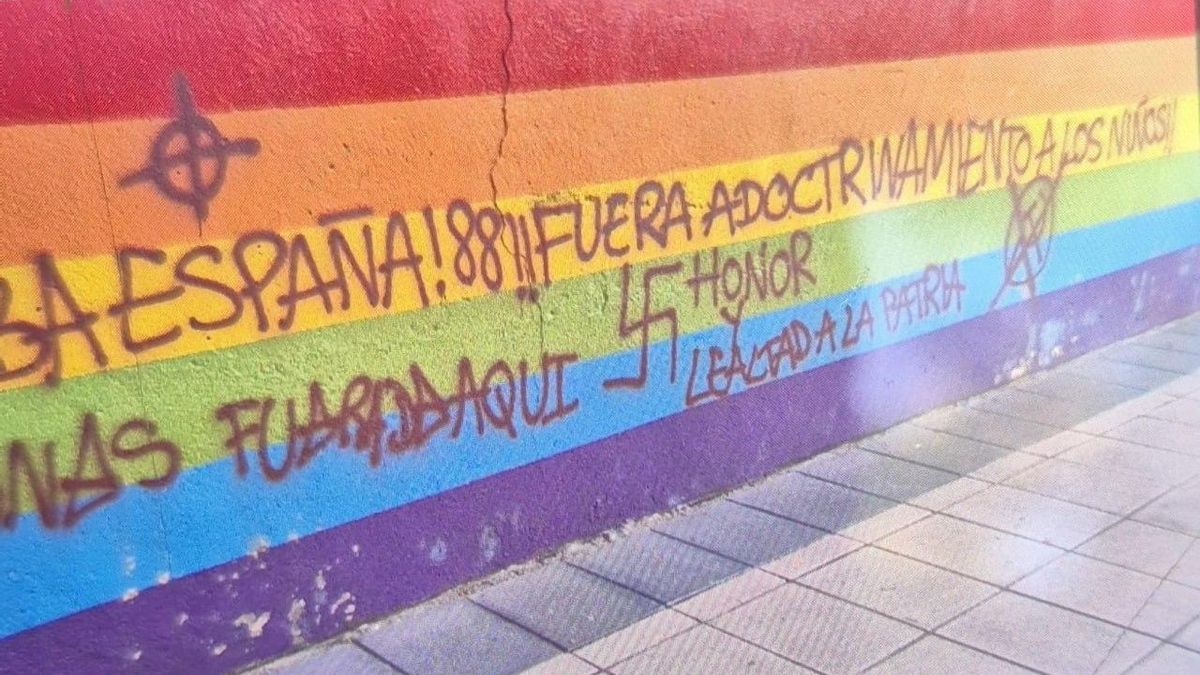
The rainbow mural of CEIP Asunción Rincón in Chamberí was vandalized with Nazi graffiti and homophobic messages, but the school's administration has decided not to give the matter more relevance after removing the graffiti within a few hours. #Vandalismo #Homofobia #Educación (translated)

www.eldiario.es
Vandalizan con pintadas nazis el mural arcoíris de un colegio de Chamberí
2165
Il Fatto Quotidiano 1w

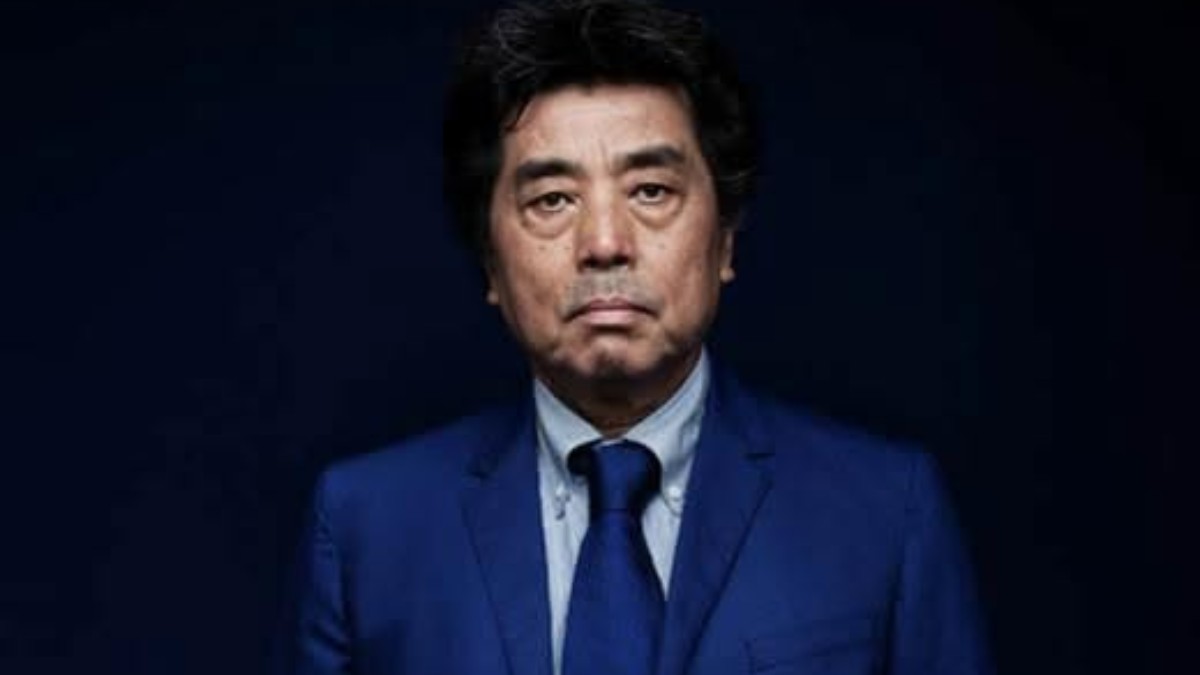
The famous Japanese writer Ryu Murakami, known for exploring the dark side of Japanese society in his novels, died at the age of 74 on October 17. #RyuMurakami #LetteraturaGiapponese #DisagioGiovanile (translated)

www.ilfattoquotidiano.it
È morto lo scrittore Ryu Murakami. Ha raccontato il lato oscuro del Giappone, tra trasgressione e disagio giovanile
2507
Onet.pl 1w

Robert Lewandowski reveals that his biggest problem in MLS is the condition of the pitch at Chicago Fire's stadium and the difficulties in adjusting to the differences in mentality between American and European players. #RobertLewandowski #ChicagoFire #MLS (translated)

przegladsportowy.onet.pl
Robert Lewandowski wskazał swój największy problem w USA
2739
EL PAÍS 2w

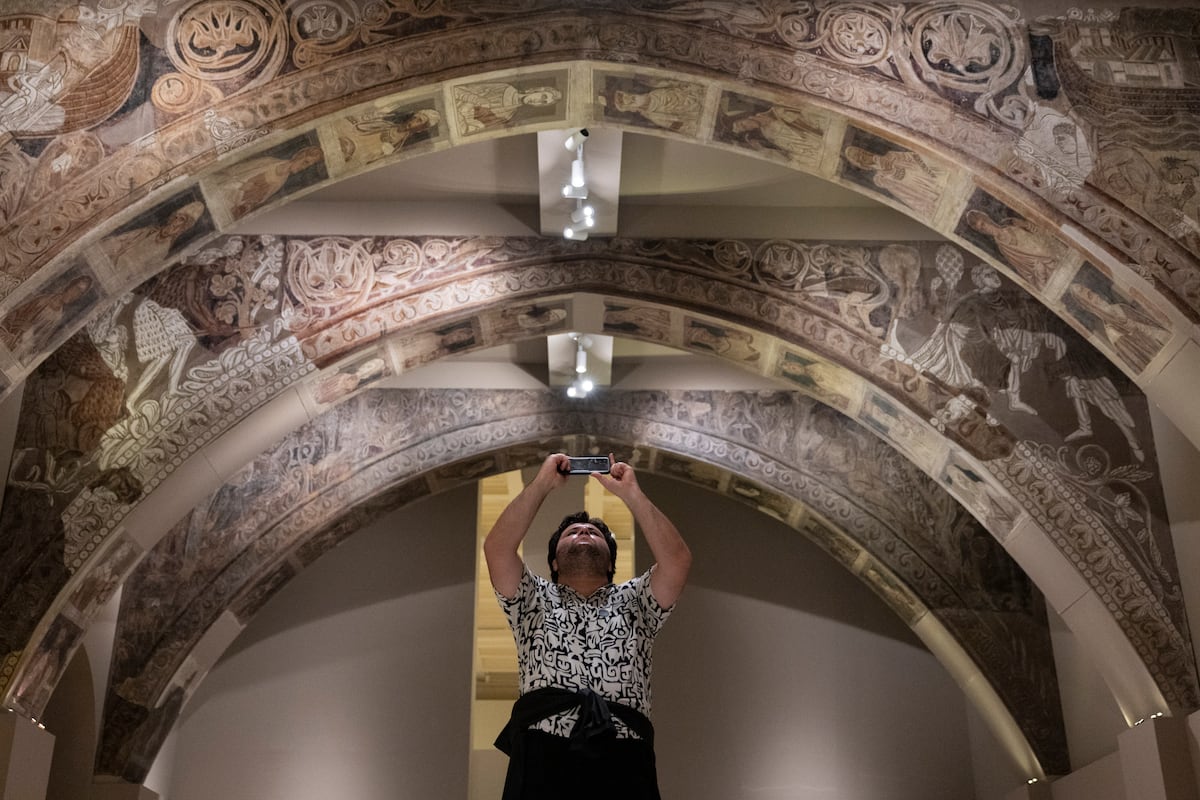
The litigation over the Sijena murals is moving towards its definitive resolution with the change of judge, who will have to address pending questions and decide whether to maintain or modify the restitution deadlines established by her predecessor. #Sijena #MuralesRomanicos #LitigioCultural (translated)

elpais.com
El litigio por los murales de Sijena encara su recta final con cambio de jueza
2629
Murat Çolak 2w

Murat Çolak wrote that he appeared before the League Commission regarding his presence on the pitch after the Cracovia-Legia match. He thanked the chairman and members of the commission for the opportunity to present his position and for the open dialogue, as well as the legal team for their quick and good work. As he conveyed, he was not prohibited from supporting Cracovia from the stands, but he was fined 10,000 PLN. Çolak wrote that he accepted the decision with respect and does not intend to appeal it. He added that the most important thing for him was that he would still be able to be with Cracovia. #Cracovia #Legia #KomisjaLigi (translated)

2973
BarcaInfo 2w

BarcaInfo criticized a portion of FC Barcelona fans for their reactions after the defeat, accusing them of undermining the team's achievements and lacking a balanced assessment of the situation. It was noted that before the match in Paris against Luis Enrique's team, the players had only one normal training session, 24 hours prior to the match, and that a delayed flight and insufficient recovery hindered preparations. The author emphasized that he did not see these circumstances as excuses but as factors affecting the game in a busy schedule. He recalled that Hansi Flick had repeatedly highlighted the importance of recovery. He added that aside from Joan García and Xavi Espart, it was difficult for him to single out players, attributing the performance responsibility to the whole team. BarcaInfo accused some fans of panicking after a single defeat and reminded them that, in his opinion, the team had been giving them reasons to rejoice for three years. He also criticized individuals who, as he wrote, would start supporting another club in case of a longer drop in form. #FCBarcelona #piłkaNożna #kibice (translated)

2973