Carlos Loret de Mola wrote that the president spent the day focused on Amílcar and Andy, and he held her responsible for it. The publication was for #Loret in Latinus. https://t.co/Eee58Ut6EG #noticias #política #actualidad (translated)

Carlos Loret de Mola wrote that the president spent the day focused on Amílcar and Andy, and he held her responsible for it. The publication was for #Loret in Latinus. https://t.co/Eee58Ut6EG #noticias #política #actualidad (translated)

Pedro Menin wrote that Janones had lost control after Sunday. He said he trusted his sources and claimed to have heard that Janones would be arrested or, at the very least, would lose his mandate. Menin argued that they should let him speak, arguing that one should not interrupt an opponent while he made mistakes, and said that power could change hands. https://t.co/ebCQsMPNZ2 #politica #corrupcao #noticias (translated)
Francisco Cardoso stated that Augusto Cury, author of "Never Give Up on Your Dreams," announced that he would leave politics after losing the presidential election. Cardoso classified this information as the news. https://t.co/wy994wiMx7 #AugustoCury #Política #Sonhos (translated)


Rê stated that he had bad news for those who thought the concern about the country having a Constitution was exaggerated and shared a link. https://t.co/iPvvd7QTQz #Constituição #Direitos #Política (translated)


Bagi said that she felt she owed news to the community, but she refrained from giving updates to focus particularly on political positioning posts regarding the current situation. She also explained that she did not do the live broadcast scheduled for the end of September because she changed her plans. She stated that she will soon share an important achievement, unrelated to content creation, and said she is exhausted but believes the effort was worth it. #Comunidade #Notícias #Política (translated)
Eduardo Bolsonaro wrote that before achieving a goal there was an attempt at an agreement, which he referred to using vulgar language. He said he was satisfied with the response from the PL and stated that Rogério Marinho was right in saying that they were not seeking revenge, but that this should not be confused with omission. According to Bolsonaro, the news could end the attempt to sustain a narrative of electoral interference to annul the election. He added that those involved were running out of resources to fight for their own survival and thanked the Brazilian people. #Política #Eleições2024 #Brasil (translated)

B24 published a statement in which Cristiano Ronaldo presented his version of the misunderstanding with the national coach and his exit from the training camp. The forward stated that, after the 2026 World Cup, he had prepared a farewell letter, but the president of the Portuguese Football Federation (FPF) had asked him to reconsider his departure. He also mentioned that he had supported the choice of the current coach. Ronaldo stated that the coach had presented him with a plan for his participation in the national team and that, in an initial conversation, he had suggested that he not travel for the matches in Norway and Denmark. According to the player, he rejected the proposal as he believed it would not be a good example for the captain to stay in Portugal. He noted that Simão Coutinho, sports director of Al Nassr, had accompanied the discussions. Regarding the match in Norway, Ronaldo reported that the coach asked him if he was available to play for 30 minutes. He said he accepted, despite recovering physically, but warmed up from halftime and did not end up playing. The player stated that, in a meeting 48 hours later, the coach agreed to publicly explain the agreed plan and acknowledged that it was a mistake to make him warm up without putting him on the field. According to Ronaldo, the coach had promised to do so at a press conference but had not fulfilled the agreement. The forward said he had validated notes for the conference, in which the coach would acknowledge proposing the plan, affirm that Ronaldo had accepted it without questioning the options, and admit that he would not make him warm up again under those circumstances. Ronaldo stated that the coach should also recognize the importance of the player, who had represented the national team for 24 years, and argue that problems should not be invented around his reaction after the game. Ronaldo said he decided to leave the training camp because he felt the coach had broken his word for the second time. He apologized to the fans for not greeting them after the game and to his teammates for leaving, taking responsibility for both decisions. He added that he accepted being punished by the FPF without mitigating circumstances, as he was the captain. The player stated that he would continue to be available to compete for Portugal after serving the suspension, as long as he was physically well and playing for the club. He also said that he hoped to have one or more farewell matches, but that his priority was to continue competing and winning for the national team. #CristianoRonaldo #SeleçãoNacional #Futebol (translated)

Claudio Dantas' Portal reported that Nikolas promised to propose a CPI on research institutes after what he called Datafolha's mistake in Minas. #CPI #Datafolha #MinasGerais (translated)

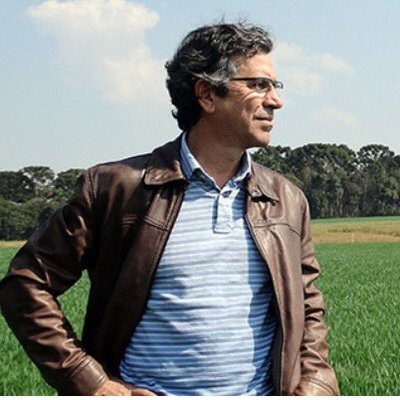
Xico Graziano wrote that the former governors Beto Richa (PSDB) and Roberto Requião (PDT) lost the election for the Chamber of Deputies. According to him, Richa received 58 thousand votes and Requião, 79 thousand, even with Requião's son running for governor. Graziano stated that they were "two more unemployed politicians." #Paraná #Eleições2022 #Política (translated)

THE OBJECTIVE reported that the PP had requested the National Court to charge the PSOE for irregular financing. The news was by Paloma Cervilla. https://t.co/DMFsxsL4Zx #PP #PSOE #FinanciaciónIrregular (translated)

Comunacho pointed out that, amid the housing crisis, there was hardly any talk of squatters anymore. He recalled a period when, he said, there were daily news reports about families whose houses were occupied while they went out to buy bread, and he described that coverage as a major psychological operation. #Vivienda #Okupas #Sociedad (translated)
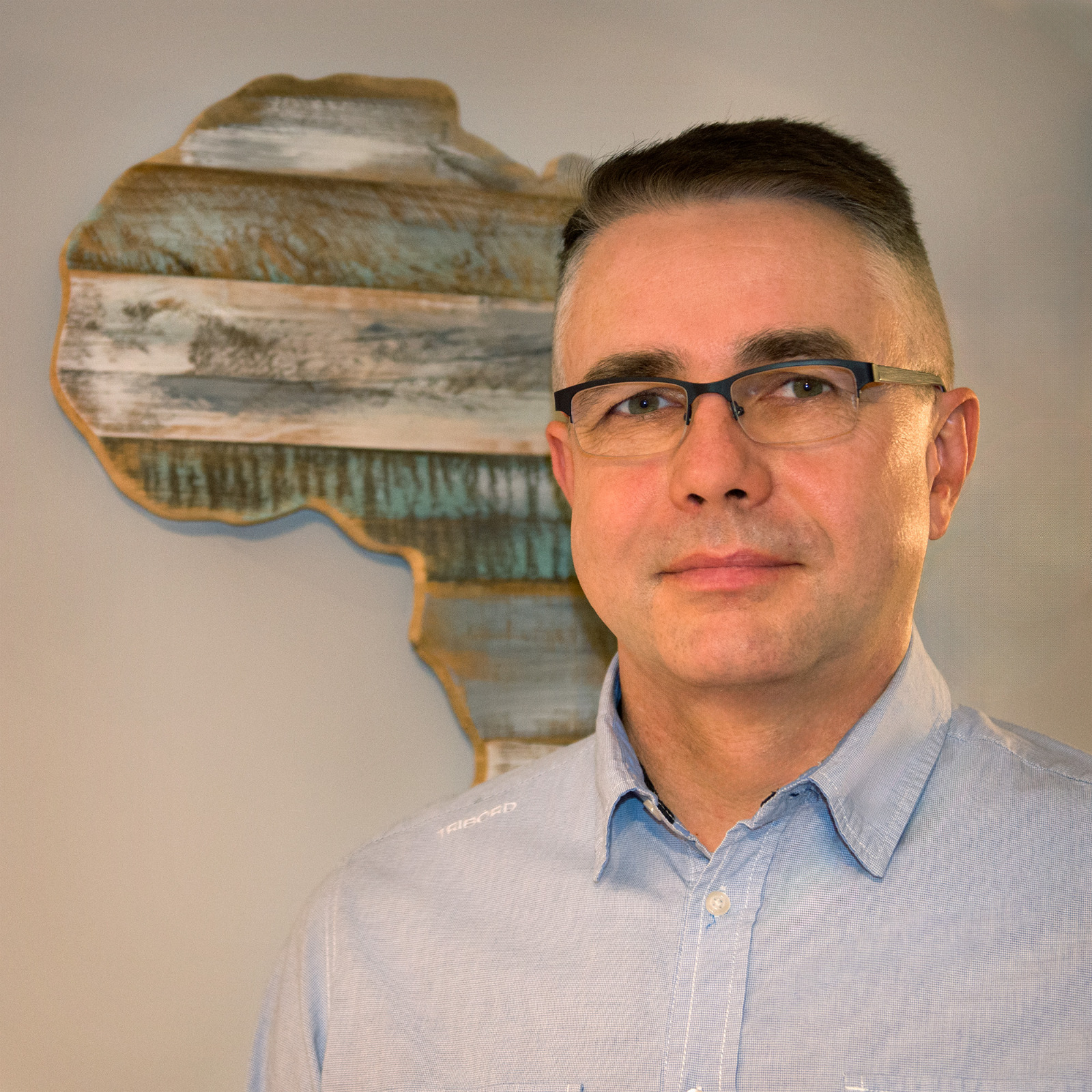
Brazil’s synthetic voters – when AI manufactures public opinion They look like ordinary street interviews. A reporter approaches a passer-by in a Brazilian square and asks a simple question: who will you vote for? A young voter explains why Luiz Inácio Lula da Silva deserves another term. An elderly woman says Brazil needs Flávio Bolsonaro because he represents political renewal and greater security. The locations look plausible, the microphones are visible and the answers sound much like the brief political opinions heard in television vox pops around the world. None of the people are real. Ahead of Brazil’s presidential election on 4 October, fact-checking organisation Aos Fatos identified at least 50 TikTok videos in which artificial intelligence was used to manufacture voters, reporters and apparently spontaneous political interviews. Together, the videos had accumulated around 7.4 million views by mid-August. Some promoted Lula, others Flávio Bolsonaro, while another group used synthetic characters to ridicule or stereotype supporters of one side. Aos Fatos found no apparent evidence linking the accounts producing the videos to either presidential campaign. The opinion poll that never took place The format is important. These were not conventional deepfakes in which a recognisable politician is made to say something he never said. Instead, the creators reproduced the visual language of the vox pop – the short street interview used by broadcasters and social-media creators to illustrate what ordinary people supposedly think. In pro-Lula videos, synthetic voters described themselves as beneficiaries of social programmes or credited the president with improving their lives. In videos supporting Flávio Bolsonaro, artificial interviewees associated him with political renewal, public security and fighting corruption. Other clips were openly hostile: AI-generated characters presented as poor or living in parts of Brazil’s north-east were shown in dirty clothes or run-down surroundings, declaring support for Lula because they supposedly preferred welfare payments to work. The deception is therefore subtler than fabricating a candidate’s statement. It manufactures something that political communication normally treats as evidence of public sentiment. A real vox pop may be unscientific, but the people interviewed at least exist. These videos created the appearance that identifiable social groups – young people, pensioners, welfare recipients or residents of particular regions – were spontaneously expressing political preferences when no such encounters had taken place. An electoral-law specialist interviewed by Aos Fatos described the technique as the fabrication of a “social fact that never occurred”. That captures the central innovation: AI is being used not merely to falsify political speech, but to manufacture the impression of grassroots opinion. Fifty videos, but not one proven network The available evidence does not support describing the 50 posts as a centrally controlled influence operation. Aos Fatos located them through TikTok searches and recommendations produced by the platform itself, then examined the accounts responsible for publication. Most had relatively small individual audiences, although their combined reach was substantial. The first examples identified by the investigation appeared as early as March 2026. Activity increased in June and was concentrated particularly in July and the first half of August as Brazil’s election calendar intensified. Some accounts specialised in AI-generated videos generally, including fabricated podcast-style material. Others were explicitly political or supportive of a candidate, but Aos Fatos found no apparent links between those profiles and the official Lula or Bolsonaro campaigns. That distinction is essential. The evidence demonstrates a common technique and a shared political environment, not a single command structure. Some creators may have been motivated by ideology, others by engagement or monetisation. Publicly available evidence does not establish who commissioned the individual videos or whether any coordination existed between the accounts. This decentralised model also creates a different enforcement problem from a traditional bot network. There may be no headquarters to expose and no infrastructure whose removal disables the entire operation. The format itself can be copied by anyone with access to inexpensive generative-video tools. When the algorithm mixes real and synthetic citizens Aos Fatos documented another important feature of the phenomenon: TikTok’s recommendation system placed AI-generated interviews alongside genuine street interviews. For a user scrolling quickly through the platform, the transition between an authentic citizen and an entirely fabricated one could therefore be almost invisible. In 18 per cent of the 50 videos analysed, there was no indication that the people shown had been generated using AI. After Aos Fatos provided TikTok with the videos, the company said it had removed all of them for violating its rules on edited and AI-generated media. TikTok said its policies require creators to identify synthetic content and prohibit manipulated media capable of misleading users about matters of public importance or impersonating genuine journalistic material. The issue extends beyond one platform. Factchequeado’s review of Brazil’s 2026 election campaign found that synthetic endorsements and other deepfakes had become one of the most visible forms of AI-assisted electoral misinformation, alongside fabricated candidate statements and invented scenes. Brazil already had rules for synthetic politics Brazil entered the campaign with unusually detailed electoral rules governing artificial intelligence. The Superior Electoral Court, the TSE, requires electoral propaganda using synthetic multimedia to disclose clearly that AI was used. More importantly for the fake-voter videos, its rules prohibit synthetic audio or video used to favour or harm a candidacy when it creates or alters the image or voice of a living, deceased or fictitious person. The difficulty is attribution and enforcement. When a synthetic video is published by an official campaign, responsibility can be relatively straightforward to investigate. When it comes from an apparently independent account with no demonstrated relationship to a candidate, lawyers interviewed by Aos Fatos said responsibility is more likely to fall on the individual creator, while imposing electoral sanctions on a campaign would require evidence of a connection. For the final 72 hours before the election and the 24 hours following it, the TSE has imposed additional restrictions on newly published or republished synthetic material involving candidates or public figures, reflecting the particular difficulty of correcting fabricated content immediately before voting. From deepfake politicians to synthetic electorates The Brazilian case illustrates a broader change in political manipulation. The first generation of electoral deepfakes concentrated on famous people: make a politician appear to say something damaging, or fabricate an endorsement from a celebrity. Synthetic vox pops reverse the perspective. The politician can remain completely authentic; it is the electorate around the politician that is fabricated. That changes the psychological proposition of the message. Instead of saying the candidate believes this, the video suggests people like you believe this. Age, clothing, accent, neighbourhood and social class can all be generated to construct an artificial constituency around almost any political claim. There is no evidence that the 50 Brazilian videos identified by Aos Fatos constitute a single centrally directed campaign, nor evidence that they changed voting intentions. What they demonstrate is a technique whose barrier to entry has become extremely low. AI no longer needs to forge the politician. #DISINFORMED #Episode14 #Brazil #BrazilElection2026 #Elections #ElectionDisinformation #ArtificialIntelligence #AI #GenerativeAI #SyntheticVoters #SyntheticMedia #AIAvatars #AIGeneratedVideo #VoxPop #FakeInterviews #Astroturfing #AIPropaganda #PoliticalDisinformation #InfluenceOperations #InformationWarfare #SocialMediaManipulation #TikTok #PublicOpinion #ManufacturedConsent #SyntheticPublicOpinion #DigitalInfluence #Deepfakes #ElectionIntegrity #TSE #AosFatos #FactChecking #OSINT #MediaManipulation #WRLD (translated)

The Debate published information signed by Alejandro Entrambasaguas indicating that a member of Los Rocho, who claimed that the plan was to kill the judge who is Sánchez's brother, said that they had been offered advantages with the tax authorities. https://t.co/xq2KZDCTzW #Exclusiva #Noticias #Justicia (translated)


The fan site Central Sabrina Brasil said that it had directed part of its visibility and time to a political cause it considered necessary at that moment. It stated that it would continue to follow Sabrina and publish the main news about her, in addition to thanking the support and understanding of the public. #Carpinteiros #Notícias #Política (translated)
Gustavo Petro defended the pension reform and denied that his government had bought support to approve it. He said that the House of Representatives backed it widely and that the then President of the Senate, Iván Name, delayed the debate for eight months so that it would fail due to lack of time. He also accused Magistrate Ibáñez of keeping it frozen for two years in the Constitutional Court, although he pointed out that the reform had already passed that stage. According to Petro, millions of elderly people, many of them from the right, could receive a pension thanks to the law. Regarding the allegations related to the UNGRD, Petro asked the Pacto Histórico bench to commission a forensic audit of the entire existence of the entity, since 2010, and to publish the names of those whom he claimed had embezzled it. He stated that only one person from the Pacto Histórico appeared on the extensive list, whom he said he had removed from the administration and whom, according to him, the party expelled. He also argued that justice should investigate whether Name had received public money through his romantic or political environment. Petro claimed that, during the first month of his government, resources were recovered that he attributed to Olmedo's group and that then the UNGRD was sidelined in the assistance to people trapped after an earthquake in the west of the country. Citing a journalistic investigation by Nueva Prensa, he stated that a private coordination center had been set up in the house of Gregory Schaller, whom he identified as Abelardo's compadre. He linked Andrés Depew, Negre — whom he described as a partner of Fernando Cerimedo — and people who, according to him, had ties to Donald Trump and businessman Dan Newlin to that place. Petro stated that Newlin had illegally lent his plane and resources during Abelardo's campaign. In the same publication, Petro mentioned businessman Yadid Jalaff, whom he said was accused of stealing Colombian-Venezuelan Monómeros, and Jorge Alberto Campillo Vélez, whom he described as one of Pablo Escobar's first pilots. He also pointed out pilot Luis Almeira Quiroz and linked him to a flight of paramilitaries from Urabá to San José del Guaviare, which, according to Petro, allowed the Mapiripán massacre, in which 50 farmers were murdered. He asked how much money had been raised to address the earthquake and if that explained why, according to him, the full operation of the UNGRD had been prevented and international aid and volunteers had been rejected. https://t.co/eiJJnl3Lxu #ReformaPensional #Justicia #Corrupción (translated)


The account ★ melu ?! pointed out that there was nothing new to add and described in derogatory terms those who, as she wrote, would harass those people. She also argued that the media covering the news, which revealed where they were staying and tried to film them in different places, exposing their privacy, were part of the problem. #Acoso #Privacidad #MediosDeComunicación (translated)
Kim D. Paim stated that, for the first time in all the trackings, Flávio had surpassed his own ceiling in that day's survey, achieving the best moment of the campaign. He also said that Lula had returned to the lowest floor and questioned whether the index could drop even further. #Eleições2024 #Política #Brasil (translated)
The account noted that Taehyung's responses had reached the Peruvian media and celebrated those reports, which, as he wrote, other media should take as an example. https://t.co/nTUG1Qt6YO #Taehyung #NoticiasPeruanas #Cultura (translated)

The author wrote that, according to what was said, there were fans and reporters from various media outlets outside someone’s hotel, and expressed a deep rejection of the situation. #Fans #Reporteros #Noticias (translated)