How does a painting change when we look at it through the eyes of a literary character? Mona Lisa — Leonardo da Vinci (1452–1519) Elizabeth Bennet might smile at all the theories surrounding that famous smile. Emma Woodhouse would probably try at once to decipher the personality of the woman in the portrait. Water Lilies — Claude Monet (1840–1926) Anne Elliot might see time, memory, and change in it. Mr. Darcy might appreciate precisely the calm and restraint of the image. The Starry Night — Vincent van Gogh (1853–1890) Catherine Morland might turn the restless sky into the beginning of a mystery. Marianne Dashwood might notice the emotion first, and only then the landscape. These characters belong to the world of Jane Austen (1775–1817), while the paintings come from very different periods. Perhaps one interesting way to look at art is to ask not only: “What do I see?” but also: “What would someone else see in it?” #ArtHistory #FamousPaintings #LeonardoDaVinci #ClaudeMonet #VincentVanGogh #ArtAndLiterature #Museums #20260824 #0006 #MrCulturewise #CaptainWeb #English
How would Jane Austen’s (1775–1817) characters react to famous paintings? Mona Lisa — Leonardo da Vinci (1452–1519) Would Elizabeth Bennet be amused by all the interpretations built around the smile? Would Emma Woodhouse immediately try to “read” the personality of the woman in the portrait? Would Lady Catherine de Bourgh accept the mystery — or confidently explain what the expression really means? Water Lilies — Claude Monet (1840–1926) Would Mr. Darcy appreciate the quietness and restraint of the painting? Would Anne Elliot see something in it about time, memory, and things that change slowly? Would Marianne Dashwood simply be overwhelmed by the atmosphere? The Starry Night — Vincent van Gogh (1853–1890) Would Elizabeth Bennet be drawn to the energy and freedom of the image? Would Catherine Morland turn the restless sky into the beginning of a Gothic mystery? Would Marianne Dashwood notice the beauty first — or the unease? Perhaps the way a character looks at a painting tells us as much about the character as it does about the artwork. #0033= #JaneAusten #PrideAndPrejudice #Emma #NorthangerAbbey #SenseAndSensibility #Persuasion #ArtAndLiterature #ArtHistory #ArthurWren #English
The Temptation of Saint Anthony (1680s) Domenicus van Wijnen (Dutch, 1658 – 1700) https://t.co/7IqQf2Gfsg #Art #Baroque #Painting
Librarian Segerstéen in his home, by Swedish painter Johan Krouthén (1886). Norrköping Art Museum. https://t.co/a1yRplVEJi #Art #Painting #Museum
Lättja, by Swedish painter Robert Thegerström (1887). In private collection. https://t.co/Kc878oZKTe #Art #Painting #SwedishArt
For those who don’t get it, this is a re-enactment (in Zaporizhzhia) of Repin’s famous painting, Zaporizhzhia Cossacks writing (an insulting) letter to the Ottoman Sultan. Except it’s now about Zelensky firing defense minister Fedorov and sparking a wholly unnecessary political https://t.co/iskxqamnfg #Zaporizhzhia #Repin #Zelensky #UA #TR
The forest south of Paris being burned up in wildfire isn’t just any forest. The Forest of Fontainebleau was central to the development of Impressionism, is in paintings by Monet and Renoir, and the campaign to protect it inspired one of the earliest environmental manifestos #Fontainebleau #Impressionism #Wildfire #FR
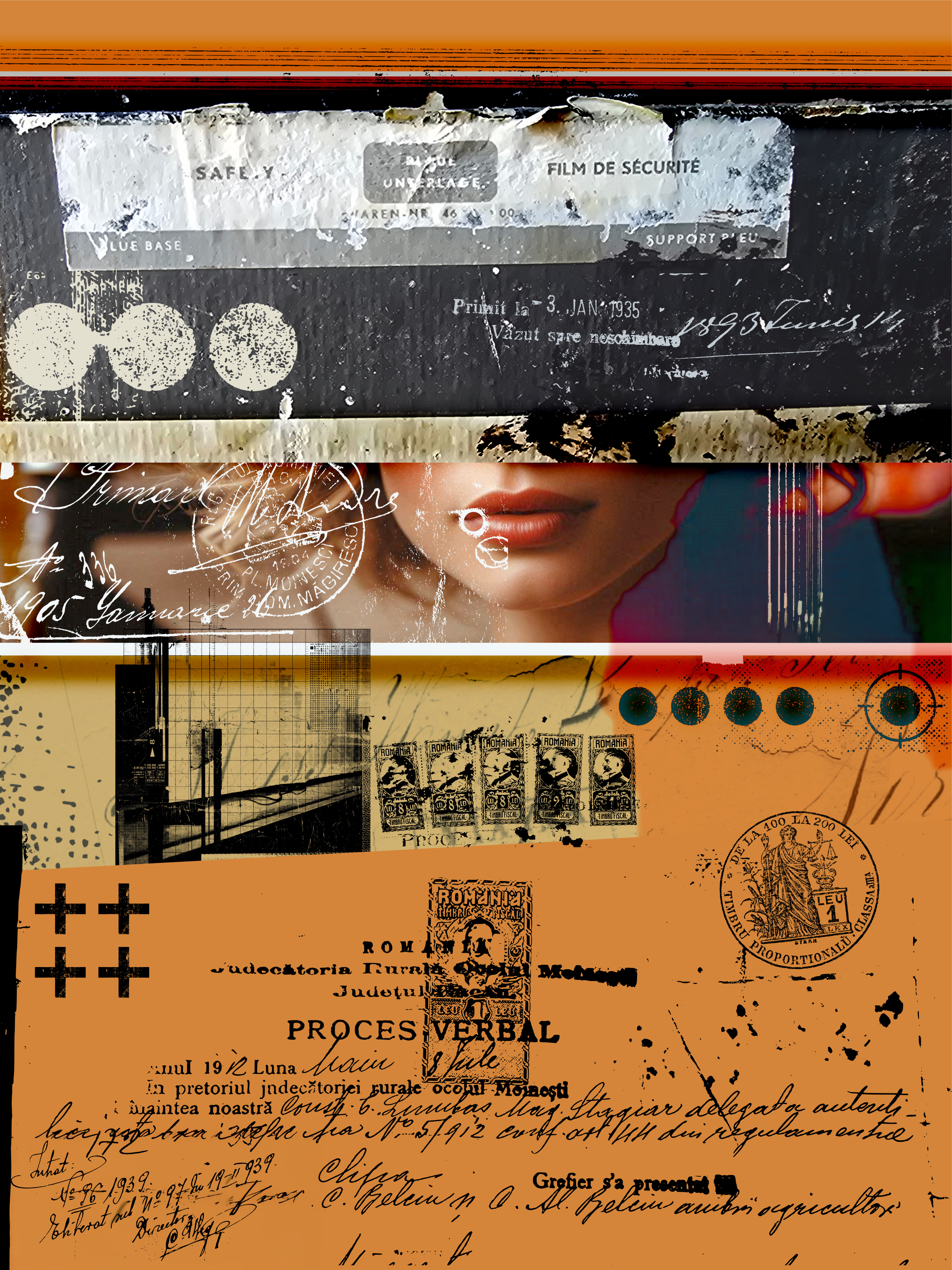
The dream about rebirth, digital painting, 75 x 100 cm. This digital painting unfolds like an archaeological dream, built from fragments of documents, stamps, handwriting, and photographic traces. Layers of torn paper, official seals, and historical markings create a visual palimpsest — an archive that has been broken, reassembled, and reimagined. At the top, a weathered strip of security film introduces the idea of protection, fragility, and time. Beneath it, a partial portrait — lips, chin, the suggestion of a human presence — emerges from cursive handwriting and circular ink marks, as if memory itself were trying to speak through the layers. The lower section is dominated by sepia‑toned bureaucratic documents: Romanian stamps, signatures, legal text, and official seals. These elements anchor the work in a specific cultural history, yet the collage transforms them into something fluid, symbolic, and dreamlike. The marks of institutions become emotional residues; the administrative becomes intimate. The entire composition feels like a rebirth through paper — a reconstruction of identity from fragments, a return of something once lost. The painting suggests that rebirth is not a clean beginning, but a layered process: a negotiation between what remains, what fades, and what insists on returning.
Midsummer fire,Herman Österlund, 1942. Swedish, 1873-1964 Oil on canvas , 66 x 89 cm. https://t.co/48VNtgWP5i #Art #Painting #Sweden
My wife and I have been greatly saddened to learn of the death of a giant of the world of art and painting, a Yorkshireman through and through, and a dear friend and inspiration to so many.
David Hockney's early painting, We Two Boys Together Clinging, created in 1961 when homosexuality was still illegal in the UK, boldly celebrated same-sex love and domestic life, challenging societal norms and laying the groundwork for his influential role in British and LGBT+ culture. #DavidHockney #LGBTQArt #QueerCulture

PART 4 – Letter to President Trump @POTUS Freedom of speech in Poland is falling like Icarus in Bruegel's painting. This is the story of how political forces silenced 🇺🇸MaxTV🇵🇱 -Poland's most popular online television network - through censorship, coordinated attacks, and the https://t.co/wcz8r0veHw #FreedomOfSpeech #Censorship #MaxTV #US #PL
David Hockney, a groundbreaking British artist who passed away at 88, gained fame for his vibrant paintings, innovative use of various mediums, and an unwavering belief in creating art about what he loved, encapsulating his essence as both a cultural icon and a voice of his generation. #DavidHockney #ArtInnovation #BritishArtist

David Hockney, a groundbreaking British artist who passed away at 88, gained fame for his vibrant paintings, innovative use of various mediums, and an unwavering belief in creating art about what he loved, encapsulating his essence as both a cultural icon and a voice of his generation. #DavidHockney #ArtInnovation #BritishArtist

A Jackson Pollock painting titled Number 7A, 1948 has sold for a record $181 million at Christie's auction in New York, making it the fourth most expensive artwork ever sold at auction and significantly exceeding the previous record for a Pollock piece. #JacksonPollock #AbstractArt #ArtAuction

RT @GitaGopinath: A painting of the end of meritocracy: A meeting of the two largest economies and not one woman at the table. https://t.co… #Meritocracy #GenderEquality #Economy #US #CN

RT @GitaGopinath: A painting of the end of meritocracy: A meeting of the two largest economies and not one woman at the table. https://t.co… #Meritocracy #GenderEquality #Economics #US #CN
RT @GitaGopinath: A painting of the end of meritocracy: A meeting of the two largest economies and not one woman at the table. https://t.co… #GenderEquality #Meritocracy #RepresentationMatters #US #CN