Justine agreed with Yassin and wondered how the simultaneous return of all the eliminated contestants on the same day could have been planned. She felt that the "Koh-Lanta" season was too influenced by the production. #Productions (translated)

Justine agreed with Yassin and wondered how the simultaneous return of all the eliminated contestants on the same day could have been planned. She felt that the "Koh-Lanta" season was too influenced by the production. #Productions (translated)

Abdou Fall wrote that Gaston Productions had organized a fight between Thiatou Daouda Fall and Petit Lo. He presented the poster as a generational clash between two young wrestlers who wanted to make their mark on their time. https://t.co/IoQKTZJq6R #Lutte #Sport #ChocGénérationnel (translated)


Russia’s war propaganda gets a soundtrack – how AI-generated songs reached global streaming platforms Russian war propaganda is no longer confined to television broadcasts, Telegram channels or political videos. A study by the Ukrainian threat-intelligence organisation Terrecon has identified 981 songs combining signs of AI generation with pro-Russian military narratives, distributed through an ecosystem that reaches YouTube, Spotify, Apple Music, Deezer and SoundCloud. The songs range from sentimental ballads to rock and heavy metal. Their recurring themes are familiar from conventional Russian wartime propaganda: the heroisation of Russian soldiers, romanticisation of the war, mobilisation, the “Russian world”, commemoration of fallen troops and attacks on Ukraine and its armed forces. Some contain derogatory or dehumanising references to Ukrainians. What is new is not necessarily the message, but the production and distribution model: generative AI allows propagandistic music to be produced rapidly, cheaply and in quantities that would previously have required musicians, studios and producers. Nearly 1,000 tracks identified Terrecon examined 3,725 tracks collected from YouTube, YouTube Music, SoundCloud and the AI music platform Suno. After manual review, researchers classified 981 as showing both indications of AI generation and pro-Russian war propaganda. In 681 tracks they identified 728 propaganda-related keywords or phrases. The largest category was the glorification of the Russian military, followed by romanticised treatment of Moscow’s so-called “special military operation”, mobilisation appeals, narratives about the “Russian world”, and the cult of fallen soldiers and the state. The reach was not merely theoretical. Listening or viewing statistics were available for 608 of the identified tracks; together they had accumulated 86.8 million plays and views, according to Terrecon. A smaller group of 13 high-performing songs accounted for more than 53 million YouTube views and more than 67 million when YouTube Music was included. Among the better-known examples is “Power of Artillery”, a Russian-language rock song praising artillery weapons that passed two million views on YouTube. Most of the tracks for which publication dates could be established appeared after 2024, broadly coinciding with the rapid expansion of consumer AI music generators such as Suno and Udio. That correlation does not prove that AI alone caused the increase, but it illustrates how drastically the economics of production have changed. A propaganda song for as little as $11 Terrecon also tested how difficult it would be to commission such material. Researchers approached 25 creators producing AI-assisted militaristic music; 15 agreed to take commissions. Prices ranged from approximately $11 to $330, while delivery times ranged from two hours to three days. According to Terrecon, some were prepared to produce highly aggressive anti-Ukrainian material, including content intended for audiences involving children from occupied Ukrainian territories. Some creators used Russian intermediary services that provided access to Western AI tools such as Suno and Udio despite restrictions. The researchers then tested several AI generators themselves. Across 40 prompts submitted to Suno, Udio, Mureka, Google Flow Music and ElevenLabs, 25 resulted in successful generations, while safeguards were circumvented in 15 cases. Terrecon reported that four of the five services tested produced Russian-language material containing wartime narratives, although technical problems prevented comparable testing on some systems. In one Udio experiment, the researchers said the model itself introduced more explicit violent language than had appeared in the original promp These tests do not demonstrate that the commercial platforms knowingly support Russian propaganda. They show something narrower: existing safeguards can be inconsistent when political messaging is packaged as music. From generation to Spotify The distribution experiment may be the most revealing part of Terrecon’s research. The team deliberately uploaded test tracks containing explicit hostile language to YouTube, SoundCloud, Spotify and Deezer. Terrecon says none was blocked during the experiment. On SoundCloud, researchers used an account identifying its location as Moscow, disclosed the use of AI and added markers including references to the Russian military and the war. The platform accepted the upload and subsequently offered paid promotional and distribution tools. This does not prove that streaming recommendation systems systematically promote pro-war music. There is currently insufficient public evidence to make that claim. It does demonstrate that material can enter the same commercial distribution infrastructure as ordinary music and, once there, potentially benefit from playlists, searches, sharing and recommendation mechanisms available to other releases. That distinction is important. Propaganda no longer has to announce itself as political communication. On a streaming platform it can look like another song. Culture as a delivery mechanism Music has always been used in wartime propaganda. What generative AI changes is scale. Instead of investing heavily in a limited number of patriotic performers or officially commissioned productions, creators can generate variations across styles, audiences and emotional registers at very low cost. Terrecon found material ranging from war rock to sentimental songs and content styled for younger audiences. Some creators also experimented with cloned celebrity voices and stylistic imitation of established musicians. The format also offers a different relationship with the audience. A political video asks a viewer to consume an argument. Music can accompany commuting, exercise or entertainment and may be encountered outside explicitly political spaces. This does not automatically make it more persuasive, and Terrecon’s research does not establish measurable effects on political attitudes. It does, however, place wartime narratives inside a cultural environment where users may not initially perceive themselves as consuming political messaging. An ecosystem, not a proven Kremlin command structure The strongest evidence supports describing this as a growing AI-assisted pro-Russian propaganda-music ecosystem, not a single operation controlled from Moscow. Terrecon did not establish that the Russian government created, financed or coordinated all 981 tracks. Reporting on the study likewise notes that the extent of direct state involvement remains unclear. There is broader evidence that the Russian state finances cultural projects and digital content supporting the war, including through state-backed funding bodies. That context matters, but it does not allow individual songs in Terrecon’s dataset to be attributed to the Kremlin without additional evidence. The significance of the case lies elsewhere. AI has reduced the cost of producing ideological content, intermediaries can help creators access generation tools, and global platforms can provide distribution. The result is a pipeline in which wartime propaganda no longer has to resemble propaganda at all. It can simply appear in a playlist. Sources Terrecon / Ukrainska Pravda — Daria Verbytska on the research https://www.pravda.com.ua/columns/2026/10/05/8056229/ Suspilne Culture — detailed breakdown of Terrecon findings https://suspilne.media/culture/1417933-rosijsku-voennu-propagandu-maskuut-pid-anime-karaoke-ta-rok-doslidzenna-si-pisen-vid-terrecon/ The Insider — AI-generated Russian war propaganda music https://theins.ru/news/297839 Institute of Mass Information — summary of New York Times reporting https://imi.org.ua/en/news/doslidzhennya-rf-masovo-stvoryu%D1%94-propagandistski-pisni-za-dopomogoyu-shi The Bridge Media — AI-generated songs and Russian military propaganda https://thebridgemedia.com.ua/en/ai-generated-songs-russian-military-propaganda/ Center for Strategic Communication — cost and production of AI propaganda music https://spravdi.org/propaganda-za-11-yak-rosiya-shtampuye-shi-pisni-z-miljonamy-prosluhovuvan/ Times of India — AI-generated Russian war songs https://timesofindia.indiatimes.com/world/europe/ai-sings-russias-war-story-inside-the-rise-of-generative-songs-about-ukraine-conflict/articleshow/134650594.cms EU Council / EUR-Lex — Presidential Foundation for Cultural Initiatives https://eur-lex.europa.eu/legal-content/EN/TXT/?uri=CELEX:32026D1351 Human Rights Watch — Russian state funding of digital and patriotic content https://www.hrw.org/report/2025/07/30/disrupted-throttled-and-blocked/state-censorship-control-and-increasing-isolation #DISINFORMED #Episode16 #Russia #Ukraine #RussianPropaganda #WarPropaganda #MusicPropaganda #AIMusic #ArtificialIntelligence #AI #GenerativeAI #SyntheticMedia #AIPropaganda #Disinformation #InformationWarfare #InfluenceOperations #CulturalPropaganda #DigitalInfluence #NarrativeManipulation #PropagandaMusic #StreamingPlatforms #Spotify #AppleMusic #YouTube #YouTubeMusic #Deezer #SoundCloud #Suno #Udio #RussianWorld #RusskiyMir #MilitaryPropaganda #WarNarratives #Mobilisation #AlgorithmicDistribution #RecommendationAlgorithms #MusicStreaming #PlatformManipulation #Terrecon #OSINT #MediaManipulation #WRLD


The CERBERUS characterized Eleonora Meleti's activity as an employer as profitable and mentioned that she and her husband, Theodoros Marosoulis, have the company "MAROSSOULIS PRODUCTIONS E.E.". He claimed that after Meleti was elected to the European Parliament, the company signed successive contracts with Regions and Municipalities. He mentioned a contract of 12,400 euros with the Region of Crete for organizing the performance "Perfect Strangers," an assignment of 6,200 euros with VAT from the Municipality of Acharnes for the same performance as part of "Cultural September," and a contract of 26,040 euros with the Municipality of Sparta for the performance "PERSIANS." #Μελέτη #Θέατρο #Συμβάσεις (translated)

Wine production in France for 2026 is expected to reach a historically low level, with a decrease of 2% compared to 2025, due to drought, heatwaves, and vine uprooting plans, although some regions in the south show slightly better production. #Vins #Vendanges2026 #Sécheresse (translated)

Comment une petite structure (liée à l’origine au secteur du cinéma et du scouting de lieux de tournage, y compris pour des productions de l’époque comédien de Zelensky) est devenue une entreprise valorisée à plusieurs milliards de dollars, dans le domaine de l'armement ? #Cinéma #Armement #Zelensky #UA

Avec l'affaire Thélizon Orélien, il y a dorénavant une suspicion généralisée autour des productions littéraires et artistiques. Il faut néamoins rappeler que certains artistes continuent à ne compter que sur leur seul talent. Ainsi, je peux vous confirmer que la chanson de Patrick Sébastien "Tu l'as vu mon cul ?" a été intégralement écrite par un humain. #littérature #art #talent


Quelques mots sur « Balance ton Claude », projet à travers lequel nous avons révélé que « C’était ça ou mourir », livre phénomène de la rentrée littéraire, est sans doute très largement rédigé par une IA. 1) Je n’étais pas seul ; il s’agissait d’un projet collectif. Les autres révéleront leur identité en temps voulu s’ils le souhaitent. 2) À tous ceux qui nous reprochent d’avoir nui à Orélien, pensez plutôt à l’auteur qui a passé des centaines d’heures sur son manuscrit pour écrire un magnifique livre, qui aurait mérité le Goncourt, et qui ne l’aurait pas eu. Aurait-il été plus juste de laisser cet auteur être floué ? Et des milliers de lecteurs être trahis ? Nous avons évidemment de la compassion pour les jours difficiles que doit vivre Orélien, et nous espérons qu’il est soutenu. Mais il nous a semblé être de notre devoir de lancer l’alerte. 3) Quelles étaient nos motivations ? Ceux qui me lisent savent que je mène, depuis un an, une reflexion sur les effets de l’IA sur nos vies. Pourtant plutôt techno-optimiste, je redoute qu’après plusieurs millénaires de civilisation fondée sur l’écrit, l’IA provoque la disparition de la lecture et de l’écriture. L’IA peut, et pourra de plus en plus (les tics d’écriture disparaîtront avec le progrès des modèles) produire des oeuvres exceptionnelles, en quasi autonomie. Le contenu humain sera (est déjà ?) noyé dans un océan de contenu IA d’excellente qualité. Un jour l’écrivain humain se dira : à quoi bon ? À quoi bon passer des centaines d’heures à me documenter, à réfléchir, à choisir mes mots pour être dans tous les cas soupçonnés d’avoir copié-collé Chat GPT (parce que certains trompent leurs lecteurs, le soupçon se généralisera) et pour ne pas être lu (l’attention humaine est une ressource finie ; plus elle est absorbée par du contenu IA, moins elle est allouée aux productions humaines) ? Pour preserver les incitations à écrire dans ce nouveau monde, il faudrait que les lecteurs puissent savoir s’ils ont affaire au texte d’un humain ou d’un robot, pour pouvoir, si tel est leur souhait, allouer disproportionnellement leur attention aux productions humaines. Je chéris donc l’existence de Pangram (entreprise dans laquelle je ne suis pas investisseur, même si cette théorie est amusante), tout en redoutant que le logiciel soit dépassé par les progrès des modèles. En disant ça, je ne pense pas uniquement aux écrivains, mais avant tout aux lecteurs. Les lecteurs semblent aimer lire un roman rédigé par une IA, mais uniquement… lorsqu’ils ne savent pas qu’il s’agit d’IA ! Or on peut collectivement s’aveugler un certain temps, mais le jour où la plupart des écrivains humains auront abandonné, le jour où chaque lecteur comprendra qu’il fait face, avec une forte probabilité, à la prose de Chat GPT, il cessera sans doute de lire. En effet, ce qui comble, dans la lecture d’un bon roman, voire d’un essai, n’est pas uniquement le fait de lire une suite de mots intéressante (même si cela compte !), mais aussi le fait de lire des mots qu’un autre humain a pensés, pesés, qui reflètent sa subjectivité et sa singularité. Et ainsi d’entrer, par cette lecture, en contact avec un autre esprit. L’être humain n’est pas fait pour rester longtemps isolé de ses semblables, or la lecture d’un roman rédigé par un humain le lie à l’un de ses semblables ; la lecture d’un roman produit par Chat GPT ne fait rien de tel. C’est pourquoi il est important de dénoncer les auteurs qui proposent un copié-collé de Chat GPT en prétendant qu’il s’agit de leur plume. Non seulement ils trahissent le pacte moral qui les lie à leur lectorat, mais en plus, ils contribuent à retirer, de façon déloyale (car ils mentent sur la nature de leur produit !) des lecteurs à ceux qui font encore l’effort de choisir leurs mots (et donc à décourager cet effort). Et surtout, ils contribuent à la généralisation du soupçon, ils érodent la présomption d’humanité dont bénéficie un texte face à de potentiels lecteurs. Ils précipitent l’avénement d’un monde où plus personne ne lira et n’écrira, avec toutes les regressions cognitives et culturelles que cela implique. (Je m’étonne d’ailleurs de voir certains écrivains ne pas comprendre qu’en défendant la démarche d’Orélien, ils scient la branche qui a permis à la littérature d’exister.) Entendons-nous bien : si des producteurs de contenu IA souhaitent concurrencer les écrivains humain, c’est leur droit le plus strict *du moment qu’ils ne mentent pas sur la nature de leur travail et qu’ils laissent donc les lecteurs choisir en connaissance de cause*. S’il se trouve que dans ces conditions, l’attention des lecteurs se porte toute de même massivement vers l’artificiel plutôt que l’authentique, les écrivains humains auront perdu à la loyale. Mais les réactions à l’affaire Orélien montrent que les lecteurs semblent avoir une forte préférence pour l’authentique. Le projet est donc né de ces préoccupations. Ni les idées politiques d’Orélien ni le thème de son livre ne nous importaient (ceux qui me lisent savent que mon combat contre le slop n’a rien de politiquement partisan). Il se trouve que des lecteurs attentifs nous ont parlé d’importants soupçons sur ce livre en particulier. Nous avons testé beaucoup d’autres livres ; aucun n’atteignait de tels scores d’IA. 4) Je pense (cela n’engage que moi, pas les autres membres du collectif) qu’un mauvais procès est fait aux jurys des prix littéraires et aux critiques ayant encensé ce livre. Le style du texte pouvait être pénible pour quiconque a l’habitude de discuter avec des LLM, mais pour les autres, l’admiration est compréhensible : si chaque mot de ce livre avait été choisi par un humain, il aurait sans doute fallu saluer une forme de génie dans le rythme de cette écriture, soutenue ainsi sur 250 pages. L’angle le plus profond dans cette polémique n’est pas la naiveté des jurys (nous serons tous, à un moment ou un autre, dépassés par les progrès de ces modèles), mais justement, cette vitesse de progression, illustrée ici par la capacité des IA non seulement à passer le test de Turing mais à remporter nos prix littéraires les plus prestigieux. Cela donne le vertige et soulève des questions existentielles sur la place de l’homme dans ce nouveau monde. 5) Merci à tous les médias, parmi lesquels Libération, France Info, France Inter, Le Huffington Post ou Les Échos, qui ont fait un travail d’enquête honnête et rigoureux pour établir la fiabilité de Pangram. #IA #littérature #écriture
Dans un retournement stratégique surprenant, Netflix, longtemps perçue comme l'ennemie des salles de cinéma, envisage désormais de renforcer ses liens avec ces dernières en multipliant les sorties en salle de ses productions, comme le prochain film Le Monde de Narnia, offrant ainsi une période d'exclusivité aux cinéma avant sa diffusion sur sa plateforme. #Netflix #Cinéma #Stratégie


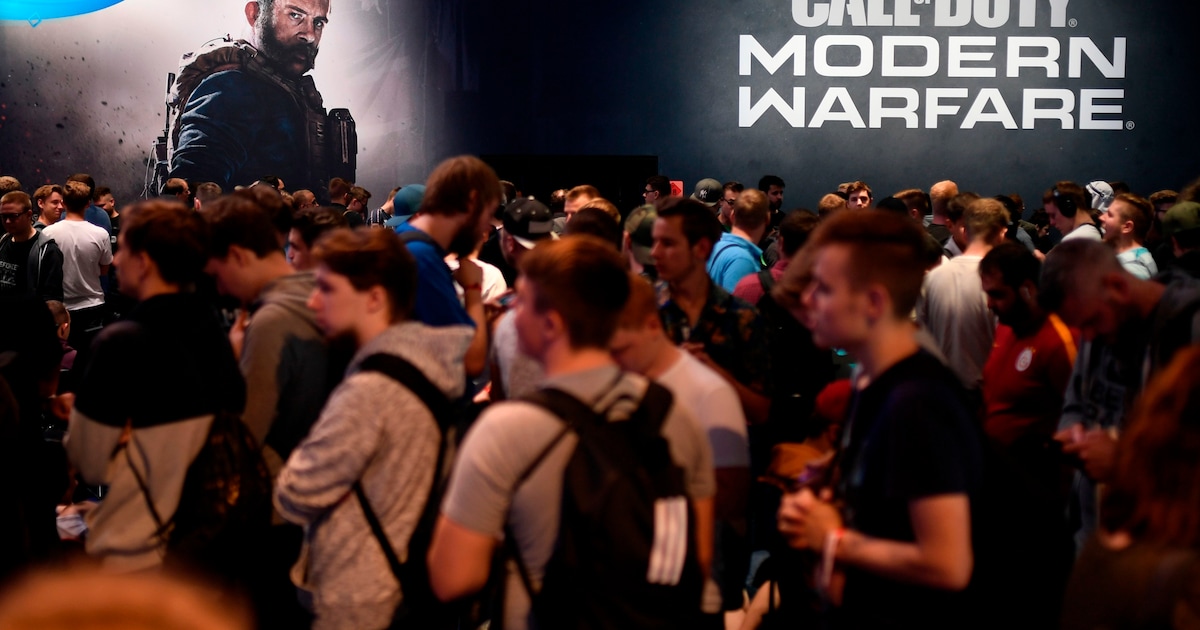
Kojima Productions salió a desmentir las recientes informaciones publicadas por Bloomberg. El estudio emitió un comunicado oficial en el que rechaza las especulaciones sobre su situación financiera, las ventas de Death Stranding y su relación con PlayStation, asegurando que dichas informaciones no se basan en fuentes oficiales ni datos verificables. Además, dejó tres puntos claros: ▫️ Kojima Productions se encuentra en una situación financiera saludable y genera beneficios. ▫️ El desarrollo de PHYSINT avanza sin problemas en colaboración con Xbox. ▫️ Su relación con PlayStation continúa siendo sólida. El estudio explica que decidió pronunciarse porque estos rumores ya podían terminar afectando a la compañía, sus fans y sus socios creativos. Personalmente, creo que si Kojima Productions ha salido con un comunicado tan directo es porque el tema ya había escalado demasiado. Al menos ahora tenemos una postura oficial y bastante clara. #KojimaProductions #DeathStranding #Xbox

L'augmentation de l'utilisation de l'intelligence artificielle dans la recherche scientifique suscite des interrogations fondamentales sur la délégation de la responsabilité intellectuelle et la qualité des productions scientifiques, alors que des avancées notables, telles que celles réalisées par AI Scientist, pourraient transformer en profondeur le processus de recherche. #IntelligenceArtificielle #RechercheScientifique #InnovationTechnologique

SAN SEVERO: "TEATRO EDICOLA" CONQUERS THE "STANFORD SOCIAL INNOVATION REVIEW" SOURCE: https://www.statoquotidiano.it/17/09/2026/il-teatro-edicola-conquista-la-stanford-social-innovation-review/1350500/ The initiative is promoted by the company Foyer '97, under the artistic direction of Francesco Gravino, protagonist of a project of urban and cultural regeneration. The theatre in San Severo is reborn from less than two square metres and a mere six chairs, transforming a disused newsstand in Via Tondi into a singular cultural space capable of attracting attention well beyond the confines of the Province of Foggia. The undertaking is promoted by the company Foyer '97, artistically directed by Francesco Gravino, protagonist of a project of urban and cultural regeneration that has restored a new purpose to a space left unutilised for years. Where once there stood a lowered shutter, today theatre itself is staged. Performances accommodate a maximum of six spectators, with actors in the closest proximity to the audience and productions of brief duration, thereby constructing a direct relationship between the stage and the urban space. The experiment, inaugurated on 27th March, yielded significant results from its earliest days. More than 60 persons attended the performances in a single afternoon, whilst the three days of the inaugural season were fully booked. Figures which attest to the interest aroused by a model founded upon proximity, upon the quality of the cultural offering, and upon the capacity to transform a residual space into a place of encounter. The San Severo experience has thus attained international attention. In September 2026, the Stanford Social Innovation Review devoted to the project the reportage “The Six-Seat Revolution”, authored by Luciano Magaldi Sardella, researcher, academic and international journalist, native of Orta Nova and of maternal San Severo origin. The project is analysed not merely for its distinctive theatrical formula, but also as a potential model of low-cost social innovation and urban regeneration, capable of mobilising resources and cultural capital without the necessity of erecting grand structures or sustaining substantial investment. Francesco Gravino, artistic director of the project, underscores the significance of the experience: “One does not require grand theatres in order to transform a fragment of a city. What is required is a sound idea and the courage to restore to the community a space that has lost its function.” And he adds: “Teatro Edicola was born to demonstrate that a place of encounter and culture may arise anywhere, even within two square metres. That this work should now be studied at an international level and that enquiries should arrive from cities such as Lucca and Rome is confirmation that we are pursuing the right course.” The story of the Teatro Edicola thus inscribes itself within the broader theme of the valorisation of the urban patrimony through the creative reclamation of abandoned spaces. A disused kiosk, six seats and a cultural proposition have sufficed to transform a forgotten corner of the city into a place capable of attracting both public and international attention. An example of regeneration commencing from the bare minimum: not to construct a new space, but to return to inhabiting that which already exists.



🚨 : Lo PRIMERO que ha hecho Asha Sharma al pisar Tokyo, ha sido visitar las oficinas de Kojima Productions en lo que ella misma describe como: «Día de trabajo con Kojima y el equipo en OD, PHYSINT y el futuro». Sin duda Hideo Kojima se ha convertido en un socio preferencial para XBOX y eso ME ENCANTA. #AshaSharma #KojimaProductions #Xbox


Déclaration de Asha Sharma, PDG de XBOX à propos de PHYSINT de Hideo Kojima ⬇️ « Les créateurs ont le choix quant au lieu et à la manière de donner vie à leurs idées. Nous sommes honorés que M. Kojima ait choisi Xbox pour collaborer avec Kojima Productions sur Physint . Son ambition de bousculer les conventions reflète le type de créativité que nous souhaitons soutenir chez Xbox » #Xbox #HideoKojima #JeuxVidéo


Minutos depois de a PlayStation anunciar o fim da parceria com a Kojima Productions, a Xbox anunciou uma parceria com o estúdio. A PlayStation levou uma jantada da Xbox. https://t.co/1zwRBoesuP #PlayStation #Xbox #KojimaProductions


O PlayStation tentou CANCELAR o PHYSINT, da Kojima Productions, após isso o jogo deixou de ser publicado pela Sony e passou a ser publicado pelo XBOX. A Xbox e a Kojima Productions anunciaram nesta quarta-feira (9) a expansão de sua parceria. Kojima destacou que a mudança aconteceu após a Sony dizer que iria cancelar seu importante projeto. O jogo de ação e espionagem, PHYSINT, agora será agora publicado pela Xbox. Hideo Kojima e a CEO da Xbox, Asha Sharma, confirmaram o acordo, que amplia a relação já existente com o título OD e inclui também colaborações em filme e televisão. #PlayStation #Xbox #KojimaProductions


PlayStation cancelando un proyecto en colaboración con Kojima no estaba en mi carta de Bingo. Que está pasando dentro de Sony? PHYSINT seguirá su curso, ya que Kojima productions trabajará ahora con Xbox para la publicación. Lo cual probablemente signifique que el juego salga en Xbox y PC. #PlayStation #Kojima #Xbox

⚡️🇫🇷FLASH - Devant une foule compacte à la braderie de #Lille, Jean-Luc #Mélenchon a déclaré que « la France n’est plus un pays souverain » sur le plan #alimentaire, incapable selon lui de nourrir sa population avec ses propres productions. Il appelle à produire davantage de « carottes » et de « tomates » plutôt que « du maïs pour nourrir les poulets chinois », et promet le #bio gratuit à la cantine pour tous les enfants : « Cela fera des économies de santé (…) le cancer et le diabète sont des maladies politiques », a-t-il ajouté. #Lille #Mélenchon #Agriculture


les pertes de rendement pour les productions végétales dépassent 50% dans plusieurs zones du pays
De Nederlandse game-industrie verkeert in een crisis door stijgende ontwikkelingskosten en een gebrek aan financiële ondersteuning, wat heeft geleid tot het faillissement van studio's zoals PlayerUnknown Productions, terwijl gamers niet bereid zijn meer dan 70 euro voor een spel te betalen. #gameindustrie #PUBG #Gamescom