WRLD

Search

#Resonance
T
The Mystic 1d

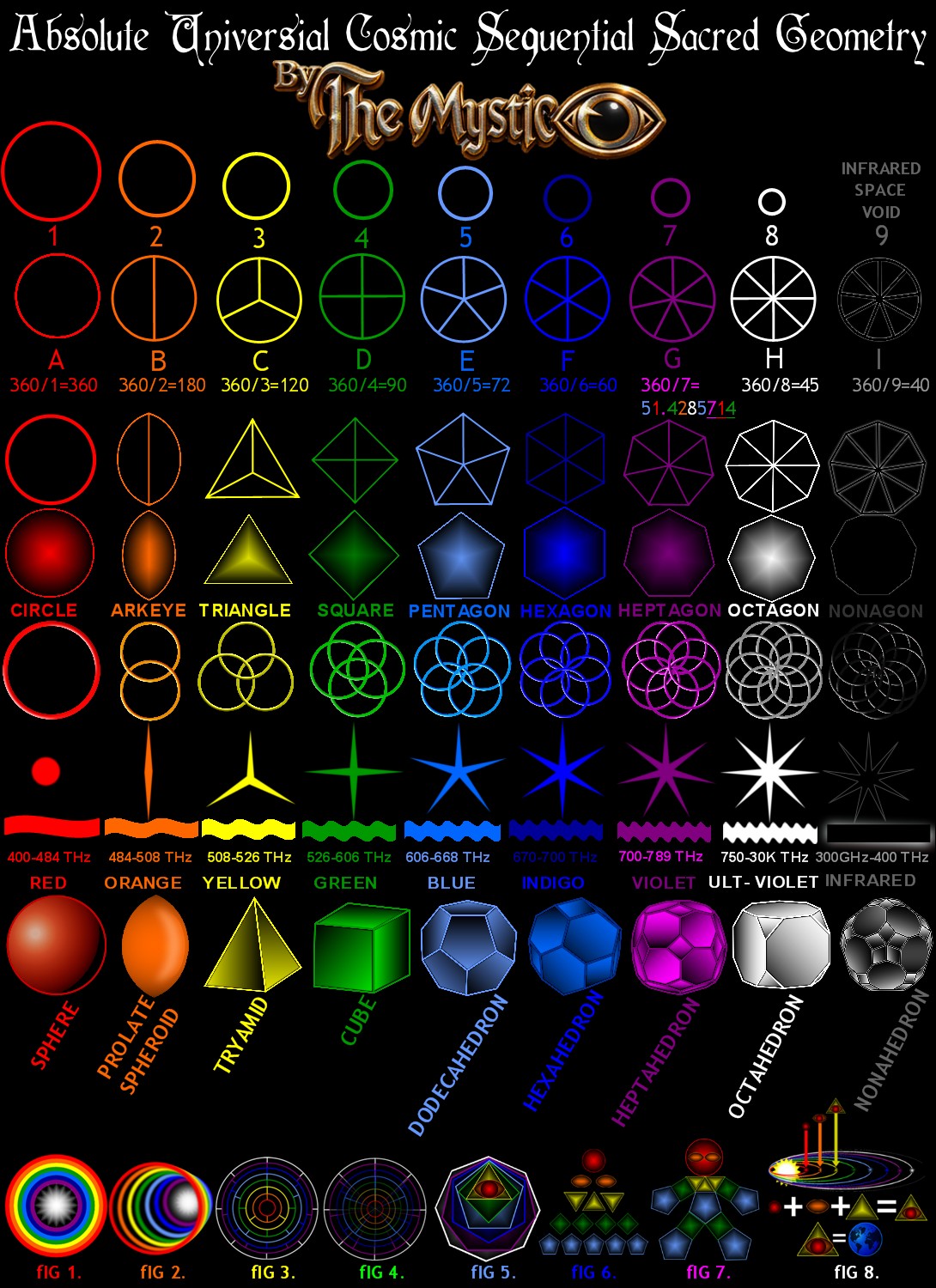
Now, for the first time in perhaps thousands of years, the mystery of True Sacred Geometry has been solved! As what was once a chaotic mess of confusion and misunderstanding has finally been put into the correct absolute order, revealing what can only be described as a masterful chart which presents an elegant visual explanation of origin, as well as the relationship within and between sacred geometry, light, color, form, shape, frequency, number and letter. No, this has never been achieved in known recorded history, and supposed experts will be beside themselves as they nervously attempt to criticise what is absolute and irrefutable, sending supposed expert academic and amateur enthusiasts alike in sacred geometry scrambling and scouring the internet in search of one singular piece of evidence of one singular work equivalent to this masterpiece. #TrueSacredGeometry #SacredGeometry #SacredGeometries #SacredKnowledge #UniversalGeometry #DivineGeometry #AncientWisdom #HiddenKnowledge #UniversalTruth #GeometryOfCreation #OriginOfCreation #CosmicOrder #DivineOrder #SacredScience #GeometryOfLight #LightAndColor #FrequencyAndVibration #NumbersAndLetters #UniversalPatterns #MathematicsOfTheUniverse #AncientMysteries #GeometryOfTheUniverse #BlueprintOfCreation #MysteriesOfTheUniverse #SecretsOfTheUniverse #SacredWisdom #SacredPatterns #SacredSymbols #SacredMathematics #CosmicGeometry #GeometryOfExistence #GeometryOfLife #GeometryOfSound #GeometryOfConsciousness #TheLanguageOfCreation #GeometryOfEverything #GeometryOfNature #AncientKnowledge #LostKnowledge #ForgottenKnowledge #EsotericKnowledge #EsotericWisdom #OccultKnowledge #Mysticism #Metaphysics #MetaphysicalScience #SpiritualScience #SpiritualAwakening #SpiritualDiscovery #Consciousness #HigherConsciousness #UniversalConsciousness #CosmicConsciousness #ExpandedConsciousness #Awakening #Enlightenment #HigherKnowledge #AncientCivilizations #AncientTeachings #LostCivilizations #AncientScience #SacredTraditions #HermeticWisdom #HermeticPrinciples #UniversalLaws #LawsOfNature #NaturalOrder #MathematicalMysteries #UniversalMathematics #SacredNumbers #Numerology #NumberMysteries #GeometryAndMathematics #MathematicalPatterns #NumericalPatterns #Symbolism #SacredSymbolism #SymbolicLanguage #LanguageOfTheUniverse #UniversalLanguage #Frequency #Frequencies #Vibration #VibrationalFrequency #EnergyAndFrequency #UniversalEnergy #EnergyPatterns #Resonance #Harmonics #HarmonicResonance #SoundAndFrequency #SoundGeometry #Cymatics #Light #LightFrequency #LightAndFrequency #NatureOfLight #SpectrumOfLight #ElectromagneticSpectrum #VibrationalUniverse #WaveFrequency #WavePatterns #FormAndShape #SacredForms #GeometricForms #GeometricPatterns #GeometricDesign #GeometricShapes #Fractals #FractalGeometry #FractalPatterns #SelfSimilarity #GoldenRatio #DivineProportion #FibonacciSequence #FibonacciSpiral #PhiRatio #FlowerOfLife #SeedOfLife #FruitOfLife #TreeOfLife #MetatronsCube #Merkaba #VesicaPiscis #SriYantra #PlatonicSolids #PlatonicGeometry #ArchimedeanSolids #Torus #ToroidalGeometry #FlowerOfCreation #SeedOfCreation #SacredCircles #SacredTriangles #SacredSpirals #HexagonalGeometry #Hexagons #PentagonalGeometry #ThreeDimensionalGeometry #DimensionalGeometry #HigherDimensions #Multidimensional #QuantumGeometry #QuantumPhysics #QuantumScience #UnifiedTheory #TheoryOfEverything #UniversalConnections #EverythingIsConnected #Interconnectedness #CosmicPatterns #CosmicDesign #IntelligentDesign #OrderFromChaos #PatternsInNature #NatureIsMathematical #MathematicsInNature #ScienceAndSpirituality #ScienceMeetsSpirituality #ArtAndScience #GeometryAndArt #VisualMathematics #VisualKnowledge #KnowledgeIsPower #NewDiscoveries #GroundbreakingDiscovery #RevolutionaryKnowledge #NewUnderstanding #ParadigmShift #BeyondTheOrdinary #BeyondConventionalThinking #ThinkBeyond #ExploreTheUnknown #QuestionEverything #SeekTheTruth #TruthSeekers #KnowledgeSeekers #OpenYourMind #ExpandYourMind #MindBlowingDiscoveries #CosmicMysteries #TheGreatMystery #TheMasterPattern #TheMasterKey #TheMissingLink #TheUltimateConnection #TheGrandDesign #TheGrandPattern #TheUniversalBlueprint #Masterpiece #GeometryMasterpiece #SacredGeometryChart #GeometryChart #VisualExplanation #VisualDiscovery #KnowledgeUnveiled #MysterySolved #AncientMysterySolved #TheBigPicture #DiscoverTheTruth #ExploreSacredGeometry #SacredGeometryCommunity #SacredGeometryArt #SacredGeometryDesign #SacredGeometryStudy #SacredGeometryResearch #SpiritualCommunity #ConsciousCommunity #MetaphysicalCommunity #EsotericCommunity #AlternativeKnowledge #AlternativeScience #IndependentResearch #IndependentDiscovery #DeepResearch #UniversalUnderstanding #OriginAndCreation #LightColorFrequency #FormShapeFrequency #NumberAndLetter #TheScienceOfCreation #TheArtOfCreation #CosmicUnderstanding #InfinitePatterns #InfiniteGeometry #InfiniteWisdom #InfinitePossibilities #BeyondTheVisible #UncoveringTheUnknown #HiddenInPlainSight #KnowledgeWithoutLimits #DiscoverSomethingNew #ShareKnowledge #MindExpanding #AncientAndModernWisdom #Spirituality #Science #Mathematics #Art #Cosmos #Universe #MindBlowing #TruthRevealed #KnowledgeRevealed #Metaphysics #GeometryOfLight #GoldenRatio #FibonacciSequence #PlatonicSolids #FractalGeometry #CosmicOrder #DivineProportion #QuantumGeometry #AncientScience #UniversalEnergy #TheUniversalBlueprint #TheMissingLink #MysterySolved #EverythingIsConnected #PatternsInNature #GeometryOfTheUniverse #BlueprintOfCreation #HigherConsciousness #AncientMysteries #EsotericKnowledge #SpiritualAwakening #DivineGeometry #SacredScience #HiddenKnowledge #UniversalTruth #LanguageOfCreation #NumbersAndLetters #FrequencyAndVibration #LightAndColor #GeometryOfCreation #OriginOfCreation #AncientWisdom #KnowledgeIsPower #ExploreTheUnknown #ParadigmShift #GroundbreakingDiscovery #MindBlowingDiscoveries #TruthSeekers #TheMasterKey #TheGrandDesign #SacredGeometryArt #SacredGeometryDesign #SacredGeometryResearch #GeometryMasterpiece #GeometryChart #VisualDiscovery #TheBigPicture #DiscoverTheTruth #UniversalPatterns #UniversalConnections #CosmicPatterns #CosmicDesign #OrderFromChaos #MathematicsOfTheUniverse #SacredMathematics #GeometryAndMathematics #SacredNumbers #Numerology #Symbolism #VibrationalFrequency #HarmonicResonance #Cymatics #WavePatterns #GeometricPatterns #GeometricForms #GoldenRatio #FlowerOfLife #SeedOfLife #MetatronsCube #Merkaba #VesicaPiscis #SriYantra #Torus #ToroidalGeometry #HigherDimensions #Multidimensional #TheoryOfEverything #ScienceMeetsSpirituality #ArtAndScience #VisualMathematics #AncientCivilizations #AncientTeachings #HermeticWisdom #UniversalLaws #NaturalOrder #SpiritualScience #CosmicConsciousness #ExpandedConsciousness #Enlightenment #Awakening #OpenYourMind #ExpandYourMind #MindExpanding #HiddenInPlainSight #BeyondTheVisible #InfinitePossibilities #InfiniteWisdom #AncientAndModernWisdom
pierre haski 2d

In his geopolitical column on October 7th on France Inter, the author estimated that the political crisis in Poland surrounding the control of the Constitutional Tribunal echoed the French electoral campaign, particularly the positions taken by Marine Le Pen. https://t.co/FT7UipKnpp #Politique #Pologne #Élections #PL #FR (translated)

2671
Médias Citoyens 3d

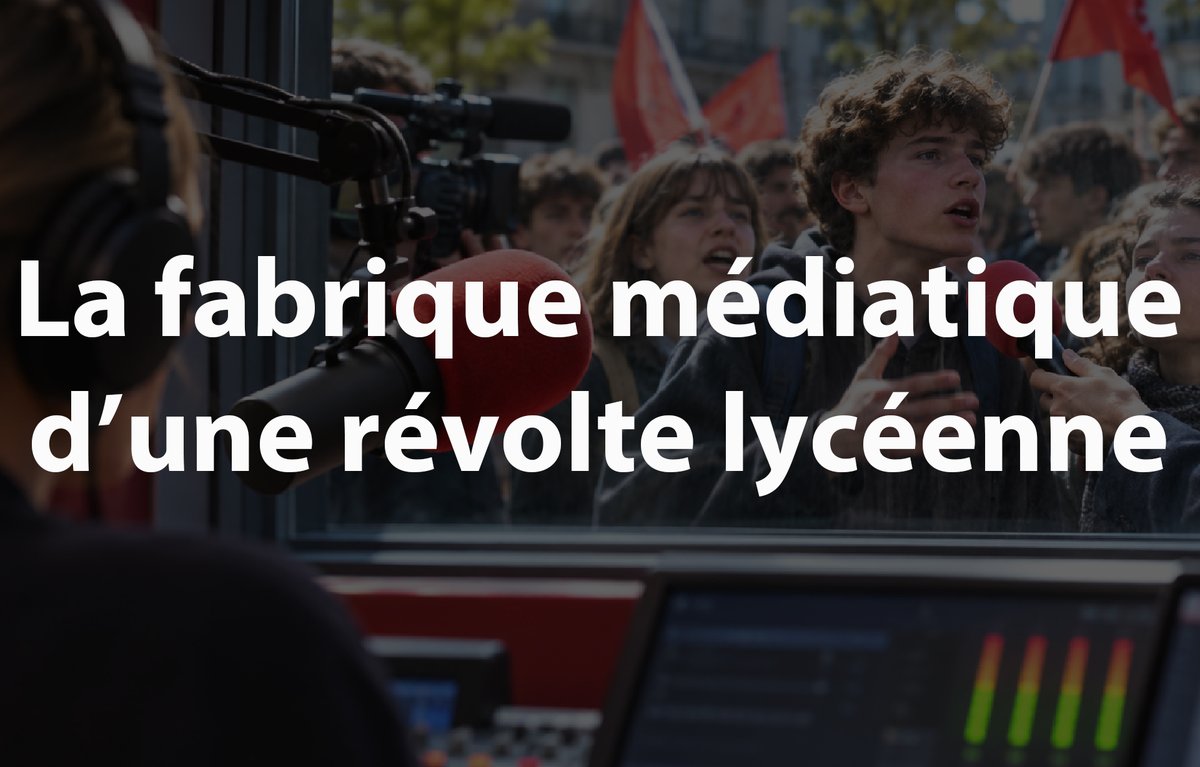
Citizens' Media accused several French media outlets, notably France Inter, France Info, and France Culture, of providing massive and biased coverage of high school and student mobilizations. The media claimed that more than a hundred reports made on-site had been broadcast since the start of the movement, and that the testimonies of the most demanding protesters were often relayed without sufficient verification. It estimated that this treatment contributed to presenting a movement as general that it described as essentially driven by activists. According to Citizens' Media, the media also failed to sufficiently confront the demands with the responsibilities of regions in the material funding of high schools and institutional realities. To support its remarks, the media cited the analysis of over 60,000 contributions submitted on the ministry's consultation platform: timetables represented 70% of concerns, the state of school buildings 48.2%, teacher replacements 27.2%, and teacher staffing 25.9%. The elimination of Parcoursup appeared in 16.4% of the contributions, it noted. Citizens' Media also pointed out that the ministry indicated, on October 13, that 94.2% of high schools were open. It lamented that students opposed to blockages, parents, and teachers wishing to continue classes were not being heard. The media called on newsrooms to verify claims, contextualize demands, and solicit dissenting viewpoints. #Médias #RévolteLycéenne #Journalisme (translated)

3248
Actualité - Barça 2w

News - Barça wrote that Khvicha Kvaratskhelia might miss the rest of the season and that his entourage feared a torn anterior cruciate ligament in the knee. The media indicated that an MRI was to be performed during the day to determine the extent of the injury, and wished good luck to the Georgian player, hoping the injury would be less serious than feared. #football #blessure #Kvaratskhelia (translated)

2988
Luciano Magaldi Sardella (PhD) Sep 29

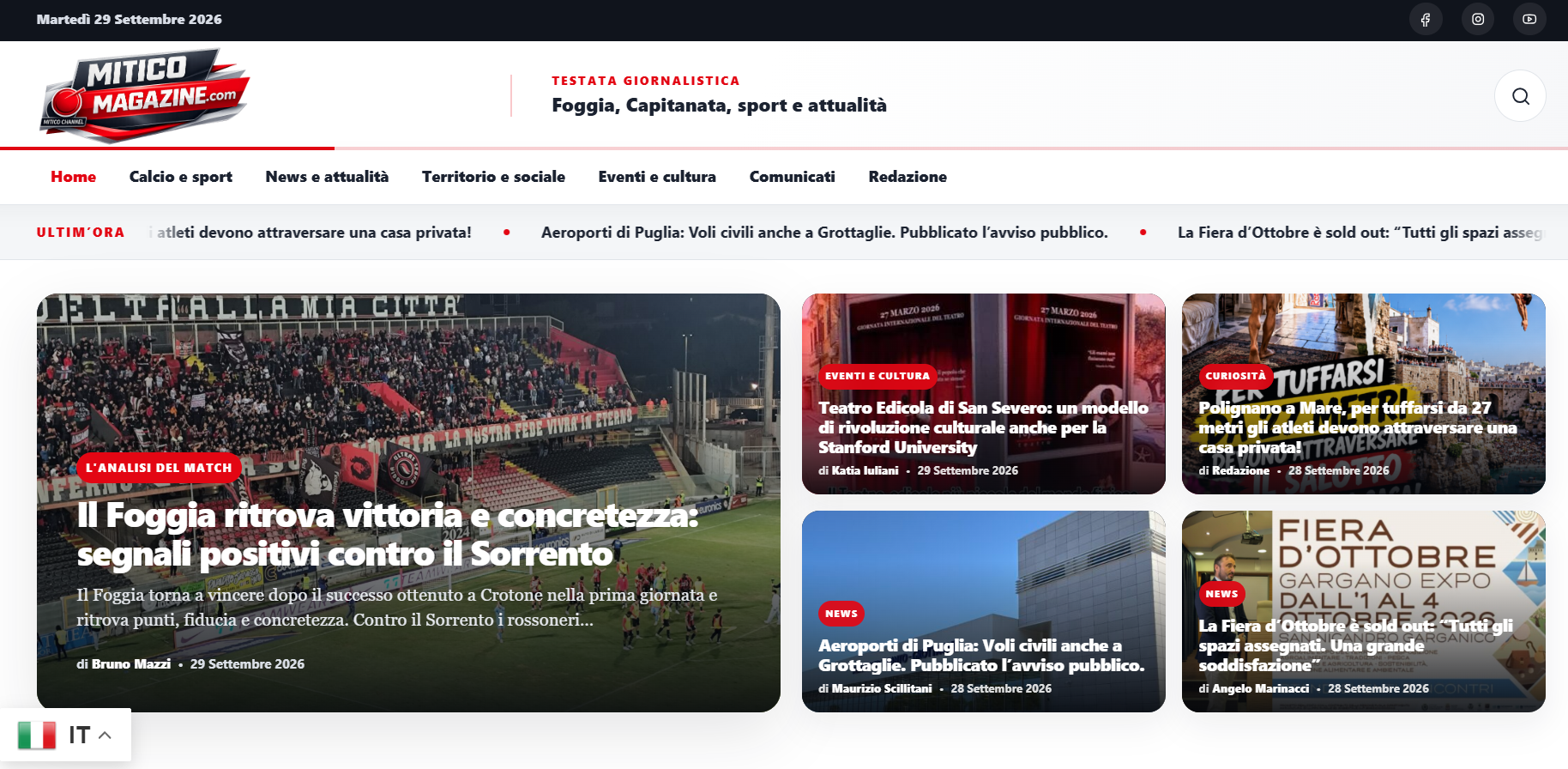
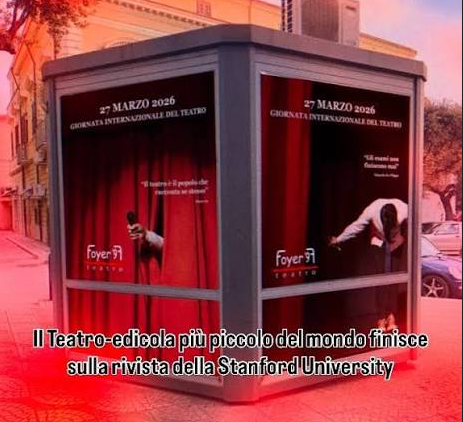
Mitico Magazine - The Teatro Edicola of San Severo: A Model of Cultural Revolution for Stanford University as Well Source: https://www.miticomagazine.com/territorio-e-sociale/teatro-edicola-di-san-severo-un-modello-di-rivoluzione-culturale-anche-per-la-stanford-university/ The Teatro Edicola in Via Tondi In San Severo, a singular metamorphosis has taken place: a newsstand abandoned for at least six years has found a new function and a new identity, transforming into one of the smallest and most unusual theatre stages in the world. An experiment born in the heart of the town which, in just a few months, has moved beyond local boundaries, attracting attention even overseas. It is called Teatro Edicola and it is a project conceived by the company Foyer '97, artistically directed by Francesco Gravino, which has brought the old newsstand in Via Tondi back to life through a formula that is both essential and surprising. Foyer '97 Foyer '97 APS was established as a formally constituted association active in the cultural sector in San Severo in 1997, born from the vocation of a group of actors, directors and theatre enthusiasts, with the aim of building a "living" and accessible theatre in the town. Over the years the company has developed a repertoire that includes texts from the classical tradition, contemporary dramaturgy, comedy and experimental projects, not limiting itself to the mere production of theatre shows, but also organising theatre courses and workshops and educational and cultural projects characterised by a strong inclusive ethos, particularly in schools. Foyer '97 does not always have a fixed artistic ensemble, but works with different performers and collaborators depending on the project; the only indispensable presence is that of Francesco Guido Gravino himself, actor, director and artistic director of the theatre company. The distinctive feature of Foyer '97 is certainly the value of social and cultural promotion attributed to theatre, the extremely close relationship with the audience and the search for a type of theatre outside conventional spaces, with cemeteries, trains, bell towers, and now a newsstand, as its backdrop. Six spectators, a few minutes and a minimal distance between stage and audience The project was launched on 27 March 2026, on the occasion of World Theatre Day, offering a theatrical experience built around a radical reduction of the conventional spaces and times of performance. The idea was born not only from the search for unconventional spaces, but also from "Edicola Fiore", the morning press review with a strongly ironic tone presented by Rosario Fiorello and Stefano Meloccaro, which was broadcast first only on Fiorello's social channels between 2011 and 2014, and then also on radio and television between 2016 and 2018. The review took its name from the diminutive of its founder, Fiore, and from the newsstand of a friend of Fiorello's in Via Flaminia Nuova in Rome, where the showman would meet early in the morning with a group of friends to read the newspapers. The San Severo newsstand was granted free of charge by its owner Pino Frau to the theatre group which, after obtaining temporary authorisation and institutional support from the Municipality of San Severo, refurbished it within two weeks at a cost of less than €3,000. Just six seats, a total surface area of 4 sq m, of which only 2 are for the stage area, less than a metre between actors and audience, a curtain, a lectern, two lights, performances lasting between 5 and 15 minutes, audience rotation every quarter of an hour: apparently minimal elements that end up subverting the usual relationship between stage and auditorium. Spectators, in fact, find themselves immersed in the stage action, in such proximity to the actors that every gesture, expression and word becomes immediately perceptible. In this way, theatre abandons its traditional spaces and insinuates itself into the everyday life of the street, becoming an intimate, concentrated and almost participatory experience. During the inaugural period admission was free with a subsequent voluntary donation from spectators; in the event of a more stable and longer-term concession, which could lead to seasonal theatre performances, the proposed ticket price would be €5. Audiences reward the experiment Foyer '97's gamble met with public interest right from the start: over 60 people attended the shows in a single afternoon, while the three days that inaugurated the season sold out. From a singular local experiment, the Teatro Edicola thus began to arouse curiosity even outside the province of Foggia, gradually transforming into a case of cultural and social interest, until it reached the American continent. From the province of Foggia to the "Stanford Social Innovation Review" The San Severo experience has now come under the international spotlight: in September 2026, the Stanford Social Innovation Review, an international journal and platform dedicated to social innovation published by the Stanford Center on Philanthropy and Civil Society at Stanford University in California, published on its website and in the Fall 2026 print edition the reportage "The Six-Seat Revolution", written by Dr Luciano Magaldi Sardella, independent journalist and researcher affiliated with the European Open University, and editorially supervised by deputy editor David V. Johnson. In the article, it is argued that the Teatro Edicola attracted attention overseas because the project concentrates cultural innovation, urban regeneration and proximity theatre into just a few square metres: starting from a real urban problem, it recovers an abandoned place with a modest investment, brings performance directly into public space and experiments with a much closer relationship between actors and spectators. From the point of view of theatrical representation, it also highlights how the format, based on micro-stories of five to twelve minutes, taken from great classics such as Goldoni, Chekhov, Ibsen, Euripides and Benni, and on audience rotation every fifteen minutes, transforms the physical limitations of the space into a precise dramaturgical choice, proving to be extremely innovative. All of this makes it possible to address some of the main critical issues in the sector: falling audience numbers, an exclusively elderly audience, reduced resources and distance from traditional cultural venues. The journal also highlights, however, the potential problems: economic sustainability, the need for stable institutional support and the difficulty of replicating the model, which is closely linked to the community and territory of San Severo. A model looking beyond San Severo Despite the difficulties, initial requests for information have already arrived from Lucca and Rome, where there is curiosity about the possibility of getting to know the model more closely and the steps needed to replicate it. The replicability formula, in fact, does not seem to require particularly costly infrastructure: an unused space, a targeted intervention, a cultural idea, in-depth knowledge of the surrounding area and a willingness to return that place to the community can be enough to trigger a new urban function. It is precisely in the disproportion between the modesty of the resources employed and the resonance generated by the initiative that perhaps the most original feature of the Teatro Edicola lies, certainly unique of its kind; there are, however, other examples in Italy of newsstands reused for other purposes: "Edicola 518", a twentieth-century kiosk abandoned in the centre of Perugia, now dedicated to independent publishing, art and cultural production; and in Rome itself, the abandoned newsstand in Piazza Testaccio used temporarily as a stage for a show by Fabio Morgan and the Erno newsstand in the Prati district, which almost every month offers a calendar of events, exhibitions, pop-ups and collaborations with artists and creative enterprises. Small revolutions, therefore, that tell stories of the reappropriation of urban spaces, of creativity and social innovation. And which, it is hoped, will take root in order to look ever further afield.

www.miticomagazine.com
Teatro Edicola di San Severo: un modello di rivoluzione culturale anche per la Stanford University
1051
Rafik Smati Sep 28

Je ne suis pas chrétien. Et pourtant, la visite de Léon XIV en France me touche. Elle me touche d'abord parce que je vois chez ce Pape quelque chose qui me semble profondément en résonance avec notre époque : la volonté de regarder en face les immenses bouleversements scientifiques et technologiques qui nous font face. J'avais eu la chance d'échanger avec le Pape François sur l'IA. Il m'avait parlé du « vertige » que lui inspirait cette révolution, dont il avait très tôt perçu la portée. Je trouve passionnant de voir Léon XIV poursuivre cette réflexion et placer à son tour la révolution technologique au cœur de sa pensée. Et cela me parle. Car plus la science et la technologie repoussent les frontières du possible, plus une question très ancienne revient avec force : qu'allons-nous faire de cette puissance ? Et surtout, où voulons-nous aller ? Et puis il y a quelque chose de plus personnel. Léon XIV est un fils spirituel de saint Augustin. Et Augustin était un enfant de cette terre d'Afrique du Nord où je suis né, en Algérie. Il y a là un fil invisible qui traverse les siècles et la Méditerranée et qui, forcément, me touche. Enfin, il y a eu cette foule immense, place de la Concorde et à Lourdes. Au-delà de la foi de chacun, je crois qu'elle nous dit quelque chose de la France. Nous avons passé des décennies à chercher des réponses économiques, sociales, institutionnelles à notre malaise collectif. Elles sont indispensables. Mais peut-être avons-nous oublié une dimension plus profonde : un pays ne vit pas seulement de ce qu'il possède. Il vit aussi de ce qui le dépasse. Oui, une civilisation a besoin de prospérité, de science et de progrès. Mais elle a aussi besoin de transmission, de sacré, de racines, d'espérance, d'un horizon commun. Appelez cela religion, spiritualité, transcendance, civilisation ou simplement besoin de sens. Français et musulman, je n'ai aucun mal à reconnaître dans la France la fille aînée de l'Église. Pas plus que je n'oublie qu'elle s'est construite, siècle après siècle, en sachant aussi accueillir, intégrer et faire siens des apports venus d'ailleurs. Ces deux histoires ne s'opposent pas. Elles sont la France. En regardant Léon XIV et ces foules rassemblées, je me demande si ce Pape n'est pas venu réveiller quelque chose que nous pensions avoir perdu. Et dont, peut-être, la France avait terriblement besoin. #LéonXIV #Spiritualité #Technologie

13088
Bally Bagayoko Sep 25

À Saint-Denis - Pierrefitte, ville de la Basilique, ville de toutes les cultures et de toutes les croyances, cette visite a une résonance particulière : nous sommes la ville du peuple vivant ! https://t.co/1dzCAx88CW #SaintDenis #Basilique #Diversité

24565
La Libre.be Sep 15

Sonia Devillers, dans son roman Le fabuleux piano, explore l'histoire poignant des pianos volés par les nazis à travers le journal de Jacques Enoch, mêlant habilement fiction et réalité, et suscitant une forte résonance émotionnelle chez les lecteurs. #LeFabuleuxPiano #SoniaDevillers #HistoireEtFiction

www.lalibre.be
"J'ai littéralement fondu en sanglots. Je ne m'attendais pas à un tel retentissement"
16441
Racing Club de Lens Sep 10

Ils ont été 𝐋𝐞𝐧𝐬𝐨𝐢𝐬 et 𝐏𝐫𝐚𝐠𝐮𝐨𝐢𝐬 🔙 Ce #SLARCL aura une résonance particulière pour @Sima_Abdalah, Vladimír Šmicer et Radek Bejbl, tous les trois passés par l'Artois et la capitale tchèque. #FiersDEtreLensois #UCL https://t.co/pa6vUbGliW #SLARCL #FiersDEtreLensois #UCL

12705
Luciano Magaldi Sardella (PhD) Sep 5

After “Broadway World”, Marina (1888) from the Teatro Umberto Giordano’s “GIO Festival” in Foggia now reaches the Belgian “Opera Gazet” SOURCE: https://medium.com/@ingnucllms/after-broadway-world-marina-1888-from-the-teatro-umberto-giordanos-gio-festival-in-foggia-73ba01e5f50a SOURCE: https://www.operagazet.com/marina-by-giordano-its-world-stage-premiere-in-foggia/ SOURCE: https://www.operagazet.com/marina-by-giordano-its-world-stage-premiere-in-foggia/ From the homepage of “Broadway World” to the pages of an authoritative international magazine: the world stage première of Umberto Giordano’s youthful melodrama now consecrates Foggia as the capital of a “rediscovered verismo”. There is a destiny that waits, patiently, to be fulfilled. It is the destiny of Marina, a one‑act melodrama with music by Umberto Giordano and a libretto by Enrico Golisciani, composed in 1888 for the celebrated Sonzogno competition and subsequently withdrawn by the composer himself, falling into an oblivion that lasted 138 years. That destiny was fulfilled on 5 June 2026 at the Teatro Umberto Giordano in Foggia, with the World Staging Première of the opera, the inaugural event of the first edition of the “GIO Festival” — “Giordano International Opera Festival”, the new international showcase which, from 5 to 20 June, transformed the Capitanata into a widespread stage devoted to the Maestro from Foggia. A cultural enterprise of European breadth, promoted by the Chamber of Commerce of Foggia together with the Municipality and the Province, supported by the Region of Puglia and the Fondazione Monti Uniti, and capable of restoring to history a fundamental fragment of nascent verismo. The Foggia production — directed by Giandomenico Vaccari, conducted and coordinated by Matteo Dal Maso, with sets and costumes by Alfredo Troisi, lighting by Massimo Russo, and soprano Valeria Sepe in the eponymous role — represented not a mere performance, but the scenic resurrection of an opera long believed lost. Its autograph score was rediscovered only recently at Yale University’s “Beinecke Rare Book and Manuscript Library”, within the “Frederick R. Koch” Collection, thanks to the philological work of the conductor and musicologist of Venetian and German heritage, Andreas Gies, who prepared its critical edition. After the transatlantic resonance that saw the “GIO Festival” reach the homepage of “Broadway World” thanks to the world première of Marina, complete with exclusive photographs of the historic debut, a new and prestigious international recognition now arrives. The authoritative Belgian opera magazine “Opera Gazet” dedicates an extensive musicological review to the Foggia event with the article: “ “MARINA” (by Giordano) — ITS WORLD STAGE PREMIÈRE IN FOGGIA”. An arrival far from secondary. If “Broadway World” marked the opera’s transatlantic debut, “Opera Gazet” now seals its critical consecration among the most discerning and specialised audiences: the melomaniacs, scholars, and professionals of the operatic world. From Foggia to New York, from New York to the circuit of the international opera press. The trajectory of Marina confirms what the “GIO Festival” has sought to demonstrate since its inception: Giordano’s legacy is not a local memory, but a living repertoire, capable of conversing with major stages and with the world’s most prestigious cultural outlets. The rediscovery born in Foggia is now a heritage shared by all.

825
Luciano Magaldi Sardella (PhD) Sep 5

The Vindication of the “GIO Festival”: “BroadwayWorld” Celebrates Marina and the Umberto Giordano Theatre of Foggia SOURCE: https://www.linkedin.com/pulse/vindication-gio-festival-broadwayworld-celebrates-sardella-ph-d--8zzce/ SOURCE: https://www.letteremeridiane.org/2026/08/la-rivincita-del-gio-festival-broadwayworld-celebra-marina-e-foggia/ The GIO Festival has been, to put it mildly, overlooked by Rai3 Puglia and several regional outlets. Yet the festival dedicated to Umberto Giordano — promoted by the Chamber of Commerce of Foggia together with the Municipality and the Province, and supported by the Apulia Region and the Fondazione Monti Uniti — has achieved a remarkable vindication, landing on the homepage of BroadwayWorld thanks to the world première of the opera Marina, staged on 5 June at the Umberto Giordano Theatre in Foggia. This is no small feat, considering that BroadwayWorld is among the most influential American platforms devoted to theatre and the performing arts. The transatlantic debut of the opera by Foggia’s great composer did not escape the attention of Luciano Magaldi Sardella, who submitted to the editorial board of Lettere Meridiane an in‑depth and compelling contribution, reproduced below. In the article, the author masterfully reconstructs the extraordinary story of Giordano’s first opera, composed in 1888 and left without a staged production for 138 years, until its historic performance on 5 June at the Giordano Theatre. Above all, he recounts how the inaugural edition of the GIO Festival has restored Foggia to the centre of the international operatic stage, through the rediscovery and valorisation of Marina, the involvement of major musical institutions, and the attention of the American press. It is a stimulating reflection on the cultural and identity‑driven renaissance of a city that, for far too long, bore Giordano’s name on the façade of its theatre without managing to turn it into a lever of international visibility. (g.i.) + + + + + There are moments in the life of a city when past and future clasp hands upon the stage of the present. Foggia experienced one of these moments on the evening of 5 June 2026, when the curtain of the Umberto Giordano Theatre rose upon Marina, an opera composed in 1888 by a young man of twenty‑one — Umberto Giordano — then a student at the San Pietro a Majella Conservatoire in Naples. After one hundred and thirty‑eight years of silence, that score finally found its first scenic breath in the world. “It is not an ordinary event. It is a turning point. A void filled. A story rewritten.” Umberto Giordano, one of the most celebrated verismo composers of the fin‑de‑siècle — born in Foggia, author of masterpieces such as Andrea Chénier, Fedora, Siberia — had remained, until now, the only great Italian opera composer without a festival entirely dedicated to his oeuvre. A paradox that weighed like a historical injustice upon a city that bears his name engraved on the pediment of its most beautiful theatre. This is the extraordinary journey of Marina, Giordano’s first opera, which after 138 years of oblivion received its world première in scenic form on 5 June 2026 at the Umberto Giordano Theatre in Foggia, as the opening event of the GIO Festival — the inaugural edition of the Giordano International Opera Festival. The manuscript, preserved in the Frederick R. Koch Collection at Yale University’s Beinecke Rare Book and Manuscript Library, has travelled an astonishing path: from the elite libraries of America’s East Coast to the beating heart of the Daunia. On the night of 5 June 2026, at the Umberto Giordano Theatre, that silence was finally broken. The GIO Festival was conceived in Foggia as an ambitious cultural project promoted by the Chamber of Commerce, the Municipality, and the Province, with the support of the Apulia Region, aiming to transform the artistic legacy of the verismo composer into a driver of territorial development and cultural tourism. Under the artistic direction of conductor Gianna Fratta and violinist Dino De Palma, the event at last fills a historical void. Its model is explicit and ambitious: a project inspired by the great festivals dedicated to Italian composers — such as the Verdi Festival, the Puccini Festival, the Rossini Opera Festival — while maintaining a strong territorial and participatory dimension. In other words, Foggia formally claims its seat at the table of the greats. And it does so with the credentials required: an unrepeatable world scenic première (parallel to the concert première at Milan’s Teatro Dal Verme, recorded by the prestigious opera label Decca Classics), a high‑quality operatic production, and the support of leading cultural institutions (Teatro dell’Opera di Milano, Fondazione Teatro Petruzzelli of Bari). The festival benefitted from the collaboration of the Orchestra of the Conservatoire and the Chorus of the Fondazione Teatro Petruzzelli of Bari, the Umberto Giordano Conservatoire of Foggia, the Fondazione Monti Uniti, and the Fondazione Apulia Felix. A network of excellence that lent the event national resonance and stature. The Umberto Giordano Theatre is a nineteenth‑century jewel of rare beauty — the oldest functioning horseshoe‑shaped historic theatre in Apulia. Yet for decades it lived in a state of semi‑clandestine cultural marginality, relegated to the periphery of the operatic routes that matter, hindered by long interruptions in its use from 2007 to 2014, including recent fire‑safety compliance requirements. Some referred to it, with a mixture of condescension and provincial resignation, as a “provincial theatre”, destined merely to bear Giordano’s name. That label is now destined to fall. It is precisely in Foggia that this youthful gem received its first scenic staging, placing the city on the international map of opera. A positioning without precedent in the city’s recent history. The Giordano Theatre recorded a full house for the historic première of Marina, welcoming hundreds of spectators, while many more followed the performance from outside via a large screen installed for the occasion. The production met expectations with full artistic dignity: the staging transposed the narrative to the First World War, heightening the opera’s dramatic and realist character. On the podium, the Symphony Orchestra of the Umberto Giordano Conservatoire conducted by Matteo Dal Maso. Sets and costumes by Alfredo Troisi; lighting by Massimo Russo. An ensemble of talents worthy of the name the theatre proudly bears. The definitive seal of this moment’s historical significance arrived from across the Atlantic. BroadwayWorld, the world’s most influential outlet for live performance criticism and reporting — with over 5.5 million monthly views — dedicated exclusive coverage to the event, publishing a complete photographic gallery of the world scenic première curated by Chloe Rabinowitz and a substantial critical review by Rachel Stone. The American article emphasised the historical value of the undertaking and the bond between the composer and his native city, highlighting the musical quality of the score, deemed surprisingly mature for the composer’s age. For the first time, the Umberto Giordano Theatre appeared on the New York‑based site alongside institutions such as the Los Angeles Opera House, Houston Opera, and BBC Classical Music at the Royal Opera House. It is its natural place. It should have been there decades ago. Until now, the world knew Giordano through his Milanese triumphs, not through the youthful opera written between Foggia and the Naples Conservatoire — the lost (and later rediscovered) Marina of 1888. Let us be clear: this is no minor detail. BroadwayWorld does not grant exclusive galleries to provincial theatres. It does so for events that shift the coordinates of musical and theatrical history within the circuits that matter. This time, those coordinates shifted to Foggia thanks to the GIO Festival, in the name of Umberto Giordano. For the record — and for those who may not yet know — the GIO Festival is a new and ambitious biennial event conceived by the Chamber of Commerce of Foggia, with the aim of celebrating the genius of Umberto Giordano and transforming it into a powerful engine of development for the entire Capitanata. Biennial means continuity, planning, vision. It means that Foggia does not intend to be a meteor in the operatic firmament, but a stable and recognisable presence within the international festival circuit. Andrea Chénier, Siberia, and Fedora had already carried Giordano’s name to the Metropolitan Opera House in New York for more than a century, where his works are still performed to great acclaim. Now Foggia itself — not merely its scattered operatic legacy — claims its rightful “place in the sun”. The composer whom his city struggled to recognise in life, and whose name it preserves on its theatre, its square, and its conservatoire, may finally become the lever of an unprecedented cultural, economic, and identity‑driven renaissance. The GIO Festival 2026 is not, one hopes, a point of arrival. It should be the first chapter of a new story for Foggia, for the Capitanata, and for the cultural South of Italy. The Umberto Giordano Theatre is no longer merely an architectural jewel to be preserved: it has now become a place of creation and inspiration, capable of attracting international press attention and hosting events that enter the annals of world opera. To those who still whisper that Foggia is a provincial city, the answer is now written upon the world’s stages: on the evening of 5 June 2026, the periphery became the centre.

www.linkedin.com
The Vindication of the “GIO Festival”: “BroadwayWorld” Celebrates Marina and the Umberto Giordano Theatre of Foggia
825
Luciano Magaldi Sardella (PhD) Sep 5

The GIO Festival Captures the Attention of Broadway World: International Spotlight on the Staged World Premiere of Umberto Giordano’s Marina SOURCE: https://www.linkedin.com/pulse/gio-festival-captures-attention-broadway-world-staged-sardella-ph-d--pw1qe/ SOURCE: https://www.immediato.net/2026/08/20/il-gio-festival-conquista-broadway-world-riflettori-internazionali-sulla-prima-scenica-di-marina-di-umberto-giordano/ The prestigious American outlet has devoted an extensive feature to the production presented at the Teatro Giordano in Foggia. The opera, composed in 1888 and left without a true staging for almost 140 years, has returned to life within the festival directed by Gianna Fratta and Dino De Palma. The staged world premiere of Marina, a youthful work by Umberto Giordano, has brought Foggia onto the pages of the international press. Broadway World, a US publication specialising in the performing arts, has dedicated a substantial article to the production presented on 5 June at the Teatro Umberto Giordano as part of the GIO Festival. Luciano Magaldi Sardella, in a communication sent to several editorial offices, highlighted the international resonance of the event, noting that it has attracted attention even overseas. The title chosen by Broadway World is unequivocal: “Marina, Umberto Giordano’s Lost Opera, Makes World Stage Premiere in Foggia.” An opera left in the shadows for nearly 140 years Marina was composed in 1888 by Giordano, then barely in his twenties and still a student at the Naples Conservatoire. The opera was submitted to the second edition of the Sonzogno Competition in Milan, but did not win and remained essentially forgotten for decades, even as the composer from Foggia would later achieve acclaim with works such as Andrea Chénier and Fedora. According to the feature, the score received its first concert performance only at the beginning of 2026 at the Teatro Dal Verme in Milan. The Foggia production, however, marked the opera’s true staged debut, in the theatre that bears Giordano’s own name. The staged premiere at the Teatro Giordano The production was presented on 5 June during the GIO Festival. Artistic direction was entrusted to Gianna Fratta and Dino De Palma, while the staging was directed by Giandomenico Vaccari. As reported by Broadway World, the production relocated the narrative to the period of the First World War, emphasising the dramatic and realistic character of the opera. Valeria Sepe performed in the role of Marina, while the Orchestra Sinfonica of the Conservatorio Umberto Giordano in Foggia was conducted by Matteo Dal Maso. The cast also included Samuele Simoncini as Giorgio Lascari, Elia Fabbian and Cüneyt Ünsal, and the Chorus of the Fondazione Teatro Petruzzelli, prepared by Marco Medved. Broadway World celebrates Foggia The American publication underscores the historical significance of the initiative and the bond between the composer and his native city. The symbolic value is considerable: in the theatre named after Giordano, Foggia has hosted for the first time the complete staged version of an opera that had remained outside the repertoire for more than a century. The feature also highlights the musical quality of the score, described as surprisingly mature for the composer’s age and already capable of anticipating elements that would later characterise Giordano’s subsequent works. A festival spanning Foggia, the Gargano and the Monti Dauni The GIO Festival—Giordano International Opera Festival—was promoted by the Chamber of Commerce of Foggia in partnership with the Municipality and the Province, with support from the Region of Apulia and Puglia Culture. The initiative involved not only the provincial capital but also the Gargano and the Monti Dauni, with a programme ranging across opera, jazz, cinema, dance, chamber music and scientific outreach. The festival concluded on 20 June with Andrea Chénier in Piazza Cavour, in a production originating at La Scala in Milan and brought to Foggia for the occasion. Gianna Fratta conducted the Chorus and Orchestra of the Teatro Petruzzelli. Foggia’s image beyond Italy’s borders The prominence achieved by Marina also represents an important result for the region’s cultural profile. The festival’s narrative seeks to enhance Foggia’s cultural heritage through one of its most emblematic figures. The appearance of the production on the pages of Broadway World reinforces this international dimension, transforming the revival of a forgotten opera into an opportunity for cultural promotion for the entire Capitanata.

www.linkedin.com
The GIO Festival Captures the Attention of Broadway World: International Spotlight on the Staged World Premiere of Umberto Giordano’s Marina
1178
AlertesInfos Sep 5

🇫🇷 Gabriel Attal confie avoir une professeure de chant pour gérer son STRESS avant ses prises de parole. Au programme : des exercices de "résonance nasale" pour se détendre et parler plus lentement. https://t.co/2wihzilBib #Stress #DéveloppementPersonnel #PriseDeParole

16727
Luciano Magaldi Sardella (PhD) Sep 5

PORTAL-ANALITIKA.ME publishes the “Edicola Teatro” of Foyer ’97, Founded by Francesco Gravino of San Severo, Puglia, Italy SOURCE: https://www.linkedin.com/pulse/portal-analitikame-publishes-edicola-teatro-foyer-97-sardella-ph-d--6i2of/ The format devised by the Pulgian theatre company Foyer ’97 — already described as “the smallest theatre in the world” — has now reached the international stage through its feature on the global platform Europe Says. A story born from an abandoned news kiosk in the province of Foggia is now crossing every conceivable boundary. It is a genuine pleasure and an honour to share the brilliant idea of the artistic director of Teatro ’97, the distinguished actor and director from San Severo, Francesco Gravino, and his remarkable theatre company, as they gain international visibility with this marvellous and innovative creation: a true “Teatro Edicola”. Source: https://www.portalanalitika.me/clanak/na-drugoj-obali-jadrana-otvoreno-najmanje-pozoriste-na-planeti Only a few square metres, six chairs, and the passion of a theatre company are enough to make history. The Edicola Teatro, conceived by Francesco Gravino, Artistic Director of the historic San Severo-based company Foyer ’97, is receiving significant media recognition, “taking to the stage” of leading national and international outlets thanks to his talented intuition, inspired by Edicola Fiore, the celebrated format created by the Italian entertainment icon Rosario Fiorello. An abandoned kiosk, a record‑breaking theatre It has already been dubbed “the smallest theatre in the world” and, with merely six seats, may well aspire to a Guinness World Record. Since its launch a few days ago, the original venue has drawn hundreds of curious visitors who queued to attend the performances—scheduled every fifteen minutes—inside a former abandoned news kiosk in San Severo, in the province of Foggia. The initiative stems from the distinctive vision of the long‑established San Severo company Foyer ’97, led by Gravino, who sought to celebrate World Theatre Day with an unprecedented experiment that has already been widely reported by national‑level media. The idea, seemingly simple in its striking essentiality, in fact conceals a profound reflection on the nature of theatrical practice. “The idea of the smallest theatre in the world was born from a creative provocation: to return theatre to its most direct essence. Together with the company, we asked ourselves how far the space could be reduced without losing intensity, and the kiosk became the perfect symbol: a place that suddenly transforms into a stage. From a space of news to a space of emotions,” Gravino explained. Foyer ’97 has been active since 1997 and is based in San Severo. Next year it will celebrate its thirtieth anniversary—an occasion approaching at the moment of greatest visibility in its history. The format: sixteen giants of literature in fifteen minutes With only six seats available at a time and performances following one another every fifteen minutes, the audience is quite literally immersed in the work. From 11:00 to 20:45, eleven actors alternate in bringing to life the giants of literature: from Goldoni to Chekhov, via the wit of Gaber and the dramatic force of Euripides. Inside the small theatre carved out of the disused kiosk owned by Mr Pino Grau, there is no traditional separation between stage and auditorium; instead, an intimate encounter takes place in which spectators and actors become, in effect, a single entity. Admission is free, reflecting Gravino’s aim: to restore theatre’s accessibility, returning it to a place that welcomes everyone. At the kiosk’s threshold, a QR code and a cryptic notice encapsulate the spirit of the project: “Warning. This QR code turns passers‑by into actors. Scan only if you are ready.” From the crisis of print media to cultural rebirth The project also carries with it a reflection on urban transformation and the decline of traditional commerce. The kiosk had been unused for around six years and has now been transformed into an intimate and surprising performance space in which less than a metre separates actors from spectators. At a time when kiosks in town and city centres are increasingly converted into drink stands, flower stalls, or souvenir shops, the Edicola Teatro comes closer to the original spirit of knowledge with which such kiosks were conceived—as places for the sale of newspapers and books. It is a symbolic short circuit of remarkable eloquence: a bastion of written culture becoming a bastion of live culture. The idea draws inspiration from Edicola Fiore, Fiorello’s cult programme, which first brought performance into a Roman kiosk. Gravino and his collaborators have also embraced the invitation of Willem Dafoe, the renowned actor and current director of the Theatre Section of the Venice Biennale, regarding the importance of theatre as a force for cohesion among peoples. The Grokipedia entry: a leap to global scale The theatre company Foyer ’97, led by Francesco Gravino, has now been granted its own dedicated encyclopaedic entry, “Teatro Edicola”. This Grokipedia listing represents more than a mere media acknowledgement. Launched in October 2025, Grokipedia is an AI-generated encyclopaedia managed by xAI, the artificial-intelligence research company founded by Musk. The fact that Grok’s knowledge engine has deemed the micro‑theatre worthy of an autonomous encyclopaedic entry—on a par with established cultural institutions—confirms the international resonance of an idea born in a side street of a southern Italian town. The objective is now to export the format beyond the borders of Apulia; with Grokipedia’s recognition, that prospect appears more concrete than ever. The praise of local institutions “We extend our heartfelt congratulations to Franco Gravino and to all the actors and artists for this wonderful initiative,” declared Mayor Lidya Colangelo and Deputy Mayor for Culture Anna Paola Giuliani. The municipal administration has announced its intention to welcome the company to Palazzo Celestini to celebrate the achievement together. Perhaps the most striking aspect has been the audience’s reaction. Many emerged with glistening eyes or with a suspended smile, as though they had experienced something secret. This is the theatre that Francesco Gravino and Foyer ’97 have chosen to pursue: not the theatre that waits for its audience on velvet seats, but the theatre that goes out to find them in the street, surprises them, and transforms them.

www.linkedin.com
PORTAL-ANALITIKA.ME publishes the “Edicola Teatro” of Foyer ’97, Founded by Francesco Gravino of San Severo, Puglia, Italy
942
Luciano Magaldi Sardella (PhD) Sep 5

WP TURYSTYKA.PL publishes the “Edicola Teatro” of Foyer ’97, Founded by Francesco Gravino of San Severo, Puglia, Italy SOURCE: https://www.linkedin.com/pulse/wp-turystykapl-publishes-edicola-teatro-foyer-97-san-sardella-ph-d--hs5pf/ The format devised by the Pulgian theatre company Foyer ’97 — already described as “the smallest theatre in the world” — has now reached the international stage through its feature on the global platform Europe Says. A story born from an abandoned news kiosk in the province of Foggia is now crossing every conceivable boundary. It is a genuine pleasure and an honour to share the brilliant idea of the artistic director of Teatro ’97, the distinguished actor and director from San Severo, Francesco Gravino, and his remarkable theatre company, as they gain international visibility with this marvellous and innovative creation: a true “Teatro Edicola”. Source: https://turystyka.wp.pl/najmniejszy-teatr-swiata-ustawiaja-sie-kolejki-7273686077245632a Only a few square metres, six chairs, and the passion of a theatre company are enough to make history. The Edicola Teatro, conceived by Francesco Gravino, Artistic Director of the historic San Severo-based company Foyer ’97, is receiving significant media recognition, “taking to the stage” of leading national and international outlets thanks to his talented intuition, inspired by Edicola Fiore, the celebrated format created by the Italian entertainment icon Rosario Fiorello. An abandoned kiosk, a record‑breaking theatre It has already been dubbed “the smallest theatre in the world” and, with merely six seats, may well aspire to a Guinness World Record. Since its launch a few days ago, the original venue has drawn hundreds of curious visitors who queued to attend the performances—scheduled every fifteen minutes—inside a former abandoned news kiosk in San Severo, in the province of Foggia. The initiative stems from the distinctive vision of the long‑established San Severo company Foyer ’97, led by Gravino, who sought to celebrate World Theatre Day with an unprecedented experiment that has already been widely reported by national‑level media. The idea, seemingly simple in its striking essentiality, in fact conceals a profound reflection on the nature of theatrical practice. “The idea of the smallest theatre in the world was born from a creative provocation: to return theatre to its most direct essence. Together with the company, we asked ourselves how far the space could be reduced without losing intensity, and the kiosk became the perfect symbol: a place that suddenly transforms into a stage. From a space of news to a space of emotions,” Gravino explained. Foyer ’97 has been active since 1997 and is based in San Severo. Next year it will celebrate its thirtieth anniversary—an occasion approaching at the moment of greatest visibility in its history. The format: sixteen giants of literature in fifteen minutes With only six seats available at a time and performances following one another every fifteen minutes, the audience is quite literally immersed in the work. From 11:00 to 20:45, eleven actors alternate in bringing to life the giants of literature: from Goldoni to Chekhov, via the wit of Gaber and the dramatic force of Euripides. Inside the small theatre carved out of the disused kiosk owned by Mr Pino Grau, there is no traditional separation between stage and auditorium; instead, an intimate encounter takes place in which spectators and actors become, in effect, a single entity. Admission is free, reflecting Gravino’s aim: to restore theatre’s accessibility, returning it to a place that welcomes everyone. At the kiosk’s threshold, a QR code and a cryptic notice encapsulate the spirit of the project: “Warning. This QR code turns passers‑by into actors. Scan only if you are ready.” From the crisis of print media to cultural rebirth The project also carries with it a reflection on urban transformation and the decline of traditional commerce. The kiosk had been unused for around six years and has now been transformed into an intimate and surprising performance space in which less than a metre separates actors from spectators. At a time when kiosks in town and city centres are increasingly converted into drink stands, flower stalls, or souvenir shops, the Edicola Teatro comes closer to the original spirit of knowledge with which such kiosks were conceived—as places for the sale of newspapers and books. It is a symbolic short circuit of remarkable eloquence: a bastion of written culture becoming a bastion of live culture. The idea draws inspiration from Edicola Fiore, Fiorello’s cult programme, which first brought performance into a Roman kiosk. Gravino and his collaborators have also embraced the invitation of Willem Dafoe, the renowned actor and current director of the Theatre Section of the Venice Biennale, regarding the importance of theatre as a force for cohesion among peoples. The Grokipedia entry: a leap to global scale The theatre company Foyer ’97, led by Francesco Gravino, has now been granted its own dedicated encyclopaedic entry, “Teatro Edicola”. This Grokipedia listing represents more than a mere media acknowledgement. Launched in October 2025, Grokipedia is an AI-generated encyclopaedia managed by xAI, the artificial-intelligence research company founded by Musk. The fact that Grok’s knowledge engine has deemed the micro‑theatre worthy of an autonomous encyclopaedic entry—on a par with established cultural institutions—confirms the international resonance of an idea born in a side street of a southern Italian town. The objective is now to export the format beyond the borders of Apulia; with Grokipedia’s recognition, that prospect appears more concrete than ever. The praise of local institutions “We extend our heartfelt congratulations to Franco Gravino and to all the actors and artists for this wonderful initiative,” declared Mayor Lidya Colangelo and Deputy Mayor for Culture Anna Paola Giuliani. The municipal administration has announced its intention to welcome the company to Palazzo Celestini to celebrate the achievement together. Perhaps the most striking aspect has been the audience’s reaction. Many emerged with glistening eyes or with a suspended smile, as though they had experienced something secret. This is the theatre that Francesco Gravino and Foyer ’97 have chosen to pursue: not the theatre that waits for its audience on velvet seats, but the theatre that goes out to find them in the street, surprises them, and transforms them.

www.linkedin.com
WP TURYSTYKA.PL publishes the “Edicola Teatro” of Foyer ’97, Founded by Francesco Gravino of San Severo, Puglia, Italy
1060
Luciano Magaldi Sardella (PhD) Sep 5

E-TEATR.PL publishes the “Edicola Teatro” of Foyer ’97, founded by Francesco Gravino of San Severo, Puglia, Italy SOURCE: https://www.linkedin.com/pulse/e-teatrpl-publishes-edicola-teatro-foyer-97-founded-sardella-ph-d--bhrnf/ The format devised by the Apulian theatre company Foyer ’97 — already described as “the smallest theatre in the world” — has now reached the international stage through its feature on the global platform Europe Says. A story born from an abandoned news kiosk in the province of Foggia is now crossing every conceivable boundary. It is a genuine pleasure and an honour to share the brilliant idea of the artistic director of Teatro ’97, the distinguished actor and director from San Severo, Francesco Gravino, and his remarkable theatre company, as they gain international visibility with this marvellous and innovative creation: a true “Teatro Edicola”. Source: https://e-teatr.pl/wlochy-najmniejszy-teatr-swiata-w-dawnym-kiosku-z-gazetami-6789 Only a few square metres, six chairs, and the passion of a theatre company are enough to make history. The Edicola Teatro, conceived by Francesco Gravino, Artistic Director of the historic San Severo-based company Foyer ’97, is receiving significant media recognition, “taking to the stage” of leading national and international outlets thanks to his talented intuition, inspired by Edicola Fiore, the celebrated format created by the Italian entertainment icon Rosario Fiorello. An abandoned kiosk, a record‑breaking theatre It has already been dubbed “the smallest theatre in the world” and, with merely six seats, may well aspire to a Guinness World Record. Since its launch a few days ago, the original venue has drawn hundreds of curious visitors who queued to attend the performances—scheduled every fifteen minutes—inside a former abandoned news kiosk in San Severo, in the province of Foggia. The initiative stems from the distinctive vision of the long‑established San Severo company Foyer ’97, led by Gravino, who sought to celebrate World Theatre Day with an unprecedented experiment that has already been widely reported by national‑level media. The idea, seemingly simple in its striking essentiality, in fact conceals a profound reflection on the nature of theatrical practice. “The idea of the smallest theatre in the world was born from a creative provocation: to return theatre to its most direct essence. Together with the company, we asked ourselves how far the space could be reduced without losing intensity, and the kiosk became the perfect symbol: a place that suddenly transforms into a stage. From a space of news to a space of emotions,” Gravino explained. Foyer ’97 has been active since 1997 and is based in San Severo. Next year it will celebrate its thirtieth anniversary—an occasion approaching at the moment of greatest visibility in its history. The format: sixteen giants of literature in fifteen minutes With only six seats available at a time and performances following one another every fifteen minutes, the audience is quite literally immersed in the work. From 11:00 to 20:45, eleven actors alternate in bringing to life the giants of literature: from Goldoni to Chekhov, via the wit of Gaber and the dramatic force of Euripides. Inside the small theatre carved out of the disused kiosk owned by Mr Pino Grau, there is no traditional separation between stage and auditorium; instead, an intimate encounter takes place in which spectators and actors become, in effect, a single entity. Admission is free, reflecting Gravino’s aim: to restore theatre’s accessibility, returning it to a place that welcomes everyone. At the kiosk’s threshold, a QR code and a cryptic notice encapsulate the spirit of the project: “Warning. This QR code turns passers‑by into actors. Scan only if you are ready.” From the crisis of print media to cultural rebirth The project also carries with it a reflection on urban transformation and the decline of traditional commerce. The kiosk had been unused for around six years and has now been transformed into an intimate and surprising performance space in which less than a metre separates actors from spectators. At a time when kiosks in town and city centres are increasingly converted into drink stands, flower stalls, or souvenir shops, the Edicola Teatro comes closer to the original spirit of knowledge with which such kiosks were conceived—as places for the sale of newspapers and books. It is a symbolic short circuit of remarkable eloquence: a bastion of written culture becoming a bastion of live culture. The idea draws inspiration from Edicola Fiore, Fiorello’s cult programme, which first brought performance into a Roman kiosk. Gravino and his collaborators have also embraced the invitation of Willem Dafoe, the renowned actor and current director of the Theatre Section of the Venice Biennale, regarding the importance of theatre as a force for cohesion among peoples. The Grokipedia entry: a leap to global scale The theatre company Foyer ’97, led by Francesco Gravino, has now been granted its own dedicated encyclopaedic entry, “Teatro Edicola”. This Grokipedia listing represents more than a mere media acknowledgement. Launched in October 2025, Grokipedia is an AI-generated encyclopaedia managed by xAI, the artificial-intelligence research company founded by Musk. The fact that Grok’s knowledge engine has deemed the micro‑theatre worthy of an autonomous encyclopaedic entry—on a par with established cultural institutions—confirms the international resonance of an idea born in a side street of a southern Italian town. The objective is now to export the format beyond the borders of Apulia; with Grokipedia’s recognition, that prospect appears more concrete than ever. The praise of local institutions “We extend our heartfelt congratulations to Franco Gravino and to all the actors and artists for this wonderful initiative,” declared Mayor Lidya Colangelo and Deputy Mayor for Culture Anna Paola Giuliani. The municipal administration has announced its intention to welcome the company to Palazzo Celestini to celebrate the achievement together. Perhaps the most striking aspect has been the audience’s reaction. Many emerged with glistening eyes or with a suspended smile, as though they had experienced something secret. This is the theatre that Francesco Gravino and Foyer ’97 have chosen to pursue: not the theatre that waits for its audience on velvet seats, but the theatre that goes out to find them in the street, surprises them, and transforms them.

www.linkedin.com
E-TEATR.PL publishes the “Edicola Teatro” of Foyer ’97, founded by Francesco Gravino of San Severo, Puglia, Italy
942
Luciano Magaldi Sardella (PhD) Sep 5

Elon Musk cites the “Edicola Teatro” of Foyer '97 by Francesco Gravino of San Severo in his own encyclopaedia, Grokipedia SOURCE: https://www.linkedin.com/pulse/elon-musk-cites-edicola-teatro-foyer-97-francesco-san-sardella-ph-d--jvudf/ The format devised by the San Severo-based theatre company Foyer ’97 — already described as “the smallest theatre in the world” — is now capturing the international spotlight in the field of artificial intelligence. A story that began with an abandoned news kiosk in the province of Foggia is now crossing every border. It is both a pleasure and an honour to help disseminate the brilliant idea of the artistic director of Teatro ’97, the distinguished actor and director from San Severo, Francesco Gravino, together with his remarkable theatre company, as they gain international visibility for this marvellous and innovative creation: a true “Teatro Edicola”. Source: https://grokipedia.com/page/Teatro_Edicola It takes only a few square metres, six chairs, and the passion of a theatre company to make history. The “Edicola Teatro” created by Francesco Gravino, artistic director of the historic San Severo‑based company Foyer ’97, has achieved a distinction that few Italian cultural projects can claim: its own dedicated entry within Grokipedia, the AI‑driven digital encyclopaedia launched by Elon Musk in November 2025 through his company xAI. Grokipedia has been presented as a direct alternative to Wikipedia, powered by the Grok artificial intelligence system, with content generated and updated automatically by the language model developed by xAI. The platform currently hosts more than 885,000 articles in its 0.1 version, and Musk has already announced future updates, hinting at rapid expansion thanks to the system’s automatic generation capabilities. The fact that the “Edicola Teatro” of San Severo, in the province of Foggia, now appears among the indexed entries is, in every respect, a recognition of the cultural and media impact that the project conceived by Francesco Gravino and his theatre company Foyer ’97 has managed to generate in such a short time. An abandoned kiosk, a record‑breaking theatre It has already been dubbed “the smallest theatre in the world” and, with only six seats, may well be aiming for a Guinness World Record. Since its launch just a few days ago, the unusual venue has attracted hundreds of curious visitors who have queued to attend the performances, scheduled every fifteen minutes, inside a former abandoned news kiosk in San Severo, in the province of Foggia. The initiative stems from the distinctive vision of the long‑established San Severo company Foyer ’97, led by Francesco Gravino, who wished to celebrate World Theatre Day with an unprecedented experiment that has already been picked up by numerous media outlets, including national ones. The idea, seemingly simple in its striking essentiality, in fact conceals a profound reflection on the nature of theatre‑making. “The idea of the smallest theatre in the world was born from a creative provocation: to bring theatre back to its most direct essence. Together with the rest of the company, we asked ourselves how far the space could be reduced without losing intensity, and the kiosk became the perfect symbol: a place that suddenly transforms into a stage. From a space of news to a space of emotion,” Gravino explained. The theatre company Foyer ’97 has been active since 1997 and is based in San Severo. Next year it will celebrate its thirtieth anniversary—an occasion approaching at the moment of greatest visibility in its history. The format: sixteen giants of literature in fifteen minutes With only six seats available at a time and performances running every fifteen minutes, the audience is quite literally immersed in the work. From 11:00 to 20:45, eleven actors take turns bringing to life the giants of literature: from Goldoni to Chekhov, via the wit of Gaber and the power of Euripides. Inside the tiny theatre carved out of the disused kiosk owned by Mr Pino Grau, there is no traditional separation between stage and audience; instead, an intimate encounter takes place in which spectators and actors become one. Admission is free, reflecting Gravino’s aim: to champion accessibility in theatre, a place that must once again welcome everyone. On the kiosk’s threshold, a QR code and a cryptic notice encapsulate the spirit of the project: “Warning. This QR Code turns passers‑by into actors. Scan only if you are ready.” From the crisis of print media to cultural rebirth The project also carries a reflection on urban transformation and the decline of traditional retail. The kiosk had been abandoned for around six years and has now been transformed into an intimate and surprising performance space in which less than a metre separates actors and audience. At a time when kiosks in town centres are increasingly converted into drink stands, flower stalls, or souvenir shops, the Edicola Teatro comes closer to the original spirit of knowledge with which they were conceived—as places for the sale of newspapers and books. A symbolic short circuit of remarkable eloquence: a bastion of written culture becoming a bastion of live culture. The idea draws inspiration from Edicola Fiore, the cult programme by Fiorello, who was the first to bring performance into a Roman news kiosk. Gravino and his team have also embraced the call of Willem Dafoe, the renowned actor and current director of the Theatre section of the Venice Biennale, on the importance of theatre as a force for cohesion among peoples. The Grokipedia entry: a leap to global scale The project’s inclusion in Grokipedia represents more than a simple media acknowledgement. Grokipedia was launched in October 2025 as an AI‑generated encyclopaedia managed by xAI, the artificial intelligence research company founded by Musk himself. The fact that Grok’s knowledge engine deemed the “Edicola Teatro” worthy of an autonomous encyclopaedic entry—on a par with established cultural institutions—confirms the international resonance of an idea born in a side street of a southern Italian town. The aim is now to export the format beyond the borders of Apulia: with Grokipedia’s recognition, that prospect appears more tangible than ever. Praise from local institutions “We extend our warmest congratulations to Franco Gravino and to all the actors and artists for this wonderful initiative,” declared Mayor Lidya Colangelo and Deputy Mayor for Culture Anna Paola Giuliani. The municipal administration has announced its intention to welcome the company to Palazzo Celestini to celebrate the achievement together. The audience’s reaction has perhaps been the most beautiful aspect. Many emerged with glistening eyes or a suspended smile, as though they had experienced something secret. This is the kind of theatre that Francesco Gravino and Foyer ’97 have chosen to pursue: not the theatre that waits for its audience on velvet seats, but the theatre that goes out to find them in the street, surprises them, transforms them. And now, even an encyclopaedia powered by artificial intelligence has, at last, taken note.

www.linkedin.com
Elon Musk cites the “Edicola Teatro” of Foyer '97 by Francesco Gravino of San Severo in his own encyclopaedia, Grokipedia
1531
Luciano Magaldi Sardella (PhD) Sep 5

Elon Musk cites the “Edicola Teatro” of Foyer ’97 by Francesco Gravino of San Severo in his own encyclopaedia, Grokipedia SOURCE: https://www.lagazzettadisansevero.it/elon-musk-cita-ledicola-teatro-di-foyer97-francesco-gravino-di-san-severo-nella-sua-enciclopedia-grokipedia/ The format devised by the San Severo-based theatre company Foyer ’97 — already described as “the smallest theatre in the world” — is now capturing the international spotlight in the field of artificial intelligence. A story that began with an abandoned news kiosk in the province of Foggia is now crossing every border. It is both a pleasure and an honour to help disseminate the brilliant idea of the artistic director of Teatro ’97, the distinguished actor and director from San Severo, Francesco Gravino, together with his remarkable theatre company, as they gain international visibility for this marvellous and innovative creation: a true “Teatro Edicola”. Source: https://grokipedia.com/page/Teatro_Edicola It takes only a few square metres, six chairs, and the passion of a theatre company to make history. The “Edicola Teatro” created by Francesco Gravino, artistic director of the historic San Severo‑based company Foyer ’97, has achieved a distinction that few Italian cultural projects can claim: its own dedicated entry within Grokipedia, the AI‑driven digital encyclopaedia launched by Elon Musk in November 2025 through his company xAI. Grokipedia has been presented as a direct alternative to Wikipedia, powered by the Grok artificial intelligence system, with content generated and updated automatically by the language model developed by xAI. The platform currently hosts more than 885,000 articles in its 0.1 version, and Musk has already announced future updates, hinting at rapid expansion thanks to the system’s automatic generation capabilities. The fact that the “Edicola Teatro” of San Severo, in the province of Foggia, now appears among the indexed entries is, in every respect, a recognition of the cultural and media impact that the project conceived by Francesco Gravino and his theatre company Foyer ’97 has managed to generate in such a short time. An abandoned kiosk, a record‑breaking theatre It has already been dubbed “the smallest theatre in the world” and, with only six seats, may well be aiming for a Guinness World Record. Since its launch just a few days ago, the unusual venue has attracted hundreds of curious visitors who have queued to attend the performances, scheduled every fifteen minutes, inside a former abandoned news kiosk in San Severo, in the province of Foggia. The initiative stems from the distinctive vision of the long‑established San Severo company Foyer ’97, led by Francesco Gravino, who wished to celebrate World Theatre Day with an unprecedented experiment that has already been picked up by numerous media outlets, including national ones. The idea, seemingly simple in its striking essentiality, in fact conceals a profound reflection on the nature of theatre‑making. “The idea of the smallest theatre in the world was born from a creative provocation: to bring theatre back to its most direct essence. Together with the rest of the company, we asked ourselves how far the space could be reduced without losing intensity, and the kiosk became the perfect symbol: a place that suddenly transforms into a stage. From a space of news to a space of emotion,” Gravino explained. Become a Medium member The theatre company Foyer ’97 has been active since 1997 and is based in San Severo. Next year it will celebrate its thirtieth anniversary — an occasion approaching at the moment of greatest visibility in its history. The format: sixteen giants of literature in fifteen minutes With only six seats available at a time and performances running every fifteen minutes, the audience is quite literally immersed in the work. From 11:00 to 20:45, eleven actors take turns bringing to life the giants of literature: from Goldoni to Chekhov, via the wit of Gaber and the power of Euripides. Inside the tiny theatre carved out of the disused kiosk owned by Mr Pino Grau, there is no traditional separation between stage and audience; instead, an intimate encounter takes place in which spectators and actors become one. Admission is free, reflecting Gravino’s aim: to champion accessibility in theatre, a place that must once again welcome everyone. On the kiosk’s threshold, a QR code and a cryptic notice encapsulate the spirit of the project: “Warning. This QR Code turns passers‑by into actors. Scan only if you are ready.” From the crisis of print media to cultural rebirth The project also carries a reflection on urban transformation and the decline of traditional retail. The kiosk had been abandoned for around six years and has now been transformed into an intimate and surprising performance space in which less than a metre separates actors and audience. At a time when kiosks in town centres are increasingly converted into drink stands, flower stalls, or souvenir shops, the Edicola Teatro comes closer to the original spirit of knowledge with which they were conceived — as places for the sale of newspapers and books. A symbolic short circuit of remarkable eloquence: a bastion of written culture becoming a bastion of live culture. The idea draws inspiration from Edicola Fiore, the cult programme by Fiorello, who was the first to bring performance into a Roman news kiosk. Gravino and his team have also embraced the call of Willem Dafoe, the renowned actor and current director of the Theatre section of the Venice Biennale, on the importance of theatre as a force for cohesion among peoples. The Grokipedia entry: a leap to global scale The project’s inclusion in Grokipedia represents more than a simple media acknowledgement. Grokipedia was launched in October 2025 as an AI‑generated encyclopaedia managed by xAI, the artificial intelligence research company founded by Musk himself. The fact that Grok’s knowledge engine deemed the “Edicola Teatro” worthy of an autonomous encyclopaedic entry — on a par with established cultural institutions — confirms the international resonance of an idea born in a side street of a southern Italian town. The aim is now to export the format beyond the borders of Apulia: with Grokipedia’s recognition, that prospect appears more tangible than ever. Praise from local institutions “We extend our warmest congratulations to Franco Gravino and to all the actors and artists for this wonderful initiative,” declared Mayor Lidya Colangelo and Deputy Mayor for Culture Anna Paola Giuliani. The municipal administration has announced its intention to welcome the company to Palazzo Celestini to celebrate the achievement together. The audience’s reaction has perhaps been the most beautiful aspect. Many emerged with glistening eyes or a suspended smile, as though they had experienced something secret. This is the kind of theatre that Francesco Gravino and Foyer ’97 have chosen to pursue: not the theatre that waits for its audience on velvet seats, but the theatre that goes out to find them in the street, surprises them, and transforms them. And now, even an encyclopaedia powered by artificial intelligence has, at last, taken note.

www.lagazzettadisansevero.it
Elon Musk cita L’«Edicola Teatro» di Foyer’97 Francesco Gravino di San Severo nella sua Enciclopedia, Grokipedia - La Gazzetta di San Severo - News di Capitanata
471
S
Sandfeen Aug 28

Empathy, Compassion, and the Limits of Emotional Moral Judgment Empathy is widely regarded as a foundation of morality, but psychological research suggests that it is not an unqualified virtue. Paul Bloom (2017) argues that affective empathy—the experience of sharing another person’s feelings—has important limitations when used as a guide for moral judgment. First, empathy is biased. We respond more strongly to suffering that is vivid, identifiable, and psychologically close. Research on the “identifiable victim effect” shows that people can be more willing to help a specific individual than anonymous victims, even when the latter represent a much larger number (Kogut & Ritov, 2005; Lee & Feeley, 2016). Emotional salience therefore does not necessarily correspond to moral significance. Second, empathy is innumerate. Human emotional responses do not naturally scale with the number of people suffering. A single identifiable victim can evoke a powerful response, while thousands or millions of anonymous victims may produce comparatively little emotional engagement. This creates a problem when moral decisions concern suffering on a large scale (Bloom, 2017). Third, empathy can be exhausting. Repeatedly sharing the distress of others may produce empathic distress and emotional fatigue. Research suggests an important distinction between empathic resonance and compassion: while empathic engagement can increase negative affect, compassion can promote positive affect, motivation, and prosocial behaviour (Klimecki et al., 2014; Weng et al., 2013). The implication is not that we should care less. Rather, caring and feeling are not the same thing. Compassion allows us to recognize suffering and remain motivated to alleviate it without necessarily absorbing the suffering ourselves. Empathy may therefore be valuable for human connection, but it is a poor stand-alone system for making large-scale moral decisions. When millions of lives, limited resources, and competing needs are involved, compassion must be combined with reason, evidence, and deliberate judgment. The goal should not be to feel everything others feel. It should be to care deeply enough to help, while remaining clear-headed enough to help effectively. References: Bloom (2017); Kogut & Ritov (2005); Klimecki et al. (2014); Lee & Feeley (2016); Weng et al. (2013). Empathy and Its Discontents https://pubmed.ncbi.nlm.nih.gov/27916513/?utm_source=chatgpt.com

826