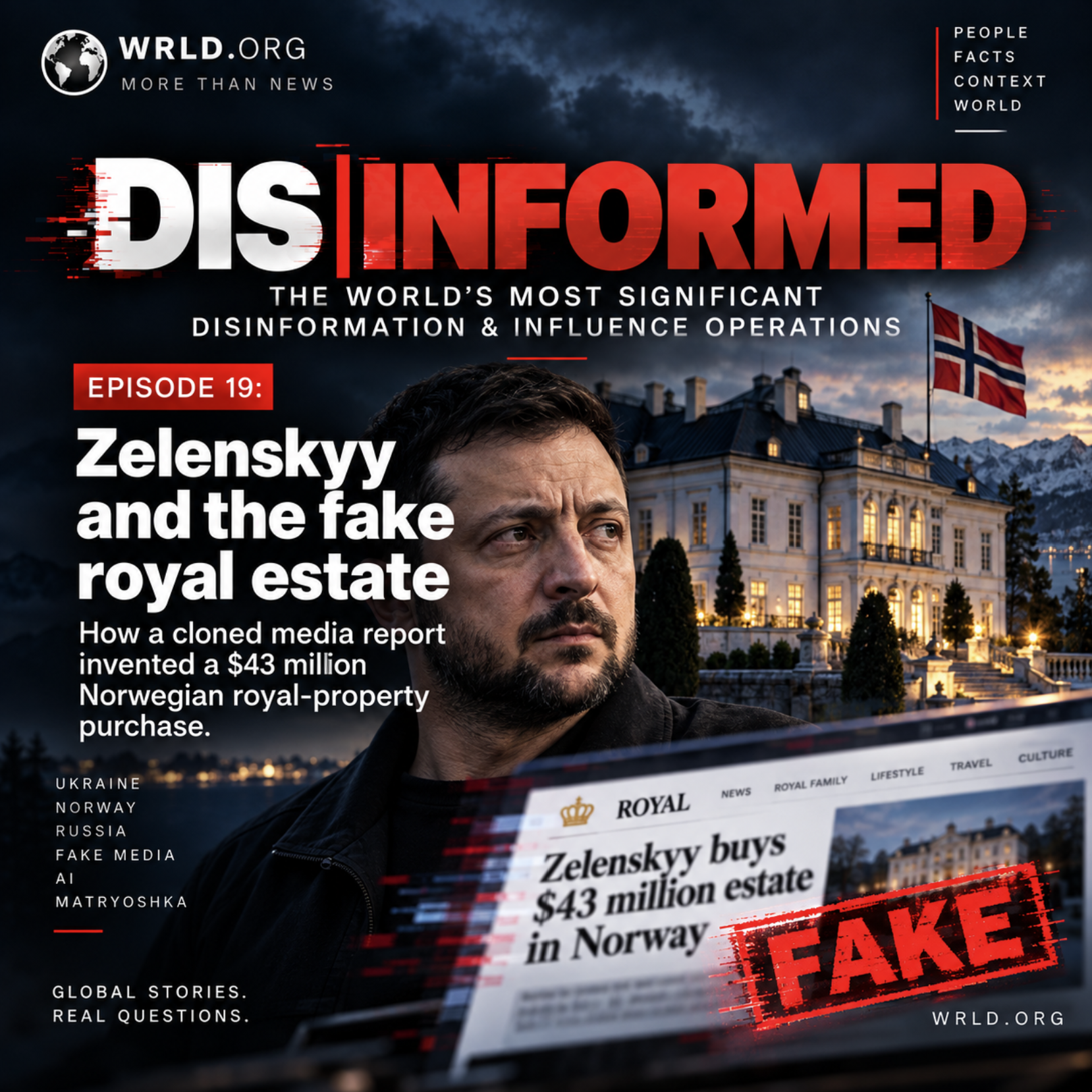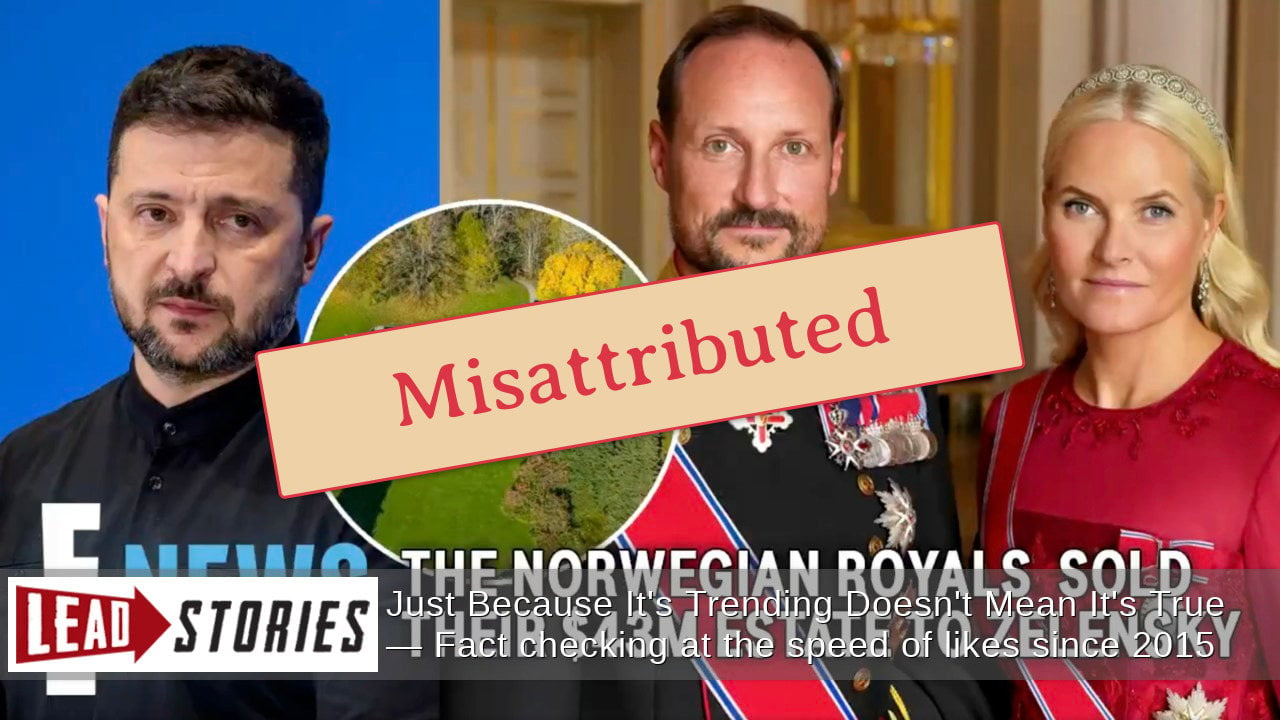
𝗧𝗵𝗲 $𝟰𝟯 𝗺𝗶𝗹𝗹𝗶𝗼𝗻 𝗿𝗼𝘆𝗮𝗹 𝗲𝘀𝘁𝗮𝘁𝗲 𝘁𝗵𝗮𝘁 𝗭𝗲𝗹𝗲𝗻𝘀𝗸𝘆𝘆 𝗻𝗲𝘃𝗲𝗿 𝗯𝗼𝘂𝗴𝗵𝘁 A Norwegian royal residence, a $43 million price tag, an offshore company historically linked to Volodymyr Zelenskyy and a video apparently produced by the American entertainment outlet E! News. The story contained enough authentic details to look plausible. It was also fabricated. At the end of September 2026, social-media accounts began circulating a video claiming that Film Heritage Inc., a Belize-registered company with historical links to Zelenskyy and his family, had purchased the Norwegian royal estate of Skaugum for approximately $43 million. The property was described as covering 240 acres, while the supposed transaction was linked to Zelenskyy’s visit to Norway for the funeral of King Harald V. Independent investigations found no evidence that such a sale had ever taken place. 𝗔 𝗳𝗮𝗸𝗲 𝗿𝗲𝗽𝗼𝗿𝘁 𝗯𝘂𝗶𝗹𝘁 𝗮𝗿𝗼𝘂𝗻𝗱 𝗿𝗲𝗮𝗹 𝗲𝘃𝗲𝗻𝘁𝘀 The fabrication was carefully constructed around genuine information. King Harald V had died in August 2026, and Zelenskyy and First Lady Olena Zelenska travelled to Oslo for his funeral on 9 September. Skaugum is also a genuine royal estate in Asker with a long history as a residence of Norway’s heir to the throne. The false report turned those facts into a fictional property transaction. It claimed that Zelenskyy had previously attempted to buy the estate, that the Norwegian royal family had rejected an earlier approach and that the purchase had finally been completed after the property supposedly became a financial burden. No documentary evidence supporting any of these claims has emerged. Norway’s Ministry of Foreign Affairs later confirmed to fact-checkers that the allegation was false. Searches of established Norwegian and international media also produced no credible reporting about the supposed transaction. 𝗔 𝗻𝗲𝘄𝘀𝗿𝗼𝗼𝗺 𝘁𝗵𝗮𝘁 𝗲𝘅𝗶𝘀𝘁𝗲𝗱 𝗳𝗼𝗿 𝘁𝘄𝗼 𝗱𝗮𝘆𝘀 The most important part of the operation was not the property claim itself. It was the source apparently verifying it. The video was designed to resemble an E! News report, borrowing the visual language of the established American entertainment brand. But investigators found no such story on E! News’s genuine website, social-media channels or archived pages. Instead, the accompanying article appeared on eonline.news, a domain closely resembling E! News’s legitimate eonline.com address. Registration records showed that the imitation domain had been created on 27 September 2026 — only two days before the story was published. The accompanying video also showed signs of synthetic production. Fact-checkers examining the material identified indications that AI tools had been used in the narration and audiovisual elements. The operation therefore did not simply invent a news story. It created an apparently credible media environment around it. 𝗧𝗵𝗲 𝗿𝗲𝗮𝗹 𝗰𝗼𝗺𝗽𝗮𝗻𝘆 𝗶𝗻𝘀𝗶𝗱𝗲 𝘁𝗵𝗲 𝗳𝗮𝗹𝘀𝗲 𝘀𝘁𝗼𝗿𝘆 The supposed buyer was also carefully selected. Film Heritage Inc. was not invented for the fabrication. The Pandora Papers previously documented a genuine historical connection between the Belize-registered company and Zelenskyy’s former business network. Leaked documents showed that Zelenskyy and his wife had held an interest in another offshore company through Film Heritage before changes were made to the ownership structure around his 2019 presidential campaign. That authentic history gave the new fabrication an additional layer of plausibility. The same company name has previously appeared in false narratives alleging extravagant purchases by Zelenskyy, including supposed luxury-property and casino acquisitions. Those stories were also unsupported by evidence. This illustrates a recurring feature of effective disinformation: not every component has to be false. A genuine company can be combined with a genuine trip, a genuine property and a genuine media brand to manufacture an event that never occurred. 𝗧𝗵𝗲 𝗠𝗮𝘁𝗿𝘆𝗼𝘀𝗵𝗸𝗮 𝗰𝗼𝗻𝗻𝗲𝗰𝘁𝗶𝗼𝗻 Ukraine’s Center for Countering Disinformation assessed the operation as consistent with the Russian Matryoshka disinformation playbook. The technique strongly resembles previously documented Matryoshka activity: impersonating established Western media organisations, creating fabricated video reports and distributing them through coordinated or pro-Russian social-media networks. French authorities have documented Matryoshka since 2023 as a pro-Russian influence operation targeting media organisations, public figures and fact-checkers. Investigations have shown repeated use of counterfeit reports imitating major European and North American news brands. The Norwegian-estate story fits that pattern closely. The attribution nevertheless requires precision. Independent evidence establishes that the E! News report was fake, that a newly created imitation website was involved and that the story circulated through pro-Russian information channels. Publicly available forensic evidence does not yet identify a specific individual or technical operator who created this particular asset. It is therefore more accurate to describe the Matryoshka connection as a well-supported analytical attribution rather than a publicly proven chain of command. 𝗪𝗵𝗲𝗻 𝘁𝗵𝗲 𝘀𝗼𝘂𝗿𝗰𝗲 𝗯𝗲𝗰𝗼𝗺𝗲𝘀 𝘁𝗵𝗲 𝗱𝗲𝗲𝗽𝗳𝗮𝗸𝗲 The most important element of the operation is not really the $43 million figure. It is the construction of credibility around it. A genuine royal funeral supplied the timing. A genuine Norwegian estate supplied the location. A genuine offshore company supplied a documented connection to Zelenskyy. A counterfeit E! News website supplied apparent journalistic confirmation. Synthetic audiovisual material supplied what looked like additional evidence. Each element reinforced the others. This reflects a broader change in contemporary disinformation. The most sophisticated operations no longer rely exclusively on fabricating photographs, videos or statements. Increasingly, they fabricate the source that supposedly verified them. The deepfake is sometimes the entire newsroom! 𝗦𝗼𝘂𝗿𝗰𝗲𝘀 Lead Stories — investigation into the fake E! News report https://leadstories.com/hoax-alert/2026/10/fact-check-enews-did-not-publish-report-about-zelenskyy-buying-43-million-dollar-mansion-from-norways-royal-family.html Center for Countering Disinformation of Ukraine — Norwegian royal estate fabrication https://cpd.gov.ua/en/international-threats-en/europe/fake-about-zelenskyys-purchase-of-a-norwegian-royal-family-estate/ Ellinika Hoaxes — investigation and Norwegian government response https://www.ellinikahoaxes.gr/2026/10/09/agorase-o-zelenski-ektasi-240-stremmaton-apo-ti-vasiliki-oikogeneia-tis-norvigias-gia-43-ekatommyria-dolaria/ The Royal House of Norway — funeral of King Harald V https://www.royalcourt.no/news/the-funeral-of-king-harald-v The Royal House of Norway — Skaugum and the Royal Estates https://www.royalcourt.no/the-royal-court/the-departments-the-royal-court/the-royal-estates-and-parks President of Ukraine — Zelenskyy and First Lady attend King Harald V’s funeral https://www.president.gov.ua/en/news/prezident-ukrayini-ta-persha-ledi-vzyali-uchast-u-ceremoniyi-106293 OCCRP — Pandora Papers investigation into Zelenskyy’s offshore network https://www.occrp.org/en/project/the-pandora-papers/pandora-papers-reveal-offshore-holdings-of-ukrainian-president-and-his-inner-circle AFP Fact Check — previous false luxury-purchase narrative involving Film Heritage https://factcheck.afp.com/doc.afp.com.36PG6EC VIGINUM / SGDSN — Matryoshka technical report https://www.sgdsn.gouv.fr/files/files/20240611_NP_SGDSN_VIGINUM_Matriochka_EN_VF.pdf CheckFirst — Operation Overload / Matryoshka investigation https://checkfirst.network/operation-overload-an-ai-fuelled-escalation-of-the-kremlin-linked-propaganda-effort/ Keywords #DISINFORMED #Episode19 #Zelenskyy #Ukraine #Norway #Russia #RussianDisinformation #RussianInfluence #Matryoshka #OperationOverload #Disinformation #InfluenceOperations #InformationWarfare #FIMI #MediaImpersonation #FakeMedia #ClonedWebsite #FakeNewsroom #ENews #ArtificialIntelligence #AI #AIGeneratedContent #VoiceCloning #SyntheticMedia #Deepfake #SourceLaundering #NarrativeLaundering #FilmHeritage #PandoraPapers #Skaugum #NorwegianRoyalFamily #Propaganda #DigitalInfluence #FactChecking #VIGINUM #OSINT #MediaManipulation #WRLD