BETA nonprofit public democratic european moderated

Search

#auditor

The neighborhood of Carabanchel expresses its fear about the possible construction of an auditorium for 7,000 people on the former site of the Puerta Bonita football field, preferring instead a sports complex or a green area, according to the results of a public consultation. #Carabanchel #Auditorio #ConsultaPopular (translated)
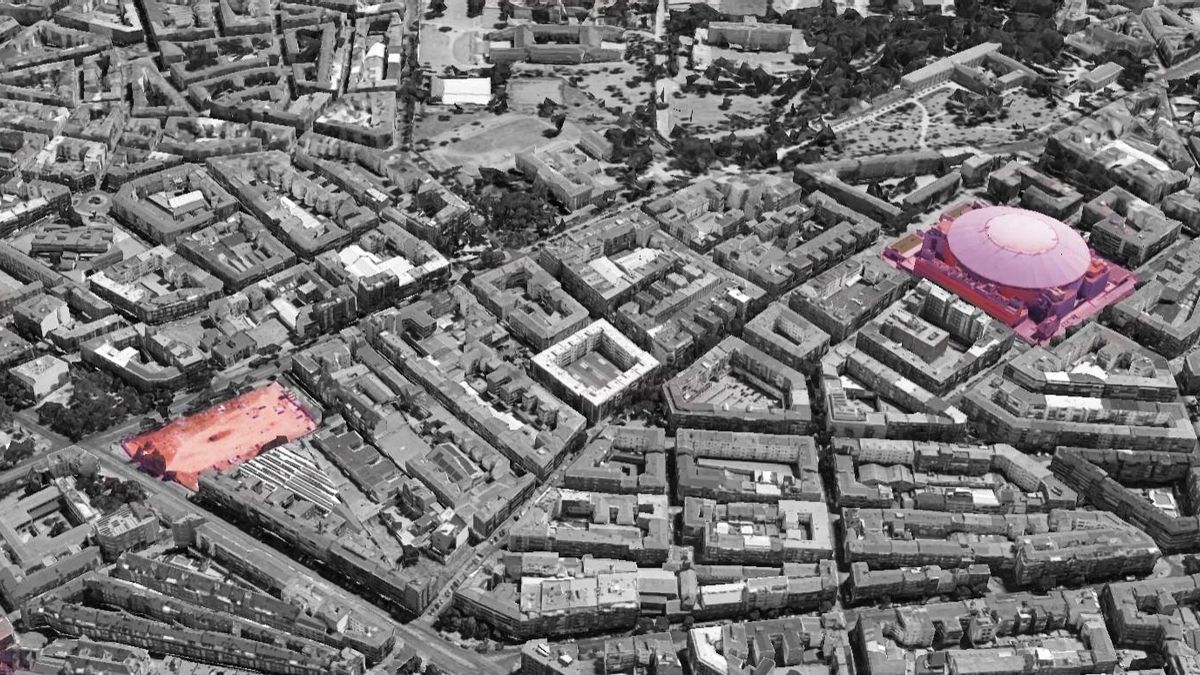
Temor entre el vecindario de Carabanchel ante un posible auditorio para 7.000 personas en el distrito

Lucero 1h

Lucero stated that "FuertesDeclaraciones" had been in first place for three weeks and thanked her followers for their support. She also mentioned that, during her concert at the Auditorium a few days earlier, she noticed that the audience knew the song very well and said that it had brought her a lot of joy. https://t.co/2nUnZibsCe #Música #Éxito #Concierto (translated)

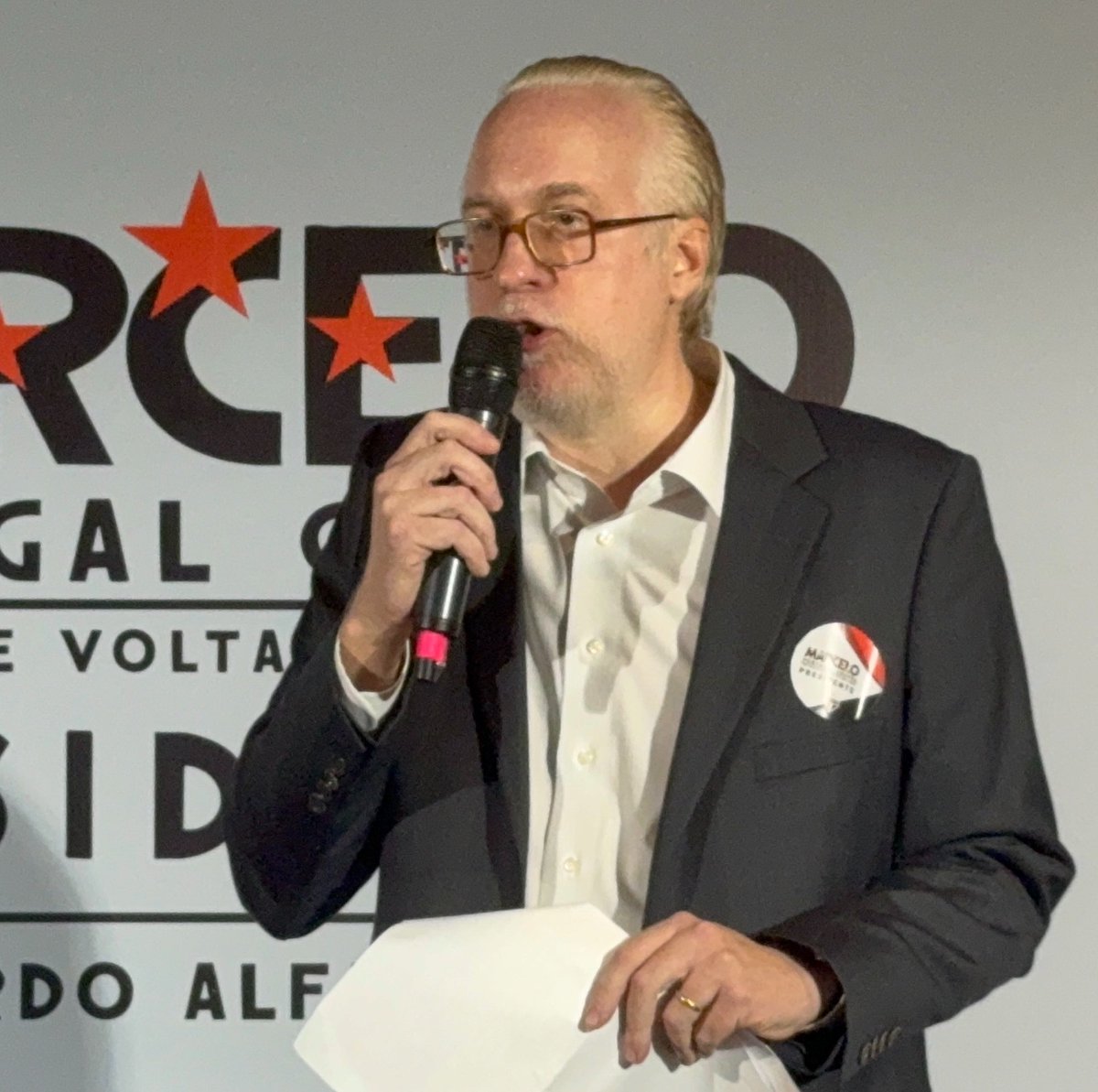
Gabriel Sá reported that Marcelo Portugal Gouvêa, candidate for the presidency of São Paulo, said that within the first 90 days of management, he would hire a financial, tax, administrative, and technology audit. Gouvêa also stated that the club would hire a market CEO right in the first few days. https://t.co/AL8JoQQL0N #SãoPaulo #Futebol #GestãoEsportiva (translated)

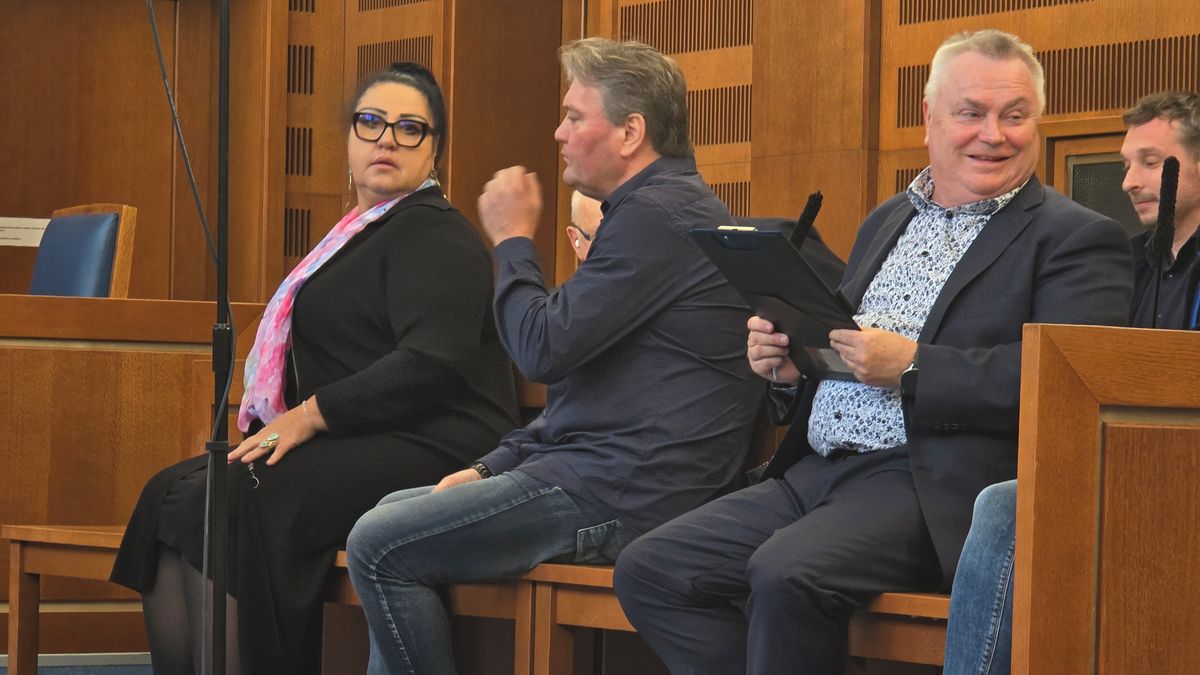
At the Regional Court in Hradec Králové, the main hearing has begun in the case of eight entrepreneurs and one auditor accused of creating a criminal organization and tax fraud, with total damages exceeding 134 million crowns. #daňovépodvody #organizovanýzločin #HradecKrálové (translated)

Skupina podnikatelů včetně auditora je obžalovaná z daňových podvodů

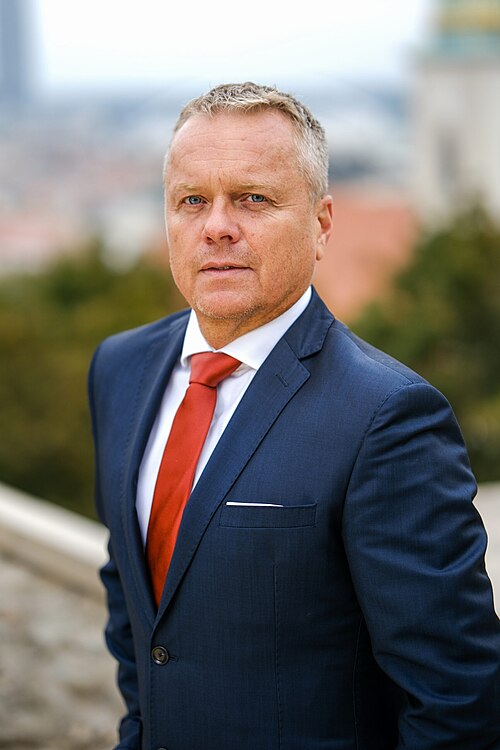
"We warned the ministers and the current minister (Richard Takáč, editor's note) that this enterprise is in economic disarray and has no idea about the development of infrastructure. According to the chairman of the office, Ľubomír Andrassy, the state has been failing in this area for a long time, and the chosen financing model is completely out of the control of state auditors." #PPPprojekty #poľnohospodárstvo #financovanie (translated)

Zrazu nás idú zachraňovať šejkovia, hovorí šéf NKÚ o arabských investoroch do závlah
www.aktuality.sk

Gustavo Petro defended the pension reform and denied that his government had bought support to approve it. He said that the House of Representatives backed it widely and that the then President of the Senate, Iván Name, delayed the debate for eight months so that it would fail due to lack of time. He also accused Magistrate Ibáñez of keeping it frozen for two years in the Constitutional Court, although he pointed out that the reform had already passed that stage. According to Petro, millions of elderly people, many of them from the right, could receive a pension thanks to the law. Regarding the allegations related to the UNGRD, Petro asked the Pacto Histórico bench to commission a forensic audit of the entire existence of the entity, since 2010, and to publish the names of those whom he claimed had embezzled it. He stated that only one person from the Pacto Histórico appeared on the extensive list, whom he said he had removed from the administration and whom, according to him, the party expelled. He also argued that justice should investigate whether Name had received public money through his romantic or political environment. Petro claimed that, during the first month of his government, resources were recovered that he attributed to Olmedo's group and that then the UNGRD was sidelined in the assistance to people trapped after an earthquake in the west of the country. Citing a journalistic investigation by Nueva Prensa, he stated that a private coordination center had been set up in the house of Gregory Schaller, whom he identified as Abelardo's compadre. He linked Andrés Depew, Negre — whom he described as a partner of Fernando Cerimedo — and people who, according to him, had ties to Donald Trump and businessman Dan Newlin to that place. Petro stated that Newlin had illegally lent his plane and resources during Abelardo's campaign. In the same publication, Petro mentioned businessman Yadid Jalaff, whom he said was accused of stealing Colombian-Venezuelan Monómeros, and Jorge Alberto Campillo Vélez, whom he described as one of Pablo Escobar's first pilots. He also pointed out pilot Luis Almeira Quiroz and linked him to a flight of paramilitaries from Urabá to San José del Guaviare, which, according to Petro, allowed the Mapiripán massacre, in which 50 farmers were murdered. He asked how much money had been raised to address the earthquake and if that explained why, according to him, the full operation of the UNGRD had been prevented and international aid and volunteers had been rejected. https://t.co/eiJJnl3Lxu #ReformaPensional #Justicia #Corrupción (translated)

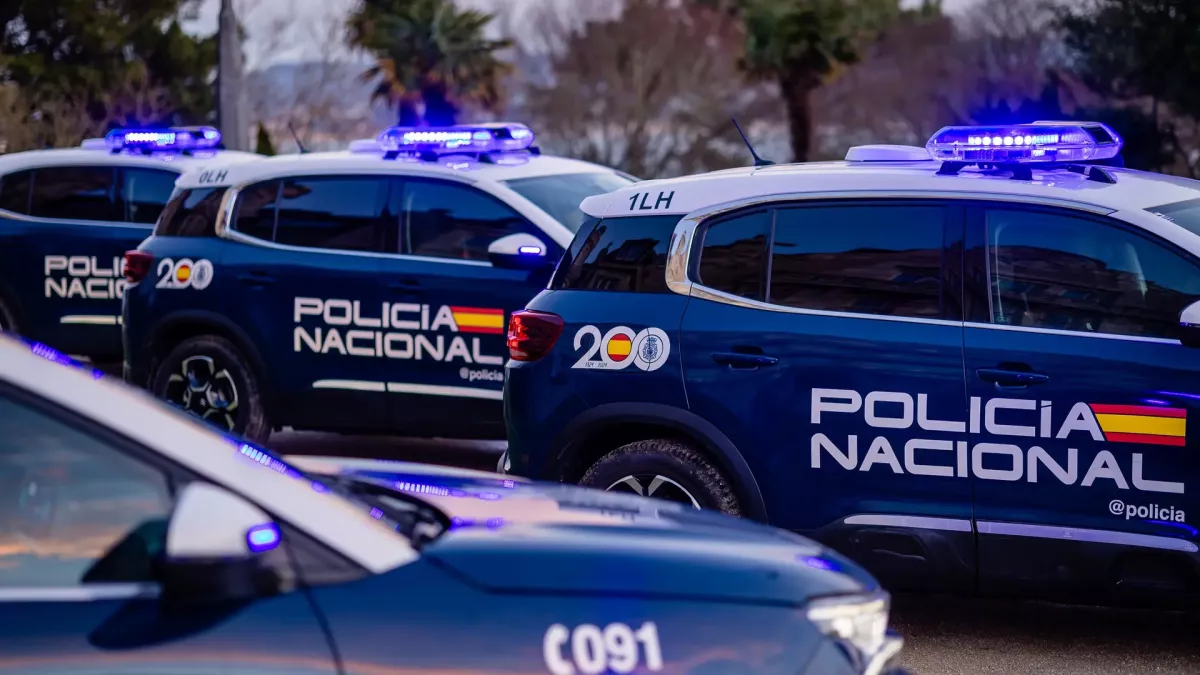
A former employee of an insurance company in Cádiz is being investigated for allegedly committing a fraud of more than 659,000 euros by improperly making 726 payments during the period from 2018 to 2021. #Estafa #AuditoríaInterna #PolicíaNacional (translated)

Investigada una exempleada de una aseguradora por una estafa de más 659.000 euros

Fede Sturzenegger stated that, just as Decathlon had democratized sports, Mercado Libre had democratized commerce, and social networks had democratized communication, artificial intelligence was beginning to democratize state auditing. He expressed his desire for many Argentines to join and contribute to achieving safer routes. #IA #Democratización #Argentina (translated)

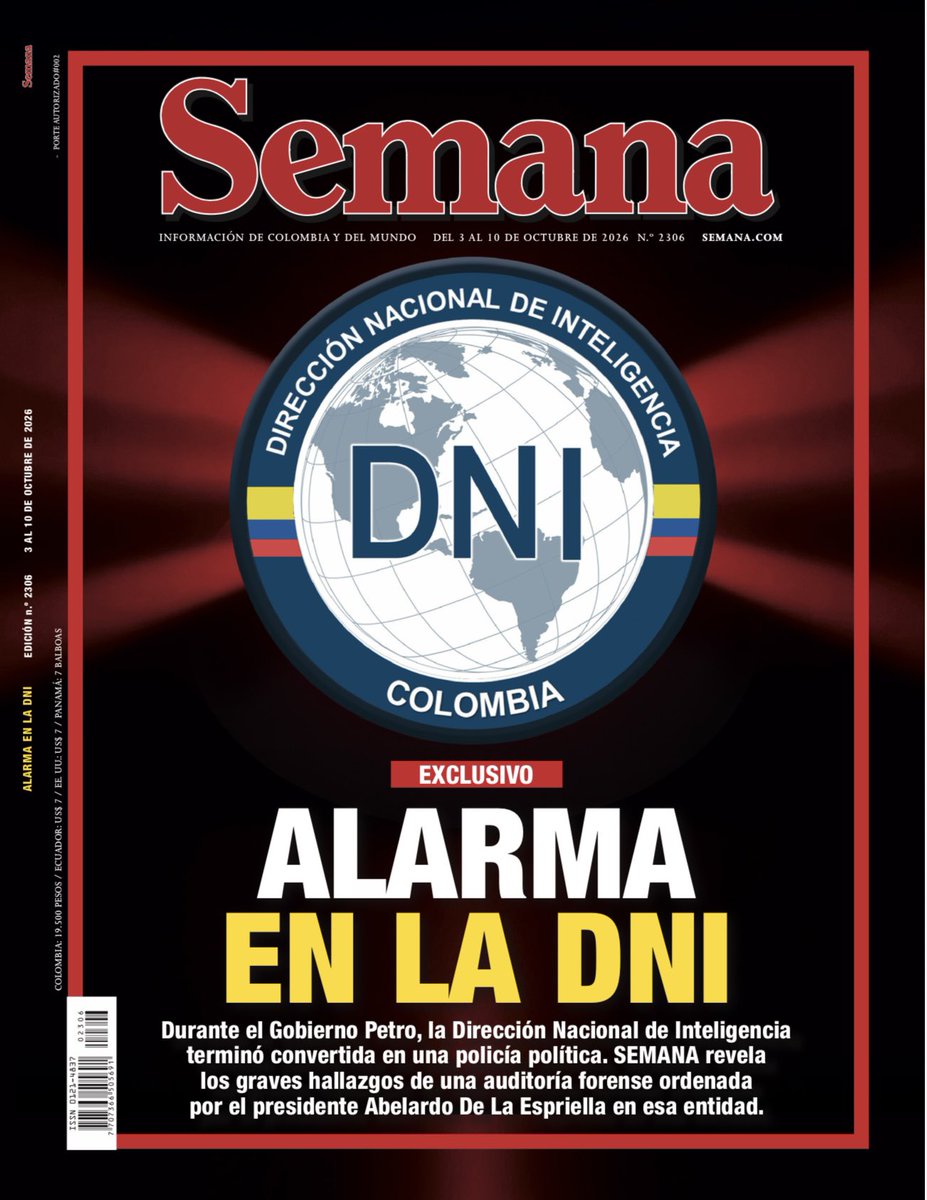
Vicky Dávila stated that the National Intelligence Directorate (DNI) had become a "political police" during Petro's government. She added that SEMANA had revealed the results of a forensic audit ordered by Abelardo De La Espriella. https://t.co/Ff4ypeGqBF https://t.co/oC6motSjMc #Política #Colombia #Inteligencia (translated)

Eli Vieira wrote that Luís Roberto Barroso canceled at the last minute an audit of the lottery system for cases at the STF while presiding over the court. According to Vieira, UOL, which was to participate in the audit, reported the cancellation, and no audit had been conducted until then. https://t.co/Zlpjv6Jb7h #STF #auditoria #justiça (translated)

In fact, a day before the presentation, Google's CEO, Sundar Pichai, signed along with the President of the United States, Donald Trump, and other tech leaders the White House agreement on superintelligence or voluntary commitment, which includes audits and internal controls in areas such as cybersecurity and biological threats. #Gemini4Argon #Ciberseguridad #InteligenciaArtificial (translated)

Google presenta Gemini 4 Argon, su IA más potente: halla vulnerabilidades críticas y las corrige
www.20minutos.es

In fact, a day before the presentation, Google's CEO, Sundar Pichai, signed alongside the President of the United States, Donald Trump, and other technology leaders the White House agreement on superintelligence or voluntary commitment, which includes audits and internal controls in areas such as cybersecurity and biological threats. #Gemini4Argon #Ciberseguridad #InteligenciaArtificial (translated)

Google presenta Gemini 4 Argon, su IA más potente: halla vulnerabilidades críticas y las corrige
www.20minutos.es
M

“As nossas quatro propostas de resolução foram integralmente acolhidas”Em declarações à Lusa, o dirigente da Dar Voz ao Silêncio Manuel Fernandes explicou que o objetivo do encontro, o primeiro do género da associação criada há poucos meses depois de uma divisão da associação congénere, Coração Silenciado, é assegurar “abertura da Igreja para dar seguimento às reivindicações das vítimas”, que incluem uma auditoria independente. #AbusosNaIgreja #DarVozAoSilêncio #JustiçaParaVítimas

Nova associação de vítimas pede à CEP que aceite auditoria
observador.pt

The new association of victims of sexual abuse in the Church, Give Voice to the Silence, will request the Portuguese Episcopal Conference to accept a state audit of the compensation process, also holding the state accountable for the abuses committed. #AbusosNaIgreja #DarVozAoSilêncio #JustiçaParaVítimas (translated)

Nova associação de vítimas pede à CEP que aceite auditoria

For Che and Fidel (the murderers): scandal, audits, and investigations underway. The statues are safeguarded. Now I want to see the same treatment with Felipe Calderón. Let's see if the problem was the heritage... or who dares to touch their symbols, their moral leaders. #Cuba #Calderón #Justicia (translated)

„Am elaborat un set de principii și angajamente privind construirea unor controale interne solide și detectarea eventualelor probleme ale tehnologiei, împreună cu mai multe niveluri de audit și control. Acestea încep cu evaluarea internă a riscurilor, continuă cu auditori și evaluatori externi, iar noi am convenit ca toate consiliile noastre de administrație să analizeze în mod independent rapoartele furnizate de auditori”.Mark Zuckerberg, director general Meta: „Am elaborat un set de principii și angajamente privind construirea unor controale interne solide și detectarea eventualelor probleme ale tehnologiei, împreună cu mai multe niveluri de audit și control. #inteligențăartificială #DonaldTrump #armebiologice

Un model chinez de IA a oferit instrucțiuni pentru arme biologice. Trump cere dezvoltarea „Superinteligenței”
stirileprotv.ro

⚠️ The Premier League claims that Manchester City "cooked" over R$ 6 billion to bypass Financial Fair Play. The English club was found guilty of 115 accusations of financial irregularities investigated since 2018. According to the league, City used sham contracts, presented incorrect financial data, concealed its real situation from auditors and regulators, exceeded spending limits of the Premier League and UEFA, and did not cooperate in good faith with investigations. City allegedly used simulated agreements with the Abu Dhabi United Group, the club's owner, and Fordham, a company financed by the group, to artificially inflate revenues and reduce costs by £900 million (R$ 6.2 billion). The club has until Friday to appeal, declared itself innocent, and claimed to have "irrefutable evidence." A new hearing will determine the punishment, which may include fines, point deductions, and other sporting measures. The Premier League intends to complete the process as quickly as possible. #PremierLeague #ManchesterCity #FairPlayFinanceiro (translated)

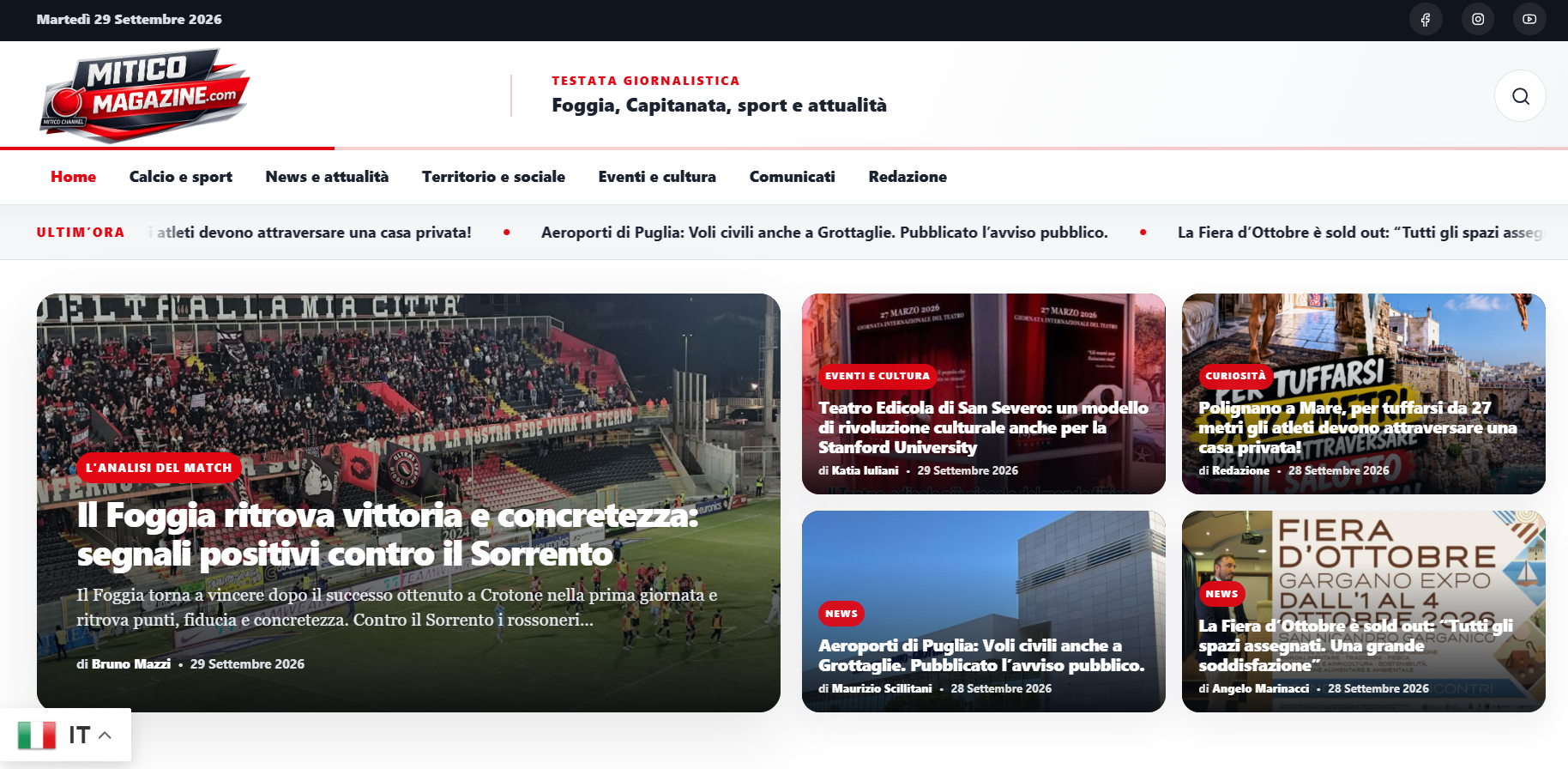
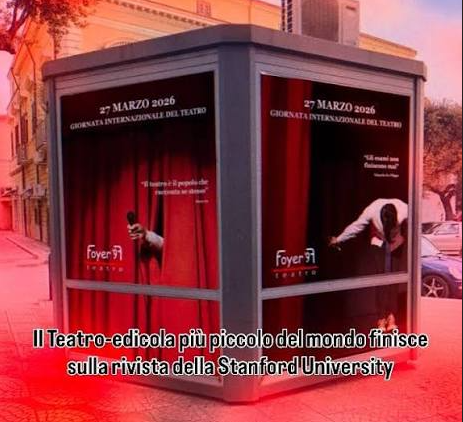
Mitico Magazine - The Teatro Edicola of San Severo: A Model of Cultural Revolution for Stanford University as Well Source: https://www.miticomagazine.com/territorio-e-sociale/teatro-edicola-di-san-severo-un-modello-di-rivoluzione-culturale-anche-per-la-stanford-university/ The Teatro Edicola in Via Tondi In San Severo, a singular metamorphosis has taken place: a newsstand abandoned for at least six years has found a new function and a new identity, transforming into one of the smallest and most unusual theatre stages in the world. An experiment born in the heart of the town which, in just a few months, has moved beyond local boundaries, attracting attention even overseas. It is called Teatro Edicola and it is a project conceived by the company Foyer '97, artistically directed by Francesco Gravino, which has brought the old newsstand in Via Tondi back to life through a formula that is both essential and surprising. Foyer '97 Foyer '97 APS was established as a formally constituted association active in the cultural sector in San Severo in 1997, born from the vocation of a group of actors, directors and theatre enthusiasts, with the aim of building a "living" and accessible theatre in the town. Over the years the company has developed a repertoire that includes texts from the classical tradition, contemporary dramaturgy, comedy and experimental projects, not limiting itself to the mere production of theatre shows, but also organising theatre courses and workshops and educational and cultural projects characterised by a strong inclusive ethos, particularly in schools. Foyer '97 does not always have a fixed artistic ensemble, but works with different performers and collaborators depending on the project; the only indispensable presence is that of Francesco Guido Gravino himself, actor, director and artistic director of the theatre company. The distinctive feature of Foyer '97 is certainly the value of social and cultural promotion attributed to theatre, the extremely close relationship with the audience and the search for a type of theatre outside conventional spaces, with cemeteries, trains, bell towers, and now a newsstand, as its backdrop. Six spectators, a few minutes and a minimal distance between stage and audience The project was launched on 27 March 2026, on the occasion of World Theatre Day, offering a theatrical experience built around a radical reduction of the conventional spaces and times of performance. The idea was born not only from the search for unconventional spaces, but also from "Edicola Fiore", the morning press review with a strongly ironic tone presented by Rosario Fiorello and Stefano Meloccaro, which was broadcast first only on Fiorello's social channels between 2011 and 2014, and then also on radio and television between 2016 and 2018. The review took its name from the diminutive of its founder, Fiore, and from the newsstand of a friend of Fiorello's in Via Flaminia Nuova in Rome, where the showman would meet early in the morning with a group of friends to read the newspapers. The San Severo newsstand was granted free of charge by its owner Pino Frau to the theatre group which, after obtaining temporary authorisation and institutional support from the Municipality of San Severo, refurbished it within two weeks at a cost of less than €3,000. Just six seats, a total surface area of 4 sq m, of which only 2 are for the stage area, less than a metre between actors and audience, a curtain, a lectern, two lights, performances lasting between 5 and 15 minutes, audience rotation every quarter of an hour: apparently minimal elements that end up subverting the usual relationship between stage and auditorium. Spectators, in fact, find themselves immersed in the stage action, in such proximity to the actors that every gesture, expression and word becomes immediately perceptible. In this way, theatre abandons its traditional spaces and insinuates itself into the everyday life of the street, becoming an intimate, concentrated and almost participatory experience. During the inaugural period admission was free with a subsequent voluntary donation from spectators; in the event of a more stable and longer-term concession, which could lead to seasonal theatre performances, the proposed ticket price would be €5. Audiences reward the experiment Foyer '97's gamble met with public interest right from the start: over 60 people attended the shows in a single afternoon, while the three days that inaugurated the season sold out. From a singular local experiment, the Teatro Edicola thus began to arouse curiosity even outside the province of Foggia, gradually transforming into a case of cultural and social interest, until it reached the American continent. From the province of Foggia to the "Stanford Social Innovation Review" The San Severo experience has now come under the international spotlight: in September 2026, the Stanford Social Innovation Review, an international journal and platform dedicated to social innovation published by the Stanford Center on Philanthropy and Civil Society at Stanford University in California, published on its website and in the Fall 2026 print edition the reportage "The Six-Seat Revolution", written by Dr Luciano Magaldi Sardella, independent journalist and researcher affiliated with the European Open University, and editorially supervised by deputy editor David V. Johnson. In the article, it is argued that the Teatro Edicola attracted attention overseas because the project concentrates cultural innovation, urban regeneration and proximity theatre into just a few square metres: starting from a real urban problem, it recovers an abandoned place with a modest investment, brings performance directly into public space and experiments with a much closer relationship between actors and spectators. From the point of view of theatrical representation, it also highlights how the format, based on micro-stories of five to twelve minutes, taken from great classics such as Goldoni, Chekhov, Ibsen, Euripides and Benni, and on audience rotation every fifteen minutes, transforms the physical limitations of the space into a precise dramaturgical choice, proving to be extremely innovative. All of this makes it possible to address some of the main critical issues in the sector: falling audience numbers, an exclusively elderly audience, reduced resources and distance from traditional cultural venues. The journal also highlights, however, the potential problems: economic sustainability, the need for stable institutional support and the difficulty of replicating the model, which is closely linked to the community and territory of San Severo. A model looking beyond San Severo Despite the difficulties, initial requests for information have already arrived from Lucca and Rome, where there is curiosity about the possibility of getting to know the model more closely and the steps needed to replicate it. The replicability formula, in fact, does not seem to require particularly costly infrastructure: an unused space, a targeted intervention, a cultural idea, in-depth knowledge of the surrounding area and a willingness to return that place to the community can be enough to trigger a new urban function. It is precisely in the disproportion between the modesty of the resources employed and the resonance generated by the initiative that perhaps the most original feature of the Teatro Edicola lies, certainly unique of its kind; there are, however, other examples in Italy of newsstands reused for other purposes: "Edicola 518", a twentieth-century kiosk abandoned in the centre of Perugia, now dedicated to independent publishing, art and cultural production; and in Rome itself, the abandoned newsstand in Piazza Testaccio used temporarily as a stage for a show by Fabio Morgan and the Erno newsstand in the Prati district, which almost every month offers a calendar of events, exhibitions, pop-ups and collaborations with artists and creative enterprises. Small revolutions, therefore, that tell stories of the reappropriation of urban spaces, of creativity and social innovation. And which, it is hoped, will take root in order to look ever further afield.

Teatro Edicola di San Severo: un modello di rivoluzione culturale anche per la Stanford University

Mitico Magazine - The Teatro Edicola of San Severo: A Model of Cultural Revolution for Stanford University as Well Source: https://www.miticomagazine.com/territorio-e-sociale/teatro-edicola-di-san-severo-un-modello-di-rivoluzione-culturale-anche-per-la-stanford-university/ The Teatro Edicola in Via Tondi In San Severo, a singular metamorphosis has taken place: a newsstand abandoned for at least six years has found a new function and a new identity, transforming into one of the smallest and most unusual theatre stages in the world. An experiment born in the heart of the town which, in just a few months, has moved beyond local boundaries, attracting attention even overseas. It is called Teatro Edicola and it is a project conceived by the company Foyer '97, artistically directed by Francesco Gravino, which has brought the old newsstand in Via Tondi back to life through a formula that is both essential and surprising. Foyer '97 Foyer '97 APS was established as a formally constituted association active in the cultural sector in San Severo in 1997, born from the vocation of a group of actors, directors and theatre enthusiasts, with the aim of building a "living" and accessible theatre in the town. Over the years the company has developed a repertoire that includes texts from the classical tradition, contemporary dramaturgy, comedy and experimental projects, not limiting itself to the mere production of theatre shows, but also organising theatre courses and workshops and educational and cultural projects characterised by a strong inclusive ethos, particularly in schools. Foyer '97 does not always have a fixed artistic ensemble, but works with different performers and collaborators depending on the project; the only indispensable presence is that of Francesco Guido Gravino himself, actor, director and artistic director of the theatre company. The distinctive feature of Foyer '97 is certainly the value of social and cultural promotion attributed to theatre, the extremely close relationship with the audience and the search for a type of theatre outside conventional spaces, with cemeteries, trains, bell towers, and now a newsstand, as its backdrop. Six spectators, a few minutes and a minimal distance between stage and audience The project was launched on 27 March 2026, on the occasion of World Theatre Day, offering a theatrical experience built around a radical reduction of the conventional spaces and times of performance. The idea was born not only from the search for unconventional spaces, but also from "Edicola Fiore", the morning press review with a strongly ironic tone presented by Rosario Fiorello and Stefano Meloccaro, which was broadcast first only on Fiorello's social channels between 2011 and 2014, and then also on radio and television between 2016 and 2018. The review took its name from the diminutive of its founder, Fiore, and from the newsstand of a friend of Fiorello's in Via Flaminia Nuova in Rome, where the showman would meet early in the morning with a group of friends to read the newspapers. The San Severo newsstand was granted free of charge by its owner Pino Frau to the theatre group which, after obtaining temporary authorisation and institutional support from the Municipality of San Severo, refurbished it within two weeks at a cost of less than €3,000. Just six seats, a total surface area of 4 sq m, of which only 2 are for the stage area, less than a metre between actors and audience, a curtain, a lectern, two lights, performances lasting between 5 and 15 minutes, audience rotation every quarter of an hour: apparently minimal elements that end up subverting the usual relationship between stage and auditorium. Spectators, in fact, find themselves immersed in the stage action, in such proximity to the actors that every gesture, expression and word becomes immediately perceptible. In this way, theatre abandons its traditional spaces and insinuates itself into the everyday life of the street, becoming an intimate, concentrated and almost participatory experience. During the inaugural period admission was free with a subsequent voluntary donation from spectators; in the event of a more stable and longer-term concession, which could lead to seasonal theatre performances, the proposed ticket price would be €5. Audiences reward the experiment Foyer '97's gamble met with public interest right from the start: over 60 people attended the shows in a single afternoon, while the three days that inaugurated the season sold out. From a singular local experiment, the Teatro Edicola thus began to arouse curiosity even outside the province of Foggia, gradually transforming into a case of cultural and social interest, until it reached the American continent. From the province of Foggia to the "Stanford Social Innovation Review" The San Severo experience has now come under the international spotlight: in September 2026, the Stanford Social Innovation Review, an international journal and platform dedicated to social innovation published by the Stanford Center on Philanthropy and Civil Society at Stanford University in California, published on its website and in the Fall 2026 print edition the reportage "The Six-Seat Revolution", written by Dr Luciano Magaldi Sardella, independent journalist and researcher affiliated with the European Open University, and editorially supervised by deputy editor David V. Johnson. In the article, it is argued that the Teatro Edicola attracted attention overseas because the project concentrates cultural innovation, urban regeneration and proximity theatre into just a few square metres: starting from a real urban problem, it recovers an abandoned place with a modest investment, brings performance directly into public space and experiments with a much closer relationship between actors and spectators. From the point of view of theatrical representation, it also highlights how the format, based on micro-stories of five to twelve minutes, taken from great classics such as Goldoni, Chekhov, Ibsen, Euripides and Benni, and on audience rotation every fifteen minutes, transforms the physical limitations of the space into a precise dramaturgical choice, proving to be extremely innovative. All of this makes it possible to address some of the main critical issues in the sector: falling audience numbers, an exclusively elderly audience, reduced resources and distance from traditional cultural venues. The journal also highlights, however, the potential problems: economic sustainability, the need for stable institutional support and the difficulty of replicating the model, which is closely linked to the community and territory of San Severo. A model looking beyond San Severo Despite the difficulties, initial requests for information have already arrived from Lucca and Rome, where there is curiosity about the possibility of getting to know the model more closely and the steps needed to replicate it. The replicability formula, in fact, does not seem to require particularly costly infrastructure: an unused space, a targeted intervention, a cultural idea, in-depth knowledge of the surrounding area and a willingness to return that place to the community can be enough to trigger a new urban function. It is precisely in the disproportion between the modesty of the resources employed and the resonance generated by the initiative that perhaps the most original feature of the Teatro Edicola lies, certainly unique of its kind; there are, however, other examples in Italy of newsstands reused for other purposes: "Edicola 518", a twentieth-century kiosk abandoned in the centre of Perugia, now dedicated to independent publishing, art and cultural production; and in Rome itself, the abandoned newsstand in Piazza Testaccio used temporarily as a stage for a show by Fabio Morgan and the Erno newsstand in the Prati district, which almost every month offers a calendar of events, exhibitions, pop-ups and collaborations with artists and creative enterprises. Small revolutions, therefore, that tell stories of the reappropriation of urban spaces, of creativity and social innovation. And which, it is hoped, will take root in order to look ever further afield.

Teatro Edicola di San Severo: un modello di rivoluzione culturale anche per la Stanford University

#GenshinImpact #Mitya "Pesquisa e produção são diferentes — eficiência não é o padrão-ouro aqui. Já trabalhei com muitas pessoas extremamente talentosas e sei que talento e excentricidade costumam andar de mãos dadas. Mas há uma coisa que nunca decepciona: as 'respostas' que elas fornecem." — Pierro, "O Bobo da Corte", responde à insinuação de Mitya de que ele gozava de privilégios especiais. "Solicitei o aumento do nível de sigilo do cachecol dele, pois, na grande maioria das auditorias de prevenção de vazamentos, os espectadores são considerados inocentes." — Valeriy, Líder do Batalhão de Missões Especiais ◆ Nome: Mitya ◆ Título: Regras Postas de Lado ◆ Especialista da "Comissão de Energia Real de Snezhnaya" ◆ Eixo Estelar: Electro ◆ Constelação: Nodus Gordianus #GenshinImpact #Gaming #CulturaGaming