WRLD

Search

#herdenken
sarah lambrechts 6d

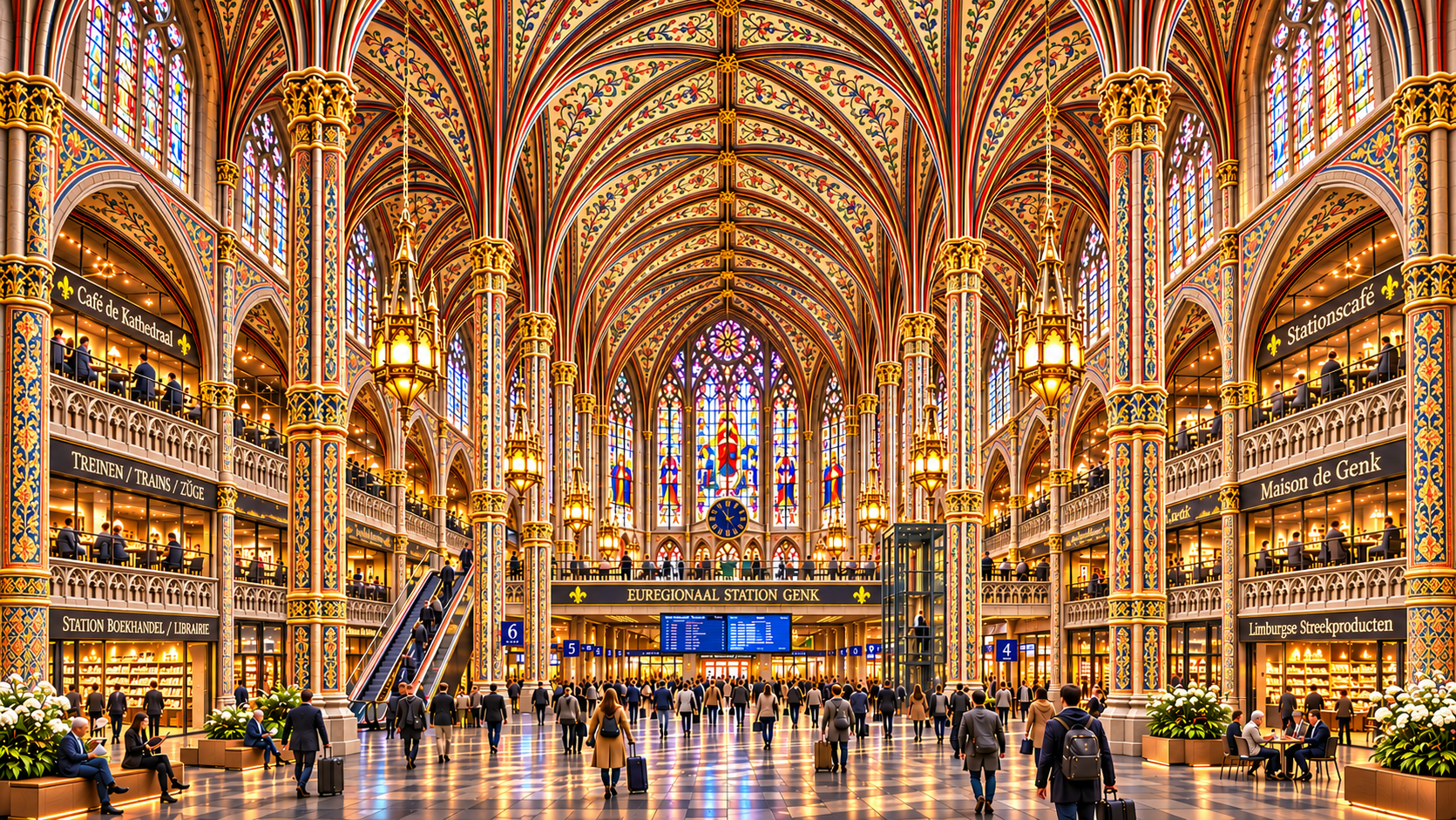
# STATION CATHEDRAL GENK SINT-MARTINUS ### What war destroyed, vision can bring back to life. Two eras. One architectural soul.** Once, Genk possessed a church whose architectural richness still touches today. The original St. Martin's Church, with its refined neo-Gothic style, impressive columns, painted vaults, ornate decorations, and splendid stained-glass windows. A monument where art, craftsmanship, and architecture merged into an exceptional whole. In 1944, that world was destroyed by the violence of war. But must what was lost also remain lost forever? **What if we not only commemorate the past, but give it a future again?** Imagine a monumental station cathedral. An immense central hall where richly decorated vaults stretch high above the travelers. Where gold, deep blue, and warm earth tones merge. Where sunlight falls through monumental glass windows, and historical grandeur goes hand in hand with the technology of tomorrow. Where trains and trams converge. Where people meet each other. Where galleries, shops, restaurants, culture, and public spaces form one impressive architectural whole. **Not a church that becomes a station. But a station that reawakens the architectural soul of a vanished church.** No soulless infrastructure. No anonymous transit building. But a place that touches people. A place where one does not only come to depart but also wants to arrive, stay, discover, and admire. A place where mobility is no longer just a practical necessity but becomes part of an extraordinary cultural and urban experience. And why should we limit such ambitions to world cities like Paris, London, or New York? **Why couldn't Genk itself become an architectural reference point of international significance?** The Station Cathedral Genk Sint-Martinus forms a meeting point within my overarching vision **EUREGIO RENAISSANCE** between heritage, mobility, economy, culture, and future-oriented urban development. These images are artistic conceptual visualizations. Not definitive construction plans, but an invitation to dare to think big again. For progress does not mean erasing our history. On the contrary. The greatest progress can actually arise when we connect the achievements of the past with the possibilities of the future. **In 1944, Genk lost a monument.** **Perhaps that lost beauty can someday become the inspiration for a new monument that evokes admiration for generations.** Not by copying history. **But by giving it a future that no one thought possible.** *STATION CATHEDRAL GENK SINT-MARTINUS* *EUREGIO RENAISSANCE* **Bring back the past. Make the future with it.** #Genk #StationCathedral #EuregioRenaissance #Architecture #Heritage #Mobility #UrbanDevelopment #Genk #Stationskathedraal #EuregioRenaissance #Architectuur #Erfgoed #Mobiliteit #Stadsontwikkeling (translated)
793
sarah lambrechts 6d

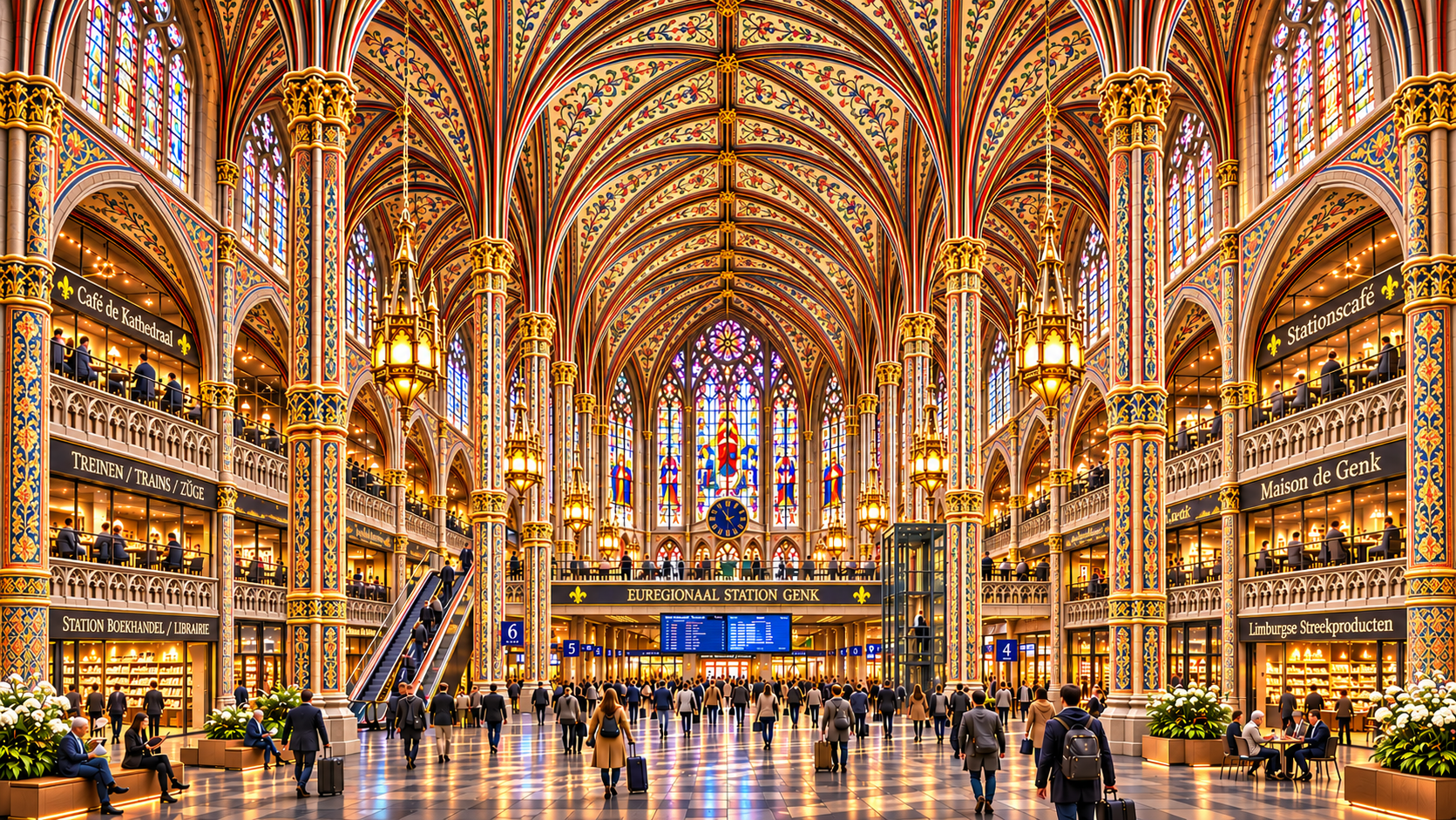
# STATION CATHEDRAL GENK SINT-MARTINUS ### What war destroyed, vision can bring back to life. Two eras. One architectural soul.** Once, Genk possessed a church whose architectural richness still moves today. The original St. Martin's Church, with its refined Neo-Gothic style, impressive columns, painted vaults, graceful ornaments, and stunning stained glass windows. A monument where art, craftsmanship, and architecture merged into an exceptional whole. In 1944, that world was destroyed by the violence of war. But must what was lost also remain lost forever? **What if we not only commemorate the past, but also give it a future?** Imagine a monumental station cathedral. An immense central hall where richly decorated vaults stretch high above the travelers. Where gold, deep blue, and warm earth tones merge. Where sunlight filters through monumental stained glass and historical grandeur meets the technology of tomorrow. Where trains and trams converge. Where people meet one another. Where galleries, shops, restaurants, culture, and public spaces form one impressive architectural whole. **Not a church becoming a station. But a station that revives the architectural soul of a vanished church.** Not soulless infrastructure. Not an anonymous transit building. But a place that touches people. A place where one does not come solely to depart, but where one also wants to arrive, linger, discover, and admire. A place where mobility is no longer just a practical necessity, but becomes part of an extraordinary cultural and urban experience. And why should we limit such ambitions to world cities like Paris, London, or New York? **Why couldn't Genk itself become an architectural reference point of international significance?** The Station Cathedral Genk Sint-Martinus forms, within my overarching vision **EUREGIO RENAISSANCE**, a meeting point between heritage, mobility, economy, culture, and future-oriented urban development. These images are artistic conceptual visualizations. No definitive construction plans, but an invitation to dare to think big again. For progress does not mean we must erase our history. On the contrary. The greatest progress can arise when we connect the achievements of the past with the possibilities of the future. **In 1944, Genk lost a monument.** **Perhaps that lost beauty can someday become the inspiration for a new monument that evokes admiration for generations.** Not by copying history. **But by giving it a future that no one considered possible.** *STATION CATHEDRAL GENK SINT-MARTINUS* *EUREGIO RENAISSANCE* **Bring back the past. Create the future with it.** #Genk #StationCathedral #EuregioRenaissance #Architecture #Heritage #Mobility #UrbanDevelopment #Genk #Stationskathedraal #EuregioRenaissance #Architectuur #Erfgoed #Mobiliteit #Stadsontwikkeling (translated)
1019
sarah lambrechts 6d

# STATION CATHEDRAL GENK SINT-MARTINUS ### What war destroyed, vision can bring to life again. Two eras. One architectural soul.** Once, Genk had a church whose architectural richness still moves today. The original Sint-Martinus church, with its refined neo-Gothic style, impressive columns, painted vaults, elegant ornaments, and magnificent stained glass windows. A monument where art, craft, and architecture fused into an exceptional whole. In 1944, that world was destroyed by the violence of war. But must what was lost also remain lost forever? **What if we not only commemorate the past, but also give it a future?** Imagine a monumental station cathedral. An immense central hall where richly decorated vaults stretch high above the travelers. Where gold, deep blue, and warm earth tones merge. Where sunlight streams through monumental stained glass windows and historical grandeur coexists with the technology of tomorrow. Where trains and trams converge. Where people meet. Where galleries, shops, restaurants, culture, and public spaces form one impressive architectural whole. **Not a church that becomes a station. But a station that revives the architectural soul of a vanished church.** No soulless infrastructure. No anonymous transit building. But a place that touches people. A place where one does not merely come to depart, but where one also wishes to arrive, stay, discover, and admire. A place where mobility is no longer merely a practical necessity, but becomes part of an extraordinary cultural and urban experience. And why should we limit such ambitions to world cities like Paris, London, or New York? **Why can't Genk itself become an architectural reference point of international significance?** The Station Cathedral Genk Sint-Martinus serves as a meeting point within my overarching vision **EUREGIO RENAISSANCE** between heritage, mobility, economy, culture, and future-oriented urban development. These images are artistic conceptual visualizations. No definitive building plans, but an invitation to dare to think big again. For progress does not mean we must erase our history. On the contrary. The greatest progress may arise precisely when we connect the achievements of the past with the possibilities of the future. **In 1944, Genk lost a monument.** **Perhaps that lost beauty can someday become the inspiration for a new monument that evokes admiration for generations.** Not by copying history. **But by giving it a future that no one thought possible.** *STATION CATHEDRAL GENK SINT-MARTINUS* *EUREGIO RENAISSANCE* **Bring back the past. Shape the future with it.** #Genk #StationCathedral #EuregioRenaissance #Architecture #Heritage #Mobility #UrbanDevelopment #Genk #Stationskathedraal #EuregioRenaissance #Architectuur #Erfgoed #Mobiliteit #Stadsontwikkeling (translated)

340
Sam van Rooy MP Wrld summary 2w
Belgian politician

The author wrote that on November 11, among other places, Belgium, France, and the United Kingdom commemorated the end of World War I. He also wondered whether the current war against a jihadist enemy, which according to the author was waged in a very different way, would be won. #EersteWereldoorlog #Herdenking #Vrede #BE #FR #GB (translated)

2761
NOS 4w

Today the Cycling Gala Awards are being presented in Utrecht and Catholics commemorate the deceased on All Souls' Day, while the KNMI begins issuing local weather warnings. #Wielergala #Allerzielen #Weerwaarschuwingen (translated)

nos.nl
Wekdienst 2/11: Wielergala Awards worden uitgereikt • Overledenen herdacht op Allerzielen
2785
NOS 4w

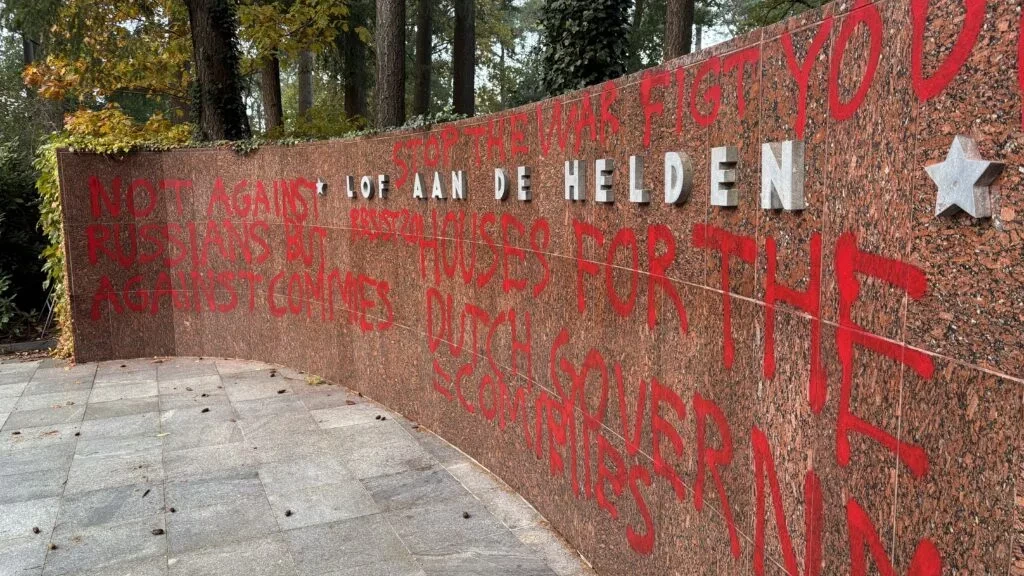
The Soviet War Cemetery in Leusden has been defaced again with slogans against communists, including texts that label the Dutch government as communist, while the police are still investigating who is responsible for these incidents. #SovjetEreveld #herdenken #oorlogsmonument (translated)

nos.nl
Sovjet Ereveld in Leusden opnieuw beklad, leuzen tegen communisten
2439
Sam van Rooy MP Wrld summary Oct 23
Belgian politician

The author called it hypocritical that people, according to him, commemorated deceased Jews but found it problematic when living Jews defended themselves against what he described as Islamist Nazism. He also spoke of hypocrisy in the Belgian parliament and asked where the current debate on the subject in the attached link had gone. https://t.co/NU5dImibZN #hypocrisie #Joden #islamonazisme #BE (translated)

3268
Denkjewel Wrld summary Oct 21

Denkewel commemorated the Battle of Civetot in 1096, in which, according to the author, the army of the People's Crusade under Peter the Hermit and Walter Sans-Avoir faced the Seljuk Empire under Sultan Kilij Arslan I. Almost all 60,000 crusaders were killed according to Denkewel, marking the end of the People's Crusade. https://t.co/f1mo5UXHdv #SlagbijCivetot #Volkskruistocht #Kruistochten (translated)

3504
Denkjewel Wrld summary Oct 20

Denkewel wrote that today the Battle of Coutras from 1587 was commemorated. According to the author, during the Huguenot Wars, a Protestant army under Henry of Navarre fought against a royal-Catholic army under Anne de Joyeuse. The royal army was destroyed and Duke de Joyeuse was killed, according to Denkewel. https://t.co/8G4EPmUlJ0 #geschiedenis #Hugenotenoorlogen #SlagbijCoutras (translated)

3272
Denkjewel Wrld summary Oct 19

Denkewel commemorated the Battle of Zama during the Second Punic War, which he stated took place in 202 BC between Rome under Scipio Africanus major and Carthage under Hannibal. He wrote that Scipio won by leaving openings in his formation, which allowed Hannibal's elephants to cause little damage. https://t.co/qeiAgQVGf9 #geschiedenis #Oorlog #Rome (translated)

2806
Denkjewel Wrld summary Oct 18

Denkjewel wrote that the Battle of Assandun was fought in 1016 between England under Edmund II and Denmark under Cnut the Great. According to the author, Eadric Streona, a vassal of Edmund, withdrew after he committed treason, which led to the Danish victory. Cnut then became king of England, according to Denkjewel. https://t.co/O6sytcOvLp #geschiedenis #SlagbijAssandun #Engeland (translated)

3275
Denkjewel Wrld summary Oct 17

Denkewel wrote that the Battle of Neville’s Cross in 1346, between England and Scotland during the Hundred Years' War, was commemorated. According to him, Philip VI of France had incited David II of Scotland to attack England, but that attempt failed and David was captured. https://t.co/vPt8kTZee0 #Geschiedenis #HonderdjarigeOorlog #NevillesCross (translated)

2808
Denkjewel Wrld summary Oct 16

Denkewel wrote that the Battle of Leipzig of 1813 was commemorated, in which the French Empire of Napoleon faced coalition troops from Russia, Prussia, Austria, and Sweden. According to the author, Napoleon had to retreat and the father of the newly born Richard Wagner was one of the 90,000 victims. https://t.co/C4pZx1sAmB #geschiedenis #Napoleon #SlagbijLeipzig (translated)

3044
La Libre.be Oct 15

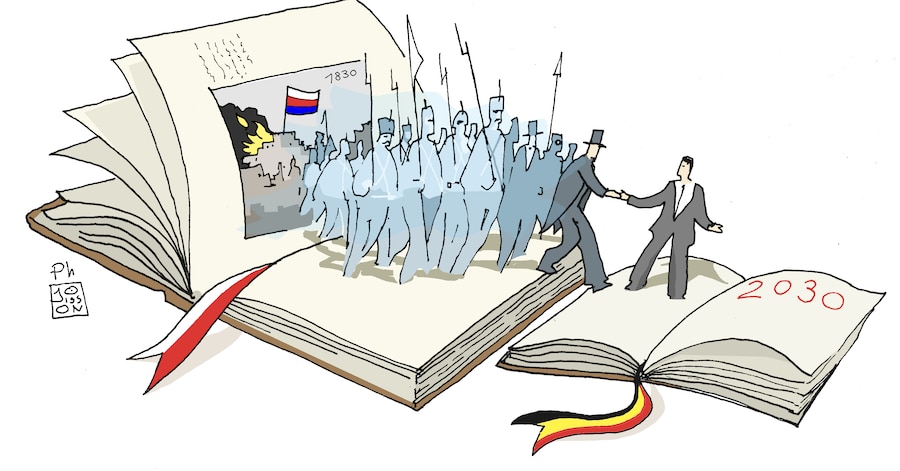
In the context of the run-up to the two-hundredth anniversary of Belgian independence in 2030, the impact of the Polish uprising of 1830 is discussed, which halted the Russian troops intended for Belgium, emphasizing the necessity of commemorating both events together. #Belgique #Pologne #Bicentenaire (translated)

www.lalibre.be
1830 : quand Varsovie a pris les coups destinés à Bruxelles
2459
Denkjewel Wrld summary Oct 15

Denkewel wrote that he commemorated the Battle of Raft Swamp in 1781, which he believed took place during the American Revolutionary War between Whig patriots under General Griffith Rutherford and Tory loyalists under Colonel Hector McNeill, nicknamed "One-Eyed Hector." He wrote that the Tories fled. https://t.co/yiBNi1Gga1 #AmerikaanseOnafhankelijkheidsoorlog #Geschiedenis #Herdenking (translated)

2811
Roy Grinwis Wrld summary Oct 14

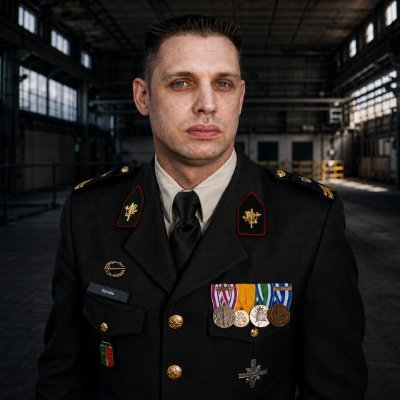
Roy Grinwis wrote that Sergeant Willem "Wim" Dijkstra died by suicide on October 11, 2006, at the age of 36 at Camp Holland, near Tarin Kowt in the Afghan province of Uruzgan. According to Grinwis, Dijkstra, who used his service weapon, was found by colleagues. Grinwis stated that Dijkstra served in the Royal Netherlands Army and was part of the Dutch contribution to the NATO mission ISAF during his deployment. He expressed his condolences to Dijkstra’s family, friends, and comrades and said that no assumptions should be made about the personal circumstances surrounding his death. Grinwis also called for attention to be given to soldiers who lost their lives during missions outside of combat. #LestWeForget #Veteranen #Herdenking (translated)

3046
Denkjewel Wrld summary Oct 14

Denkewel wrote that on that day the Battle of Hastings from 1066 was commemorated. According to him, a Norman-French army led by Duke William I the Conqueror faced the Anglo-Saxons under King Harold II. He called the outcome a decisive Norman victory and the first step in the conquest of England. (translated)

3046
Oscar Hammerstein Wrld summary Oct 13

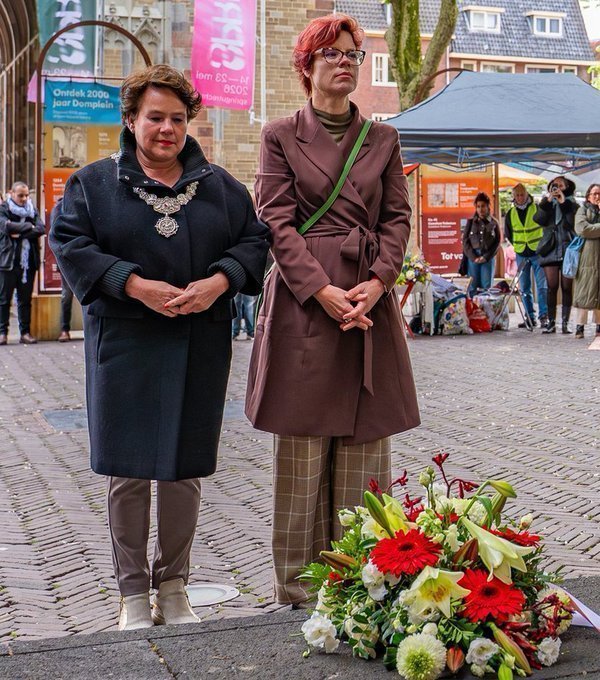
Oscar Hammerstein wrote that intimidation and hate-mongering at Dam Square, in his opinion, undermined the freedom that is commemorated there. He argued that disgust and outrage were not enough and that leaders must set and enforce boundaries. According to him, moral authority was demonstrated by the willingness to act, not by the sharpness of statements. https://t.co/PvRsApoJEQ #vrijheid #respect #samenleving (translated)

3633
Bart Nijman Wrld summary Oct 13

Bart Nijman wrote that he wanted to establish a committee to prepare a celebration for the day when, according to him, the political chains would break and the Netherlands would be freed from Rob Jetten's "puppet prime ministership." On that date, he also wanted to commemorate the "past of mockery" annually from then on. #Bevrijding #Herdenking #Politiek (translated)

3047
Denkjewel Wrld summary Oct 13

Denkewel wrote that the Sea Battle at Fehmarn in 1644, during the Torstenson War, was commemorated. According to the author, a Swedish-Dutch fleet and a Danish-Norwegian fleet faced each other; of the seventeen Danish ships, only two would have escaped after a crushing defeat. https://t.co/9Z0Wqk0aBH #geschiedenis #oorlog #Fehmarn (translated)

3047