BETA nonprofit public democratic european moderated

Search

#kasyno
mickpl 3d

Mickpl compared the characterization of the stock exchange as a casino to the purchase of an investment property in a frontline country, which — as he wrote — had the worst demographics in Europe and historically the highest valuations. He called such an approach responsibility. #Inwestycje #Giełda #Odpowiedzialność (translated)


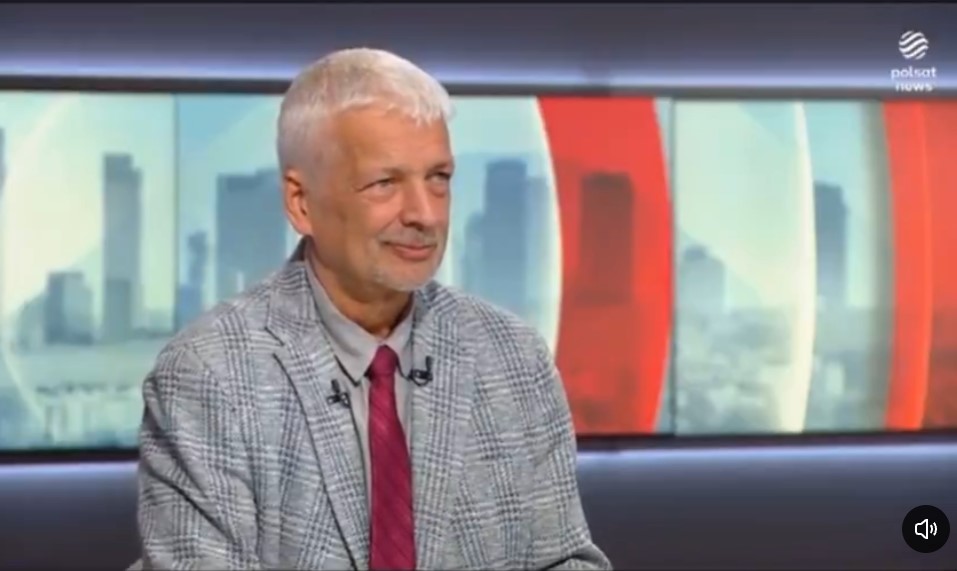
Piotr Cymcyk wrote that the last day showed how socially harmful media commentators' statements can be, including Gwiazdowski's, who compare the stock market to a casino. He argued that in a casino, the mathematical advantage belongs to the casino, while in the broad stock market, a longer horizon works in favor of the investor. As he argued, shareholders become co-owners of companies that conduct business, achieve profits, reinvest them, pay out dividends, and buy back their own shares. The growth of productivity in the economy and company profits, in his opinion, means that long-term investing in the broad market has a positive expected value. Cymcyk pointed out that one can behave like a gambler in the stock market, for example, by using excessive leverage, buying meme coins, or betting on options movements after the release of quarterly results, but that does not make the stock exchange itself a casino. He compared it to stating that the ability to drive a Ferrari into a family at a bus stop does not mean that the car is a killing machine. He also criticized the lack, as he wrote, of educational television material on investing a portion of savings in productive assets and using compound interest, while there is a frequent media presence of individuals whose statements he described as pseudo-wise. He added that Poland should build a strong capital market and increase its participation in it in order to catch up with the West economically, instead of being satisfied with current accounts at 0.1 percent. #giełda #inwestowanie #ekonomia (translated)

rzep 4d

Rzep questioned the treatment of a certain man as an economic expert whose opinion would be valuable. He wrote that this man had previously predicted 10 bankruptcies of the Social Insurance Institution (ZUS), although he himself later retired from that institution and now compared the stock market to a casino. According to Rzep, scaring Poles about investing in the stock market causes them to massively invest their money in real estate, which is regarded as safe. He added that the stock market is presented as if investing required predicting the right moment to buy and sell and access to confidential information, otherwise one could lose everything. He also mentioned Jankowski in the background and referred to "uncle's communication." https://t.co/jxV5nLksGz #gospodarka #giełda #nieruchomości (translated)

mickpl 4d

Mickpl ironically referred to the term "casino" when describing the stock market and suggested that older people prefer to invest in additional apartments. He wrote that the Polish economy was based on Western corporations funding themselves on their own stock exchanges, while the Polish market lacked capital, and company debuts were rare. According to him, young people mainly found job contracts in corporations that could withdraw from Poland during the first downturn in the West. Mickpl assessed that leading the country by a generation of the baby boom will end in disaster, although it is unknown when that will happen. #Giełda #Gospodarka #Praca (translated)

Piotr Cymcyk wrote to Robert Gwiazdowski and the Professional Investor that he already understood the comparison of the stock market to a casino, because — as he stated — his recipients were not knowledgeable about either one. He referred to the statement that in a casino, the dealer decides the outcome of the winnings. #giełda #kasyno #wygrana (translated)

The profession Investor wrote that he does not know about wines and does not speak about them as an expert on television, then compared a casino to investing in the stock market. He described the casino as a place where the outcome is determined by chance, and games have a negative sum — the more often one participates, the more one loses. As an example of investment, he mentioned about 2,500 of the largest companies from around the world included in the MSCI ACWI index. According to him, an ETF tracking the index costs about 0.2% per year, and the companies it includes build value and grow. He stated that over a longer period, one can observe an increase in their revenues and margins, which leads to regular growth in stock prices. The author stated that investors can earn when the companies they own increase their value, therefore he considered long-term investment in a broad stock market as a game with a positive sum. He suggested considering an exposure lasting at least 10 years, among other things through an ETF, especially during the next technological revolution. He emphasized that the stock market is not a casino, and buying stocks he called investing, not playing. The profession Investor also posted a chart of an ETF encompassing stocks from around the world, on which — he wrote — he also marked his monthly purchases. He asked whether its trajectory would resemble the financial state after regular visits to a casino. #inwestowanie #giełda #finanse (translated)

Blocking government laws by Karol Nawrocki is pure madness when you calmly look at specific laws. In most cases, the same pattern occurs—ordinary people lose out while large corporations or the old system gain. Below are examples: 1. Tax Code Gained: the tax authorities, penalties for formal violations become harsher. Lost: taxpayers and companies that were supposed to receive lower penalties for formal shortcomings. 2. Oil, fuel, and gas reserves Gained: no one Lost: Poles, new rules were supposed to apply during the crisis 3. Mandatory insurance Gained: Insurance companies Lost: drivers and the market, if the amendment really simplified the OC; this was not checked before coming into effect. 4. Water supply and sewage Gained: the current tariff and municipal company system. Lost: municipalities and consumers, the law was supposed to regulate tariffs in their favor. 5. Road Traffic Law Gained: the old system Lost: carriers counting on EU e-permits that were to be implemented immediately. 6. Electoral Code Gained: the current, narrower voting model. Lost: voters who were supposed to receive a more widespread postal vote. 7. CIT and family foundations Gained: family foundations and individuals using them for optimization. Lost: the budget, i.e. Poles 8. Crypto-assets market Gained: crypto companies Lost: clients and supervision 9. Education Law Gained: schools and teachers sticking to the old calendar. Lost: the government's schedule for the new basis and the postponement of the eighth-grade exam. 10. Sugar tax and PIT on winnings Gained: beverage producers, stores, casino players; Lost: Poles, NFZ, and the budget 11. Alcohol excise tax Gained: breweries, distilleries, trade, alcohol buyers Lost: Poles, the budget 12. NCBR Gained: the current setup in the agency. Lost: greater oversight over NCBR 13. Active farmer Gained: individuals benefiting from agriculture without real farming Lost: farmers actively working, whom the law was supposed to strengthen. 14. SAFE Gained: Russia, USA Lost: Poland 15. Family Code Gained: no one Lost: childless couples who could part without court. 16. Shaping the agricultural system Gained: current land turnover restrictions. Lost: land buyers and companies wanting cheaper, simpler transactions. 17. SENT Gained: companies trading concrete and transport outside the broader SENT. Lost: Poles (1.2 billion) to the budget from tightening 19. Health care benefits Gained: the current NFZ benefits system. Lost: patients and facilities 20. Status of a close person Gained: no one Lost: couples, including same-sex ones, without a cohabitation agreement and the rights that come with it. 21. Public transport Gained: carriers with longer, 10-year contracts. Lost: eventually, passengers 22. Energy law Gained: the old system Lost: ultimately Poles 23. tax on extraordinary profits of fuel companies. Gained: big oil corporations, Lost: the budget. #Polska #Prawo #Społeczeństwo (translated)

230 mln dolarów straty. Wenezuelska ropa, kryptowaluty i polskie pieniądze. To nie scenariusz filmu… to rachunek za państwo działające jak kasyno. Transakcję prowadził Samer Awad, szef Orlen Trading Switzerland. Prezesem całego Orlenu był wtedy Daniel Obajtek. Kto za to #Wenezuela #Kryptowaluty #Orlen #VE #PL #CH