WRLD

Search

#kompetencje
r00t🇪🇺 1d

The author of the entry assessed that Nawrocki was not a "guardian of the Constitution" and accused him of attempting to ascribe to himself competencies that, according to the author, the fundamental law did not grant him. He wrote that merely invoking the Constitution during conferences and political disputes did not mean defending it, and it should also be respected when its provisions were politically inconvenient. He added that Nawrocki was not a ruler, and the Constitution should not be treated as a private regulation of his power. He concluded his assessment with a critical comment. #Konstytucja #Prawo #Polityka (translated)


2583
r00t🇪🇺 1d

The author accused Bogucki of incorrectly asserting that in Poland no one can become a judge without taking an oath before the president. He wrote that he did not know whether it was Bogucki's interpretation or that of Karol Nawrocki, and he cited Article 194, paragraph 1 of the Constitution. According to the author, judges of the Constitutional Tribunal are chosen by the Sejm, and the president does not have constitutional powers to appoint or approve them. The author emphasized that the obligation to take an oath before the president arises from the law, not from the Constitution. He claimed that the president merely receives the oath, and the oath itself does not create the judge's mandate. He also referenced the Constitutional Tribunal's ruling in case K 34/15, which — as he wrote — clarified that the taking of the oath does not imply the president's involvement in shaping the Tribunal's composition. Finally, he criticized Bogucki for, in his opinion, presenting the Constitution according to the political needs of the President's Chancellery. #Konstytucja #TrybunałKonstytucyjny #Polska (translated)

2985
Onet.pl 2d

Donald Tusk criticized President Karol Nawrocki for his opposition to the nomination of ambassadors, emphasizing that both the president and the minister of foreign affairs must adhere to the constitution, which clearly defines the competencies in this matter. #Polityka #Ambasadorzy #Rząd (translated)

www.onet.pl
Donald Tusk odpowiedział Karolowi Nawrockiemu. "To absurd"
2888
r00t🇪🇺 3d

The author criticized Dubyna's post, accusing him of misrepresenting the division of powers, the competences of the Council of Ministers, the rulings of the Constitutional Tribunal, and the concept of a coup d'état. He wrote that the appointed team analyzing the systemic effects of the court and tribunal rulings did not seize judicial power and had no authority to overturn judgments, change decision-making panels, or issue orders to judges. The author stated that Dubyna referred to Article 190 of the Constitution while omitting the difference between the finality of Constitutional Tribunal rulings and the analysis of their legal effects. He also accused him of failing to take into account the rulings of the European Court of Human Rights in the case of Xero Flor v. Poland and the Court of Justice of the European Union in case C-448/23, which — as he wrote — concerned fundamental irregularities in the functioning of the Polish Constitutional Tribunal. The author considered the designation of the appointment of the government analytical team as a coup d'état to be a manifestation of a misunderstanding of the principles of state functioning. He also criticized the comparison of the situation to a totalitarian system, stating that it was historically unfounded and offensive to those repressed by the communist state. He added that the use of capital letters and exclamation marks did not lend any legal or intellectual value to the statements. #prawo #konstytucja #Polska (translated)

3463
Marcin Matczak 4d

Marcin Matczak requested an indication of the provision that would define the competence of the President of the Republic of Poland to examine the actual and legal situation of a judge of the Constitutional Tribunal elected by the Sejm, including the entity, subject, and procedure of such control. He asserted that such a provision does not exist, and therefore the president does not have such competence. He added that the thought experiments of his interlocutor did not, in his opinion, change the fact that the president was claiming rights that the law did not grant him, and his interlocutor was assisting him in this. #Prawo #Prezydent #TK (translated)

3371
Onet.pl 4d

Aneesh Raman, former director of LinkedIn, emphasizes in an interview that no occupations are completely immune to artificial intelligence, and the key to achieving success in the changing job market is predicting and adapting to new skills. #sztucznainteligencja #przemiana #kompetencje (translated)

www.onet.pl
Były dyrektor w LinkedIn o AI: żaden zawód nie jest bezpieczny
2923
Roman Giertych 5d

Roman Giertych criticized Karol Nawrocki for announcing that Maciej Berek is not a judge. He believed that such a position showed how Nawrocki and his surroundings understood presidential powers: as the right to ultimately approve individuals appointed to positions or taking an oath. Giertych assessed that the consolidation of such an interpretation could lead to an actual dictatorship or absolute monarchy. He argued that the president could then refuse to sign a law despite a veto override or appoint a prime minister chosen by the Sejm. He reminded that according to the Constitution, the president must sign the law within 7 days of the veto override, and Article 154 provides for the appointment of a prime minister elected by the Sejm and ministers at his request. He also pointed out that a two-thirds majority is needed for impeachment. As a hypothetical example, he cited a situation in which, after the victory of the Civic Coalition and its majority, Mateusz Morawiecki would become prime minister, and Nawrocki would later refuse to appoint Donald Tusk chosen by the Sejm. Giertych also claimed that according to such an interpretation, judges, officers, generals, and ambassadors could not be appointed or professorships, citizenship, or honors granted without the president's consent. He defined the dispute surrounding the Constitutional Tribunal as a conflict over whether after the 2027 elections the government will designate the Sejm or Nawrocki. He warned the president that the interpretation he was pushing would mean changing the Constitution without following proper procedures and could lead to a coup against the Constitutional Tribunal and create grounds for undermining the government. He added that who will govern after 2027 will be decided by Poles in the general elections in the fall of next year. According to Giertych, Nawrocki's stance could exacerbate social relations and even lead to violence, for which the president would bear responsibility. #Polska #Konstytucja #Demokracja (translated)

3609
Oskar Kida 5d

Oskar Kida wrote that EU officials have no right to influence how Poles choose their authorities. He accused Brussels of attempting to expand its powers into areas not covered by the treaties, and emphasized that the choice of authorities should be determined by the will of the citizens expressed at the ballot boxes, not by pressure from EU officials. https://t.co/91QanpHdcD #Polska #demokracja #UniaEuropejska (translated)

3159
r00t🇪🇺 5d

The author of the entry expressed surprise that Nawrocki certainly questioned the status of the person elected by the Sejm as a judge of the Constitutional Tribunal. He reminded that Article 194(1) of the Constitution entrusts the Sejm with the competence to select judges of the Tribunal. At the same time, the author pointed to concerns about the constitutional validity of the procedure for affirming the election of Nawrocki as president. He wrote that the resolution on this matter was adopted by the Chamber of Extraordinary Control and Public Affairs of the Supreme Court, whose status as a court established by law was challenged in European case law. He indicated that Article 129(1) of the Constitution requires the Supreme Court to affirm the validity of the president's election but does not determine the legal consequences of the indicated irregularities. The author criticized Nawrocki for instructing first-year law students and called on him to show greater respect for the Constitution, also in matters concerning his own office. #Konstytucja #Prawo #Sędziowie (translated)

2934
Krzysztof Sałek KO Stalowa Wola 5d

Krzysztof Sałek from KO Stalowa Wola wrote that Judge Maciej Berek had been waiting for weeks for Nawrocki's response. He accused Nawrocki of hiding in the palace and ignoring the constitutional duty to take the oath, as well as pretending to deliberate and assess, which — as Sałek stated — he was not competent to do. He described the entire situation as pathetic. https://t.co/9br0sd9vdP #Polska #Konstytucja #Sąd (translated)

2710
r00t🇪🇺 5d

Author r00t🇪🇺 accused Bogucki of omitting the Constitution, the hierarchy of legal sources, and circumstances in his interpretation that—according to the author—did not fit his thesis. He reminded that according to Article 194(1) of the Constitution, judges of the Constitutional Tribunal are elected by the Sejm, and the president has no right to approve this election or politically verify it. According to the author, Article 4(1) of the Act on the Status of Judges of the CT concerned the taking of an oath but did not grant the president the right of veto. The author cited the judgment of the CT K 34/15 from December 3, 2015, stating that the Tribunal recognized that the lack of a statutory deadline for taking an oath means an obligation to act without delay, with the possibility of considering exceptional, objective circumstances. He questioned Bogucki's argument about the change of law and urged him to specify a particular normative change that would justify departing from this interpretation. He added that the fundamental structure of the oath before the president remained unchanged, as did Article 194(1) of the Constitution. Discussing the judgment K 3/26 from May 12, 2026, the author pointed out that Justyn Piskorski sat in the adjudicating panel, whose status—he wrote—was linked to the flawed composition of the CT considered by the ECtHR in the case of Xero Flor v. Poland. He also accused Bogucki of failing to mention the publication of the judgment in the Journal of Laws, required—according to the author—by Article 190(2) of the Constitution. The author also recalled the dissenting opinions of Rafał Wojciechowski and Jarosław Wyrembak. According to his account, Wojciechowski accused the majority of going beyond the limits of the request and creating a norm contrary to Article 194(1) of the Constitution, while Wyrembak questioned the sentence and pointed to the obligation to take the oath as a consequence of the obligation to submit it. The author also noted that the justification of K 3/26 referred to extraordinary, objective, and justified circumstances, not to the unlimited political freedom of the president. Questioning Article 5 of the Act on the Status of Judges of the CT, the author stated that adopting Bogucki’s interpretation could mean granting the president an actual ability to block the effects of the election made by the Sejm. He urged him to indicate a provision of the Constitution establishing such a competence. He added that Article 126 does not constitute a blanket authorization for extending the president's powers, and its paragraph 3 specifies that the president performs tasks on the principles laid down in the Constitution and laws. Finally, the author accused Bogucki of selective use of provisions and case law. He wrote that the lack of a statutory deadline does not grant the president the right to indefinitely block the constitutional competences of the Sejm. #Konstytucja #Prawo #Polska (translated)

2936
Kafir 5d

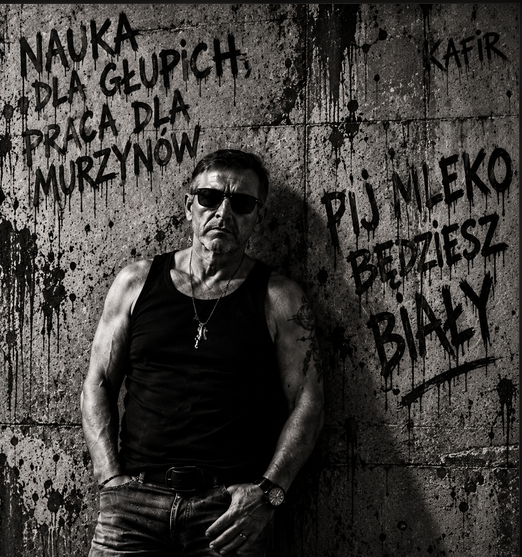
Kafir wrote that he increasingly considered elitism to be better than democracy, because — as he claimed — in elections the vote of a person with knowledge and experience carries the same weight as the vote of a person without basic competencies. He noted that elitism, in his opinion, did not depend on wealth or education, but on knowledge, reason, and the ability to think independently. He criticized voters who — according to him — assessed economic policy without knowledge of issues such as inflation, budget, or monetary policy. As examples, he referred to people shopping at Lidl and Biedronka, as well as checking purchase prices, and accused some of them of confusing daily savings with the competencies needed to evaluate the state's finances. At the same time, he emphasized that simply looking for cheaper products was not bad. Kafir also criticized politicians who — as he wrote — lacked experience in running businesses or managing budgets, yet held positions that allowed them to decide on significant public expenditures. He accused right-wing groups of citing religion, tradition, and national values while simultaneously supporting strong authority without proper oversight. He argued that appeals to patriotism and religion did not replace the knowledge and competencies necessary to govern the state. He compared the expectations placed on children in their education to the expectations of politicians. He wrote that parents usually required their children to learn math and helped them acquire knowledge, yet some voters — in his opinion — did not expect similar competencies from those seeking power. He compared governing the state to entrusting a ten-year-old child with the household budget without parental control, pointing out that promises of unfunded expenditures could lead to debt. The author accused voters of re-electing politicians despite their mistakes if they promised them more money, and that they rejected criticism as a lack of patriotism. He claimed that some people did not want to check information or analyze arguments and instead trusted loud political messages. In conclusion, he asked why voters demanded education from children but did not require knowledge from politicians before entrusting them with power. He also mentioned the action "7 percent of 460," relating it to the number of deputies, and stated that there were at most 7 percent of wise ones among them. #Demokracja #Elitaryzm #Edukacja (translated)

3727
Dariusz Mazur 6d

Dariusz Mazur wrote that President Nawrocki, a doctor of history, conditional in an interview for "Rzeczpospolita" the acceptance of the oath by judges of the Constitutional Tribunal on their basic legal knowledge. Mazur assessed that the president has ascribed himself a competence that Polish law does not grant him, and presented himself as an authority in the field of law. He added that history knows many leaders convinced of their own infallibility, but few of them are remembered with sentiment. He considered such conduct to be very harmful and stated that today's opinion of the Venice Commission confirmed this. #Polska #prawo #historia (translated)

3507
r00t🇪🇺 6d

The author of the entry questioned whether Karol Nawrocki had a constitutional basis to control the selection of judges of the Constitutional Tribunal by the Sejm. He pointed out that Article 194 paragraph 1 entrusts this competence to the Sejm, and Article 126 paragraph 3 states that the president performs tasks in accordance with the principles provided for in the Constitution and laws. He criticized the Office of the President for justifying interference in the competences of another body by the obligation to ensure compliance with the Constitution. He wrote that Nawrocki should not only declare an understanding of the limits of his power but also abide by them. He added that the Constitution should not be mere decoration, and the responsibility towards citizens should not be reduced to publishing sentences on graphics from the Office of the President. #Konstytucja #Prezydent #Władza (translated)

3508
r00t🇪🇺 6d

The author of the entry accused Bogucki, the head of the Chancellery of the President of the Republic of Poland, of a selective interpretation of the Constitution and the rulings of the Constitutional Tribunal. He pointed out that the opinion of the Venice Commission was not a source of universally binding law or a resolution of a dispute, but rather a legal opinion regarding the powers of the president. The author argued that Article 126, paragraph 3 of the Constitution limits the president's performance of his duties to the principles specified in the Constitution and laws. He reminded that Article 194, paragraph 1 entrusts the selection of judges of the Constitutional Tribunal to the Sejm, and the president's involvement in the taking of the oath— as he claims follows from the Constitutional Tribunal's ruling of December 3, 2015, case no. K 34/15—does not grant him the right to co-decide on the composition of the Tribunal. He added that the Constitutional Tribunal had permitted the postponement of the oath in extraordinary circumstances, but not the refusal to accept it. Referring to Article 86 of the Act on the Organization and Procedure of Proceedings before the Constitutional Tribunal, the author emphasized that merely submitting a proposal regarding a competence dispute does not create new powers for the president. He also questioned Bogucki's public doubts concerning the qualifications of Maciej Berek, indicating that these should be accompanied by evidence and the legal basis for the president's actions. Finally, he asked from which provision of the Constitution Bogucki derives the president's competence to supervise the Sejm's decision on the selection of judges of the Constitutional Tribunal. #Konstytucja #Prawo #TrybunałKonstytucyjny (translated)

2942
Zbigniew Bogucki🇵🇱 6d

Zbigniew Bogucki wrote that the highest law in Poland is the Constitution, and the positions of the Venice Commission are not a source of law or a binding interpretation of Polish provisions. He pointed out that according to Article 87, paragraph 1 of the Constitution, sources of commonly applicable law also include statutes, ratified international agreements, and regulations. He added that the assessment of the compliance of law with the Constitution was entrusted to the Constitutional Tribunal under Article 188, and it resolves jurisdictional disputes between central state authorities based on Article 189. Bogucki argued that according to Article 4 of the Constitution, sovereignty belongs to the Nation, which elected the President in general elections. Referring to Article 126, he defined the President as the highest representative of the state, a guarantor of the continuity of power, and an authority overseeing compliance with the Constitution. Regarding the oath-taking of four judges of the Constitutional Tribunal, Bogucki wrote that the President is waiting for the Tribunal to resolve the jurisdictional dispute. According to him, based on Article 86, paragraph 1 of the Act on the Organization and Procedure before the Constitutional Tribunal, the proceedings related to the oath-taking have been suspended until the dispute is resolved. He added that this was confirmed by the President of the Constitutional Tribunal in a letter dated April 29, 2026, and the President cannot continue actions related to the acceptance of the oath during this time. Referring to Maciej Berek, a former minister in Donald Tusk's government, Bogucki pointed to unexplained doubts regarding his fulfillment of the requirements under Article 3 of the Act on the Status of Judges of the Constitutional Tribunal, including the required experience as a legal adviser. He claimed that the President has a duty to clarify serious and objectively justified doubts regarding the statutory qualifications of the person chosen by the Sejm as a judge of the Constitutional Tribunal before accepting their oath. In his opinion, this act cannot only be ceremonial, and the obligation to accept the oath is not absolute. He referenced Article 126, paragraph 2 and Article 7 of the Constitution. Bogucki wrote that the President not only has the right but also the duty to safeguard the Polish constitutional order. He added that he would do so despite what he termed politicized pressures from within the country and abroad. #Konstytucja #Polska #Prawo (translated)

3509
Oskar Kida 6d

Oskar Kida criticized the minister's interpretation regarding the opinion of the Venice Commission on the oath-taking of judges of the Constitutional Tribunal before the president. He wrote that according to the principle, the president should promptly accept the oath from individuals legally elected by the Sejm. In his opinion, however, if there are doubts about the legality of the election, the president may withhold acceptance of the oath until these doubts are resolved by the appropriate authority. If the doubts are confirmed, the president — as Kida argued — cannot accept the oath. Kida assessed that the position of the Venice Commission is contrary to the case law of the Constitutional Tribunal or overly simplifies the matter. He claimed that the president can examine the circumstances of the candidates' selection, including their compliance with formal requirements, but cannot resolve doubts against them on his own. The decision should be made by the appropriate authority. Kida also accused the minister of manipulating the presentation of the Commission's position: according to him, the opinion allows for the oath to be taken without the president's physical presence only when he unlawfully delays acceptance or refuses it. The author emphasized that the Venice Commission is an advisory body and does not issue binding resolutions. He concluded that its opinion is inconsistent in many places with Polish law, the Constitution, and the case law of the Constitutional Tribunal. According to Kida, the opinion does not preclude that the oaths taken on April 9, 2026, by four individuals were effective, nor that these individuals are serving judges of the Constitutional Tribunal. He argued that such an effect could occur if the Tribunal found that the president unjustifiably delayed the acceptance of the oath; otherwise, these individuals could not become judges. Kida wrote that in his opinion, without a change in the law, one cannot take an oath before the president without his presence. #Prawo #Konstytucja #Sędziowie (translated)

3396
r00t🇪🇺 6d

The author of the entry accused Wróblewski of incorrectly attributing to the Venice Commission the usurpation of powers that — as he pointed out — the Commission did not claim the right to exercise. He emphasized that the legal opinion does not constitute either a legislative act or a court ruling. Referring to the supremacy of the Constitution of the Republic of Poland, the author asked which provision authorizes the president to approve, evaluate, or block the election of judges of the Constitutional Tribunal by the Sejm. He indicated that Article 194, section 1 does not foresee such a competence, and the obligation to take an oath before the president arises from a law which — according to him — cannot extend the constitutional powers of the head of state. The author assessed that the Venice Commission did not question the supremacy of the Polish Constitution, but pointed to the need to adhere to the division of powers specified in it. He also called on Wróblewski to distinguish the defense of the Constitution from the defense of his own interpretation of it. #Konstytucja #Prawo #Polska (translated)

3283
Oskar Szafarowicz 6d

The author of the entry argued that the oath to the President of the Republic of Poland is not merely a formality, but closes the procedure for the selection of a judge of the Constitutional Tribunal and has legal consequences. He indicated that taking the oath falls within the exclusive competences of the head of state, who — in his opinion — is not obligated to automatically accept persons chosen by the Sejm. https://t.co/5O5qp48qcV #Prezydent #Trybunał #Sędziowie #PL (translated)

2944
r00t🇪🇺 6d

The author of the entry wrote that he agreed with the conclusions of the Venice Commission. He pointed out that Article 194 of the Polish Constitution entrusts the selection of judges of the Constitutional Tribunal to the Sejm, and that the statutory obligation to take an oath before the President should not, in his opinion, be interpreted as a right to approve or block the decisions of the Sejm. He also added that the competencies of state bodies cannot be inferred or extended through interpretation. He assessed that a ceremonial act should not serve one body to interfere in the constitutional competencies of another. #Konstytucja #Sędziowie #KomisjaWenecka (translated)

3510