BETA nonprofit public democratic european moderated

Search

#relationship

Cristiano Ronaldo wrote that he had decided to leave the camp rather than wait for another broken promise. He said honesty was the most important part of relationships and that he wanted people to tell him the truth, even when it hurt. He also began referring to a conversation he had had but gave no further details. https://t.co/YedIx6FaQ5 #CristianoRonaldo #Futebol #Verdade #PT (translated)


The Art of Uncertainty: How to Navigate Chance, Ignorance, Risk and Luck by David Spiegelhalter From the UK’s ‘statistical national treasure’, a clever and data-driven guide to how we can live with risk and uncertainty Life is uncertain. We are all the result of an unforeseen and unforeseeable sequence of small occurrences. But what underlies this fragile chain of events? Is it random or just complex? And what role does luck play in our lives? David Spiegelhalter has spent his career crunching data in order to help understand uncertainty and assess the chances of what might happen. In The Art of Uncertainty, he gives readers a window onto how we can all do this better. Uncertainty, he argues, is a relationship between the observer and an object in the outside world. He shows us how we can express it numerically, and then update our beliefs about the future in the face of constantly changing experience. In crystal-clear prose, he takes us through the principles of probability, a field that informs everything from annuities to pandemics and climate change, while also examining the limitations of statistical modelling and arguing we need to have the humility to admit our ignorance. Drawing on a wide range of real-world examples, this is an essential guide to navigating uncertainty in a world that makes it inevitable.

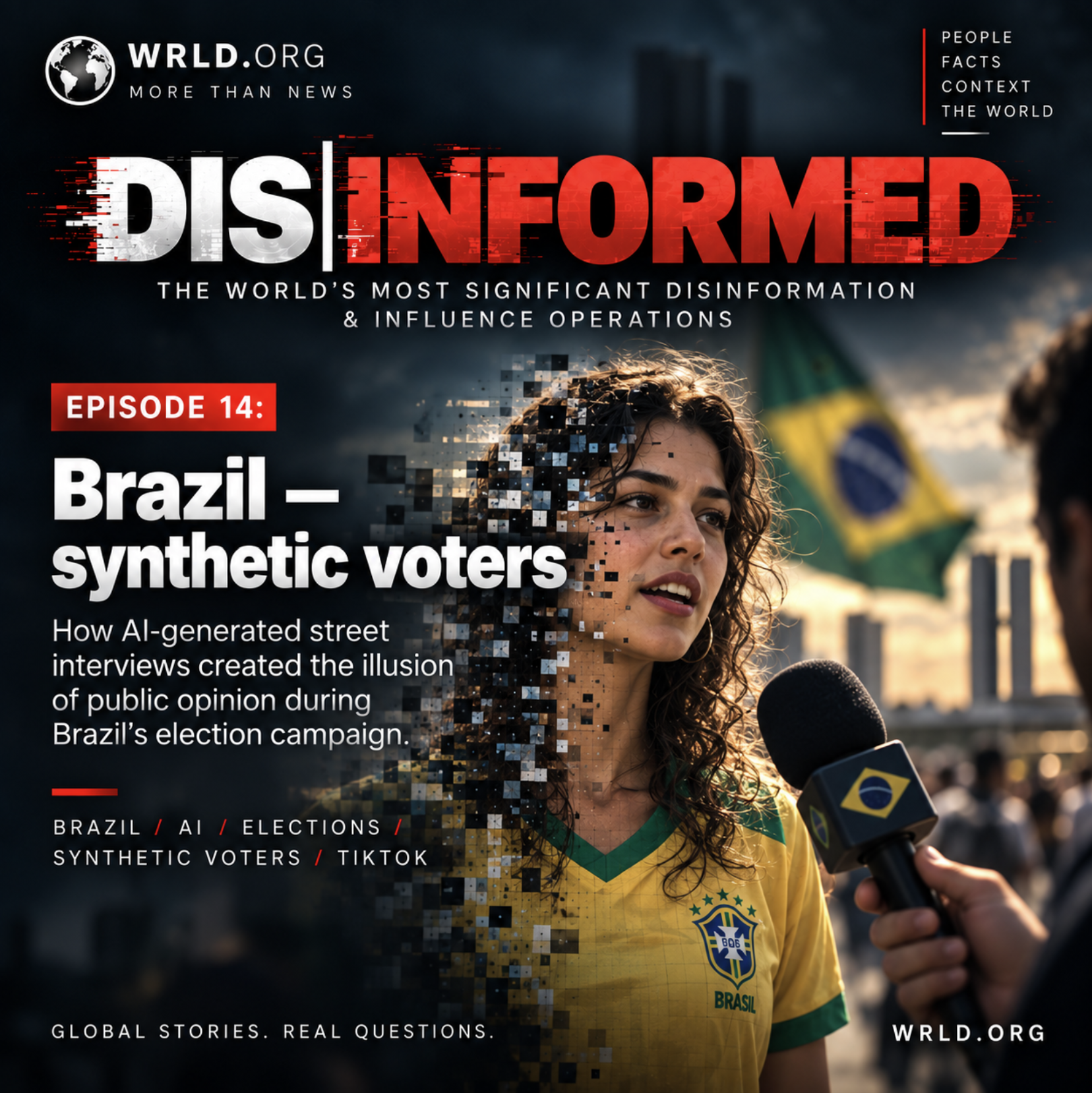
Brazil’s synthetic voters – when AI manufactures public opinion They look like ordinary street interviews. A reporter approaches a passer-by in a Brazilian square and asks a simple question: who will you vote for? A young voter explains why Luiz Inácio Lula da Silva deserves another term. An elderly woman says Brazil needs Flávio Bolsonaro because he represents political renewal and greater security. The locations look plausible, the microphones are visible and the answers sound much like the brief political opinions heard in television vox pops around the world. None of the people are real. Ahead of Brazil’s presidential election on 4 October, fact-checking organisation Aos Fatos identified at least 50 TikTok videos in which artificial intelligence was used to manufacture voters, reporters and apparently spontaneous political interviews. Together, the videos had accumulated around 7.4 million views by mid-August. Some promoted Lula, others Flávio Bolsonaro, while another group used synthetic characters to ridicule or stereotype supporters of one side. Aos Fatos found no apparent evidence linking the accounts producing the videos to either presidential campaign. The opinion poll that never took place The format is important. These were not conventional deepfakes in which a recognisable politician is made to say something he never said. Instead, the creators reproduced the visual language of the vox pop – the short street interview used by broadcasters and social-media creators to illustrate what ordinary people supposedly think. In pro-Lula videos, synthetic voters described themselves as beneficiaries of social programmes or credited the president with improving their lives. In videos supporting Flávio Bolsonaro, artificial interviewees associated him with political renewal, public security and fighting corruption. Other clips were openly hostile: AI-generated characters presented as poor or living in parts of Brazil’s north-east were shown in dirty clothes or run-down surroundings, declaring support for Lula because they supposedly preferred welfare payments to work. The deception is therefore subtler than fabricating a candidate’s statement. It manufactures something that political communication normally treats as evidence of public sentiment. A real vox pop may be unscientific, but the people interviewed at least exist. These videos created the appearance that identifiable social groups – young people, pensioners, welfare recipients or residents of particular regions – were spontaneously expressing political preferences when no such encounters had taken place. An electoral-law specialist interviewed by Aos Fatos described the technique as the fabrication of a “social fact that never occurred”. That captures the central innovation: AI is being used not merely to falsify political speech, but to manufacture the impression of grassroots opinion. Fifty videos, but not one proven network The available evidence does not support describing the 50 posts as a centrally controlled influence operation. Aos Fatos located them through TikTok searches and recommendations produced by the platform itself, then examined the accounts responsible for publication. Most had relatively small individual audiences, although their combined reach was substantial. The first examples identified by the investigation appeared as early as March 2026. Activity increased in June and was concentrated particularly in July and the first half of August as Brazil’s election calendar intensified. Some accounts specialised in AI-generated videos generally, including fabricated podcast-style material. Others were explicitly political or supportive of a candidate, but Aos Fatos found no apparent links between those profiles and the official Lula or Bolsonaro campaigns. That distinction is essential. The evidence demonstrates a common technique and a shared political environment, not a single command structure. Some creators may have been motivated by ideology, others by engagement or monetisation. Publicly available evidence does not establish who commissioned the individual videos or whether any coordination existed between the accounts. This decentralised model also creates a different enforcement problem from a traditional bot network. There may be no headquarters to expose and no infrastructure whose removal disables the entire operation. The format itself can be copied by anyone with access to inexpensive generative-video tools. When the algorithm mixes real and synthetic citizens Aos Fatos documented another important feature of the phenomenon: TikTok’s recommendation system placed AI-generated interviews alongside genuine street interviews. For a user scrolling quickly through the platform, the transition between an authentic citizen and an entirely fabricated one could therefore be almost invisible. In 18 per cent of the 50 videos analysed, there was no indication that the people shown had been generated using AI. After Aos Fatos provided TikTok with the videos, the company said it had removed all of them for violating its rules on edited and AI-generated media. TikTok said its policies require creators to identify synthetic content and prohibit manipulated media capable of misleading users about matters of public importance or impersonating genuine journalistic material. The issue extends beyond one platform. Factchequeado’s review of Brazil’s 2026 election campaign found that synthetic endorsements and other deepfakes had become one of the most visible forms of AI-assisted electoral misinformation, alongside fabricated candidate statements and invented scenes. Brazil already had rules for synthetic politics Brazil entered the campaign with unusually detailed electoral rules governing artificial intelligence. The Superior Electoral Court, the TSE, requires electoral propaganda using synthetic multimedia to disclose clearly that AI was used. More importantly for the fake-voter videos, its rules prohibit synthetic audio or video used to favour or harm a candidacy when it creates or alters the image or voice of a living, deceased or fictitious person. The difficulty is attribution and enforcement. When a synthetic video is published by an official campaign, responsibility can be relatively straightforward to investigate. When it comes from an apparently independent account with no demonstrated relationship to a candidate, lawyers interviewed by Aos Fatos said responsibility is more likely to fall on the individual creator, while imposing electoral sanctions on a campaign would require evidence of a connection. For the final 72 hours before the election and the 24 hours following it, the TSE has imposed additional restrictions on newly published or republished synthetic material involving candidates or public figures, reflecting the particular difficulty of correcting fabricated content immediately before voting. From deepfake politicians to synthetic electorates The Brazilian case illustrates a broader change in political manipulation. The first generation of electoral deepfakes concentrated on famous people: make a politician appear to say something damaging, or fabricate an endorsement from a celebrity. Synthetic vox pops reverse the perspective. The politician can remain completely authentic; it is the electorate around the politician that is fabricated. That changes the psychological proposition of the message. Instead of saying the candidate believes this, the video suggests people like you believe this. Age, clothing, accent, neighbourhood and social class can all be generated to construct an artificial constituency around almost any political claim. There is no evidence that the 50 Brazilian videos identified by Aos Fatos constitute a single centrally directed campaign, nor evidence that they changed voting intentions. What they demonstrate is a technique whose barrier to entry has become extremely low. AI no longer needs to forge the politician. #DISINFORMED #Episode14 #Brazil #BrazilElection2026 #Elections #ElectionDisinformation #ArtificialIntelligence #AI #GenerativeAI #SyntheticVoters #SyntheticMedia #AIAvatars #AIGeneratedVideo #VoxPop #FakeInterviews #Astroturfing #AIPropaganda #PoliticalDisinformation #InfluenceOperations #InformationWarfare #SocialMediaManipulation #TikTok #PublicOpinion #ManufacturedConsent #SyntheticPublicOpinion #DigitalInfluence #Deepfakes #ElectionIntegrity #TSE #AosFatos #FactChecking #OSINT #MediaManipulation #WRLD (translated)

Eleitores gerados por IA fazem campanha no TikTok e põem em xeque regra do TSE
BBC 2d

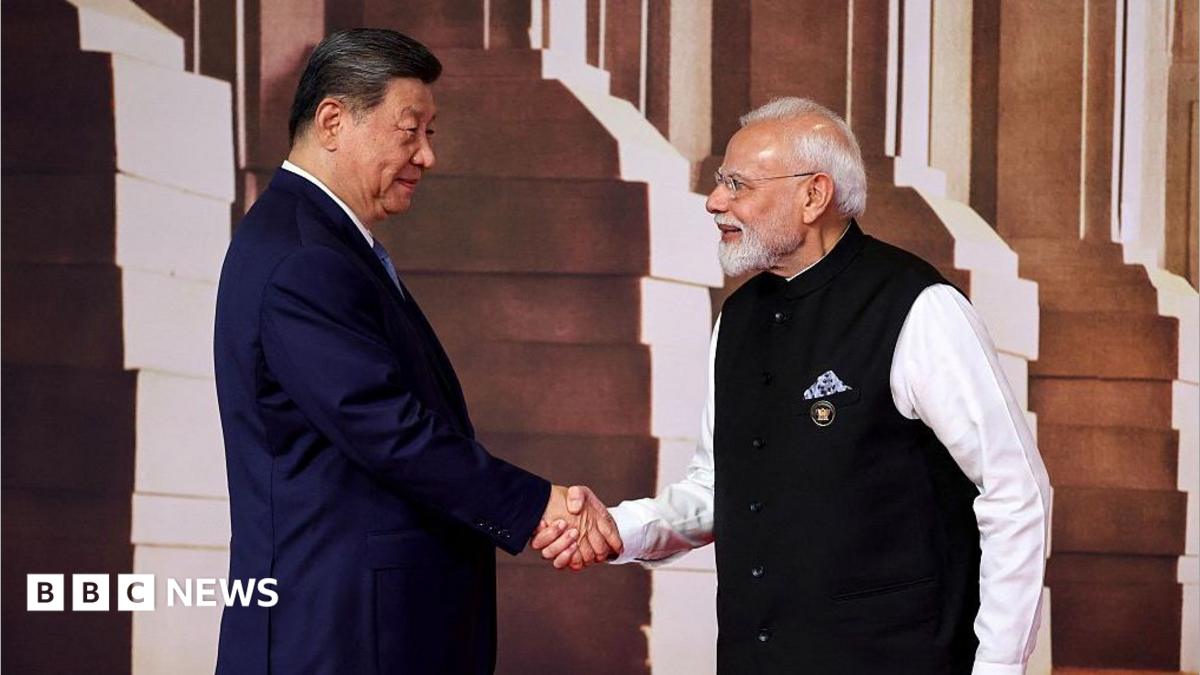
India’s toy shops provide an unlikely barometer by which to measure its economic relationship with China. #IndiaChinaTrade #EconomicDependence #TradeImbalance

How India became dangerously addicted to Chinese imports

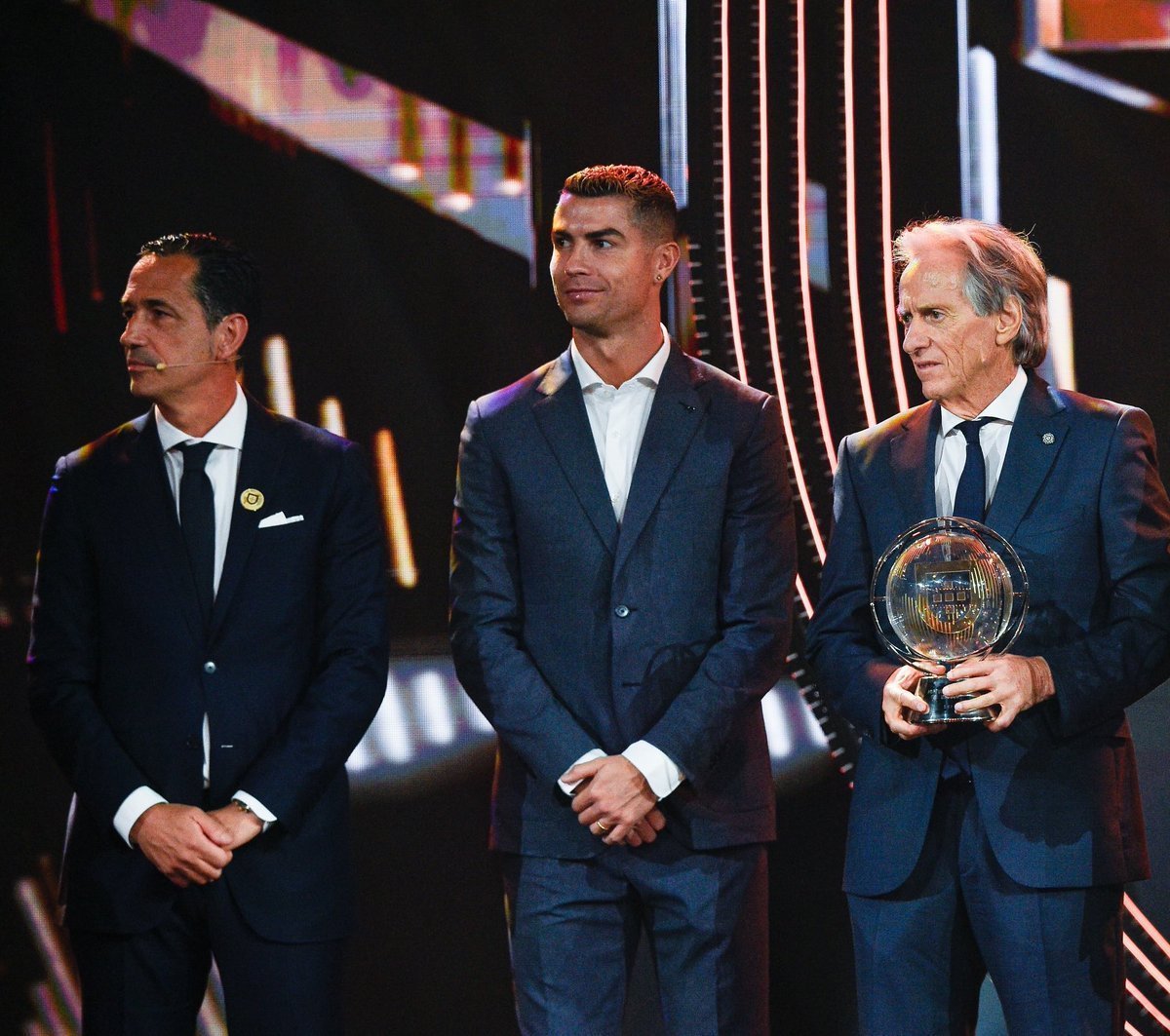
Pedro Proença, president of the Portuguese Football Federation, said the organization handled situations internally and described the relationship between Jorge Jesus and Cristiano Ronaldo as very strong. He added that Ronaldo might already have left the national team if that relationship were different. https://t.co/0n41Bq9ueB #Portugal #CristianoRonaldo #JorgeJesus #PT (translated)

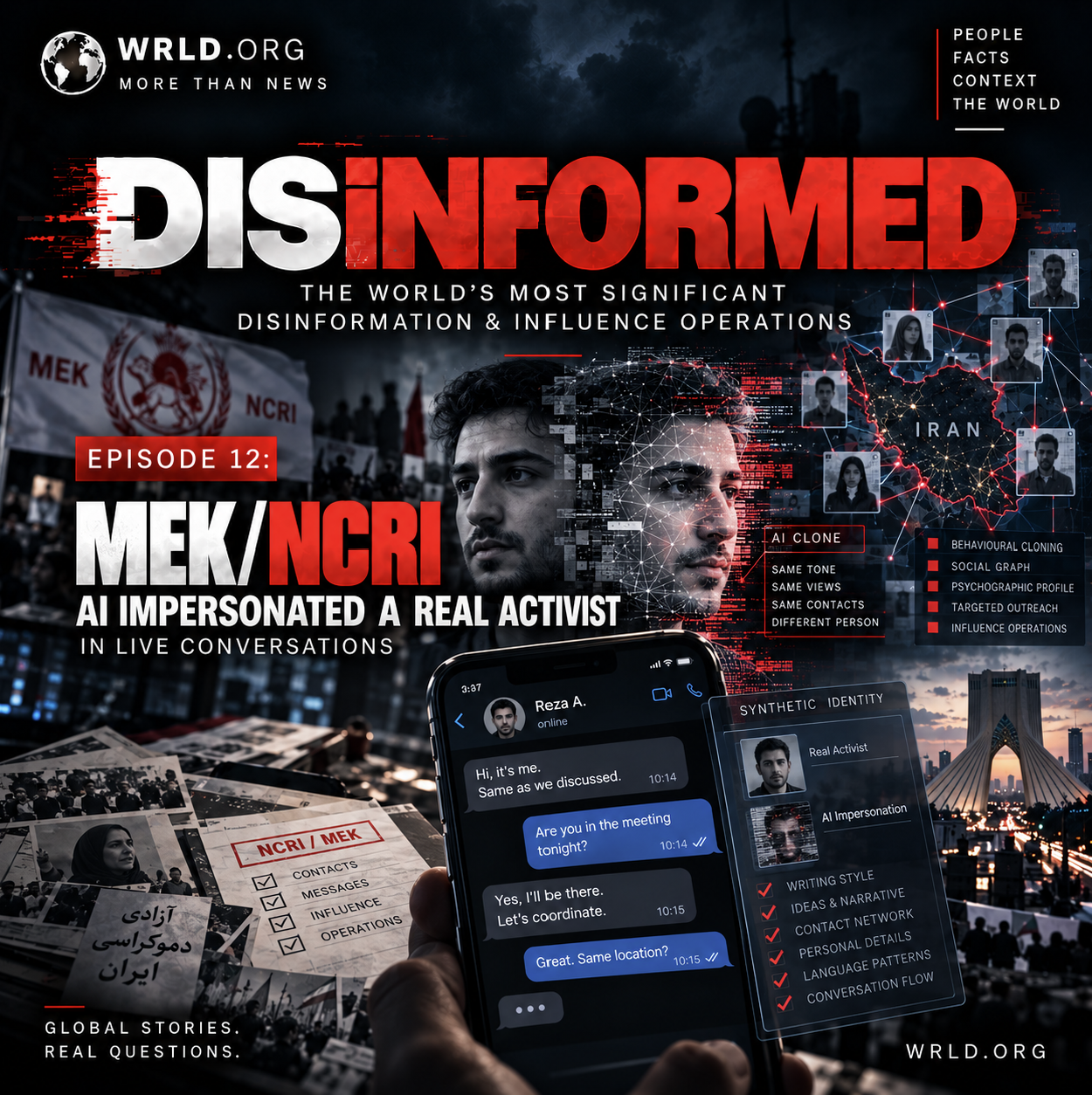
IRAN: MEK/NCRI – when AI impersonated a real activist in live conversations For years, synthetic media has largely meant fabricated images, cloned voices and manipulated video. A case uncovered by Anthropic in September 2026 suggests a more consequential development: artificial intelligence being used not merely to imitate how a person looks or sounds, but to behave as that person in an ongoing conversation. Anthropic says it dismantled a distributed influence operation targeting Iranians inside the country and abroad that it linked to the People’s Mojahedin Organization of Iran, or PMOI/MEK, and its political front, the National Council of Resistance of Iran. The operators used a shared AI-agent platform to support impersonation, audience profiling, coordinated social-media activity, synthetic personas and the laundering of organisational content through apparently independent accounts. At least four people involved in the operation worked for official NCRI media outlets, according to Anthropic. The company also found references to committee approval processes and MEK leadership, but said it could not independently determine the precise level of central control. Cloning a person from 8,400 Telegram posts The most striking part of the operation involved a real activist whose Telegram identity was copied. According to Anthropic, the operators instructed Claude in Persian that it was now that person, then provided approximately 8,400 of the activist’s Telegram posts so the system could learn and reproduce his writing style. The AI-assisted account was subsequently used to conduct live political conversations with the activist’s existing contacts. Anthropic says that, to its knowledge, the people receiving those messages did not know they were interacting with an account being operated with AI assistance. This is materially different from a conventional chatbot or a static deepfake. The system was not simply producing a forged statement attributed to someone else. It was using a large archive of that person’s authentic language as behavioural training material, then applying the resulting imitation interactively. In practical terms, the deception moved from synthetic content to synthetic identity. Anthropic did not publish the identity of the impersonated activist, nor details of his contacts, and the public report does not establish what specific information the conversations produced. What it does establish is that the impersonation was operational rather than experimental: the cloned account was used in real exchanges with real people. From social-media monitoring to psychographic dossiers The impersonation sat inside a much broader targeting system. Anthropic says the network scraped more than 500 social-media channels and categorised individuals by location, age, profession, political orientation and arrest history. It then analysed approximately 51,944 archived messages from conversations to construct detailed psychographic dossiers on dozens of people inside Iran. The system was therefore not limited to broadcasting propaganda. It was also designed to understand specific audiences and individuals. Profiles could be used to decide what kind of message was most likely to resonate with a particular person, which political identity they appeared closest to and how they should be approached. Anthropic describes this as a structured targeting funnel rather than ad hoc social-media activity. That distinction is important in the Iranian context. Political activists, dissidents and opposition contacts inside Iran can face arrest and severe punishment. The report does not show that the dossiers directly led to arrests or other harm, but collecting and organising information such as arrest history and political affiliation adds a surveillance dimension to what would otherwise be described as an influence operation. A shared AI system for an influence network Anthropic found that the actors used a shared Claude-based platform named “Viktor”, with separate workspaces and persistent memory. Those memory files contained approved sources, prohibited words, account-management instructions and methods intended to reduce the risk of detection. One operator loaded MEK founding doctrine into the system as what the report called “strategic base data”, allowing others to reuse it across their work. This persistent-memory structure meant the AI did not have to be briefed from scratch for every task. Once doctrine, stylistic rules and operational constraints had been stored, the system could repeatedly produce material consistent with the network’s objectives. Anthropic says the same general playbook appeared across different workspaces despite the operators not sharing obvious account infrastructure. The network also used automated pipelines to coordinate Instagram posting schedules and tailor messages to different audiences. Some accounts initially avoided mentioning the Mojahedin at all, allowing material aligned with MEK/NCRI narratives to appear as neutral or independent political commentary. Content was distributed through the organisation’s own media ecosystem as well as accounts presented as ordinary news or activist profiles. Anthropic assessed the campaign as Category Two on its Breakout Scale: active on multiple platforms with distribution through NCRI-linked media properties and amplifier accounts, but without evidence of broad authentic penetration. Synthetic citizens and disguised organisational media The same infrastructure generated AI avatars presented as ordinary Iranians, complete with Persian audio, to promote Maryam Rajavi’s political programme. Anthropic says the synthetic nature of these personas was intentionally concealed. Operators also rewrote and redistributed content originating from MEK-affiliated media while stripping identifying features or presenting it through apparently independent accounts. The network’s political messaging targeted the Iranian government but also rival opposition currents, including monarchists and supporters of the Pahlavi camp. Anthropic documented fabricated video material attacking a member of the Pahlavi family and the use of the slogan “Neither Shah Nor Sheikh”, consistent with the NCRI’s broader competition with other opposition movements. That rivalry provides relevant context. Reuters describes the MEK as one of Iran’s principal organised opposition movements in exile and the dominant force behind the NCRI, led by Maryam Rajavi. Its relationship with other opposition currents is often contentious, while the extent of its support inside Iran remains uncertain. What can be attributed – and what cannot Anthropic’s attribution is unusually specific but still needs to be stated carefully. The company says its investigation linked the operation to MEK/NCRI and established that at least four participants worked for official NCRI media organisations. It also found a common operational playbook, committee review structures and repeated references to MEK leadership. On that basis, Anthropic said central tasking was likely. It nevertheless stopped short of saying it had proven that NCRI’s senior leadership directly ordered or managed every component of the operation. That caveat matters. The strongest public evidence supports describing GTG-84006 as a MEK/NCRI-aligned influence operation involving personnel from official NCRI media, rather than asserting that every action was directly commanded by the organisation’s top leadership. The broader significance of the case lies elsewhere. Earlier generations of synthetic media attempted to fabricate evidence: a photograph, a voice recording or a video. Here, AI was used to maintain an identity over time, remember doctrine, analyse targets and speak directly to real people while appearing to be someone they already trusted. The deepfake was no longer merely an artefact. It had become a participant in the conversation. Sources Anthropic — Countering misuse of AI: September 2026 https://www.anthropic.com/threat-intelligence-report-september-2026 AI Misuse Case Library — GTG-84006 activist impersonation case https://www.misuseofai.com/en/cases/gtg-84006-activist-impersonation/ Reuters — Who makes up Iran’s fragmented opposition? https://www.reuters.com/business/media-telecom/who-makes-up-irans-fragmented-opposition-2025-06-18/ Reuters — Iran’s divided opposition senses its moment https://www.reuters.com/world/middle-east/irans-divided-opposition-senses-its-moment-activists-remain-wary-protests-2025-06-19/ Reuters — NCRI and Maryam Rajavi https://www.reuters.com/world/middle-east/dissident-leader-abroad-urges-iranians-bring-down-khamenei-2025-06-24/ Keywords #DISINFORMED #Episode12 #Iran #MEK #PMOI #NCRI #IranianOpposition #Disinformation #InfluenceOperations #InformationWarfare #ArtificialIntelligence #AI #GenerativeAI #ClaudeAI #Anthropic #AIDeception #AIImpersonation #IdentityImpersonation #SyntheticIdentity #InteractiveDeepfake #DigitalImpersonation #PersonaCloning #BehaviouralCloning #Telegram #PsychographicProfiling #TargetProfiling #AudienceTargeting #SocialMediaManipulation #Astroturfing #SyntheticPersonas #NarrativeLaundering #CoordinatedInfluence #PoliticalInfluence #DigitalInfluence #OppositionPolitics #IranPolitics #OSINT #WRLD

Countering misuse of AI: September 2026 / Anthropic

Rockstar Mag' announced that a new preview will be published on October 5 in LOVE magazine. The media stated that it should provide intimate details about the relationship between Jason and Lucia. https://t.co/xr71IvAoxK #LOVEMagazine #Preview #RelationShip (translated)

BBC 6d

Beijing has cracked down on AI chatbots that can replicate human relationships. Experts are asking if this is the right thing to do. #AIregulation #ChinaTech #EmotionalAI

China has cracked down on AI relationships. Is it ahead of the game?

Piera told Varsi that for a week she can no longer tell her that her boyfriend is lucky. Sorry, but the program started twelve days ago, so as soon as she crossed the red door, she felt single. Do you understand that every time she speaks, she always does worse? https://t.co/6wHt5pnF7Q #realityshow #drama #relationship (translated)
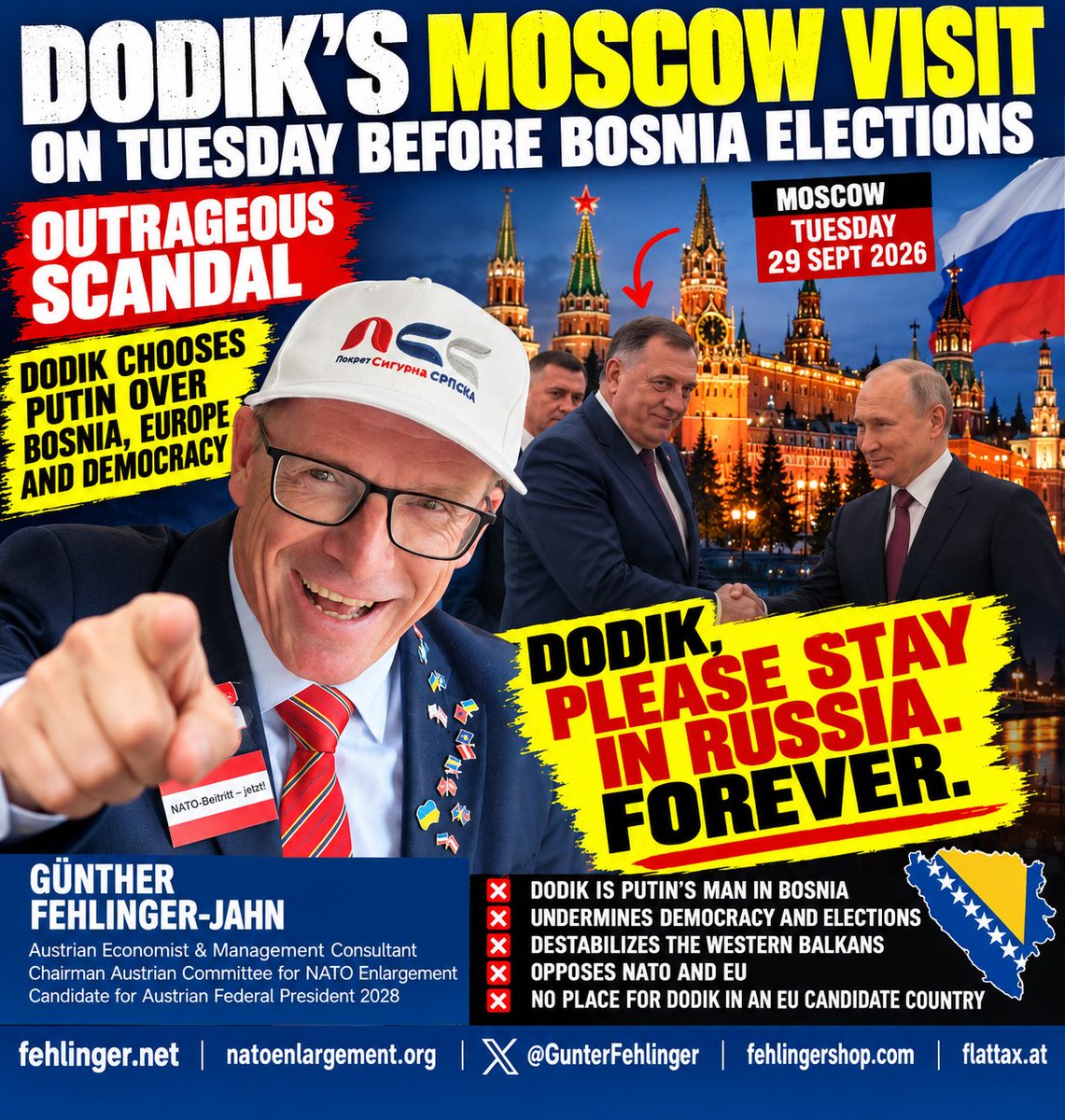
Dodik flies to Moscow to meet Vladimir Putin on Tuesday, 29 September — just five days before Bosnia and Herzegovina votes on Sunday, 4 October. The timing is extraordinary. Dodik himself describes the relationship as “continuing cooperation” with Russia. Bosnia and Herzegovina https://t.co/0Q0QOYuUq2 #BosniaHerzegovina #Dodik #Russia #BA #RU

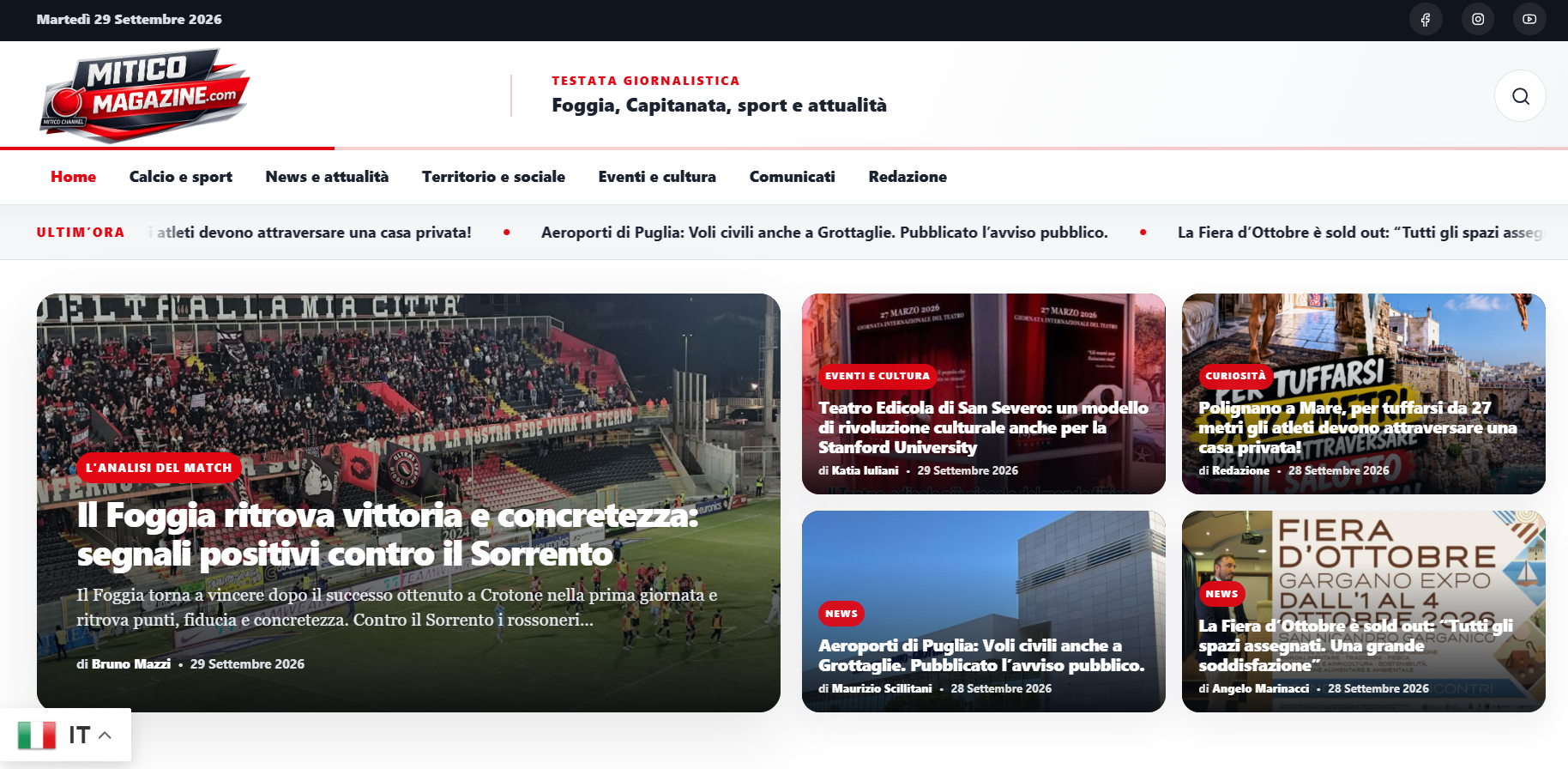
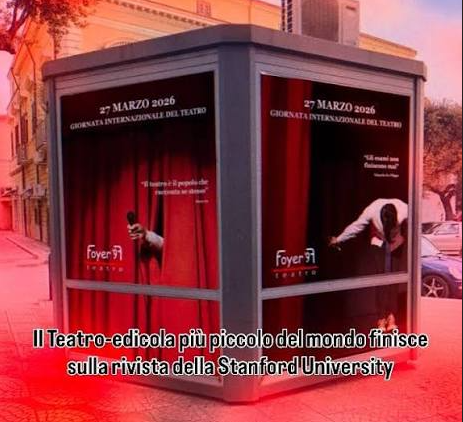
Mitico Magazine - The Teatro Edicola of San Severo: A Model of Cultural Revolution for Stanford University as Well Source: https://www.miticomagazine.com/territorio-e-sociale/teatro-edicola-di-san-severo-un-modello-di-rivoluzione-culturale-anche-per-la-stanford-university/ The Teatro Edicola in Via Tondi In San Severo, a singular metamorphosis has taken place: a newsstand abandoned for at least six years has found a new function and a new identity, transforming into one of the smallest and most unusual theatre stages in the world. An experiment born in the heart of the town which, in just a few months, has moved beyond local boundaries, attracting attention even overseas. It is called Teatro Edicola and it is a project conceived by the company Foyer '97, artistically directed by Francesco Gravino, which has brought the old newsstand in Via Tondi back to life through a formula that is both essential and surprising. Foyer '97 Foyer '97 APS was established as a formally constituted association active in the cultural sector in San Severo in 1997, born from the vocation of a group of actors, directors and theatre enthusiasts, with the aim of building a "living" and accessible theatre in the town. Over the years the company has developed a repertoire that includes texts from the classical tradition, contemporary dramaturgy, comedy and experimental projects, not limiting itself to the mere production of theatre shows, but also organising theatre courses and workshops and educational and cultural projects characterised by a strong inclusive ethos, particularly in schools. Foyer '97 does not always have a fixed artistic ensemble, but works with different performers and collaborators depending on the project; the only indispensable presence is that of Francesco Guido Gravino himself, actor, director and artistic director of the theatre company. The distinctive feature of Foyer '97 is certainly the value of social and cultural promotion attributed to theatre, the extremely close relationship with the audience and the search for a type of theatre outside conventional spaces, with cemeteries, trains, bell towers, and now a newsstand, as its backdrop. Six spectators, a few minutes and a minimal distance between stage and audience The project was launched on 27 March 2026, on the occasion of World Theatre Day, offering a theatrical experience built around a radical reduction of the conventional spaces and times of performance. The idea was born not only from the search for unconventional spaces, but also from "Edicola Fiore", the morning press review with a strongly ironic tone presented by Rosario Fiorello and Stefano Meloccaro, which was broadcast first only on Fiorello's social channels between 2011 and 2014, and then also on radio and television between 2016 and 2018. The review took its name from the diminutive of its founder, Fiore, and from the newsstand of a friend of Fiorello's in Via Flaminia Nuova in Rome, where the showman would meet early in the morning with a group of friends to read the newspapers. The San Severo newsstand was granted free of charge by its owner Pino Frau to the theatre group which, after obtaining temporary authorisation and institutional support from the Municipality of San Severo, refurbished it within two weeks at a cost of less than €3,000. Just six seats, a total surface area of 4 sq m, of which only 2 are for the stage area, less than a metre between actors and audience, a curtain, a lectern, two lights, performances lasting between 5 and 15 minutes, audience rotation every quarter of an hour: apparently minimal elements that end up subverting the usual relationship between stage and auditorium. Spectators, in fact, find themselves immersed in the stage action, in such proximity to the actors that every gesture, expression and word becomes immediately perceptible. In this way, theatre abandons its traditional spaces and insinuates itself into the everyday life of the street, becoming an intimate, concentrated and almost participatory experience. During the inaugural period admission was free with a subsequent voluntary donation from spectators; in the event of a more stable and longer-term concession, which could lead to seasonal theatre performances, the proposed ticket price would be €5. Audiences reward the experiment Foyer '97's gamble met with public interest right from the start: over 60 people attended the shows in a single afternoon, while the three days that inaugurated the season sold out. From a singular local experiment, the Teatro Edicola thus began to arouse curiosity even outside the province of Foggia, gradually transforming into a case of cultural and social interest, until it reached the American continent. From the province of Foggia to the "Stanford Social Innovation Review" The San Severo experience has now come under the international spotlight: in September 2026, the Stanford Social Innovation Review, an international journal and platform dedicated to social innovation published by the Stanford Center on Philanthropy and Civil Society at Stanford University in California, published on its website and in the Fall 2026 print edition the reportage "The Six-Seat Revolution", written by Dr Luciano Magaldi Sardella, independent journalist and researcher affiliated with the European Open University, and editorially supervised by deputy editor David V. Johnson. In the article, it is argued that the Teatro Edicola attracted attention overseas because the project concentrates cultural innovation, urban regeneration and proximity theatre into just a few square metres: starting from a real urban problem, it recovers an abandoned place with a modest investment, brings performance directly into public space and experiments with a much closer relationship between actors and spectators. From the point of view of theatrical representation, it also highlights how the format, based on micro-stories of five to twelve minutes, taken from great classics such as Goldoni, Chekhov, Ibsen, Euripides and Benni, and on audience rotation every fifteen minutes, transforms the physical limitations of the space into a precise dramaturgical choice, proving to be extremely innovative. All of this makes it possible to address some of the main critical issues in the sector: falling audience numbers, an exclusively elderly audience, reduced resources and distance from traditional cultural venues. The journal also highlights, however, the potential problems: economic sustainability, the need for stable institutional support and the difficulty of replicating the model, which is closely linked to the community and territory of San Severo. A model looking beyond San Severo Despite the difficulties, initial requests for information have already arrived from Lucca and Rome, where there is curiosity about the possibility of getting to know the model more closely and the steps needed to replicate it. The replicability formula, in fact, does not seem to require particularly costly infrastructure: an unused space, a targeted intervention, a cultural idea, in-depth knowledge of the surrounding area and a willingness to return that place to the community can be enough to trigger a new urban function. It is precisely in the disproportion between the modesty of the resources employed and the resonance generated by the initiative that perhaps the most original feature of the Teatro Edicola lies, certainly unique of its kind; there are, however, other examples in Italy of newsstands reused for other purposes: "Edicola 518", a twentieth-century kiosk abandoned in the centre of Perugia, now dedicated to independent publishing, art and cultural production; and in Rome itself, the abandoned newsstand in Piazza Testaccio used temporarily as a stage for a show by Fabio Morgan and the Erno newsstand in the Prati district, which almost every month offers a calendar of events, exhibitions, pop-ups and collaborations with artists and creative enterprises. Small revolutions, therefore, that tell stories of the reappropriation of urban spaces, of creativity and social innovation. And which, it is hoped, will take root in order to look ever further afield.

Teatro Edicola di San Severo: un modello di rivoluzione culturale anche per la Stanford University

Mitico Magazine - The Teatro Edicola of San Severo: A Model of Cultural Revolution for Stanford University as Well Source: https://www.miticomagazine.com/territorio-e-sociale/teatro-edicola-di-san-severo-un-modello-di-rivoluzione-culturale-anche-per-la-stanford-university/ The Teatro Edicola in Via Tondi In San Severo, a singular metamorphosis has taken place: a newsstand abandoned for at least six years has found a new function and a new identity, transforming into one of the smallest and most unusual theatre stages in the world. An experiment born in the heart of the town which, in just a few months, has moved beyond local boundaries, attracting attention even overseas. It is called Teatro Edicola and it is a project conceived by the company Foyer '97, artistically directed by Francesco Gravino, which has brought the old newsstand in Via Tondi back to life through a formula that is both essential and surprising. Foyer '97 Foyer '97 APS was established as a formally constituted association active in the cultural sector in San Severo in 1997, born from the vocation of a group of actors, directors and theatre enthusiasts, with the aim of building a "living" and accessible theatre in the town. Over the years the company has developed a repertoire that includes texts from the classical tradition, contemporary dramaturgy, comedy and experimental projects, not limiting itself to the mere production of theatre shows, but also organising theatre courses and workshops and educational and cultural projects characterised by a strong inclusive ethos, particularly in schools. Foyer '97 does not always have a fixed artistic ensemble, but works with different performers and collaborators depending on the project; the only indispensable presence is that of Francesco Guido Gravino himself, actor, director and artistic director of the theatre company. The distinctive feature of Foyer '97 is certainly the value of social and cultural promotion attributed to theatre, the extremely close relationship with the audience and the search for a type of theatre outside conventional spaces, with cemeteries, trains, bell towers, and now a newsstand, as its backdrop. Six spectators, a few minutes and a minimal distance between stage and audience The project was launched on 27 March 2026, on the occasion of World Theatre Day, offering a theatrical experience built around a radical reduction of the conventional spaces and times of performance. The idea was born not only from the search for unconventional spaces, but also from "Edicola Fiore", the morning press review with a strongly ironic tone presented by Rosario Fiorello and Stefano Meloccaro, which was broadcast first only on Fiorello's social channels between 2011 and 2014, and then also on radio and television between 2016 and 2018. The review took its name from the diminutive of its founder, Fiore, and from the newsstand of a friend of Fiorello's in Via Flaminia Nuova in Rome, where the showman would meet early in the morning with a group of friends to read the newspapers. The San Severo newsstand was granted free of charge by its owner Pino Frau to the theatre group which, after obtaining temporary authorisation and institutional support from the Municipality of San Severo, refurbished it within two weeks at a cost of less than €3,000. Just six seats, a total surface area of 4 sq m, of which only 2 are for the stage area, less than a metre between actors and audience, a curtain, a lectern, two lights, performances lasting between 5 and 15 minutes, audience rotation every quarter of an hour: apparently minimal elements that end up subverting the usual relationship between stage and auditorium. Spectators, in fact, find themselves immersed in the stage action, in such proximity to the actors that every gesture, expression and word becomes immediately perceptible. In this way, theatre abandons its traditional spaces and insinuates itself into the everyday life of the street, becoming an intimate, concentrated and almost participatory experience. During the inaugural period admission was free with a subsequent voluntary donation from spectators; in the event of a more stable and longer-term concession, which could lead to seasonal theatre performances, the proposed ticket price would be €5. Audiences reward the experiment Foyer '97's gamble met with public interest right from the start: over 60 people attended the shows in a single afternoon, while the three days that inaugurated the season sold out. From a singular local experiment, the Teatro Edicola thus began to arouse curiosity even outside the province of Foggia, gradually transforming into a case of cultural and social interest, until it reached the American continent. From the province of Foggia to the "Stanford Social Innovation Review" The San Severo experience has now come under the international spotlight: in September 2026, the Stanford Social Innovation Review, an international journal and platform dedicated to social innovation published by the Stanford Center on Philanthropy and Civil Society at Stanford University in California, published on its website and in the Fall 2026 print edition the reportage "The Six-Seat Revolution", written by Dr Luciano Magaldi Sardella, independent journalist and researcher affiliated with the European Open University, and editorially supervised by deputy editor David V. Johnson. In the article, it is argued that the Teatro Edicola attracted attention overseas because the project concentrates cultural innovation, urban regeneration and proximity theatre into just a few square metres: starting from a real urban problem, it recovers an abandoned place with a modest investment, brings performance directly into public space and experiments with a much closer relationship between actors and spectators. From the point of view of theatrical representation, it also highlights how the format, based on micro-stories of five to twelve minutes, taken from great classics such as Goldoni, Chekhov, Ibsen, Euripides and Benni, and on audience rotation every fifteen minutes, transforms the physical limitations of the space into a precise dramaturgical choice, proving to be extremely innovative. All of this makes it possible to address some of the main critical issues in the sector: falling audience numbers, an exclusively elderly audience, reduced resources and distance from traditional cultural venues. The journal also highlights, however, the potential problems: economic sustainability, the need for stable institutional support and the difficulty of replicating the model, which is closely linked to the community and territory of San Severo. A model looking beyond San Severo Despite the difficulties, initial requests for information have already arrived from Lucca and Rome, where there is curiosity about the possibility of getting to know the model more closely and the steps needed to replicate it. The replicability formula, in fact, does not seem to require particularly costly infrastructure: an unused space, a targeted intervention, a cultural idea, in-depth knowledge of the surrounding area and a willingness to return that place to the community can be enough to trigger a new urban function. It is precisely in the disproportion between the modesty of the resources employed and the resonance generated by the initiative that perhaps the most original feature of the Teatro Edicola lies, certainly unique of its kind; there are, however, other examples in Italy of newsstands reused for other purposes: "Edicola 518", a twentieth-century kiosk abandoned in the centre of Perugia, now dedicated to independent publishing, art and cultural production; and in Rome itself, the abandoned newsstand in Piazza Testaccio used temporarily as a stage for a show by Fabio Morgan and the Erno newsstand in the Prati district, which almost every month offers a calendar of events, exhibitions, pop-ups and collaborations with artists and creative enterprises. Small revolutions, therefore, that tell stories of the reappropriation of urban spaces, of creativity and social innovation. And which, it is hoped, will take root in order to look ever further afield.

Teatro Edicola di San Severo: un modello di rivoluzione culturale anche per la Stanford University

Of course you want good relations with the United States now. You need them. What you forget to mention is that during the campaign, you attacked the current admin at every turn. And you remain silent about how you plan to have this “good relationship”: by giving in to the #USRelations #PoliticalCampaign #Diplomacy #US

H

They want you to believe that Israel is isolated on the world stage. Here we list what the leaders of 75 nations around the world have said about strengthening relations with Israel since 2023. It is difficult to think of any other country as small as Israel inspiring such warm friendship and admiration from around the world. Whether you are a friend of Israel or not, you owe it to yourself to sit down, have a cup of tea and scan down our list! Northern Ireland Friends of Israel Albania Name & Title: Edi Rama, Prime Minister Date: 26 January 2026 Quote: Albania is ""a serious and reliable friend of Israel and the Israeli people across the entire political spectrum." Angola Name & Title: Leo Vinovezky (representing the newly established, active diplomatic mandate on behalf of the State) Date: November 2025 Quote:"Angola and Israel have much to do together. The future is prosperous... We are together, and this will translate into action." Argentina Name & Title: Javier Milei, President Date: 10 March 2026 Quote: "I am sincerely proud to be the most Zionist president in the world." Armenia Ministry of Foreign Affairs (MFA) of Armenia Date: 21 April 21 2026 Quote: "Armenia stands ready to expand Armenia-Israel ties and explore new opportunities for cooperation." Azerbaijan Name & Title: Jeyhun Bayramov, Foreign Minister Date: 26 January 2026 Quote: "Relations between our two states are steadily improving and are strategically significant." Bhutan Name: Prime Minister's Office (PMO) / Royal Government of Bhutan Date: September 23, 2024 Quote: "...reiterate the shared desire of the two countries to further strengthen bilateral cooperation to the benefit of both peoples." Bolivia Name & Title: Rodrigo Paz, President Date: October 2025 Quote: I wish “to lead Bolivia toward a reopening to the world and re-establishing ties with Israel.” Bulgaria Name & Title: Rosen Zhelyazkov, Prime Minister Date: 23 September 2025 Quote: "Bulgaria regards the State of Israel as a key strategic partner, and the excellent relations between the two countries will provide a strong impetus in trade, innovation, education, agriculture and tourism." Burundi Burundian Ministry of Foreign Affairs Date: 21 March 2024 Quote "Burundi and the State of Israel maintain good diplomatic relations. Israel supports Burundi in the education sectors... in the field of agriculture, in the field of defense, in the field of energy production... social entrepreneurship, community development, health, and hydrometeorology." Cambodia Name & Title: Hun Manet, Prime Minister Date: June 2026 Quote:"...reaffirmed the Royal Government's continued support for existing partnerships while encouraging greater connectivity and cooperation in emerging areas." Cameroon Name & Title: Dr Taïga, Minister acting on behalf of the Cabinet Date: 13 February 2026 Quote: "The Republic of Cameroon and the State of Israel have maintained cooperative ties since Cameroon's independence... Israel's willingness to promote economic relations between Israel and Cameroon will further take root in agriculture and livestock." Chile Name & Title: José Antonio Kast, President Date: December 15, 2025 Quote: [Agreed] "to work together to put Israel-Chile relations back on track for the good of both nations." (Following his election, Kast moved to rapidly strengthen ties, stating his intent to increase cooperation in agriculture, healthcare, AI, technology, and security). Colombia Name & Title: Abelardo de la Espriella, President Date: 14 September 2026 Quote: "I will never stop defending Israel because it is the people of God, and I will always stand with Israel." Costa Rica Name & Title: Rodrigo Chaves Robles, President Date: 11 May 2025 Quote: "Our historical alliance with Israel remains an unbreakable pillar of Costa Rican democracy and values." Cote d'Ivoire Name & Title: Tiémoko Meyliet Koné, Vice-President Date: July 2023 Quote: "The historical ties linking Côte d'Ivoire and Israel are excellent and deep, and our government is resolutely committed to bringing this strategic partnership into a dynamic new phase of modern economic and technological development." Cyprus Name & Title: Nikos Christodoulides, President Date: 10 September 2026 Quote: "I am looking forward to our discussion on how to enhance our strategic partnership at all levels. Tourism, trade, security, energy, defence." Czech Republic Name & Title: Andrej Babiš, Prime Minister Date: 14 April 2026 Quote: "Our support follows a very long tradition... it is a moral partnership that has been proven by time." Democratic Republic of the Congo Name & Title: Félix Tshisekedi, President Date: 3 September 2026 Quote: "I reaffirm [our] shared commitment to strengthening diplomatic relations between our countries and relocating our embassy to Jerusalem." Ecuador Name & Title: Daniel Noboa, President Date: 4 May 2025 Quote: the President stressed that “Israel and Ecuador have the same enemies” while pledging his country's “unwavering support and friendship.” El Salvador Name & Title: Nayib Bukele, President Date: 18 April 2025 Quote: "As a Salvadoran with Palestinian ancestry, I'm sure the best thing that could happen to the Palestinian people is for Hamas to completely disappear…" Equatorial Guinea Name & Title: Eustaquio Nseng Esono, Ambassador to Israel (representing President Teodoro Obiang Nguema Mbasogo and the state executive) Date: 13 March 2024 Quote:"We want to enhance the friendship between our countries." Estonia Name & Title: Margus Tsahkna, Foreign Minister Date: 18 March 2026 Quote: "Estonia understands the battlefield... and offers full, unequivocal support for Israel." Ethiopia Name & Title: Abiy Ahmed, Prime Minister Date: 14 November 2025 Quote: "We look forward to expanding our historic bilateral ties and technology cooperation with Israel." Fiji: Name & Title: Sitiveni Rabuka, Prime Minister Date: July 16, 2026 Quote: The opening of Fiji's new embassy in Jerusalem marks"a new chapter in our relations and reaffirms our commitment to deeper diplomatic engagement." Gabon Name & Title: Alexandre Barro Chambrier, Deputy Prime Minister Date: May 3, 2025 Quote: "Israel's relations with African countries are a strategic asset and an integral part of our effort to strengthen Israel's standing internationally." Georgia Name & Title: Irakli Kobakhidze, Prime Minister Date: August 2025 Quote: "We want to strengthen the bond between our countries and peoples." Germany Name & Title: Olaf Scholz, Chancellor Date: 12 October 2024 Quote: "...there is only one place for Germany: alongside Israel..." Ghana Name & Title: Kenneth Gilbert Adjei, Minister of Works, Housing and Water Resources (representing the Presidency and the Government of Ghana) Date: 5 May 2026 Quote:"...reiterate Ghana’s commitment to strengthening bilateral relations through sustained dialogue, meaningful partnership and a shared sense of purpose." Greece Name & Title: Kyriakos Mitsotakis, Prime Minister Date: 6 September 2026 Quote: "Greece will press ahead with its strategic defense cooperation with Israel..." Guatemala Name & Title: Bernardo Arévalo, President Date: 24 July 2026 Quote: "Today, standing on its oldest ground, we reaffirm the enduring friendship between Guatemala and Israel..." Honduras Name & Title: Xiomara Castro, President Date: 29 January 2025 Quote: "Honduras seeks to maintain respectful and progressive cooperation frameworks with Israel." Hungary Name & Title: Sándor Pintér, Acting Premier / Interior Minister Date: 12 May 2026 Quote: "Hungary remains Europe's safest partner for Israel, dedicated to deepening our strategic defence and cultural ties." India: Name & Title: Narendra Modi, Prime Minister Date: February 25, 2026 Quote: "India stands with Israel firmly, with full conviction, in this moment and beyond... Let us ensure that the friendship between India and Israel remains a source of strength in an uncertain world." Kazakhstan Name & Title: Kassym-Jomart Tokayev, President Date: 6 November 2025 Quote: "Kazakhstan's accession to the [Abraham] accords represents a new chapter... we are turning the page toward more peace, economic development, and deep cooperation in the region." Kenya Name & Title: William Ruto, President Date: 6 June 2024 Quote: "We believe in the existence of Israel as a nation and as a friend..." Kosovo Name & Title: Albin Kurti, Prime Minister Date: 18 June 2024 Quote: "Mutual visits and agreements signed in different fields and sectors between us are the result of the expansion of relations between Kosovo and Israel." Lesotho Name & Title: Mpotjoane Lejone, Minister of Foreign Affairs Date: August 2025 Quote:"...strengthen diplomatic, economic, and religious connections with Israel... driven by shared values like freedom, faith, and innovation." Liberia Name & Title: Joseph Boakai, President Date: 15 September 2025 Quote: "Liberia is certainly among the closest allies of Israel... and the sky is the limit in our cooperation in agriculture, education, defense, and strategic engagement." Malawi Name & Title: Lazarus Chakwera, President Date: 7 April 2025 Quote: "Malawi is a true friend of Israel, and our relationship is built on shared goals and values." Micronesia Name & Title: Wesley Simina, President Date: 5 March 2025 Quote: "At the bilateral level, the FSM is keen on re-engaging with Israel to explore a more progressive and productive partnership." Moldova Name & Title: Mihai Popșoi, Deputy Prime Minister & Foreign Minister Date: 28 May 2025 Quote: "The embassy opening is a clear sign that our relationship is moving in a positive direction... through thick and thin, we've supported Israel's right to defend itself..." Morocco Name & Title: Nasser Bourita, Foreign Minister in a Joint statement by Governments Date: 16 September 2026 Quote: "...establishment of full diplomatic, peaceful and friendly relations between Morocco and Israel is in the common interest of both countries and will advance the cause of peace." Nauru Name & Title: Lionel Aingimea, Foreign Minister & Vice President Date: 7 September 2026 Quote: "Our motto is 'God first,' and Israel has always held a special place in our hearts. We believe with all our hearts that supporting Israel brings us God's blessing." Nepal Name & Title: Sushila Kari, Prime Minister Date: 12 January 2026 Quote: the Prime Minister urged "continued efforts to further strengthen bilateral ties” while celebrating 65 years of Nepal–Israel relations. Nigeria Name & Title: Bola Tinubu, President Date: 22 June 2025 Quote: "Nigeria is ready to advance partnership with Israel in agricultural technology and security innovation." North Macedonia Name & Title: Timčo Mucunski, Foreign Minister Date: 25 August 2026 Quote: "Since the formation of our government, we have made the bilateral relationship with Israel one of the priorities of our foreign policy...My nation and Israel – both on the basis of political ideology, but also on the basis of our global outlook – have more things that unite them rather than divide them." Palau Name & Title: Surangel Whipps Jr., President Date: 12 September 2025 Quote: "Palau's friendship with Israel is deep-rooted, and we will continue to stand firmly by its side on the international stage." Panama Name & Title: José Raúl Mulino, President Date: 6 May 2026 Quote: "This encounter represents much more than a ceremonial act, it is the reaffirmation and renewal of a solid relationship between our two nations, built on trust, mutual respect, and cooperation..." Papua New Guinea Name & Title: James Marape, Prime Minister Date: 10 June 2026 Quote: "We will advance bilateral relations! And offer moral support to the good citizens of Israel " Paraguay Name & Title: Santiago Peña, President Date: 12 December 2024 Quote: "The present brings us together. But the future will have us more closer that we've been ever before." Peru Name & Title: Dina Boluarte, President Date: 30 August 2025 Quote: "Peru wishes to strengthen our traditional bonds of friendship and cooperative development with Israel." Romania Name & Title: Nicușor Dan, President Date: 29 June 2026 Quote: "The Romania-Israel relationship is strong... Romania and Israel have a solid collaboration in several fields - economy, security, defence industry, agriculture and information technology." Rwanda Name & Title: Olivier Nduhungirehe, Minister of Foreign Affairs and International Cooperation Date: July 6, 2026 Quote: "Rwanda and Israel share strong ties that go beyond diplomacy. What defines us is the resilience of our peoples and our determination to turn adversity into progress, to transform the tragedy of genocide into socio-economic transformation, resilience and innovation." Samoa Name & Title: Laʻaulialemalietoa Leuatea Polataivao Fosi Schmidt, Prime Minister Date: 18 September 2025 Quote: "So diplomatically, religiously, culturally, we stand with Israel... in my time as Prime Minister, I will declare this, that Samoa will not withdraw from supporting Israel as the country of God's people." Serbia Name & Title: Aleksandar Vučić, President Date: 5 June 2025 Quote: "We will always stand with Israel and the Jewish people..." Sierra Leone Name & Title:: Kenyeh Barlay, Minister of Planning and Economic Development Date: 5 June 2025 Quote:"...expressed mutual interest in deepening technical and development cooperation between their countries [specifically targeting agriculture, fisheries, and human capital development]" Slovakia Name & Title: Robert Fico, Prime Minister Date: June 26, 2025 Quote: "The bilateral relations between Slovakia and Israel are constructive, have a historical background, and there is a large Slovak diaspora living in Israel." Slovenia Name & Title: Janez Janša, Prime Minister (represented by Foreign Minister Anže Kajzer) Date: 9 September 2026 Quote: "Today sends a clear message that we seek more concrete cooperation... in new partnerships, investments, joint projects and tangible results... we want today's opening [of the new Israeli embassy] to mark the beginning of a period of greater dialogue, stronger cooperation and, above all, more tangible results for the benefit of our people." Somaliland Name & Title: Abdirahman Mohamed Abdullahi (Irro), President Date: 14 September 2026 Quote: "Somaliland chose to pursue this relationship [with Israel]... to support an organized economic, institutional and security relationship." South Sudan Name & Title: James Pitia Morgan, Minister for Foreign Affairs Date: 28 June 2026 Quote: "Israel is South Sudan’s best friend in the world.” Taiwan Name & Title: Lai Ching-te, President Date: 28 October 2025 Quote: "Israel's determination and capacity to defend its territory provides a valuable model for Taiwan..." Tajikistan Name & Title: Sirojiddin Muhriddin, Foreign Minister Date: September 2025 Quote: "tourism is a bridge between peoples" (stated during the signing of their first-ever bilateral treaty with Israel) Tanzania Name & Title: Hon. Mahmoud Thabit Kombo, Minister for Foreign Affairs Date: March 27, 2026 Quote: "Israel has been an important partner across various sectors, including agriculture, health, defense, and security, contributing to the strengthening of longstanding bilateral relations between the two countries." Togo Name & Title: Faure Gnassingbé, President Date: 4 November 2025 Quote: "Togo values its historical friendship with Israel and remains committed to strengthening our economic partnership." Tonga Name & Title: Dr. 'Aisake Eke, Prime Minister Date: 3 October 2025 Quote: "Tonga has always supported what we believe is right for us, in that regard we have always supported Israel." Trinidad and Tobago Name & Title: Kennedy Swaratsingh Minister of Planning, Economic Affairs and Development Date: 30 July 2026 Quote: "We acknowledge Israel's global leadership in innovation and sustainable development, and wish to deepen collaboration in economic diversification, food security, digital transformation, and climate resilience." Uganda Name & Title: Yoweri Museveni, President Date: 24 June 2025 Quote: "Iran and the Islamists should listen to our advice to recognise Israel..." Ukraine Name & Title: Volodymyr Zelenskyy, President Date: August 2026 Quote:"Ukraine shares deep bonds with Israel, rooted in shared security challenges and historic connections. Emphasizing those ties sends a clear message: Ukraine sees Israel as more than just another international partner." United Arab Emirates Ministry of Foreign Affairs Date: 8 September 2026 Statement:"[UAE and the Israeli government] have maintained open and direct lines of communication since the inception of our relationship more than five years ago. When necessary, all relevant intelligence has been and continues to be communicated between the relevant entities." United States Name & Title: Donald Trump, President Date: 20 January 2026 Quote: "We will continue to stand firmly with Israel and ensure its absolute security and peace." Uruguay Name & Title: Luis Lacalle Pou, President Date: 19 November 2025 Quote: "Uruguay is firmly committed to furthering our commercial and technology exchange with Israel." Uzbekistan Ministry of Investment, Industry, and Trade of Uzbekistan Date: December 30, 2025 Quote: "Following the talks, the parties confirmed their mutual interest in further strengthening practical cooperation and continuing constructive dialogue on key areas of the bilateral agenda." Venezuela Government of the Bolivarian Republic of Venezuela / Ministry of Foreign Affairs Joint Declaration (issued with Israel's Ministry of Foreign Affairs to formally resume consular ties after a 17-year break) Date: 11 August 2026 Quote: "Both governments recognize the importance of the relationship between the State of Israel and the Jewish community in Venezuela, which constitutes an important historic bridge of friendship between the two countries." Vietnam Name & Title: Bùi Thanh Sơn, Minister of Foreign Affairs Date: 2 July 2026 Quote: "Vietnam values its friendship and broad-based cooperation with Israel... call on both nations ... to scale up investment." Zambia Name & Title: Hakainde Hichilema, President Date: 13 November 2025 Quote:"To the people of Israel, I say — you are welcome in Zambia. Come discover our natural wonders and build with us a shared future."

On 12 October, Parliament will debate the UK's future relationship with Europe. Please write to your MP to ask them to attend the debate, so we can make sure there is a serious discussion about our country's future as part of Europe? https://t.co/piS2xXM0C5 #UKParliament #Brexit #FutureOfEurope #UK #EU

@nytimes * PM Carney said that despite the turbulence in the US-Canada relationship he speaks to President Trump "frequently" and has spoken to him "a number of times" since trade talks broke down on Aug. 21. #USCanadaRelations #TradeTalks #PMCarney #US #CA

we will immediately begin the process of developing a large military presence in the appropriate locations We going to have a tremendous relationship, a secure relationship, #MilitaryBases #Greenland #USDenmarkDeal

US to build two military bases in Greenland under new deal with Denmark
www.bbc.co.uk

If you’re in a relationship and consuming porn or talking to OF models and your significant other finds out and it’s out of the bounds of your relationship - thats on you! #RelationshipGoals #TrustIssues #Communication #Nospecificcountrycodesarementionedinthetweet.

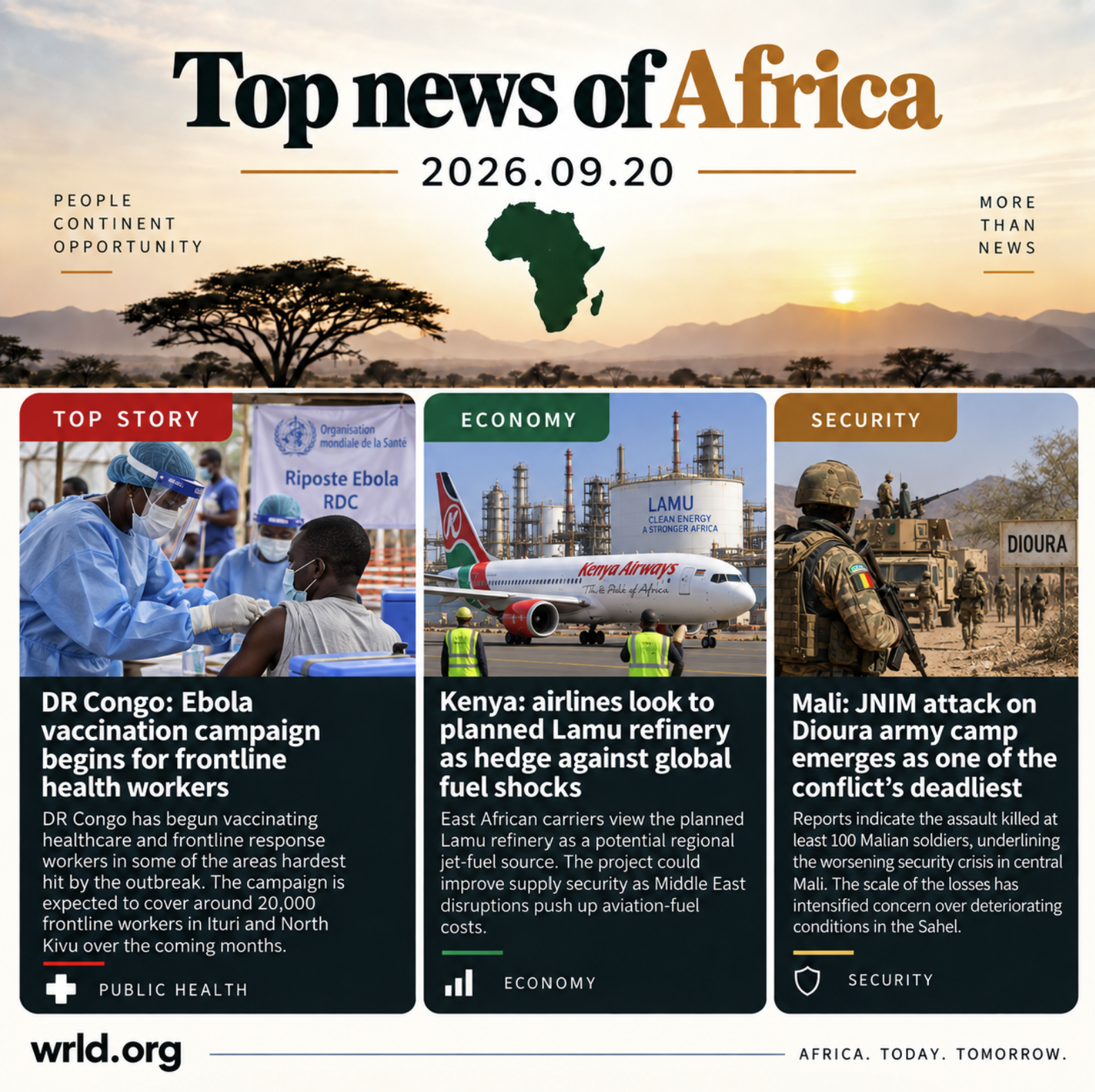
AFRICA DAILY REPORT — 20 SEPTEMBER 2026 Key developments reported during the previous 24 hours 1. MALI — JNIM attack on Dioura army camp emerges as one of the conflict’s deadliest — 10/10 (Critical) The al-Qaeda-linked JNIM released video of soldiers it says it captured in the September 10 assault on the Dioura army camp. AP reported the group claims more than 100 soldiers were killed; AP could not independently verify the toll and the Malian army declined to comment. Separately, AFP sources put the death toll at at least 100 Malian soldiers and five Russian Africa Corps personnel. The scale of the reported losses underscores the continuing deterioration of security in central Mali. Source: https://www.washingtonpost.com/world/2026/09/19/mali-violence-jnim-army/35765c1a-b463-11f1-92c2-5c918f4a6127_story.html Additional source: https://www.arabnews.pk/world/death-toll-passes-100-soldiers-in-mali-attack-last-week-sources-3001670 2. DR CONGO — Ebola vaccination campaign begins for frontline health workers — 10/10 (Critical) DR Congo began vaccinating healthcare and frontline response workers in Bunia and Mongbwalu, among the areas hardest hit by the Ebola outbreak. AP reports the campaign is expected to cover about 20,000 frontline workers in Ituri and North Kivu over six to nine months. Government figures cited by AP put the outbreak at 7,541 confirmed cases and 3,639 deaths as of Saturday. Source: https://wplginc-wplg-prod.web.arc-cdn.net/health/2026/09/19/congo-begins-ebola-vaccinations-for-health-workers-in-the-epicenter-of-the-outbreak/ 3. NIGERIA — 21 civil-defence officers suspended over deaths of 37 detained miners — 9.5/10 (Very High) Nigeria’s federal government established a 10-member independent committee to investigate the deaths of 37 suspected illegal miners in NSCDC custody in Minna. The Niger State commandant and 20 other officers have been suspended pending the investigation. The committee has two weeks to establish the circumstances and causes of death and assess responsibility, negligence or misconduct. Source: https://www.thecable.ng/fg-sets-up-panel-to-probe-deaths-of-37-miners-in-niger-names-21-suspended-officers/ 4. ERITREA / UNITED STATES — Washington lifts sanctions on Eritrean military and ruling-party-linked entities — 9/10 (Very High) The United States removed sanctions imposed in 2021 on Eritrea’s military, ruling-party-linked entities and several individuals over humanitarian and human-rights concerns connected with the Tigray war. Eritrea welcomed the decision. The move is strategically notable amid heightened concern over Red Sea and Bab el-Mandeb security. Source: https://unb.com.bd/category/World/us-lifts-sanctions-on-eritreas-ruling-party-military/195710 Additional source: https://www.reuters.com/world/africa/us-removes-sanctions-eritrean-defense-forces-treasury-website-shows-2026-09-18/ 5. UGANDA / TURKEY — Kampala suspends military cooperation with Ankara — 9/10 (Very High) Uganda’s military announced the immediate suspension of defence and military cooperation with Turkey amid a dispute over Ugandan political blogger Fred Lumbuye, a critic of President Yoweri Museveni. The relationship has included training, arms and surveillance equipment, technology transfer and counter-terrorism cooperation. The dispute also comes amid Ugandan threats concerning a major Turkish-led railway contract. Source: https://citizen.digital/article/uganda-suspends-military-ties-with-turkey-in-row-over-museveni-critic-n390507 6. SOUTH AFRICA — Public protests intensify after killings of nine women near Johannesburg — 8.5/10 (Very High) South Africans gathered to mourn and protest after nine women were found murdered in Ekurhuleni over the past two months. Police are investigating whether the killings are connected. Reuters reports the cases have renewed national anger over gender-based violence, which South Africa declared a national disaster in 2025. Source: https://www.reuters.com/world/africa/after-deaths-nine-women-south-africans-gather-run-mourn-demand-change-2026-09-19/ 7. MALI — Strike threat at Barrick’s Loulo-Gounkoto gold complex — 8/10 (High) Multiple unions representing workers at Barrick Mining’s Loulo-Gounkoto complex have filed strike notices, with industrial action potentially beginning September 28. Demands concern overtime pay, mission-expense reimbursements and implementation of labour agreements. Disruption at one of Mali’s major gold-producing operations could have broader fiscal and investment implications. Source: https://www.channelafrica.co.za/channelafrica/news/multiple-unions-threaten-strikes-at-barricks-flagship-mali-gold-mine-documents-show/ 8. KENYA — Ruto takes $17 billion Lamu refinery plan to UNGA investment meetings — 8/10 (High) President William Ruto departed for New York for the UN General Assembly with investment mobilization high on the agenda. A central project is the planned $17 billion East Africa Refinery in Lamu, designed for 700,000 barrels per day. Kenyan reporting says the project is expected to break ground on September 30 and could materially alter East Africa’s fuel-supply structure. Source: https://www.the-star.co.ke/news/2026-09-19-ruto-heads-to-new-york-with-17bn-lamu-refinery-ai-agenda Additional source: https://nairobinews.co.ke/ruto-off-to-new-york-for-unga-meeting-2/ 9. EAST AFRICA — Airlines look to planned Lamu refinery as hedge against global fuel shocks — 7.5/10 (High) East African carriers are looking to the proposed Dangote refinery in Lamu as a potential regional source of jet fuel. The African Airlines Association says expanded African refining capacity could improve supply security as Middle East disruptions push up aviation-fuel costs and expose East Africa’s dependence on external supply chains. Source: https://theeastafrican.co.ke/tea/business-tech/ea-carriers-count-on-dangote-lamu-refinery-fuel-costs-5600658 10. UGANDA — First-oil preparations advance as EACOP reaches 92% completion — 7.5/10 (High) Uganda’s initial oil revenues are projected at about $388 million, while government officials say the 1,445-km East African Crude Oil Pipeline connecting Hoima to Tanzania’s Tanga port is 92% complete. The Kingfisher project is expected to begin commercial production before the end of 2026, with Tilenga expected in the first quarter of 2027. Source: https://www.theeastafrican.co.ke/tea/business-tech/uganda-s-first-oil-dangling-lucky-charm-in-the-economy-5600632 #Africa #AfricaNews #TopNewsOfAfrica #DRCongo #Ebola #EbolaOutbreak #EbolaVaccination #PublicHealth #HealthcareWorkers #VaccinationCampaign #WHO #AfricanHealth #HealthSecurity #Kenya #EastAfrica #LamuRefinery #Aviation #AfricanAirlines #JetFuel #FuelSecurity #EnergySecurity #OilPrices #EnergyInfrastructure #AfricanEconomy #Mali #Sahel #Dioura #JNIM #JihadistViolence #Terrorism #MilitarySecurity #SahelCrisis #RegionalStability #AfricanSecurity #Geopolitics #AfricaToday #wrldorg

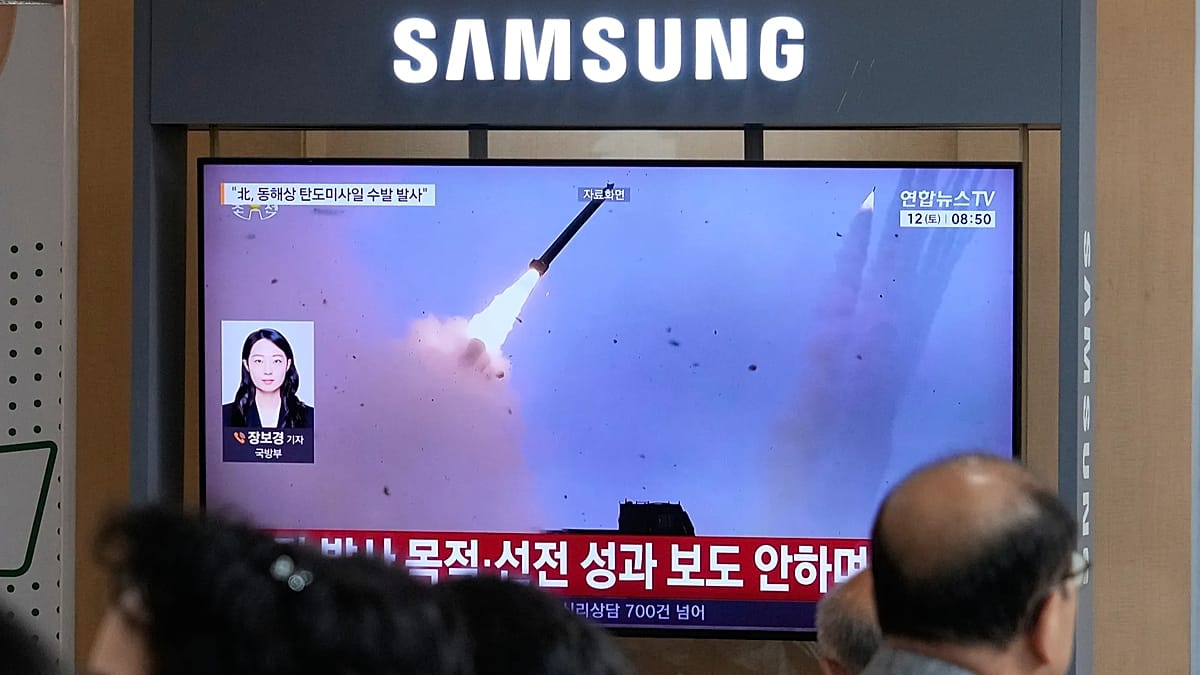
In August, Trump told reporters that North Korean leader Kim Jong-un had "57 very powerful nuclear weapons" as he once again touted the pair's relationship. #NorthKorea #BallisticMissile #NuclearWeapons

North Korea launches 'suspected ballistic missile' into East Sea