BETA nonprofit public democratic european moderated

Search

#Feedback

Björn Harms announced that his new book "The Asylum Complex" would be available in stores the following day; he already had some freshly printed copies in hand. He wrote that the book includes, among other things, a detailed overall calculation of the asylum costs of past years and an overview of the number of asylum accommodations in Germany. According to him, the federal government does not know this number. According to Harms, the book also addresses real estate companies and hoteliers who earn millions by renting to the state, as well as home operators, welfare associations, lawyer networks, and state companies that benefit from the growing market or mass immigration. He announced interviews with insiders from the social industry and the real estate market, as well as insights into asylum NGOs, refugee councils, and million-euro funding programs from the EU and the federal government. Additionally, the book aims to address legal questions related to the topic of asylum. Harms requested feedback on the book. #Asylkomplex #Buchneuerscheinung #Asylpolitik (translated)


Fernando “nandoshow” Schwabe reported that he would be traveling to China in a few hours to cover the finals of the VALORANT Champions in Shanghai 2026. He said it would be his third international coverage in the VCT, but the first at a Champions event and also his first visit to China. Schwabe stated that he hoped to conduct in-person interviews with players from LOUD, follow press conferences on his channel, and, if possible, carry out other interviews. He also mentioned that he was hoping to return to Brazil with the title. The journalist thanked his followers for their support and for the positive feedback on his press conferences, interviews, and content. Finally, he joked that he would not be bringing jackets for other people. #VALORANT #Champions #Xangai (translated)

But Cuatro stated that he had been enduring weeks of criticisms directed at his team, his family, and himself, in addition to assuming blame and responsibilities that, he said, did not belong to him. He pointed out that the reactions to the event were divided and that some participants attributed issues to them that did not depend on the organization. Regarding the cooperative series, he claimed they would not cancel it because some participants did not follow instructions or did not play as a team, even though, he stated, they received instructions an hour in advance and had alliances to identify the members of each group. He also rejected accusations of favoritism and said that his team had the experience to distinguish technical errors from game failures. Cuatro expressed sadness over the toxicity that, in his opinion, had surrounded the series, and affirmed that participants insulted them and spread incorrect information about the attention they received. He said they had handled more than 700 tickets during the season and had insisted that players use a Discord channel to send feedback. He also defended the technical work and content of the series: he stated that the team had adjusted the difficulty and mechanics in all seasons and had incorporated novelties. He added that they had revived all participants in several seasons and urged that no hasty conclusions be drawn about future resurrection mechanics. Finally, he said that Eufonia was doing things well, that the team was striving and growing, and asked those who disagreed to let them work in peace. #Toxicidad #JuegoEnEquipo #Feedback (translated)

Nachez 1d

Nachez expressed his concern that Honda said it would make the change "based on Fernando's feedback." He wondered if the team did not have its own diagnosis and if it did not know why it was losing so much in acceleration. #Honda #F1 #FernandoAlonso (translated)

A

Steven Cercamondi wrote that Margaret Hamilton, whom he referred to as the "woman of the Moon," had passed away at the age of 90. He described a photograph in which Hamilton appeared next to the lists of software developed by the team she led for the lunar module and the command module of the Apollo 11 mission. According to Cercamondi, that software managed critical functions such as flight control, navigation, data, communications, and safety, and was designed to handle emergencies and failures by providing real-time feedback to the astronauts. He also credited Hamilton with introducing an error management approach based on "interrupts," which allowed for timely detection and management of problems. He wrote that the team's code had provided the foundations for the safe operation of space missions and concluded with a message of condolence. #MargaretHamilton #NASA #Apollo11 (translated)

O

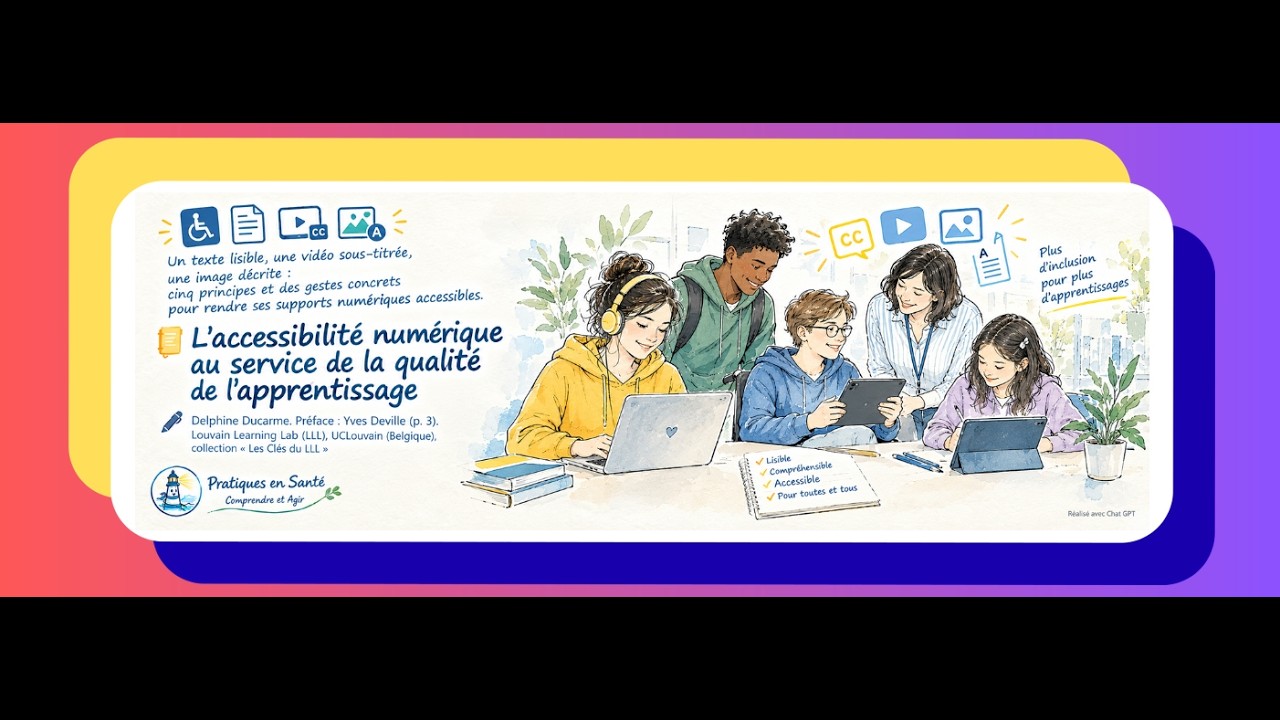
A readable text, a subtitled video, a described image: five principles and concrete actions to make digital resources accessible. Digital accessibility in the service of the quality of learning Delphine Ducarme. Foreword: Yves Deville (p. 3). Louvain Learning Lab (LLL), UCLouvain (Belgium), "The Keys of LLL" collection Audio Capsules on Health Practices 🎙️🎥 https://www.youtube.com/watch?v=aCKvkJIZAxE An illustrated Key from UCLouvain, written for higher education, with glossary, annotated examples and a ready-to-use mini-feedback survey. Analysis of Health Practices and link to source ℹ️➕ https://www.pratiquesensante.com/blog/pratiques-15/l-accessibilite-numerique-au-service-de-la-qualite-de-l-apprentissage-6236 The document presents itself as a set of concrete guidelines to improve the digital accessibility of teachings (p. 2). It proposes five principles with precise implementations (p. 10), a glossary of key concepts (p. 11), annotated examples for texts, videos and audios, images and Moodle (p. 12-17), as well as suggestions for checking resources and gathering feedback from students (p. 18-19). It is written for higher education; its use for prevention, training, or information resources involves transposition (analysis Health Practices). #️⃣ #pratiquesensante #DigitalAccessibility #UniversalDesign #Inclusion #Disability #AccessibleResources #OpenEducation #Pedagogy #pratiquesensante #AccessibilitéNumérique #ConceptionUniverselle #Inclusion #Handicap #SupportsAccessibles #ÉducationOuverte #Pédagogie (translated)

L'accessibilité numérique au service de la qualité de l'apprentissage

AlkoInwestor described an informal competition among parents from his office for additional classes for children, which was set to last from the beginning of September. According to his account, the conversation started with ballet and English with a native speaker from London for seven-year-old Zuzia, after which colleagues exchanged ideas for robotics, chess, and Mandarin. Five-year-old Lenka was supposed to learn Chinese twice a week at home. The author also reported that eight-year-old Antek attended fencing and the Little Leaders Academy, where — as he heard from the boy's father — leadership, emotional intelligence, and feedback skills were taught. Monika's daughter, according to the description, had individual art lessons for 120 złoty per week because she had problems with composition, often placing the sun in the upper left corner of the drawing. AlkoInwestor wrote that after the conversation, parents began looking for contacts and available slots, although they had not previously known they needed such services. He compared these activities with his own son, who — as he indicated — went to the yard after school, and with Marek's child, who had math three times a week, English twice, programming, chess, and soccer. Marek was expected to spend almost two thousand złoty on classes from the beginning of September, and his son and the author’s son both received four grades in math. The author concluded that they achieved the same result at a lower cost. #FIRE #Edukacja #Rodzicielstwo #Kreatywność (translated)

V

"The WTA is committed to offering more to players and tournaments in 2027. We have listened to players' feedback on calendar-related needs and have responded with a significant reduction in commitments. Achieving equal prize money across all combined WTA 1000 tournaments represents a milestone for tennis," said Valerie Camillo, president of the WTA. #TennisFemminile #ParitàDiGenere #WTA1000 (translated)

Svolta storica nel tennis femminile: nel 2027 premi uguali agli uomini per tutti i 1000 combined
www.ilfattoquotidiano.it
P

In connection with yesterday's tweet, I would like to highlight the entire team and point out how crucial it is to have great people and professionals in the team who know what they are doing. After each outing, I always try to do team feedback and always appreciate "my people." Below is a small example of great professionalism. 👇 #tým #profesionalita #ocenění (translated)

Fui na Coamix e recebi a revisão do Vice Editor Chefe! O H.E.A.R.T. n era p ser analisado lá, mas ele quis ler as obras dos alunos do sensei Ossamu Ele dizer q ficou animado lendo, q se divertiu, q os personagens são carismáticos e a história é interessante me deixou mto feliz + https://t.co/23mCNXbIOz #Literatura #EscritaCriativa #Feedback

Insomniac Games ha lanzado una nueva actualización para Wolverine. Entre los cambios, el estudio ha suavizado los efectos visuales relacionados con los rastros de olor y la percepción auditiva, reduciendo su intensidad para que resulten menos invasivos durante el gameplay. Además, el equipo continúa trabajando en posibles mejoras para la función Sentidos y está considerando añadir opciones que permitan activar o desactivar algunos de estos elementos en futuras actualizaciones. Insomniac también reafirma que seguirá tomando en cuenta el feedback de la comunidad para continuar puliendo la experiencia. Bien ahí. #Wolverine #InsomniacGames #Videojuegos

Ik heb geen begrip voor het standpunt van mensen die hun lidmaatschap demonstratief opzeggen van de FVD omdat er 1 standpunt is over een klein landje in Azie waar onenigheid over is. 1. Prioriteit zou de bevrijding van NL moeten zijn 2. Meningsverschil mag. 3. De arms trade treaty is een heel goed principe. 4. Juist als een 'bevriende" natie ontspoort zijn politieke en economische de manier om feedback te geven. #politiek #meningsvorming #geopolitiek

Dlaczego ludzie „głupsi od Ciebie” zarabiają więcej? Bo talent rozkłada w kształt dzwonu, a pieniądze według Pareto. Już tłumaczę Znacie powiedzenie „uczniowie piątkowi pracują dla trójkowych” ? Nie jest przypadkowe. Szkoła nagradza poprawne odpowiedzi, posłuszeństwo i unikanie błędu. Rynek nagradza timing, ryzyko, sprzedaż i wytrwałość przy niepewności. Ktoś mniej inteligenty mniej analizuje i nie boi się próbować. Badania naukowe opisują precyzyjnie jaka statystyka za tym stoi i jak wykorzystać ją na swoją korzyść. Artykuł MIT Technology Review z 2018 („If you’re so smart, why aren’t you rich?”) rozbija model Pluchino, Biondo i Rapisardy. IQ i talent mają rozkład normalny tj nikt nie jest tysiąc razy mądrzejszy od średniej. Bogactwo idzie z kolei według prawa potęgowego: 20% ludzi zgarnia 80% kapitału. W symulacji ludzie ze średnim talentem i serią szczęśliwych zdarzeń kończyli bogatsi niż geniusze z pechem. Największy sukces prawie nigdy nie pokrywał się z największym talentem. Potrzebujesz zatem progu kompetencji, żeby okazję w ogóle złapać, powyżej tego progu decyduje liczba trafień. Jeśli możesz obejrzeć dzisiaj jedno wideo na YouTube niech to będzie wykład inwestora Billa Ackmana „Jeśli jesteś taki mądry czemu nie jesteś bogaty?”. Uzupełnia on wiedzę z MIT o część praktyczną. MIT mówi: ekstremalne bogactwo to głównie los. Wideo mówi: ten los da się produkować. Oba zdania mogą być prawdziwe naraz. Szczęście nie jest magiczną kartą, to powierzchnia styku: ile razy wychodzisz, ile razy publikujesz, ile razy sprzedajesz, ile razy wracasz po odmowie. Im więcej rzutów, tym większa szansa na serię. Feedback z każdego rzutu podnosi jakość kolejnego. Bill Ackman mówi to samo językiem praktyka, nie modelu wskazując, że wszystko jest prawdopodobieństwem, nie pewnością. A błędy są nieuniknione; tylko nie powtarzaj tego samego dwa razy. Chęć szybkiego zarobku to prawie gwarancja złego wyniku, a pomysł i wiedza są cenniejsze niż znajomości: „jeśli masz naprawdę dobry pomysł, kapitał cię znajdzie”. Po prostu trzeba być w grze wystarczająco długo. Jego wniosek nie brzmi: „odpuść, bo i tak decyduje los”. Brzmi: przestań czekać, aż będziesz wystarczająco inteligentny. Ludzie, którzy wydają się mniej bystrzy i bardziej zamożni, rzadko są geniuszami. Po prostu zrobili więcej podejść, zebrali więcej informacji zwrotnej i trafili serię, której Ty jeszcze nie zdążyłeś trafić. Jak Jordan zwiększaj liczbę rzutów, ucz się z każdego i zostań w grze. Powodzenia (Na zdjęciu Bar Kempinski w Hotelu De Russie w Rzymie) #sukces #biznes #inteligencja

"RadioText-RadioSoftware (1983–1989)": Il Primo Programma Radiofonico (dimenticato) della Divulgazione Informatica in Italia SOURCE: https://www.linkedin.com/pulse/radiotext-radiosoftware-19831989-il-primo-programma-sardella-ph-d--hkcpf/ Radiosoftware costituisce il pioniere italiano in assoluto della divulgazione via etere di alfabetizzazione digitale nel Belpaese Abstract Il presente contributo ricostruisce la storia di Radiosoftware, il prilo programma radiofonico italiano che ha anticipato di oltre un decennio la divulgazione della microtelematica, dell'informatica e del digitale, e le moderne modalità di distribuzione digitale del software. Nato nel 1983 presso Radio Popolare e successivamente sviluppato come iniziativa nazionale su Rai Radio 3 dal 1984 al 1989, Radiosoftware rappresenta il primo radioprogramma italiano con divulgazione e trasmissione via etere di software eseguibile per home computer. Attraverso l'analisi della sua evoluzione tecnica, dei contenuti didattici e dell'impatto culturale, questo articolo dimostra come l'iniziativa abbia costituito un precedente significativo nell'alfabetizzazione informatica nazionale, nella democratizzazione dell'accesso al software e nello sviluppo di comunità di programmatori amatoriali, ponendosi come capostipite di un ecosistema mediale dedicato alla divulgazione tecnologica che si è esteso fino all'era contemporanea. Keywords: storia dell'informatica italiana, divulgazione tecnologica, broadcasting digitale, alfabetizzazione informatica, Radio Popolare Introduzione: L'Alba della Divulgazione Informatica in Italia Nel panorama della storia dei media digitali italiani, un capitolo fondamentale rimane poco esplorato dalla letteratura accademica: quello della divulgazione informatica attraverso il mezzo radiofonico negli anni Ottanta. In un'epoca caratterizzata dall'assenza di connettività di rete e da barriere economiche e geografiche nell'accesso alle tecnologie informatiche, la radio si configurò come strumento democratico per la diffusione della cultura digitale nascente. Radiosoftware emerge in questo contesto come iniziativa pionieristica assoluta in Italia, anticipando non solo analoghe esperienze italiane, ma posizionandosi tra i primi esperimenti europei di trasmissione di software via etere. La sua genesi presso Radio Popolare nel 1983 e la successiva evoluzione come programma nazionale su Rai Radio 3 testimoniano un percorso di innovazione tecnica e pedagogica che merita un'analisi approfondita. Contenuto dell’articolo La Fase Originaria: Radio Popolare (1983) La nascita di Radiosoftware presso Radio Popolare nel 1983 costituisce il momento fondativo della divulgazione informatica radiofonica in Italia. In un periodo in cui i personal computer rappresentavano ancora oggetti di nicchia, il programma si propose di esplorare sistematicamente linguaggi di programmazione, architetture hardware e applicazioni pratiche dell'informatica domestica, rivolgendosi a un pubblico eterogeneo composto da studenti, insegnanti, hobbisti e professionisti. Questa prima incarnazione stabilì i paradigmi concettuali che avrebbero caratterizzato l'intera tradizione successiva: accessibilità linguistica, vocazione didattica, attenzione alle dimensioni sociali e culturali della tecnologia, promozione della partecipazione attiva degli ascoltatori. Contenuto dell’articolo L'Evoluzione Nazionale: da Radiotext a Radiosoftware (1984–1989) L'esperienza maturata presso Radio Popolare trovò sviluppo sistematico nell'iniziativa nazionale coordinata da Rai Radio 3. La fase pilota, denominata Radiotext, prese avvio l'11 maggio 1984 come segmento sperimentale all'interno del programma di attualità Un certo discorso, condotto da Pasquale Santoli. Otto episodi da 30 minuti, trasmessi il venerdì alle 16:00 con repliche domenicali, testarono la fattibilità tecnica e l'interesse del pubblico verso la trasmissione di software eseguibile attraverso segnali audio. Curata da Luigi Grimaldi e Giovanni Sighele della Lega Informatica di Firenze, in collaborazione con Arci Media, la fase pilota dimostrò la viabilità del concetto. Nell'autunno del 1984, il formato si consolidò con la denominazione definitiva Radiosoftware, espandendosi a episodi di un'ora e mantenendo la collocazione all'interno di Un certo discorso. Contenuto dell’articolo La terza stagione, inaugurata il 7 febbraio 1986, introdusse una strutturazione tematica articolata in tre segmenti distintivi: "Hard & soft news" (aggiornamenti e recensioni), "Studiare con il computer" (applicazioni didattiche) e "Radio + informatica" (intersecazioni sperimentali tra broadcasting e informatica). Questa fase evidenziò una crescente sofisticazione pedagogica e una maggiore attenzione alle applicazioni educative formali. Nel tardo 1986, il programma acquisì autonomia editoriale, trasformandosi in trasmissione indipendente con collocazione notturna nei weekend. Il 1987 segnò un'innovazione tecnica significativa con l'introduzione dell'interfaccia hardware a 4800 bit/s sviluppata dal Centro Ricerche RAI di Torino, che consentiva la connessione diretta alla porta seriale RS-232, superando i limiti del metodo audio-cassetta. La fase conclusiva, dal febbraio al giugno 1989, adottò un formato quotidiano breve (10 minuti, dal lunedì al venerdì alle 19:45), concentrandosi su software compatibile MS-DOS. Nonostante l'annuncio di un ciclo per il 1990, nessuna trasmissione nazionale è documentata oltre il giugno 1989. Contenuto dell’articolo Il Metodo Audio-Cassetta (1984–1987) La metodologia iniziale replicava i meccanismi di caricamento da cassetta tipici degli home computer degli anni Ottanta. I programmi venivano codificati come sequenze di impulsi audio—rumori elettronici incomprensibili all'orecchio umano—che gli ascoltatori registravano su audiocassette vergini collegando un registratore all'uscita audio della radio. La cassetta registrata veniva successivamente riprodotta attraverso l'interfaccia cassetta del computer, che decodificava i segnali caricando il software in memoria. Questo approccio, basato su tecniche di modulazione simili al frequency-shift keying (FSK), garantiva compatibilità con piattaforme eterogenee quali ZX Spectrum 48K, Commodore 64, Olivetti M10, successivamente estese ad Apple II, MSX, BBC Micro, Olivetti M24 e M28. Ogni episodio trasmetteva sequenzialmente versioni specifiche per ciascuna piattaforma. Sebbene accessibile e rivoluzionario per la distribuzione di massa nell'Italia pre-Internet, questo metodo presentava limitazioni significative: bassa velocità di trasmissione, suscettibilità agli errori indotti da interferenze radio o rumore ambientale, necessità di precise regolazioni di volume e timing. Contenuto dell’articolo L'Interfaccia Hardware RAI-Radiosoftware (1987) Nel 1987, il Centro Ricerche RAI di Torino sviluppò un'interfaccia avanzata documentata nei rapporti CCIR come sistema RAI-Radiosoftware. L'innovazione principale consisteva nella trasmissione diretta a 4800 bit/s utilizzando modulazione bifase organizzata in pacchetti, consentendo la connessione alla porta seriale RS-232 del computer senza intermediazione di cassette. L'interfaccia era progettata per l'indipendenza dal sistema operativo, con software di gestione adattabile per MS-DOS, CP/M e potenziali estensioni future a Macintosh. Per i computer Olivetti M24 e M28 era disponibile una versione con scheda interna. Il Centro Ricerche sviluppò inoltre software di gestione, cassette di test e manuali, considerando una commercializzazione iniziale a circa 90.000 lire. Questa evoluzione tecnica rappresentò un significativo avanzamento in termini di velocità, affidabilità e usabilità, pur mantenendo in parallelo il metodo audio-cassetta per garantire l'accesso universale. Contenuto dell’articolo Tipologie di Software Trasmesso Il catalogo di software distribuito attraverso Radiosoftware rifletteva un'ampia gamma di applicazioni: utilità pratiche (database tematici su moda, musica, itinerari, diete personalizzate), strumenti educativi (programmi didattici per scuole medie, superiori e conservatori), software ludico (giochi come il pentathlon olimpico per Commodore 64), dimostrazioni grafiche e strumenti creativi (basi per composizione musicale, fumetti digitali). Particolarmente significativa fu l'introduzione, dalla terza stagione, di software didattico sviluppato in collaborazione con il Ministero della Pubblica Istruzione, progettato specificamente per l'utilizzo scolastico in diverse discipline, non limitato all'informatica. Contenuto dell’articolo Partecipazione Comunitaria: La Sezione ORSA L'Osservatorio Radiofonico del Software Autoprodotto (ORSA), riproposto nella terza stagione dal febbraio 1986, costituì uno spazio dedicato alla trasmissione di programmi creati dagli ascoltatori. Questa rubrica trasformò Radiosoftware in una piattaforma bidirezionale, anticipando logiche collaborative che caratterizzeranno decenni dopo le comunità open source e le culture partecipative digitali. La sezione "posta degli ascoltatori" in "Hard & soft news" facilitava inoltre un dialogo continuo con il pubblico, integrando feedback, domande e suggerimenti nella programmazione. Questionari distribuiti alla fine dei cicli e indagini condotte da riviste specializzate come Sperimentare con l'elettronica e il computer fornivano ulteriori meccanismi di valutazione e orientamento editoriale. Contenuto dell’articolo Collaborazioni Istituzionali e Esperimenti Scolastici Nel 1987, Radiosoftware collaborò con l'ITIS Enrico Fermi di Roma per produrre una serie di trasmissioni dedicate allo sviluppo e all'applicazione di software didattico in contesti scolastici. L'iniziativa coinvolse centri di ricezione sperimentali in 60 scuole italiane, dove studenti e insegnanti utilizzavano le interfacce specializzate sviluppate dal Centro Ricerche RAI per catturare e caricare direttamente il software trasmesso. Questi esperimenti posizionarono Radiosoftware come strumento operativo di innovazione pedagogica, estendendo il suo impatto oltre l'utenza hobbistica verso l'integrazione formale nel sistema educativo nazionale. Contenuto dell’articolo Confronto con Esperienze Europee Sebbene Radiosoftware rappresenti la prima iniziativa nazionale italiana, non fu il primo esperimento europeo di trasmissione radiofonica di software. Nei Paesi Bassi, il programma Hobbyscoop dell'emittente pubblica NOS iniziò a trasmettere programmi informatici via radio intorno al 1979-1980, sviluppando successivamente lo standard Basicode (dal 1982). Questo formato standardizzato utilizzava un sottoinsieme ristretto di comandi BASIC e routine di traduzione specifiche per piattaforma, garantendo portabilità attraverso architetture eterogenee mediante modulazione FSK a 1200 bps. Contenuto dell’articolo Nel Regno Unito, The Chip Shop di BBC Radio 4, condotto da Barry Norman e lanciato nel 1984, includeva un servizio "takeaway" che trasmetteva programmi Basicode in orario notturno su VHF. Contenuto dell’articolo Differenziazione Tecnica e Culturale Diversamente dagli approcci basati su Basicode, che privilegiavano la portabilità a livello di linguaggio interpretato, Radiosoftware trasmetteva file eseguibili specifici per piattaforma, spesso in codice macchina, codificati come toni audio analoghi ai segnali di caricamento da cassetta. Questa scelta rifletteva priorità differenti: massimizzare le prestazioni e le capacità specifiche di ciascuna architettura piuttosto che garantire compatibilità universale attraverso un linguaggio standardizzato. L'introduzione successiva dell'interfaccia a 4800 bit/s con connessione RS-232 rappresentò un'ulteriore differenziazione, bypassando completamente la registrazione su cassetta. Queste specificità tecniche testimoniano un percorso di sviluppo autonomo, orientato alle caratteristiche del mercato e dell'ecosistema informatico italiano. Contenuto dell’articolo Transizione verso il Telesoftware Tra il 1988 e il 1989, Radiosoftware fu progressivamente affiancato e superato dal telesoftware trasmesso attraverso Televideo, il sistema teletext di RAI. Definito tecnicamente dal Centro Ricerche RAI in collaborazione con Olivetti, il sistema divenne operativo nel 1989 dopo esperimenti scolastici coordinati con il Ministero della Pubblica Istruzione e Seleco nel 1988. Il telesoftware rappresentava un'evoluzione naturale che spostava la distribuzione dalla radio alla televisione, offrendo vantaggi in termini di capacità di banda e infrastruttura di ricezione già diffusa. Questa transizione rifletteva tendenze più ampie nella convergenza mediale e nell'evoluzione delle tecnologie di broadcasting digitale. Contenuto dell’articolo Obsolescenza e Ascesa di Internet L'emergere di Internet negli anni Novanta rese obsoleti sia i metodi di distribuzione software basati su radio che quelli basati su teletext. Le reti digitali bidirezionali offrivano velocità, scalabilità e interattività incomparabili, trasformando radicalmente i paradigmi di accesso e distribuzione del software. Tuttavia, l'eredità concettuale di Radiosoftware persiste: l'idea di distribuzione massiva di contenuti digitali eseguibili attraverso canali di broadcasting anticipò logiche che riemergono nelle moderne distribuzioni over-the-air di firmware e aggiornamenti software per dispositivi mobili e IoT. Contenuto dell’articolo L'Ecosistema della Divulgazione Informatica Radiofonica Italiana 📻 TIMELINE COMPLETA Dalla nascita della divulgazione informatica in radio all'ecosistema digitale contemporaneo 🟦 1983 — L'ORIGINE Radiosoftware – Radio Popolare (1983) Il primo programma italiano interamente dedicato all'informatica, ai linguaggi di programmazione e ai personal computer. Capostipite assoluto della tradizione italiana di divulgazione tecnologica radiofonica. 🟦 ANNI '80 — I PRIMI EREDI 1984–1989 — Bit, Byte & Musica – Radio Popolare Tecnologia, elettronica, prime reti, cultura hacker. Prosegue lo spirito pionieristico di Radiosoftware, esplorando le dimensioni controculturali e comunitarie dell'informatica nascente. 11987–1990 — Decoder / Cyberpunk – Radio Popolare Prime discussioni sistematiche su BBS, crittografia, telematica alternativa, anticipando tematiche che diventeranno centrali nell'era Internet. 🟩 ANNI '90 — L'ERA INTERNET 1993 — Golem – Radio3 Riflessione critica su media e tecnologie digitali, inserendo la trasformazione tecnologica in un quadro culturale e filosofico più ampio. 1994 — Eta Beta – Radio1 Innovazione, società dell'informazione, trasformazione digitale. Divulgazione tecnologica per un pubblico generalista in fase di prima alfabetizzazione digitale. 1995 — Internetworkcity – Radio Deejay Condotto da Claudio Cecchetto e Marco Camisani Calzolari, rappresenta il primo programma pop-commerciale dedicato a Internet, introducendo email, siti web, chat e cultura cyber al grande pubblico con linguaggio accessibile e approccio divulgativo massificato. 1996–1999 — Mediamente (versione radiofonica) – RAI Divulgazione su Internet, reti, cultura digitale, con particolare attenzione alle implicazioni sociali e cognitive delle tecnologie emergenti. 1997–2000 — Cybernet / Tecnologie e Libertà – Radio Sherwood Software libero, diritti digitali, reti civiche. Prosecuzione della tradizione critica e comunitaria inaugurata da Radio Popolare, con focus su dimensioni politiche e libertarie della tecnologia. Questa timeline evidenzia come Radiosoftware non rappresenti un fenomeno isolato, ma il punto di origine di una tradizione continuativa che ha attraversato oltre quattro decenni. Dai linguaggi di programmazione e dalla trasmissione di software via etere degli anni Ottanta, attraverso le esplorazioni delle BBS e della telematica alternativa, fino all'alfabetizzazione di massa su Internet negli anni Novanta e alle riflessioni critiche su software libero e diritti digitali, si delinea un filo conduttore che testimonia il ruolo del mezzo radiofonico come spazio privilegiato per la mediazione culturale delle tecnologie emergenti. Contenuto dell’articolo Riconoscimento Contemporaneo e Preservazione Archivistica In anni recenti, Radiosoftware ha acquisito rinnovata attenzione come iniziativa pioneristica nella storia dell'informatica italiana. Nel 2024, contributi di studiosi come Andrea Fortuna hanno descritto il programma come capitolo affascinante nella diffusione del personal computing in Italia, sottolineando il suo approccio innovativo alla distribuzione di software eseguibile nell'era pre-Internet. La RAI ha preservato selezioni dalla fase iniziale del programma attraverso piattaforme digitali come RaiPlay Sound, dove una playlist dedicata nella serie "Via Asiago 10" include diversi episodi pilota del 1984, originariamente trasmessi su Rai Radio 3. Sforzi di preservazione da parte di appassionati hanno ulteriormente contribuito a mantenere accessibili porzioni dell'eredità del programma, con registrazioni audio parziali e interviste agli ascoltatori disponibili su siti dedicati. Radiosoftware costituisce un caso di studio significativo per molteplici prospettive disciplinari. Dal punto di vista della storia dei media, rappresenta un'innovazione nell'utilizzo del mezzo radiofonico, estendendo le sue funzionalità oltre la trasmissione di contenuti audio verso la distribuzione di codice eseguibile. Nella storia dell'informatica, testimonia strategie di democratizzazione dell'accesso al software in contesti caratterizzati da scarsità di risorse e infrastrutture. Dal punto di vista pedagogico, anticipa modelli di apprendimento distribuito e comunitario che riemergono nelle moderne piattaforme educative online. La dimensione partecipativa incarnata dalla sezione ORSA prefigura dinamiche collaborative che caratterizzeranno le culture open source. La sua posizione come capostipite di un ecosistema mediale continuativo dedicato alla divulgazione tecnologica—da Radio Popolare attraverso le emittenti pubbliche nazionali fino alle esperienze degli anni Novanta—sottolinea il ruolo del broadcasting radiofonico come infrastruttura culturale essenziale nei processi di alfabetizzazione digitale nazionale. In un'epoca in cui la distribuzione over-the-air di aggiornamenti software è divenuta pratica ordinaria per miliardi di dispositivi connessi, Radiosoftware emerge non come curiosità antiquaria, ma come antecedente concettuale che illumina genealogie tecnologiche spesso trascurate. La sua riscoperta e preservazione archivistica costituiscono operazioni essenziali per una comprensione completa delle radici della cultura digitale italiana.

"RadioText-RadioSoftware (1983–1989)": Il Primo Programma Radiofonico (dimenticato) della Divulgazione Informatica in Italia

"RadioText-RadioSoftware (1983–1989)": The First (Forgotten) Radio Programme of Computer Science Dissemination in Italy SOURCE: https://www.linkedin.com/pulse/radiotext-radiosoftware-19831989-first-forgotten-sardella-ph-d--eqief/ Radiosoftware represents Italy's absolute pioneer in broadcasting digital literacy education over the airwaves in the Belpaese. Abstract This paper reconstructs the history of Radiosoftware, the first Italian radio programme which anticipated by over a decade the dissemination of microtelematics, computing, and digital technology, as well as modern methods of digital software distribution. Established in 1983 at Radio Popolare and subsequently developed as a national initiative on Rai Radio 3 from 1984 to 1989, Radiosoftware represents the first Italian radio programme to broadcast educational content and transmit executable software for home computers over the airwaves. Through analysis of its technical evolution, educational content, and cultural impact, this article demonstrates how the initiative constituted a significant precedent in national computer literacy, the democratisation of access to software, and the development of amateur programming communities, establishing itself as the progenitor of a media ecosystem dedicated to technological dissemination that has extended into the contemporary era. Keywords: history of Italian computing, technological dissemination, digital broadcasting, computer literacy, Radio Popolare Introduction: The Dawn of Computing Dissemination in Italy In the landscape of Italian digital media history, a fundamental chapter remains little explored in academic literature: that of computing dissemination through radio broadcasting in the 1980s. In an era characterised by the absence of network connectivity and economic and geographical barriers to accessing computer technologies, radio configured itself as a democratic instrument for the diffusion of nascent digital culture. Radiosoftware emerges in this context as an absolutely pioneering initiative in Italy, anticipating not only analogous Italian experiences but also positioning itself amongst the first European experiments in software transmission over the airwaves. Its genesis at Radio Popolare in 1983 and subsequent evolution as a national programme on Rai Radio 3 bear witness to a trajectory of technical and pedagogical innovation that merits in-depth analysis. Contenuto dell’articolo The Original Phase: Radio Popolare (1983) The birth of Radiosoftware at Radio Popolare in 1983 constitutes the foundational moment of radio-based computing dissemination in Italy. In a period when personal computers still represented niche objects, the programme set out to systematically explore programming languages, hardware architectures, and practical applications of home computing, addressing a heterogeneous audience composed of students, teachers, hobbyists, and professionals. This first incarnation established the conceptual paradigms that would characterise the entire subsequent tradition: linguistic accessibility, pedagogical vocation, attention to the social and cultural dimensions of technology, and promotion of active listener participation. Contenuto dell’articolo The National Evolution: From Radiotext to Radiosoftware (1984–1989) The experience gained at Radio Popolare found systematic development in the national initiative coordinated by Rai Radio 3. The pilot phase, denominated Radiotext, commenced on 11 May 1984 as an experimental segment within the current affairs programme Un certo discorso, presented by Pasquale Santoli. Eight 30-minute episodes, broadcast on Fridays at 16:00 with Sunday repeats, tested the technical feasibility and public interest in the transmission of executable software through audio signals. Curated by Luigi Grimaldi and Giovanni Sighele of the Lega Informatica of Florence, in collaboration with Arci Media, the pilot phase demonstrated the viability of the concept. In autumn 1984, the format consolidated with the definitive denomination Radiosoftware, expanding to one-hour episodes and maintaining its placement within Un certo discorso. Contenuto dell’articolo The third season, inaugurated on 7 February 1986, introduced a thematic structuring articulated in three distinctive segments: "Hard & soft news" (updates and reviews), "Studiare con il computer" (educational applications), and "Radio + informatica" (experimental intersections between broadcasting and computing). This phase evidenced a growing pedagogical sophistication and greater attention to formal educational applications. In late 1986, the programme acquired editorial autonomy, transforming into an independent transmission with nocturnal weekend scheduling. 1987 marked a significant technical innovation with the introduction of the 4800 bit/s hardware interface developed by the RAI Research Centre in Turin, which enabled direct connection to the RS-232 serial port, overcoming the limitations of the audio-cassette method. The concluding phase, from February to June 1989, adopted a brief daily format (10 minutes, Monday to Friday at 19:45), concentrating on MS-DOS-compatible software. Despite the announcement of a cycle for 1990, no national transmission is documented beyond June 1989. Contenuto dell’articolo The Audio-Cassette Method (1984–1987) The initial methodology replicated the cassette loading mechanisms typical of 1980s home computers. Programmes were encoded as sequences of audio impulses—electronic noises incomprehensible to the human ear—which listeners recorded onto blank audiocassettes by connecting a tape recorder to the radio's audio output. The recorded cassette was subsequently played through the computer's cassette interface, which decoded the signals, loading the software into memory. This approach, based on modulation techniques similar to frequency-shift keying (FSK), guaranteed compatibility with heterogeneous platforms such as the ZX Spectrum 48K, Commodore 64, Olivetti M10, subsequently extended to the Apple II, MSX, BBC Micro, Olivetti M24 and M28. Each episode transmitted sequentially platform-specific versions for each system. Whilst accessible and revolutionary for mass distribution in pre-Internet Italy, this method presented significant limitations: low transmission speed, susceptibility to errors induced by radio interference or ambient noise, and the necessity for precise volume and timing adjustments. Contenuto dell’articolo The RAI-Radiosoftware Hardware Interface (1987) In 1987, the RAI Research Centre in Turin developed an advanced interface documented in CCIR reports as the RAI-Radiosoftware system. The principal innovation consisted of direct transmission at 4800 bits/s utilising biphase modulation organised in packets, enabling connection to the computer's RS-232 serial port without cassette intermediation. The interface was designed for operating system independence, with management software adaptable for MS-DOS, CP/M, and potential future extensions to Macintosh. For Olivetti M24 and M28 computers, a version with an internal card was available. The Research Centre additionally developed management software, test cassettes, and manuals, considering initial commercialisation at approximately 90,000 lire. This technical evolution represented a significant advancement in terms of speed, reliability, and usability, whilst maintaining the audio-cassette method in parallel to guarantee universal access. Contenuto dell’articolo Types of Software Transmitted The catalogue of software distributed through Radiosoftware reflected a broad range of applications: practical utilities (thematic databases on fashion, music, itineraries, and personalised diets), educational tools (didactic programmes for secondary schools, upper secondary schools, and conservatoires), recreational software (games such as the Olympic pentathlon for the Commodore 64), graphic demonstrations, and creative tools (bases for musical composition and digital comics). Particularly significant was the introduction, from the third season onwards, of educational software developed in collaboration with the Ministry of Public Education, designed specifically for scholastic use across various disciplines, not limited to computing. Contenuto dell’articolo Community Participation: The ORSA Section The Osservatorio Radiofonico del Software Autoprodotto (ORSA) [Radio Observatory of Self-Produced Software], reintroduced in the third season from February 1986, constituted a space dedicated to the transmission of programmes created by listeners. This feature transformed Radiosoftware into a bidirectional platform, anticipating collaborative logics that would characterise, decades later, open-source communities and participatory digital cultures. The "listeners' post" section within "Hard & soft news" additionally facilitated continuous dialogue with the public, integrating feedback, questions, and suggestions into the programming. Questionnaires distributed at the end of cycles and surveys conducted by specialist magazines such as Sperimentare con l'elettronica e il computer provided further mechanisms for evaluation and editorial orientation. Contenuto dell’articolo Institutional Collaborations and School Experiments In 1987, Radiosoftware collaborated with the ITIS Enrico Fermi in Rome to produce a series of transmissions dedicated to the development and application of educational software in scholastic contexts. The initiative involved experimental reception centres in 60 Italian schools, where students and teachers utilised the specialised interfaces developed by the RAI Research Centre to capture and load directly the transmitted software. These experiments positioned Radiosoftware as an operational instrument of pedagogical innovation, extending its impact beyond the hobbyist user base towards formal integration within the national education system. Contenuto dell’articolo Comparison with European Experiences Although Radiosoftware represents the first Italian national initiative, it was not the first European experiment in radio transmission of software. In the Netherlands, the programme Hobbyscoop on the public broadcaster NOS began transmitting computer programmes via radio around 1979–1980, subsequently developing the Basicode standard (from 1982). This standardised format utilised a restricted subset of BASIC commands and platform-specific translation routines, guaranteeing portability across heterogeneous architectures through FSK modulation at 1200 bps. Contenuto dell’articolo In the United Kingdom, The Chip Shop on BBC Radio 4, presented by Barry Norman and launched in 1984, included a "takeaway" service that transmitted Basicode programmes during nocturnal hours on VHF. Contenuto dell’articolo Technical and Cultural Differentiation Unlike approaches based on Basicode, which privileged portability at the interpreted language level, Radiosoftware transmitted platform-specific executable files, often in machine code, encoded as audio tones analogous to cassette loading signals. This choice reflected different priorities: maximising performance and the specific capabilities of each architecture rather than guaranteeing universal compatibility through a standardised language. The subsequent introduction of the 4800 bit/s interface with RS-232 connection represented a further differentiation, bypassing cassette recording entirely. These technical specificities bear witness to an autonomous development pathway, oriented towards the characteristics of the Italian computing market and ecosystem. Contenuto dell’articolo Transition towards Telesoftware Between 1988 and 1989, Radiosoftware was progressively accompanied and superseded by telesoftware transmitted through Televideo, RAI's teletext system. Technically defined by the RAI Research Centre in collaboration with Olivetti, the system became operational in 1989 following scholastic experiments coordinated with the Ministry of Public Education and Seleco in 1988. Telesoftware represented a natural evolution that shifted distribution from radio to television, offering advantages in terms of bandwidth capacity and already widespread reception infrastructure. This transition reflected broader trends in media convergence and the evolution of digital broadcasting technologies. Contenuto dell’articolo Obsolescence and the Rise of the Internet The emergence of the Internet in the 1990s rendered obsolete both radio-based and teletext-based methods of software distribution. Bidirectional digital networks offered incomparable speed, scalability, and interactivity, radically transforming the paradigms of software access and distribution. However, the conceptual legacy of Radiosoftware persists: the idea of mass distribution of executable digital content through broadcasting channels anticipated logics that re-emerge in modern over-the-air distributions of firmware and software updates for mobile devices and IoT. Contenuto dell’articolo The Ecosystem of Italian Radio-Based Computing Dissemination COMPLETE TIMELINE From the birth of computing dissemination on radio to the contemporary digital ecosystem 🟦 1983 — THE ORIGIN Radiosoftware – Radio Popolare (1983) The first Italian programme entirely dedicated to computing, programming languages, and personal computers. The absolute progenitor of the Italian tradition of radio-based technological dissemination. 🟦 THE 1980s — THE FIRST HEIRS 1984–1989 — Bit, Byte & Musica – Radio Popolare Technology, electronics, early networks, hacker culture. Continues the pioneering spirit of Radiosoftware, exploring the countercultural and communal dimensions of nascent computing. 1987–1990 — Decoder / Cyberpunk – Radio Popolare First systematic discussions of BBS, cryptography, alternative telematics, anticipating themes that would become central in the Internet era. 🟩 THE 1990s — THE INTERNET ERA 1993 — Golem – Radio3 Critical reflection on media and digital technologies, situating technological transformation within a broader cultural and philosophical framework. 1994 — Eta Beta – Radio1 Innovation, information society, digital transformation. Technological dissemination for a general audience in the phase of initial digital literacy. 1995 — Internetworkcity – Radio Deejay Presented by Claudio Cecchetto and Marco Camisani Calzolari, represents the first pop-commercial programme dedicated to the Internet, introducing email, websites, chat, and cyber culture to the mass public with accessible language and a massified educational approach. 1996–1999 — Mediamente (radio version) – RAI Dissemination on the Internet, networks, digital culture, with particular attention to the social and cognitive implications of emerging technologies. 1997–2000 — Cybernet / Tecnologie e Libertà – Radio Sherwood Free software, digital rights, civic networks. Continuation of the critical and communal tradition inaugurated by Radio Popolare, with focus on the political and libertarian dimensions of technology. This timeline evidences how Radiosoftware does not represent an isolated phenomenon, but rather the point of origin of a continuous tradition that has traversed over four decades. From the programming languages and over-the-air software transmission of the 1980s, through explorations of BBS and alternative telematics, to mass literacy on the Internet in the 1990s and critical reflections on free software and digital rights, a connecting thread emerges that testifies to the role of radio as a privileged space for the cultural mediation of emerging technologies. Contenuto dell’articolo Contemporary Recognition and Archival Preservation In recent years, Radiosoftware has acquired renewed attention as a pioneering initiative in the history of Italian computing. In 2024, contributions by scholars such as Andrea Fortuna have described the programme as a fascinating chapter in the diffusion of personal computing in Italy, underscoring its innovative approach to the distribution of executable software in the pre-Internet era. RAI has preserved selections from the initial phase of the programme through digital platforms such as RaiPlay Sound, where a dedicated playlist in the "Via Asiago 10" series includes several pilot episodes from 1984, originally broadcast on Rai Radio 3. Preservation efforts by enthusiasts have further contributed to maintaining accessible portions of the programme's legacy, with partial audio recordings and listener interviews available on dedicated websites. Radiosoftware constitutes a significant case study from multiple disciplinary perspectives. From the standpoint of media history, it represents an innovation in the utilisation of radio broadcasting, extending its functionalities beyond the transmission of audio content towards the distribution of executable code. In computing history, it testifies to strategies of democratisation of software access in contexts characterised by scarcity of resources and infrastructure. From a pedagogical standpoint, it anticipates models of distributed and community learning that re-emerge in modern online educational platforms. The participatory dimension embodied by the ORSA section prefigures collaborative dynamics that would characterise open-source cultures. Its position as progenitor of a continuous media ecosystem dedicated to technological dissemination—from Radio Popolare through national public broadcasters to the experiences of the 1990s—underscores the role of radio broadcasting as essential cultural infrastructure in the processes of national digital literacy. In an era when over-the-air distribution of software updates has become ordinary practice for billions of connected devices, Radiosoftware emerges not as an antiquarian curiosity, but as a conceptual antecedent that illuminates often-neglected technological genealogies. Its rediscovery and archival preservation constitute essential operations for a complete understanding of the roots of Italian digital culture.

"RadioText-RadioSoftware (1983–1989)": The First (Forgotten) Radio Programme of Computer Science Dissemination in Italy

Ich möchte hier auf @Strien9 antworten und in eigner Sache ergänzen. Mein lieber HC, mach vielleicht einfach mal ne Pause. Ich habe das in letzter Zeit auch immer öfter mal getan. Das was Du hier beschreibst merkst nicht nur Du, das geht vielen von uns so. Das Interesse über Details zum UA Krieg geht massiv zurück. Es gibt nicht nur "Abnutzungserscheinungen" bei uns, die darüber berichten, sondern auch bei den Lesern. Das liegt zum einen daran, dass es wie Du richtig beschreibst kaum noch Informationen gibt, die " Neuigkeitswert" haben, und an der zunehmenden OpSec Informations-Politik sowohl von UA und auch RU. Wenn der tausendste Luftangriff auf Kyiv läuft, wenn die hundertste Öl-Raffinerie und das 20. Wildberries brennt, ist der Informationswert dahin. Hinzu kommt, dass es seit längerer Zeit im Frontgebiet keine wirklich-relevanten Bewegungen mehr gibt, weder in die eine noch in die andere Richtung. Das fünftausendstete FPV Drohnen Video und die nächste 3 Mann Infiltrationen interessiert dann auch irgendwann niemanden wirklich mehr. Das ist insbesondere für die Menschen in der Ukraine eine Katastrophe, denn wir alle sind hier mal angetreten, das Thema international hochzuhalten, bei uns beiden insbesondere im deutschsprachigen Raum. Die Wahrheit ist, die Lage für die Menschen in der Ukraine war noch nie so schwierig wie bisher. Heute haben wir den 5. Tag in Folge von nahezu Dauer-Luft Alarm in Kyiv. Das gab es bisher noch nie. Die RU Angriffe durch ballistische Raketen und Jet-Powered Shaheds, die eigentlich eher Marschflugkörper als Drohnen sind, gehen aktuell permanent nicht nur in Kyiv und Odessa runter. Die Todes- und Verletzen Zahlen bei Zivilisten in den UA Städten waren noch nie so hoch wie aktuell. In den Mainstream Medien ist das noch nicht mal mehr eine Meldung wert. Das ist die Wahrheit. Der "Abnutzungskrieg" findet schon lange nicht mehr nur an der ukrainischen Front statt, sondern in unserer aller Köpfen. Was längere Analysen betrifft haben wir diese de de fcto eigentlich schon immer für die Follower geschrieben, die sehr Tief in der Materie drin sind, und die sich wirklich dafür bis ins kleinste Detail interessieren. Da sitzt man teilweise vorher Stunden im Vorfeld dran, und sie kommen auf wenige views/shares, während ein gutes Meme mit einem flotten Spruch locker das 100-fache an Aufmerksamkeit bekommen. Das war schon immer so. Ich hab mir schon paarmal überlegt, ob ich längere Analysen hier hinter ein kleines Abo-Modell (Bezahlschranke. 2-3 Euro pro Monat) stelle, um zu sehen, wer sich wirklich dafür interessiert. Nicht um damit Geld zu verdienen, das Geld kann man auch spenden, aber um zu sehen, ob sich der Aufwand wirklich noch lohnt. Bisher habe ich davon abgesehen. Wie Du richtig beschreibst geht es um die Anzahl der "Views". Für wen macht man das am Ende eigentlich, wenn nur sehr wenige im Vergleich bereit sind es auch wirklich zu lesen? Ich tue es trotzdem immer wieder, aber auch bei mir ist das viel weniger geworden. Das grosse Problem ist, das Interesse zum Ukraine Krieg geht ganz allgemein massiv zurück. Und das nicht nur in Deutschland, und das während die Lage für Zivilisten in den letzten 4 1/2 in UA eigentlich noch nie so prekär war wie jetzt. - Deswegen versuche ich das ganze Thema noch irgendwie hochzuhalten, für die paar Kröten die Elon Accounts unsere Größe bezahlt ganz sicher nicht. Die Wahrheit ist, wenn wir es nicht tun, tut es irgendwann keiner mehr. Deswegen mache ich weiter, aber in der Intensität und so im Detail wie noch 2 Jahren kann ich das nicht mehr. Unser Lohn waren nie Eigeninteresse, sondern immer das Feedback einer Community die sich dafür interessiert, mitfühlend und engagiert für die Menschen in der Ukraine ist. Und ja, das ist messbar an Likes, Retweets, Kommentaren. Hinzu kamen die höchst erfolgreichen UA Fundraiser, die sich auch ganz konkret in der Vergangenheit bei AFU Fronteinheiten und Zivilisten ausgewirkt haben. Hier hat sich jede Arbeit dafür im Hintergrund auch ganz praktisch ausgezahlt. Aber auch hier ist zu beobachten, dass es mittlerweile für viele Kollegen in dem Bereich extrem schwer geworden ist. Viele UA Spenden-Aktionen verrecken buchstäblich bereits in ihren Anfängen. Es gibt viele Organisatoren, die mittlerweile komplett verzweifelt sind, weil sie mit ihrer Botschaft nicht mehr durchdringen. Und das wirkt sich nicht nur auf Diejenigen und den Zweck aus, für den die Mittel dringend benötigt werden, sondern auch auf die Psyche der Organisatoren. Es gibt einen guten Grund warum ich jetzt eine längere Pause gemacht habe mit UA Fundraisern: Bisher habe ich jeden Fundraiser den ich angegangen bin erfolgreich mit Euch allen abgeschlossen. Ausnahmslos. Das waren teilweise unglaubliche 5-stellige Summen die da jeweils für einen bestimmten Zweck zusammenkamen, aber ab dem letzten Jahr wurde das schwer, extrem schwer sie über die Ziellinie zu bringen. Der Aufwand nicht nur in der Orga, sondern auch in der Promotion ist mittlerweile so Zweit- und Nervenaufwendig, das die Angst mitschwingt, das beim nächsten mal nicht mehr zu erfolgreich zu schaffen, weil das Interesse ganz im allgemeinen zum Thema Ukraine so stark zurückgegangen ist, und das zeigt sich am Ende eben auch durch Likes, Retweets und Kommentare. Ich weiss, die BUA Community hat eine extreme Kraft wenn es darum geht, den Menschen in der Ukraine zu helfen, und ich habe weiterhin das Vertrauen, dass wir hier auch zukünftig weiterhin erfolgreich sein werden, aber ich versuche ein aktuell geplantes UA Fundraiser Projekt etwas breiter aufzustellen. In diesem Sinne, stay tuned und seid gespannt, ich werde Euch informieren, wenn es soweit ist. - Wenn wir es nicht tun, tut es am Ende keiner mehr, und das darf nicht passieren. 🫶 Slava Ukraïni 🇺🇦 #Ukraine #Krieg #Hilfe

H
Sandfeen Aug 29

The Downward Spiral of Gender Polarization The growing divide between men and women resembles less a debate than a divorce involving millions. Both sides escalate, talk past each other, and blame the other gender amid a mental-health crisis. Depression among Americans under thirty has doubled in eight years, while anxiety continues to rise. Each gender has failure modes and one successful path. Carl Jung called it individuation; a simpler term is integration. The integrated are not leading the conversation. The disordered are. Every man carries an inner feminine—the part that feels, intuits, and creates meaning. Jung called it the anima. Cut off from it, he becomes cold and contemptuous; overwhelmed by it, passive and moody. Every woman carries an inner masculine—the part that decides, asserts, and holds the line. Jung called it the animus. Cut off from it, she defers to stronger people; possessed by it, argumentative and rigid. I believe the four failure modes pair off. The cold, contemptuous man finds a timid woman who cannot challenge him; the red-pill industry calls this manhood. The passive man finds a domineering woman who can run his life; the feminist industry calls this liberation. A 2025 Nature Human Behaviour study of 14.8 million people in Taiwan, Denmark, and Sweden found that disordered individuals consistently marry one another across cultures and generations dating back to the 1930s. My theory is that integrated people increasingly date within a pool dominated by the disordered. They try, fail, and get hurt, then drift toward the same patterns. The pool corrupts those who might have healed it, creating a feedback loop. We are in a downward spiral: integrated people encounter disordered partners and become disordered themselves, while the already disordered grow worse. Reversal requires enough people to reject cynicism. When every encounter feels like proof that the other gender is broken, our own drift toward disorder begins to feel justified.

H
Sandfeen Aug 28

The Gender War and the Downward Social Spiral The growing polarization between men and women resembles less a public debate than a divorce involving millions. Both sides talk past each other, escalate tensions, and blame the other gender—all amid a severe mental health crisis. The gender war is a cultural debate among a psychologically struggling population. The people lashing out most intensely may fit recognizable psychological patterns. Each gender has two major failure modes and one healthy alternative: integration. Carl Jung called this individuation. Every man carries an inner feminine—the part that feels, intuits, and finds meaning. Jung called it the anima. Cut off from it, he becomes cold and contemptuous; overwhelmed by it, he becomes passive and moody. Every woman carries an inner masculine—the part that decides, asserts, and holds the line. Jung called it the animus. Cut off from it, she defers to stronger people; possessed by it, she becomes argumentative and rigid. These failures often pair off. The cold, contemptuous man finds a timid woman who cannot challenge him, while the passive man finds a domineering woman who can run his life. Each ideology may then rebrand these unhealthy dynamics as either manhood or liberation. A 2025 *Nature Human Behaviour* study of 14.8 million people across Taiwan, Denmark, and Sweden found that disordered people consistently marry other disordered people across cultures and generations. Balanced people, by contrast, do not need to dominate or be dominated. Yet they are trying to date within a pool increasingly shaped by dysfunction. They get hurt, become cynical, and begin drifting toward the very patterns they once rejected. The disordered worsen, while the healthy become corrupted—a positive feedback loop. Well-integrated people meet a growing pool of disordered partners and drift toward disorder themselves. Reversal may require a critical mass of people to reject cynicism.

VAMOS ELEGER 178 DEPUTADOS DE DIREITA https://t.co/EMhKSntMHi dêem o Feedback galera, se tiver algum esquerdista/centrão alocado me avisem pra eu tirar e compartilhem o site. #Direita #Eleições2024 #Política