BETA nonprofit public democratic european moderated

Search

#Initiative

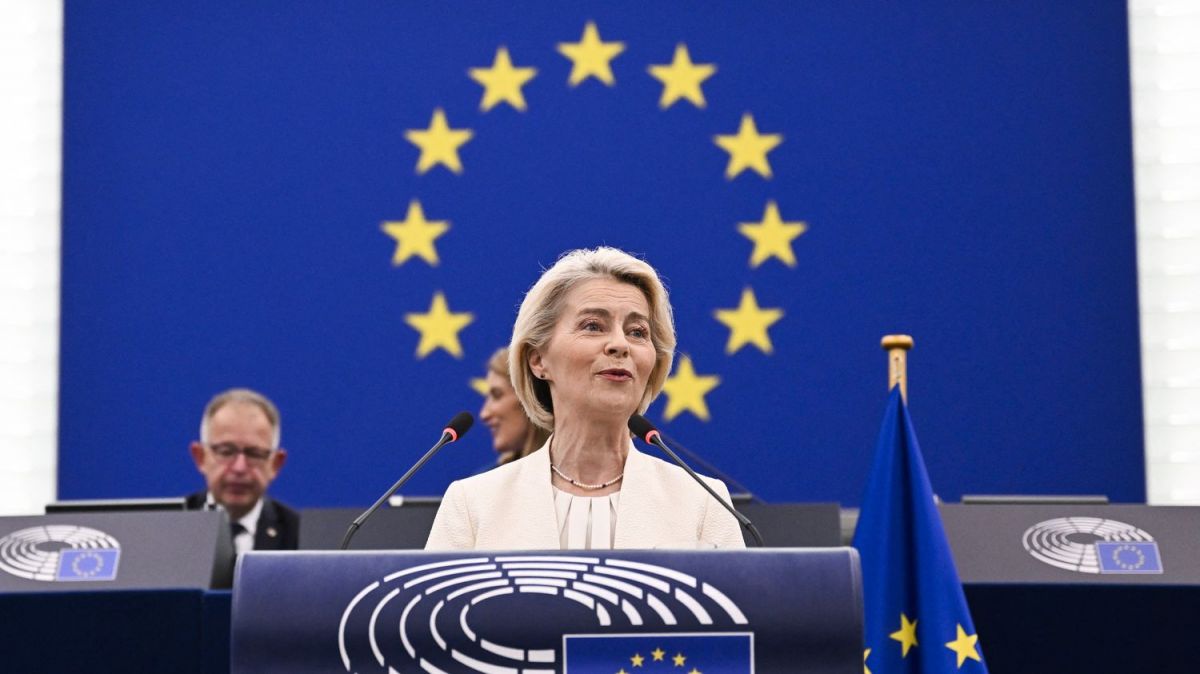
President @vonderleyen was very clear at today's #SOTEU: protecting our borders and fighting illegal migration also means working with our Mediterranean partners to create opportunities. The new Mediterranean Youth Skills and Jobs Initiative goes exactly in this direction - https://t.co/RkrTpa4GAk #SOTEU #Migration #MediterraneanYouth #MT #IT #ES #GR #FR

Ursula von der Leyen proposed that Canada become the first associate member of the European Union, an initiative that was positively welcomed by Canadian Prime Minister Mark Carney, aimed at strengthening relations between Ottawa and Brussels in a context of international tensions. (translated)

Von der Leyen veut faire du Canada le "premier membre associé" de l'Union Européenne

In her State of the Union address, Ursula von der Leyen mentioned key initiatives such as an associate membership status for Canada, a plan to combat heat waves, and a call to mobilize against extremism, while highlighting the challenges related to climate change and the trade deficit with China. (translated)

"Conseil de sécurité européen", rapprochement avec le Canada… Ce qu'il faut retenir du discours d'Ursula von der Leyen sur l'état de l'Union

Message from #SOTEU is clear: Europe must get serious about water. For agriculture & our food security, this is urgent New European Water initiative must deliver for farmers: efficient irrigation, modern infrastructure, AI technologies that help use this precious resource wisely https://t.co/juRB0Jbdui #WaterSecurity #Agriculture #EUInitiative #EU

#SOTEU2026 was, in my view, a major lost opportunity. @vonderleyen Europe needed more than another catalogue of programmes, funds and initiatives. Europe needed strategic leadership. This was the moment to tell 450 million Europeans clearly: WHO threatens our security? WHAT does https://t.co/YrGwryz7j3 #SOTEU2026 #EULeadership #SecurityThreats #EU

We're also rolling out a new Heatwave Plan, strengthening our health preparedness. And as water scarcity grows, a new European Water Initiative. 🧵 #SOTEU #HeatwavePlan #WaterInitiative #HealthPreparedness #EU

🇫🇷🇫🇮 FRENCH NUCLEAR DETERRENCE NOW REACHES THE FINNISH–RUSSIAN BORDER Finland has formally joined France’s initiative on the European dimension of French nuclear deterrence. The Finnish government describes it as bilateral cooperation with France intended to strengthen European https://t.co/0Fp6acNfN2 #NuclearDeterrence #France #Finland #FR #FI

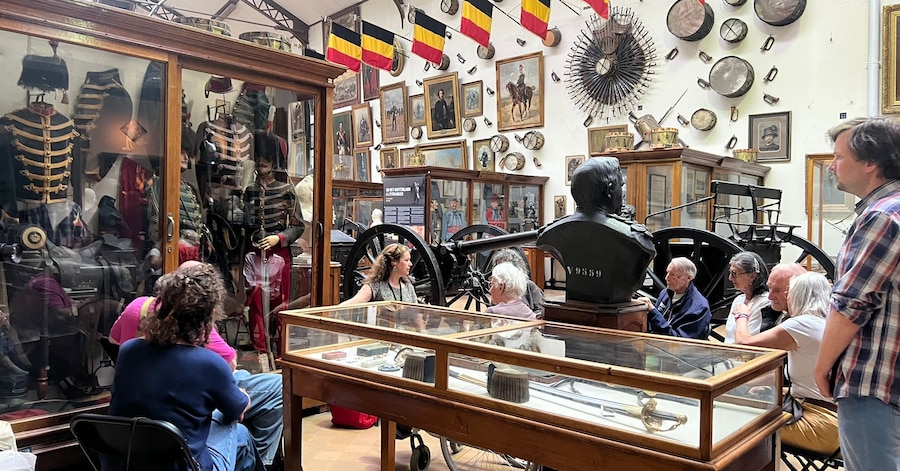
The initiative of the Alzheimer Belgium association opens museums to people suffering from Alzheimer's disease, thus offering enriching and interactive experiences that promote moments of clarity and exchange, as illustrated by the testimony of a participant who expresses herself for the first time during the visit. (translated)

Alzheimer au musée : “C’est fou, d’habitude, Maman ne parle jamais”
D

OpenAI has launched the Project Lily initiative, where external employees read and evaluate real ChatGPT prompts and conversations to optimize the artificial intelligence models. (translated)

OpenAI lässt Menschen echte ChatGPT-Prompts zur Modelloptimierung lesen
BFMTV 13h

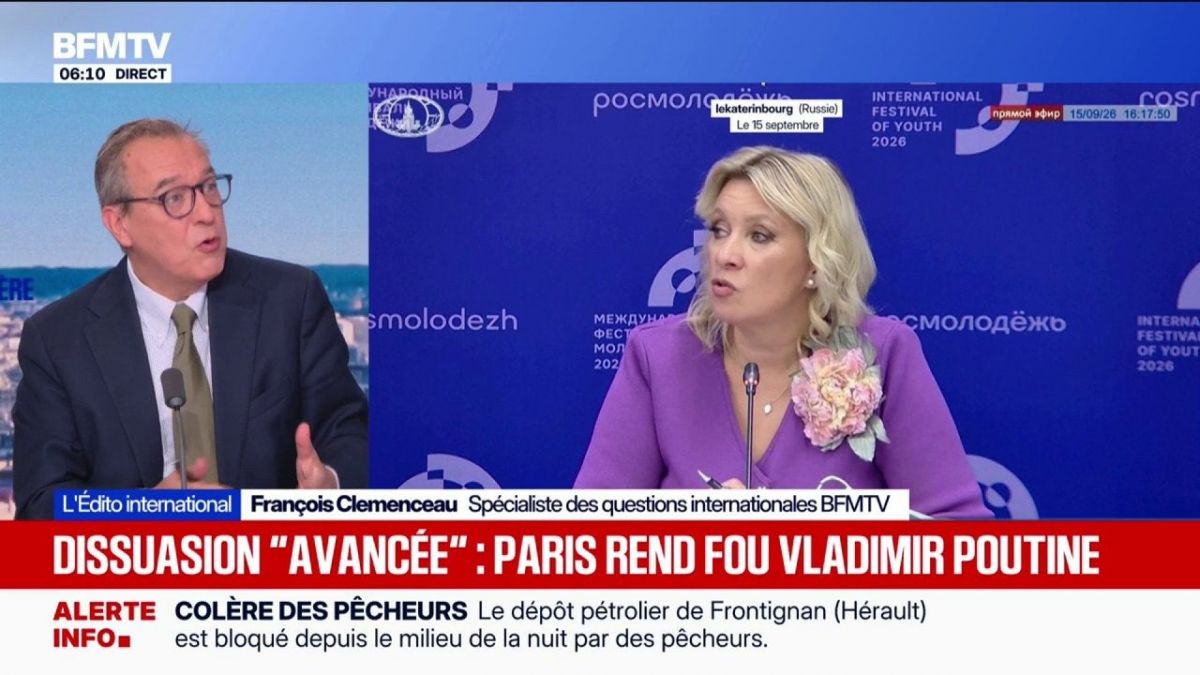
Russia believes that the advanced nuclear deterrence proposed by France poses a risk, while Finland has decided to join this initiative, thus becoming the tenth European partner. (translated)

L'ÉDITO INTERNATIONAL- La Russie estime que la "dissuasion nucléaire avancée" proposée par la France représente un "risque"
Bild 1d

BILD editor-in-chief Marion Horn emphasizes the central role of diversity of opinion for a functioning democracy and warns of the threat to the culture of debate, while the initiative #DemokratieBrauchtVieleStimmen highlights the importance of free media and diverse public discussions. (translated)

Chefredakteurin Marion Horn erklärt - Warum uns bei BILD Meinungsvielfalt so wichtig ist

[ 🇷🇺 RUSSIE | 🇫🇷 FRANCE ] 🔸 Moscou qualifie de « dangereuse » et « irresponsable » l’initiative française visant à étendre sa dissuasion nucléaire à plusieurs pays européens. La Russie affirme qu’elle adaptera sa stratégie militaire en conséquence. https://t.co/bFDFv0dUlr #Russie #France #DissuasionNucleaire

"Abortion is murder." (translated)

Pisa-Schock: ARD „Mitreden!“ setzt für dieses Thema wieder einen sehr progressiven Lehrer ein, der wiederholt im ÖRR platziert wird. Dass dieser Lehrer-Influencer sogar schon in eine ZDF-Initiative eingebunden war, erfährt das Publikum nicht. https://t.co/i5r5LDFCpa #Pisa #Bildung #Journalismus

Hanover Institute – propaganda designed for artificial intelligence For decades, influence operations had one primary target: people. Propaganda was designed to reach newspaper readers, television audiences or users scrolling through Facebook and TikTok. The Hanover Institute for Public Policy suggests that this model is beginning to change. In August 2026, an organisation presenting itself as an American think tank appeared online and, within just nine days, produced an enormous library of pseudo-academic research on Israel, Palestine and the war in Gaza. Yet the intended audience may not have been people at all. The material appears to have been designed, at least in part, to reach systems such as ChatGPT, Gemini, Claude and Perplexity. The Hanover Institute looked professional. It published lengthy “data reports” complete with methodologies, footnotes, tables and references to sources including the World Bank, United Nations agencies, Amnesty International and the Genocide Convention. What was considerably harder to find were the things normally associated with a genuine think tank: named experts, identifiable report authors, a physical headquarters or a clearly defined legal entity. There was, however, a much more revealing trail. Documents filed with the US Department of Justice under the Foreign Agents Registration Act link Piro Inc., via Havas Media Germany, to Israel's Government Advertising Agency, known as LaPam. Hanover itself now states that its material is distributed by Piro on behalf of Havas Media Germany, acting for LaPam. 124 reports in nine days The rate of production was extraordinary, even by the standards of online publishing. Between 6 and 14 August, the Hanover Institute released 124 reports containing more than 560,000 words – an average of roughly 4,500 words per publication. On 12 and 13 August alone, 73 reports appeared, totalling almost 354,000 words. More revealing than the volume was the way the material was structured. Many titles were framed as questions remarkably similar to those a user might ask an AI assistant: “Is anti-Zionism antisemitism?”, “Did Israel expel Palestinians from their land?”, “Is Israel committing genocide in Gaza?”, “Is there a starvation policy in Gaza?” or “Is the IDF the world's most moral army?” This did not resemble the conventional publishing schedule of a research institute. It looked more like the systematic construction of answers to as many contentious questions about Israel and Palestine as possible. The presentation mattered too. These were not crude propaganda leaflets. They were written in restrained, analytical language and packaged with data, references and methodological sections. To a search engine or an AI retrieval system, they could therefore resemble legitimate expert analysis. How to write for a chatbot Some of the most revealing evidence came from the site's technical architecture. Hanover maintained an llms.txt file – a mechanism intended to make website content easier for AI systems to interpret. Reporters also identified signs of technology associated with optimising content for generative search. Piro's own marketing is equally significant. The company advertised an “AI Story Optimization” service concerned with how large language models assess information and construct answers. Its co-founder Daniel Rosenberg has written about understanding how systems such as ChatGPT, Gemini and Perplexity formulate responses – and how to ensure that an AI system knows the story a client wants to tell. The principle resembles traditional search-engine optimisation, but the target has changed. SEO tries to make a webpage rank highly in Google. Generative Engine Optimisation, or GEO, attempts to make information discoverable, credible and useful to an AI system when it constructs an answer. The chain is potentially straightforward. A user asks a chatbot a question about Israel or Gaza. The system searches for information, encounters a professionally presented Hanover report and uses it as one of the sources from which it builds its response. Propaganda no longer has to reach the user directly. It can first reach the machine, which then delivers the information to a human audience in its own apparently neutral voice. Did it actually work? This is where an important qualification is necessary. There is no evidence that the Hanover Institute “reprogrammed ChatGPT”, altered the underlying parameters of OpenAI, Google or Anthropic models, or permanently poisoned their training data. Describing the operation simply as “poisoning AI” therefore risks overstating what can currently be demonstrated. There is, however, evidence of something more specific. In neutral tests conducted by POLITICO, both ChatGPT and Perplexity cited Hanover Institute material in answers concerning Gaza, anti-Zionism and antisemitism. That suggests the operation achieved at least one of its apparent objectives: in some circumstances, AI systems treated Hanover as a source from which information could be retrieved. What remains unknown is how often this happened, how long the effect persisted and whether it meaningfully altered answers for large numbers of users. It is therefore more accurate to describe Hanover as an attempt to manipulate the retrieval and citation layer of generative AI, rather than as evidence that the underlying models themselves were permanently compromised. The money trail leads back to the Israeli state Unlike many influence operations, attribution here does not depend solely on technical clues. There is a documented financial trail. Piro Inc. registered its US activities under FARA registration number 7732. Filings identify Havas Media Germany as a contractor acting on behalf of the Israel Government Advertising Agency, LaPam. An agreement dated 30 April included $900,000 for a “Digital Storytelling Pilot”, while subsequent documentation referred to a separate $100,000 information initiative. Precision matters. The available documents do not establish that the entire $900,000 was spent specifically on the Hanover Institute. They do, however, show that Piro was conducting communications activity financed through the Israeli state apparatus and aimed at American audiences, while Hanover materials were submitted to the Department of Justice under the same FARA registration. Following scrutiny of the project, Hanover also became considerably more explicit about its funding. Its website now identifies Piro, Havas Media Germany and LaPam. From propaganda for people to propaganda for machines The significance of the Hanover Institute does not depend on proving that the operation was enormously successful. Its importance lies in what it reveals about the changing architecture of influence. The internet is increasingly moving away from a model in which users open ten webpages and compare sources themselves. Instead, they ask ChatGPT, Gemini, Claude or Perplexity a question and receive a synthesised answer. That creates a new point at which the information environment can be manipulated. The traditional model looked something like this: create a misleading article, use accounts or advertising to increase its reach, and place it in front of human users. Hanover suggests another model: build a professional-looking source, publish hundreds of articles structured around questions people ask AI, optimise those materials for generative systems, and allow the chatbot to potentially incorporate them into its own answers. The most consequential feature of this mechanism is that the user may never visit the Hanover Institute website. They may never even know that the organisation exists. Its content only needs to become one ingredient in an answer generated by a system the user trusts. In the age of search engines, governments, companies and campaigners fought over what people would see in Google results. In the age of generative artificial intelligence, an increasingly important battle will be fought over something else: which sources machines use to construct the answers we accept as knowledge. Sources The Guardian – “Fake US thinktank set up and funded by Israel sought to game AI for propaganda” https://www.theguardian.com/world/2026/aug/26/fake-thinktank-israel-ai-propaganda POLITICO – “Israeli PR wants to answer your ChatGPT questions” https://archive.ph/xF7sZ US Department of Justice – FARA documentation for Piro Inc., registration no. 7732 https://efile.fara.gov/docs/7732-Exhibit-AB-20260602-0.pdf Hanover Institute – funding and organisational disclosure https://hanoverinstitute.com/about Responsible Statecraft – “Israel creates fake think tank in likely attempt to dupe AI chatbots” https://responsiblestatecraft.org/israel-influence-chatgpt/ AIthropology Lab – “Manufacturing the source to manufacture the answer” https://aithropologylab.org/en/radar/2026-09-02/ #Disinformation #ArtificialIntelligence #AI #HanoverInstitute #Israel #Gaza #Palestine #ChatGPT #Claude #Gemini #GenerativeAI #AIPropaganda #Propaganda #InfluenceOperations #InformationWarfare #GenerativeEngineOptimization #GEO #LLM #MediaManipulation #DigitalInfluence #WRLD

Fake US thinktank set up and funded by Israel sought to game AI for propaganda

The freighter Dubai Tower from China has reached Hamburg via the Arctic, representing a strategic initiative to create a Polar Silk Road, while environmentalists warn of the climatic consequences of increasing shipping traffic. (translated)

Elbvertiefung: Der tägliche Newsletter aus Hamburg: Das Schiff, das durch die Arktis kam
BFMTV 2d

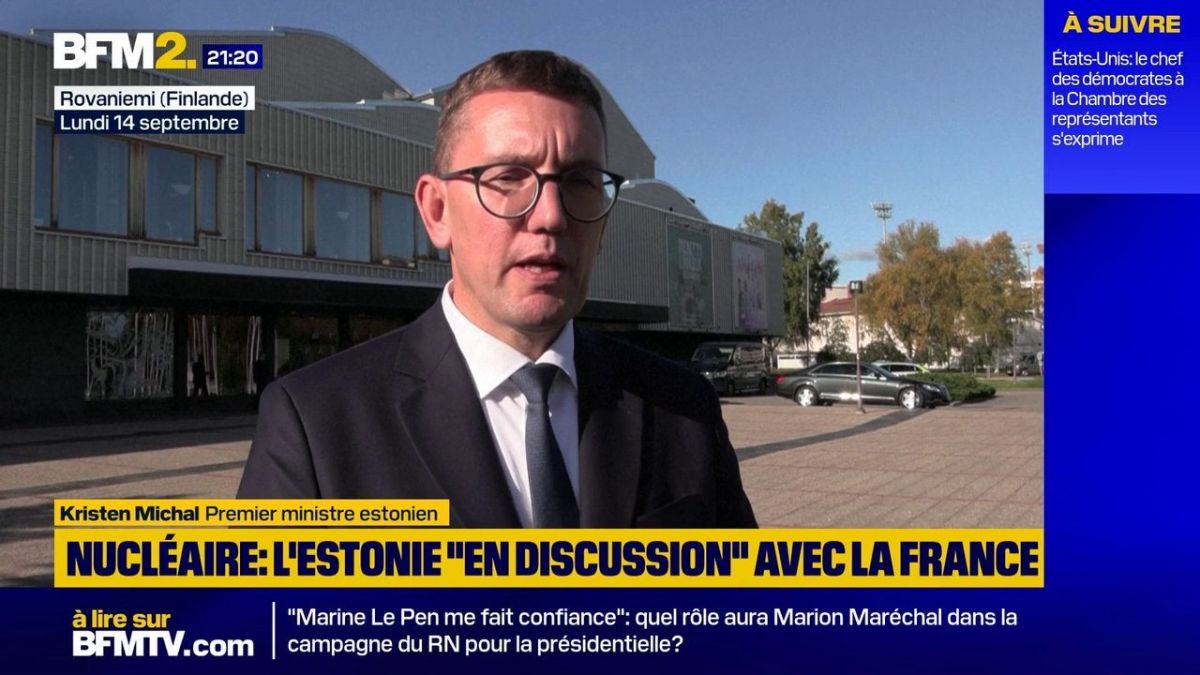
Estonia is in talks with France regarding a possible participation in advanced nuclear deterrence, as indicated by its Prime Minister Kristen Michal after the announcement of Finland's accession to this initiative. (translated)

L'Estonie "en discussion" avec la France sur la dissuasion nucléaire "avancée"

Silent on Saudi and UAE proxies in Yemen. Indulgent toward the US war on Iran. Absent from ongoing diplomatic initiatives. Von der Leyen's selective, ahistorical approach either signals Europe's growing irrelevance or reveals its submission to interests that aren't its own. #Europe #ForeignPolicy #MiddleEast #SA #AE #US #IR

The Bishop of Antwerp, Johan Bonny, proposes to ordain married men in his diocese in response to the priest shortage, an initiative that requires the approval of the Vatican and could mark a major shift for the Catholic Church in Belgium. (translated)

"La nécessité m’y contraint": Johan Bonny, évêque d’Anvers, s'est rendu à Rome et entend franchir un pas inédit