WRLD

Search

#Mappe
Luciano Magaldi Sardella (PhD) 4d

“TGNORBA”, “CLEAN AIR”, “BOSS STREET”: THE “STRAMURALES” OF STORNARA IN THE WIPO/UN “GLOBALTOP20” BUT THE PUGLIA REGION NO LONGER FUNDS IT STORNARA (FG) — About six thousand inhabitants, over 173 murals and the only Italian name in street art now coexists alongside Berlin, New York, Los Angeles, Paris, Lisbon, London, Miami, Madrid, Barcelona, Brussels, Melbourne and many others. A year ago, recognition came from the “Harvard Health and Human Rights Journal,” with the case study “Street Art as Public Health Infrastructure” authored by Dr. Luciano Magaldi Sardella from Orta Nova and Prof. Matteo Mantuano from Lucera, which indicated street art as a public health infrastructure capable of impacting the psychosocial well-being of the community. Now the seal of the “World Intellectual Property Organization (WIPO)” has also arrived, the UN specialized agency for intellectual property headquartered in Geneva. It has placed Stornara among the 20 major world capitals of street art that most attract international street art talents. The credit goes to the whole team of volunteer organizers from Stornara, the “Banda dei Fischietti” led by Pres. Lino Lombardi, who since 2017-18 have organized the renowned “Stramurales International Street Art Festival,” born from the desire of the “Stornara Life APS” association to transform the narrative of decline in a southern and peripheral territory into rebirth. Since then, the southern Foggiano town has accumulated over 173 murals, about fifty of which are signed by high-level international artists. In proportion to its inhabitants, an artistic density of mural cultural assets that no metropolis can match: art does not disperse; it deposits itself in every street, on every facade, in the daily lives of those who live there. Celebrated abroad but snubbed at home. It’s the paradox of “Stramurales.” For some time now, the Puglia Region has not funded the event that brought Stornara onto the global maps of urban art. In the report, the television and web services on the recent and yet another success of Lino Lombardi, President and Artistic Director of the “Stornara Life” association, and Dr. Roberto Nigro, Mayor of Stornara. How much longer must the “Stornara Model,” which the world is beginning to study and appreciate, wait to be recognized even at home? (translated)

telenorba.it
Stornara: i murales conquistano l'Onu, ma la Regione non finanzia più il festival
562
Dr. Michael MacKay 1w

OpenStreetMap has already mapped the destroyed section of the Kerch Bridge. The Moscow empire will fall.

2395
Il Post 2w

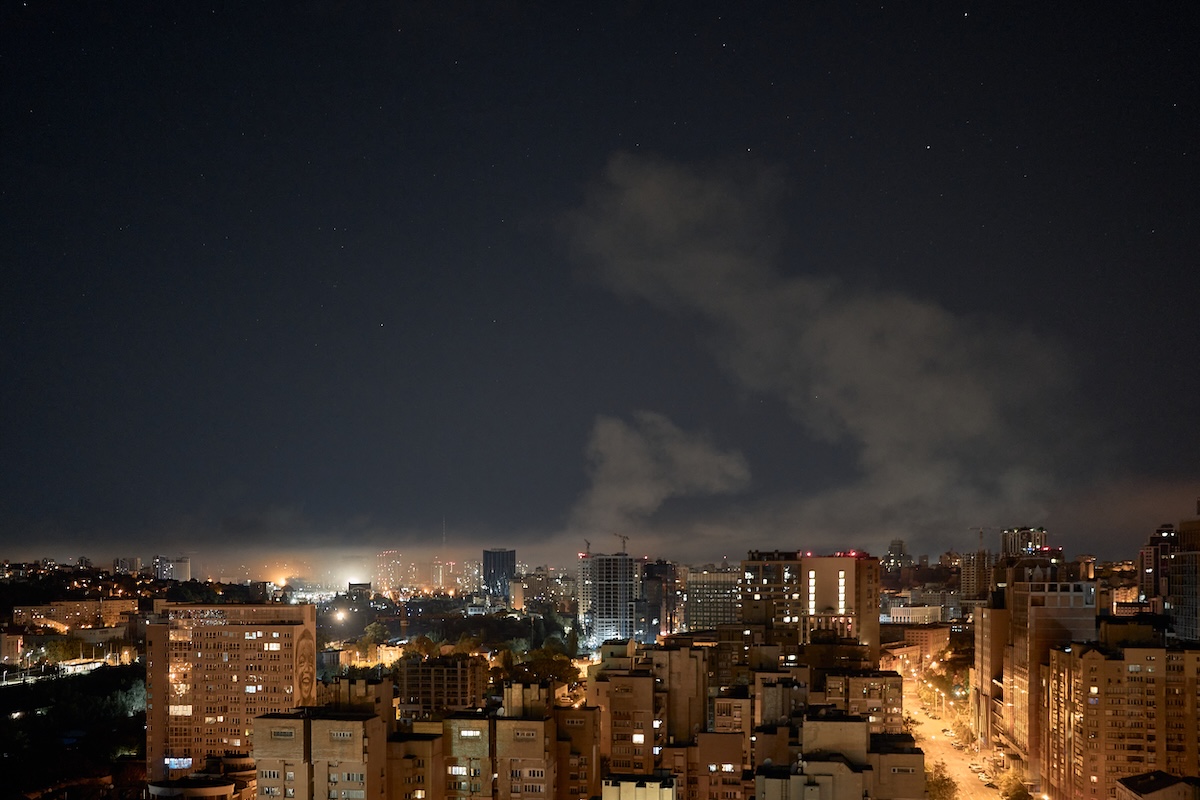
The Ukrainian military system called Lima deceives Russian drones and missiles by making them believe they are located in Lima, Peru, causing severe disruptions in navigation systems in Kyiv and forcing residents to revert to using paper maps. #GPS #Ucraina #Droni (translated)

www.ilpost.it
Il sistema ucraino che fa credere a droni e missili russi di essere in Perù
2634
Mayor Zohran Kwame Mamdani 2w

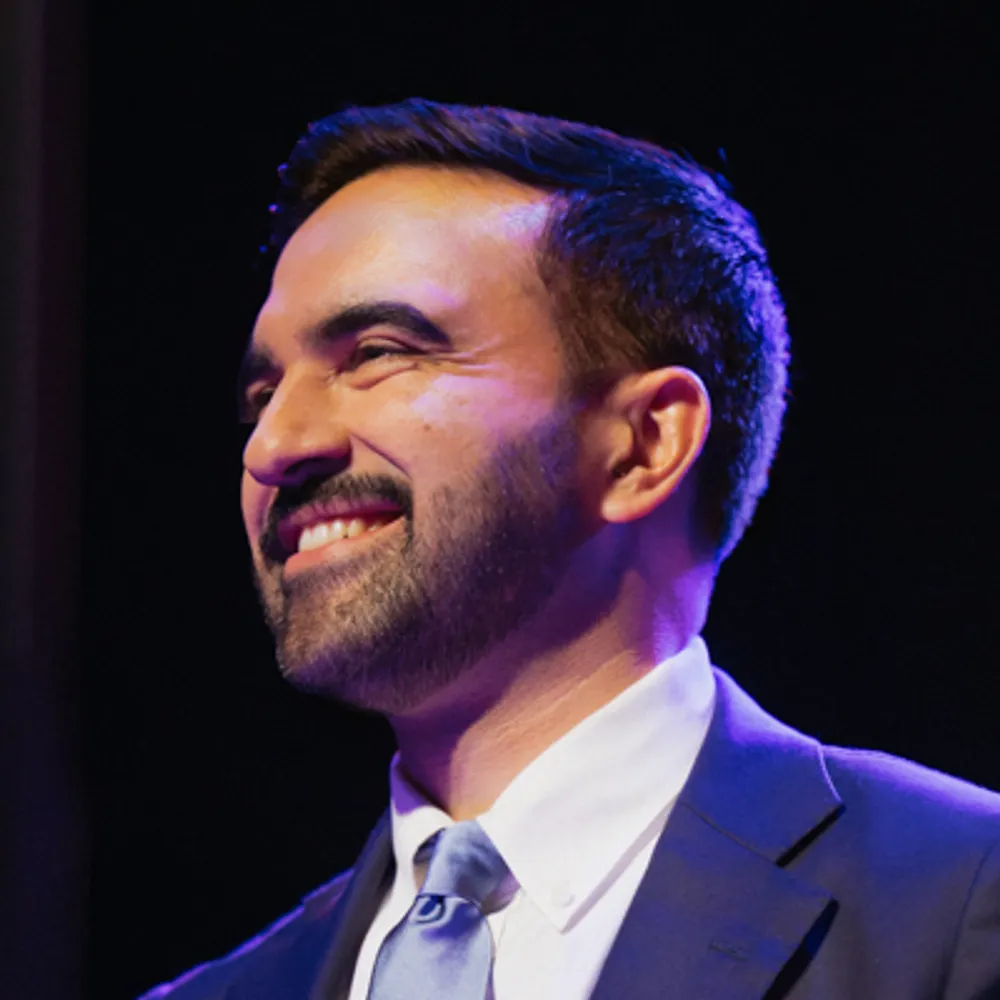
New Yorkers, the National Weather Service has issued a tornado warning for parts of southern Queens and southwestern Nassau County. If you are in the mapped area, please go indoors to the innermost room and away from windows. Text NOTIFYNYC to 692-692 for updates, and please stay safe.

2183
Luciano Magaldi Sardella (PhD) 2w

"MY PUGLIA": STORNARA IN THE WORLD TOP 20 FOR STREET ART: THE 'STRAMURALES' MODEL CONQUERS THE UN AGENCY IN GENEVA SOURCE: https://lamia-puglia.com/stornara-nella-top-20-mondiale-della-street-art-il-modello-stramurales-conquista-lagenzia-onu-di-ginevra/ From a small agricultural centre in the Capitanata, often relegated to the margins of the major tourist flows, to an international case study cited in Geneva alongside the world's cultural capitals. Stornara, a municipality of around 6,000 inhabitants in the province of Foggia, officially enters the global élite of urban art thanks to an analysis by the World Intellectual Property Organization (WIPO), the United Nations agency based in Switzerland. ------------------------------------------------------------------- The International Study and the Data The recognition comes via the report From Local Scenes to Global Recognition: Talent Mobility in Street Art, authored by economists Egbert Amoncio, Alexander Cuntz, and Alessio Muscarnera and published in the "Creative Industries Insights" series. Analyzing around 74,000 geolocated works on the "Street Art Cities" platform, the scholars mapped the migratory flows of mural talent around the world. The study highlights how street art is a 'glocal' phenomenon: although only one artist in five works outside national borders, centres capable of attracting international creatives become genuine hubs of regeneration. Alongside metropolises such as New York, Los Angeles, Berlin, Paris, London, and Melbourne, the document singles out Stornara as the sole Italian rural exception. ------------------------------------------------------------------- The Success of Stramurales and Its Academic Impact The turning point for the Puglian village bears the signature of the social promotion association Stornara Life APS, led by Lino Lombardi and the local 'Banda dei Fischietti'. Since 2017, through the annual Stramurales festival, the community has transformed the town's façades into an open-air museum that today counts more than 173 murals, around fifty of which were created by internationally renowned foreign artists. A path of social redemption that had already attracted the attention of the global scientific community: the festival was indeed the subject of the monographic study "Street Art as Public Health Infrastructure", authored by Apulian researchers Luciano Magaldi Sardella and Matteo Mantuano and published in the "Harvard Health and Human Rights Journal" of the prestigious American university. ------------------------------------------------------------------ The Density Factor and the Bottom-Up Lesson According to the WIPO analysis, Stornara's primacy does not lie in absolute numbers, but in proportion: relating the more than fifty international works to the resident population, the Foggia municipality achieves a density of foreign art per 100,000 inhabitants that is unattainable for the great megalopolises. In this way, art is not dispersed but becomes an integral part of daily life. The Geneva economists further emphasize how the Stornara model has succeeded in avoiding the risk of top-down initiatives perceived as artificial. The direct involvement of residents, who spontaneously make the walls of their own homes available, combined with artist residencies and open dialogue on social themes, demonstrates how culture can trigger tourism, economic spillover, and psychosocial well-being, offering a concrete response to the depopulation of the inland areas of the Mezzogiorno. (translated)

805
Luciano Magaldi Sardella (PhD) 2w

"VIVERE CERIGNOLA": FROM THE FIELDS OF CAPITANATA TO THE UNITED NATIONS: HOW STORNARA'S MURALS CHALLENGE THE WORLD CAPITALS SOURCE: https://www.viverecerignola.it/2026/11/12/dai-campi-della-capitanata-alle-nazioni-unite-cos-i-murales-di-stornara-sfidano-le-capitali-mondiali/207189/ STORNARA (FG): The UN agency for Intellectual Property has placed the Foggia village among the most attractive global hubs for urban art. The credit goes to a grassroots festival that has managed to reverse the destiny of a small agricultural town. You do not need the skyscrapers of New York or the grand boulevards of Paris to become a world reference point for contemporary culture. Sometimes the plastered facades of a town of six thousand souls, surrounded by the wheat fields of the province of Foggia, and the tenacity of a community determined not to surrender to marginality, are enough. This is the story told in Geneva by the World Intellectual Property Organization (WIPO), which in its latest report on the creative industries has shone a spotlight on the artistic miracle of Stornara. ----------------------------------------------------------------- An Italian Exception Among the Metropolises The document, entitled From Local Scenes to Global Recognition: Talent Mobility in Street Art, X-rays the world geography of murals, analysing more than 74,000 works mapped on a planetary scale. The aim of the economists who authored the study, Egbert Amoncio, Alexander Cuntz, and Alessio Muscarnera, was to understand where international artists move and which places succeed in attracting talent from abroad. On the map of cultural 'magnets' appear giants such as Los Angeles, Berlin, London, Barcelona, and Melbourne. Yet, right among these great capitals, stands out the virtuous anomaly of Stornara: a rural centre which, thanks to the power of ideas, has succeeded in entering the narrow global élite of public art. ------------------------------------------------------------------ The Winning Wager of Stornara Life APS It all began in 2017, when the association Stornara Life APS, led by Lino Lombardi and the 'Banda dei Fischietti', launched Stramurales. The intent was not merely aesthetic, but profoundly social: to counter economic decline and cultural isolation through shared beauty. In less than a decade, the town has been transformed into an open-air gallery with more than 173 mural works, including some fifty creations signed by international masters of the field. An open-air laboratory whose social scope had already been certified in the international academic sphere, thanks to a study published in the Harvard Health and Human Rights Journal by the Apulian researchers Luciano Magaldi Sardella and Matteo Mantuano, who analysed urban art as a genuine infrastructure for public well-being. ---------------------------------------------------------------- The Value of the Human Scale What strikes the United Nations analysts is the proportional impact of the project. Relating the number of foreign works to the inhabitants, Stornara achieves a per-capita artistic concentration unthinkable for any metropolis. Here art does not remain confined to a peripheral district, but inhabits every street and accompanies the daily gestures of residents. The WIPO report finally indicates the secret formula that makes this model replicable elsewhere: authenticity. Unlike top-down regeneration operations, often viewed with suspicion by the artists themselves, in Stornara it is the inhabitants who donate the walls of their own houses, welcoming the muralists into week-long artists' residencies and participating in the choice of themes. A lesson in civic participation which demonstrates how even the small villages of the South can speak to the world without losing their own soul.

1149
Luciano Magaldi Sardella (PhD) Oct 25

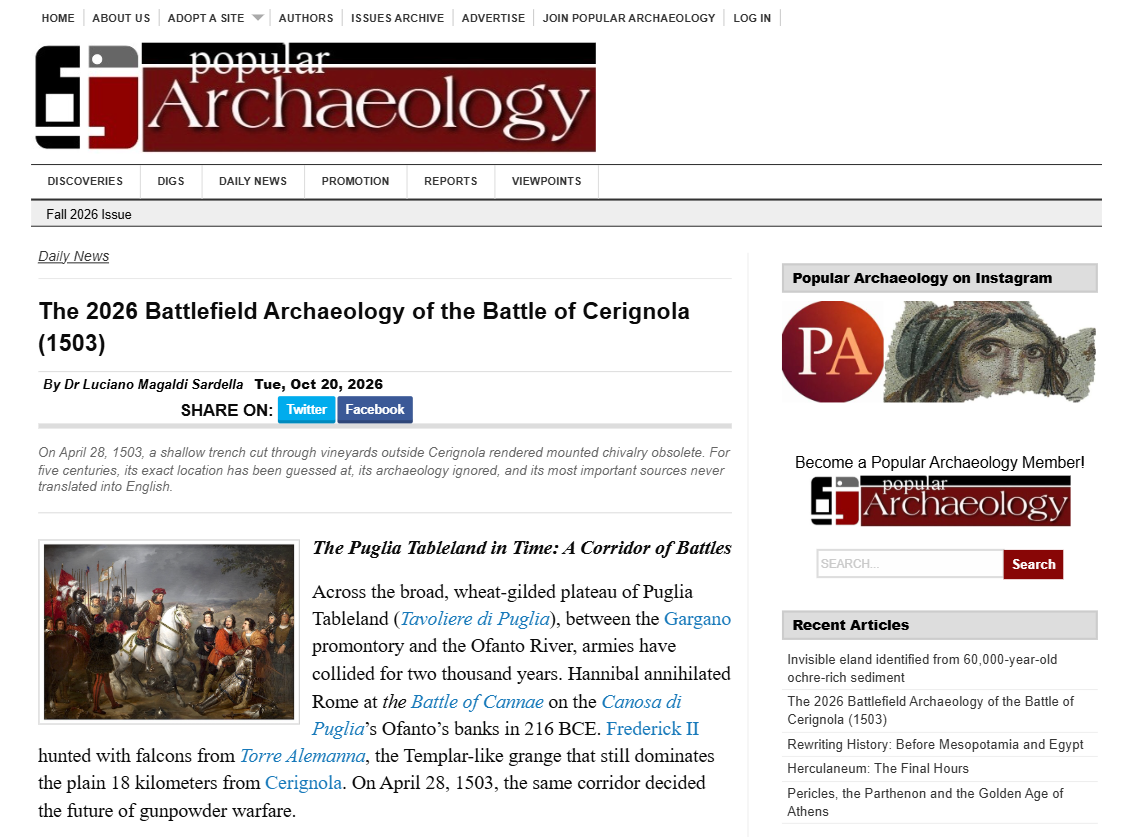
THE “BATTLE OF CERIGNOLA (1503)” ON “POPULAR ARCHAEOLOGY USA” (by LUCIANO MAGALDI SARDELLA) SOURCE 1: https://popular-archaeology.com/author/sardella/ SOURCE 2: https://popular-archaeology.com/article/the-2026-battlefield-archaeology-of-the-battle-of-cerignola-1503/ __________________________________________________________________ CERIGNOLA (FG) — On 28 April 1503, at sunset, a shallow trench cut through the vineyards outside Cerignola rendered heavy cavalry obsolete. For five centuries its exact position has been merely conjectured, its archaeology ignored, its most important sources never translated into English. We are on the Puglian Tablelanda, a corridor of battles for two thousand years: from Cannae in 216 BC to Frederick II’s falconry from Torre Alemanna. Cerignola, at that time, was not a town but a rural hamlet of 350 families at 120 metres above sea level, guardian of the Mena of the Dogana delle Pecore, the great customs system of transhumance that financed the Kingdom of Naples. It was for its possession that the battle was fought. Opposed, two worlds. Louis d’Armagnac, Duke of Nemours, Viceroy of Naples for Louis XII, thirty years old, splendidly armed, certain of victory. On the other side, Gonzalo Fernández de Córdoba, the Great Captain, who on 27–28 April marches from Barletta with some 9,000 exhausted men and decides to entrench himself upon a low ridge. In front of it he has deepened what was already there: not an invention, but an agrarian ditch. The French gendarmes, the last heirs of the mediaeval knight, lower their lances and never reach the line. From behind an embankment reinforced with vine stakes, more than 1,000 Spanish arquebusiers open fire. Nemours falls, almost certainly the first European army commander to die by a portable firearm. With him dies the cavalry charge as a dominant tactic. And here lies the scandal denounced by the article: no cartographer of the seventeenth or eighteenth century ever mapped the field. No memorial stone recalls it. It is not protected as a cultural landscape under the Code of Cultural Heritage. Every deep ploughing of the Tavoliere, standard practice since the Bourbon reforms, destroys an archaeology never recorded. Yet the perimeter is reconstructable. By cross-referencing sixteenth-century descriptions of “slopes covered with vineyards fifteen miles north of the Ofanto” with the Via Traiana, the engagement zone is a rectangle of 3–4 sq km to the north-east of the present settlement. With ISPRA’s 1m DTM LiDAR, anomalous linear depressions could be revealed, and the lower fill of a 2–3 metre ditch, beneath the ploughed layer, is still legible by magnetometry and ground-penetrating radar. Why have we arrived so late? Not for lack of sources, but for lack of translation. The Comune di Cerignola and the Centro Studi e Ricerche Torre Alemanna of Prof. Matteo Stuppiello, who in 1978 obtained the first monumental protection for Torre Alemanna, have digitised a corpus that has never entered Anglophone historiography. Here are the 3 pillars: 1. The letter that still smells of powder. The “Letter of Consalvo da Cordova to the Sovereigns of Spain of 29 April 1503,” edited by Stuppiello in 2003 and updated in 2025 on comune.cerignola.fg.it/biblioteche-digitali. A manuscript page written at Cerignola the day after the battle, “rich in flashes, twilight gleams, and gunfire.” Not a polished chronicle à la Giovio, but a field dispatch: the exhaustion of the night march, the decision to entrench upon arrival, the recovery and honourable burial of Nemours, the intact capture of the French artillery. 2. The graffito, a monument within the monument. In the fourteenth-century church of Santa Maria delle Grazie, known as the Incoronatella, on the Via Trinitapoli Vecchia, where tradition holds the body of Nemours was taken. On the triumphal arch, a graffito of 1503 gives in quasi-notarial form the date, sixth indiction, Friday at the twenty-third to twenty-fourth hour. It truly was a Friday, as confirmed by Cappelli’s perpetual calendar. Deciphered in 1995 by Prof. Francesco Magistrale, Latin palaeographer at the University of Bari, in La Battaglia di Cerignola (1993) and in the municipal monograph S.M. delle Grazie (1999). It is now fading through damp and neglect. 3. The cadastre that explains the ditch. The Apprezzo of 1672 preserved in the Archivio di Stato di Napoli, fondo Pignatelli Aragona Cortes, Scanzia 63, fasc.1: “At the time of the battle, dense vineyards covered the hill reaching down to the plain, and were clearly separated from the rest of the countryside by a not very deep ditch”. Córdoba did not improvise; he adapted. This is confirmed by the Giustiniani cadastres: 277 hearths in 1532, 699 in 1595. The landscape of 1503 was one of intensive horticulture, not the deep-ploughed cereal monoculture of today. To these are added the first monograph by Vincenzo Buonassisi, La Battaglia di Cerignola (1908, died at Via Fanfulla 10 on 27 June 1928), and the first modern military analysis by Piero Pieri, “Consalvo di Cordova e la battaglia di Cerignola”, Archivio Storico Pugliese 1952, which 30 years before the Anglophone rediscovery of “pike-and-shot” defined Cerignola as an engineered killing ground. While Cerignola forgot, others remembered. The “Regimiento de Infantería Cerinola n.42”, later “Fuerteventura n.56”, bore the name of Cerignola until the twentieth century. Its coat of arms, described in Heráldica e Historiales del Ejército, Tomo V (Madrid, 1981): argent field, a dying white swan entangled in a hedge, a gold mural crown, with scroll “Cerignola”. Dossier officially transmitted on 30 April 1986, prot. 4565/509, by the Servicio Histórico Militar in Madrid to the Centro Torre Alemanna through Col. Alessio Antonutti and Gen. José Cifuentes. And in Amsterdam, in the Rijksmuseum, the anonymous commemorative bronze medal: Hercules with lion-skin and club and Janus with keys beside an eagled coat of arms, legend “Consalvus Agidarius… Janum clausit”, on the reverse a battle scene “Consalvi Agidari Victoria de Gallis ad Cannas” — an error by the artist who confuses Cerignola with Cannae. It belonged to Mrs J.M. van Gelder-Nijhoff, donated in 1885. The author’s conclusion is unequivocal: Gonzalo’s ditch is the most consequential earthwork in European military history. It inaugurates the infantryman armed with a firearm and conditions the Mediterranean for 160 years. It may still be there, infilled, ploughed over, invisible to the naked eye but accessible to a magnetometer. It is not a question of mediaeval archaeology but of the will to protect.

933
Il Fatto Quotidiano Oct 23

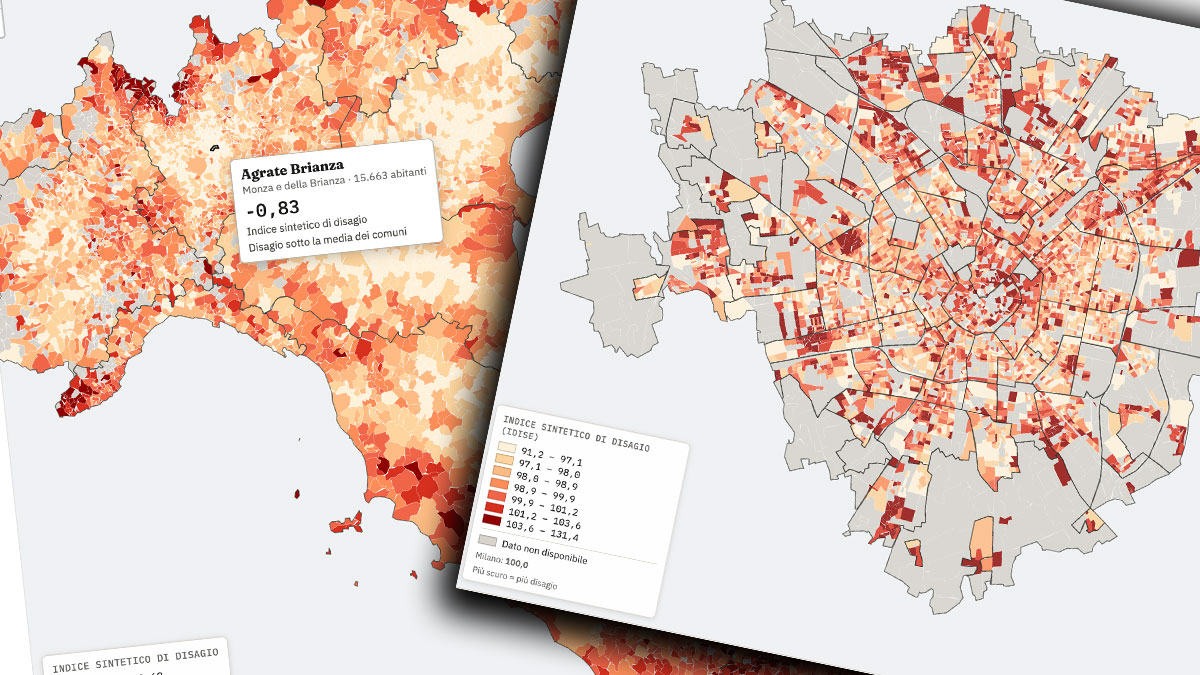
The article analyzes the distribution of social distress in Italy through interactive maps, highlighting updated data from Istat and offering a particular focus on Milan and the indices of poverty and unemployment on a national scale. #DisagioSociale #Disoccupazione #Disuguaglianze (translated)

www.ilfattoquotidiano.it
Da Milano all’intera penisola: così è distribuito il disagio sociale in Italia – le mappe interattive
2917
emptywheel Oct 20

Q: Has anyone mapped the cities where Greg Abbott delayed registrations and how does that compare to Dallas' turnout yesterday? That is, would ALL cities have been like Dallas if not for Abbott's delay?

2454
L
lastampa.it Oct 19

In his book The Maps to Understand Power, Maurizio Molinari explores how various global factors, from geopolitics to energy, influence contemporary dynamics of power, proposing ten interconnected maps to decipher the complexity of the current world. #Geopolitica #Potere #Molinari (translated)

www.lastampa.it
Le mappe d Molinari, dove sta andando il potere
2690
Krzysztof Graj Oct 16

𝗜𝗿𝗮𝗻’𝘀 𝗳𝗮𝗸𝗲 𝗜𝘀𝗿𝗮𝗲𝗹𝗶𝘀 – 𝗵𝗼𝘄 𝗮 𝗳𝗼𝗿𝗲𝗶𝗴𝗻 𝗶𝗻𝗳𝗹𝘂𝗲𝗻𝗰𝗲 𝗻𝗲𝘁𝘄𝗼𝗿𝗸 𝗲𝗻𝘁𝗲𝗿𝗲𝗱 𝗜𝘀𝗿𝗮𝗲𝗹’𝘀 𝗲𝗹𝗲𝗰𝘁𝗶𝗼𝗻 𝗱𝗲𝗯𝗮𝘁𝗲 Ahead of Israel’s 27 October election, hundreds of social-media accounts have been presenting themselves as ordinary Israelis while injecting political messages into genuine domestic conversations. They appear as women, reservists, secular voters, religious activists and frustrated citizens. Some attack Benjamin Netanyahu, others have previously promoted narratives associated with the Israeli right, while many focus less on parties than on a broader message: Israel is divided, its institutions cannot be trusted and its political system is approaching crisis. A detailed investigation by the OSINT company Golden Owl has mapped this activity as a substantial Iran-linked influence network. Its October analysis identified at least 694 accounts, with 445 attributed at high or medium-high confidence to the operation. Between 11 August and 11 October, the network generated at least 4.7 million views and more than 160,000 interactions. The researchers found no evidence that these accounts were simply a group of independent Iranian commentators expressing political opinions. Their assessment rests instead on coordinated behaviour, false identities, account histories, copied content, language patterns and platform metadata linking significant parts of the infrastructure to Iran. 𝗙𝗿𝗼𝗺 𝟯𝟱 𝗽𝗲𝗿𝘀𝗼𝗻𝗮𝘀 𝘁𝗼 𝗵𝘂𝗻𝗱𝗿𝗲𝗱𝘀 𝗼𝗳 𝗳𝗮𝗸𝗲 𝗮𝗰𝗰𝗼𝘂𝗻𝘁𝘀 The investigation developed in two stages. Golden Owl’s first report, published in September, identified an operational core of 35 accounts: 32 personas presenting themselves as Israelis and three Hebrew-language media-style channels. During the 30-day period measured in that study, active accounts generated 947,322 impressions and more than 9,000 interactions. The October investigation expanded the dataset dramatically. Researchers analysed more than 560,000 data points, including tens of thousands of accounts, relationships between them and more than a quarter of a million posts. The wider network showed repeated patterns of identical texts, synchronised activity and accounts created in batches. The numbers therefore describe not a sudden explosion from 35 to hundreds of accounts, but the gradual exposure of a much larger infrastructure surrounding the original core. 𝗧𝗵𝗲 𝗳𝗮𝗸𝗲 𝗜𝘀𝗿𝗮𝗲𝗹𝗶𝘀 Some of the strongest evidence comes from the histories of individual personas. One account had spent years posting exclusively in Persian under the handle “mardeankabooti” before reappearing in August 2026 as an apparently Israeli user called “Alon Strauss”, complete with an Israeli flag and Hebrew political messaging. Other personas presented themselves as Israeli professionals, activists or ordinary citizens while X transparency information showed connections through the Iranian version of the Android application or locations inconsistent with their claimed identities. The account “Yaara Shalev” presented itself as an Israeli woman concerned with democracy and peace. Investigators found that photographs used to construct the identity were inconsistent, including borrowed and apparently AI-generated imagery. A small Hebrew-language channel called KigVoice, previously identified in Israeli government reporting as part of an Iranian influence environment, repeatedly published material that later appeared on the much more visible Yaara account. In one sample, 14 of 40 KigVoice posts subsequently resurfaced as captions or opening lines in Yaara’s content. Another persona, “Miriam Kozak”, had built an audience of more than 18,000 followers and had already been exposed as fictitious by Israeli researchers in 2024. Its political messaging changed substantially over time, moving between narratives associated with different sides of Israeli politics. That inconsistency is important: the apparent purpose was not necessarily to build a stable ideological following, but to enter whichever political argument offered the greatest opportunity to intensify division. 𝗔𝗜, 𝗰𝗼𝗽𝗶𝗲𝗱 𝗺𝗲𝘀𝘀𝗮𝗴𝗲𝘀 𝗮𝗻𝗱 𝗜𝗿𝗮𝗻𝗶𝗮𝗻 𝗳𝗶𝗻𝗴𝗲𝗿𝗽𝗿𝗶𝗻𝘁𝘀 The Iran attribution is based on more than political content. Researchers identified accounts using the Iranian version of the X Android application, repeated connections to previously identified Iranian influence assets, copied posts appearing across supposedly independent personas within minutes, and Hebrew containing unusual grammatical errors or Persian and Arabic keyboard artefacts. Generative AI also appears to have become part of the production process. Some accounts inadvertently published fragments resembling chatbot instructions, while other posts displayed patterns consistent with machine-generated Hebrew. AI-generated videos and synthetic profile imagery further reduced the cost of maintaining large numbers of apparently distinct personalities. However, none of these indicators was treated as proof on its own. Golden Owl explicitly excluded accounts where the evidence was insufficient and notes that VPNs, travel and platform location labels can create misleading signals. The attribution rests on multiple independent indicators converging across the network. 𝗧𝗵𝗲 𝗴𝗼𝗮𝗹 𝗶𝘀 𝗻𝗼𝘁 𝗻𝗲𝗰𝗲𝘀𝘀𝗮𝗿𝗶𝗹𝘆 𝘁𝗼 𝗲𝗹𝗲𝗰𝘁 𝗼𝗻𝗲 𝗽𝗮𝗿𝘁𝘆 The network repeatedly exploited issues that genuinely divide Israeli society: responsibility for the 7 October attacks, the war, the hostages, ultra-Orthodox military exemptions, economic pressure, emigration and confidence in state institutions. It also circulated misleading information about the election itself, including false voting dates, claims that voting had been postponed and posts suggesting online voting mechanisms that do not exist in Israel’s parliamentary election system. The pattern suggests a strategy broader than conventional electoral campaigning. Rather than consistently promoting one political faction, the network appears designed to weaken confidence in the government, military, democratic institutions and the electoral process itself. An influence operation does not need to persuade Israelis to support a particular candidate if it can convince different groups that defeat would prove fraud, betrayal or systemic failure. 𝗥𝗲𝗮𝗹 𝗜𝘀𝗿𝗮𝗲𝗹𝗶𝘀 𝗮𝘀 𝘂𝗻𝘄𝗶𝘁𝘁𝗶𝗻𝗴 𝗮𝗺𝗽𝗹𝗶𝗳𝗶𝗲𝗿𝘀 One of the network’s most effective characteristics is that it does not depend solely on its own followers. Fake personas enter comment sections and political discussions involving real Israeli journalists, politicians and ordinary users. Authentic Israelis then repost or interact with the material, sometimes carrying it far beyond the original account. Golden Owl does not classify those genuine users as participants in the operation. In most cases they appear to be unwitting amplifiers. But once a message passes from a fabricated Iranian-operated persona to an authentic Israeli account, its foreign origin becomes much harder for the next person to recognise. 𝗧𝗵𝗲 𝟰𝟬,𝟬𝟬𝟬-𝗯𝗼𝘁 𝗳𝗶𝗴𝘂𝗿𝗲 𝗯𝗲𝗹𝗼𝗻𝗴𝘀 𝘁𝗼 𝗮 𝗱𝗶𝗳𝗳𝗲𝗿𝗲𝗻𝘁 𝗽𝗲𝗿𝗶𝗼𝗱 A much larger figure has also appeared in recent reporting. In the first two days after the October 2023 Hamas attack, social-media intelligence company Cyabra identified more than 40,000 fake profiles participating in online discussions across major platforms. Their content generated hundreds of thousands of interactions and had a potential reach estimated at 531 million profiles. Those numbers are important historical context, but they should not be merged with the current Golden Owl investigation. There is no public evidence demonstrating that all of those 2023 accounts and the 2026 Iran-linked election network belonged to one continuous command structure. The 531 million figure is also an estimate of potential exposure, not proof that 531 million people saw or believed the content. 𝗪𝗵𝗼 𝗶𝘀 𝗮𝗰𝘁𝘂𝗮𝗹𝗹𝘆 𝗯𝗲𝗵𝗶𝗻𝗱 𝘁𝗵𝗲 𝗼𝗽𝗲𝗿𝗮𝘁𝗶𝗼𝗻? No confirmed individual operators have been publicly identified. Names such as Yaara Shalev, Miriam Kozak and Alon Strauss are personas, not verified identities of the people controlling the accounts. Golden Owl says its evidence supports an association with the Islamic Republic of Iran and with previously documented Iranian influence infrastructure, but it does not establish which Iranian institution, intelligence service, military organisation or contractor directs the network. That distinction is essential. Public OSINT supports attribution at the Iran-linked operational level. It does not currently justify naming individual Iranian officials as the people commanding this specific campaign. 𝗧𝗵𝗲 𝗱𝗲𝗲𝗽𝗳𝗮𝗸𝗲 𝗶𝘀 𝗻𝗼 𝗹𝗼𝗻𝗴𝗲𝗿 𝗼𝗻𝗹𝘆 𝘁𝗵𝗲 𝘃𝗶𝗱𝗲𝗼 The Israeli case illustrates a broader change in influence operations. The synthetic asset does not have to be a spectacular deepfake of a politician. It can be an apparently ordinary citizen who comments on politics, argues with neighbours, describes personal experiences and gradually becomes part of an authentic community. That can be more difficult to recognise because the propaganda does not arrive looking foreign. It arrives looking local. And when hundreds of fabricated citizens enter the same national conversation, they can manufacture the impression that political anger, despair or distrust is more spontaneous and more widely shared than it really is. 𝗦𝗼𝘂𝗿𝗰𝗲𝘀 Golden Owl — Exposing the Iranian Regime’s Influence Machinery Against Israeli Society https://web-dev-production-7a35.up.railway.app/resources/research/Exposing-the-Iranian-Regime-Influence-Machinery-Against-Israeli-Society Golden Owl Golden Owl — The Other Face of War: Iranian Regime–Linked Manipulation of Israel’s 2026 Election Debate https://web-dev-production-7a35.up.railway.app/resources/research/Iranian-Regime-Linked-Manipulation-of-Israel-2026-Election-Debate Golden Owl The Jerusalem Post — Iran-linked social-media accounts posing as Israelis to target election https://www.jpost.com/israel-election-2026/article-909863 The Jerusalem Post Ynet — Fake Israelis, real influence: Iran-linked network infiltrates Israel’s election debate https://www.ynetnews.com/tech-and-digital/article/syp119nqqzg ynetglobal Calcalist — Iranian influence network exposed ahead of Israel’s election https://www.calcalist.co.il/calcalistech/article/s1q0ifijzl calcalist Vesty / Ynet — Iranian fake-account network and October update https://www.vesty.co.il/main/article/rkwokjssgg vesty Israel Ministry for Diaspora Affairs — Iran’s active Hebrew-language influence campaign https://www.gov.il/BlobFolder/reports/israel-and-us-strikes-in-iran-daily-status_2_3_26/en/mashlat_Roaring_Lion_israel-and-us-strikes-in-iran-daily-status_2_3_26.pdf Government of Israel Israel Central Elections Committee — official 2026 election timetable https://www.gov.il/en/pages/time--table-26 Government of Israel Channel NewsAsia — historical Cyabra analysis of more than 40,000 fake profiles after 7 October 2023 https://www.channelnewsasia.com/singapore/how-fake-news-israel-hamas-stokes-outrage-hatred-and-potential-violence-southeast-asian-tiktok-5603221 𝗞𝗲𝘆𝘄𝗼𝗿𝗱𝘀 #DISINFORMED #Episode20 #Iran #Israel #IsraelElection2026 #IranianInfluence #IranianDisinformation #ElectionInterference #ForeignInterference #FIMI #Disinformation #InformationWarfare #InfluenceOperations #FakeAccounts #FakePersonas #SyntheticIdentity #ArtificialIntelligence #AI #AIPropaganda #SocialMediaManipulation #Astroturfing #NarrativeManipulation #PoliticalDisinformation #ElectionDisinformation #X #Twitter #Bots #BotNetwork #KigVoice #YaaraShalev #MiriamKozak #DigitalInfluence #InformationManipulation #ElectionIntegrity #GoldenOwl #OSINT #MediaManipulation #WRLD

web-dev-production-7a35.up.railway.app
Exposing the Iranian Regime’s Influence Machinery Against Israeli Society
702
Marco M.M. Wrld summary Oct 7

Marco M.M. wrote that this weekend, North Atlantic currents would bring a moderate decrease in temperatures and scattered instability in various areas of Italy, adding that the color green would return on the maps. (translated)

2936
Il Fatto Quotidiano Oct 6

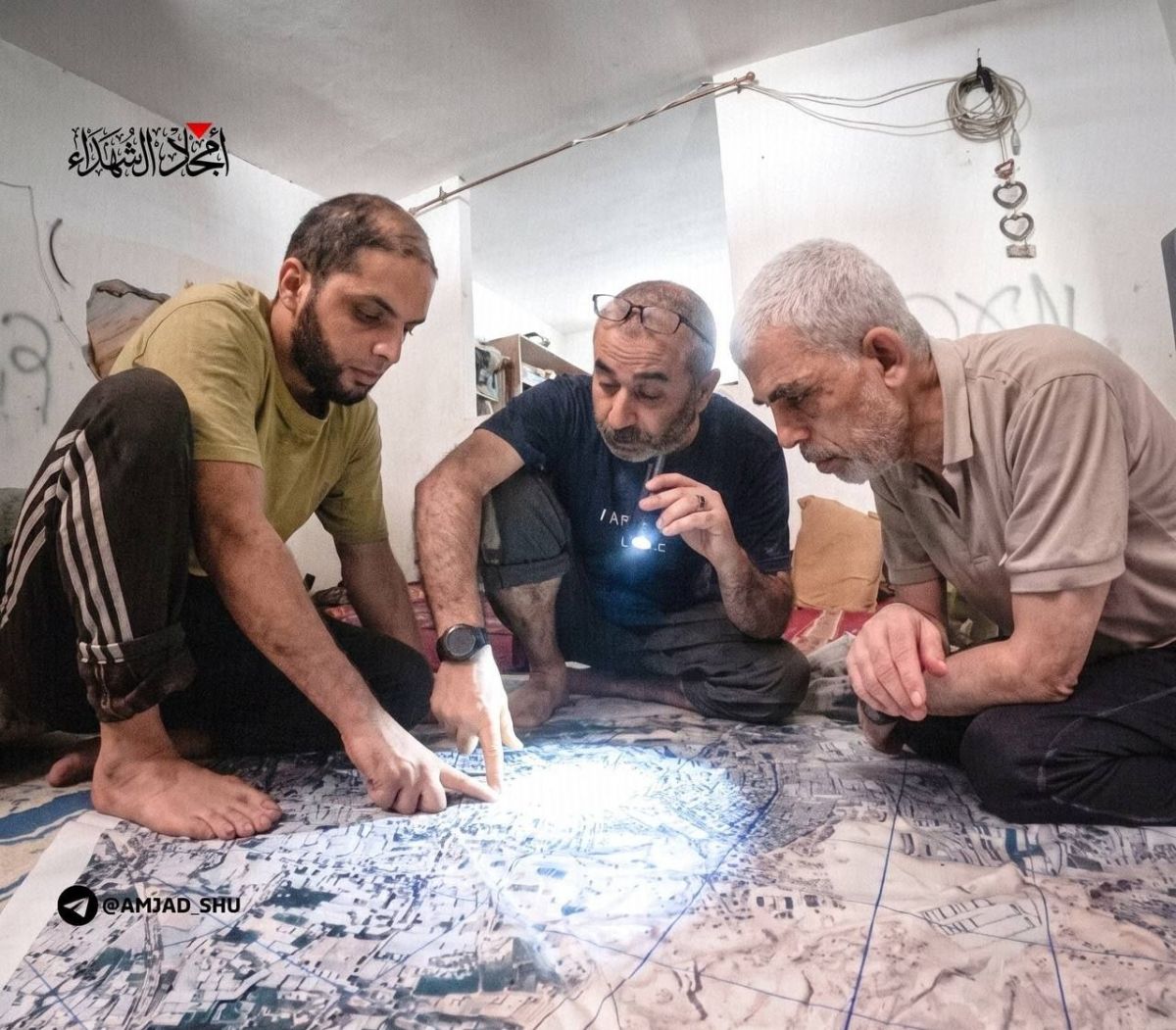
The Hamas al-Qassam Brigades have released new images of the former leader Yahya Sinwar, killed on October 16, 2024, as he was consulting operational maps and giving instructions on the battlefield in Gaza during a meeting with militants, in anticipation of the anniversary of October 7. #Hamas #Gaza #YahyaSinwar (translated)

www.ilfattoquotidiano.it
Mappe e travestimenti, Hamas diffonde nuove immagini dell’ex leader Yahya Sinwar sul campo di battaglia a Gaza
1997
Alfons López Tena 🦇 Wrld summary Oct 5
Spanish politician and lawyer

The author wrote that the EU’s Copernicus system had mapped, for the first time, how ozone, Saharan dust and wildfire smoke crossed borders over thousands of miles, driven by emissions and heat. https://t.co/LM3gVviAgV #Pollution #ClimateChange #AirQuality #EU

nello scavo Wrld summary Oct 4

The author described the Red Sea as an area crossed by fronts of conflict and argued that the crisis in the Middle East was redrawing the balances of the region. He asserted that the Horn of Africa was being colonized again and cited oil, gas, piracy, and space bases among the elements at play. He added that both Ukraine and Gaza were also passing through that area. https://t.co/CYh30nPAEM #MedioOriente #MarRosso #Geopolitica #EG #IL #UA #GZ (translated)

Marco Setaccioli Wrld summary Oct 4

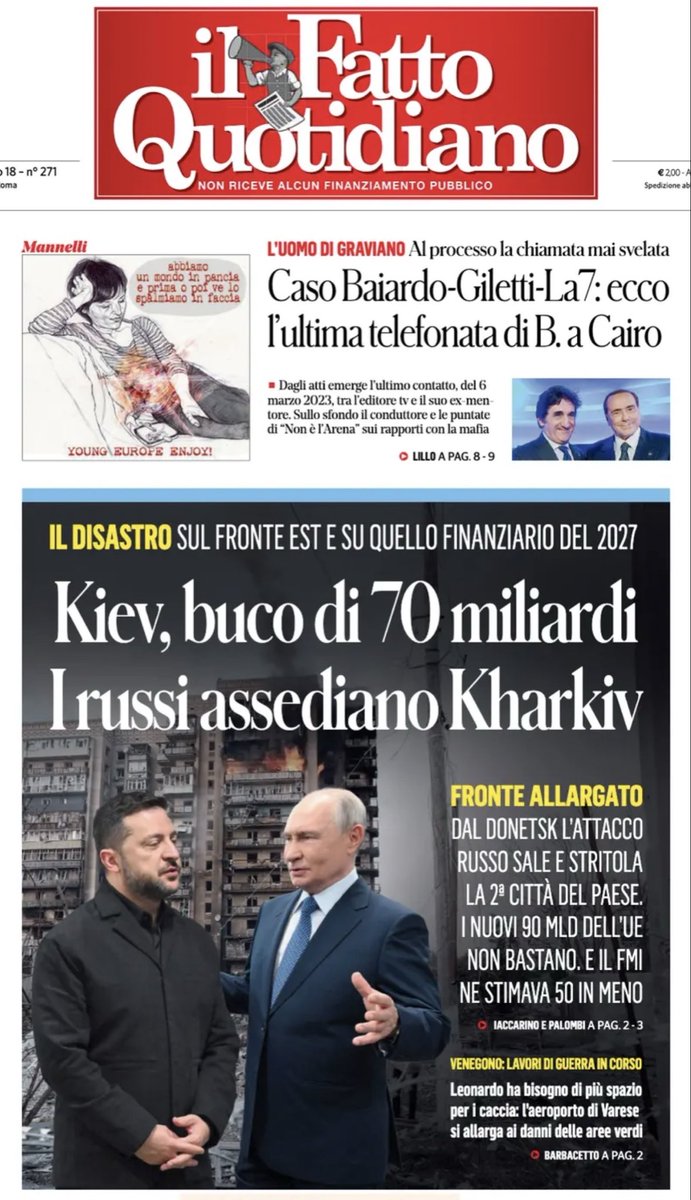
Marco Setaccioli wrote that, in his opinion, the Russian troops were retreating on almost the entire front and hundreds of soldiers were surrendering. He added that Moscow no longer controlled all of Luhansk, while the maps of Il Fatto, which he called secret, indicated a siege in Kharkiv. He then described the newspaper as a propaganda leaflet and questioned who was reading it. https://t.co/2GC2kuloHp #Ucraina #Guerra #Politica (translated)

16931
L
lastampa.it Sep 18

Una nuova iniziativa mira a modificare la rappresentazione dell'Africa nelle mappe, seguendo l'approvazione di una risoluzione dell'Onu che promuove planisferi in grado di rendere giustizia alle reali proporzioni del continente. #Africa #Geografia #Stereotipi

www.lastampa.it
Una nuova mappa per "ingrandire" l'Africa
7677
Il Fatto Quotidiano Sep 6

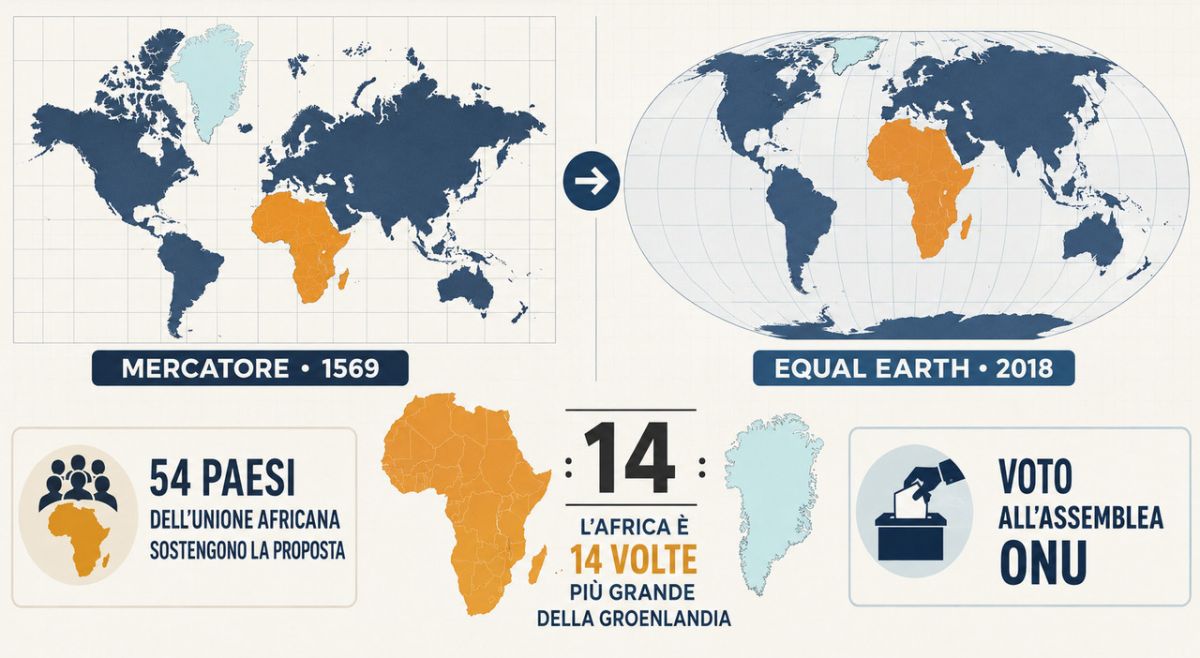
L'Assemblea Generale delle Nazioni Unite ha approvato una risoluzione per favorire l'adozione di proiezioni cartografiche più accurate delle dimensioni dei continenti, abbandonando la tradizionale mappa di Mercatore che distorce le proporzioni, in particolare dell'Africa. #Africa #ONU #Mappe

www.ilfattoquotidiano.it
L’Onu vota l’addio alla mappa del mondo di Mercatore che falsa la dimensione dei continenti: l’Africa sarà molto più grande
20129
Il Messaggero Sep 4

L'Onu voterà l'adozione di una nuova mappa che rappresenta accuratamente le dimensioni dell'Africa, proposta dal Togo per sostituire la tradizionale mappa di Mercatore, ritenuta inadeguata e simbolo di colonialismo cartografico. #Mappe #Africa #Cartografia

www.ilmessaggero.it
«La mappa attuale è sbagliata, alcuni Paesi sono rappresentati più grandi». E l'Onu vota la nuova cartina
16584
Il Post Sep 4

L'assemblea generale dell'ONU voterà venerdì per adottare ufficialmente una nuova mappa, basata sulla proiezione Equal Earth, che rappresenta meglio le dimensioni reali dell'Africa rispetto alle tradizionali mappe basate sulla proiezione di Mercatore. #Africa #Cartografia #ProiezioneEqualEarth

www.ilpost.it
All’ONU si vota per adottare una mappa che rappresenti meglio l’Africa
15992