BETA nonprofit public democratic european moderated

Search

#Objection

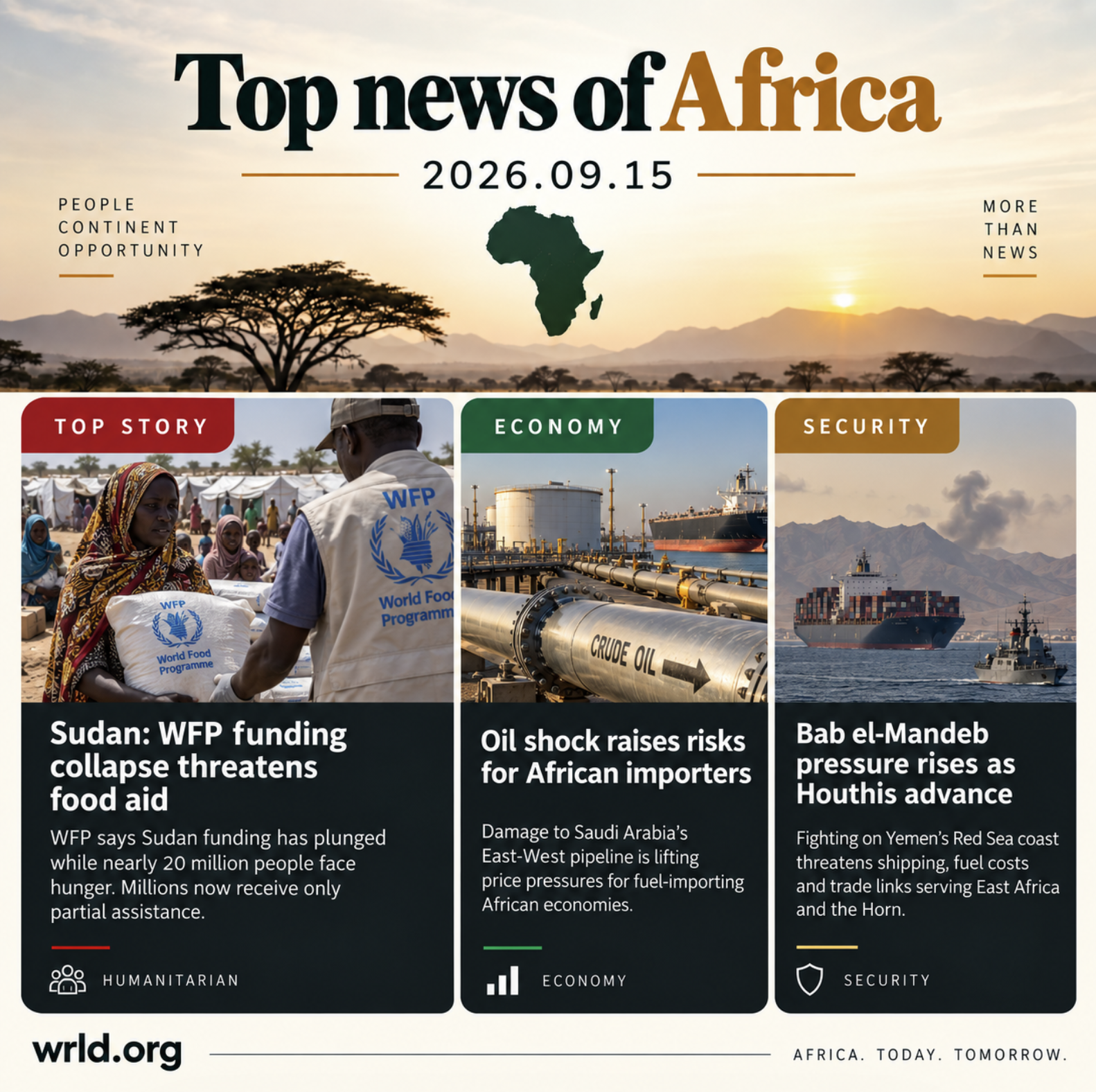
AFRICA DAILY REPORT — 15 SEPTEMBER 2026 Coverage: key developments identified in the latest 24-hour news cycle 1. SUDAN — WFP funding collapse threatens food aid Importance: 10/10 — CRITICAL The World Food Programme says its Sudan budget has fallen to roughly $206 million this year from $645 million last year, while nearly 20 million people face hunger. WFP says it needs almost $300 million more to sustain current operations. Funding constraints have forced the agency to concentrate assistance on about five million of the most vulnerable people, with roughly four million currently receiving partial rations. The funding shock risks deepening what is already one of the world's largest humanitarian emergencies. Source: Reuters, 14 Sep 2026 https://www.reuters.com/world/africa/world-food-programme-funding-sudan-plummets-more-go-hungry-head-says-2026-09-14/ 2. RED SEA / HORN OF AFRICA — Houthi advances increase pressure around Bab el-Mandeb Importance: 9.5/10 — CRITICAL Fighting in Yemen is intensifying along the Red Sea coast, with Houthi territorial gains creating additional risk around the Bab el-Mandeb shipping corridor. More than 82,000 people have reportedly been displaced since early September, and over 2,000 have crossed to Djibouti. For Africa, the significance extends beyond the humanitarian impact: disruption around Bab el-Mandeb threatens trade, fuel costs and shipping links serving East Africa, the Horn and the Suez route. Sources: Reuters/AP, 14 Sep 2026 https://www.reuters.com/world/middle-east/yemens-displaced-long-loved-ones-stability-houthis-advance-2026-09-14/ https://apnews.com/article/90dc86201ef51410ebcdd913837d741d 3. GLOBAL ENERGY / AFRICA — Saudi pipeline damage raises oil-price risk for African importers Importance: 9/10 — VERY HIGH Saudi Arabia's strategically important East-West oil pipeline is expected to remain largely out of service for three to five weeks after a drone attack. Oil prices rose as markets assessed the disruption alongside instability around Gulf and Red Sea routes. The consequences are especially important for oil-importing African economies, where higher crude prices can quickly feed into fuel costs, inflation, currencies and transport prices. Source: AP, 14 Sep 2026 https://apnews.com/article/8c18d82c109a8ea91347ce53c0096c53 4. SOUTH AFRICA — Rand falls sharply as oil prices surge Importance: 8.5/10 — VERY HIGH The South African rand fell around 1.1% against the dollar during Monday trading as rising oil prices increased pressure on Africa's most industrialised economy. South Africa is a major net oil importer and therefore particularly exposed to the current energy shock. The JSE Top-40 also weakened, while government bond yields moved higher. The development illustrates how the Middle East/Red Sea crisis is transmitting directly into African financial markets. Source: Reuters, 14 Sep 2026 5. DR CONGO — Ebola outbreak remains a continental-level health emergency Importance: 10/10 — CRITICAL The Ebola epidemic remains one of Africa's most serious current risks. The outbreak has spread to seven Congolese provinces, including Sud-Ubangi in western DRC, raising concern about further cross-border transmission toward the Republic of Congo and Central African Republic. Latest reported figures exceed 7,000 cases and 3,300 deaths. Conflict, displacement, health-worker strikes and population movement continue to obstruct containment. Sources: AP / public-health reporting, latest updates through 14 Sep 2026 https://apnews.com/article/58a2b25c752eaa8344ff16564a8e3547 6. EASTERN DR CONGO — Bukavu mourns 27 students killed in school fires Importance: 8/10 — HIGH Hundreds gathered in Bukavu for a mass funeral after fires at two neighbouring schools killed 27 students. The tragedy is particularly significant because it occurred in an already severely stressed city: Bukavu is controlled by the M23/AFC movement and local medical capacity is simultaneously under pressure from conflict and the Ebola epidemic. The disaster highlights the fragility of civilian infrastructure in eastern Congo. Source: AP, 14 Sep 2026 https://apnews.com/article/fd1aea4738a9a686fc6f0d45997a2be3 7. SOUTH AFRICA — Major road disaster kills at least 21 people in Western Cape Importance: 7.5/10 — HIGH At least 21 people were killed in a multi-vehicle collision on the N1 between Prince Albert and Leeu-Gamka in Western Cape. Two minibus taxis collided head-on before an SUV struck the wreckage. Together with another fatal accident near Ermelo, at least 29 people died on South African roads over the weekend, renewing scrutiny of road and minibus-taxi safety. Source: AP, 14 Sep 2026 https://apnews.com/article/9ae8e6beeb75cc307be24e15e9ec1fad 8. SUDAN — International leverage constrained as humanitarian needs rise Importance: 8.5/10 — VERY HIGH The widening humanitarian funding gap comes as diplomatic pressure on Sudan's belligerents remains limited. The UN Security Council recently extended the Darfur arms embargo only temporarily while members continue debating a U.S. proposal for a nationwide ban. Russia and China have raised objections to expanding the restrictions. The combination of weak humanitarian financing and diplomatic deadlock increases the risk of further deterioration. Sources: Reuters/AP https://apnews.com/article/fde2c6880c80343bebffb83c243fd3f4 9. UGANDA / SOUTH SUDAN — Climate stress is fuelling violence against traditional rainmakers Importance: 6.5/10 — SIGNIFICANT AP reports growing violence against traditional rainmakers in parts of Uganda and South Sudan as increasingly erratic rainfall damages subsistence agriculture. Farmers facing droughts, floods and crop losses have sometimes blamed spiritual practitioners for failed rains. The story is locally focused but illustrates a broader African security issue: climate disruption increasingly interacts with poverty, social tension and traditional belief systems. Source: AP, 15 Sep 2026 https://apnews.com/article/6080fa9dbc838ba75b9bab29cfd48fc9 10. AFRICA'S ECONOMIC OUTLOOK — Oil shock becomes the key near-term macro risk Importance: 8/10 — HIGH The combination of damaged Saudi export infrastructure, instability around Bab el-Mandeb and elevated crude prices is becoming an important macroeconomic risk for African oil-importing states. South Africa's currency reaction is an early indicator. If elevated prices persist, Kenya, Ethiopia, Morocco, Senegal and other net importers could face renewed inflation and balance-of-payments pressure, while African oil exporters could receive a revenue boost. This is a cross-cutting issue to watch closely over the coming days. Sources: Reuters/AP, 14 Sep 2026 TODAY'S ASSESSMENT The three developments with the greatest strategic significance are: (1) the sharp deterioration in humanitarian financing for Sudan; (2) the continuing Ebola emergency in DR Congo; and (3) the expanding Red Sea/Middle East energy shock, which is increasingly transmitting into African currencies, inflation and trade risks. #Africa #AfricaNews #TopNewsOfAfrica #Sudan #SudanCrisis #HumanitarianCrisis #WFP #WorldFoodProgramme #FoodSecurity #HungerCrisis #HumanitarianAid #RedSea #HornOfAfrica #BabElMandeb #Houthis #MaritimeSecurity #Shipping #GlobalTrade #EnergySecurity #OilPrices #OilMarket #AfricanEconomies #AfricanMarkets #EconomicRisk #Geopolitics #MiddleEast #EastAfrica #GlobalSouth #AfricaToday #wrldorg
H

“Socialism Was Good in Theory” That assumes socialism’s theory was never seriously challenged. It was—long before the Soviet Union, Lenin, or any national-scale experiment. Five thinkers attacked its foundations from different directions. Tocqueville: Equality Can Become Servitude In 1848, Alexis de Tocqueville distinguished democracy from socialism. Both pursued equality, but democracy sought it while preserving individual freedom. Socialism risked achieving equality by expanding state power. Equality, he warned, is not automatically liberty. Bastiat: Redistribution Can Become Plunder In 1850, Frédéric Bastiat examined what happens when the state takes from some to give to others in the name of justice. He called this “legal plunder.” His concern was that politics could become a permanent struggle to control redistribution. Nietzsche: Equality Can Become Resentment Nietzsche attacked socialism psychologically. He saw egalitarianism as potentially rooted in resentment toward exceptional individuals, ambition, strength, and hierarchy. The danger was a culture that treated excellence as morally suspect—not lifting people upward, but bringing the exceptional downward. Böhm-Bawerk: Challenge the Economics In 1896, Eugen von Böhm-Bawerk attacked Marx’s economic theory, arguing that Marx’s labor theory of value could not adequately explain the relationship between labor values and actual prices. He challenged socialism’s claim to a scientific economic foundation. Mises: The Calculation Problem In 1920, Ludwig von Mises asked a devastating question: even if socialism is morally desirable, how would planners know what to produce? The sequence is clear: Tocqueville challenged the political premise. Bastiat challenged redistribution. Nietzsche challenged egalitarian psychology. Böhm-Bawerk challenged Marxian economics. Mises challenged central planning. All of them preceded the Soviet experiment. So “socialism was good in theory, but bad in practice” is not an argument. It is a historical claim that requires explaining why these objections were wrong.

H

“Socialism Was Good in Theory” That sentence assumes the theory was never seriously challenged. It was. Long before the Soviet Union existed, before Lenin seized power, and before socialism had been tested on a national scale, major thinkers were already attacking its foundations—from very different directions. Five of them stand out. Tocqueville: Equality Can Become Servitude In 1848, Alexis de Tocqueville drew a sharp distinction between democracy and socialism. Both spoke about equality. But Tocqueville believed they pursued it in fundamentally different ways. Democracy, in his view, sought equality while preserving individual freedom. Socialism risked achieving equality by expanding the power of the state over the individual. His warning was essentially this: equality is not automatically liberty. A society can pursue equality so aggressively that it begins sacrificing the independence that makes political freedom meaningful. Bastiat: Follow Where Redistribution Leads Two years later, Frédéric Bastiat attacked socialism from a different direction. His question was deceptively simple: What happens when the state acquires the authority to take from some people and give to others in the name of justice? Bastiat called this “legal plunder.” His concern was not merely that redistribution might be expensive. It was that once government becomes the instrument through which competing groups obtain benefits from one another, politics can turn into a permanent struggle over who controls the machinery of redistribution. The problem, therefore, wasn’t simply how much the state redistributed. It was the principle that made redistribution legitimate in the first place. (bastiat.org⁠) Nietzsche: Equality Can Become Resentment Nietzsche approached socialism neither as an economist nor as a constitutional theorist. He attacked its psychology. He saw modern egalitarian movements as part of a much older moral impulse: resentment toward exceptional individuals and suspicion of strength, ambition and hierarchy. For Nietzsche, the danger was not simply that everyone might become economically equal. It was that a culture could begin treating excellence itself as something morally suspect. The goal would cease to be lifting people upward. It would become bringing the exceptional downward. Böhm-Bawerk: Challenge the Economics Then came Eugen von Böhm-Bawerk. In 1896, he turned his attention specifically toward Marx’s economic system. His criticism was not primarily moral or political. It was technical. Böhm-Bawerk argued that Marx’s theory of value did not adequately explain how the labor values developed in Capital could be reconciled with the actual prices Marx subsequently needed to explain. In other words, he attacked socialism where it claimed to possess a scientific economic foundation. The argument became one of the central criticisms of Marxian economics and helped launch a debate that would continue for generations. Mises: The Calculation Problem Then, in 1920, Ludwig von Mises attacked an even more fundamental question: Even if socialism is morally desirable, how would a socialist economy actually know what to produce? A functioning economy has millions of competing uses for scarce resources. Build a bridge or a hospital? Use steel here or there? Produce more machinery or more consumer goods? Under private ownership and markets, prices for capital goods provide information about relative scarcity and opportunity costs. Mises argued that abolishing private ownership of the means of production also removes the genuine market prices necessary for rational economic calculation. The problem wasn’t simply that socialist planners might make bad decisions. It was that the system deprived them of the very economic signals required to systematically compare those decisions. (Mises Institute⁠) And that was the sequence. Tocqueville challenged the political premise. Bastiat challenged the moral and legal mechanism of redistribution. Nietzsche challenged the psychology behind egalitarianism. Böhm-Bawerk challenged Marx’s economic theory. Mises challenged the possibility of rational central economic calculation. Five different thinkers. Five different objections. And all of them came before the Soviet Union had demonstrated what large-scale socialist government would actually look like. So “socialism was good in theory, but bad in practice” is not an argument. It is a historical claim that requires you to explain why these theoretical objections were wrong. The interesting question isn’t whether socialism had critics. It did. The interesting question is whether socialism ever adequately answered them” - ChatGPT

🗣️ @CarlesFite : « Si une offre arrive pour Koundé, il n’y a pas d’objection à son départ, Eric serait le titulaire et Xavi Espart le remplaçant, je suis fan d’Espart. Il y a aussi Cancelo qui peut jouer sur le côté droit. » (@OnzeTv3) https://t.co/7wad8qhR1y #Koundé #FCBarcelona #TransferNews

A Generation That Forgot the Shape of the Square On memory left to die alone By Adham Hasanin Egyptian journalist and political writer, based in the Netherlands In a house near mine, there is a boy of thirteen. Born in 2013 just a few months younger than the July coup itself, younger than the new republic under whose shadow we now live. I asked him once, with no preamble, no test, out of nothing more than passing curiosity: do you know what January was? He answered simply, without hesitation, without any sense that he was missing something: "An old revolution, against Mubarak, right?" Not entirely wrong. But it is everything he knows. The name Tahrir Square means nothing specific to him. The sound of the crowd chanting has no echo in his mind. He does not know that his own family whom he sees every day saying "thank God for stability," who warn him against "chaos" whenever a political headline crosses the screen once, at a moment two years before he was born, went down into the street, betting their entire lives on the possibility that something might change. This article is not about politics. It is about memory, and about who decides what gets told and what is left to die in silence. I. Who Erases the Picture? The first question that comes to mind is the easiest and most deceptive one: who erases this memory? And where do we begin holding them accountable? But the truth is too complex to reduce to a single actor. No one actually erases memory, in the literal sense of the act. There is no ministry called the "Ministry of Forgetting," no presidential decree ordering January struck from the collective consciousness. What happens is simpler than that, and more dangerous at once: the subject is simply never told. School says nothing. The textbook leaps from one period to another without pausing on January for more than two faded lines, composed with deliberate neutrality, devoid of any detail that might make the event feel alive to its young reader. Television no longer has any reason to return to it; the programmes that once hosted witnesses and activists stopped years ago, replaced by an official discourse that mentions January only in passing, as an unfortunate prelude to the "stability" that supposedly followed. And the home the most dangerous link of all has become afraid of the subject. Speech now carries a price, and many families, whether consciously or by sheer survival instinct, have decided that silence is safer than the story. The father who marched fears passing on to his son a curiosity that might one day lead him into trouble the family cannot afford. The mother who lost a friend in the events prefers not to reopen the wound before a child who does not yet grasp the weight of loss. And so, generation after generation, the circle of those who know shrinks, and the circle of those who do not even ask because they do not know there is anything worth asking widens. No one decided to erase the memory through an explicit decision. The memory was simply left to die alone, with no one tending it. And it is precisely this decentralised absence of responsibility that makes this kind of erasure more dangerous than any direct official ban: there is no single decision to challenge, no single body to hold accountable. Responsibility is distributed across thousands of small decisions made by thousands of individuals, each within their own context, each seeming reasonable when viewed in isolation. II. Why This Is More Dangerous Than Direct Repression An objection might be raised: is direct repression arrest, imprisonment, publishing bans not far more lethal than mere gradual forgetting? The answer is complex, and deserves calm unpacking. Direct repression can be seen. It can be documented, and the victim can know they are a victim, can tell their story, and their pain can become a testimony added to the collective memory, even if it never reaches justice. The political prisoner knows he is a political prisoner. The journalist banned from writing knows he is banned, and can tell the world he is banned. Direct repression, for all its cruelty, leaves a trace that can be followed. But a generation that has forgotten something happened at all does not even have a starting point from which to ask. This thirteen-year-old boy will never ask "why were we repressed?" because he does not know there is anything deserving that question in the first place. He feels no absence, because he does not know there is anything absent. He simply lives in a version of reality stripped of an entire chapter of his country’s history, and never for a moment suspects that this void is a void at all. Here lies the essence of the danger: direct repression creates victims who know they are victims. Erasure of memory, when it succeeds, creates a generation that does not even know it has been deprived of anything. And deprivation that is not felt cannot be resisted, because resistance always begins with an awareness of loss. The regime that came after 2013 does not need to convince the new generation that January was a mistake. That would be an arduous, costly task, requiring sustained propaganda and continuous effort to persuade each individual one by one. It is far easier, and strategically far more efficient, simply to ensure they never know it was anything at all. The void requires no defence; it requires only silence, and silence is free and always available. III. The Four Mechanisms of Erasure Four complementary mechanisms can be identified working together to produce this collective void not as an organised conspiracy, but as a system of incentives that pushes each party, consciously or not, to contribute to the same process. The first mechanism: formal education. The curriculum, as currently designed, treats January as a passing footnote rather than a founding event deserving detail and analysis. The student memorises two dates the start of the revolution and its presumed end without understanding why people took to the streets, what they were demanding, or how they felt in that pivotal moment. The second mechanism: broadcast media. The channels that once hosted live discussions on January, featuring varied perspectives, have gradually disappeared, or transformed their discourse entirely. Today’s televised image either ignores the anniversary altogether, or invokes it only to frame it as a prelude to chaos that must be avoided. The third mechanism: the silence of homes. This is the most dangerous of all, precisely because it is the most human and understandable. Parents who lived through the experience protect it with silence, not out of aversion to the story, but out of fear of its price. This silence, however legitimate its motives, achieves exactly the same effect as official censorship: it blocks the transmission of knowledge from one generation to the next. The fourth mechanism: the absence of alternative spaces. Even those among the new generation who wish to know cannot easily find places to look. Archives are scattered, trustworthy websites are blocked or require effort to reach, and personal testimonies are dispersed across corners of the internet that an ordinary student at an ordinary school will never stumble upon. These four mechanisms require no central coordination to work together. Each naturally serves the others, and all converge on a single result: a growing void in the consciousness of every new generation. IV. Memory as an Act of Resistance If erasure operates without a centre, then resisting it must also be decentralised. No one waits for a government decision to restore January to the curriculum, nor for a television programme to revive the testimonies. Resistance here is necessarily individual, happening in small details, in passing conversations, in the simple decision to tell rather than to stay silent. This is exactly what I try to do, without any claim to heroism, without any grand mission. I try, whenever I can, to tell the thirteen-year-old boy and others like him details that are never written in official reports or in schoolbooks: what the voices in the square sounded like, how someone felt the first time they realised change was possible, what that moment of hope was like before everything changed. The goal is not to bring back the past; the past cannot be brought back. The goal is that this boy, when he grows older and asks again and he will ask, because the questions always return at some point finds someone to tell him the full story, not two faded lines in a schoolbook. That he knows the stability he is told is the fruit of "wisdom" has a prior history, that this history carried other possibilities, and that real people bet their lives on those possibilities. V. Why This Matters Now Talking about the memory of a generation not yet aware might seem an intellectual luxury next to more urgent matters: arrests, a collapsing economy, regional wars. But the truth is that this issue is the foundation on which every other issue is built. A people who do not know they once rose up will not understand why they should ever think of rising again. A generation raised to believe "stability" is the only natural state possible will never ask itself what drove its own parents, shortly before it was born, to risk everything for an alternative that was never guaranteed. Memory is not a luxury; it is the reference point by which every generation measures its present, and through which it determines what is possible and what is not. And whoever understands this understands why erasing memory, not direct repression alone, is among the most important tools of any regime seeking to guarantee its permanence: because a people who have forgotten they were once free will not even know they are missing freedom. Memory, like the word, needs someone to tell it in order to survive. And when the tellers stop, memory does not die suddenly; it withers slowly, generation after generation, until the day comes when a boy asks an innocent question, and finds no one to answer him but two faded lines in a schoolbook.

BFMTV Jul 24

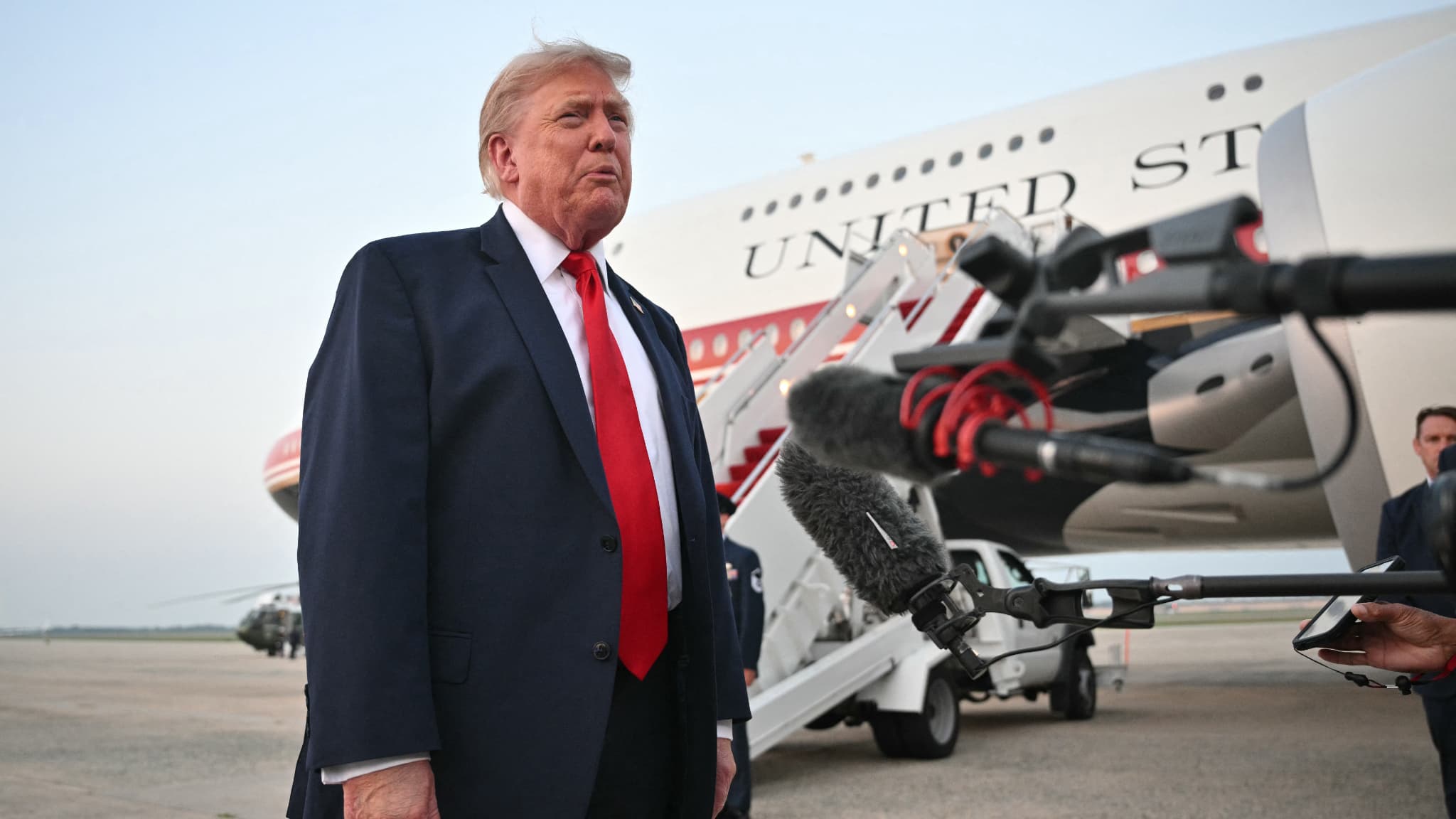
Malgré les objections de ses alliés, Donald Trump remet en place des droits de douane sur 60 économies, dont l'Union européenne, imposant des surtaxes de 10% à 12,5% sur certains produits afin de lutter contre le travail forcé dans les chaînes d'approvisionnement. #Douanes #Trump #CommerceInternational

"À nos yeux, cela n'a aucun sens": malgré les protestations de pays alliés, Donald Trump reconstruit son mur tarifaire en ciblant 60 économies, dont l'Union européenne, avec des taxes entre 10% et 12,5%
BFMTV Jul 16

La Commission européenne impose à Google de partager des données de son moteur de recherche et d'ouvrir Android aux assistants d'IA concurrents, malgré les objections du géant américain qui craint pour la sécurité et la confidentialité des utilisateurs. #Google #DMA #IA

DMA: Bruxelles force Google à desserrer son emprise sur Android et Search pour favoriser les concurrents dans l'IA et la recherche en ligne

The comparison with abortion is your main argument, and it is striking. However, I see several objections: It is curious to see you compare the death caused to an embryo, which is not considered a human person in our country, with that caused to... (translated)

D
der Standard Jun 23

Startup Objection, financované Peterem Thielem, plánuje využívat umělou inteligenci k posuzování objektivity novinových příspěvků a tím se snaží zastoupit roli jak presserátu, tak soudu, čímž vytváří veřejný tlak na média, i když jeho verdicty nemají přímé právní důsledky. #Objection #PeterThiel #Medienethik

Den Medien an den Kragen: Neues Thiel-Startup möchte Presserat und Gericht zugleich sein

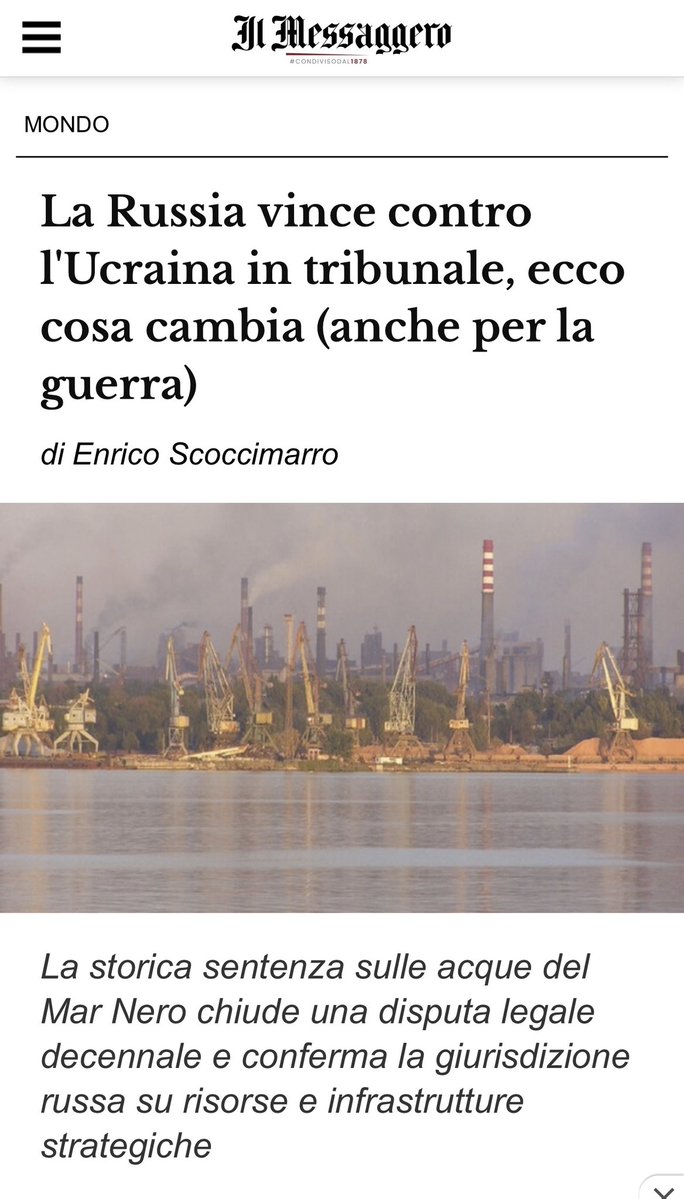
Ho inviato una lettera al Direttore del Messaggero per richiedere la rettifica di un articolo incredibile scritto da una delle tante penne particolarmente sensibili alle ragioni di Putin, tal Enrico Scoccimarro. Secondo l’autore la Russia avrebbe stravinto all’Aja, presso il tribunale internazionale basato sulla Convenzione delle Nazioni Unite sul diritto del mare (UNCLOS), in un giudizio che sancirebbe ora la legittimità dell’occupazione della Crimea, della costruzione del Ponte di Kerch e del principio secondo cui le acque del Mar D’Azov sarebbero esclusivamente russe. Peccato che sia vero esattamente il contrario e che la versione riportata senza vergogna su una testata nazionale sia il copia e incolla del comunicato emesso dalla Federazione Russa. Nel pezzo si legge ad esempio che “il tribunale ha stabilito che lo Stretto di Kerch e il Mar d'Azov devono essere considerati acque interne, confermando la giurisdizione russa su tali aree”. In realtà il tribunale ha smontato questa tesi: «The Arbitral Tribunal thus cannot accept the Russian Federation's argument... and rejects the Russian Federation's first general objection». A rafforzamento di questo, la Russia sosteneva anche che dopo l'annessione illegale delle regioni di Donetsk, Zaporizhzhia e Kherson nel 2022 fosse cambiato lo status sovrano. Il tribunale ha respinto anche questo punto («rejects the Russian Federation's third general objection»), riaffermando che la giurisdizione si basa sulla situazione del 2016, quando entrambi i paesi erano indiscutibilmente Stati costieri legittimi del Mar d'Azov. Nell’articolo è anche scritto che “il collegio arbitrale ha respinto anche le pretese ucraine relative allo sfruttamento delle risorse naturali, negando a Kiev il controllo sulle attività estrattive e sulle riserve ittiche presenti in quelle acque”. Una versione manipolata che spaccia per diniego, quella che è piuttosto una dichiarazione di incompetenza da parte del tribunale. L'UNCLOS (la Convenzione ONU sul diritto del mare) ha respinto le richieste ucraine, non perché infondate, ma perché non ha l'autorità legale per stabilire a quale Stato appartenga un territorio terrestre (la Crimea). A questo proposito Scoccimarro scrive anche che “la Corte ha negato che l'integrazione delle regioni di Donetsk, Luhansk, Zaporizhia e Kherson, avvenuta negli ultimi anni, rappresenti una violazione del diritto internazionale in questo contesto marittimo”. Altra manipolazione, che lascia intendere una legittimazione delle annessioni da parte dei giudici, le quali invece, nel ritenere le acque del Mar D’Azov ancora condivise è stata di fatto palesemente esclusa. Nell’articolo infine è scritto che “la Corte ha sottolineato che anche l'Ucraina non ha rispettato integralmente i propri obblighi di cooperazione internazionale necessari alla tutela dell'ambiente marino”. Ma non si trova traccia delle violazioni del diritto internazionale marittimo da parte russa nella costruzione del ponte di Kerch, elemento che si evince in ben tre punti del dispositivo. In particolare al punto 5 si legge: «Decides, unanimously, that the Russian Federation violated Article 206 of the Convention...» (La Russia ha violato l'obbligo di valutazione di impatto ambientale per il ponte di Crimea, i cavi elettrici e i gasdotti). Al punto 6 è scritto: «...violated Articles 205 and 206... by failing to publish reports...» (Ha violato l'obbligo di pubblicare e trasmettere i rapporti ambientali). Infine il punto 7: «...violated Articles 123, 192, and 194... and by failing to fulfil its duty to cooperate...» (Ha violato l'obbligo generale di protezione dell'ambiente marino e, soprattutto, ha violato il dovere di cooperazione con l'Ucraina). Dal momento che Scoccimarro non è nuovo a simili vergognose violazioni del codice deontologico, ho chiesto esplicitamente la rettifica. In caso di inadempienza procederò alla segnalazione al collegio di disciplina dell’Ordine dei Giornalisti del Lazio, nel cui elenco è iscritto. #Russia #Ucraina #DirittiUmani

La Libre.be May 29

Kanye West, malgré des controverses liées à des propos antisémites, a obtenu l'autorisation de se produire aux Pays-Bas en juin, avec des concerts prévus à Arnhem, bien que certains responsables politiques aient exprimé des objections. #KanyeWest #Antisémitisme #ConcertsPaysBas

Dans la tourmente, Kanye West autorisé à se produire aux Pays-Bas

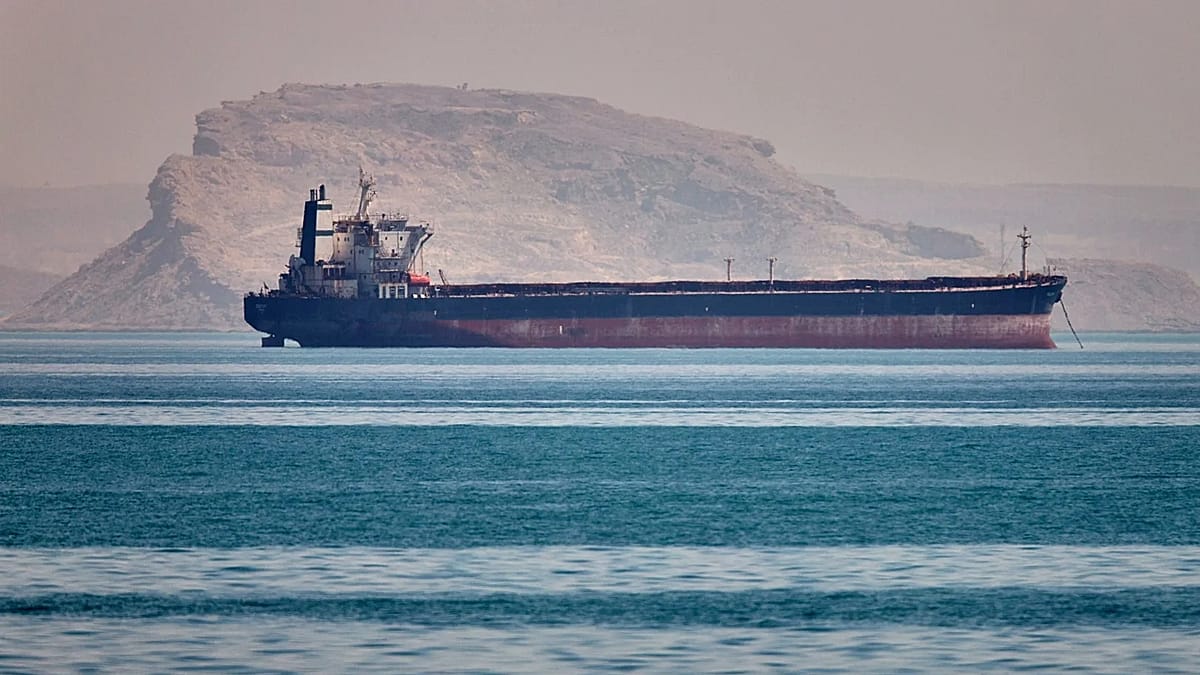
Iran has established the Persian Gulf Strait Authority to officially manage and charge ships for transit through the Strait of Hormuz, amidst growing tensions and a surge in maritime traffic, aiming to replace a grey market of unofficial transit permits and generate significant revenue despite international legal objections. #StraitOfHormuz #IranShipping #MaritimeSecurity

Iran sets up Hormuz transit authority to charge ships for passage
BBC May 17

A proposed warehousing project in Carrington, Trafford, that would remove over 10,000 trees and disrupt local wildlife habitats is set to receive council approval despite significant objections, as it promises to create 1,000 jobs and boost the local economy by £100 million. #UrbanDevelopment #Biodiversity #EnvironmentalImpact #GB

Carrington: Warehouse scheme will uproot more than 10,000 trees
BBC May 17

A proposed warehousing project in Carrington, Trafford, could receive approval despite plans to uproot over 10,000 trees and destroy important woodland habitats, with supporters citing its potential to create 1,000 jobs and boost the local economy by £100 million, even as it faces significant environmental concerns and numerous objections. #Sustainability #Biodiversity #UrbanDevelopment #GB

Carrington: Warehouse scheme will uproot more than 10,000 trees
BBC May 17

Councillors are set to approve a large warehousing project in Trafford that would destroy over 10,000 trees and disrupt local biodiversity, despite receiving 60 objections, with supporters arguing it will provide 1,000 jobs and a £100 million boost to the economy. #EnvironmentalImpact #UrbanDevelopment #Biodiversity #GB

Carrington: Warehouse scheme will uproot more than 10,000 trees

France has initiated an inquiry into the murder of journalist Jamal Khashoggi after several NGOs filed a complaint against Saudi Crown Prince Mohammed bin Salman, who is accused of ordering the assassination, despite earlier objections from the National Anti-Terrorism Prosecutor's Office. #HumanRights #Justice #PressFreedom #FR #SA #US #TR

French judge to investigate 2018 killing of Khashoggi
BBC May 16

Plans to develop an 1,800-home estate in North Walsham, Norfolk, include provisions for a primary school and specialized care accommodation; however, local residents have expressed concerns about the potential strain on services and increased traffic, with objections being voiced to the North Norfolk District Council ahead of a decision on a crucial part of the project. #HousingDevelopment #CommunityConcerns #UrbanPlanning #GB

What do we know about the plan for 1,800 homes in North Walsham?

The Smithsonian Institution has reinstated mentions of President Trump's impeachments in the National Portrait Gallery, alongside other significant events from his first term, following previous criticism for their removal amid Trump's objections to the depiction of American history. #TrumpImpeachment #AmericanHistory #Smithsonian #US

Smithsonian Adds Back Impeachment Language to Label on Trump Portrait

President Trump acknowledged discussing U.S. weapons sales to Taiwan with Chinese leader Xi Jinping during their summit, which raises concerns about the adherence to a longstanding U.S. commitment not to consult China on this sensitive issue, while also indicating he would consider Xi's objections amidst ongoing pressures from U.S. lawmakers to finalize a $14 billion arms package for Taiwan. #USChinaRelations #Taiwan #ArmsSales #US #TW #CN

Trump Discussed U.S. Arms Sales With Xi 'In Great Detail'
BBC May 13

Israel's Eurovision contestant, Noam Bettan, expressed surprise at protests during his semi-final performance in Vienna, where audience members voiced anti-Israel sentiments, amidst ongoing controversies surrounding Israel's participation in the contest due to the Gaza conflict, while several countries boycotted the event citing moral objections. #Eurovision #HumanRights #MusicalFreedom #IL #ES #NL #IE #IS #SI #AT #PS

Eurovision: Israel's Noam Bettan 'shocked' by semi-final protests