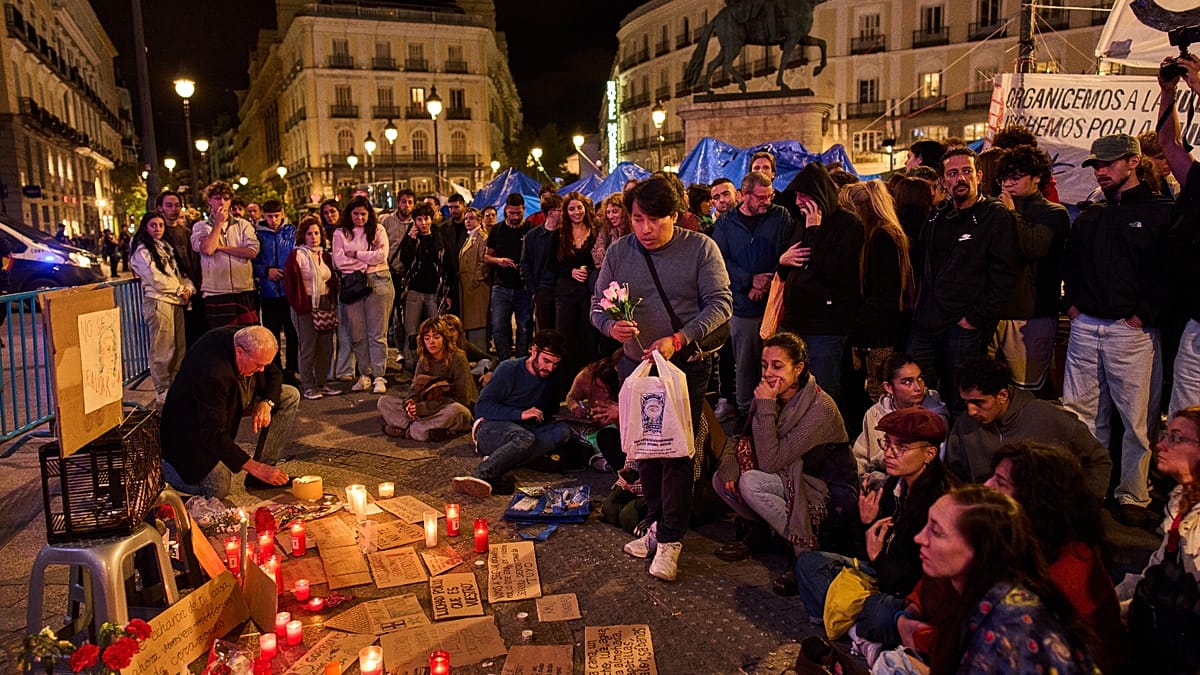
Tens of thousands marched in Madrid to mourn pensioner Maricarmen Abascal, whose eviction made her a housing crisis symbol and sparked fresh protests. #HousingCrisis #Eviction #MadridProtests
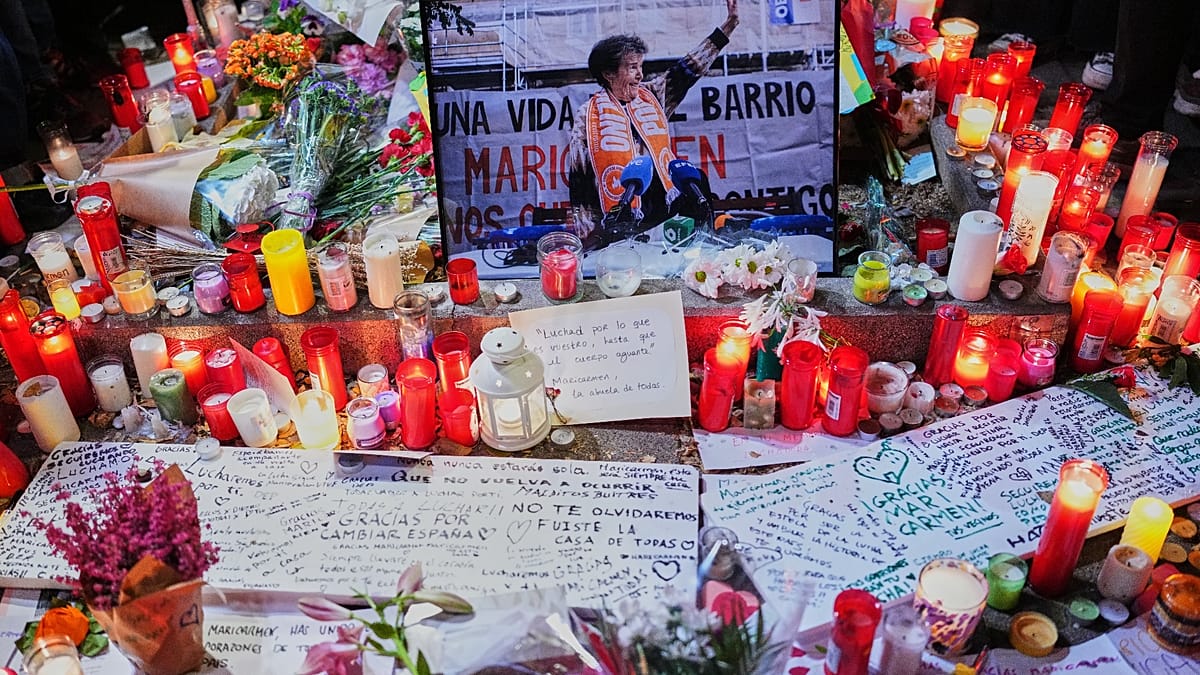
Tens of thousands marched in Madrid to mourn pensioner Maricarmen Abascal, whose eviction made her a housing crisis symbol and sparked fresh protests. #HousingCrisis #Eviction #MadridProtests

Hundreds protest near Spain's parliament in Madrid to honour evicted pensioner Maricarmen Abascal and demand action over the country’s housing crisis. #HousingCrisis #MadridProtests #AdiosMaricarmen

Brazil’s synthetic voters – when AI manufactures public opinion They look like ordinary street interviews. A reporter approaches a passer-by in a Brazilian square and asks a simple question: who will you vote for? A young voter explains why Luiz Inácio Lula da Silva deserves another term. An elderly woman says Brazil needs Flávio Bolsonaro because he represents political renewal and greater security. The locations look plausible, the microphones are visible and the answers sound much like the brief political opinions heard in television vox pops around the world. None of the people are real. Ahead of Brazil’s presidential election on 4 October, fact-checking organisation Aos Fatos identified at least 50 TikTok videos in which artificial intelligence was used to manufacture voters, reporters and apparently spontaneous political interviews. Together, the videos had accumulated around 7.4 million views by mid-August. Some promoted Lula, others Flávio Bolsonaro, while another group used synthetic characters to ridicule or stereotype supporters of one side. Aos Fatos found no apparent evidence linking the accounts producing the videos to either presidential campaign. The opinion poll that never took place The format is important. These were not conventional deepfakes in which a recognisable politician is made to say something he never said. Instead, the creators reproduced the visual language of the vox pop – the short street interview used by broadcasters and social-media creators to illustrate what ordinary people supposedly think. In pro-Lula videos, synthetic voters described themselves as beneficiaries of social programmes or credited the president with improving their lives. In videos supporting Flávio Bolsonaro, artificial interviewees associated him with political renewal, public security and fighting corruption. Other clips were openly hostile: AI-generated characters presented as poor or living in parts of Brazil’s north-east were shown in dirty clothes or run-down surroundings, declaring support for Lula because they supposedly preferred welfare payments to work. The deception is therefore subtler than fabricating a candidate’s statement. It manufactures something that political communication normally treats as evidence of public sentiment. A real vox pop may be unscientific, but the people interviewed at least exist. These videos created the appearance that identifiable social groups – young people, pensioners, welfare recipients or residents of particular regions – were spontaneously expressing political preferences when no such encounters had taken place. An electoral-law specialist interviewed by Aos Fatos described the technique as the fabrication of a “social fact that never occurred”. That captures the central innovation: AI is being used not merely to falsify political speech, but to manufacture the impression of grassroots opinion. Fifty videos, but not one proven network The available evidence does not support describing the 50 posts as a centrally controlled influence operation. Aos Fatos located them through TikTok searches and recommendations produced by the platform itself, then examined the accounts responsible for publication. Most had relatively small individual audiences, although their combined reach was substantial. The first examples identified by the investigation appeared as early as March 2026. Activity increased in June and was concentrated particularly in July and the first half of August as Brazil’s election calendar intensified. Some accounts specialised in AI-generated videos generally, including fabricated podcast-style material. Others were explicitly political or supportive of a candidate, but Aos Fatos found no apparent links between those profiles and the official Lula or Bolsonaro campaigns. That distinction is essential. The evidence demonstrates a common technique and a shared political environment, not a single command structure. Some creators may have been motivated by ideology, others by engagement or monetisation. Publicly available evidence does not establish who commissioned the individual videos or whether any coordination existed between the accounts. This decentralised model also creates a different enforcement problem from a traditional bot network. There may be no headquarters to expose and no infrastructure whose removal disables the entire operation. The format itself can be copied by anyone with access to inexpensive generative-video tools. When the algorithm mixes real and synthetic citizens Aos Fatos documented another important feature of the phenomenon: TikTok’s recommendation system placed AI-generated interviews alongside genuine street interviews. For a user scrolling quickly through the platform, the transition between an authentic citizen and an entirely fabricated one could therefore be almost invisible. In 18 per cent of the 50 videos analysed, there was no indication that the people shown had been generated using AI. After Aos Fatos provided TikTok with the videos, the company said it had removed all of them for violating its rules on edited and AI-generated media. TikTok said its policies require creators to identify synthetic content and prohibit manipulated media capable of misleading users about matters of public importance or impersonating genuine journalistic material. The issue extends beyond one platform. Factchequeado’s review of Brazil’s 2026 election campaign found that synthetic endorsements and other deepfakes had become one of the most visible forms of AI-assisted electoral misinformation, alongside fabricated candidate statements and invented scenes. Brazil already had rules for synthetic politics Brazil entered the campaign with unusually detailed electoral rules governing artificial intelligence. The Superior Electoral Court, the TSE, requires electoral propaganda using synthetic multimedia to disclose clearly that AI was used. More importantly for the fake-voter videos, its rules prohibit synthetic audio or video used to favour or harm a candidacy when it creates or alters the image or voice of a living, deceased or fictitious person. The difficulty is attribution and enforcement. When a synthetic video is published by an official campaign, responsibility can be relatively straightforward to investigate. When it comes from an apparently independent account with no demonstrated relationship to a candidate, lawyers interviewed by Aos Fatos said responsibility is more likely to fall on the individual creator, while imposing electoral sanctions on a campaign would require evidence of a connection. For the final 72 hours before the election and the 24 hours following it, the TSE has imposed additional restrictions on newly published or republished synthetic material involving candidates or public figures, reflecting the particular difficulty of correcting fabricated content immediately before voting. From deepfake politicians to synthetic electorates The Brazilian case illustrates a broader change in political manipulation. The first generation of electoral deepfakes concentrated on famous people: make a politician appear to say something damaging, or fabricate an endorsement from a celebrity. Synthetic vox pops reverse the perspective. The politician can remain completely authentic; it is the electorate around the politician that is fabricated. That changes the psychological proposition of the message. Instead of saying the candidate believes this, the video suggests people like you believe this. Age, clothing, accent, neighbourhood and social class can all be generated to construct an artificial constituency around almost any political claim. There is no evidence that the 50 Brazilian videos identified by Aos Fatos constitute a single centrally directed campaign, nor evidence that they changed voting intentions. What they demonstrate is a technique whose barrier to entry has become extremely low. AI no longer needs to forge the politician. #DISINFORMED #Episode14 #Brazil #BrazilElection2026 #Elections #ElectionDisinformation #ArtificialIntelligence #AI #GenerativeAI #SyntheticVoters #SyntheticMedia #AIAvatars #AIGeneratedVideo #VoxPop #FakeInterviews #Astroturfing #AIPropaganda #PoliticalDisinformation #InfluenceOperations #InformationWarfare #SocialMediaManipulation #TikTok #PublicOpinion #ManufacturedConsent #SyntheticPublicOpinion #DigitalInfluence #Deepfakes #ElectionIntegrity #TSE #AosFatos #FactChecking #OSINT #MediaManipulation #WRLD (translated)
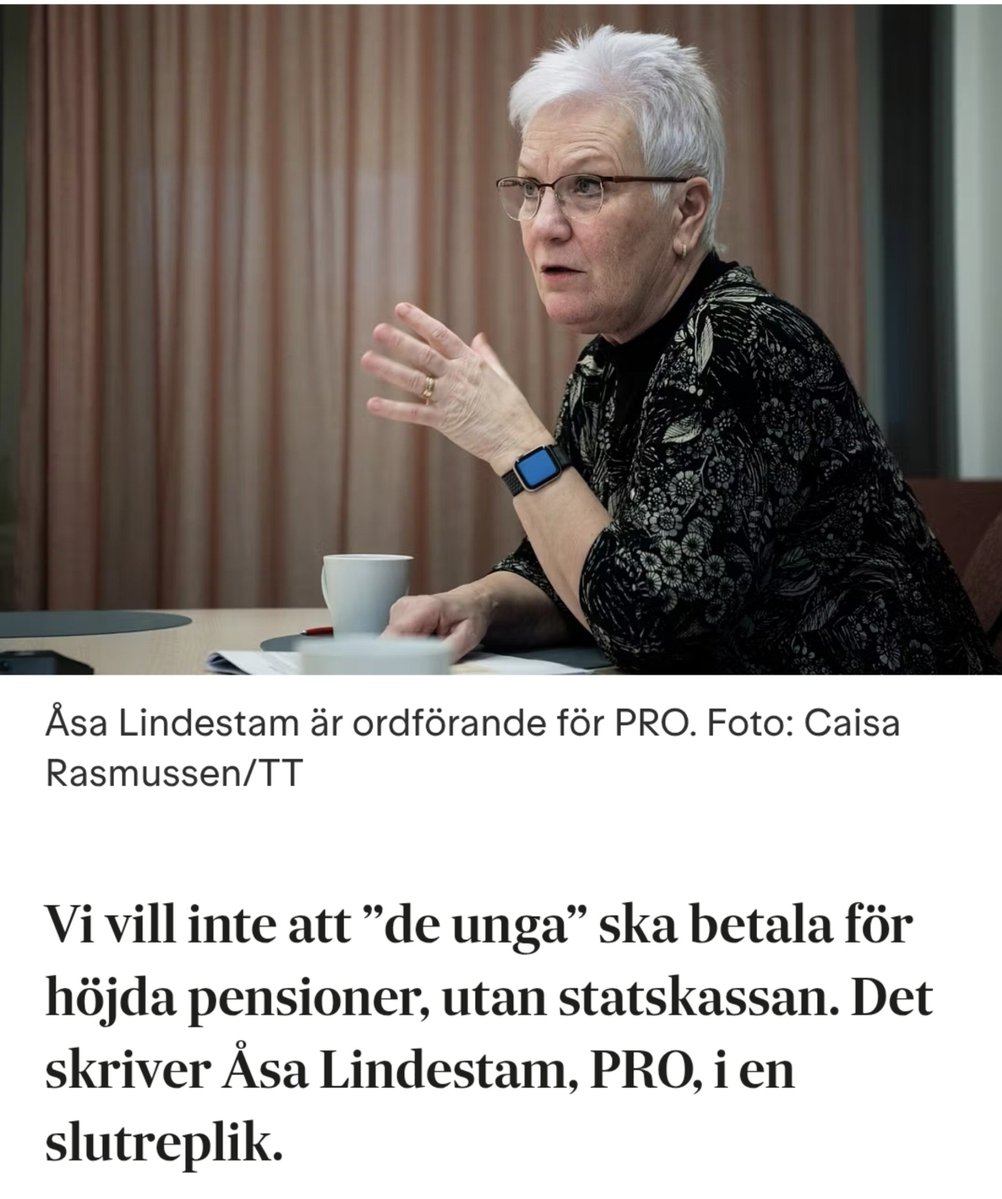
Rutger Brattström wondered where PRO thought the money for the state treasury came from and asked if pensioners would finance their own pensions. https://t.co/VcoNy0RQu6 #pensioner #ekonomi #PRO (translated)
"Der var en periode, hvor Rasmus Højlund spillede som en, der havde mistet begge sine forældre." - Morten Bruun Seriøst. Hvem tænker på - og siger så - SÅ mærkelige ting på sin professionelle arbejdsplads indenfor kommunikationsarbejde? Hvor hele landet lytter med. Nogen på tv2 skal pensionere den mand. Ind med taktisk-fodboldkyndige mennesker. #fodbold #kommentar #TV2
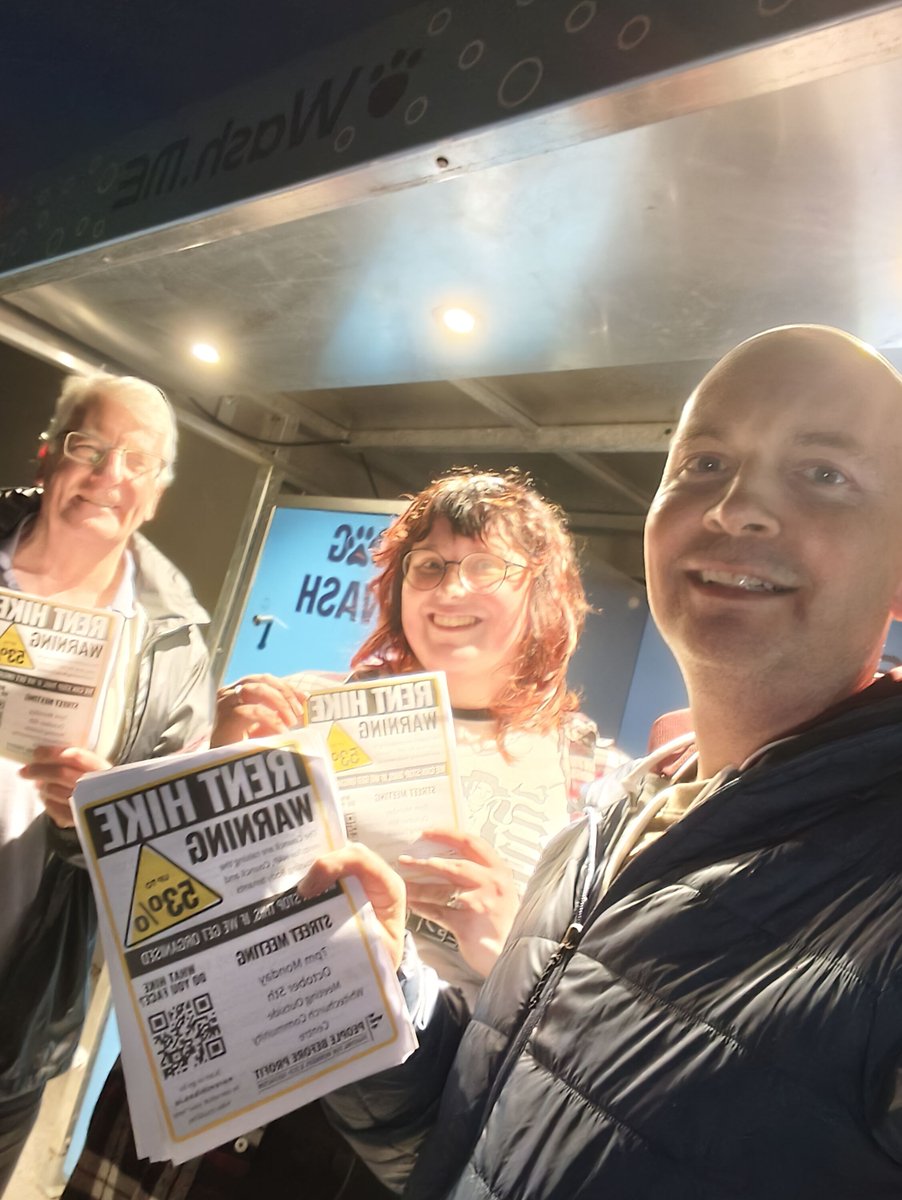
Out last night in Whitechurch campaigning against Council rent hikes. We need people to get organised to stop these unjust hikes. I met a pensioner couple whose rent is going up 40% under the new scheme! People simply cannot afford this during the cost of living crisis. https://t.co/Jt6IgM0Lxa #StopRentHikes #CostOfLivingCrisis #Whitechurch #Thistweetdoesnotmentionanyspecificcountries.Therefore #therearenocountrycodestoreturn.
I Sverige kan kurder, palestinier eller vilket annat folkslag som helst, kapa ett parti att stödja ena sidan i en konflikt på andra sidan jorden. Så ett riksdagsval i Sverige kan mer handla om andra länders konflikter än svensk sjukvård, pensioner eller skola. Ska vi ändra det? #Sverige #Politik #Konflikt
Joyce Thomas, en 78-årig pensionerad sjuksköterska, utvisas efter 22 år i Sverige, medan oppositionen lovar att arbeta för att Brexit-brittiska medborgare ska få stanna om de vinner valet. #Sverige #Utvisning #Politik

Nästan åtta av tio arbetare önskar få besked om sina pensioner från politiska partier innan valet, enligt en undersökning beställd av LO, som varnar för att nuvarande statsminister Ulf Kristersson inte kommer att höja pensionerna för dem som arbetat länge. #pension #arbetare #LO

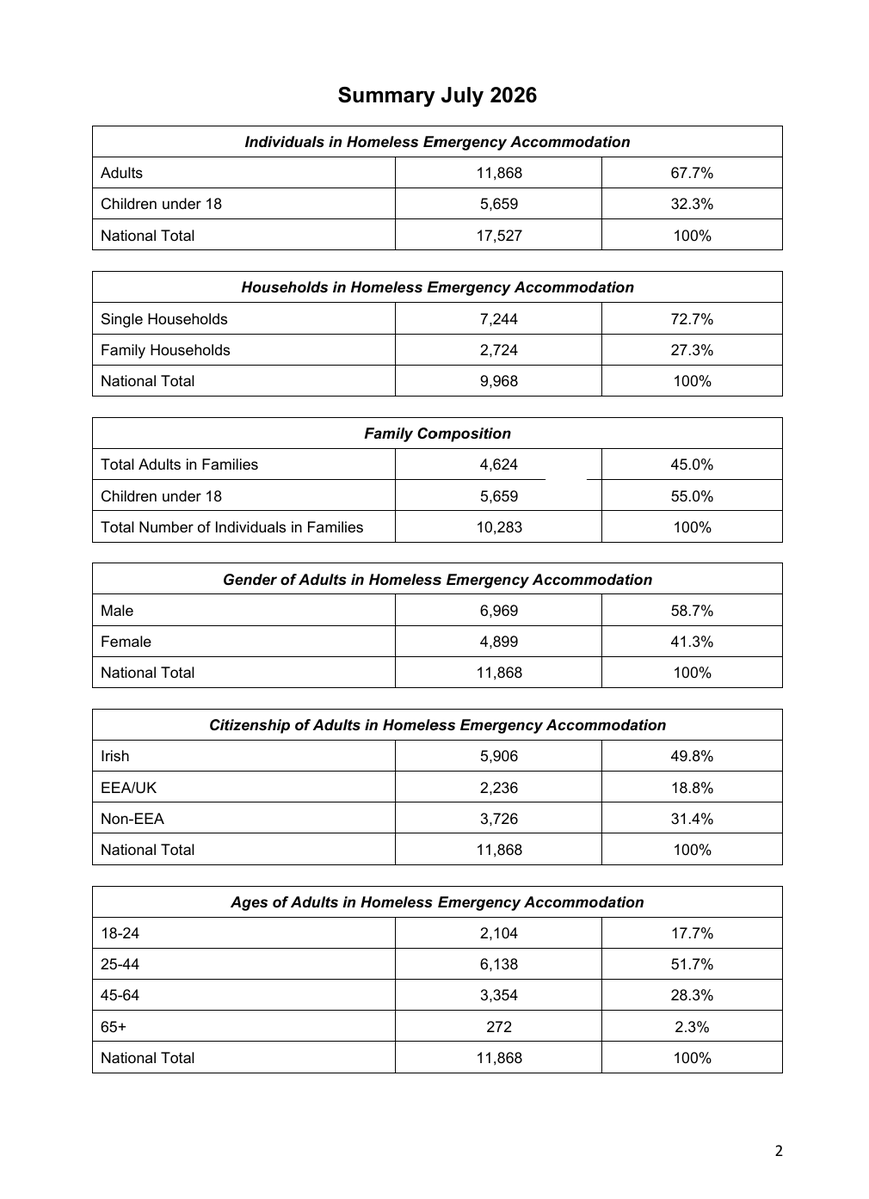
Govt must introduce plan to end homelessness Since @JamesBrowneTD became Minister homelessness up 11%, child homeless up 23% Latest monthly figures: 🚨Adults 11,868, +6 🚨Children 5,656, +39 🚨Total 17,527, +45 🚨Families 2,724, +16 🚨Singles 7,244, -44 🚨Pensioners 272, -13 https://t.co/iYK5ubXGGz #EndHomelessness #HousingCrisis #GovernmentAction #Thetweetdoesnotmentionanyspecificcountries.Therefore #theoutputis:
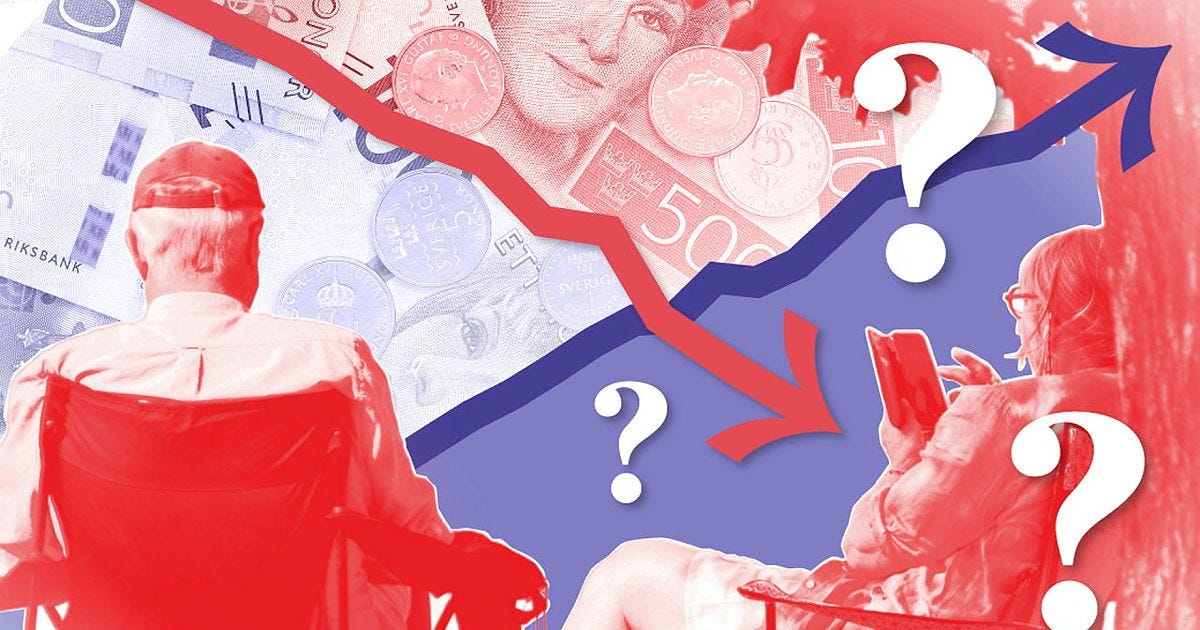
Artikeln diskuterar det växande missnöjet bland svenskar angående pensionssystemets komplexitet och det individuella ansvaret, där många känner att politiker ignorerar pensionsfrågan trots att den är viktig för väljarna. #Pensioner #Val2026 #Ekonomi

Nästa mandatperiod ska familjer vara vinnare KD vill höja barnbidraget. Minska barngrupperna och höja mammors pensioner för att nämna några viktiga förslag. Positivt att fler pratar familj – senast M idag om avgiftsfri förskola. M:s förslag är i samma riktning. Men förslaget riskerar att öka trycket på förskolan. Vi tycker att man behöver säkerställa att barngrupperna minskar först och lägger mer pengar där. Skulle man avskaffa förskoleavgiften får en ensamstående mamma som jobbar som undersköterska i Stockholm med två barn ca 684 kr i lägre avgift. Med Kristdemokraternas förslag får hon 1500 kr i höjt barnbidrag. Vi tror på Sveriges familjer. #Familj #Barnbidrag #Förskola
Dagens pensionärer har generellt sett en bättre ekonomi än tidigare generationer, trots rådande uppfattningar om försämringar, vilket bekräftas av olika analyser av disponibel inkomst och inkomstskillnader bland pensionärer i Sverige. #Pensioner #Ekonomi #Sverige

Nooshi Dadgostar ljuger i bästa sändningstid. Att Moderaterna skulle stoppat höjda pensioner är absurt. 2200kr mer i plånboken har ett pensionärspar fått tack vare oss. Och mer ska de få. Med V blir det istället högre skatt på allt ifrån sparande till bostäder. https://t.co/O5SFTlh5y1 #Sverige #Pensioner #Politik
På tal om aktisvistmötet: Per Gudmundsson sammanfattar det på ett lysande sätt: "Är alla Sveriges pensionerade syslöjdsfröknar här? Gråhåriga tanter sitter på marken och stickar. Väggarna runt Plattan är behängda med hemmasydda banderoller. På vikskärmar ännu mer textilier. Makramé, brodyr, batik, lapptäcke – alla upptänkliga tekniker. Någon har byggt ett altare och knäfaller. Andra hänger upp lappar i vinden med önskningar om en bättre värld – utan kapitalism. Besökarna målar skyltar och skriver under upprop. Runtom hänger en del identitetssökande tonåringar. Några flickor med rävöron och -svans. På scenen byter den grånande aktivistgenerationens alfahannar av varandra. Damerna jublar. Trubaduren Stefan Sundström. Tidningsmannen Johan/Jenny Ehrenberg. Klimatpolitik som hämnd Yngre revolutionärer som författaren Shora Esmailian knyter ihop klimatet med både kolonialismen, flyktingpolitiken och Gaza. Det är kommunistisk klimatpolitik som hämnd för Västerlandets tidigare försyndelser: ”Vi är här därför att ni var där!” Applåd." Läs hela: https://t.co/oTH8rYwLPG #Aktivism #Klimatpolitik #Sverige
Ett bostadstillägg som inte följer hyrorna är inte längre ett fungerande stöd för äldre med små pensioner. Nu krävs en höjning och sedan årliga indexeringar.
En ny rapport från SPF Seniorerna avslöjar att bostadstillägget för pensionärer inte har hållit pace med ökande hyreskostnader, vilket lett till att andelen ensamboende hyresgäster i behov av stöd har tredubblats på fyra år, och nu krävs det en höjning av bostadskostnadstaket samt årliga indexeringar för att stärka stödet till äldre med låga pensioner. #Bostadstillägg #Pensionärer #Hyror

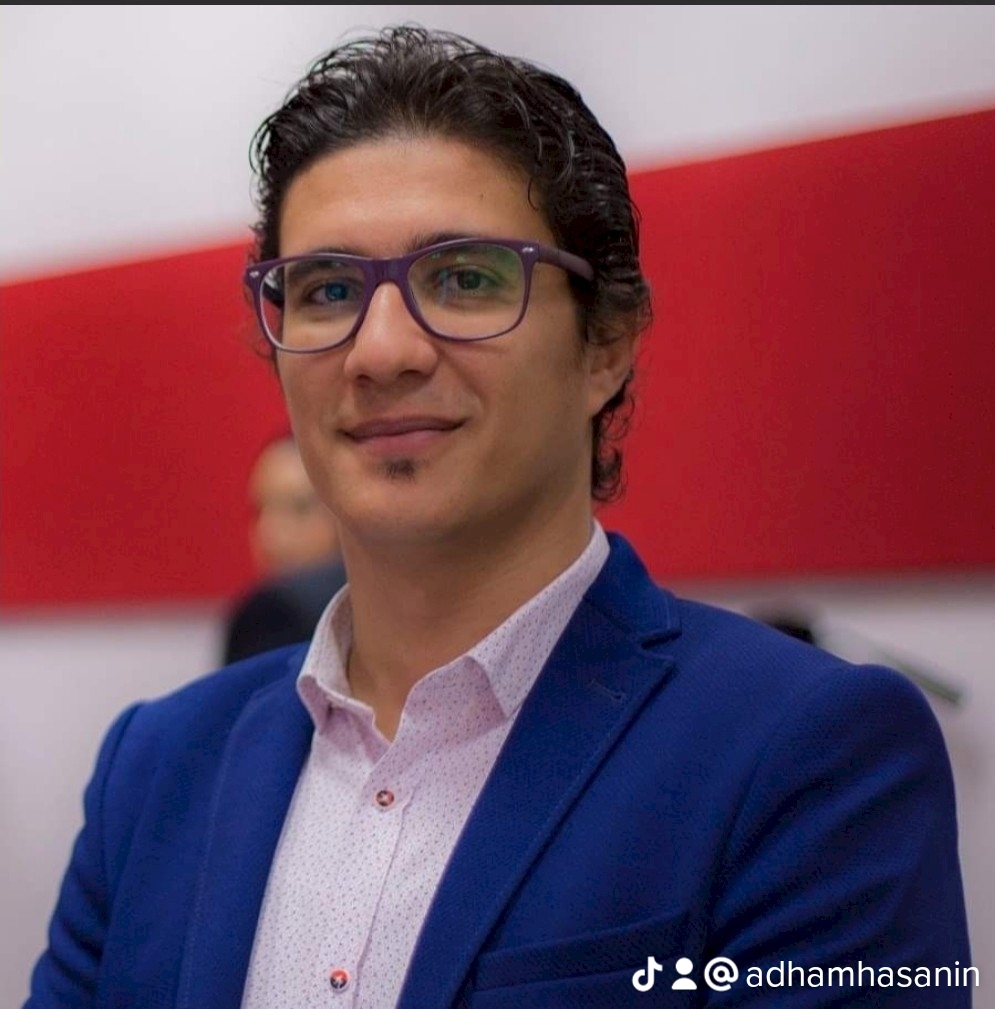
| JULY 2026 | The Guard State How the largest Arab nation became a security contractor at the gates of its own people By Adham Hasanin Egyptian journalist and political writer, based in the Netherlands In June 2025, hundreds of activists from forty countries landed at Cairo airport. Doctors from France, lawyers from Australia, students from the United States, pensioners from the Netherlands. They carried no weapons and no banned slogans; they carried backpacks, walking shoes, and a single intention: to march from Arish to the Rafah crossing — entirely on Egyptian soil — to demand that food be allowed through to a people starving behind the gate. Not one of them reached Rafah. More than two hundred were detained before the march could begin. Around five hundred foreign nationals were deported from airports, hotels, and checkpoints. Passports were confiscated, activists were pulled out of downtown Cairo cafés, and the Global March to Gaza was cancelled on 16 June without taking its first step. And the world watched. This was no secret operation in a dark basement; it happened in the open, documented by the deportees’ own phone cameras, carried by every international news agency. The world watched an Arab state arrest Europeans, Americans, and Africans for wanting to walk towards Palestine. A state guarding the gate of a siege — from the side that was supposed to be the side of rescue. Hold that image, because it is the key to everything that follows. This was not an aberration in Egyptian policy, nor an isolated security decision. It is the function — the complete function around which the Egyptian state has been redefined over the past decade, and which it is time to call by its proper name: the Guard State. I. The Name — What Do We Mean by the Guard State? Political economy has long described states that live off the rent of their location rather than the production of their people. But what has crystallised in Egypt over the past decade goes beyond traditional geographic rent — the Suez Canal, say — into something far graver: the conversion of sovereignty itself into a commodity for hire. The Guard State does not sell its location; it sells its function. It collects its wages not for what it produces, but for what it prevents: it prevents the refugee from reaching Europe, the activist from reaching Gaza, its own people from reaching politics, and the resistance’s weapons from reaching their destination. Four gates, guarded by a single machine, whose wages are paid in loans, deposits, and perpetually renewed rescue packages. This is not a rhetorical metaphor; it is an economic structure with numbers attached. When the Egyptian economy collapsed in 2024, it was rescued not by productive reform but by a single deal whose subject was location: Ras el-Hekma — thirty-five billion dollars for a stretch of coastline. And whenever negotiations with the IMF stall, the tranches are unlocked by explicit European pressure whose subject is migration: nine billion euros from the European Union in the 2024 “Strategic Partnership,” whose own documents place “migration management” at its core. Europe does not pay Egypt to prosper. It pays Egypt to guard. Thus the model is complete: income in exchange for prevention, external legitimacy in exchange for guarding, and international silence about domestic tyranny in exchange for keeping the gates controlled. To see how the model works on the ground, consider the bloodiest gate of all: the gate of Gaza. II. The Gaza Gate — The Guard Who Is Himself Searched The first paradox must be nailed down with facts: Egypt is not a sovereign guard of its own crossing; it is a searched guard. Egyptian relief trucks — ninety-two thousand food parcels in a single convoy this month — are subject to Israeli inspection before entering the Strip: from Egyptian soil, through a crossing that bears an Egyptian name. The state that guards the gate does not hold its key. It owns the threshold, but not the door. Then the October 2025 truce added a new layer to the function. Under the fifteen-point roadmap sponsored by the international envoy together with the “guarantor states” — Egypt foremost among them — Cairo is to train the civilian police force that will replace Hamas in administering the Strip, under the slogan of “one authority, one law, one weapon.” Let us call things by their names: the state that could not — or would not — deliver a loaf of bread without Israeli permission is now qualifying to graduate the security apparatus that will oversee the disarming of the resistance. From guarding the siege to administering what comes after the siege — a promotion within the same project. And meanwhile, what is happening behind the guarded gate? Since the truce, more than one thousand one hundred Palestinians have been killed by Israeli fire — the latest, just two days ago, a ten-year-old boy named Motaz Abu Shaar, carried to his grave in Khan Younis by his mother, Warda. A United Nations commission of inquiry has concluded that Israel is “deliberately targeting children in an ongoing genocide.” This is what the guarantors’ official language calls a “ceasefire.” What meaning is left in the word “guarantor”? A guarantor that the gate stays firmly shut — however high the dead pile up behind it. III. The Mediterranean Gate — The Guard Europe Pays For The second gate faces north. Since 2016, Cairo has boasted — through its officials at every European forum — that “not a single irregular migration boat has departed from Egyptian shores.” This is very nearly true. But the forbidden question is: at what political price has this “efficiency” become an instrument of mutual blackmail? Europe — which condemns Egypt’s human rights record in its parliamentary resolutions — is the same Europe that signed the nine-billion-euro partnership, and the same Europe that stays silent about sixty thousand political prisoners because the alternative, in its calculations, is boats that never stop. And Cairo understands the game and has mastered it: whenever human rights pressure intensifies, the official discourse turns up the volume on “Egypt hosts millions of refugees” and “the last line of defence.” The result is a perfect structure of mutual blackmail: Europe buys its conscience’s silence, the regime sells its location, and the people — Egyptian and refugee alike — are the commodity in the transaction. The democracies that lecture on values are financing the guard who keeps the victims from knocking on their doors. This is not passing hypocrisy; it is a structural partnership in the Guard State model — one that makes Brussels and Berlin shareholders in everything this state produces, from domestic repression to external siege. IV. The Interior Gate — Guarding the People Against Politics But the most dangerous gate is not on any border; it is inside. The Guard State cannot perform its external function unless it first guards an internal gate: the people’s gate to politics. The function requires a people that does not ask: why are we guarding the siege of our brothers? Why are our trucks searched on our own soil? Why are guests deported for coming to walk in peace? To guarantee the question is never asked, the largest silencing machine in the country’s history was built: sixty thousand prisoners of opinion, a press ranked 166th out of 180 worldwide, and a state security case number waiting for anyone who writes. I write these lines from experience, not from reading reports. When I continued writing from my Dutch exile, the machine reached me across continents: accounts shut down by coordinated mass-reporting campaigns, documented threats, a family harassed inside Egypt as leverage — and my name entered into Case 1282 of 2024, not for any act I committed, but for opinions written from free European soil. This is not a personal complaint; it is a job description: the Guard State guards even beyond its borders, because the free word — wherever it is written — threatens the entire contract of guardianship. The logic is perfectly self-consistent: a regime that sells “stability” abroad cannot tolerate a voice revealing that the stability on offer is the stillness of graveyards. This is why the arrest of the foreign activists in June 2025 was inevitable, not incidental: a peaceful march reaching Rafah would have revealed, before the world’s cameras, that the gate opens when it is wanted open — and that the one keeping it shut is a partner, not a mediator. V. What Has Egypt Lost? — The Guard’s Bill An apologist might argue: what is the harm? A state monetising its location as Norway monetises its oil. The answer lies in the essential difference: Norway sells a resource; Egypt leases its will. And the difference between the two is the difference between trade and bondage. Let us tally what Egypt has paid for this model, in bare facts. It lost its water sovereignty: the Renaissance Dam was completed and filled without the state — owner of “the largest defence headquarters in the world” — daring anything beyond statements of concern; for the guard does not make trouble for the international order that employs him. It lost its regional standing: in the Iran–America war halted just weeks ago, Cairo was neither party nor mediator nor even consultant — Pakistan brokered the deal, while Egypt absorbed the economic shrapnel of Hormuz’s closure like a bystander caught in a battle whose parties it does not know. It lost its place in the conscience of its nation: the state that liberated its land in 1973 and led the Arab world for a century has become, in the eyes of the Arab street from the Atlantic to the Gulf, the gatekeeper of the siege. This loss, specifically, no loan or deposit can repay — because it is the only capital that cannot be printed. And it lost — here is the crux — the very national security in whose name the guarding is justified. The model proved its fragility at the moment of testing: when Israel feared an Iranian response last year, it cut off Egypt’s gas by unilateral decision within hours. The guard who believed himself a partner discovered he was merely a hireling whose wages stop the moment danger arrives. VI. The Alternative Is Not a Slogan — It Is the Recovery of the Original Function I will not close with an essay on “the solution lies in Arab unity”; worn-out words kill more surely than silence. The alternative is specific, and it begins with redefining the function. The state is not a guard; the state is the agent of its people’s will. Every foreign policy not derived from that will is — by definition — functional servitude, however it is wrapped in the language of wisdom and moderation. And the Egyptian will is known and needs no referendum: no people in this region accepts that its country serve as warden of the siege of Gaza, or as Europe’s border post. Practically, the recovery begins with three measurable steps. Open the Rafah crossing fully and sovereignly, by purely Egyptian decision — that alone would overturn the equation of the siege. Break the negotiating bondage by linking any cooperation on migration to concrete European positions on Palestine, not statements of concern. And open the interior gate — release the prisoners and lift the hand from the written word — because a state that fears an article will never dare face an occupier. I know the current regime will do none of this; guarding is its founding contract and its financial artery. But this article is not written for the regime. It is written for memory, and for the generation that will inherit the gates — so that it knows that what is presented to it today as “the fate of geography” is no fate at all. It is an employment contract, signed by a regime without a mandate from its people. And contracts, however long they run, end when one of their parties does. And the world — I return to where I began — is a witness that requires no further proof. It watched the deportees at Cairo airport; it watched the searched trucks; it watched Warda Abu Shaar carry her son to his grave behind a firmly guarded gate. The question is no longer: what is happening? The only question left is: who dares to name it? This article is a naming. Adham Hasanin is an Egyptian journalist and political writer based in the Netherlands, covering Arab and European political affairs.
Klart bakåt! Skott kommer! Dags för landets alla kulturskribenter och såväl pensionerade som aktiva journalister samt eventuellt bildade bihang att besvara elden från denna hatiska demokratihotande politiker när hon ger sig på en enskild journalist. Inte det? Så anmärkningsvärt https://t.co/pSdJ7kiZXH #demokrati #journalistik #yttrandefrihet
An Post pensioners have been scandalously betrayed by this government. All promises and guarantees they were given have been broken. This situation must be rectified. #FightForYourRights #JoinAUnion https://t.co/3PRMlZ8oBN #FightForYourRights #JoinAUnion #PensionersJustice #Thetweetdoesnotmentionanyspecificcountries.Therefore #therearenocountrycodestoreturn.