BETA nonprofit public democratic european moderated

Search

#Protecționism

The European Union is strengthening its economic measures against China, considering trade challenges and unfair competition, but expert Adrian Negrescu argues that the solution does not lie in banning Chinese products, but in establishing bilateral agreements that protect the European economy. #ComerțInternațional #Protecționism #UniuneaEuropeană (translated)
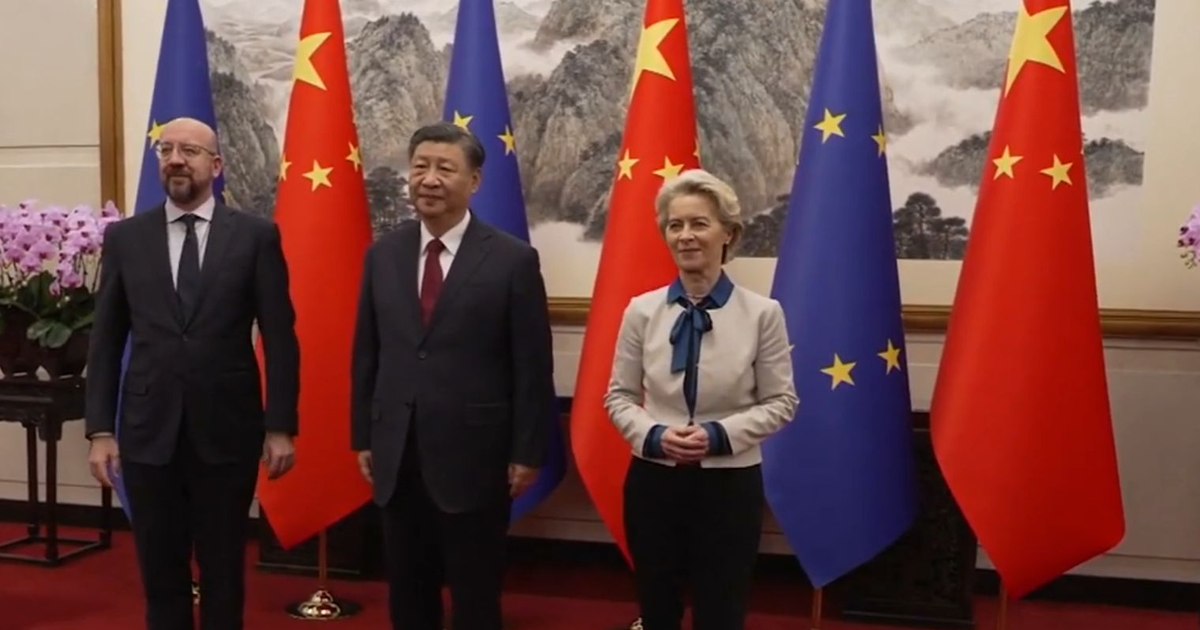
UE se înarmează economic împotriva Chinei. Adrian Negrescu: „Soluția nu este să interzici produsele chinezești”


The author argued that Europe needed to stop being naive, citing what they described as massive state subsidies, protectionism in China’s internal market, persistent currency undervaluation and ongoing intellectual-property issues. They linked to an article titled “To Stop the Chinese Tsunami.” https://t.co/wlKQ2hXoa9 #Europe #Trade #Economy #CN #EU

The author said they saw signs of what they called Europe’s protectionist reflexes and argued that the US and China had already won the race for frontier models. They urged Europe to accept this and reform the GDPR, AI Act and Digital Market Act, claiming the rules as they stood would prevent Europeans from getting early access to the best AI tools. #Europa #InteligenciaArtificial #MercadoDigital #EU #US #CN

Si on veut réduire la dette, il faut produire chez nous. Ceux qui ont cru qu’un pays sans usine pouvait être un pays prospère se trompent. Et la première chose à faire pour réindustrialiser le pays, c’est changer les politiques commerciales pour se protéger du rouleau https://t.co/siYV3WDbOl #Réindustrialisation #Dette #Protectionisme #FR

H

Consensus Is Not an Argument “Historians agree that Nazism was right-wing” is not an argument. It is intellectual outsourcing: replacing evidence with the number of authorities who repeat the same conclusion. Ideologies require criteria. You cannot cherry-pick political characteristics, notice that they fit your preferred category, and then pretend the classification has been demonstrated—especially when virtually every item on the list exists on both sides. Nationalism? Both. Militarism? Both. Protectionism? Both. State intervention? Both. Economic planning? Both. Collectivism? Both. Welfare policy? Both. Authoritarianism? Neither side has a monopoly. So what actually makes Nazism “right-wing”? The economic argument collapses even faster. Nazi Germany heavily directed its economy. So did the United States and Britain during the same period of war preparation and total war. If state direction proves socialism, then your criterion suddenly makes the Allies socialist too. If it doesn’t, stop using it selectively to classify Nazism. You cannot rig the test and then celebrate the result. And here is the inconvenient part: if economic policy cannot independently resolve the question, then the Nazis’ own ideological claims cannot simply be dismissed because they are inconvenient. Their party was literally called the National Socialist German Workers’ Party, and they repeatedly described their movement as socialist. No, self-description does not automatically make them socialist. Political movements can lie. But rejecting their description requires an actual criterion demonstrating why it was false. “Because historians say so” is not a criterion. It is an evasion. The deeper problem is that modern political taxonomy often works backwards: decide the label first, then curate the evidence until the label looks inevitable. That is not historical analysis. It is circular reasoning wearing an academic costume. So ask the question that actually matters: was Nazism committed to individual liberty—or to subordinating the individual to the collective, the state, and the nation? If Nazism is right-wing, prove it from coherent ideological principles

H
Sandfeen Sep 8

“Consensus Is Not an Argument “Historians agree that Nazism was right-wing” is not an argument. It is intellectual outsourcing: replacing evidence with the number of authorities who repeat the same conclusion. Ideologies require criteria. You cannot cherry-pick political characteristics, notice that they fit your preferred category, and then pretend the classification has been demonstrated—especially when virtually every item on the list exists on both sides. Nationalism? Both. Militarism? Both. Protectionism? Both. State intervention? Both. Economic planning? Both. Collectivism? Both. Welfare policy? Both. Authoritarianism? Neither side has a monopoly. So what actually makes Nazism “right-wing”? The economic argument collapses even faster. Nazi Germany heavily directed its economy. So did the United States and Britain during the same period of war preparation and total war. If state direction proves socialism, then your criterion suddenly makes the Allies socialist too. If it doesn’t, stop using it selectively to classify Nazism. You cannot rig the test and then celebrate the result. And here is the inconvenient part: if economic policy cannot independently resolve the question, then the Nazis’ own ideological claims cannot simply be dismissed because they are inconvenient. Their party was literally called the National Socialist German Workers’ Party, and they repeatedly described their movement as socialist. No, self-description does not automatically make them socialist. Political movements can lie. But rejecting their description requires an actual criterion demonstrating why it was false. “Because historians say so” is not a criterion. It is an evasion. The deeper problem is that modern political taxonomy often works backwards: decide the label first, then curate the evidence until the label looks inevitable. That is not historical analysis. It is circular reasoning wearing an academic costume. So ask the question that actually matters: was Nazism committed to individual liberty—or to subordinating the individual to the collective, the state, and the nation? If Nazism is right-wing, prove it from coherent ideological principles” - ChatGPT

" 'Made in Europe' o 'Made to Measure?' The Legal Fault Lines of the Industrial Accelerator Act,” Dr. Magaldi Sardella, Prof. Mantuano (Oxford Univ.) SOURCE: https://www.linkedin.com/pulse/made-europe-o-measure-legal-fault-lines-industrial-dr-sardella-ph-d--vwcoe/ SOURCE: https://blogs.law.ox.ac.uk/oblb/blog-post/2026/08/made-europe-or-made-measure-legal-fault-lines-industrial-accelerator-act Today, the Oxford Business Law Blog, Faculty of Law, University of Oxford, has published our latest contribution examining the legal fragilities and regulatory tensions embedded within the Industrial Accelerator Act, the legislative cornerstone of the European Clean Industrial Deal. The Act pledges to revitalise European manufacturing through “Made in EU” preferences across strategic sectors — steel, cement, batteries, electric vehicles, solar technologies, and heat pumps. Yet behind the slogan lies a dense lattice of normative ambiguities, WTO‑related vulnerabilities, and a delicate equilibrium between protectionism, strategic autonomy, and commercial openness. In our article, we analyse: the contradictions inherent in the definition of “Made in Europe”; the Commission’s discretionary power in determining eligible countries; the Council’s new compromise on “partner origin”, more orderly yet still incomplete; the risks posed by a legislative timetable that advances faster than the administrative capacity required to sustain it. Our conclusion? To be genuinely effective, what is “Made in Europe” must also be made to endure: robust in legal terms, coherent in industrial design, and credible in the international arena.

" 'Made in Europe' o 'Made to Measure?' The Legal Fault Lines of the Industrial Accelerator Act,” Dr. Magaldi Sardella, Prof. Mantuano (Oxford Univ.)

A self-inflicted wound: Americans now pay 75% more for aluminum than the rest of the world, and 64% more for steel. The price of protectionism is to drive up the cost of living for ordinary citizens and to destroy unprotected businesses’ ability to compete https://t.co/vHVuAmCi7q #TradePolicy #Protectionism #CostOfLiving #US

Jan Zahradil Aug 16

USA goes protectionist, all-in. Forget about anything like “transatlantic free trade area” idea. Just the contrary. USA can afford it. But EU is still not ready to acknowledge it, to analyze it and to meet the consequences, hoping that somehow it will muddle through again. Wrong. #TradeWar #Protectionism #USEURelations #USA #EU

EU farmer lobby helping Putin How Russian attacks, European protectionism and drought are trapping Ukraine’s vital grain https://t.co/CwkjMl59qt #EUAgriculture #UkraineGrain #PutinProtectionism #EU #RU #UA

Trump's tariffs have made US into a paragon of protectionism. The result has been higher prices, weaker investment, fewer manufacturing jobs, and a willingness to make falsehood official policy in order to defend a failed economic creed By @FareedZakaria https://t.co/3gUSNi7BHB #TrumpTariffs #Protectionism #EconomicPolicy #US

Protectionism, state control, state interference, state-managed manipulation of the markets... no, not China. The US. #Protectionism #StateControl #MarketManipulation #CN #US

Gerd Leonhard Jul 15

How Europe must respond to America’s AI warning shot https://t.co/430Smmsf78 "The answer is neither resignation nor retreat into protectionism. Rather, Europe must embark on the most ambitious political agenda ever attempted in peacetime" https://t.co/JNEv6Vt3fm #AI #Europe #Politics #EU #US

🇨🇳🇪🇺 #China Defends EU Trade Relations Amid Protectionism - People’s Daily - The China-EU economic relationship is “fundamentally complementary and mutually beneficial” as China is a partner in addressing Europe’s economic challenges, rather than the source, according to a #China #EUTade #EconomicRelations #CN #EU

V

Minister Sjoerd Sjoerdsma leidt een kleine Nederlandse handelsdelegatie naar Beijing, waar politieke spanningen en zorgpunten, waaronder importheffingen en protectionisme, de nadruk leggen op de uitdagingen voor bedrijven die actief zijn in China, met name in de chip- en landbouwsector. #handelsmissie #China #politiekeconflicten

‘Zorgpunten’ domineren politiek beladen bezoek van Nederlandse handelsdelegatie aan Beijing
Digi24 Jul 2

Summitul NATO de la Ankara se va concentra pe evaluarea angajamentului aliaților de a aloca 5% din PIB pentru apărare, cu Statele Unite insistând asupra nevoii de a evita protecționismul european în domeniul industrial și anticipând anunțuri substanțiale privind sprijinul pentru Ucraina. #NATO #apărare #Ucraina

Așteptările SUA de la Summitul NATO de la Ankara: aliații vor verifica alocarea a 5% din PIB pentru apărare

🇨🇳🌎 #China Warns of Trade Fractures If Protectionism Persists - Bloomberg https://t.co/EdDTaR9fua https://t.co/oZ52tBs0od #China #Trade #Protectionism #CN

Member States have a choice - continue down the path of economic destruction caused by Chinese overcapacity and market destruction, or protect our markets while boosting trade with our partners rather than foes. #Trade #Economy #Protectionism #CN

V
de Volkskrant May 27

De Europese Commissie heeft een voorstel ingediend om satellietfrequenties voor satellietinternet en telefonie te reserveren voor Europese telecombedrijven, wat leidt tot kritiek van de VS en China die beschuldigingen van protectionisme en discriminatie uiten. #EuropeseCommissie #satellietinternet #digitaleSoevereiniteit

Brussel reserveert satellietfrequenties voor Europese telecombedrijven, China en VS kritisch
V
de Volkskrant May 27

De Europese Commissie heeft een voorstel ingediend om satellietfrequenties voor satellietinternet en telefonie te reserveren voor Europese telecombedrijven, wat leidt tot kritiek van de VS en China die beschuldigingen van protectionisme en discriminatie uiten. #EuropeseCommissie #satellietinternet #digitaleSoevereiniteit

Konec ere: Pol milijona navijačev v boju za vstopnice ob slovesu Diamanta