WRLD

Search

#Realität
Gr@ntlɘr 🥨🍺 1d

Gr@ntlɘr wrote that unusually openly in ZDF, a deliberate deception by politics had been discussed from his point of view. Friedrich Merz had advocated for maintaining the debt brake, while there are now unlimited record debts, and electoral promises are being turned upside down. According to the user, CNN journalist Pleitgen expressed what is otherwise considered "far-right" at ZDF. Gr@ntlɘr described the situation as more than just a feeling. https://t.co/KMUR6eoZFn #Politik #Schulden #Wahlversprechen (translated)


2489
Frankfurter Allgemeine 2d

After the Knesset election, there are increasingly calls for the formation of a government with Arab participation, which would be a sign against the accusation of an apartheid state and could reflect the reality of many sectors of Israeli society. #IsraelWahlen #ArabischeBeteiligung #Apartheiddebatte (translated)

www.faz.net
Israel nach der Wahl: Ein Zeichen gegen den Vorwurf des Apartheidstaats
3197
Roland Tichy 2d

The author wrote that Volkswagen has suffered a huge multi-billion loss. Politics and unions would now feel the consequences of their policies – but maybe not, he added. At the same time, he criticized that unions were demanding high pay raises while the VW subsidiary Audi was already moving towards the USA. #Realität #Wirtschaft #Gewerkschaften #DE #VW #AUDI #USA (translated)

2868
Hamed Abdel-Samad 2d

The author asked how Elif Erlap was supposed to protect him from Islamists in Berlin when she herself was afraid of them. He also questioned how she wanted to reduce the police and abolish the Federal Office for the Protection of the Constitution while simultaneously increasing security in the country. He saw a discrepancy between ideology and reality. #Berlin #Sicherheit #Politik #DE (translated)

2654
Morlock Nr.2 3d

Morlock No. 2 wrote that reality causes more harm than 13 years of the AfD and costs more than fairy tales. https://t.co/pxi87mrkbC #AfD #Realität #Politik (translated)

2457
Frankfurter Allgemeine 3d

The elections in Israel leave a bitter aftertaste and reveal a disturbing political reality, as Benjamin Netanyahu emerges as the winner despite the last four traumatic years, calling into question the future of Israeli democracy. #Israel #Demokratie #Wahlen (translated)

www.faz.net
Netanjahu vorne: Die traurige Pointe der Wahl in Israel
2683
Bild 3d

The article by Alfred Draxler addresses the disappointing reality of German football, which, despite Harry Kane winning the Ballon d'Or, shows that German players continue to play no role in international football, while Spanish coaches and talents are overwhelmingly successful. #Bundesliga #BallondOr #SpanischerFußball (translated)

www.bild.de
Nachgehakt von Alfred Draxler - Die bittere Wahrheit über den deutschen Fußball
2685
HotNews.ro 4d

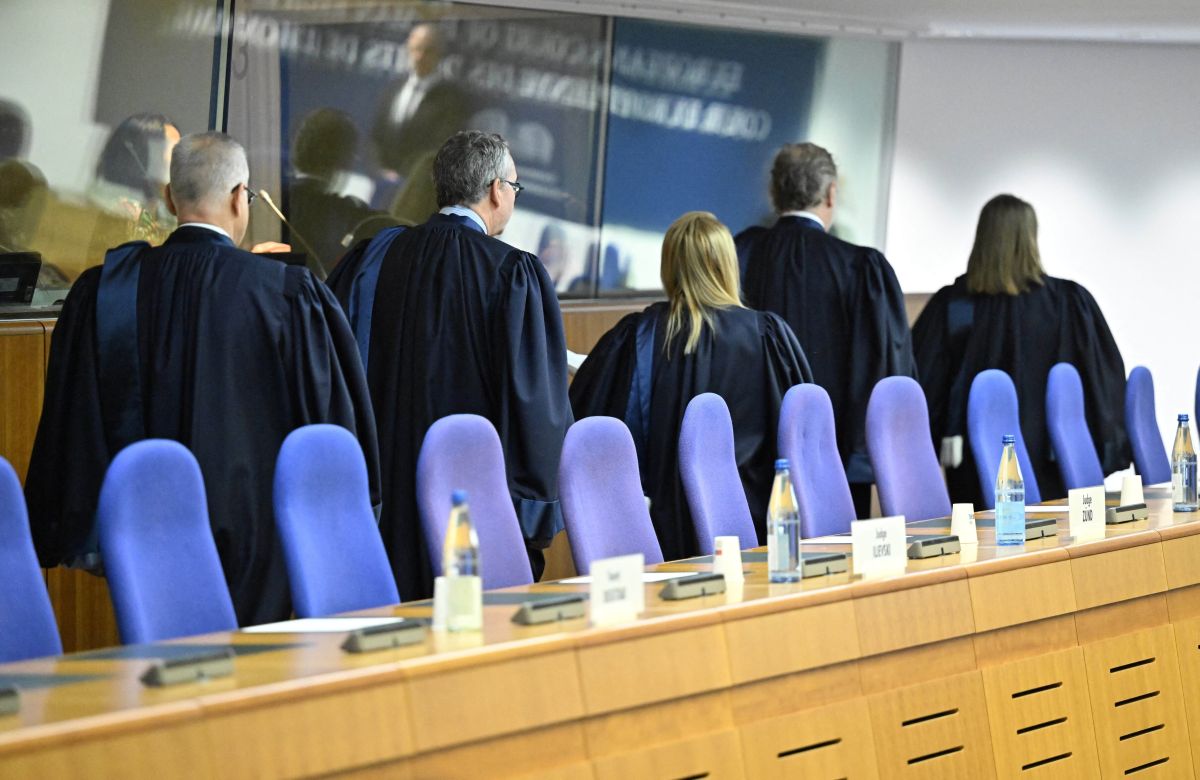
Former judge Toni Neacșu accuses the Government of Romania of distorting the information provided to the European Court of Human Rights regarding the payments made to public employees, claiming that the amounts reported are significantly lower than the reality. #CEDO #justiție #GuvernRomânia (translated)

hotnews.ro
Fostul judecător Toni Neacșu acuză Guvernul României că „a mințit CEDO” despre restanțele bugetarilor. Verificarea preliminară a HotNews confirmă, într-adevăr, o mare diferență
2920
Emanuel Boeminghaus 5d

Emanuel Boeminghaus wrote that the ifo business climate index has shown a divergence in recent months: the expectations of German companies are becoming more optimistic, while the actual business situation repeatedly disappoints. He argued that the upswing is therefore apparently mainly taking place in expectations. Boeminghaus suspected that political and media messages about a better economic situation could have contributed to the optimism without changing the economic reality. He criticized politics, mainstream media, and business press for strengthening expectations instead of achieving sustainable growth and structural reforms. #Deutschland #Wirtschaft #Optimismus (translated)

3270
Emanuel Boeminghaus 6d

Emanuel Boeminghaus wrote that business journalist Philipp Mattheis was in China for the first time last week in nearly exactly six years. According to Mattheis, around 500,000 industrial jobs have been lost in Germany between 2019 and 2025; for 2026, he cites another 15,000 positions per month. The automotive industry, mechanical engineering, and suppliers are particularly affected. According to Boeminghaus, Mattheis contrasted China's investments in cities, power plants, factories, and infrastructure with the condition of German bridges and railways, as well as high energy costs. At the same time, Mattheis criticizes the increasing state regulation in Europe: the continent is adopting control mechanisms commonly seen in China without advancing its economic modernization. Boeminghaus warned, referencing Mattheis, that Germany risks becoming an economic ruin due to its own political decisions. https://t.co/CRj4CtYeKn #China #Deutschland #Wirtschaftskrise (translated)

3284
Ralf Fuecks 6d

Ralf Fuecks asked why a repeatedly failed policy is repeated despite empirical evidence. In the long run, reality prevails over ideology, he wrote; others bear the costs. https://t.co/HNiRaMjX55 #Politik #Evidenz #Ideologie (translated)

2944
Digi24 6d

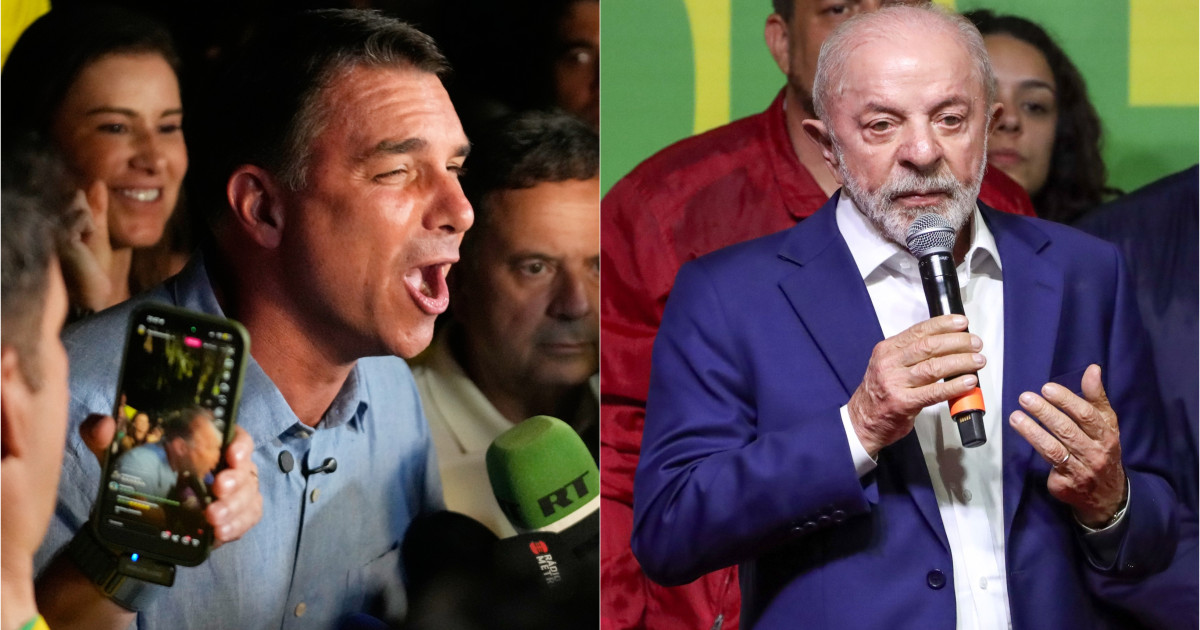
In the context of the polarized elections in Brazil, young workers are losing faith in Lula and are shifting their support towards Flavio Bolsonaro, seeing him as a more suitable alternative to the current economic realities. #AlegeriBrazilia #Bolsonaro #Lula (translated)

www.digi24.ro
Răzbunarea lui „Trump de la tropice”. Alegeri în Brazilia: tinerii muncitori îi întorc spatele lui Lula și pariază pe Bolsonaro
3285
K
Kronen Zeitung 6d

In the first joint interview about the leadership change at ORF, the new managers emphasize that they want to be close to the reality of the viewers and not isolate themselves in an ivory tower. (translated)

Erstes Doppelinterview - ORF-Führungswechsel: „Sind nicht im Elfenbeinturm“
2832
G
Gelu 6d

Don't change the time! Change the schedule, not the time! The biological rhythm is regulated by the Sun, not the clock. Time is not a work schedule that we can shift at will. Time is the measure by which we organize our lives, and nature has its own rhythm. The Earth does not change its rotation twice a year. The sun does not rise earlier because we decided to move the clock forward. Animals, birds, insects, and plants follow their biological rhythms related to light, darkness, and the natural succession of seasons. Humans are part of this nature. Our bodies have their own biological clock, fundamentally influenced by light. And when we officially move the clocks by one hour, we are not changing the course of nature, but rather asking humans to abruptly adapt to an administrative convention. Why do this every spring and reverse it every autumn? Is it natural to change the time or to adapt our schedules? Let's consider the majority of people: workers, farmers, students, teachers, parents, retirees, people who must adhere to a schedule set by others. They cannot always modify their schedules at will. They need to wake up at a certain hour, get to work, take a child to school, or comply with the public transport timetable. In contrast, there are people and organizations that have the opportunity to adapt their schedules based on the season, natural light, or the needs of their activities. If, for some people, changing their schedule is feasible, why impose the time change on everyone? Let's take a hypothetical example: if 10% of people have the freedom to adapt their schedule, is it fair to change the time for all those who do not have this freedom? Would it not be more logical to change the schedule where needed, rather than change the time by which the entire society organizes itself? Stores can modify their opening hours. Factories can adapt their shifts. Institutions can adjust their schedules, and schools and public transport can analyze timetables according to local conditions and people's needs. We do not all have to operate on the same schedule to live by the same time. Nature does not need our approval to follow its rhythm. In spring, the days lengthen. In autumn, the days shorten. This is the natural rhythm of the Earth, which we can observe without moving even a single clock hand. If we want to start activities earlier in summer, we can start sooner. If winter requires a different schedule, we can adapt it. But why change the official time, get used to a new convention, and then revert to the old one? Would it not be simpler to keep the same time all year round and organize our activities according to the season? I do not claim that all living beings measure time in hours and minutes. I assert something more important: their biological rhythms are linked to the natural cycle of light and darkness, not to the numbers we display on the clock. And humans should take this truth into account when organizing their lives. The economy must serve people, not people be permanently forced to adapt to the economy. One argument presented in favor of changing the time is the more efficient use of natural light or the reduction of energy consumption. But the actual effects depend on the country, season, population habits, and how energy is used. If we want to save energy, let's examine actual consumption. If we want more light during activities, let's adapt the schedules. If we want to improve work organization, let's change the timetables where possible. There is no need to change the time for the whole society to achieve flexibility in certain areas. The schedule is a tool we can adapt. The time should be a stable reference. We cannot stop the seasons. We cannot modify the Earth's rotation. We cannot ask nature to adapt to our clock. But we can organize our lives more wisely. Instead of moving the clock hands twice a year, we can learn to adapt our schedules to the reality around us. Instead of changing the time for everyone, we can allow each field to find the appropriate schedule, within the bounds of the law and with respect for people's rights. Let's keep the time stable and make the schedules flexible! Let's leave time in peace. Twice a year, millions of people are forced to change their clocks, schedules, and biological rhythms to adapt to an administrative decision. It is said that changing the time brings economic or energy benefits. However, in modern society, these advantages are increasingly contested, while the disadvantages are felt by nearly the entire population. People, animals, and plants do not live by the clock on the wall, but by the natural rhythms of the Earth. The human body is regulated by the alternation of light and darkness. When we artificially move the time forward or back, we disturb this balance. Many people sleep worse, feel more tired, and need days or weeks to readjust. Living beings do not change their schedules twice a year. Birds do not migrate by the clock, cows do not produce milk according to the official hour, and dogs do not understand why their owner takes them for a walk an hour earlier. Nature follows the sun, not administrative decisions. There is also a principle issue. For a relatively small percentage of people and activities that would benefit from more light in the evening, the schedule of the entire society is modified. About 90% of people are forced to adapt, even though they did not ask for this and do not gain direct advantages. It would be more logical for the sectors that need a different schedule to adapt it themselves. Stores can open earlier or later. Factories can modify their work shifts. Schools, institutions, and companies can adjust their schedules as needed. It is much easier for certain organizations to change the schedule in a targeted manner than to change the official time for the entire population. Moreover, modern technology has greatly diminished the argument for saving energy. Lighting now represents a smaller proportion of total consumption, while air conditioning, computers, and other equipment operate regardless of time changes. The time should serve people, not people be obliged to serve the time. A modern society can function efficiently without moving the clock hands twice a year. Stability, health, and respect for natural rhythms are stronger arguments than the tradition of a measure introduced in another era. Therefore, the most rational solution is to keep the same time throughout the year and adapt schedules where necessary, rather than changing the lifestyle rhythm of an entire population. Why should we keep the same time all year? Changing the time twice a year represents an artificial intervention in the natural rhythm of society. Although it was introduced with the intention of saving energy, numerous modern studies show that the benefits are minimal, while the social, medical, and economic costs are significant. 1. The biological rhythm is regulated by the Sun, not the clock. The human body operates according to an internal biological clock, synchronized with the natural alternation of day and night. Research in chronobiology shows that artificial changes in time disrupt sleep, concentration, and metabolism. In the days following the switch to summer time: - sleep disorders increase; - more traffic accidents occur; - productivity at work decreases; - there is an increase in the risk of heart attacks and other cardiovascular problems. In practice, millions of people are forced to suffer a slight "jet lag" without having traveled anywhere. 2. Nature does not change the time. Animals and plants regulate their activity according to light. Birds, insects, domesticated and wild animals do not change their schedules just because the government decides to move the clock forward by one hour. Farmers often observe that cows continue to adhere to their biological schedule regardless of the change in official time. The same happens with many other living beings. In reality, we are changing the clock display, not the position of the Sun in the sky. 3. Economic benefits are diminishing. Changing the time was introduced in an era when lighting consumed a significant proportion of the energy used by the population. Today: - lighting is much more energy-efficient; - the main consumption comes from air conditioning, heating, servers, computers, and appliances; - estimated savings are very low or even nonexistent in many states. In contrast, the economic costs are real: - employee productivity decreases after the time change; - absenteeism increases; - additional costs associated with accidents and medical problems arise; - computer and logistics systems need to be periodically adjusted. 4. It is unfair to change the schedule of all for the needs of a minority. If certain economic sectors find it useful to start activities earlier in summer, they can adapt their schedules. For example: - stores can operate from 07:00 to 21:00 instead of 08:00 to 22:00; - factories can alter shifts; - public institutions can temporarily adjust working hours; - schools and companies can decide locally what schedule is optimal. It is much simpler for 10% of organizations to change their schedule than for 100% of the population to change their biological clock. 5. Stability means efficiency. Transport, information systems, international economic activities, and public services function more smoothly when the official time remains constant. One hour throughout the year: - reduces scheduling errors; - simplifies transport and communications; - eliminates confusion regarding timetables; - provides predictability for citizens and companies. Conclusion The sun does not change its time. The Earth does not change its time. Nature does not change its time. Only humans move the clock hands and then endure the consequences of this decision. Instead of modifying the schedule of an entire society twice a year, it is more logical to keep the same time constantly and allow those fields that need a different schedule to adapt their programs individually. This way, natural biological rhythms are respected, economic costs are reduced, and the comfort of the majority of the population is increased. A modern society needs flexibility in scheduling, not the constant change of the clock. (translated)

906
D
der Standard 7d

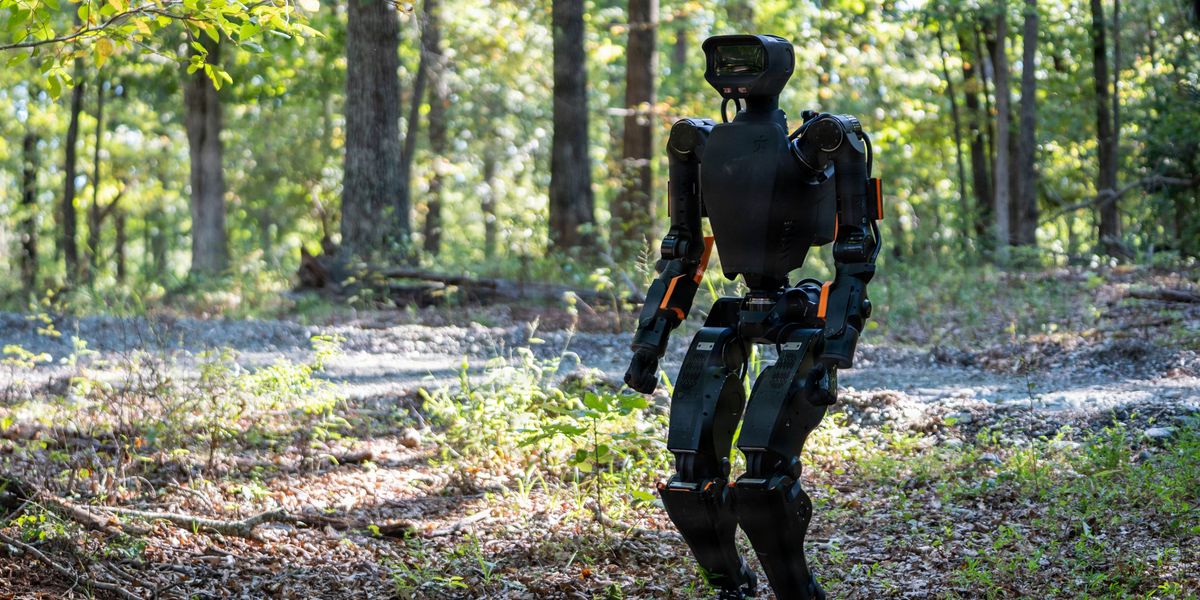
Humanoid battle robots, such as the bipedal robot Alex, fail in the army competition when playing in the sandbox, showing that the reality of robotics is far behind Hollywood notions like the Terminator. #Roboter #USArmy #Technologie (translated)

www.derstandard.at
Dumm gelaufen: Humanoide Kampfroboter scheitern beim Spiel in der Sandkiste
2724
adevarul.ro 1w

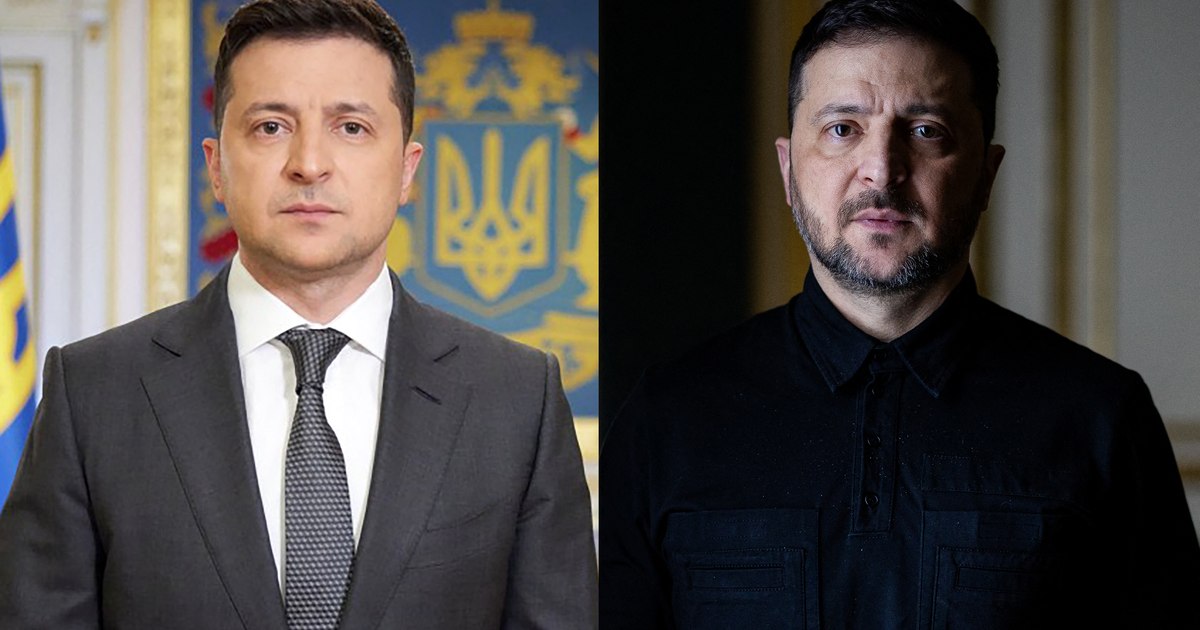
In an emotional interview, Volodymyr Zelensky discussed his vulnerabilities as a leader, facing the harsh reality of the war in Ukraine and the personal impact of the conflict on his family, highlighting the feeling of ceasing to exist under the constant pressure of his decisions. #Zelenski #Ucraina #Război (translated)

adevarul.ro
Volodimir Zelenski a lăsat scutul jos şi a vorbit despre vulnerabilităţile omului nevoit să fie puternic: „Am impresia că încetez să mai exist”
2161
Gr@ntlɘr 🥨🍺 1w

Gr@ntlɘr wrote that NIUS is now also on the government plane of Chancellor Merz. After intensive preparatory work by the lawyer Joachim Steinhöfel, the long-time BILD parliamentary reporter Ralf Schuler is traveling with Merz. The author described Schuler as the "voice of the majority" and urged him to continue on this path. #Politik #Bundestag #Deutschland (translated)

2963
Marie-Agnes Strack-Zimmermann 1w

The person wrote that she had spoken about Angelina in the plenary session of the European Parliament. The one-year-old child was killed by a Russian drone in a park in Ukraine on October 19. Her mother Ina died shortly thereafter in the hospital. This is the reality in Ukraine, the person wrote. https://t.co/Lj6YXt4W93 #Ukraine #Friedensarbeit #Menschenrechte #UA #RU (translated)

3877
Emaldrien de Argutus 1w

According to a Fraunhofer study, the end of the ban on combustion engines, which Merz proudly refers to as his success, endangers 344,000 jobs in Europe, most of them in Germany. This is what the reality behind the lie that the CDU wants to sell us looks like, not surprisingly. (translated)

www.rnd.de
Studie: Auto-Deal zwischen Merz und Macron gefährdet 350.000 neue Arbeitsplätze in Europa
2968
Miquel Ramos 🥘 1w

The author stated that an Israeli journalist from i24NEWS had interviewed a man presented as Ali in Paris, who was supposedly of Iraqi origin. He claimed that the man was actually Hezi Gangina, an Israeli tourist residing in Tel Aviv. #notícies #Israels #periodisme #IL #IQ #FR (translated)

3197