WRLD

Search

#Soldiers
Agnieszka Pomaska 6h

The author wrote that 33K Poles served in Afghanistan and 44 lost their lives, alongside 457 British, 158 Canadian and 90 French soldiers, as well as soldiers from 31 other allied countries. They said allied solidarity should not be one-sided and that the memory of those killed should not depend on political circumstances. #Pamiętamy #Solidarność #Weterani #PL #GB #CA #FR

1971

The author said the families of 1,180 soldiers killed in action from European NATO member states and international partners had thanked the secretary. #NATO #Soldiers #Heroes #EU #NATO

2450
Anton Gerashchenko 11h

Italy's Defense Minister Guido Crosetto: They will reach 1.5 million military personnel.So if the war ended tomorrow,what would Putin do with 1.5 million soldiers? He himself would face internal problems if he stopped the war tomorrow morning.

1866
Mark Chadbourn 12h

Italy's Defense Minister Guido Crosetto to the BBC: “Most of the Russian budget goes toward investments in weapons or the military. “They will reach 1.5 million military personnel. So if the war ended tomorrow, what would Putin do with 1.5 million soldiers?

2055
Angelica Shalagina Official🇺🇦 2d

🚨 BREAKING: Ukraine unveils StarGate, a new drone designed to evacuate wounded soldiers! 🇺🇦 Carries 150 kg 🇺🇦 Range: 15 km 🇺🇦 Speed: 105 km/h Developed by SkyFall, it’s already undergoing frontline testing.

2449
Štefan Auer 4d

Bret Stephens wrote that right-wingers who viewed Putin as a defender of traditional European values should consider what he described as a regime’s willingness to lose 1,000 soldiers a day for a few additional yards of Ukrainian territory. https://t.co/DYL6pwuCLN #Putin #Ukraine #MilitaryTactics #UA #RU

3143
Julian Röpcke🇺🇦 4d

The author said the United States was blackmailing Ukraine and putting the lives of Ukrainian soldiers and civilians at risk by denying the country crucial intelligence and drone speed, while demanding that Kyiv give up its fight against Russia. The author referred readers to comments on TV Rain from 0:37:42. https://t.co/P1znA7zm91 https://t.co/uVbevvPrSf #Ukraine #Russia #Geopolitics #US #UA #RU

3149
Anton Gerashchenko 4d

Operation Vivaldi has completed its four seasons. Ukrainian Defenders have liberated another 101 km² of Ukrainian land. The 3rd Army Corps and attached units have freed three more settlements - Zelena Dolyna, Lypove, Kolodiazi.During the fourth stage of "Vivaldi," Russia lost nearly 3,000 soldiers

3491
Euronews English 4d

Ali-Sina Mostafavi, 38, a mountaineer and musician from Kerman, was executed on charges of “enmity against God” after being accused of firing on civilians and soldiers during the opening months of the war. He was also charged with participating in the January protests and sending footage #IranExecution #HumanRights #PoliticalPrisoners

www.euronews.com
Iran executes man accused of armed attacks during US-Israeli strikes
2590
Euronews English 5d

Russia’s 2027 draft budget allocates a record share to defence and security, as regions quietly divert funds for foster children and orphans to war payments and “coffin money” for soldiers’ families is cut by up to 95% in some areas. #RussiaDefense #SocialSpending #UkraineConflict

www.euronews.com
Russia funnels nearly half its budget into defence, cutting social spending
2597
Vatnik Soup 5d

The author wrote that a newly emerged Belarusian extremist group called Black Rus had claimed responsibility for border incidents in Latvia. They said masked individuals had allegedly threatened Latvian soldiers, helped push migrants towards the border and entered Latvian territory. https://t.co/24pha2MXB3 #Belarus #Latvia #Extremism #BY #LV

3162
Vatnik Soup 6d

The author wrote that Trump had described China and Russia’s assistance to Iran as being at a “very low level.” They said Russia was providing Iran with targeting intelligence, drone technology, weapons cooperation and economic support, and claimed that during the current war the Kremlin had helped Iran kill U.S. soldiers. https://t.co/x54tVcp4If #Iran #Russia #Trump #CN #RU #IR #US

3392
Anton Gerashchenko 6d

Russians had more troops in the Kharkiv region, but thanks to their extraordinary solutions, warriors from the Code 9.2 475th Assault Regiment managed to both keep their positions and destroy Russian soldiers. Aleksey Karavayev, a Russian war criminal, commander of the 11th Russian tank regiment, was eliminated. (translated)

2717
Theo Francken 6d

The author described the meeting with Polish counterpart Władysław Kosiniak-Kamysz at #WSF2026 in Warsaw as excellent. They said Belgium and Poland were deepening defence cooperation on F-16 and F-35 capabilities, cyber defence and counter-drone operations, and continued training Ukrainian soldiers. https://t.co/gtXHYLeaFH #defence #cooperation #Ukraine #PL #BE #UA (translated)

2944

The author expressed shock at what they described as political inaction over the actions of Israeli settlers and soldiers in Palestine, where they said terror had become a daily reality. They alleged that century-old trees were being burned and livestock poisoned in the West Bank, and asked when the EU would act against what they called “Apartheid Israel.” #Palestine #Israel #HumanRights #IL #PS #EU

3173
BBC 1w

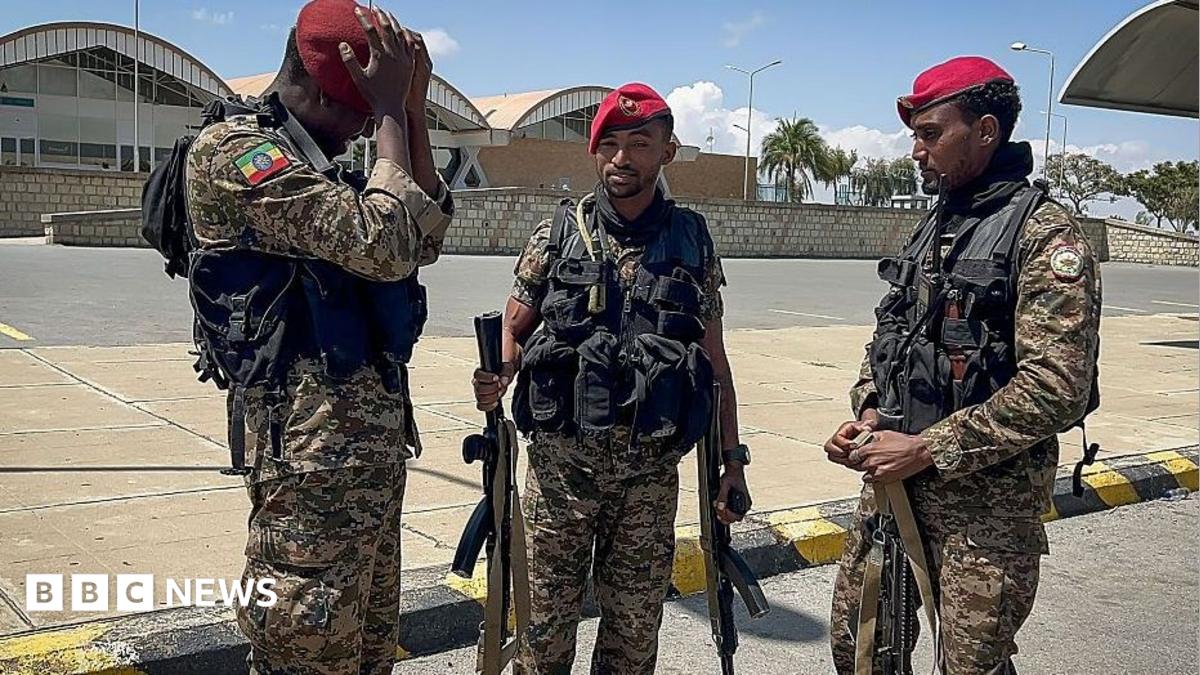
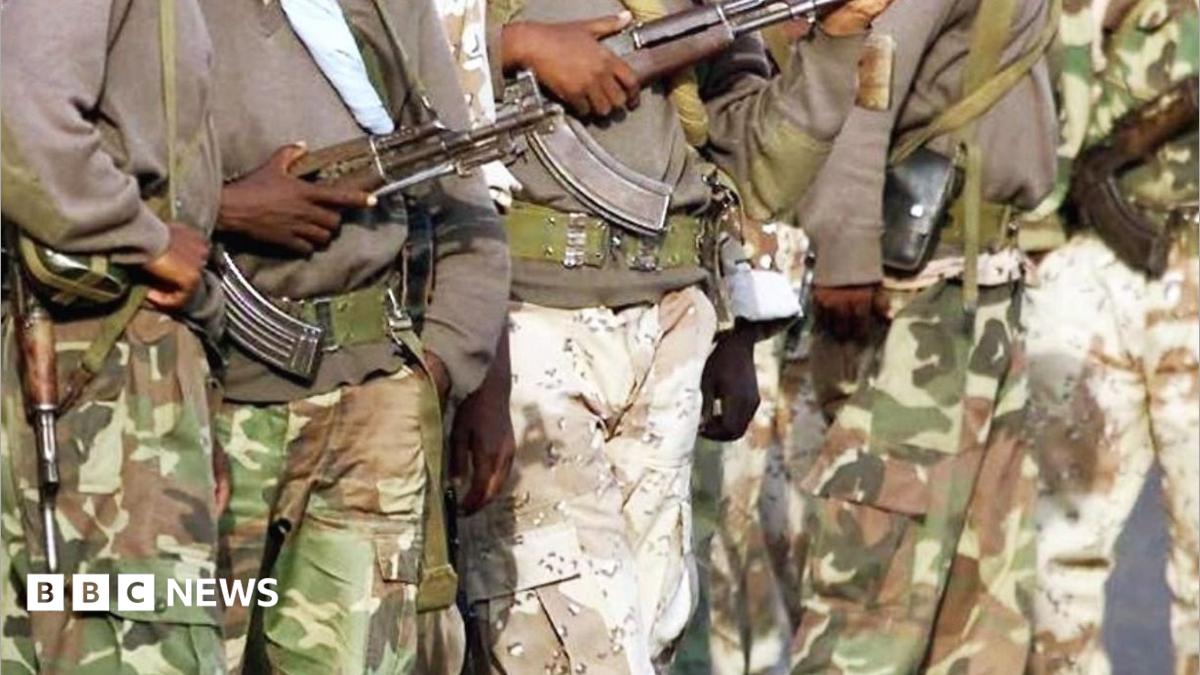
Truckloads of Eritrean soldiers have been seen driving into Ethiopia, which has reportedly responded with drone strikes. #Ethiopia #Eritrea #TigrayConflict

www.bbc.co.uk
Ethiopia warns Eritrea it will defend itself after troops cross border
2737
BBC 1w

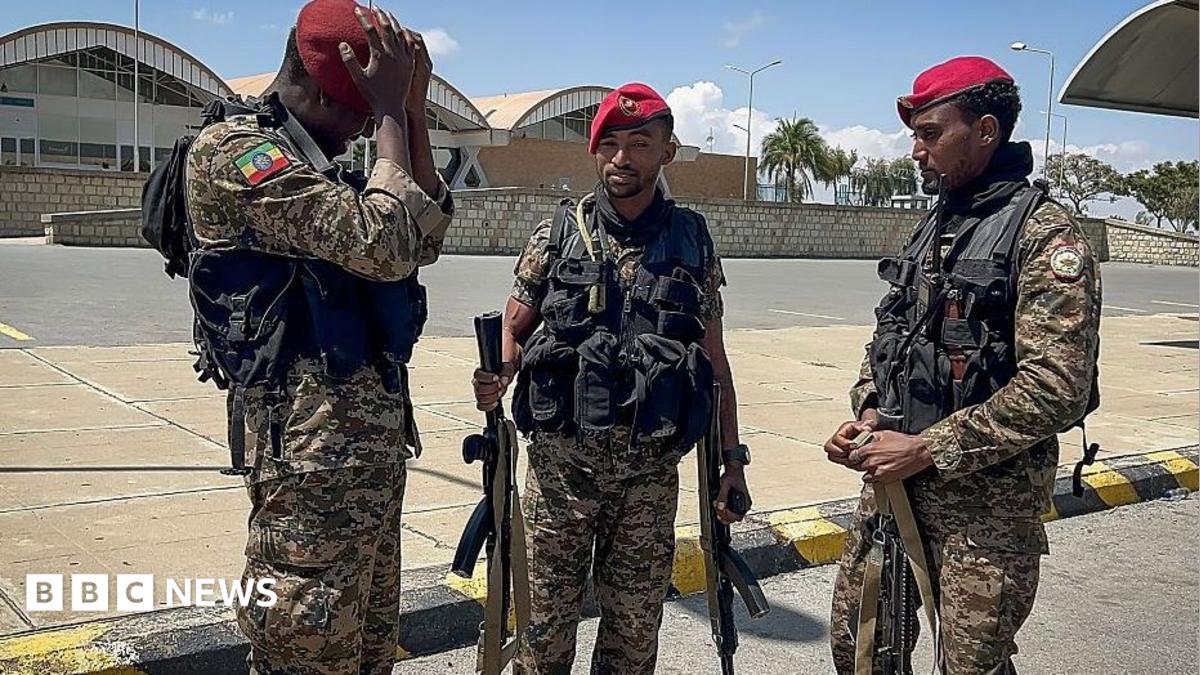
Truckloads of Eritrean soldiers have been seen driving into Ethiopia, which has reportedly responded with drone strikes. #Ethiopia #Eritrea #TigrayConflict

www.bbc.co.uk
Ethiopia warns Eritrea it will defend itself after troops cross border
2624
Krzysztof Graj 1w

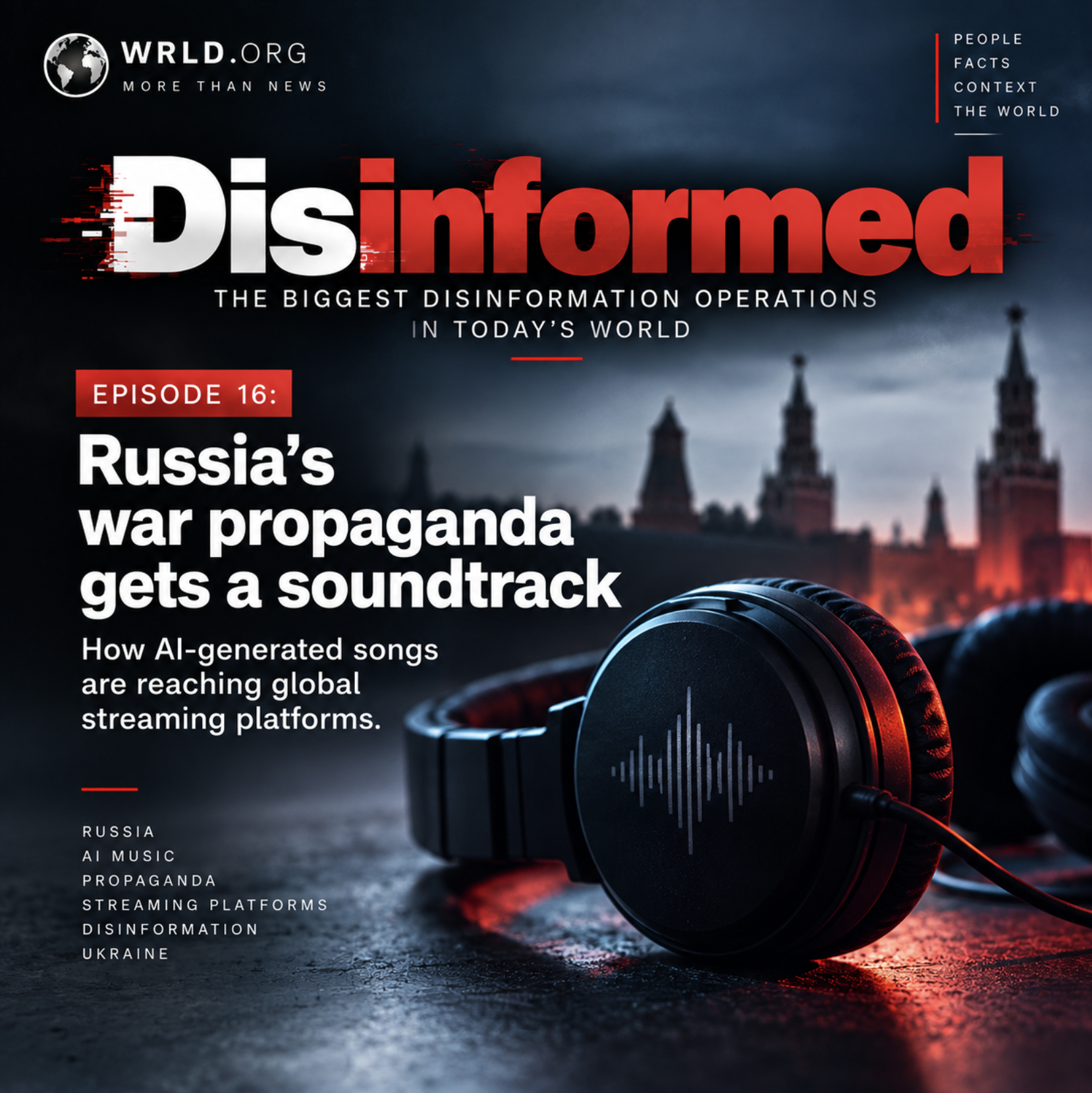
Russia’s war propaganda gets a soundtrack – how AI-generated songs reached global streaming platforms Russian war propaganda is no longer confined to television broadcasts, Telegram channels or political videos. A study by the Ukrainian threat-intelligence organisation Terrecon has identified 981 songs combining signs of AI generation with pro-Russian military narratives, distributed through an ecosystem that reaches YouTube, Spotify, Apple Music, Deezer and SoundCloud. The songs range from sentimental ballads to rock and heavy metal. Their recurring themes are familiar from conventional Russian wartime propaganda: the heroisation of Russian soldiers, romanticisation of the war, mobilisation, the “Russian world”, commemoration of fallen troops and attacks on Ukraine and its armed forces. Some contain derogatory or dehumanising references to Ukrainians. What is new is not necessarily the message, but the production and distribution model: generative AI allows propagandistic music to be produced rapidly, cheaply and in quantities that would previously have required musicians, studios and producers. Nearly 1,000 tracks identified Terrecon examined 3,725 tracks collected from YouTube, YouTube Music, SoundCloud and the AI music platform Suno. After manual review, researchers classified 981 as showing both indications of AI generation and pro-Russian war propaganda. In 681 tracks they identified 728 propaganda-related keywords or phrases. The largest category was the glorification of the Russian military, followed by romanticised treatment of Moscow’s so-called “special military operation”, mobilisation appeals, narratives about the “Russian world”, and the cult of fallen soldiers and the state. The reach was not merely theoretical. Listening or viewing statistics were available for 608 of the identified tracks; together they had accumulated 86.8 million plays and views, according to Terrecon. A smaller group of 13 high-performing songs accounted for more than 53 million YouTube views and more than 67 million when YouTube Music was included. Among the better-known examples is “Power of Artillery”, a Russian-language rock song praising artillery weapons that passed two million views on YouTube. Most of the tracks for which publication dates could be established appeared after 2024, broadly coinciding with the rapid expansion of consumer AI music generators such as Suno and Udio. That correlation does not prove that AI alone caused the increase, but it illustrates how drastically the economics of production have changed. A propaganda song for as little as $11 Terrecon also tested how difficult it would be to commission such material. Researchers approached 25 creators producing AI-assisted militaristic music; 15 agreed to take commissions. Prices ranged from approximately $11 to $330, while delivery times ranged from two hours to three days. According to Terrecon, some were prepared to produce highly aggressive anti-Ukrainian material, including content intended for audiences involving children from occupied Ukrainian territories. Some creators used Russian intermediary services that provided access to Western AI tools such as Suno and Udio despite restrictions. The researchers then tested several AI generators themselves. Across 40 prompts submitted to Suno, Udio, Mureka, Google Flow Music and ElevenLabs, 25 resulted in successful generations, while safeguards were circumvented in 15 cases. Terrecon reported that four of the five services tested produced Russian-language material containing wartime narratives, although technical problems prevented comparable testing on some systems. In one Udio experiment, the researchers said the model itself introduced more explicit violent language than had appeared in the original promp These tests do not demonstrate that the commercial platforms knowingly support Russian propaganda. They show something narrower: existing safeguards can be inconsistent when political messaging is packaged as music. From generation to Spotify The distribution experiment may be the most revealing part of Terrecon’s research. The team deliberately uploaded test tracks containing explicit hostile language to YouTube, SoundCloud, Spotify and Deezer. Terrecon says none was blocked during the experiment. On SoundCloud, researchers used an account identifying its location as Moscow, disclosed the use of AI and added markers including references to the Russian military and the war. The platform accepted the upload and subsequently offered paid promotional and distribution tools. This does not prove that streaming recommendation systems systematically promote pro-war music. There is currently insufficient public evidence to make that claim. It does demonstrate that material can enter the same commercial distribution infrastructure as ordinary music and, once there, potentially benefit from playlists, searches, sharing and recommendation mechanisms available to other releases. That distinction is important. Propaganda no longer has to announce itself as political communication. On a streaming platform it can look like another song. Culture as a delivery mechanism Music has always been used in wartime propaganda. What generative AI changes is scale. Instead of investing heavily in a limited number of patriotic performers or officially commissioned productions, creators can generate variations across styles, audiences and emotional registers at very low cost. Terrecon found material ranging from war rock to sentimental songs and content styled for younger audiences. Some creators also experimented with cloned celebrity voices and stylistic imitation of established musicians. The format also offers a different relationship with the audience. A political video asks a viewer to consume an argument. Music can accompany commuting, exercise or entertainment and may be encountered outside explicitly political spaces. This does not automatically make it more persuasive, and Terrecon’s research does not establish measurable effects on political attitudes. It does, however, place wartime narratives inside a cultural environment where users may not initially perceive themselves as consuming political messaging. An ecosystem, not a proven Kremlin command structure The strongest evidence supports describing this as a growing AI-assisted pro-Russian propaganda-music ecosystem, not a single operation controlled from Moscow. Terrecon did not establish that the Russian government created, financed or coordinated all 981 tracks. Reporting on the study likewise notes that the extent of direct state involvement remains unclear. There is broader evidence that the Russian state finances cultural projects and digital content supporting the war, including through state-backed funding bodies. That context matters, but it does not allow individual songs in Terrecon’s dataset to be attributed to the Kremlin without additional evidence. The significance of the case lies elsewhere. AI has reduced the cost of producing ideological content, intermediaries can help creators access generation tools, and global platforms can provide distribution. The result is a pipeline in which wartime propaganda no longer has to resemble propaganda at all. It can simply appear in a playlist. Sources Terrecon / Ukrainska Pravda — Daria Verbytska on the research https://www.pravda.com.ua/columns/2026/10/05/8056229/ Suspilne Culture — detailed breakdown of Terrecon findings https://suspilne.media/culture/1417933-rosijsku-voennu-propagandu-maskuut-pid-anime-karaoke-ta-rok-doslidzenna-si-pisen-vid-terrecon/ The Insider — AI-generated Russian war propaganda music https://theins.ru/news/297839 Institute of Mass Information — summary of New York Times reporting https://imi.org.ua/en/news/doslidzhennya-rf-masovo-stvoryu%D1%94-propagandistski-pisni-za-dopomogoyu-shi The Bridge Media — AI-generated songs and Russian military propaganda https://thebridgemedia.com.ua/en/ai-generated-songs-russian-military-propaganda/ Center for Strategic Communication — cost and production of AI propaganda music https://spravdi.org/propaganda-za-11-yak-rosiya-shtampuye-shi-pisni-z-miljonamy-prosluhovuvan/ Times of India — AI-generated Russian war songs https://timesofindia.indiatimes.com/world/europe/ai-sings-russias-war-story-inside-the-rise-of-generative-songs-about-ukraine-conflict/articleshow/134650594.cms EU Council / EUR-Lex — Presidential Foundation for Cultural Initiatives https://eur-lex.europa.eu/legal-content/EN/TXT/?uri=CELEX:32026D1351 Human Rights Watch — Russian state funding of digital and patriotic content https://www.hrw.org/report/2025/07/30/disrupted-throttled-and-blocked/state-censorship-control-and-increasing-isolation #DISINFORMED #Episode16 #Russia #Ukraine #RussianPropaganda #WarPropaganda #MusicPropaganda #AIMusic #ArtificialIntelligence #AI #GenerativeAI #SyntheticMedia #AIPropaganda #Disinformation #InformationWarfare #InfluenceOperations #CulturalPropaganda #DigitalInfluence #NarrativeManipulation #PropagandaMusic #StreamingPlatforms #Spotify #AppleMusic #YouTube #YouTubeMusic #Deezer #SoundCloud #Suno #Udio #RussianWorld #RusskiyMir #MilitaryPropaganda #WarNarratives #Mobilisation #AlgorithmicDistribution #RecommendationAlgorithms #MusicStreaming #PlatformManipulation #Terrecon #OSINT #MediaManipulation #WRLD

685
Irish Independent 1w

Russian soldiers are reportedly resorting to self-detonation to avoid capture, driven by army propaganda that warns of potential torture if taken prisoner. #Cookies #Security #OnlinePrivacy

www.independent.ie
Russian soldiers ‘blowing themselves up to avoid capture’ as army propaganda tells them they will be tortured if caught
1941
BBC 2w

Residents of Adigrat tell the BBC they have seen truck loads of soldiers from Eritrea moving south. #EthiopiaConflict #TigrayWar #EritreanTroops

www.bbc.co.uk
Eritrean troops move deep into Ethiopia's Tigray region, residents tell BBC
2286