BETA nonprofit public democratic european moderated

Search

#Suffering

Viewing one's own suffering as no greater than the common human lot fostered deeper emotional and social well-being. Although suffering is a universal aspect of human life, surprisingly little research has examined people’s general beliefs about suffering—its #Suffering #EmotionalWellBeing #HumanExperience #Thetweetdoesnotmentionanyspecificcountries.

❗️Μερικές φορές σταματάς για ένα σκυλί… και τελικά συναντάς ανθρώπους. ❤️🐾 ❗️Την είδα ξαπλωμένη ήσυχα σ’ ένα μικρό στενάκι, κάτω από ένα υπόστεγο. Ηλικιωμένη πια, κουρασμένη, με τα αρθριτικά της… ❗️Σταμάτησα και άρχισα να τραβάω. ❗️Και τότε, εντελώς τυχαία, πέρασε μια κυρία. Σταμάτησε, την πλησίασε, τη χάιδεψε και τη φώναξε με το όνομά της. ❗️Τη ρώτησα αν τη φροντίζει. ❗️«Ναι», μου είπε. «Η οικογένειά μου. Οι γονείς μου μένουν από πάνω και τη φροντίζουμε». ❗️Ξεκίνησαν κάποτε με μια μικρή κουβερτούλα. Και σιγά σιγά αυτό το σημείο έγινε το σπίτι της. Εκεί μένει χειμώνα–καλοκαίρι. Εκεί νιώθει ασφαλής. Εκεί υπάρχουν άνθρωποι που τη γνωρίζουν, τη φροντίζουν και τη χαϊδεύουν. ❗️Και απέναντι; Απέναντι μένει ένα άλλο, μαύρο σκυλάκι. Ο φίλος της. ❤️ ❗️Μέσα σε λίγα δευτερόλεπτα, αυτό που έμοιαζε με μια θλιμμένη εικόνα έγινε μια μικρή ιστορία ανθρωπιάς. ❗️Δεν χρειάζονται πάντα μεγάλα πράγματα. Μια κουβέρτα. Ένα πιάτο φαγητό. Λίγο νερό. Ένα χάδι. Ένας άνθρωπος που νοιάζεται. Κι ένας φίλος απέναντι… ❗️Μπράβο σ’ αυτή την οικογένεια. Μπράβο στους ανθρώπους που δεν προσπερνούν. ❗️Γιατί ο τρόπος που φερόμαστε στα πιο αδύναμα πλάσματα γύρω μας λέει πολλά για την κοινωνία που θέλουμε να είμαστε. ❗️Αν πιστεύετε ότι τέτοιες μικρές πράξεις ανθρωπιάς αξίζει να ακούγονται, μοιραστείτε αυτή την ιστορία. ❤️🐾 ❗️Sometimes you stop because of a dog… and end up discovering the kindness of people. ❤️🐾 ❗️I saw her lying quietly in a small passageway, sheltered beneath a roof. She is old now, tired, and suffering from arthritis… ❗️I stopped and started filming. ❗️And then, completely by chance, a woman walked by. She stopped, approached her, stroked her gently and called her by her name. ❗️I asked if she was the one taking care of her. ❗️“Yes,” she told me. “My family does. My parents live upstairs and we take care of her.” ❗️It all started with a small blanket. Little by little, this place became her home. She stays there winter and summer. It is where she feels safe, surrounded by people who know her, care for her and give her affection. ❗️And across the way? Another black dog lives there. Her friend. ❤️ ❗️Within a few seconds, what at first looked like a sad scene turned into a beautiful little story of humanity. ❗️It doesn’t always take something extraordinary. A blanket. A bowl of food. Some water. A gentle touch. Someone who cares. And a friend across the way… ❗️Well done to this family. And to every person who chooses not to simply walk past. ❗️Because the way we treat the most vulnerable creatures around us says a great deal about the kind of society we want to be. ❗️If you believe these small acts of kindness deserve to be seen, share this story. ❤️🐾 #AnimalLove #KindnessMatters #RespectAnimals #Dogs #Φιλοζωία #Φιλοζωία #Ανθρωπιά #Σκύλοι

H

The Age of Experts Is Over If the past two decades—COVID-19, the 2008 financial crisis, and the net-zero charade—have taught us anything, it is this: the age of unquestioned experts is over. Authority issued by corrupt, bloated institutions no longer commands automatic respect. We are entering an era in which trust must be earned, not assumed. Credentials matter less than results. Expertise can become conformity wrapped in a credential; status is no substitute for trustworthiness. The future belongs to those with proven track records, not merely letters after their names. Friedrich Nietzsche warned of this more than a century ago. He distrusted experts who served the spirit of their age—those who mistook consensus for courage and conformity for principle. To Nietzsche, many authorities were functionaries of the status quo: too timid to challenge the sacred assumptions of their time. University professors, state philosophers, and moral enforcers wore obedience as a badge of honor. They did not think; they repeated. They did not challenge; they conformed. They made the ordinary seem profound through jargon, complexity, and ambiguity. Nietzsche saw these not as signs of insight, but as camouflage—cowardice in disguise. He also distinguished knowledge from wisdom. Knowledge can be taught, measured, and tested. Wisdom must be earned through suffering, struggle, and brutal self-examination. Nietzsche admired those who forged their own paths rather than simply climbing institutional ladders. Even in science, he saw a danger. He respected its methods but feared their sanctification. Science, he argued, still required justification; materialists confused method with meaning and data with truth. Experts who presented science as the only path to knowledge were, in Nietzsche’s eyes, dogmatists in lab coats. So the question is no longer, “What are your qualifications?” It is: What have you done? What have you risked? What have you proved? We must recover the courage to think for ourselves—and place our confidence only in those who have earned it through action, not appointment.

Life is unsolvable contradiction. The scene with Odysseus tied to the mast and experiencing the terrible impact of the sirens on him is the greatest, ingenious artistic metaphor and it will never be surpassed. This is the personification of the relationship between men and women. The enormous danger that women represent for men. The Spanish-Jewish philosopher Gratian states that women combine in themselves all possible enemies and dangers for a man, but at the same time they give him the greatest joy, happiness and satisfaction from life. This is identical to the effect of drugs and this is a narcotic experience. Odysseus experiences all the contradictions of the effect of women. He wants to go to the sirens. They are the greatest temptation he has encountered in his life. He experiences the greatest possible mental suffering and at the same time he himself ordered that he be tied to the mast, that his fellow sailors plug their ears and in no case untie him, no matter what happens. Therefore, Ulysses is the first and at the same time the greatest work, which will never be surpassed in artistic mastery and ingenious depiction of life.

H

The Pathology Behind Compassion Something sinister can lurk behind compassion. Caring for others is noble, but when institutions are rewarded not for reducing suffering—only for managing it—care can become pathological. Munchausen syndrome by proxy shows the logic: a caregiver fabricates or induces illness in someone dependent on them to gain sympathy and attention. The caregiver looks devoted; the “sickness” is manufactured. In that sense, devotion can hide control. I call this the Daycare Governance model: society splits into infants to be protected (oppressed), caregivers who provide protection (allies), and predators to be removed (dissenters). Caretakers gain prestige, funding, and moral authority by managing suffering. Many may believe sincerely, yet incentives can overpower intentions—if status and resources grow with the number of “vulnerable” people, the system has reason to expand the victim class. It does so via concept creep (“trauma” broadens until ordinary difficulty counts), and by creating the perpetual patient, where normal sadness becomes pathology and struggle is rebranded as dysfunction. Care institutions and “victims” then reinforce each other. Dependency costs competence. True care prepares people to stand alone; pathological care keeps them dependent. Endless expansion of victimhood risks producing more dependency. We call it compassion—but compassion without boundaries can become control.

H

Daycare Governance and the Tyranny of Compassion Something sinister can hide behind compassion. Caring is virtuous, but it becomes pathological when institutions gain power by expanding the number of people who need care. Munchausen syndrome by proxy shows how: a caregiver fabricates or induces illness in a dependent person, then gains sympathy by performing devotion. The sickness is manufactured, but the care is real. The claim: modern society can scale this into governance. Call it the daycare governance model: (1) victims to protect, (2) caregivers to provide protection, (3) dissenters to remove. Health, therapy, NGOs, academia, media, and bureaucracy gain prestige, funding, and moral authority by managing ever-expanding categories of suffering. It unfolds in two stages. First, the victim class expands: “trauma” drifts from specific, severe harms to everyday experiences, lowering the threshold for suffering until demand is nearly limitless. Second, the perpetual patient forms: ordinary difficulties are medicalized—strength as toxicity, sadness as disorder, restlessness as pathology—creating a cycle where caretakers and victims gain status or protection. This drives a crisis of competence. Victimhood can shield accountability, and institutions are rewarded for treating problems rather than eliminating the need for themselves. Plato warned against doing for people what they can do for themselves: removing every burden removes the reason to grow stronger. True care aims to make itself unnecessary. That’s the difference between a good mother and a poisoning one: one allows appropriate hardship to build independence; the other denies it. Failing to distinguish these forms of care makes the pathology hard to recognize—and easy to applaud.

H

The Psychology Behind Political Violence Political life carries an appetite for violence beneath the surface. A shooter leaves a manifesto; supporters celebrate; online strangers justify killing over insults, misgendering, and fantasies of execution. We’re told these are separate phenomena—different ideologies, grievances, causes—but they’re deeply connected. The murderer, the celebrant, and the online fantasist share one conviction: blood will build a better world. We often assume ideology comes first, violence second—radicalization infecting an otherwise ordinary person. But corrupted people may seek ideologies that rationalize what they already want to believe. Feeling comes first; philosophy follows. Nietzsche called this *ressentiment*: not ordinary anger, but enduring resentment rooted in surrendered agency and perpetual victimhood. Ressentiment is creative: it turns grievance into virtue and revenge into justice. That’s why movements can sound humanitarian while obsessing over enemies. They promise liberation but focus on who must be eliminated; they call violence self-defense while celebrating destruction. Notice the imbalance: energy goes to identifying who deserves punishment, not to explaining how their better society would work. This is the difference between genuine grievance and pathological ressentiment. Genuine grievance seeks repair; ressentiment seeks subtraction. Its “solutions” are fantasies of punishment—heads cut off, privilege liquidated, wrong pronouns punished. These aren’t coherent doctrines of stability; they’re rationalizations for resentment. Ressentiment also despises self-improvement because it requires admitting agency. Its worldview depends on locating suffering outside oneself. The deepest enemy of these movements, then, is not any specific ideology. It is agency itself.

H

The Victimhood Economy: Why Young People Prefer Socialism Western civilization is increasingly shaped by entitlement and a culture that rewards displays of victimhood. At elite universities, disability claims have risen: 18% of male and 22% of female undergraduates report a disability, and 54% of non-binary students, with higher rates at some wealthy schools than at community colleges. The issue isn’t genuine disability; it’s what happens when accommodations become status and advantage. Extra time, separate housing, and exemptions can turn diagnosis into leverage. When weakness is rewarded, some will learn to perform it. This matters because today’s students become tomorrow’s institutional elites. If grievance produces rewards, the lesson may spread into journalism, government, HR, academia, and business, letting beneficiaries inherit the power to expand the system. Research on victimhood signaling raises uncomfortable questions: people who habitually emphasize victim status, on average, show higher narcissism, Machiavellianism, and psychopathy—not to say genuinely suffering people are manipulative, but that systems rewarding victimhood create incentives for manipulators to exploit the category. Rob Henderson describes this as a status game: in elite institutions, grievance can become the currency of virtue signaling. For some, the rational strategy is to manufacture grievance and convert it into status. Nietzsche similarly argued that displays of helplessness can become covert power, while pity can create moral superiority for the caregiver. The danger isn’t compassion; it’s a culture that turns suffering into currency and teaches ambitious people that the easiest route to power is to claim they are powerless.

H

Leftist “Empathy” Is Actually Narcissism Leftist “empathy” is often narcissism, not real compassion. Over the past decade, Western politics has debated whether empathy is the highest value—yet many policies justified in its name have produced serious unintended consequences: safe-supply programs, lenient bail, mass migration, identity-based social policy, and gender medicine for minors. Hannah Arendt helps explain why. In *On Revolution*, she contrasted the American Revolution’s focus on institutions and limits on power with the French Revolution’s “politics of pity,” an effort to eliminate suffering through political action. Robespierre’s compassion for the masses helped justify terror. Pity isn’t compassion: it creates a hierarchy between the person who pities and the person pitied. Once you claim to represent “the oppressed,” you can stop listening to real people. Much progressive “empathy” projects idealized versions of others, erasing cultural differences and treating disagreement as ignorance or prejudice. Adam Smith warned about the “man of system,” who thinks society can be rearranged like chess pieces, ignoring human wills. Dostoevsky argued abstract love is easy; loving real people is hard. Nietzsche described a morality that flatters weakness and condemns what rises above the herd, while Orwell questioned whether some socialist intellectuals truly loved workers or simply used them to vent resentment. Rob Henderson calls these “luxury beliefs”: status-providing ideas for elites that impose costs on those below them. The moral prestige is immediate; the damage unfolds over decades. So “suicidal narcissism” may fit better than “suicidal empathy”: projection, superiority, and power disguised as compassion.

H

A Culture of Violent Ressentiment A lust for violence is spreading through the worst among us. After shootings, murders, and attempted political violence, some celebrate and idolize the attackers—while others online applaud harm done to those deemed deserving, even for things like “misgendering.” People claim these are unrelated, but I see a shared conviction: blood is the only route to a better world. We debate which ideology “caused” a given attack—incel culture, Marxism, anti-Zionism—but the pattern is similar. Radicalization is often treated like infection: belief first, impulse second. I think the reverse is more common. Corrupted people don’t stumble into dangerous ideas. They go looking for them. Ressentiment—Nietzsche’s term for the slow poison of hopeless victims—builds moral systems that make a grudge feel like justice. The feeling takes the throne first; philosophy follows, recruiting whatever justifies what the person already wants. Ressentiment focuses on enemies and punishment while offering vague utopias. It subtracts, locating suffering entirely outside the self and proposing removal of its “source.” That’s why it rejects self-improvement: it requires agency. What we face is not one ideology, but the spirit that turns failure and frustration into someone else’s crime—and therefore treats violence as justice.

H

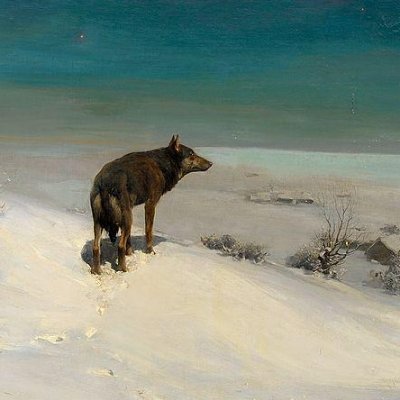
Why Weak Societies Choose Tyranny The pinnacle of tyranny would be a system that allows politicians, elites, and bureaucrats to control a population without force or coercion because the people love their servitude. Aldous Huxley wrote Brave New World, an eerily relatable dystopian novel, with this idea at the forefront. Unlike Orwell’s 1984, there is no overt oppression. The state does not have to stamp on human faces with its jackboots or erect an inescapable surveillance state. Rather, the people of Brave New World happily chain themselves with meaningless pleasure and distractions. The authorities do not rule through terror and rage, the central elements of 1984, but instead give the people everything they ever wanted. A pharmaceutical called Soma becomes the opiate of the masses. Mustapha Mond, the World Controller, likens it to Christianity without tears. While religion requires years of moral training, Soma allows citizens to achieve peace simply by swallowing tablets. It is the perfect escape from reality, a holiday from the facts. Lenina, the female counterpart to the protagonist Bernard, cannot comprehend why he refuses Soma, preferring discomfort to something that can remove it. When Bernard states, “I’d rather be myself, myself and nasty, not somebody else, however jolly,” Lenina sees this as a sort of pathology and repeatedly encourages him to take the wonder drug. Bernard explains, “I want to know what passion is.” He understands that there is more to life than merely being content, craving genuine experience, including suffering and intensity, rather than being emotionally regulated by the World State. Lenina’s bewilderment stems from her conditioning to regard unhappiness as a technical problem, encapsulated in the society’s common saying that “a gram is better than a damn.” The people of Brave New World are not captives but satisfied customers. Children are produced by the scientific state, relieving people of the responsibility of parenthood. This grants them the ability to engage in promiscuity, where everyone belongs to everyone else, while filling their free time with cheap entertainment and endless sporting events—what would be referred to as slop today. As Neil Postman observed, Orwell saw totalitarianism through the lens of fear, while Huxley saw it through pleasure. There was no need to ban a book in Brave New Worldbecause there was no one who wanted to read one. An abundance of low-quality information rendered censorship unnecessary because no one could hear the truth through all the noise. Huxley threw shade at civil libertarians who passionately opposed tyranny because they failed to take into account man’s almost infinite appetite for distractions. Humanity in its rawest form is portrayed by John the Savage, an outsider free from the World State’s conditioning. Upon coming face-to-face with this spiritually neutered society, he completely rejects it: “I don’t want comfort, I want God, I want poetry, I want real danger, I want freedom, I want goodness, I want sin.” Huxley’s dystopia is not imposed on an unwilling population but instead requested by a hollow one. Which leads us to the question: How do people become so weak that they get on their knees and beg for totalitarianism? Good times make bad times possible. Once a certain level of luxury and safety is achieved, people start to resemble the hobbits from the Shire. They are so far removed from evil that they forget it even exists and become defenseless in the face of it. Andrew Lobaczewski, who studied the psychology of totalitarianism from inside Poland’s communist takeover, wrote: “During good times, people progressively lose sight of the need for profound reflection. They lose the capacity to differentiate human nature, and emotion begins to dominate intellect. Once a critical mass starts operating on the pleasure principle, any excess mental effort seems like pointless labor.” Lobaczewski warned that it is not as simple as some people losing the ability to think rationally. It is worse, because those people then shame anyone capable of doing so. A clever, liberal, and merry individual is a good sport. A more far-sighted person predicting dire results becomes a wet blanket, a killjoy. The ability to have uncomfortable conversations without emotion taking over is, in Lobaczewski’s view, an indicator of whether a society’s future will be good or bad. It is easier to think about pleasant things. This leads people to eliminate any data or facts that cause them discomfort. That becomes a habit and eventually a custom accepted by society at large. Once the general populace accepts that inconvenient truths should be left unsaid, it becomes incapable of reaching correct conclusions. After all, how could you ever describe a picture that you refuse to look at? “Catastrophe waits in the wings of the communities that lose the capacity for psychological reason and moral criticism,” Lobaczewski wrote. “It is on the other side of this weakening of thought that the processes of the generation of evil are intensified at every social scale until they give rise to bad times.” It is precisely man’s dreams of happiness that can lead to chaos and suffering. This hedonistic view of happiness contains the seeds of misery, feeding the eternal cycle whereby good times give birth to bad times. Friedrich Nietzsche viewed socialism as demanding comfort for the greatest number of people possible. To question whether it is good for the masses to live in comfort has become a form of heresy. This reveals the spiritual atrophy that so many suffer from. Considering only the weak believe comfort to be a virtue, it is what Carl Jung would describe as the infantile dream state of mass dependency: the desire to gently slip back into the kingdom of childhood, into the paradise of parental care. Except this lack of friction has consequences. The perfect state destroys the soil in which great intellect grows. Genius, struggle, passion, strength, and wisdom are required to build a safe and abundant society. Yet once a certain level of comfort is achieved, it can destroy the very virtues required to obtain it. Nietzsche observed that it is the warmest heart that aims to alleviate suffering and hardship but fails to realize that it thereby wills the destruction of its own foundation. Comfort breeds mediocrity, which is then called good. Small people want one thing above all: that no one hurt them. We have taken this pathology to such a degree that we now obsess over hurt feelings and call this virtue. Pleasure, in its proper place, is a byproduct of meaningful goals, not a goal in itself. Aristotle saw that pleasure and comfort distort perception and proper judgment. While they do not cause us to misjudge something like geometry or mathematics, they can destroy our ability to decide what is worth pursuing and, therefore, what to do. Consider The Odyssey. Homer depicts Odysseus’ men on the island of the Lotus-Eaters, where they taste the fruit and lose all desire to go home. Much like Huxley’s Brave New World, they are not imprisoned. Rather, they simply stop wanting anything more. Odysseus has to drag his men back to the ships while they weep to stay. This is what comfort can do to men. It empties them of purpose. We intuitively understand this but fail to apply it to our own lives. We must make the same choice as Odysseus when he refuses Calypso’s offer of endless comfort and immortality. He knows she is more beautiful than his wife Penelope waiting at home. He knows that he and Penelope will grow old and die, a fate he could avoid by staying with Calypso. No one who reads these stories wishes he had stayed. We want him to choose the hard way home because if he took the offer, he would stop being admirable. Yet staying is exactly what our modern society asks of us. We are told that the island is the good life. But what happens to the man who caves to this temptation? In Thus Spoke Zarathustra, Nietzsche imagines a risk-averse society taken to its logical endpoint. The elimination of all struggle produces a man so diminished that he fails to possess even self-contempt or higher aspiration. Safety and sameness become the highest goals, creating “no shepherd in one herd.” Anyone who seeks to be anything more than normal becomes an aberration to be dealt with. Or, as Nietzsche puts it, they have “made the wolf a dog in man himself, man’s best domestic animal.”

H

Empathy, Compassion, and the Limits of Emotional Moral Judgment Empathy is widely regarded as a foundation of morality, but psychological research suggests that it is not an unqualified virtue. Paul Bloom (2017) argues that affective empathy—the experience of sharing another person’s feelings—has important limitations when used as a guide for moral judgment. First, empathy is biased. We respond more strongly to suffering that is vivid, identifiable, and psychologically close. Research on the “identifiable victim effect” shows that people can be more willing to help a specific individual than anonymous victims, even when the latter represent a much larger number (Kogut & Ritov, 2005; Lee & Feeley, 2016). Emotional salience therefore does not necessarily correspond to moral significance. Second, empathy is innumerate. Human emotional responses do not naturally scale with the number of people suffering. A single identifiable victim can evoke a powerful response, while thousands or millions of anonymous victims may produce comparatively little emotional engagement. This creates a problem when moral decisions concern suffering on a large scale (Bloom, 2017). Third, empathy can be exhausting. Repeatedly sharing the distress of others may produce empathic distress and emotional fatigue. Research suggests an important distinction between empathic resonance and compassion: while empathic engagement can increase negative affect, compassion can promote positive affect, motivation, and prosocial behaviour (Klimecki et al., 2014; Weng et al., 2013). The implication is not that we should care less. Rather, caring and feeling are not the same thing. Compassion allows us to recognize suffering and remain motivated to alleviate it without necessarily absorbing the suffering ourselves. Empathy may therefore be valuable for human connection, but it is a poor stand-alone system for making large-scale moral decisions. When millions of lives, limited resources, and competing needs are involved, compassion must be combined with reason, evidence, and deliberate judgment. The goal should not be to feel everything others feel. It should be to care deeply enough to help, while remaining clear-headed enough to help effectively. References: Bloom (2017); Kogut & Ritov (2005); Klimecki et al. (2014); Lee & Feeley (2016); Weng et al. (2013). Empathy and Its Discontents https://pubmed.ncbi.nlm.nih.gov/27916513/?utm_source=chatgpt.com

H

The Pinnacle of Tyranny The pinnacle of tyranny would allow politicians, elites, and bureaucrats to control a population without force or coercion—because the people love their servitude. Aldous Huxley’s *Brave New World* explores this idea through an eerily relatable dystopian society. Unlike Orwell’s *1984*, Huxley’s world contains no obvious oppression. The state does not need to “stamp on a human face—forever.” Instead, citizens willingly chain themselves to pleasure and distraction. Authorities do not rule through terror, but by giving people everything they think they want. Soma, a government-approved drug, becomes the opiate of the masses. Mustafa Mond, the World Controller, compares it to Christianity without the suffering. By swallowing a few tablets, citizens can escape reality—a temporary holiday from the facts. Lenina cannot understand why Bernard refuses Soma, preferring discomfort to something that can remove it. When Bernard says, “I’d rather be myself, myself and nasty, not somebody else, however jolly,” Lenina views his desire for authenticity as a kind of illness. Bernard wants to experience passion and recognizes that life involves more than contentment. He craves genuine experience, including suffering and intensity, rather than emotional regulation by the World State. Lenina’s confusion results from her conditioning, which teaches her to view unhappiness as a technical problem. This belief is captured by the saying, “A gram is better than a dam.” The citizens of *Brave New World* are not captives but satisfied customers. Children are produced by the state, relieving people of the responsibilities of parenthood. Their free time is filled with promiscuity, cheap entertainment, and endless sporting events—what might be called “slop” today. As Neil Postman observed, Orwell saw totalitarianism through fear, while Huxley imagined a society where oppression would be unnecessary because people would willingly surrender themselves to pleasure. There would be no need to ban books, because no one would want to read them. An abundance of low-quality information would make censorship unnecessary; the truth would be drowned out by noise. Huxley warned that people’s “almost infinite appetite for distractions” could make tyranny not only possible, but welcome.

H

Marxism as a Secular Religion A traditionally religious person accepts that they inhabit a world of scarcity and suffering, finding peace through belief in salvation from God. The affluent atheist, encountering hardship and personal responsibility for the first time, may instead become overwhelmed by anxiety. Marxism, disguised as economic theory, promises to relieve individuals of responsibility by transferring it to the system. It offers the religious concepts of a fallen world, a chosen people, certainty, and moral status, while removing Christianity’s most difficult demands: repentance and forgiveness. Rather than locating sin within each individual, Marxism assigns it to a class: the bourgeoisie. Salvation is no longer a process of personal transformation but something achieved by acting against others. The individual is not asked to examine himself, because guilt is always assigned to another class. This helps explain why Marxist revolutions so often end in mass graves. If evil is viewed as a property of a class, then eliminating that class becomes an act of purification. Mass murder is not treated as a betrayal of the doctrine but as its ultimate fulfillment. Marxism elevates resentment to a virtue. It portrays inequality as a cosmic injustice and suggests that hatred of those who possess more is morally justified. Ironically, although it rejects God, it borrows religious language. In a purely material world of atoms colliding randomly, no arrangement of matter can be inherently unjust. Class origin becomes a crime inherited from one’s ancestors, and forgiveness has no meaningful place. When salvation is promised through the violent removal of an entire class, the result is tragically predictable. Marxism is not merely an economic theory; it is a secular religion of resentment and destruction.

H

The End of Blind Authority If the past two decades—through COVID-19, the 2008 financial crisis, and the net-zero charade—have taught us anything, it is this: the age of unquestioned experts is over. Authority granted by corrupt, bloated institutions no longer commands automatic respect. We are entering an era in which trust must be earned, not assumed. Credentials alone are not enough. Results matter more. Expertise can become conformity wrapped in a credential. The age of trusting people solely because of their status is fading. What matters now is trustworthiness, not titles. The future belongs to those with proven track records, not simply to those with letters after their names. Friedrich Nietzsche warned about this more than a century ago. He distrusted experts who blindly served the spirit of their age—those who mistook consensus for courage and conformity for principle. To Nietzsche, many authorities were not pioneers of truth but functionaries of the status quo: people too timid to challenge the assumptions of their time. He mocked the bureaucrats of knowledge: professors, state philosophers, and moral enforcers. They wore intellectual obedience like a badge of honor. They did not think; they repeated. They did not challenge; they conformed. To Nietzsche, jargon, complexity, and ambiguity were not always signs of insight. They could also be camouflage—cowardice in disguise. He distinguished between knowledge, which can be measured, taught, and tested, and wisdom, which must be earned. Wisdom comes through suffering, struggle, and honest self-examination. Nietzsche admired those willing to rise above institutional thinking. Even in science, he saw a danger. He respected its methods but feared their sanctification. He believed materialists could confuse method with meaning and data with truth. Experts who presented science as the only path to knowledge were dogmatists in lab coats. The question is no longer, “What are your qualifications?” It is: What have you done? What have you risked? What have you proved? We must rediscover the courage to think for ourselves and trust those who have earned authority through action—not appointment.

Ależ suffering rządu. - Ambasadorka Powstania z OnlyFansa - Pełnomocnik Rządu ds promocji Marki Polska z prompta - symboliczne nowe progi podatkowe - a dziś kolejne postępowania przeciw poprzednikom umarza prokuratura. Jak nie idzie Panie Premierze to nie idzie #Polska #Rząd #Problemy

Dzień dobry. Do porannej kawy polecam Szanownym Państwu analizę, którą przygotował wczoraj kolektyw @Polityka_wSieci. 92% do 8%. Bardzo dziękuję. Natomiast dla mnie od samych liczb ważniejszy jest ten fragment: “Rozpoznanie dokumentu jako pracy sztucznej inteligencji ma jasno wskazywalne źródło – wątek Sebastiana Meitza, eksperta Instytutu Sobieskiego, opublikowany na X rano w dniu premiery afery i zestawiający kolejne przykłady błędów w formie dłuższej nitki. Wątek trafia najpierw do polityków i dziennikarzy śledzących profil autora, wśród nich do Patryka Słowika, dziennikarza Kanału Zero, który we wpisie na X cytuje ustalenia Meitza z własnym komentarzem o zabawie za publiczne pieniądze. (…) Epicentrum pozostaje przy tym pojedyncze i wyraźne – to rzadki układ, w którym cała fala krytyki wyrasta z jednego, dobrze udokumentowanego materiału źródłowego, a nie z rozproszonych, niezależnych odkryć.” Serdecznie zapraszam, wraz z Panią Minister @AnnaMKrupka, na konferencję prasową o godz. 8:00 pod KPRM, a o 8:30 do słuchania audycji Pana Redaktora @LAJankowski na falach @RadioWNET. Sądząc po porannych zdjęciach Pana Redaktora, będziemy rozmawiać również o “tradycyjnej chlebowości”, a może i o “zakorzenieniu w historii sufferingu” 😉 #SztucznaInteligencja #Polityka #KonferencjaPrasowa

J

"Polska ma GŁĘBOKIE ZAKORZENIENIE w historii sufferingu" - raport pani od marki „Polska”. To by było na tyle. #Polska #historia #suffering

Powołana przez @donaldtusk nowa Pełnomocnik ds „promocji marki Polski” odpowiada za raport, który w oczywisty sposób został wygenerowany przez AI. Do tego zespołowi nawet głupot (jak „historia sufferingu”, halucynacja z przypisami czy angielskie wstawki i losowe capslocki „TRUMP”) nie chciało się skasować. Oni nawet tego nie przeczytali przed oddaniem Nie wiem czy jest coś bardziej w stylu obecnego rządu 😀 #Polska #AI #DonaldTusk

On Wednesday, we remember & honour our @UN colleagues who were killed in the bombing of our headquarters in Baghdad 23 years ago. Their legacy lives on in every humanitarian worker & in every act of solidarity with people whose suffering is so often unseen & whose voices are so https://t.co/YVUnvaqaq1 #UN #Humanitarian #Solidarity #IQ