BETA nonprofit public democratic european moderated

Search

#charisma

The Alternative for Germany (AfD) achieved a historic electoral victory in Saxony-Anhalt with 44 percent of the votes, while regional leader Ulrich Siegmund became the center of attention due to his personal charisma and successful campaign that sought to normalize extremist politics. (translated)
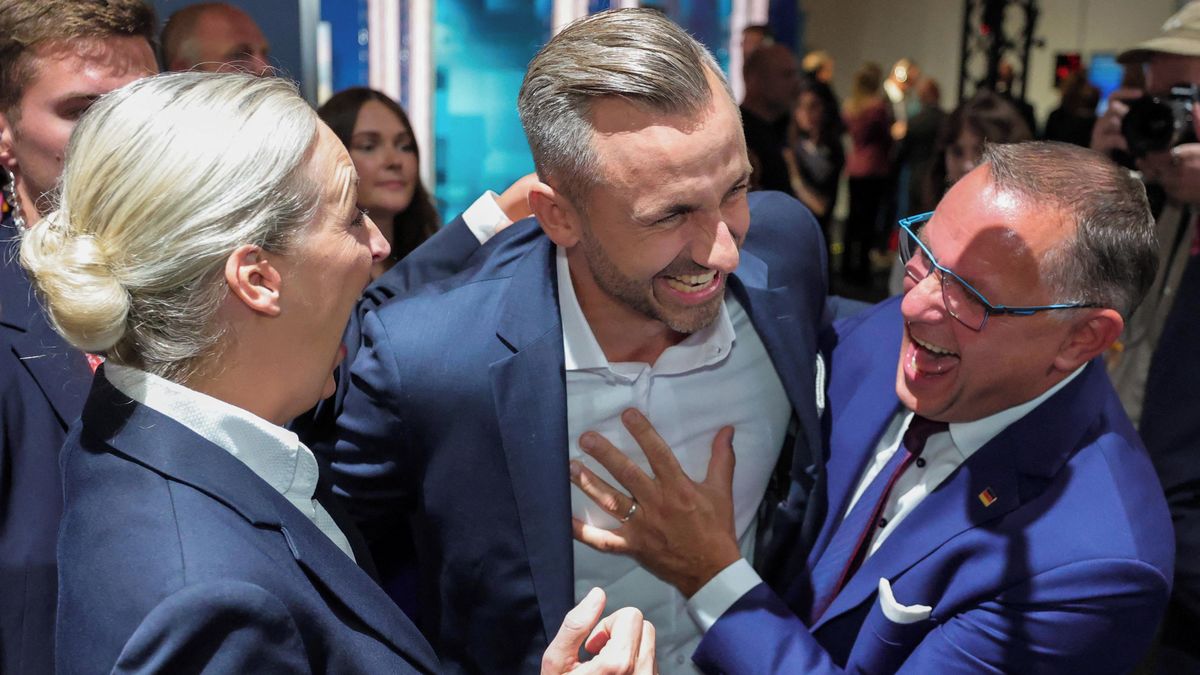
Velké volební vítězství AfD. Zasloužil se o něj lídr, který umí nadchnout

Vůbec se nedivím, že někom tak strašně leží v žaludku. Ona to musí být pruda, když vedle nich stojí klid, rozvaha, respekt, autorita, charisma, důstojnost… přesně to, co jim tak zoufale chybí. Kam přijde, tam sklízí potlesk. A navíc je to frajer. To už je na ně fakt moc.😆 https://t.co/cTnKJWaFsJ #respekt #charisma #důstojnost

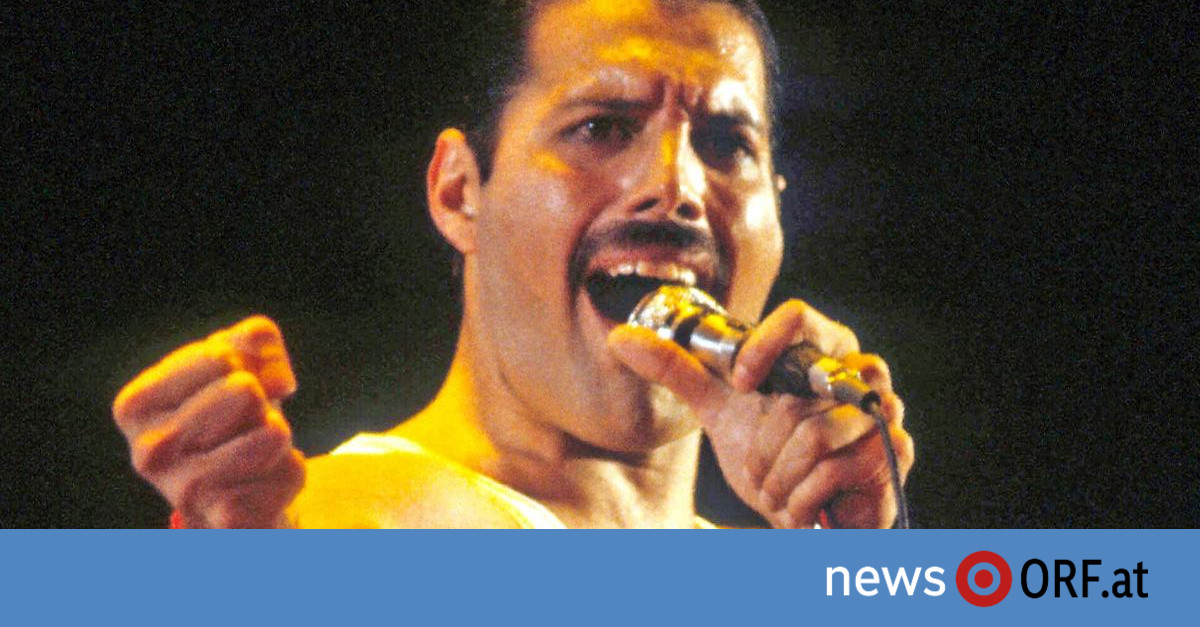
Freddie Mercury, the flamboyant genius and charismatic figurehead of the band Queen, shaped music history with his unique voice and unforgettable hits like "Bohemian Rhapsody," and remains to this day a symbol of artistic freedom and immortality. (translated)

Rampensau und flamboyanter Freigeist
NOS 2w

Ulrich Siegmund, the charismatic leader of the AfD in Saxony-Anhalt, is leading his party towards a possible absolute majority in the state elections and promises radical changes such as halting asylum and banning the rainbow flag in schools. (translated)

Charismatische parfumverkoper leidt AfD in Saksen-Anhalt naar absolute macht
V

Ulrich Siegmund, the charismatic salesman and leader of the far-right AfD, aims for a major electoral victory in Saxony-Anhalt, where his party seems to be poised to achieve a possible absolute majority in the polls. (translated)

Met de charismatische verkoper Siegmund doet de extreemrechtse AfD in Saksen-Anhalt een greep naar de macht

"Die AfD hat ein Personalproblem. Vielen ihrer Spitzenleute mangelt es an Erfahrung, Charisma und Redlichkeit. Das zieht sich durch – von Tillschneider bis ganz oben. So fiel der Parteichefin Alice Weidel im ZDF-Sommerinterview nichts Besseres ein, als deutsche Regierungspolitiker mit dem Begriff «Flachzangen» zu verunglimpfen. Stattdessen hätte sie sich einfach als vernünftige bürgerliche Alternative präsentieren können; zur vermurksten Zwangsheirat von CDU, CSU und SPD. Schwerer ins Gewicht fällt der Russland-Irrweg der AfD. Auch nach dem russischen Überfall auf die Ukraine ebbte ihre Putin-Sympathie nicht ab. Die Ukraine führt einen heroischen Abwehrkampf gegen einen verrückt gewordenen Feind. Das Feuer für diesen Kampf zieht sie aus einem glühenden Patriotismus. Die AfD sieht sich als patriotische Kraft. Es bleibt ein Rätsel, warum sie nicht auf der Seite derer steht, die einfach nur ihr Land schützen wollen." #AfD #Politik #Ukraine

H

When Pathology Takes Power If the last decade in the West felt unstable, you’re not imagining it. Andrew Lobaczewski studied how psychological pathology can spread into politics and produce “pathocracy”: societies where disordered personalities gain disproportionate power. He argued that revolutionary upheaval drives “negative selection.” Healthy people are pushed out or leave; manipulative, lying, and ruthless personalities rise through institutions. The system keeps its name and funding, but its character changes. At the top are essential psychopaths—empathy- and guilt-free exploiters. Beside them are schizoids who treat people as data and design control systems from abstract theories. Next come spellbinders: charismatic figures who package authoritarian ideas in the language of compassion, using invented moral standards for convenience. Then the spellbound: true believers. Around them gather conformists who comply to protect careers, while resisters are targeted and bystanders adapt to avoid trouble. Lobaczewski estimated a small minority builds the system, a larger group serves it, and most merely adjusts. Over time, society becomes the censor: truth turns dangerous, sanity is labeled extremism, and resistance is punished. The point isn’t only that bad ideas harm. It’s that pathological personalities can exploit good intentions, ideology, and institutional power—so the real conflict is psychological health versus pathology, and healthy institutions must be able to recognize the difference.

H

Why Psychopaths Rise to Power: What Hitler, Stalin & Mao Had in Common Polish psychiatrist Andrew Lobaczewski argued that in certain conditions, psychologically disordered people can rise through institutions and create “pathocracy,” where pathological personalities gain disproportionate power. He described “negative selection”: upheaval pushes aside those with conscience and competence while manipulative, ruthless figures thrive. At the core are psychopaths, who feel little guilt or empathy and use normal human weaknesses as tools. Around them are schizoids, ideological architects who turn abstractions into systems for managing people. Next are spellbinders, charismatic leaders who frame authoritarian ideas as moral duty. Together they produce “paramoralisms”—moral standards that invert reality: dissent becomes extremism, censorship becomes protection, coercion becomes compassion. Beneath them are true believers and conformists who follow out of conviction or career safety, echoing Milgram’s insight that the key question is who gives the orders. Finally come bystanders, a frightened majority that adapts to avoid trouble until self-policing replaces external coercion. Lobaczewski’s warning: pathological behavior becomes far more dangerous when society mistakes it for morality. The real struggle isn’t left vs. right—it’s whether institutions can preserve truth and resist normalization of destructive behavior.

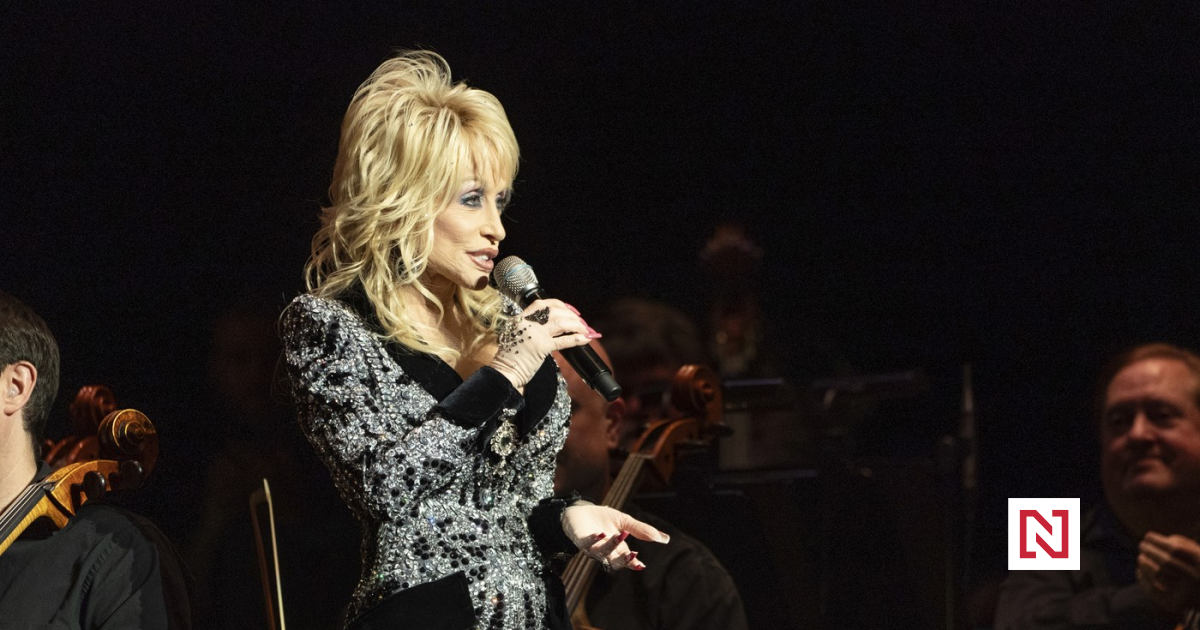
Dolly Parton, the legendary country singer and pop culture icon, died on August 25, 2026, at the age of 80, and her unique legacy lies in her ability to reach a wide range of listeners across political and generational divides, having influenced many with her hits and charisma throughout her career. (translated)

Jedinečný odkaz královny country: Proč Dolly Parton zbožňovali konzervativci i progresivci?

Hebt u ook drie uur ademlooszitten kijken naar Sigrid Kaag in Zomergasten? Iemand met kennis, charisma én mededogen. Wat een vrouw en wat een gemis voor ons land dat ze is weggepest en we nu zitten opgescheept met types als Mona Keijzer en die Forum-troela. https://t.co/0L4JRM73aI #SigridKaag #politiek #Zomergasten

🚨 Devy Rigaux, ancien DS de Bruges : « JE PENSE QUE YAMAL 🇪🇸 PEUT ÊTRE UN GRAND FRÈRE POUR BISIWU 🇧🇪. 🫂 Ils appartiennent à la GÉNÉRATION TIKTOK. Bisiwu a ce petit quelque chose en plus ; c'est un garçon charismatique, et je pense qu'il s'intégrera parfaitement au Barça. » 💙❤️ 🎙️ @diarioas #Football #Generations #Barça

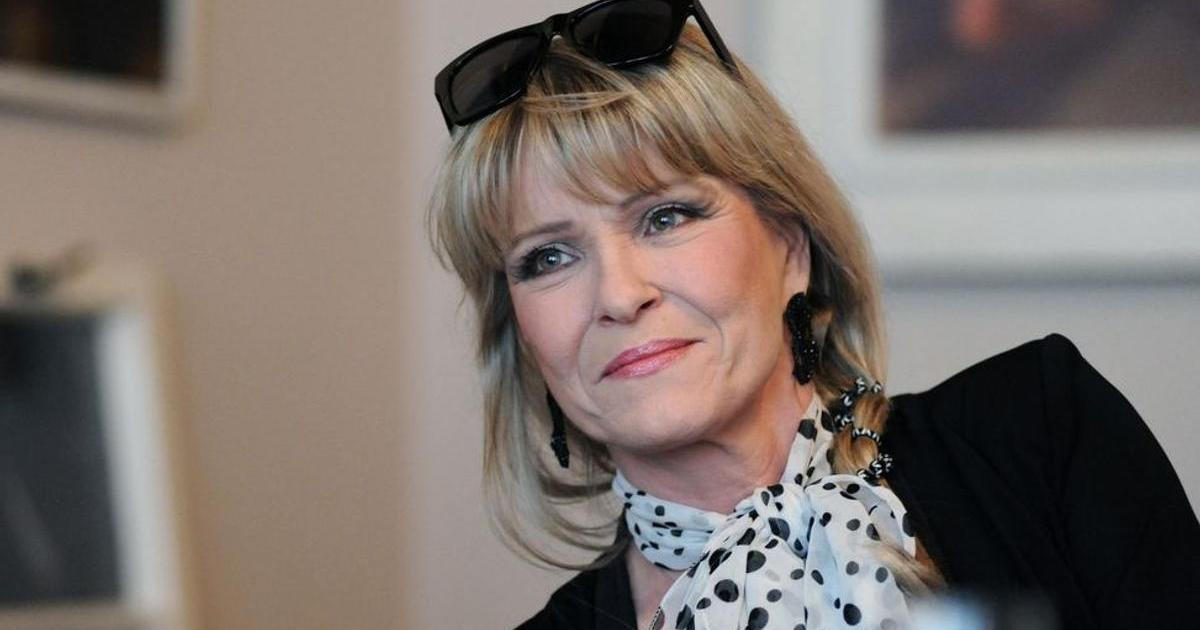
French actress Chantal Poullain, who will celebrate her 70th birthday this year, is known for her charisma, successful career in theater and film, contribution to Czech culture, as well as humanitarian activities, while she continues to engage in art and recently received the Order of the Legion of Honor for her achievements. (translated)

Sny se mi zdají ve francouzštině, říká herečka Chantal Poullain. Letos oslaví 70 let
V
de Volkskrant Aug 15

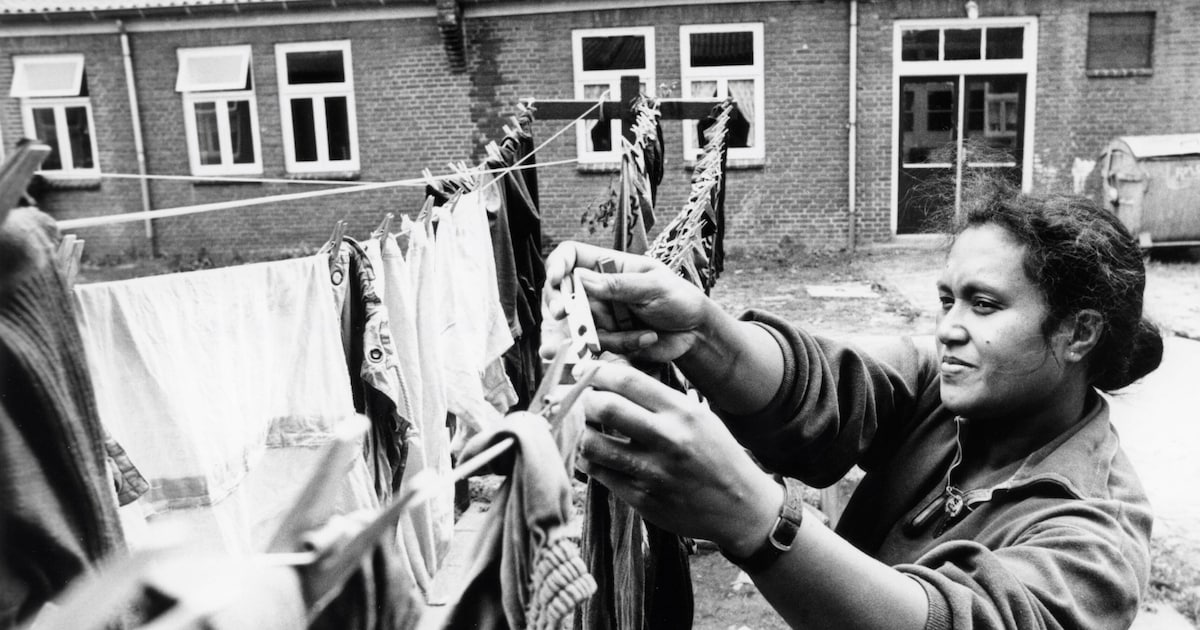
In her opinion piece, Charisma Hehakaya reflects on the lasting impact of the history of the Moluccan community and the KNIL soldiers, emphasizing that remembrance is more than just looking back; it also involves creating understanding, recognition, and space for each other's stories and experiences, which are deeply intertwined with trauma and identity formation. (translated)

Voor familie van KNIL-militairen is herdenken meer dan terugkijken

Pred 33 lety odešel Jiří Adamíra Herec s mimořádným charismatem, noblesou, hlubokým sametovým klidným hlasem a osobitým kouzlem. A vzpomínka na něj je krásnější i díky Haně Maciuchové, která po jeho boku prožila významnou část svého života. https://t.co/62HrXhgXQ8 #JiříAdamíra #vzpomínka #herectví

The SPIEGEL features Ulrich Siegmund on the cover and calls him the most dangerous man in Germany. I have been waiting for the past 10 years for the day when the AfD gets its politician of the league Jörg Haider. Someone who easily charms 40-50. (translated)

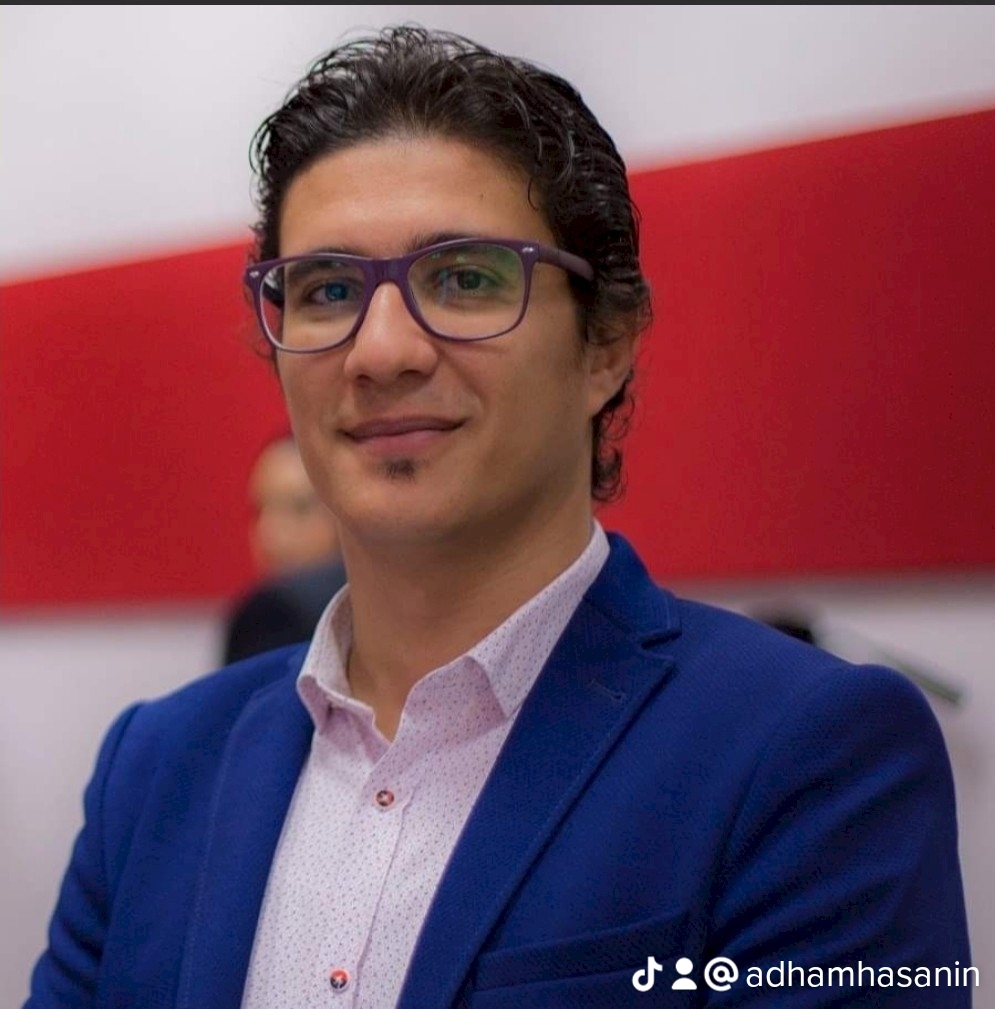
Adham Hasanin Aug 11

A Crown Instead of the Barracks: An Idea From Outside the Box Could Egypt’s exiled opposition use constitutional monarchy to dismantle the legitimacy of the 1952 coup? By Adham Hasanin Egyptian journalist and political writer, based in the Netherlands To understand what follows, a reader unfamiliar with Egypt needs one basic fact: since 1952, Egypt has never been governed by anyone who did not first wear a military uniform. Gamal Abdel Nasser, Anwar Sadat, Hosni Mubarak, and today Abdel Fattah el-Sisi four men, four eras, one common origin. All rose through the armed forces. All inherited a state built by a coup that year, when a group of officers calling themselves the "Free Officers" overthrew King Farouk I and, within a year, abolished the monarchy altogether and declared a republic. For seventy-three years, the underlying equation has not changed: the army rules, power passes from one officer to the next, and legitimacy is drawn from the barrel of a gun rather than the ballot box. Every conceivable form of opposition has been tried legal parties and banned ones, Islamist movements, liberal and leftist coalitions, the 2011 popular uprising, and the 2013 elections whose result was overturned by force within a year. All of them hit the same wall: a military institution that reproduces itself under different names, while the core of the system remains untouched. So what if the problem, all along, has not simply been who rules, but the constitutional framework that makes military rule possible in the first place? And what if the answer lies not in swapping one president for another, but in dismantling the underlying equation itself, through a framework Egyptian opposition movements have never seriously tried: a purely ceremonial constitutional monarchy, on the model of Belgium, the Netherlands, or Spain where the head of state becomes a symbol above the political fray, while the army is permanently expelled from politics and returned to its barracks. This is not a call to revive a particular family, nor nostalgia for a golden age that never quite existed. It is a proposal for a political and strategic tool that has not yet been used in the intellectual arsenal of Egypt’s opposition in exile a tool that deserves serious discussion, regardless of whether it is ever literally realised or simply serves to expand the boundaries of what is politically thinkable. I. Why 1952, Not 2013 or 2011, Is the Root The strategic error made by most Egyptian opposition movements from the Muslim Brotherhood to the April 6 Youth Movement to the various civil opposition parties has been treating each political crisis as an isolated case: Mubarak was corrupt and had to be toppled; Sisi staged a coup that must be condemned; the interim military council was a transitional phase to be endured. This piecemeal approach treats the symptoms while leaving the original illness untouched. That original illness is the very structure of legitimacy established by the coup of 23 July 1952. The Egyptian republican system, from Nasser to today, has never built its legitimacy on a genuine democratic social contract. Instead, it has rested on a fixed trinity: the rhetoric of "revolution against feudalism and colonialism," charismatic individual leadership, and military protection of the regime framed as the guarantor of stability. This trinity has repeated itself from Nasser to Sadat to Mubarak to Sisi, with only cosmetic variations. Each new president was never a break from the system he was its continuation. When the opposition says "let us return to the constitutional framework that preceded the coup," it is not criticising a particular policy. It is declaring that the legal foundation of everything that came after 1952 was illegitimate from the start. Here lies the rhetorical power of "returning to the pre-1952 order": it does not merely demand swapping one ruler for another. It withdraws historical legitimacy from the entire republican military system including today’s regime, which draws its own declared legitimacy from that same "1952 legacy." II. Why a "Ceremonial Crown," Not "the Return of a Ruling Family" Here is the most important distinction anyone advocating this idea seriously must grasp: the project does not rest on restoring any particular individual from the Muhammad Ali dynasty, nor on nostalgia for King Farouk or his ancestors. The real power of the idea lies in the constitutional form, not in the person who happens to sit on the throne. Three successful European democracies illustrate the model clearly. Belgium, where King Philippe is a purely constitutional symbol with no real executive power, while the state is run through an elected parliament and a complex coalition government reflecting the country’s linguistic and political diversity. The Netherlands, where King Willem-Alexander formally opens the parliamentary year and signs laws, but where actual decision-making rests with the prime minister and the elected parliament. And Spain, where the king represents symbolic continuity of the state above party politics, while the military and security services answer entirely to civilian authority a transition achieved after the death of the dictator Francisco Franco in 1975, when King Juan Carlos I voluntarily relinquished the extensive executive powers he had inherited and backed free elections, most dramatically in February 1981, when he personally ordered the armed forces to remain loyal to the constitution during an attempted military coup, causing it to collapse within hours. The common thread across these three models is not "the presence of an ancient royal family." It is the principle of separating symbol from power. The monarch in these countries does not rule; he represents. He issues no political decisions; he provides the continuity and symbolic stability that allows party political competition to revolve beneath him, without every transfer of power becoming an existential crisis of legitimacy. This is precisely what Egypt’s military republican system lacks: a neutral mechanism for guaranteeing state continuity that does not depend on the person of the ruler or his security apparatus. When Egypt’s military-republican president is absent, it is always the army that fills the vacuum, because it is the only institution built to be the "guarantor of stability." Under a ceremonial monarchical model, by contrast, it is the king not the army who represents that symbolic guarantee, genuinely opening the door to removing the military institution from the political equation altogether. III. Egypt’s Standing Under the Monarchy: An Honest Reckoning, Not Blind Nostalgia For a Western reader with little prior knowledge of Egypt’s monarchical period (1922–1952), it helps to know this: Egypt was nominally independent under its own king from 1922, but Britain retained enormous informal control over the country’s foreign policy, military bases, and the Suez Canal throughout the period a reality that shaped everything that follows. Any honest invocation of "Egypt’s standing under the monarchy" must avoid the trap of mythologised nostalgia that many advocates of this idea fall into. Egypt in that era was no lost paradise, and any honest article must say so plainly. The Egyptian pound, for instance, often invoked as a symbol of "national currency strength" in that period, was not strong because of independent Egyptian monetary policy. It was pegged to the British pound sterling as part of Egypt’s complete colonial financial dependency until 1947, with Egypt exercising no independent oversight of its own currency whatsoever. The pound’s strength, in other words, was not a sovereign Egyptian achievement it was a reflection of British imperial power ruling Egypt from behind the throne. But this does not mean Egypt lacked a genuine regional standing worth studying. Cairo, in the 1930s and 1940s, was the undisputed cultural capital of the entire Arab world: the Egyptian film industry produced more than half of all Arabic-language cinema; its theatre scene, led by figures like Youssef Wahbi and Naguib al-Rihani, and its music, with Umm Kulthum and Mohammed Abdel Wahab, set the standard across the region; Cairo University was the first modern university in the Arab world; and the Egyptian press was the reference point for Arab public opinion from the Atlantic to the Gulf. Cairo was, quite simply, to the Arab world what Paris was to Francophone Europe: an unrivalled centre of cultural and intellectual gravity. This standing was not necessarily a product of monarchy itself, so much as a product of a relative space of political and press pluralism that allowed Egyptian civil society to flourish, despite all the flaws of the political system and the interference of both palace and occupier. The lesson here is not "bring back the king and the standing will return." It is: when even a limited margin of civic freedom exists, Egypt flourishes culturally and intellectually almost by its own nature. And that margin is precisely what has been entirely absent across the past seven decades of unchallenged military rule. IV. What Reform Would Actually Require Not Repeating the Old Mistakes Any serious advocacy of this model must include, even briefly, a clear vision for avoiding the flaws of the old monarchical system itself otherwise the proposal collapses into simply replacing one form of authoritarianism with another wearing a different crown. First, the armed forces would need to be placed fully under a civilian ministry of defence, with its budget subject to transparent parliamentary oversight the exact opposite of its current status as a state-within-a-state, and equally opposed to its role under the monarchy, when it often served as an instrument of British influence. Second, a judiciary fully independent of both palace and government alike, unlike the old model, which saw direct royal interference in political life as when King Fuad I dismissed the elected government of Prime Minister Saad Zaghloul’s successor, Mustafa al-Nahhas, in 1928, in one of the clearest "constitutional coups" in modern Egyptian history. Third, a parliament that genuinely represents the people rather than landowners and the aristocracy, as was the case before 1952, when membership in the Senate was effectively conditional on the ability to pay land taxes meaning political representation was, by law, restricted to the wealthy. Fourth, genuine economic sovereignty, with a truly independent national currency rather than one pegged to a foreign power’s currency, unlike the historical dependency of the Egyptian pound on sterling. These four principles are enough to clarify that the project on offer is not a literal "return to the past," but a borrowing of the constitutional form (symbolic monarchy) combined with an explicit rejection of its old substance (colonial dependency, palace interference, parliamentary feudalism). V. The Role of Egyptian Movements in Exile: Between Goal and Instrument This raises the most practical question of all: how might Egypt’s opposition abroad actually adopt this idea, and in what capacity? The honest answer is that the power of this proposal does not necessarily lie in its literal fulfilment, but in its dual strategic function. On one hand, it can be advanced as a genuine political goal adopted by broad coalitions of Egyptian movements coalitions that might include Islamists, liberals, leftists, and traditional monarchists, united around a single shared premise: rejecting the legitimacy of the 1952 order and everything that followed from it, even if they later disagree over the precise final shape of the state. On the other hand and this matters more in practice the idea can be deployed as a rhetorical instrument of pressure to widen a Egyptian political debate currently trapped between two false choices: "continued military rule" or "no alternative, chaos awaits." When the opposition puts forward a clearly defined third model a European-style constitutional monarchy it breaks this false binary and opens new intellectual space in Egyptian public discourse, even if the project is never realised in its literal form. This kind of "leverage idea" is common in the history of political movements worldwide: it is not necessarily proposed to be fulfilled immediately in full, but to redraw the boundaries of the politically possible, and to force the existing regime to defend its legitimacy rather than simply assume it. Conclusion: An Invitation to Debate, Not a Ready-Made Prescription This article does not claim that restoring a monarchical form would magically resolve Egypt’s chronic crisis of legitimacy, nor does it ignore the immense difficulties facing any transformative project under a military institution as economically and securitywise entrenched as Egypt’s is today. But it raises a question that deserves serious debate among Egypt’s opposition in exile, rather than automatic dismissal simply for being unfamiliar: Has the Egyptian opposition exhausted every available tool for dismantling the legitimacy of 1952, or has it remained trapped in the same old binary swapping one ruler for another while the framework that makes military rule possible remains untouched? The idea is on the table now, not as a finished solution, but as an overdue invitation to think outside the box.

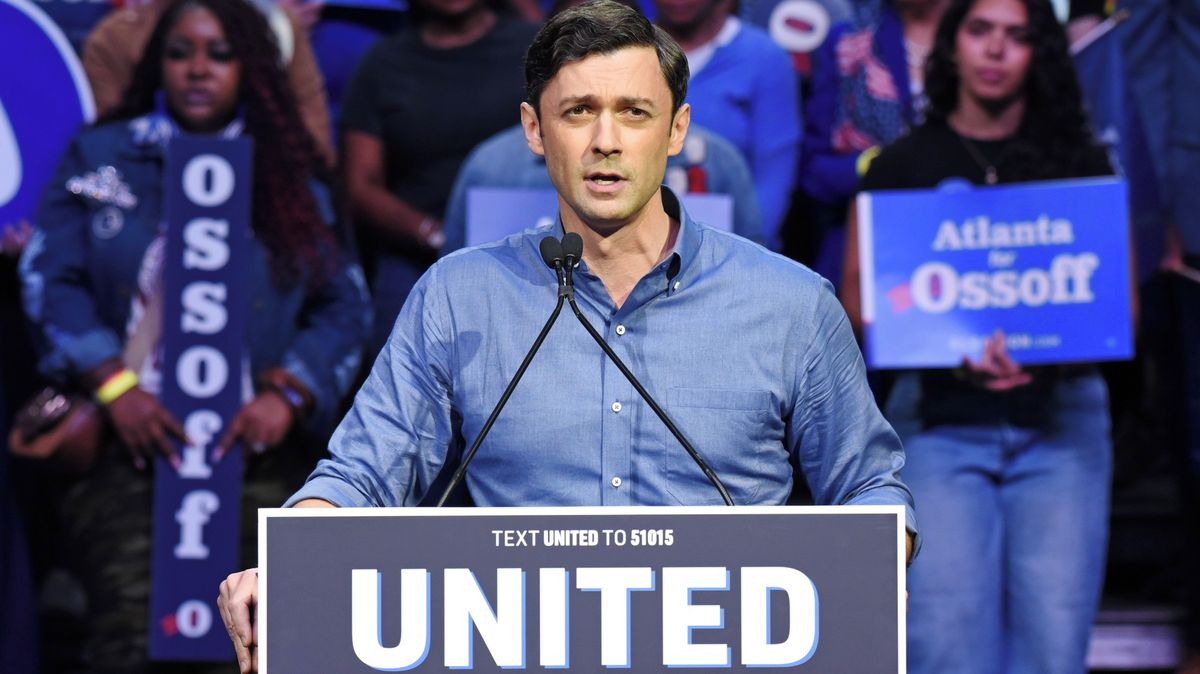
Jon Ossoff, the young senator from Georgia, is becoming a significant figure in the Democratic Party and is considered a possible candidate for president in 2028, as his popularity is growing due to his exceptional speaking skills and charisma, while some analysts warn that his success may be threatened by the traditions and views of local conservative voters. (translated)

Demokraté mají „korunního prince“. Trump ho označuje za infantilní postavu
20 minutos Aug 1

The RiseGuide app is looking for a 'Global Charisma Scout' who will travel across Europe talking to locals and other tourists for two months, receiving a salary of approximately 2,630 euros per month, in addition to covering all travel expenses. (translated)

Así puedes viajar gratis por Europa y con sueldo: solo tienes que ser extrovertido

Je la considérais comme une diva authentique et charismatique dont le style d'interprétation et la voix unique ont dépassé les frontières de cette région et ont porté la gloire de notre culture à travers le monde.

Olivera Katarina, diva yougoslave et star du film "J'ai même rencontré des Tziganes heureux", est morte à 86 ans
www.franceinfo.fr
NRC Jul 21

Met het overlijden van Kevin Keegan, een van Engeland's meest succesvolle en charismatische voetballers, verliest de voetbalwereld een warmbloedige persoon die niet alleen uitblonk in zijn sportieve carrière met onder anderen meerdere landstitels en de Europa Cup 1, maar ook bekend stond om zijn sociale betrokkenheid en unieke manier van communiceren. #KevinKeegan #Voetbalgeschiedenis #MightyMouse

‘Mighty Mouse’ Kevin Keegan was veel meer dan een topvoetballer: warm, charismatisch en sociaal voelend