BETA nonprofit public democratic european moderated

Search

#helsinki

Mikael Lith wrote that, in his opinion, the center of Helsinki has become more unpleasant in recent years, especially on weekend evenings. He described loud and swearing groups of people, individuals under the influence of substances, and rundown places. According to Lith, there was an increasing need for police and security guards, and he estimated that it wouldn't be long before Helsinki would become Finland's Birmingham. #Helsinki #yhteiskunta #kulttuuri (translated)


The police are searching in Helsinki for an approximately 120 cm tall 8-year-old girl who went missing in Mellunmäki, with her last sighting at 12 o'clock. She was wearing a pink jacket and light purple winter sneakers. #Helsinki #kadonnut #poliisi (translated)

8-vuotiasta tyttöä etsitään Helsingissä

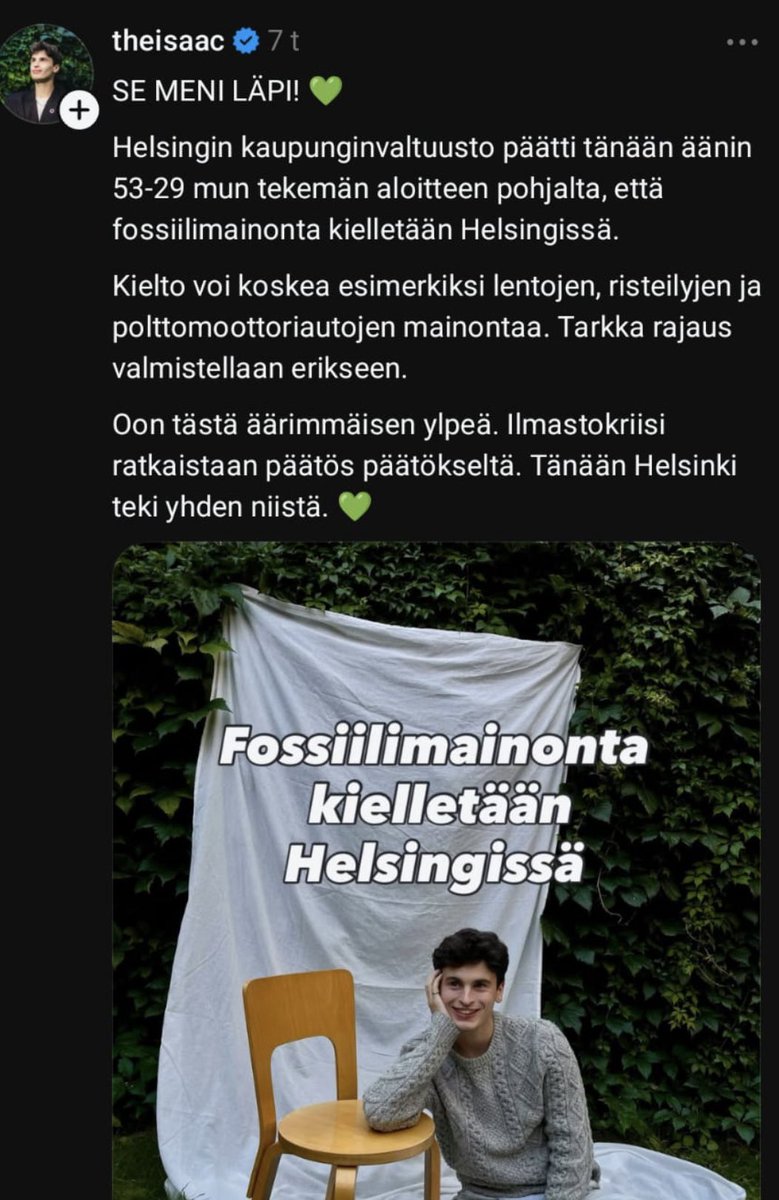
Sture Fjäder wrote that the red-green coalition in Helsinki had passed a decision stating that the city would no longer accept advertising related to fossil fuels, such as advertising for flying. He questioned whether those who supported the decision would themselves give up flying on their travels, and assessed that they would not do so. Fjäder described the action as green posturing. #viherposeeraus https://t.co/qbovaaryzX #Helsinki #ilmastonmuutos #kestäväkehitys (translated)

Otto Juote criticized the National Coalition Party for allegedly abandoning its values and becoming an assistant to the right-wing government. He wrote that disappointed voters were shifting to support the Left Alliance and the Social Democratic Party and questioned where the previously promised projects, such as Garden Helsinki, senior spa vouchers, and the sale of natural monopolies to international investors, had gone. Juote ironically described the National Coalition Party as a leftist social-liberal party, which in his view had previously supported, among other things, state-owned projects, service vouchers, increased immigration from developing countries, climate actions, and support packages. He claimed that the party had also held onto acquired benefits while it spoke of cuts and reducing debt. Additionally, Juote asked why discussions about entrepreneurship, economic growth, and warnings about right-wing policies seemed to have disappeared from the party. He wrote that Orpo's National Coalition Party no longer reflected the pragmatic interest group and system party that he had previously supported. Juote estimated that he would likely vote for a red tie-wearing socialist in the upcoming elections instead of a blue tie-wearing one for the first time. #Kokoomus #Vasemmistoliitto #Politiikka (translated)

The Daily Bureaucrat asked whether bike paths should be built in downtown Helsinki, car lanes blocked, and palms planted. He wrote that the appeal of the city center had collapsed and that it was Pia Svensk's task to reverse this trend. https://t.co/L19cMrj3N3 #Helsinki #kaupunkisuunnittelu #pyöräily (translated)

The number of juvenile crimes in Helsinki has increased significantly, especially due to the phenomena of violence that has become brutal and humiliation, which concerns the police and leads to measures to combat youth crime. #AlaikäistenRikokset #Väkivalta #Helsinki (translated)

Alaikäisten rikokset kasvussa Helsingissä – uusi nöyryyttävä ilmiö: "Se väkivalta on aika brutaalia"

HJK started the Championship Series with a crushing 6–0 victory over VPS, with Mads Borchers scoring a hat trick and Teemu Pukki and other players from Helsinki contributing to the celebratory score. #HJK #Veikkausliiga #jalkapallo (translated)

6–0: HJK aloitti Mestaruussarjan rajusti

Sture Fjäder wrote that Helsinki, according to him, bans all advertisements that use fossil fuels. He criticized the city council's bans and stated that he was glad to have moved away from Helsinki. #lentomainontakiellot https://t.co/LKwKKDcned #Helsinki #mainonta #ympäristö (translated)

Tanja Aidanjuuri wrote that the plan in Helsinki to ban advertising of fossil fuels could, according to her, cost the city nearly 100 million euros in advertising revenue. She criticized the proposal as unnecessary and absurd and listed as examples of potentially restricted advertising gasoline and diesel cars, flights, cruises, synthetic clothing, plastic products, and fossil fuels. Aidanjuuri described that the Greens in Vantaa could, in her opinion, follow the same line and that advertising would then practically be limited to, for example, veggie sausages, rainbow flags, and new mosques. She also pointed out that taxpayer money would be used for the handling of the matter. Aidanjuuri cited a proposal stating that the advertising ban would be investigated in the preparation of the next outdoor advertising agreement for Helsinki's public areas and that the advertising agreements of Urban Traffic Ltd would also be taken into account. The assessment would examine, among other things, the legal boundaries of the ban, its climate and environmental impacts, effects on the city's economy, the city's own communication and marketing, as well as the media landscape. The proposal also mentioned the possibility of examining advertising's ethical principles more broadly and limiting outdoor advertising from entities considered to violate human rights and particularly polluting industries. #Helsinki #ilmastonmuutos #mainonta (translated)

Mats Uotila wrote that the representatives of the Left Alliance, the Greens, and the SDP had returned by plane from a study trip to Vienna shortly before the Helsinki city council's vote and supported a ban that would prevent, for example, the display of airplane advertisements on the city's billboards. Uotila considered this action hypocritical. #Helsinki #politiikka #ympäristö (translated)

Seida Sohrabi reported that her initiative to ban face coverings was passed by the Helsinki City Council. According to her, Helsinki will add a requirement for visibility and recognizability of faces in the guidelines for schools, daycare centers, and educational institutions. Sohrabi justified the visibility of faces with safety, identification, interaction, and the principles of a safe space. She also referred to the city’s commitment to supporting girls' equal learning and the goals of the city strategy to enhance the well-being of children and youth and the equal right to education for every child. (translated)

Di.se 4d

The red index in the Nordic region indicates that the manufacturing sector in Helsinki is negatively affected, contributing to a decline in the Finnish economy. (translated)

Röda index i Norden – verkstad sänke i Helsingfors

The Listener podcast invited Timo Stewart and Dennis Mitzner to their studio in Helsinki to record an episode at the earliest convenient time for both, if they both accepted the invitation. #podcast #studio #Helsinki (translated)

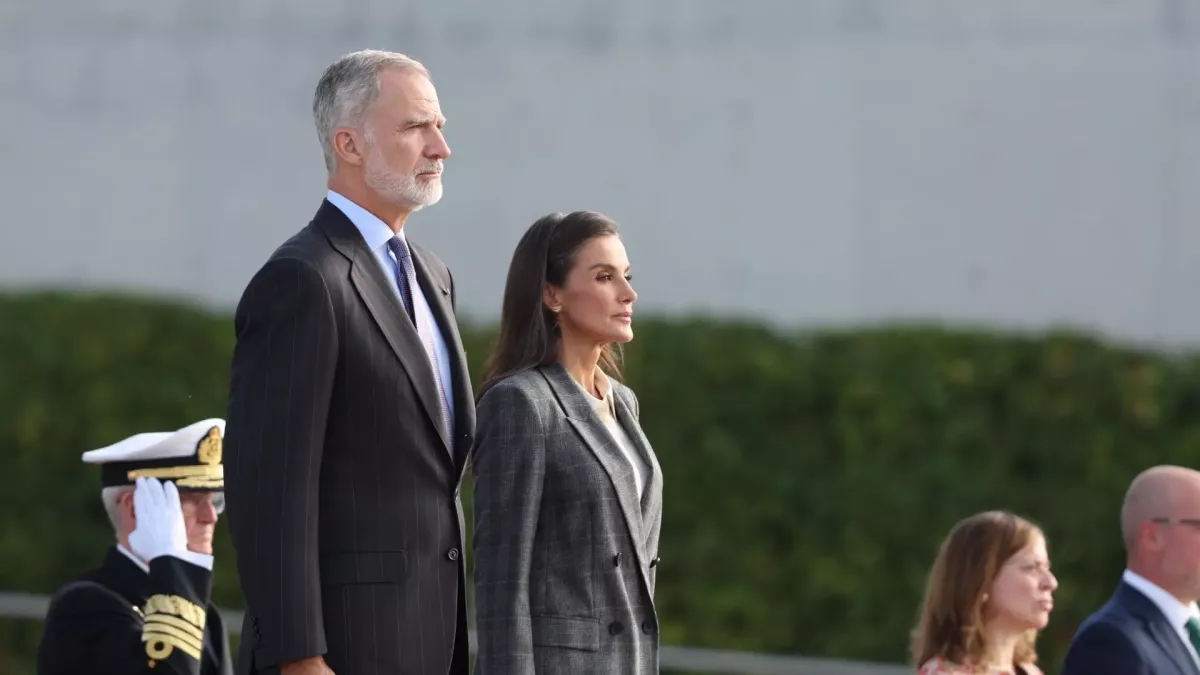
King Felipe VI has highlighted the importance of European technological sovereignty and the cooperation between Spain and Finland during a business meeting in Helsinki, emphasizing that this goal can only be achieved through collaboration between countries and the utilization of existing talent and resources. #SoberaníaTecnológica #CooperaciónEmpresarial #InnovaciónEuropa (translated)

Felipe VI aboga por la soberanía tecnológica de la UE ante empresas españolas y finlandesas

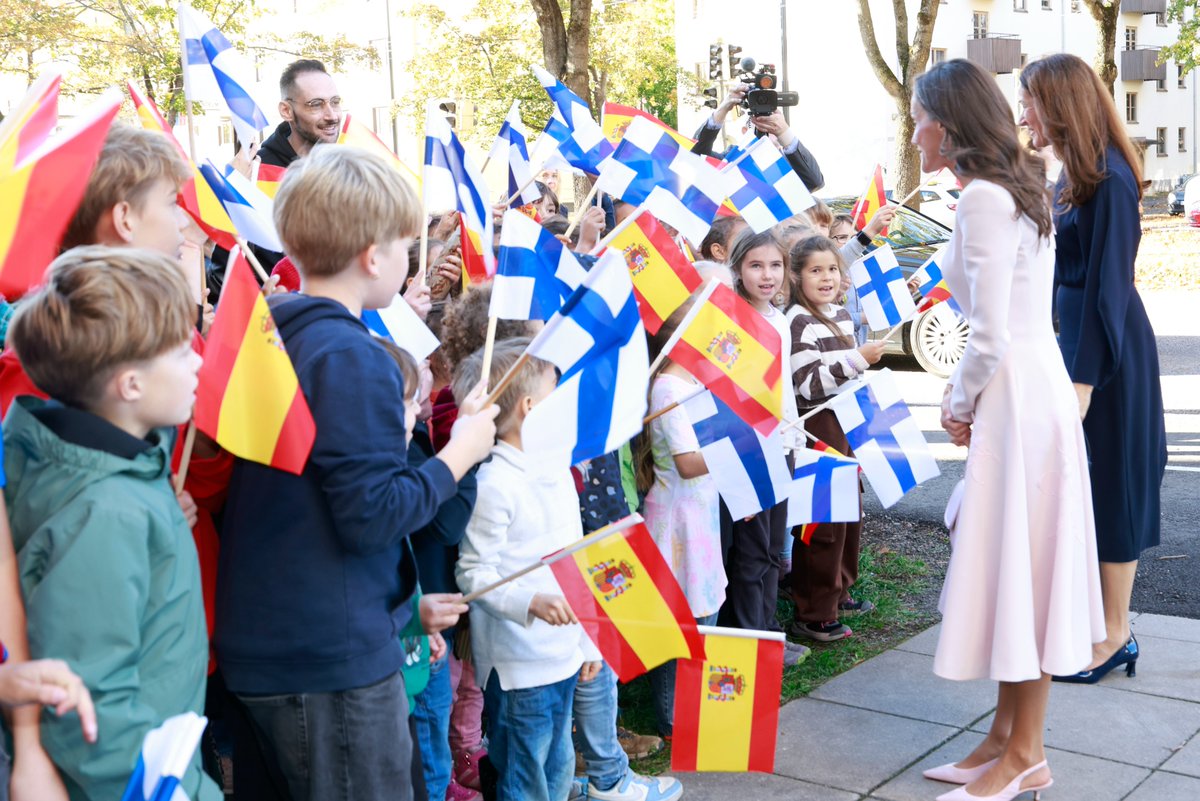
The House of His Majesty the King informed that the Queen and Suzanne Innes-Stubb, the First Lady of Finland, visited the Käpylä Public School in Helsinki, a bilingual center in Finnish and Spanish. According to the institution, they met with teachers and school council officials there. #Finlandia #Educación #EscuelasBilingües (translated)

Wojciech Górski wrote that the crisis of the national team during Kulesza's presidency has continued, and he asked how many more embarrassing events must occur. He cited examples such as Hungary under Sousa, three minutes against the Czech Republic, Chișinău, a 0:6 loss to Belgium, the game against Mexico, praying for the result of the match against Argentina, Austria at the Euros, a 1:5 loss to Portugal, Helsinki, the playoff against Sweden, and Bosnia. https://t.co/mzyazIewlI #futbol #reprezentacja #porażka (translated)

King Felipe VI has signed electronically from Helsinki the decree calling for general elections on November 29, shortly after arriving in Finland for a state visit with Queen Letizia. #EleccionesGenerales #ViajeDeEstado #FelipeVI (translated)

El rey firma de forma telemática desde Helsinki el decreto que convoca las elecciones

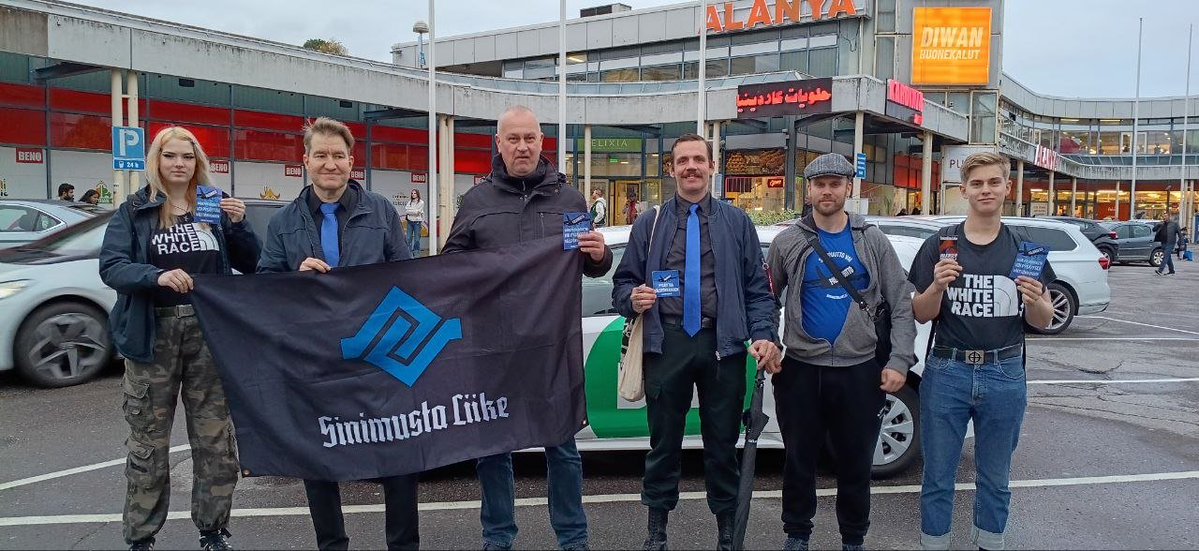
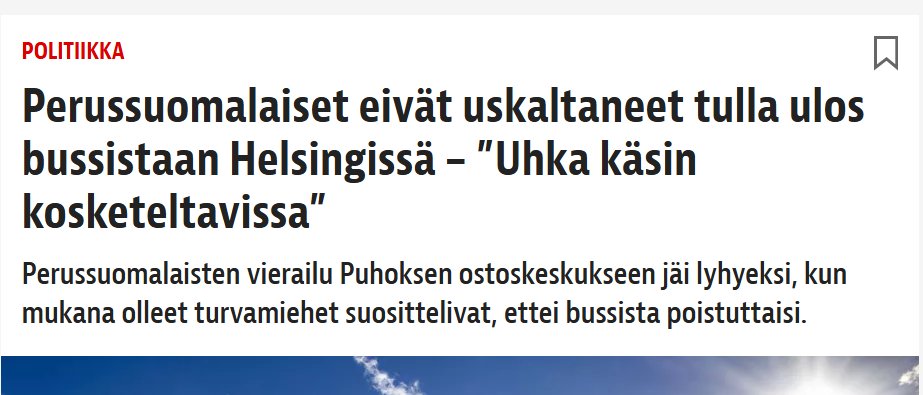
Tuukka Kuru wrote that the activists of the Helsinki district had made a visit related to repatriation to a shopping center known from the news. According to him, the trip did not require a bus or security guards. https://t.co/d07cyuWeRJ #Helsinki #Paluumuutto #retki (translated)

Heikki Pursiainen wrote that the image of the bus with horrified members of the Finns Party looking out depicted the entire party well in his opinion. He described the Helsinki residents visible through the bus window as ordinary people in their daily activities. https://t.co/wtJtPP67g2 #Politiikka #Suomi #Helsinki (translated)

Lucia described the typical reader of Helsingin Sanomat as a 25–40-year-old, highly educated urban woman who lived in neighborhoods like Kallio, Käpylä, Kumpula, Pakila, Kalasatama, Töölö, or Lauttasaari. She noted that this woman would usually vote for the Greens, the Left Alliance, or the SDP and would frequent brunches, bars, and the Flow festival. According to Lucia, the woman she described might be in a relationship, live in a community garden cabin, and be the mother of one or two children. She listed names like Alvar, Oliver, Ariel, Kuura, and Kaura for the children. Lucia mentioned that the woman preferred public transportation but accepted her partner's expensive car, even if she suffered from climate anxiety and flying shame. The woman might also have a small dog. The author claimed that such a reader did not know any voters of the Finns Party and might consider her rural uncle, who had voted for the party at times, to be peculiar. She speculated that the woman worked in a field where she could aim to make the world a better place. Lucia called this a reader profile and target group for Helsingin Sanomat, whose interests and views, according to her, the paper's journalists anticipated. She wrote that HS did not aim for objective or neutral reporting, nor was it an agenda-driven media outlet. According to her, the paper's target group did not encompass all people regardless of their background, lifestyle, or viewpoints. She compared HS to a mirror held up by journalists so that the reader could be satisfied with what they saw, and concluded that the reader of the described profile was not the same as the writer of the piece. #Helsinki #ilmastoahdistus #lukijaprofiili (translated)