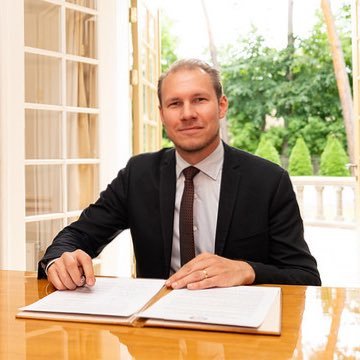
Swedish politician
The author wrote that Venezuelans were clear about the path they wanted to take and were tired of authoritarian oppression and misuse. #VenezuelanVoices #Libertad #DerechosHumanos #VE
The author wrote that Venezuelans were clear about the path they wanted to take and were tired of authoritarian oppression and misuse. #VenezuelanVoices #Libertad #DerechosHumanos #VE
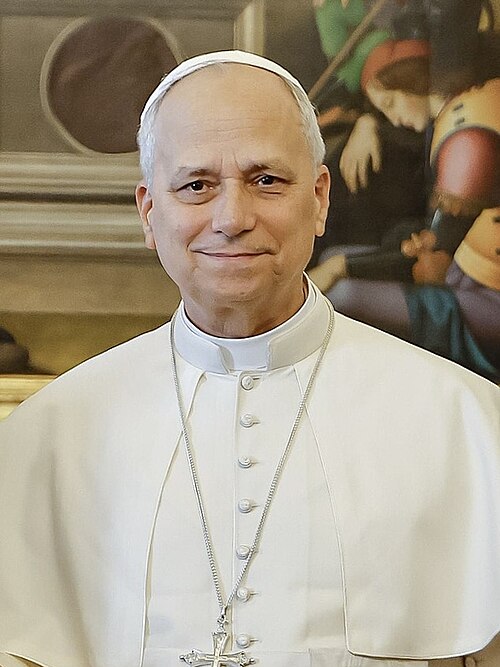
"An indifferent progress to justice and the dignity of workers becomes a mechanism of oppression and exclusion," said Léon XIV in front of an audience of students, stressing that scientific progress should not become a privilege of the wealthiest. #SciencePourTous #ÉthiqueTechnologique #InégalitésSociales (translated)
"An progress indifferent to the justice and dignity of workers becomes a mechanism of oppression and exclusion," said Léon XIV before an audience of students, emphasizing that scientific progress should not become a privilege of the wealthiest. #PapeLéonXIV #JusticeSociale #ProgrèsScientifique (translated)
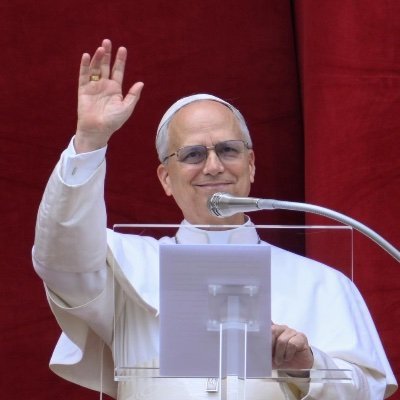
Pope Leo XIV wrote that transhumanist and posthumanist currents promised that technology would eventually eliminate diseases, pain, aging, and death. He believed that scientific progress, the result of human intelligence, should not become a privilege reserved for millionaires in search of immortality, while entire peoples suffered from misery and oppression. He also denounced the illusion of human beings optimized by cybernetics and biotechnologies, stating that, according to Christian anthropology, limitations were a condition of human greatness and not a defect. #VoyageApostolique #Pérou #MagnificaHumanitas https://t.co/Nkr7VBAxKT #Transhumanisme #Posthumanisme #Humanité (translated)
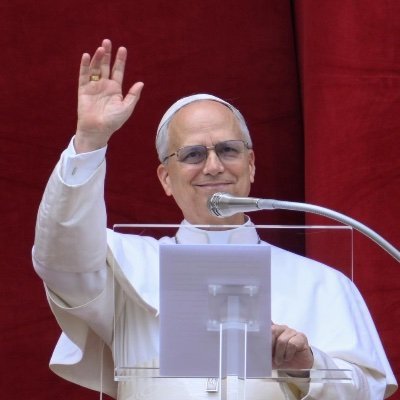
Pope Leo XIV wrote that the promises of transhumanism and posthumanism envisioned a future in which technology would eliminate diseases, pain, aging, and death. He argued that scientific progress, while the result of human intelligence, should not become a privilege for billionaires seeking immortality while entire peoples lived in misery and oppression. He also criticized the idea of perfected human beings through cybernetics and biotechnologies, stating that, according to Christian anthropology, limits were not defects but part of human greatness. #ViaggioApostolico #Perù #MagnificaHumanitas https://t.co/N5IEKLbWkH #Transumanesimo #Postumanesimo #Antropologia (translated)
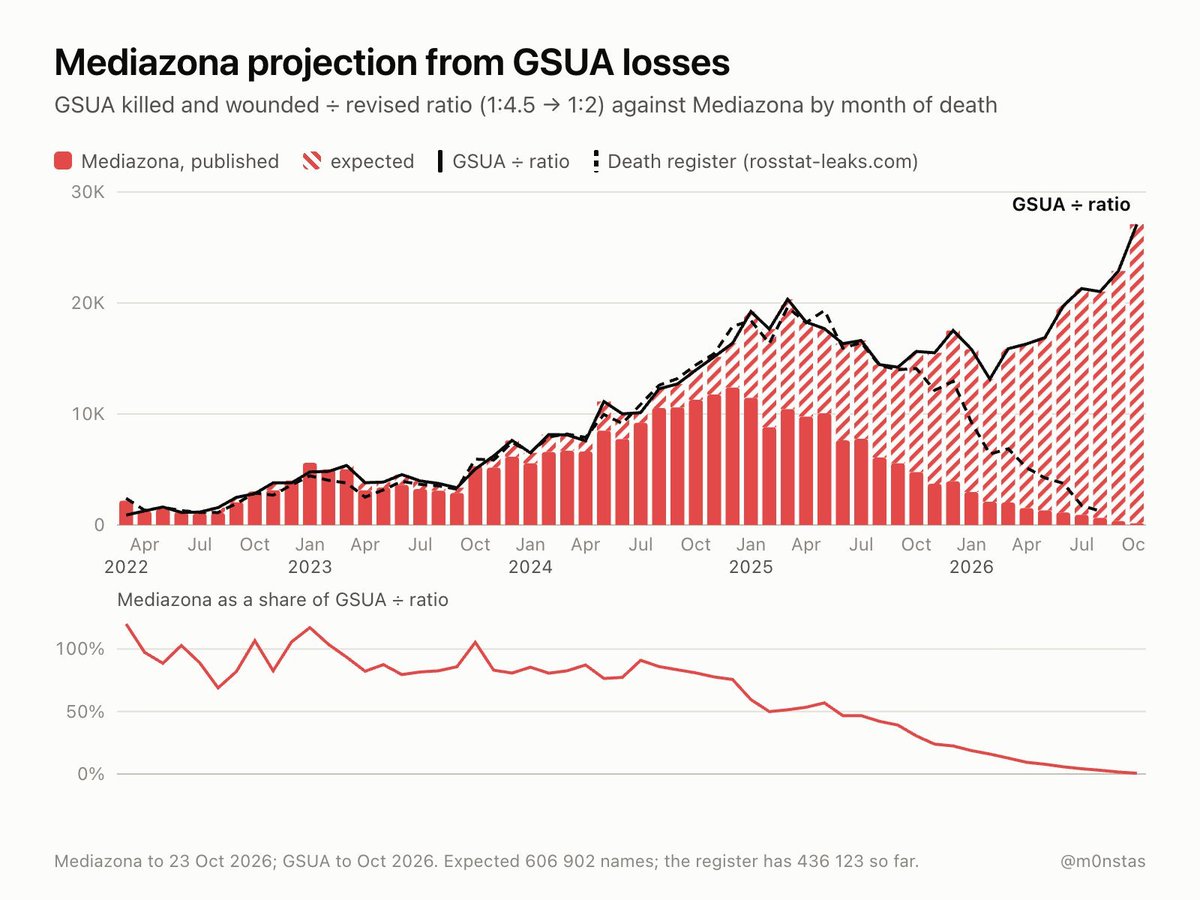
Clément Molin described the war in Ukraine as a conflict that has led to massive human losses. He estimated that about 3% of men aged 18 to 60 in government-controlled Ukrainian territories had been killed, and that an additional 2 to 3% were likely severely injured, amputated, or traumatized. For Russia, he suggested that 1.5% of men in this age group had been killed, and at least 2% more had suffered serious injuries or trauma. On a broader scale of the conflict, Molin assessed the number of dead or severely injured men to be between 1.5 and 2 million, along with a minority of women, mainly Europeans, and some volunteers or mercenaries from other regions. He also mentioned the departure of hundreds of thousands of young men from both countries, declining birth rates, and grieving families. Molin estimated that in Russia, despite probably 600,000 deaths, the war was little contested and the shock remained silent, in contrast to the war in Afghanistan. He suggested two explanations: the dead would mainly be poor, older, non-conscripted men, and the war in Afghanistan occurred in a much more difficult economic and social context. He wrote that Russia was sacrificing its future for villages in Donbass, while imposing the consequences of war on the Ukrainian people, whom he described as being attacked. He added that Ukrainians remained mostly determined to defend their freedom after Russian and then Soviet oppression, the annexation of Crimea, the war in Donbass, and the large-scale invasion. Molin also cited a graph by M0nstas on Russian losses. According to the estimate presented, which compared the 284,000 verified deaths by Mediazona, over 400,000 deaths from a leak from Rosstat, and data from the Ukrainian army, with a ratio of killed to wounded adjusted according to the years, the toll was between 580,000 and 620,000 dead. #Ukraine #Guerre #Conflit (translated)

Russia's negotiator Medinsky is now openly talking about a new Yalta and Potsdam, so reminders are in order: 1) Yalta and Potsdam are symbols of Soviet dishonesty and oppression not examples to be emulated; 2) Soviet troops were occupying then half of Europe and could realistically demand..

"The oppression of a people or even of a single individual is the oppression of all, and one cannot violate the freedom of one without violating the freedom of all." (translated)
Marco Setaccioli wrote that he found himself in Munich and had visited the building that, according to his report, had housed the University of Music and Theater since 1957. He added that for about a decade it had been the seat of Amerika-Haus and that it had previously hosted the Führerbau, Hitler's representative office in the city. Setaccioli recalled that in 1938, in the presence of Mussolini, Neville Chamberlain, and Édouard Daladier, the agreement on the Sudetenland had been reached there. According to his account, Hitler had demanded control of it, claiming that Czechoslovakia was oppressing the German-speaking population of the region, and the country to which the territory belonged had not been invited to the conference. Setaccioli stated that the agreement had been presented as a way to avoid war, but that the concessions had shown weakness and, in his opinion, preceded the beginning of World War II by less than a year. The author argued that a similar pattern was repeating itself today and criticized those who urged Ukraine to cede territories to Russia that, in his view, did not belong to it. He warned that yielding to a dictator's demands would reinforce the law of the stronger and questioned whether those supporting that position would be willing to cede part of their home to an armed and violent neighbor or accept that their children would be forced to choose between oppression and oppressors. #Storia #Pace #Libertà (translated)


Sergei Mulivanov, a 59-year-old pro-Kremlin activist from Latvia, moved to Russia because of "oppression of Russians". In Russia, he was set up by scammers, ended up in jail, where was tricked into signing a contract with the Defence Ministry.

The author wrote that he reported the Novaya Gazeta complaint late and argued that the newspaper was closing in Russia due to the oppression of Putin's regime. He recommended reading it. https://t.co/U2srYZuUvV #LibertàDiStampa #Russia #Putin #RU (translated)
The author described Palestine as a source of revelation, saying its martyrdom was awakening the world and its struggle against apartheid was at the heart of people who valued freedom. They characterized sumud as a language of resistance to oppression and thanked Mackelmore for his solidarity. #Palestine #Resistance #Freedom #PS (translated)

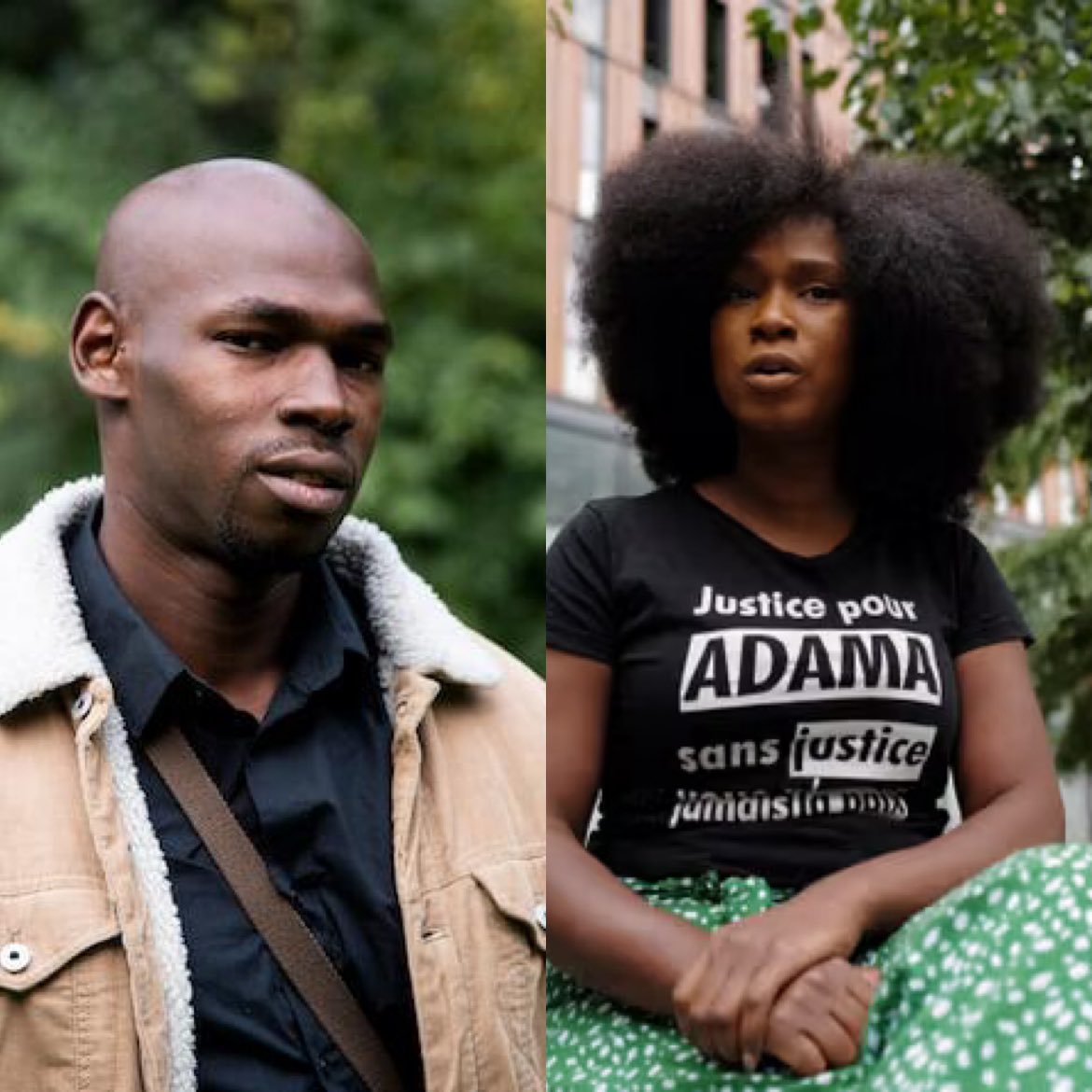
Guillaume Herblot stated that Bagui Traoré had been the subject of 20 convictions, including five for extortion. He indicated that the most recent conviction was pronounced on October 28, 2026, in Pontoise: two years in prison for an attempted extortion targeting a resident of Beaumont-sur-Oise who had just won €120,000 in bets. According to Herblot, Bagui Traoré was banned from staying in Val-d’Oise and was already incarcerated before this conviction, particularly for acts of extortion aimed at women under guardianship, threats against a witness of his trial, and violence against law enforcement. Herblot also criticized the support provided since 2016 by La France insoumise and part of the left to Assa Traoré, especially during meetings and through T-shirts demanding justice for Adama. He recalled that the dismissal in the case of Adama's death had, according to him, been confirmed on appeal and then in cassation. He stated that the convictions targeting family members made it difficult to present them as a national icon of innocence and wrote that this narrative had its limits. #JusticePourAdama #Traoré #Extorsion (translated)
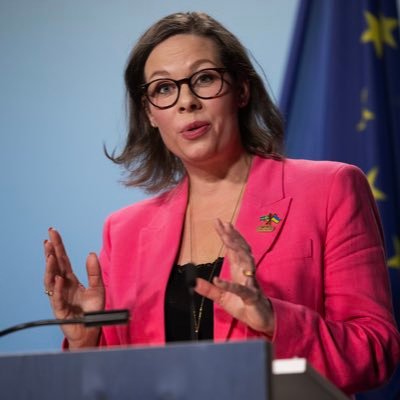
The author described the day as important for Hungary and Europe, writing that 70 years had passed since Hungarians stood up to Soviet oppression and fought for their country’s freedom. They said they were honoured to represent Sweden in Budapest for the occasion. https://t.co/u5Lko3VAhH #Hungary #Freedom #History #HU #SE

The author wrote that Hungarians had stood up to an empire in 1956, facing tanks and oppression in their pursuit of freedom. They said this showed Hungary would fight for its freedom rather than surrender its future. The post then began to refer to “70 years later” but did not complete the thought. #Magyarország #Szabadság #Történelem #HU
Honoured to attend the commemorations of the 1956 Hungarian Revolution in Budapest. 70 years ago, Hungarians rose up against oppression. They fought for freedom, democracy and justice. The very values at the heart of Europe today. Their courage lives on.

The author wrote that Hungarians had risen against communist oppression for freedom 70 years earlier. Citing Hungary’s Fundamental Law, the author said the country’s current liberty had been born of the 1956 Revolution and argued that the revolution remained a reminder to defend freedom as what the author described as communism’s “dark reflexes” cast a shadow once more. https://t.co/huJU7VjOb9 #Szabadság #1956 #Történelem #HU (translated)


Nicola Bressi wrote that most of those who had called for rebellion, arguing that the people oppressed by the system should resort to violence, were composed of anonymous users. He added that those same users claimed that an oppressed and invaded nation should instead submit peacefully, and he noted that the contradiction was evident. #Oppressione #Rivolta #Giustizia (translated)
Lorenzo Kamel had written that, perhaps, for many he represented the symbol of the oppressed and their denial: people whom, in his opinion, much of politics and journalism noticed only when they became a media case. #oppressione #giustizia #dirittiumani (translated)
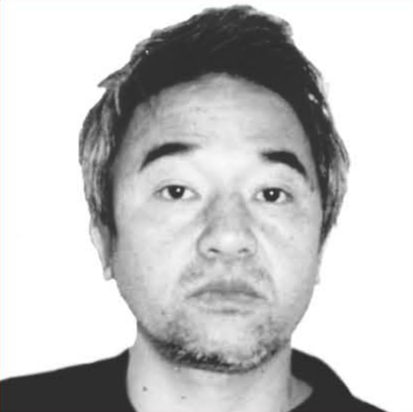
Kozo Okamoto: I dedicated my youth to the Palestinian cause. As long as there is oppression, resistance will not only be a right but a duty. #RimaHassan #ApologieDuTerrorisme #LFI (translated)





