BETA nonprofit public democratic european moderated

Search

#treat

I ACCUSE SERBIA OF GENOCIDE AGAINST ALBANIANS IN 1877–1878. The Serbian state expanded southward during the Serbian–Ottoman War and then secured its territorial gains at the Treaty of Berlin in 1878. Under Prince Milan Obrenović and Prime Minister Jovan Ristić, tens of https://t.co/hfD7i6OaEA #Genocide #Serbia #Albania #RS #AL

Europe’s defense industry is no longer protected by geography or passports. When a quiet engineer in Bavaria must write his will and live underground, the war has already arrived inside our borders. This is the new normal Moscow is testing. How many more names before we treat #Defense #Europe #WarCrime #DE #RU

Kim Jong-un has always treated me with great respect. I understand him. He understands me.

South Korea and Japan stress stress 'critical' US alliance as Trump slashes military drills
www.euronews.com

Yep. I’ve mentioned this to UK policymakers & they seemed genuinely surprised. It’s not just tariffs & treaties, this is the stuff of people’s lives - for us & our kids, on both sides of the channel. If @andyburnham‘s govt understands that they’ll get a better deal on the rest #UKPolicymakers #Brexit #PeopleFirst

Alliances don’t die from withdrawal from treaties. They die when members stop believing the security guarantees are unconditional — and when each one starts calculating its own bilateral odds instead of trusting the alliance itself. - @IvoHDaalder #Alliances #Security #Trust #Thetweetdoesnotmentionanyspecificcountries.Therefore #therearenocountrycodestoreturn.

"If the mark of a 'civilised society' is how it treats its most vulnerable members, then the lack of care shown towards adults with intellectual disabilities marks out this state as a profoundly uncivilised one." https://t.co/k7EIiQGkSz #IntellectualDisabilities #CivilRights #VulnerableMembers #Thetweetdoesnotmentionanyspecificcountries.Therefore #therearenocountrycodestoreturn.

Bonnie Tyler75, Welsh singer best known for “Total Eclipse of the Heart,” died unexpectedly in a hospital in Portugal, where she had been receiving treatment following emergency intestinal surgery. I loved her voice and energy. The other I loved from Whales was Richard Burton RIP https://t.co/exGpXjkrtc #BonnieTyler #RIP #WelshSinger #PT #GB

Wow: AI vs primary care physicians in simulated video consultations. AMIE (Video) performed as well as or better than PCPs across several clinical competencies - though this does notmean AI is ready to independently treat real-world patients. Clinical reasoning: 90% vs 76% https://t.co/TR17hgH2hd #AI #Healthcare #Telemedicine #Therearenospecificcountriesmentionedinthetweet.

It beggers belief that the Irish Government can be so openly Zionist in their treatment of Palestinians. Just as they've helped fund the Israeli Genocide by continuing to do Business with Israel... #IrishGovernment #Palestine #Zionism #IE #IL #PS

2. His offense: being “inconvenient to the regime.” First they write the list. Then they send the man. The former blacklist has become an operational hitlist. Europe must treat it as one. A key front of the Russia dirty war. #Russia #Hitlist #Europe #EU #RU

Here's another brilliant piece by a Black (ex-)academic describing his experience of being treated like a mascot by his white liberal colleagues, and why he (@Tyler_A_Harper) eventually left his tenured job. It’s mind-boggling. Both this piece and the one above also refute the #BlackVoices #AcademicFreedom #RacismInAcademia #Nospecificcountrycodesarementionedinthetweet.

Novo Nordisk's clinical trial for Ziltivekimab, an antibody targeting pro-inflammatory cytokine IL-6, failed 👀 Interestingly, both IL-6 and hsCRP fell with treatment, suggesting an anti-inflammatory effect, yet this did not translate into fewer cardiovascular events. https://t.co/jSZTM1Qxad #NovoNordisk #Ziltivekimab #ClinicalTrials #Nospecificcountriesarementionedinthetweet.

Saw an interesting @edfringe show yesterday, Breathe. Soprano Katy Lees was diagnosed with mesothelioma & given months to live. 20 years later, she tells her story through 5 arias that helped her get through the lows and highs of diagnosis, treatment & recovery. An inspiring https://t.co/ROdwSOyKFY #edfringe #Breathe #mesothelioma #Nospecificcountriesarementionedinthetweet.

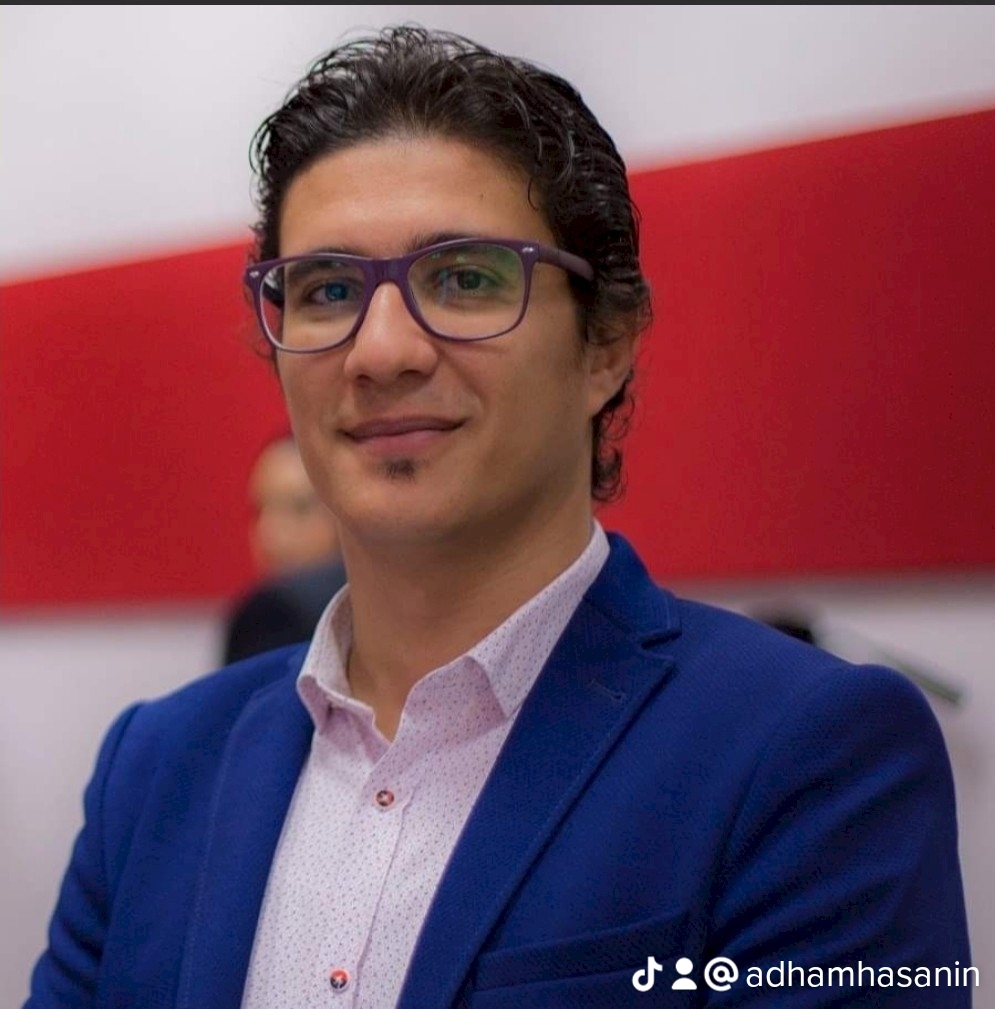
A Crown Instead of the Barracks: An Idea From Outside the Box Could Egypt’s exiled opposition use constitutional monarchy to dismantle the legitimacy of the 1952 coup? By Adham Hasanin Egyptian journalist and political writer, based in the Netherlands To understand what follows, a reader unfamiliar with Egypt needs one basic fact: since 1952, Egypt has never been governed by anyone who did not first wear a military uniform. Gamal Abdel Nasser, Anwar Sadat, Hosni Mubarak, and today Abdel Fattah el-Sisi four men, four eras, one common origin. All rose through the armed forces. All inherited a state built by a coup that year, when a group of officers calling themselves the "Free Officers" overthrew King Farouk I and, within a year, abolished the monarchy altogether and declared a republic. For seventy-three years, the underlying equation has not changed: the army rules, power passes from one officer to the next, and legitimacy is drawn from the barrel of a gun rather than the ballot box. Every conceivable form of opposition has been tried legal parties and banned ones, Islamist movements, liberal and leftist coalitions, the 2011 popular uprising, and the 2013 elections whose result was overturned by force within a year. All of them hit the same wall: a military institution that reproduces itself under different names, while the core of the system remains untouched. So what if the problem, all along, has not simply been who rules, but the constitutional framework that makes military rule possible in the first place? And what if the answer lies not in swapping one president for another, but in dismantling the underlying equation itself, through a framework Egyptian opposition movements have never seriously tried: a purely ceremonial constitutional monarchy, on the model of Belgium, the Netherlands, or Spain where the head of state becomes a symbol above the political fray, while the army is permanently expelled from politics and returned to its barracks. This is not a call to revive a particular family, nor nostalgia for a golden age that never quite existed. It is a proposal for a political and strategic tool that has not yet been used in the intellectual arsenal of Egypt’s opposition in exile a tool that deserves serious discussion, regardless of whether it is ever literally realised or simply serves to expand the boundaries of what is politically thinkable. I. Why 1952, Not 2013 or 2011, Is the Root The strategic error made by most Egyptian opposition movements from the Muslim Brotherhood to the April 6 Youth Movement to the various civil opposition parties has been treating each political crisis as an isolated case: Mubarak was corrupt and had to be toppled; Sisi staged a coup that must be condemned; the interim military council was a transitional phase to be endured. This piecemeal approach treats the symptoms while leaving the original illness untouched. That original illness is the very structure of legitimacy established by the coup of 23 July 1952. The Egyptian republican system, from Nasser to today, has never built its legitimacy on a genuine democratic social contract. Instead, it has rested on a fixed trinity: the rhetoric of "revolution against feudalism and colonialism," charismatic individual leadership, and military protection of the regime framed as the guarantor of stability. This trinity has repeated itself from Nasser to Sadat to Mubarak to Sisi, with only cosmetic variations. Each new president was never a break from the system he was its continuation. When the opposition says "let us return to the constitutional framework that preceded the coup," it is not criticising a particular policy. It is declaring that the legal foundation of everything that came after 1952 was illegitimate from the start. Here lies the rhetorical power of "returning to the pre-1952 order": it does not merely demand swapping one ruler for another. It withdraws historical legitimacy from the entire republican military system including today’s regime, which draws its own declared legitimacy from that same "1952 legacy." II. Why a "Ceremonial Crown," Not "the Return of a Ruling Family" Here is the most important distinction anyone advocating this idea seriously must grasp: the project does not rest on restoring any particular individual from the Muhammad Ali dynasty, nor on nostalgia for King Farouk or his ancestors. The real power of the idea lies in the constitutional form, not in the person who happens to sit on the throne. Three successful European democracies illustrate the model clearly. Belgium, where King Philippe is a purely constitutional symbol with no real executive power, while the state is run through an elected parliament and a complex coalition government reflecting the country’s linguistic and political diversity. The Netherlands, where King Willem-Alexander formally opens the parliamentary year and signs laws, but where actual decision-making rests with the prime minister and the elected parliament. And Spain, where the king represents symbolic continuity of the state above party politics, while the military and security services answer entirely to civilian authority a transition achieved after the death of the dictator Francisco Franco in 1975, when King Juan Carlos I voluntarily relinquished the extensive executive powers he had inherited and backed free elections, most dramatically in February 1981, when he personally ordered the armed forces to remain loyal to the constitution during an attempted military coup, causing it to collapse within hours. The common thread across these three models is not "the presence of an ancient royal family." It is the principle of separating symbol from power. The monarch in these countries does not rule; he represents. He issues no political decisions; he provides the continuity and symbolic stability that allows party political competition to revolve beneath him, without every transfer of power becoming an existential crisis of legitimacy. This is precisely what Egypt’s military republican system lacks: a neutral mechanism for guaranteeing state continuity that does not depend on the person of the ruler or his security apparatus. When Egypt’s military-republican president is absent, it is always the army that fills the vacuum, because it is the only institution built to be the "guarantor of stability." Under a ceremonial monarchical model, by contrast, it is the king not the army who represents that symbolic guarantee, genuinely opening the door to removing the military institution from the political equation altogether. III. Egypt’s Standing Under the Monarchy: An Honest Reckoning, Not Blind Nostalgia For a Western reader with little prior knowledge of Egypt’s monarchical period (1922–1952), it helps to know this: Egypt was nominally independent under its own king from 1922, but Britain retained enormous informal control over the country’s foreign policy, military bases, and the Suez Canal throughout the period a reality that shaped everything that follows. Any honest invocation of "Egypt’s standing under the monarchy" must avoid the trap of mythologised nostalgia that many advocates of this idea fall into. Egypt in that era was no lost paradise, and any honest article must say so plainly. The Egyptian pound, for instance, often invoked as a symbol of "national currency strength" in that period, was not strong because of independent Egyptian monetary policy. It was pegged to the British pound sterling as part of Egypt’s complete colonial financial dependency until 1947, with Egypt exercising no independent oversight of its own currency whatsoever. The pound’s strength, in other words, was not a sovereign Egyptian achievement it was a reflection of British imperial power ruling Egypt from behind the throne. But this does not mean Egypt lacked a genuine regional standing worth studying. Cairo, in the 1930s and 1940s, was the undisputed cultural capital of the entire Arab world: the Egyptian film industry produced more than half of all Arabic-language cinema; its theatre scene, led by figures like Youssef Wahbi and Naguib al-Rihani, and its music, with Umm Kulthum and Mohammed Abdel Wahab, set the standard across the region; Cairo University was the first modern university in the Arab world; and the Egyptian press was the reference point for Arab public opinion from the Atlantic to the Gulf. Cairo was, quite simply, to the Arab world what Paris was to Francophone Europe: an unrivalled centre of cultural and intellectual gravity. This standing was not necessarily a product of monarchy itself, so much as a product of a relative space of political and press pluralism that allowed Egyptian civil society to flourish, despite all the flaws of the political system and the interference of both palace and occupier. The lesson here is not "bring back the king and the standing will return." It is: when even a limited margin of civic freedom exists, Egypt flourishes culturally and intellectually almost by its own nature. And that margin is precisely what has been entirely absent across the past seven decades of unchallenged military rule. IV. What Reform Would Actually Require Not Repeating the Old Mistakes Any serious advocacy of this model must include, even briefly, a clear vision for avoiding the flaws of the old monarchical system itself otherwise the proposal collapses into simply replacing one form of authoritarianism with another wearing a different crown. First, the armed forces would need to be placed fully under a civilian ministry of defence, with its budget subject to transparent parliamentary oversight the exact opposite of its current status as a state-within-a-state, and equally opposed to its role under the monarchy, when it often served as an instrument of British influence. Second, a judiciary fully independent of both palace and government alike, unlike the old model, which saw direct royal interference in political life as when King Fuad I dismissed the elected government of Prime Minister Saad Zaghloul’s successor, Mustafa al-Nahhas, in 1928, in one of the clearest "constitutional coups" in modern Egyptian history. Third, a parliament that genuinely represents the people rather than landowners and the aristocracy, as was the case before 1952, when membership in the Senate was effectively conditional on the ability to pay land taxes meaning political representation was, by law, restricted to the wealthy. Fourth, genuine economic sovereignty, with a truly independent national currency rather than one pegged to a foreign power’s currency, unlike the historical dependency of the Egyptian pound on sterling. These four principles are enough to clarify that the project on offer is not a literal "return to the past," but a borrowing of the constitutional form (symbolic monarchy) combined with an explicit rejection of its old substance (colonial dependency, palace interference, parliamentary feudalism). V. The Role of Egyptian Movements in Exile: Between Goal and Instrument This raises the most practical question of all: how might Egypt’s opposition abroad actually adopt this idea, and in what capacity? The honest answer is that the power of this proposal does not necessarily lie in its literal fulfilment, but in its dual strategic function. On one hand, it can be advanced as a genuine political goal adopted by broad coalitions of Egyptian movements coalitions that might include Islamists, liberals, leftists, and traditional monarchists, united around a single shared premise: rejecting the legitimacy of the 1952 order and everything that followed from it, even if they later disagree over the precise final shape of the state. On the other hand and this matters more in practice the idea can be deployed as a rhetorical instrument of pressure to widen a Egyptian political debate currently trapped between two false choices: "continued military rule" or "no alternative, chaos awaits." When the opposition puts forward a clearly defined third model a European-style constitutional monarchy it breaks this false binary and opens new intellectual space in Egyptian public discourse, even if the project is never realised in its literal form. This kind of "leverage idea" is common in the history of political movements worldwide: it is not necessarily proposed to be fulfilled immediately in full, but to redraw the boundaries of the politically possible, and to force the existing regime to defend its legitimacy rather than simply assume it. Conclusion: An Invitation to Debate, Not a Ready-Made Prescription This article does not claim that restoring a monarchical form would magically resolve Egypt’s chronic crisis of legitimacy, nor does it ignore the immense difficulties facing any transformative project under a military institution as economically and securitywise entrenched as Egypt’s is today. But it raises a question that deserves serious debate among Egypt’s opposition in exile, rather than automatic dismissal simply for being unfamiliar: Has the Egyptian opposition exhausted every available tool for dismantling the legitimacy of 1952, or has it remained trapped in the same old binary swapping one ruler for another while the framework that makes military rule possible remains untouched? The idea is on the table now, not as a finished solution, but as an overdue invitation to think outside the box.

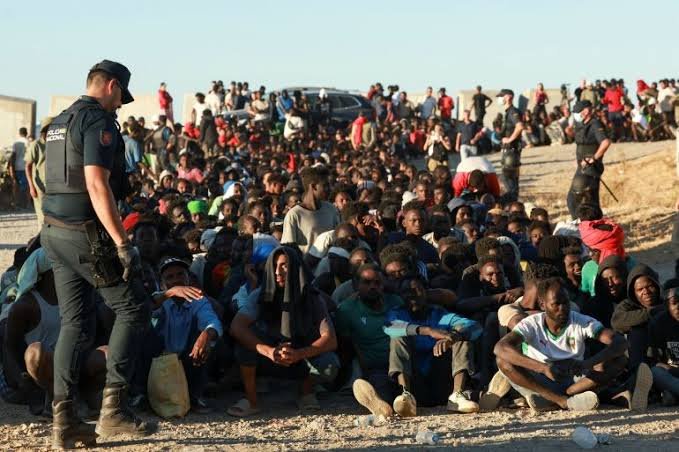
In these increasingly confrontational times, weaponized migration should be treated as a form of hybrid warfare. Europe needs a common mechanism for temporarily closing its external borders when operations like the one in Ceuta occur. Malign actors are exploiting migration to https://t.co/M5I0DcIjB8 #HybridWarfare #MigrationCrisis #BorderSecurity #ES #EU

The Horizon of Reason: Finding Meaning in Atheism. Good day, everyone. When people hear the word "atheism," they often think of what it lacks. They focus on the prefixes and the definitions: a lack of belief in a deity. But to view atheism only as an absence is to miss the entire landscape of what it actually builds. Today, I want to talk about atheism not as a void, but as a vibrant, deeply responsible, and profoundly hopeful way of looking at our universe. At its core, atheism is a commitment to radical honesty. It is the decision to look at the vast, beautiful, and sometimes terrifying cosmos and say, "I do not know all the answers, and I will not invent stories to fill the gaps." Atheism relies on evidence, reason, and the scientific method. It is driven by the same curiosity that makes a child look through a microscope or a scientist peer through a telescope. It embraces uncertainty. In uncertainty, there is room for growth, discovery, and learning. When we accept that we do not have a cosmic blueprint, we become actively responsible for writing our own stories. A common misconception is that without a divine entity, there can be no morality. But atheism flips this dynamic. It suggests that kindness, empathy, and justice do not come from a fear of cosmic punishment or a desire for a heavenly reward. They come from us. We are kind to one another because we are social creatures who share this planet. We care for the sick because we know what pain feels like. We fight for justice because we want to live in a fair world. Our morality is human-centered. It is born from the profound realization that this life is all we have, and therefore, how we treat each other right now matters more than anything else. To an atheist, this life is not a dress rehearsal for an afterlife. It is the main event. This realization does not make life meaningless; it makes life infinitely more precious. Think about a rare gem. It is beautiful precisely because it is scarce. In the same way, a single human life—spanning just a few decades on a tiny blue planet—is a rare, breathtaking miracle of biology and physics. Because we believe this is our only chance, the time we spend with our families, the art we create, and the love we give become urgently important. We cannot afford to waste a single day. Atheism is not about tearing down anyone else's faith. It is about building up human potential. It is the belief that humanity is strong enough, smart enough, and kind enough to navigate the dark corners of the universe together, guided by reason and compassion. We are the authors of our purpose, the journey, life itself. We are the guardians of this planet. And we are the keepers of one another. Thank you.

I experienced significant blood loss and my treatment and recovery will be a long process.

Perez Hilton faces long recovery after self-harm livestream
www.bbc.co.uk

Many medical professionals are prepared to have an honest conversation about adverse effects of drugs like penicillin but treat vaccine harms as a taboo topic. We need to turn the page. #VaccineDebate #MedicalTransparency #HealthConversations #Therearenospecificcountryreferencesinthetweetprovided.Hence #nocountrycodescanbereturned.

Ο υπουργός @AdonisGeorgiadi δεν έχει τολμήσει να απαντήσει από χθες που μετά από μήνες σιωπής, τελικά δυστυχώς αποφάσισε να υιοθετήσει τα ψέματα της διοικήτριας και να την καλύψει πλήρως. Ξαναδημοσιεύω λοιπόν ένα - ένα τα 18 επίσημα έγγραφα σκανδαλώδους απευθείας ανάθεσης ύψους 450 χιλιάδων ευρώ σε μια μόνο συγκεκριμένη προμηθεύτρια εταιρεία ("GENESING TREATMENT") για ... "καθαριστικό με θαλασσινό αλάτι" ( ; ). Τα έγγραφα αυτά έχουν τεθεί υπόψιν του υπουργού εδώ και ένα μήνα. Αποτελούν ΚΑΤΑΤΜΗΣΗ (σε 18 "κομμάτια") μιας και μόνο απευθείας ανάθεσης κάτι που είναι προδήλως παράνομο διότι σύμφωνα με τον νόμο θα έπρεπε να έχει γίνει ανοικτός διαγωνισμός για την προμήθεια των συγκεκριμένων "καθαριστικών". Επίσης υπόψιν του υπουργού έχουν τεθεί εδώ και πάνω από δυο μήνες άλλα επίσημα υπηρεσιακά έγγραφα που τεκμηριώνουν ότι η διοικήτρια έχει αναστείλει τις παραγγελίες απαραίτητου αναλώσιμου υγειονομικού υλικού και τροφίμων. Επίσης έχει αναστείλει παραγγελίες αναγκαίας συντήρησης ιατροτεχνολογικού και λοιπού εξοπλισμού. Αφού λοιπόν ο υπουργός πρώτα σιώπησε επί μήνες, τελικά χθες αποφάσισε να υιοθετήσει δημοσίως υπό την υψηλή πολιτική του προστασία όλα τα καμώματα της διοικήτριας. Άρα αυτονόητα ο υπουργός καθιστά εαυτόν συνένοχο στην παρανομία κατασπατάλησης δημοσίου χρήματος υπέρ μιας μόνο συγκεκριμένης προμηθεύτριας εταιρείας, δημόσιο χρήμα που ληστεύθηκε σε βάρος ζωτικών λειτουργιών του νοσοκομείου. #ΔημόσιοΧρήμα #Διαφάνεια #Υγεία