WRLD

Search

#ÖGNI
L
lastampa.it 2h

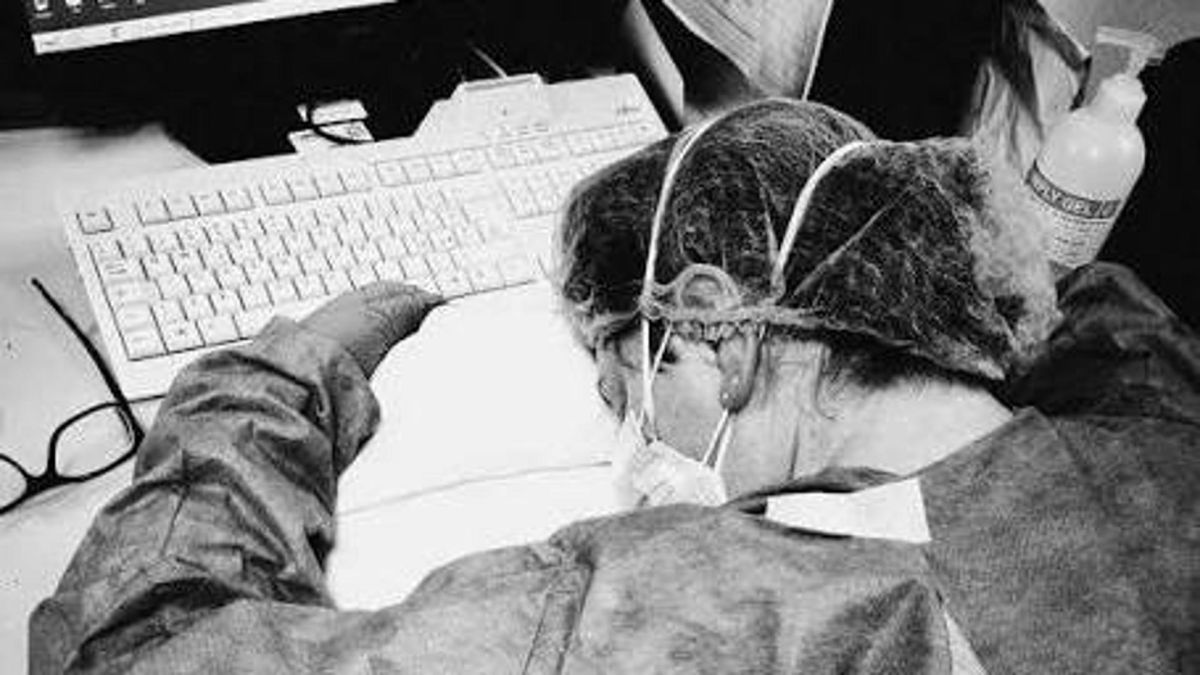
The inefficiency of the Italian pandemic plan has emerged with the reduction in the number of doctors and hospital beds, with facilities offering only three beds for every thousand inhabitants and a shortage of 73,000 nurses. #Covid19 #Sanità #Pandemia (translated)

www.lastampa.it
Covid, lezione dimenticata: Piano pandemia al palo, ridotti medici e posti letto
1181
Papa Leone XIV 4h

Pope Leo XIV wrote that doing good required countering violence with charity and corruption with honesty. According to him, taking care of people favored the rebirth of the earth, and the culture of charity could heal the moral pollution, which he identified as the cause of the wounds inflicted on the "common home." The message was accompanied by the hashtags #ApostolicJourney and #Peru. #ViaggioApostolico #Perù #Carità #Onestà #Cultura (translated)

1743
Marmitta 10h

Marmitta had hypothesized the scenario, presented as a conspiracy theory, of a global cyber attack that the following day would target the bank accounts of billionaires to redistribute their wealth. He had asked his followers what their first purchase would be, inviting them to respond on impulse. #complotti #ricchezza #hacker (translated)

1890
Papa Leone XIV 10h

Pope Leo XIV wrote that religious festivals, pilgrimages, and processions were not merely cultural manifestations: in his opinion, they expressed a community in search of God and the closeness of a friendly voice from heaven. The message was accompanied by the hashtag #ApostolicJourney and a reference to Peru. #ViaggioApostolico #Perù https://t.co/vIENwVuAza #FestaReligiosa #Pellegrinaggio #Comunità (translated)

2116
ANSA.it 13h

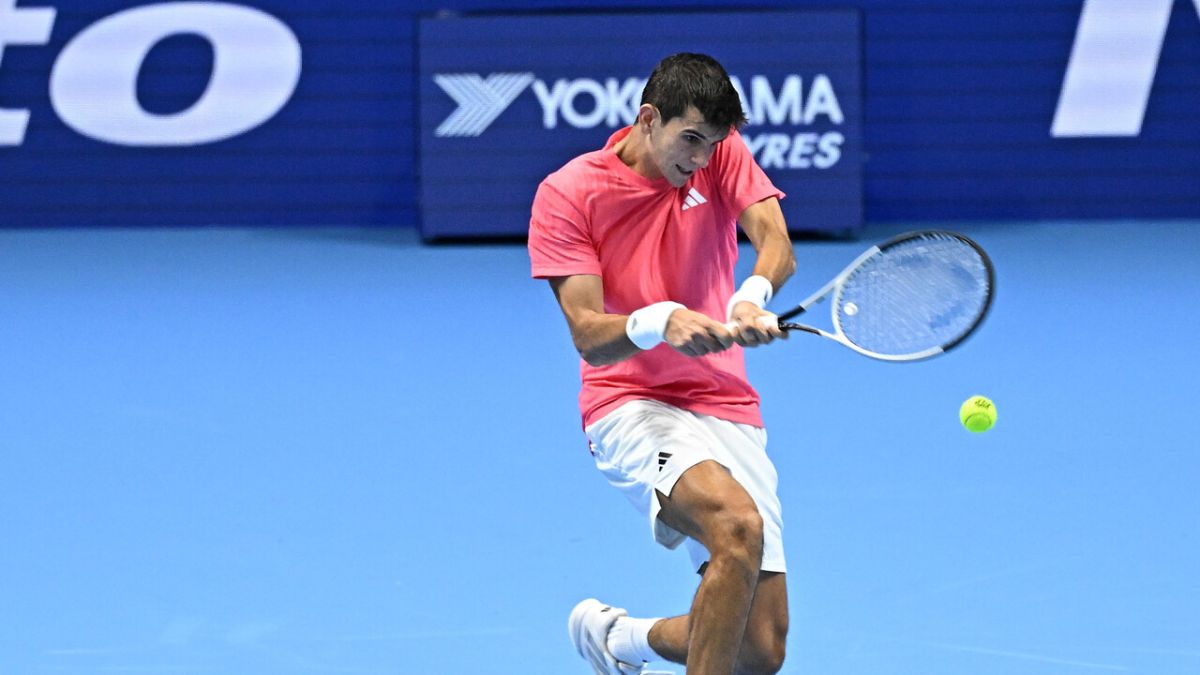
Rafael Jodar, a young Spanish talent, stated that he still feels he is in a phase of growth despite his defeat in his debut against Alexander Zverev at the ATP Finals, emphasizing that his goal is to improve every day and in every tournament. #AtpFinals #RafaelJodar #Tennis (translated)

www.ansa.it
Atp Finals, Jodar: 'Sono ancora giovane e credo di poter migliorare molto'
1853
𝒜𝒮𝒫𝐼𝒟𝐸 𓆙 14h

The author wrote that one should consider the "victims" false, as some choose to defend them every year to cleanse their conscience and hide their own hypocrisy, adding that they have always seemed unbearable to him. He concluded by wishing a good Sunday. #ipocrisia #vittime #buonadomenica (translated)

2049
Il Messaggero 17h

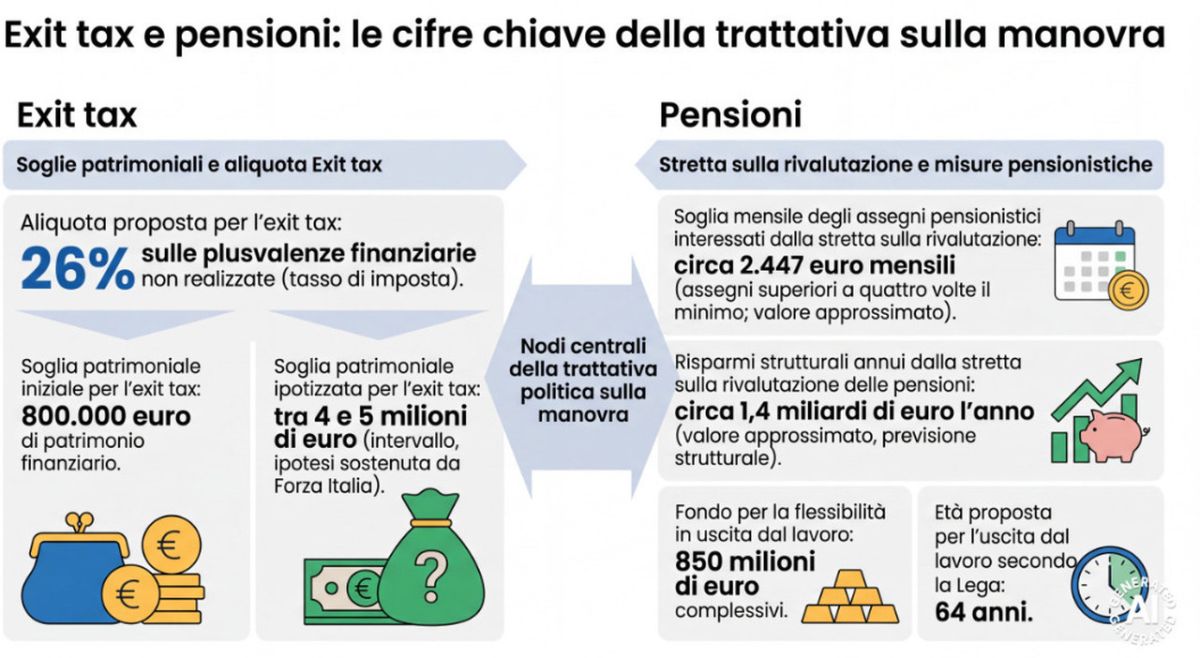
The Italian government is planning changes to the Budget Law, touching on issues such as pensions, tax exits, the Superbonus, and healthcare, while ensuring that each intervention respects the established financial balances. #Manovra2026 #Pensioni #Superbonus (translated)

www.ilmessaggero.it
Manovra, dalle pensioni al nodo exit tax: cosa può cambiare. Le modifiche anche su Superbonus e scuola
2401
Elly Schlein 18h
Italian politician

"If we want to overcome the resistances that sometimes exist in the territory - adds Schlein - we need to change this model and involve them." #Milano #Sanità #Rinnovabili (translated)

2171
Lunacharsky 20h

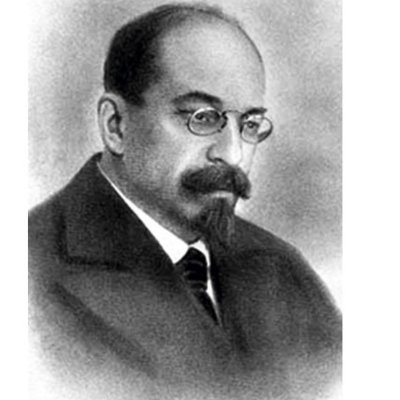
Lunacharsky wrote that in Poland a Telegram channel had been discovered which, according to him, paid $500 for every Soviet monument defaced with Ukrainian nationalist writings. He argued that the goal was to fuel public resentment against Ukrainian immigrants. https://t.co/yJcsfmv0AS #Polonia #Ucraina #Monumenti (translated)

2317
Tatiana 1d
Mexican singer

Tatiana, 45 years old, an employee in a public office, has two children, 7 and 8 years old: "The school as we knew it is no longer there. At every alarm, those at home can choose to ignore it, but teachers have to take students to the shelter, and since there aren't enough shelters for all classes, it has been decided to alternate teaching, one week at school and two connected from home, resulting in all children, even the youngest, having to have a cellphone to monitor alarms through apps but also to follow lessons, updates on assignments, whatever is needed when it is needed." #Ucraina #Guerra #Kiev (translated)

2101
Alessio Piana 2d

Alessio Piana recalled that Marc Marquez had officially debuted as a MotoGP rider 14 years earlier, in the Valencia tests, on the Honda RC213V. Due to the track conditions, he had only gone out at 15:28; on the fourth lap, according to Piana, he was already 2 seconds behind Pedrosa. He had concluded the day in seventh place with a time of 1'33"403, 1"081 from the new teammate, who had recorded a time of 1'32"322. Piana reported that Marquez had said he had waited a long time before trying, and that, initially, he struggled to manage the power of the MotoGP and the front lifting on the straight. However, he gradually found confidence, improving his times with every outing. The rider also explained that he needed to adapt his style compared to Moto2 and that he still needed to understand the sensations offered by the front end, which was different from that of the previous category; he had described the start of the new adventure as positive. #MotoGP #MarcMarquez #ValenciaTests (translated)

3120
Papa Leone XIV 2d

Pope Leo XIV wrote that the promises of transhumanism and posthumanism envisioned a future in which technology would eliminate diseases, pain, aging, and death. He argued that scientific progress, while the result of human intelligence, should not become a privilege for billionaires seeking immortality while entire peoples lived in misery and oppression. He also criticized the idea of perfected human beings through cybernetics and biotechnologies, stating that, according to Christian anthropology, limits were not defects but part of human greatness. #ViaggioApostolico #Perù #MagnificaHumanitas https://t.co/N5IEKLbWkH #Transumanesimo #Postumanesimo #Antropologia (translated)

3556
Friedrich Merz 2d
German politician, Chancellor of the Federal Republic of Germany

To the USA I ask: no more surprises, work as a team with us and with Ukraine. There is no need to discuss it, "it already exists," it was Russia "that destroyed" the Helsinki peace order, Merz thundered, recalling the 1975 multilateral agreement according to which every country has the right to choose "its own alliances" (within a framework of indivisible security). #Russia #Ucraina #Nato (translated)

2895
Luciano Magaldi Sardella (PhD) 2d

"GAZZETTA H24": STREET ART, STORNARA JOINS THE WIPO REPORT ALONGSIDE THE GREAT CITIES OF THE WORLD SOURCE: https://www.gazzettah24.it/street-art-stornara-entra-nel-rapporto-wipo-accanto-alle-grandi-citta-del-mondo/ ------------------------------------------------------------------- From "ghost town" to global model cited in Geneva: the cultural bet of Stornara Life APS captures the attention of WIPO. --------------------------------------------------------------------  STORNARA (FG) - There is a Southern Italy that makes little noise. It lies among the fields of wheat and rural roads of Capitanata, far from the main routes of mass tourism. Until a few years ago, Stornara, in the province of Foggia, was the typical town that statistics dismiss with a cruel adjective: "peripheral." Today, its name appears in an analysis from WIPO, the "World Intellectual Property Organization", the United Nations Agency in Europe based in Geneva. "Stornara Life APS" alongside Berlin, New York, Los Angeles, Paris, and Melbourne. ------------------------------------------------------------------ A report that looks at the walls of the world The text is titled "From Local Scenes to Global Recognition: Talent Mobility in Street Art". It is authored by three WIPO economists, Egbert Amoncio, Alexander Cuntz, and Alessio Muscarnera, and has been published in the "Creative Industries Insights" series. To build it, the authors started from data from the "Street Art Cities" platform. The technical note talks about approximately 74,000 geolocated works, collected and shared by street art enthusiasts worldwide. The fundamental questions are simple. Where does street art originate? Who travels to paint it? Which cities manage to attract outside talent? The first answer dismantles a common misconception. Street art is a profoundly local phenomenon. About one in five artists also works abroad, while the vast majority paint in their own city or in nearby ones. Among the few who cross borders, almost 40 percent are "highly mobile": they build an international artistic brand without severing their roots. These include the cases of Banksy, Os Gemeos, and Invader, whose walls appear on multiple continents. The authors use an effective term: street art is "glocal," rooted in its territory but capable of generating global circuits of talent and recognition. -------------------------------------------------------------------- The magnets of the world When asked which cities attract the most foreign artists, the map is fascinating. North America weighs heavily, with New York, Los Angeles, and Miami. Western Europe offers a dense network of opportunities, from Berlin to Amsterdam, from Vienna to Ghent, from Basel to Rotterdam, favored by the festival circuit and the freedom of movement within the Schengen area. Lisbon and Barcelona have focused on municipal support policies. Melbourne is the only representative from Oceania, and Northern Europe relies on Bergen, London, Belfast, and Stavanger. In this scenario of capitals and metropolises, the report includes an Italian exception, from Puglia, Foggia: Stornara, a small agricultural town of about 6,000 inhabitants, has been a destination for mural talents since 2018. It shows how street art can spark the rebirth of a community: thanks to the annual "Stramurales International Street Art Festival," born in 2017 from the strong will to combat urban and socio-economic decline by the founders of the social promotion association "Stornara Life APS,” Lino Lombardi and his local "Banda dei Fischietti," it has accumulated over 173 murals. About fifty of these are works by high-level international artists, with Google Trends data since 2017 showing notable interest in the mural tourism destination, indicating that the international festival has now captured national and international attention. It has also become the first academic case study in the world on a street art festival, "Street Art as Public Health Infrastructure," published in the prestigious academic journal "Harvard Health and Human Rights Journal" from Harvard University. Written by researcher Luciano Magaldi Sardella from Orta Nova and professor Matteo Mantuano from Lucera, this corresponds to the demonstration that an idea, an association, and the willingness of a community can change the identity of a place "forgotten by God." This is also recounted by those who have followed the story from the outside: the town, once little accustomed to visitors, now welcomes international tourists, individuals, groups, and schoolchildren who come to see its over 173 murals. ----------------------------------------------------------------- The secret is in density The data that has sparked pride in Stornara is this: it's not the volume that matters, it's the proportion. The organizers propose a simple indicator: works by foreign artists divided by the number of residents, multiplied by 100,000. With about over 50 international works and a population of a few thousand residents, Stornara reaches several hundred foreign works for every 100,000 inhabitants. This is a value that metropolises, with millions of residents, cannot approach. The meaning must be read accurately, and this is where the beauty of the matter lies. No one claims that Stornara has more foreign murals than New York. The point is that, in relation to its scale, few places in the world concentrate so much international art per inhabitant. The impact does not disperse in a megalopolis: it settles in every street, on every facade, in the daily life of those who live there. The most interesting part of the report looks beyond the ranking. The authors write that the value of street art extends well beyond the painted surfaces. Cities like Stornara demonstrate how urban art attracts tourism, generates media coverage, and can stimulate local businesses while strengthening community bonds and restoring the psychosocial well-being that could counter the perpetual Southern decline. However, the report adds a valuable warning: success depends on careful implementation and the involvement of artistic communities. Top-down initiatives risk being perceived as "predatory" by artists who care about the credibility of street art. The global model Stramurales appears to have avoided this pitfall. Field studies tell of walls donated by residents, week-long artist residences, and public discussions on the themes to be addressed. -------------------------------------------------------------------- The lesson of a town The report concludes with an idea that holds true for both Stornara and Berlin: the vitality of street art sinks its roots in local contexts. It arises from communities, speaks of their problems, and is made by artists immersed in their urban environments. The artistic family of "Stornara Life APS" understood this before many regional and local politicians, creating their walls into an open-air museum, a promise, and opening them to the world without ceasing to be themselves. In this official report from the Geneva Agency of the United Nations in Europe that measures the ability to attract talent, this results in, perhaps, the most precious value. Being cited alongside the great capitals of urban art while remaining, after all, a rural provincial town where every wall tells a colorful world of glocal stories. (translated)

www.gazzettah24.it
Street art, Stornara entra nel rapporto WIPO accanto alle grandi città del mondo
223
Marco M.M. 2d

Marco M.M. wrote that temperatures would drop especially in the North, with a more significant decrease in the northeastern regions and along the central-northern Adriatic coast. In the rest of Italy, according to the author, the cooling would be more contained, with maximum temperatures still between 17 and 20°C in several regions. He also predicted the arrival of an Atlantic disturbance on Sunday and a new worsening of the weather, describing November as characterized by the alternation of mild and cool days, clearings, and rain. #MeteoItalia #Autunno #Temperature (translated)

2897
Il Sole 24 ORE 3d

The new fund "Value for Newborns" provides a state contribution of 100 euros per year for each newborn, but according to Bankitalia, it could benefit higher-income families more, unlike the previous Child Trust Fund in the United Kingdom, which supported low-income families more. #CongressoSIN #FondoNuoviNati #RisparmioFamiliare (translated)

www.ilsole24ore.com
Fondo nuovi nati, possibili effetti regressivi: così il Regno Unito favoriva i redditi più bassi
3016
Double 3d

Duca wrote that Esposito, at 21 years old, had scored 9 goals in 12 matches. He recalled that in the past he had been mocked for stating that, except for Roma, the player would be a starter and captain in every Serie A team, and he referred to him as "God Esposito." https://t.co/dMCc0Qa1AH #SerieA #Calcio #DioEsposito (translated)

2681
Heather Parisi 🤐 3d

Heather Parisi had written that the daily alarms about the presence of the Chinese in the servers and the risk of the Russians blowing up the refrigerators were, in her opinion, aimed at creating panic and favoring the acceptance of new restrictions on freedoms. She accused the political class of hiding behind the concept of "hybrid warfare" to avoid admitting their failures and the hunger of the population. Parisi also argued that European politicians and bureaucrats were conducting a hybrid war against their own people, who would be its spoils. #Libertà #Politica #Guerra (translated)

3016
Rzeczpospolita 3d

Katarzyna Pejda, a former lecturer at the Catholic University of Lublin, faced a firestorm of criticism after making controversial comments regarding the tragic incident in Krakow, comparing her accusations to those experienced by patostreamer Daniel Magical. #Kraków #patostreaming #KUL (translated)

www.rp.pl
Kataryna: Wykładowczyni KUL czy prymitywny patostreamer? Zarzuty powinny być takie same
2234
Luciano Magaldi Sardella (PhD) 3d

“VIVERE PUGLIA”: STRAMURALES: STORNARA IN THE “GLOBAL TOP 20” OF THE REPORT OF THE UNITED NATIONS AGENCY OF EUROPE SOURCE: https://www.viverepuglia.it/2026/11/12/stramurales-stornara-nella-global-top-20-del-rapporto-dellagenzia-delle-nazioni-unite-deuropa/207030/ ------------------------------------------------------------------- From “ghost town” to global model cited in Geneva: the cultural bet of Stornara Life APS captures the attention of WIPO There is a South Italy that does not make much noise. It lies among the wheat fields and rural roads of Capitanata, far from the main routes of mass tourism. Until a few years ago, Stornara, in the province of Foggia, was the typical town that statistics dismiss with a cruel adjective: “peripheral.” Today its name appears in a WIPO analysis, the “World Intellectual Property Organization,” a United Nations agency in Europe based in Geneva. So, Stornara stands alongside Berlin, New York, Los Angeles, Paris, and Melbourne. ------------------------------------------------------------------- A report that looks at the walls of the world The text is titled From Local Scenes to Global Recognition: Talent Mobility in Street Art. It is authored by three WIPO economists, Egbert Amoncio, Alexander Cuntz, and Alessio Muscarnera, and has been published in the “Creative Industries Insights” series. To build it, the authors started from data from the “Street Art Cities” platform. The technical note discusses about 74,000 geolocated works collected and shared by street art enthusiasts worldwide. The underlying questions are simple. Where does street art originate? Who travels to paint it? Which cities manage to attract talent from outside? The first answer dismantles a common misconception. Street art is a profoundly local phenomenon. About one in five artists also works abroad, while the vast majority paint in their own city or nearby ones. Among the few who cross borders, nearly 40 percent is “highly mobile”: they build an international artistic brand without severing their roots. These include cases like Banksy, Os Gemeos, and Invader, whose works appear on multiple continents. The authors use an effective term: street art is “glocal,” rooted in its territory yet capable of generating global circuits of talent and recognition. -------------------------------------------------------------------- The magnets of the world When asked which cities most attract foreign artists, the map is fascinating. North America weighs in terms of size, with New York, Los Angeles, and Miami. Western Europe offers a dense network of opportunities, from Berlin to Amsterdam, from Vienna to Ghent, from Basel to Rotterdam, fueled by the festival circuit and the freedom of movement within the Schengen area. Lisbon and Barcelona have focused on municipal support policies. Melbourne is the only representative from Oceania, while Northern Europe relies on Bergen, London, Belfast, and Stavanger. In this landscape of capitals and metropolises, the report includes an Italian, Apulian, Foggian exception: Stornara, a small agricultural town of about 6,000 residents, has been a destination for mural talent since 2018. It shows how street art can trigger a community's revival: thanks to the annual “Stramurales International Street Art Festival,” born in 2017 from the determined will to combat urban and socio-economic decline by the founders of the social promotion association Stornara Life APS, Lino Lombardi and his local Banda dei Fischietti, it has accumulated over 173 murals. About fifty are works by high-level international artists, with Google Trends data since 2017 showing a remarkable interest in the tourism-mural destination, indicating that the international festival has now captured national and international attention. It has also become the first monographic academic case study in the world on a street art festival, “Street Art as Public Health Infrastructure,” published in the prestigious global academic journal “Harvard Health and Human Rights Journal” of Harvard University, by researcher Luciano Magaldi Sardella from Orta Nova and professor Matteo Mantuano from Lucera. All this corresponds to the demonstration that an idea, an association, and a community's willingness can change the identity of a place “forgotten by God.” This is also told by those who have followed the story from the outside: the town, once unaccustomed to visitors, now welcomes international tourists, individuals, groups, and school classes coming to see its over 173 murals. ----------------------------------------------------------------- The secret lies in density The data that has ignited pride in Stornara is this: it’s not the volume that matters, but the proportion. The organizers propose a simple indicator: the works of foreign artists divided by the population, multiplied by 100,000. With about over 50 international works and a population of a few thousand residents, Stornara reaches several hundred foreign works per 100,000 inhabitants. It’s a value that metropolises, with millions of residents, cannot approach. The significance must be read accurately, and here lies the beauty of the thing. No one claims that Stornara has more foreign murals than New York. The point is that, relative to its scale, few places in the world concentrate so much international art per inhabitant. The impact does not dissipate in a megalopolis: it settles in every street, on every façade, in the daily lives of those who live there. The most interesting part of the report looks beyond the ranking. The authors note that the value of street art extends well beyond painted surfaces. Cities like Stornara demonstrate how urban art attracts tourism, generates media coverage, and can stimulate local commercial activities while strengthening community bonds and restoring the psychosocial well-being that could fend off enduring southern decline. However, the report adds a valuable warning: success depends on careful implementation and the involvement of artistic communities. Top-down initiatives risk being perceived as “predatory” by artists who care about street credibility. The global Stramurales model seems to have avoided this pitfall. Field studies recount walls donated by residents, week-long artist residencies, and public discussions on issues to address. ----------------------------------------------------------------- The lesson from a town The report concludes with an idea that applies to Stornara as much as to Berlin: the vitality of street art is rooted in local foundations. It arises from communities, speaks of their problems, and is made by artists immersed in their urban contexts. The artistic family of Stornara Life APS understood this before many regional and local politicians, turning their walls into an open-air museum, a promise, and opened them to the world while remaining true to themselves. In this official report from the Geneva-based United Nations agency in Europe that measures the capacity to attract talent, this is likely the most valuable outcome: being mentioned alongside the great capitals of urban art while remaining, after all, a rural provincial town where every wall tells a colorful world of glocal stories. (translated)

559