WRLD

Search

#Adwokat
Sławomir Cenckiewicz 11h

Sławomir Cenckiewicz thanked the lawyers, the MPs, TV Republika, wPolsce.pl, and "all people of good will," and also wrote that Piotr had been released. He pointed out that not all of the Police operate this way, but he assessed that once again since December 13, 2023, it had become a tool of political repression and lies, serving Donald Tusk's team. He referred to messages about a knife and the statements of the police station spokesperson on Wilcza. He called for abandoning naivety and remembering these events for the future. #Wolność #Prawo #Polska (translated)

2132
ɐllǝnuɐɯı 12h

The author wrote that the court did not agree to arrest Piotr W., who — as she stated — was beaten by the police. She described the arrest as absurd and attributed the decision to the work of the lawyers and the support of Poles. She added that the pressure makes sense. #Sprawiedliwość #Polska #PrawaCzłowieka (translated)

2319

Paweł Lisiecki asked whether the actual reason for the attempt to identify Mr. Piotr by the capital city police had been established. He wrote that the recording from the officer's body camera and the video, in which — as he claimed — the detained person was made to provide information in order to access a lawyer, were unfavorable for the police. #Polska #Policja #sprawiedliwość (translated)

2813
Jan Molski 🇵🇱 1d

Jan Molski cited Sylwia Gregorczyk-Abram's declaration from July 14, 2026, that she is ready to be an advocate for all citizens. He wrote that on that day, the Ombudsman appeared with Pawlicka, but — as he claimed — did not mention the injured Piotr, instead talking about the PiS, the Constitutional Tribunal, and assistance to Ukrainians in Ukraine and Poland. https://t.co/Vfbrb3oUWn #RPO #Polska #PrawaCzłowieka (translated)

2455
Rzeczpospolita 1d

Dr. Michał Zacharski points out the doubts regarding the procedures for access to a lawyer for the detained Piotr W. after his arrest before the Constitutional Tribunal in Warsaw. #Prawo #Zatrzymanie #Adwokat (translated)

www.rp.pl
Michał Zacharski: Zatrzymanie pod TK. Co budzi wątpliwości w sprawie Piotra W.
2221
Piotr Kusznieruk 1d

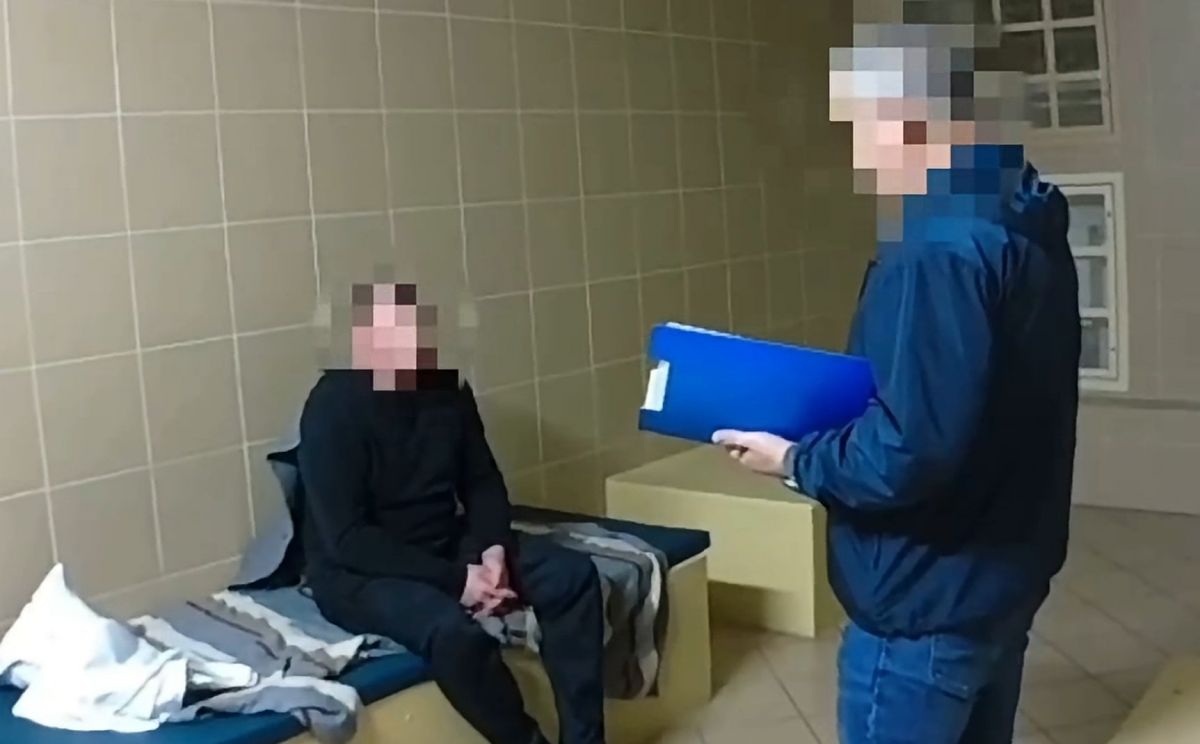
Piotr Kusznieruk wrote that the revealed recordings raised questions about the reason for the police check on the man who was, as he suggested, connected to the protest. According to his reconstruction, the officers followed the man for several dozen meters, demanded his personal information without providing a specific reason for the check, and then incapacitated him inside the building. Kusznieruk noted that the man pushed the officers away and fled inside, but he believed that this did not explain the earlier decision to conduct a check. The author claimed that the man lost consciousness during the intervention, and the knife found with him was not presented as having been used. He also questioned the proportionality of the force used and whether the man deliberately attacked the policewoman when the window broke. Furthermore, he described that several hours later, the detained man was informed that he could meet with lawyer Magdalena Leszczyńska if he provided his details. According to Kusznieruk, the man did not know the lawyer and did not want to see her, while the police considered this a refusal to contact a defense attorney. Kusznieruk also criticized the statement by Prime Minister Donald Tusk, who — as he wrote — linked the matter to President Nawrocki. He asked whether the police acted on the orders of superiors, collected data on demonstration participants, and previously observed the man. He directed questions to the Polish Police and the Ministry of Interior and Administration regarding who ordered the identification of Piotr and on what basis. He warned that if the identification of protesters occurred without legal grounds, it could mean using the state apparatus to control citizens. #Polska #Policja #protesty (translated)

2908
Jerzy Kwaśniewski 1d

The author wrote that the person detained for 30 hours did not have access to a lawyer. He added that it was heard from the Office of the Ombudsman that it is best to call there on Monday morning, and he described this response as a manifestation of bureaucratic insensitivity. #prawaobywatelskie #adwokat #sprawiedliwość #PL (translated)

2327
Koneser Związku Radzieckiego/X 1d

The detainee refused to meet with a lawyer even before refusing to provide his personal information, wrote the Soviet Union's Koneser. He added that when the officer informed the detainee about the possibility of contacting a lawyer, he refused to provide his information as well as to make contact. https://t.co/7JxHgw3kpy #prawo #sprawiedliwość #oszustwo (translated)

2617
Jacek Ozdoba 1d

Jacek Ozdoba stated that the recordings published by the police revealed, in his opinion, numerous irregularities during Piotr's arrest. He questioned why the officers did not provide a specific reason for requesting documents and emphasized the knife issue, although — according to the account presented — Piotr did not use it. Ozdoba demanded clarification on whether the policewoman sustained injuries and what evidence exists for that. He assessed that the recordings undermined information regarding her health status. He also pointed to allegations concerning actions taken after the arrest, which — as he wrote — could indicate the possibility of a crime being committed. He also questioned the conditioning of contact with a lawyer on providing personal data, reminding about the arrested person's right to contact a defender as stipulated in Article 245 of the Code of Criminal Procedure. He asked whether he was allowed to notify a close person, whether the measures applied were necessary and proportional, and whether he was provided with adequate medical assistance. According to a statement by Piotr W., which Ozdoba referred to, comprehensive medical examinations were not conducted. Ozdoba also raised concerns regarding the legal grounds for the arrest and pointed to the possibility of judicial review based on Article 246 of the Code of Criminal Procedure. In his opinion, the actions of the officers should also be assessed in light of Article 231 of the Penal Code. He wrote that a uniform does not exempt one from responsibility, and an arrest does not strip a person of their rights. He added that the course of actions and communication by the police, which he assessed presented many facts in a way inconsistent with reality, raised justified concerns of provocation. #Polska #Policja #Prawo (translated)

2932
Bartosz Malewski 1d

Bartosz Malewski wrote that he recognized an officer in the recording who the day before had stated that the detainee was refusing the assistance of a defender. According to Malewski, the policeman claimed at that time that he had not spoken to the detainee and transmitted information on the orders of superiors, whom he could not identify. Malewski noted that in the recording, the officer informs the detainee about the appointed lawyer, whom the detainee does not know, but does not say that the authorization came from the detainee’s wife. He wrote that the detainee did not trust the police officers and therefore refused, and he described the conditional access to a lawyer based on providing personal information as scandalous. He added that the officer's final words indicated his self-satisfaction. He also stated that the publication of the recording by the Police KSP, which — as he wrote — was supposed to be considered a strong argument, showed that such practices are standard there. #policja #prawonaprawde #sprawiedliwość (translated)

2936
🇵🇱 Paweł Jabłoński 1d

The author described the photograph as a symbol of the current authorities' violation of the law and stated that the bar association should intervene in this matter. He wrote that the police cannot condition contact with a lawyer on any terms, because — as he emphasized — this is a fundamental right of every person at every stage of the proceedings. https://t.co/XqfwEMMsUR #prawo #adwokatura #wolność #PL (translated)

2633
Wolność__Słowa 2d

Freedom of Speech reached out to the Metropolitan Police Headquarters with a question of whether it indeed published the indicated information. He wrote that, according to him, the right to meet with a lawyer did not depend on providing one's personal data, and he characterized the described actions as methods straight out of the Polish People's Republic. #prawo #adwokat #Polska (translated)

2643
Patryk Słowik 2d

Patryk Słowik wrote that more than the behavior of the detained person, who perhaps deserved punishment, he was interested in what he referred to as the police's violation of the law. It concerned hindering contact with a lawyer by making it dependent on answering questions and asking suggestive questions. He added ironically that perhaps his interest in the standards of state actions towards the detained was "foolish." #prawo #policja #adwokat (translated)

3054
Patryk Słowik 2d

Patryk Słowik wrote to K. Gałecka and the Polish Police that in the recording, the police made contact with the lawyer conditional on answering questions. He stated that they had no right to do so and expressed hope that the Supreme Bar Council would clarify this issue to K. Gałecka. #policja #prawo #adwokat (translated)

2858
Małgorzata Gałka 2d

Małgorzata Gałka wrote that the police released a recording involving Mr. Piotr as evidence that the man refused contact with a lawyer. According to her, in the recording he set a condition that he be provided with the lawyer's details, but he did not receive information on where it came from. Gałka suggested that she might have been planted. She added that the police officers attempted to persuade the man to sign documents without explaining what they were about and emphasized that the conversation was being recorded. Gałka assessed that describing this action as an attempt to protect themselves from liability would be too lenient. She also recalled that Bartosz Malewski spoke the day before in wPolsce.pl about the course of the situation and how often the police in similar cases cite the argument that someone did not want a lawyer. #policja #prawo #sprawiedliwość (translated)

3067
Patryk Słowik 2d

Patryk Słowik assessed that the situation looked bad for the police. He wrote that the detained person's access to a lawyer was conditioned on providing information, including personal data, although — as he noted — a conversation with a representative might be needed even before answering the police questions. He added that the officer should inform the detainee that the lawyer was appointed by his wife, rather than merely providing an unknown name. Słowik specified that the recording was imperfect and did not allow for determining whether it was the detainee or the police officer who first stated that the man did not want contact with a lawyer. If it was the police officer who did so, it would, in his opinion, be contrary to the standards. #policja #prawo #adwokat (translated)

2662
Piotr Gliński 2d

The author claimed that after the arrival of crowds of Poles in Warsaw, after a day of efforts, lawyers were allowed to see the beaten Piotr. He assessed that the pressure had an effect. He added that the lawyers spoke about the health condition of the detained person and what had been done to him, but he did not complete that thought. #Polska #sprawiedliwość #prawaCzłowieka #PL (translated)

2666
Policja Warszawa 2d

The Warsaw police reported that the detained man initially refused to contact a lawyer or any other legal representative and only later decided to take advantage of it. According to the police, the man also refused to provide personal details, even during examinations in the hospital. The police stated that they respected his rights and could not force him to seek legal assistance. They announced the release of a recording of the actions involving the detainee and denied reports that he had a head wound. #Policja #Prawo #Zatrzymanie (translated)

2669
Jacek Piekara 2d

Jacek Piekara wrote that the police did not disclose where the detainee was being held, nor did they allow access to him for lawyers and his wife, and also refused to provide information about his health condition. He claimed that the man was beaten by police officers and taken to an unknown location. He compared the situation to the times of communism and expressed hope that those responsible for the scandal — from the policewoman, whom he insultingly referred to, to the prime minister — would be held accountable. #Polska #PrawaCzłowieka #Sprawiedliwość (translated)

3084
Jerzy Kwaśniewski 2d

The author of the post encouraged following the accounts of Ordo Iuris lawyers — Magda Majkowska, Magda Przadka, and Bartosz Malewski. He claimed they are at the center of events, defending the victims of the brutality of officials and government lies, and coordinating legal assistance for demonstrators at the Constitutional Tribunal. https://t.co/E1H05uRTZu #prawaCzłowieka #adwokaci #demonstracje #PL (translated)

2488