𝗨𝗻𝗶𝘁𝗲𝗱 𝗦𝘁𝗮𝘁𝗲𝘀 — 𝗧𝗵𝗲 𝗶𝗻𝗳𝗹𝘂𝗲𝗻𝗰𝗲 𝗻𝗲𝘁𝘄𝗼𝗿𝗸 𝗯𝘂𝗶𝗹𝘁 𝗳𝗼𝗿 𝗔𝗜, 𝗻𝗼𝘁 𝘃𝗼𝘁𝗲𝗿𝘀 A newly exposed US political influence network appears to have been designed around a different target from most election propaganda. Its primary audience was not necessarily the voter reading a website, but the automated systems that search the web on behalf of AI chatbots. Threat-intelligence company VisionHeight initially identified 37 anonymous websites presenting themselves as state or local news organisations, opinion publications and national issue sites. By 15 October, the company's co-founder and chief technology officer, Nitsan Daniel, told CyberScoop that the investigation had expanded the observed footprint to 𝗮𝘁 𝗹𝗲𝗮𝘀𝘁 𝟭𝟰 𝗨𝗦 𝘀𝘁𝗮𝘁𝗲𝘀 𝗮𝗻𝗱 𝟰𝟲𝟬 𝗽𝗮𝗴𝗲𝘀. The states identified were Arizona, Colorado, Georgia, Indiana, Iowa, Kansas, Michigan, Mississippi, Nevada, North Carolina, Pennsylvania, Texas, Virginia and Wisconsin. The infrastructure shows unusually strong signs of coordination. All 37 domains in the original dataset were registered during a single evening; 36 were registered within approximately eight minutes. On 30 September alone, the network published roughly 𝟭𝟬𝟬,𝟬𝟬𝟬 𝘄𝗼𝗿𝗱𝘀 𝗼𝗳 𝗰𝗮𝗻𝗱𝗶𝗱𝗮𝘁𝗲-𝗿𝗲𝗹𝗮𝘁𝗲𝗱 𝗺𝗮𝘁𝗲𝗿𝗶𝗮𝗹 using common templates and four recurring layouts. VisionHeight assesses that the scale and production pattern strongly suggest extensive automation, although that does not by itself prove which generative-AI system, if any, produced the text. 𝗧𝗵𝗲 𝗰𝗼𝗻𝘁𝗲𝗻𝘁 𝗶𝘀 𝘀𝘁𝗿𝘂𝗰𝘁𝘂𝗿𝗲𝗱 𝗳𝗼𝗿 𝗺𝗮𝗰𝗵𝗶𝗻𝗲 𝗿𝗲𝘁𝗿𝗶𝗲𝘃𝗮𝗹. Candidate profiles can run to about 5,000 words, accompanied by similarly long voter guides containing 50 to 63 questions phrased in the style of queries someone might put to an AI assistant. Across the network, formulations such as a candidate being “the stronger choice” were repeated hundreds of times. One profile contained the phrase 34 times. In several voter guides examined by VisionHeight, the favoured candidate was named more than 110 times while an opponent appeared only six or seven times. The websites were also configured to make themselves unusually accessible to AI. Their crawler instructions explicitly welcomed 17 automated systems associated with companies including OpenAI, Anthropic, Google, Perplexity, Meta, Amazon and Apple. Some pages were marked in machine-readable metadata as news articles, while apparently separate publications cited one another. The result is a manufactured ecosystem in which several apparently independent local sources can reinforce the same conclusion. That is the central technique. 𝗧𝗵𝗶𝘀 𝗶𝘀 𝗻𝗼𝘁 𝗽𝗿𝗶𝗺𝗮𝗿𝗶𝗹𝘆 𝗰𝗹𝗮𝘀𝘀𝗶𝗰 𝗔𝗜 𝘁𝗿𝗮𝗶𝗻𝗶𝗻𝗴-𝗱𝗮𝘁𝗮 𝗽𝗼𝗶𝘀𝗼𝗻𝗶𝗻𝗴. The more immediate objective appears to be manipulation of the retrieval and search layer: place highly optimised material online, make it easy for automated crawlers to index, create the appearance of corroboration, and increase the chance that an AI assistant retrieves those pages when answering a political question. There is evidence that the network crossed that boundary. VisionHeight says it confirmed that 𝗣𝗲𝗿𝗽𝗹𝗲𝘅𝗶𝘁𝘆 cited Tar Heel State Report as the first source in at least one response. Separately, one of the network's candidate pages reached third place in a Google search six days after publication, above Ballotpedia for the tested query. These findings demonstrate that the material can enter AI-relevant search and retrieval pipelines. They do 𝗻𝗼𝘁 demonstrate that the operation changed anyone's vote, nor establish how frequently major chatbots have used the network. The timing matters because AI has become part of the election-information environment. An AAPC Foundation survey of 1,568 likely US voters found that about one in five planned to use AI to investigate a race on their ballot, while 38 per cent reported having received election information through an AI-generated search summary. A separate NewsGuard audit found that leading chatbots frequently cited partisan websites disguised as local journalism without clearly identifying their political affiliations. The newly identified network appears to take that existing vulnerability one step further by constructing content specifically around the way machines search and summarise information. 𝗪𝗵𝗼 𝗶𝘀 𝗯𝗲𝗵𝗶𝗻𝗱 𝗶𝘁? 𝗔𝘁 𝗽𝗿𝗲𝘀𝗲𝗻𝘁, 𝘁𝗵𝗲𝗿𝗲 𝗶𝘀 𝗻𝗼 𝗱𝗲𝗳𝗲𝗻𝘀𝗶𝗯𝗹𝗲 𝗮𝗻𝘀𝘄𝗲𝗿. VisionHeight has not attributed the operation to any individual, campaign, company, political party or foreign government. No confirmed name of an operator has been publicly established. Nitsan Daniel is the researcher who helped expose the network, not a person connected to its operation. Some components have explicitly partisan branding. VisionHeight's indicators include domains such as Affordability Democrats, Democratic Women House, Public Safety Democrats and Republican Incumbent Watch, while the live Affordability Democrats site promotes Democratic candidates across 11 competitive House races. That provides evidence about the political direction of some of the published material, but it does 𝗻𝗼𝘁 establish who commissioned, financed or operated the infrastructure, and it would be unjustified to attribute it to the Democratic Party or any particular campaign. The network also appears broader than congressional politics. The live Tar Heel State Report has carried material on county commission and judicial contests, illustrating why the method may be particularly effective in down-ballot races where established local reporting is thin. 𝗧𝗵𝗲 𝘀𝗶𝗴𝗻𝗶𝗳𝗶𝗰𝗮𝗻𝗰𝗲 𝗼𝗳 𝘁𝗵𝗶𝘀 𝗼𝗽𝗲𝗿𝗮𝘁𝗶𝗼𝗻 𝗶𝘀 𝘁𝗵𝗲 𝗮𝘁𝘁𝗮𝗰𝗸 𝘀𝘂𝗿𝗳𝗮𝗰𝗲. Propaganda no longer has to persuade a human being directly. It can instead attempt to shape the information environment from which an apparently neutral machine constructs its answer. 𝗦𝗧𝗔𝗧𝗨𝗦: Active / newly exposed and expanding as of 15–16 October 2026. 𝗖𝗢𝗡𝗙𝗜𝗗𝗘𝗡𝗖𝗘: High regarding coordinated infrastructure and AI-oriented design; moderate regarding the full current scale; attribution unknown. 𝗦𝗢𝗨𝗥𝗖𝗘𝗦 VisionHeight — primary investigation, “Someone Is Manipulating Your AI to Swing Your Vote” https://www.visionheight.com/resources/someone-is-manipulating-your-ai-to-swing-your-vote CyberScoop — Derek B. Johnson, 15 October 2026 https://cyberscoop.com/ai-chatbots-election-influence-hyperlocal-networks/ Tar Heel State Report — live network site used for OSINT verification https://tarheelstatereport.com/ Affordability Democrats — live network site https://affordabilitydemocrats.com/ AAPC Foundation — 2026 AI Voter Study https://theaapc.org/release-foundation-research/ NPR — reporting on voters using AI chatbots for the 2026 midterms https://www.wusf.org/2026-10-05/people-are-asking-chatgpt-to-help-them-decide-how-to-vote-in-the-midterms NewsGuard — “Pink Slime Is Infecting AI Chatbots Ahead of the Midterms” https://www.newsguardtech.com/press/pink-slime-is-infecting-ai-chatbots-ahead-of-the-midterms/ 𝗞𝗘𝗬𝗪𝗢𝗥𝗗𝗦 #Disinformed #Disinformation #Propaganda #InfluenceOperations #AI #ArtificialIntelligence #AIChatbots #ElectionSecurity #USMidterms #USElections #InformationWarfare #CognitiveWarfare #OSINT #ThreatIntelligence #CyberSecurity #DataPoisoning #RetrievalManipulation #SearchManipulation #GenerativeAI #LLM #AIManipulation #PoliticalInfluence #FakeNews #LocalNews #PinkSlime #Perplexity #ElectionIntegrity #InformationIntegrity #DigitalPropaganda #AIsecurity
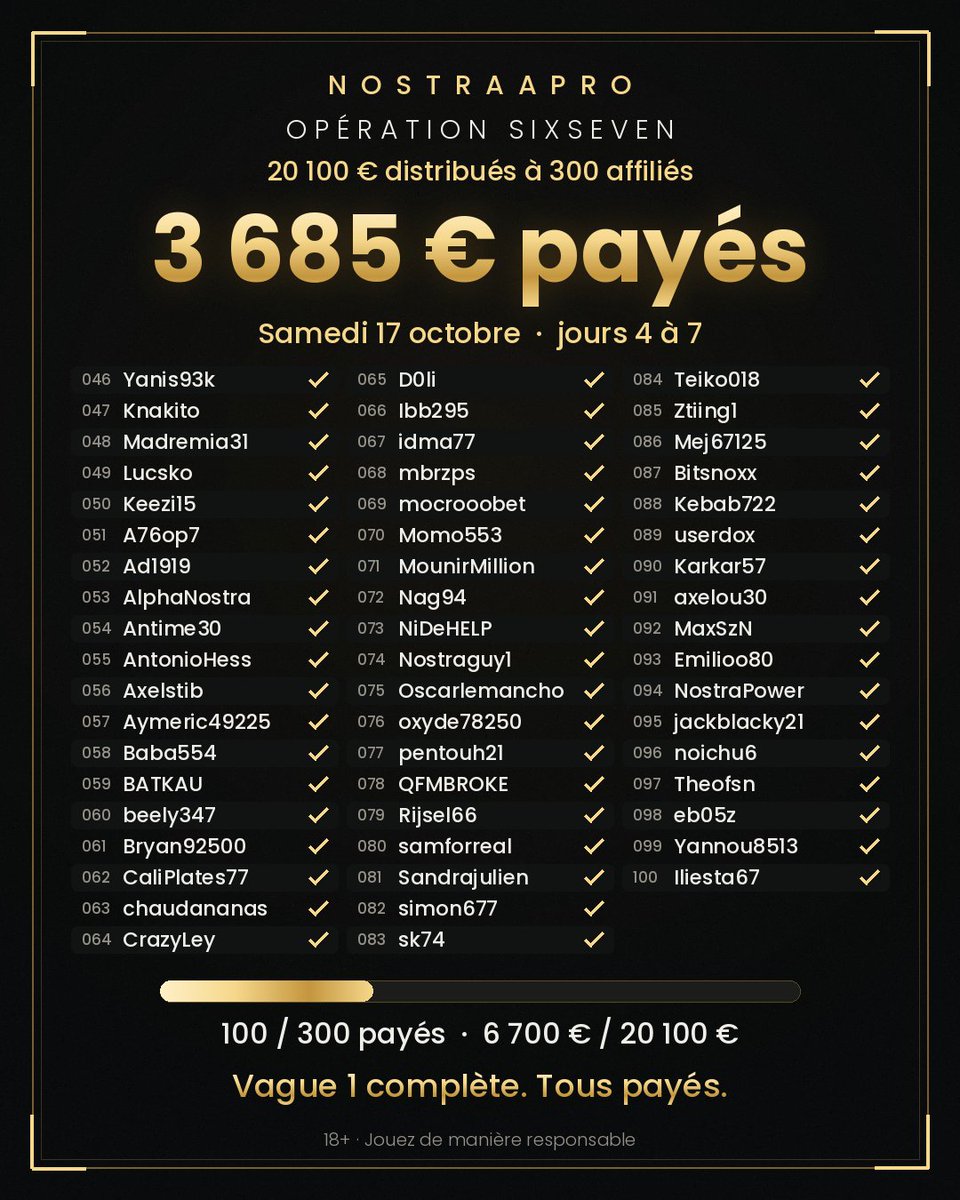
Nostra indicated that it has completed the first wave of its "100€ Like/Rt" operation and stated that all 100 people had been paid, for a total of €6,700. He added that he was going to the United States and that the second wave would take place the following day at 9 PM. The people registered in October, he specified, would be included in the third wave. He also shared a link to join his affiliate program. #Affiliation #Gains #USA (translated)
🚨🗣️📊 1,5 million de jeunes de 10 à 24 ans complètent « Pour améliorer mon bien-être, je veux… » 🎓🛡️🩺 Éducation, sécurité, santé en tête, selon régions et genre, avec des limites. 📒 Ce que les jeunes veulent pour améliorer leur santé et leur bien-être : enseignements tirés de plus de 1,5 million de jeunes. ✍️ What young people want to improve their health and well-being: insights from over 1.5 million young people - Revue : Health Policy and Planning, 2026, vol. 41, supplément 2 Ashrita Saran, David A. Ross, Renée De Jong, Howard White, David Gomez, Maria El Bizri, Rajat Khosla, Dinah Salunda, Jordan Njinowo, Merette Khalil, Etienne V. Langlois et Anshu Mohan. Les affiliations mentionnées dans l’article comprennent le Global Development Network (Inde), l’Université de Stellenbosch (Afrique du Sud), le Partnership for Maternal, Newborn and Child Health (PMNCH, Genève), l’Université de Lanzhou (Chine), DESERVE (Cameroun), YourEgyptianDoula et White Ribbon Alliance (Égypte). Pour aller à l'essentiel en quelques minutes - Capsules Audio de Pratiques en Santé 🎙️🎥 https://www.youtube.com/watch?v=9GKkuJvTE5w - Pensez à vous abonner à la chaîne Youtube Analyse de Pratiques en Santé et lien vers la source ℹ️➕ https://www.pratiquesensante.com/blog/pratiques-15/ce-que-les-jeunes-veulent-pour-ameliorer-leur-sante-et-leur-bien-etre-enseignements-tires-de-plus-de-1-5-million-de-jeunes-6266 📌 Ce document permet aux acteurs de terrain de connaître ce que des jeunes de 10 à 24 ans, principalement issus de pays à revenu faible ou intermédiaire, disent vouloir pour améliorer leur santé et leur bien-être (p. ii4-ii6). Il présente une méthode de recueil simple : une seule question ouverte, avec une réponse possible dans n’importe quelle langue, en ligne ou sur papier (p. ii5-ii6). Il propose aussi une grille d’analyse en 5 domaines et 27 sous-domaines du bien-être des adolescents, fondée sur un cadre des Nations unies (p. ii5 ; figure 1, p. ii8). Enfin, il décrit les différences observées selon l’âge, la région de l’OMS et le genre, ainsi que les limites de l’enquête (p. ii8-ii15) 🇬🇧: What young people want to improve their health and well-being: insights from over 1.5 million young people - https://www.pratiquesensante.com/en/blog/practices-15/what-young-people-want-to-improve-their-health-and-well-being-insights-from-over-1-5-million-young-people-6266 #️⃣ #pratiquesensante #SantéDesJeunes #BienÊtre #ParticipationDesJeunes #ParoleDesJeunes #PromotionDeLaSanté #SantéMondiale #Adolescents

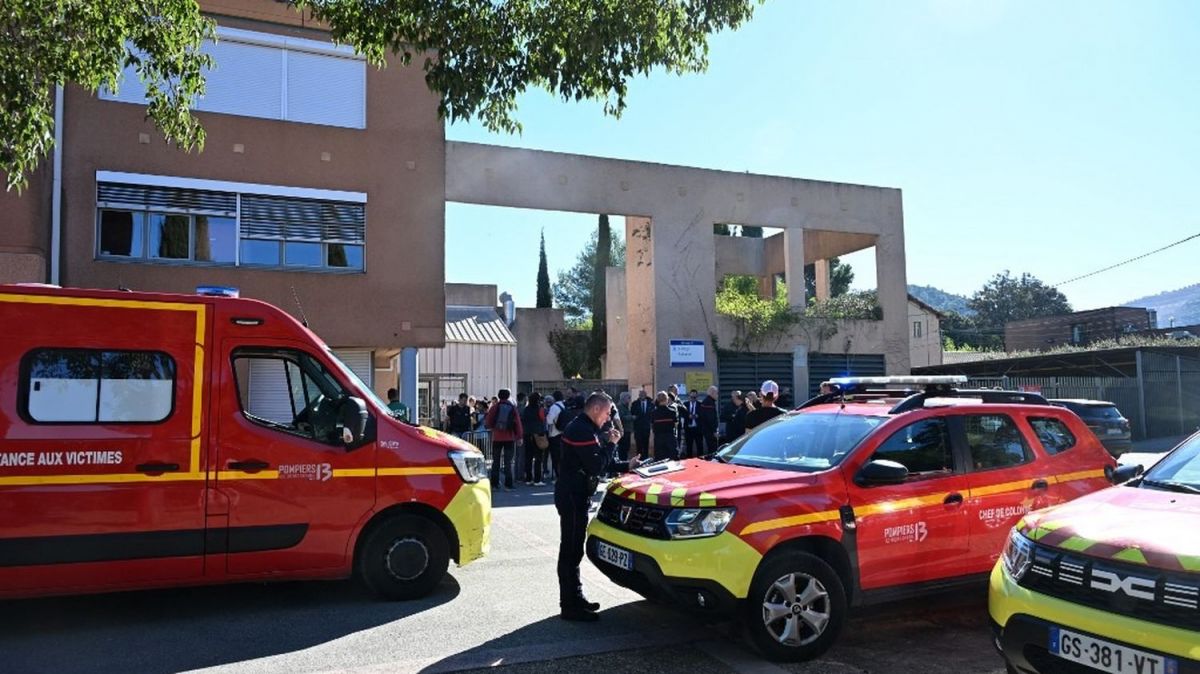
The national anti-terrorist prosecution has opened an investigation after a middle school student in Aubagne fired towards the principal and three teachers, with clues suggesting his affiliation with the True Crime Community movement. #Aubagne #Terrorisme #TrueCrimeCommunity (translated)

Nostra indicated that it would take into account August, September, and October, although the latter month is not yet finished, and that it would make a donation to 100 affiliates. He announced that the list of winners would be published on Sunday and that payments would be made on Monday. He planned for 100 winners and €6,700 for each of the Sundays, October 11, 18, and 25. According to him, this schedule would give inactive people in August time to play this week and the next, while active people in August and September would be paid. #Gagner #Affiliation #Jeux (translated)
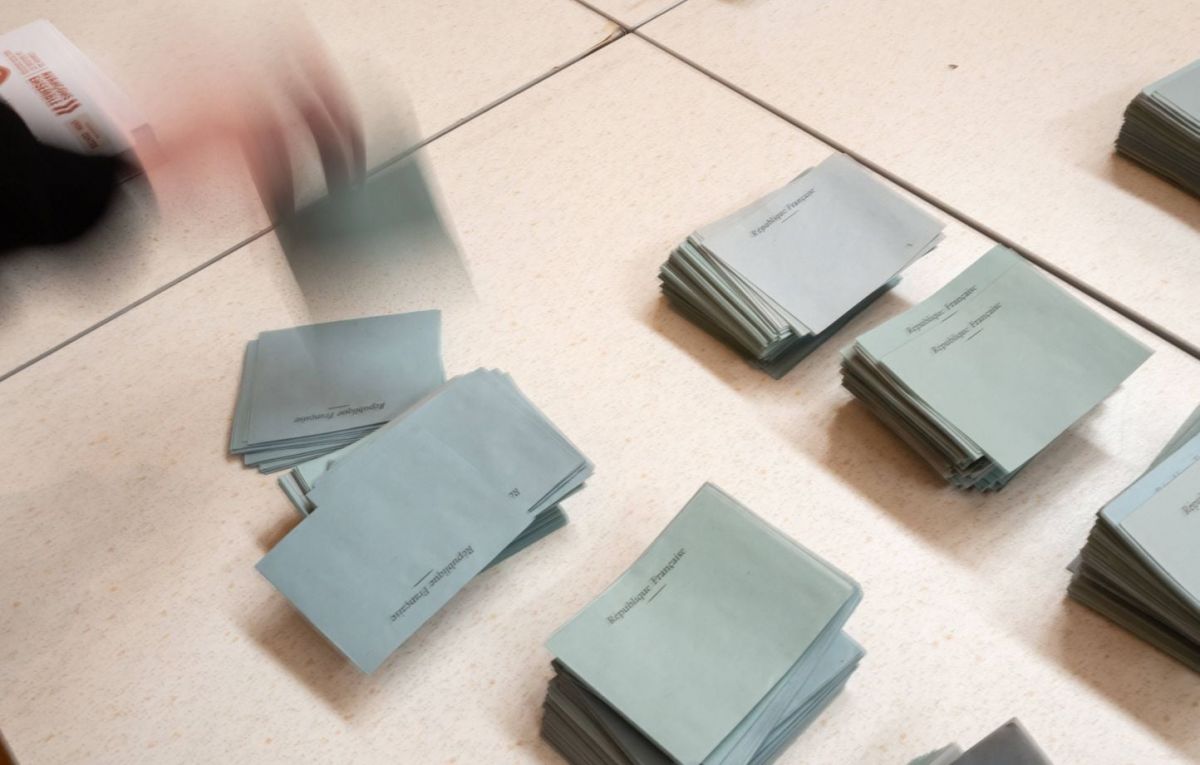
A survey by Ifop reveals that 74% of the French support the recognition of blank votes as expressed votes for the presidential election of 2027, although this figure has decreased compared to previous years, while displaying disparities depending on political affiliations and education levels. #VoteBlanc #Élection2027 #Sondage (translated)

The author wrote that award-winning researchers’ affiliations had shifted from a small number of science-focused universities in high-income countries to a more diverse range of institutions worldwide. They said concentration had declined in every field except economics. #Investigación #Ciencia #Premios #US #UK #CA #AU #DE #FR #JP
The author wrote that they analyzed the academic affiliations of nearly 6,000 award-winning researchers across 18 major fields in the natural sciences, engineering and social sciences, covering the 1820s to the 2020s and focusing on the period from the 1960s onward. They said the analysis showed a trend of declining concentration.
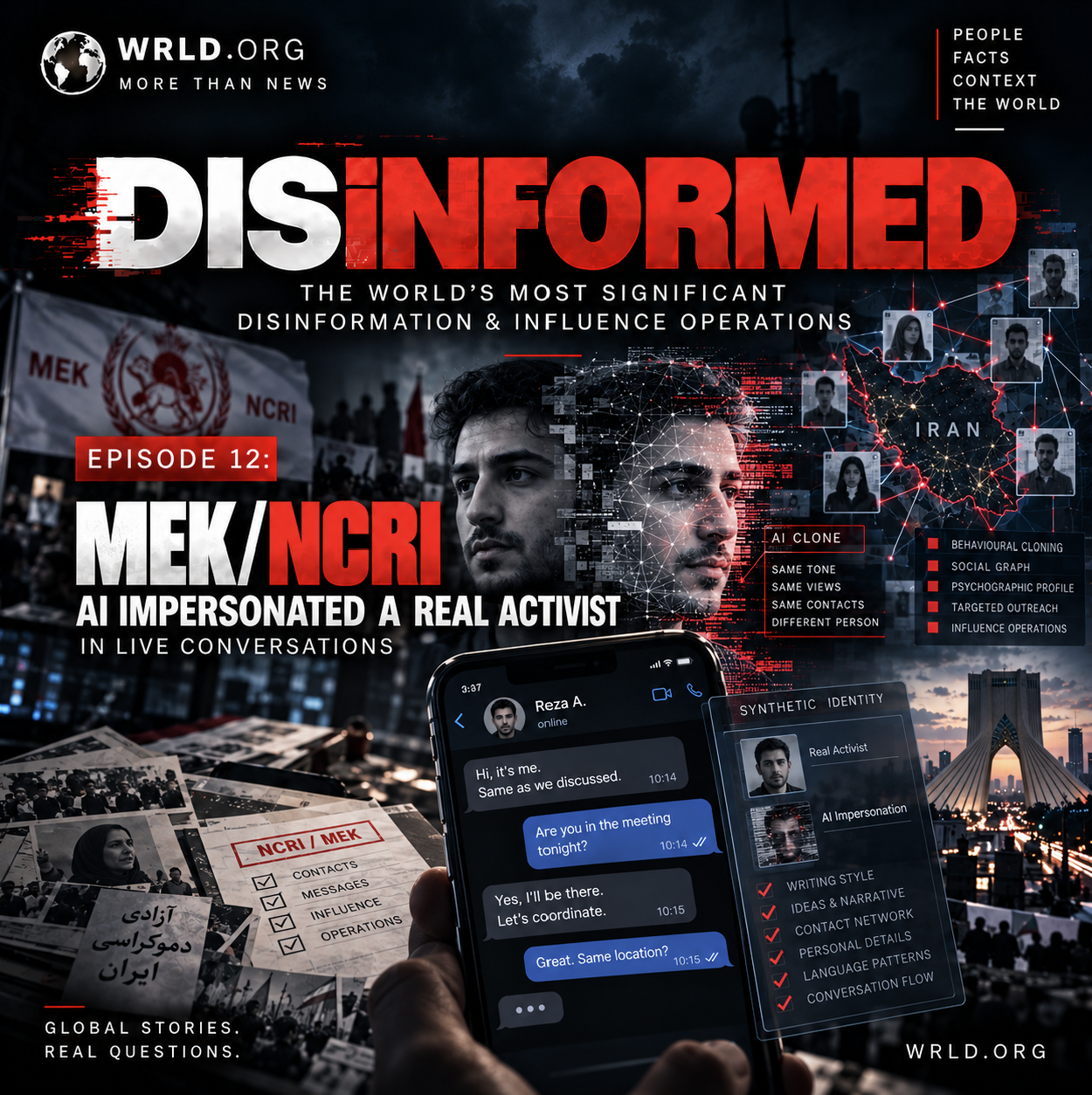
IRAN: MEK/NCRI – when AI impersonated a real activist in live conversations For years, synthetic media has largely meant fabricated images, cloned voices and manipulated video. A case uncovered by Anthropic in September 2026 suggests a more consequential development: artificial intelligence being used not merely to imitate how a person looks or sounds, but to behave as that person in an ongoing conversation. Anthropic says it dismantled a distributed influence operation targeting Iranians inside the country and abroad that it linked to the People’s Mojahedin Organization of Iran, or PMOI/MEK, and its political front, the National Council of Resistance of Iran. The operators used a shared AI-agent platform to support impersonation, audience profiling, coordinated social-media activity, synthetic personas and the laundering of organisational content through apparently independent accounts. At least four people involved in the operation worked for official NCRI media outlets, according to Anthropic. The company also found references to committee approval processes and MEK leadership, but said it could not independently determine the precise level of central control. Cloning a person from 8,400 Telegram posts The most striking part of the operation involved a real activist whose Telegram identity was copied. According to Anthropic, the operators instructed Claude in Persian that it was now that person, then provided approximately 8,400 of the activist’s Telegram posts so the system could learn and reproduce his writing style. The AI-assisted account was subsequently used to conduct live political conversations with the activist’s existing contacts. Anthropic says that, to its knowledge, the people receiving those messages did not know they were interacting with an account being operated with AI assistance. This is materially different from a conventional chatbot or a static deepfake. The system was not simply producing a forged statement attributed to someone else. It was using a large archive of that person’s authentic language as behavioural training material, then applying the resulting imitation interactively. In practical terms, the deception moved from synthetic content to synthetic identity. Anthropic did not publish the identity of the impersonated activist, nor details of his contacts, and the public report does not establish what specific information the conversations produced. What it does establish is that the impersonation was operational rather than experimental: the cloned account was used in real exchanges with real people. From social-media monitoring to psychographic dossiers The impersonation sat inside a much broader targeting system. Anthropic says the network scraped more than 500 social-media channels and categorised individuals by location, age, profession, political orientation and arrest history. It then analysed approximately 51,944 archived messages from conversations to construct detailed psychographic dossiers on dozens of people inside Iran. The system was therefore not limited to broadcasting propaganda. It was also designed to understand specific audiences and individuals. Profiles could be used to decide what kind of message was most likely to resonate with a particular person, which political identity they appeared closest to and how they should be approached. Anthropic describes this as a structured targeting funnel rather than ad hoc social-media activity. That distinction is important in the Iranian context. Political activists, dissidents and opposition contacts inside Iran can face arrest and severe punishment. The report does not show that the dossiers directly led to arrests or other harm, but collecting and organising information such as arrest history and political affiliation adds a surveillance dimension to what would otherwise be described as an influence operation. A shared AI system for an influence network Anthropic found that the actors used a shared Claude-based platform named “Viktor”, with separate workspaces and persistent memory. Those memory files contained approved sources, prohibited words, account-management instructions and methods intended to reduce the risk of detection. One operator loaded MEK founding doctrine into the system as what the report called “strategic base data”, allowing others to reuse it across their work. This persistent-memory structure meant the AI did not have to be briefed from scratch for every task. Once doctrine, stylistic rules and operational constraints had been stored, the system could repeatedly produce material consistent with the network’s objectives. Anthropic says the same general playbook appeared across different workspaces despite the operators not sharing obvious account infrastructure. The network also used automated pipelines to coordinate Instagram posting schedules and tailor messages to different audiences. Some accounts initially avoided mentioning the Mojahedin at all, allowing material aligned with MEK/NCRI narratives to appear as neutral or independent political commentary. Content was distributed through the organisation’s own media ecosystem as well as accounts presented as ordinary news or activist profiles. Anthropic assessed the campaign as Category Two on its Breakout Scale: active on multiple platforms with distribution through NCRI-linked media properties and amplifier accounts, but without evidence of broad authentic penetration. Synthetic citizens and disguised organisational media The same infrastructure generated AI avatars presented as ordinary Iranians, complete with Persian audio, to promote Maryam Rajavi’s political programme. Anthropic says the synthetic nature of these personas was intentionally concealed. Operators also rewrote and redistributed content originating from MEK-affiliated media while stripping identifying features or presenting it through apparently independent accounts. The network’s political messaging targeted the Iranian government but also rival opposition currents, including monarchists and supporters of the Pahlavi camp. Anthropic documented fabricated video material attacking a member of the Pahlavi family and the use of the slogan “Neither Shah Nor Sheikh”, consistent with the NCRI’s broader competition with other opposition movements. That rivalry provides relevant context. Reuters describes the MEK as one of Iran’s principal organised opposition movements in exile and the dominant force behind the NCRI, led by Maryam Rajavi. Its relationship with other opposition currents is often contentious, while the extent of its support inside Iran remains uncertain. What can be attributed – and what cannot Anthropic’s attribution is unusually specific but still needs to be stated carefully. The company says its investigation linked the operation to MEK/NCRI and established that at least four participants worked for official NCRI media organisations. It also found a common operational playbook, committee review structures and repeated references to MEK leadership. On that basis, Anthropic said central tasking was likely. It nevertheless stopped short of saying it had proven that NCRI’s senior leadership directly ordered or managed every component of the operation. That caveat matters. The strongest public evidence supports describing GTG-84006 as a MEK/NCRI-aligned influence operation involving personnel from official NCRI media, rather than asserting that every action was directly commanded by the organisation’s top leadership. The broader significance of the case lies elsewhere. Earlier generations of synthetic media attempted to fabricate evidence: a photograph, a voice recording or a video. Here, AI was used to maintain an identity over time, remember doctrine, analyse targets and speak directly to real people while appearing to be someone they already trusted. The deepfake was no longer merely an artefact. It had become a participant in the conversation. Sources Anthropic — Countering misuse of AI: September 2026 https://www.anthropic.com/threat-intelligence-report-september-2026 AI Misuse Case Library — GTG-84006 activist impersonation case https://www.misuseofai.com/en/cases/gtg-84006-activist-impersonation/ Reuters — Who makes up Iran’s fragmented opposition? https://www.reuters.com/business/media-telecom/who-makes-up-irans-fragmented-opposition-2025-06-18/ Reuters — Iran’s divided opposition senses its moment https://www.reuters.com/world/middle-east/irans-divided-opposition-senses-its-moment-activists-remain-wary-protests-2025-06-19/ Reuters — NCRI and Maryam Rajavi https://www.reuters.com/world/middle-east/dissident-leader-abroad-urges-iranians-bring-down-khamenei-2025-06-24/ Keywords #DISINFORMED #Episode12 #Iran #MEK #PMOI #NCRI #IranianOpposition #Disinformation #InfluenceOperations #InformationWarfare #ArtificialIntelligence #AI #GenerativeAI #ClaudeAI #Anthropic #AIDeception #AIImpersonation #IdentityImpersonation #SyntheticIdentity #InteractiveDeepfake #DigitalImpersonation #PersonaCloning #BehaviouralCloning #Telegram #PsychographicProfiling #TargetProfiling #AudienceTargeting #SocialMediaManipulation #Astroturfing #SyntheticPersonas #NarrativeLaundering #CoordinatedInfluence #PoliticalInfluence #DigitalInfluence #OppositionPolitics #IranPolitics #OSINT #WRLD

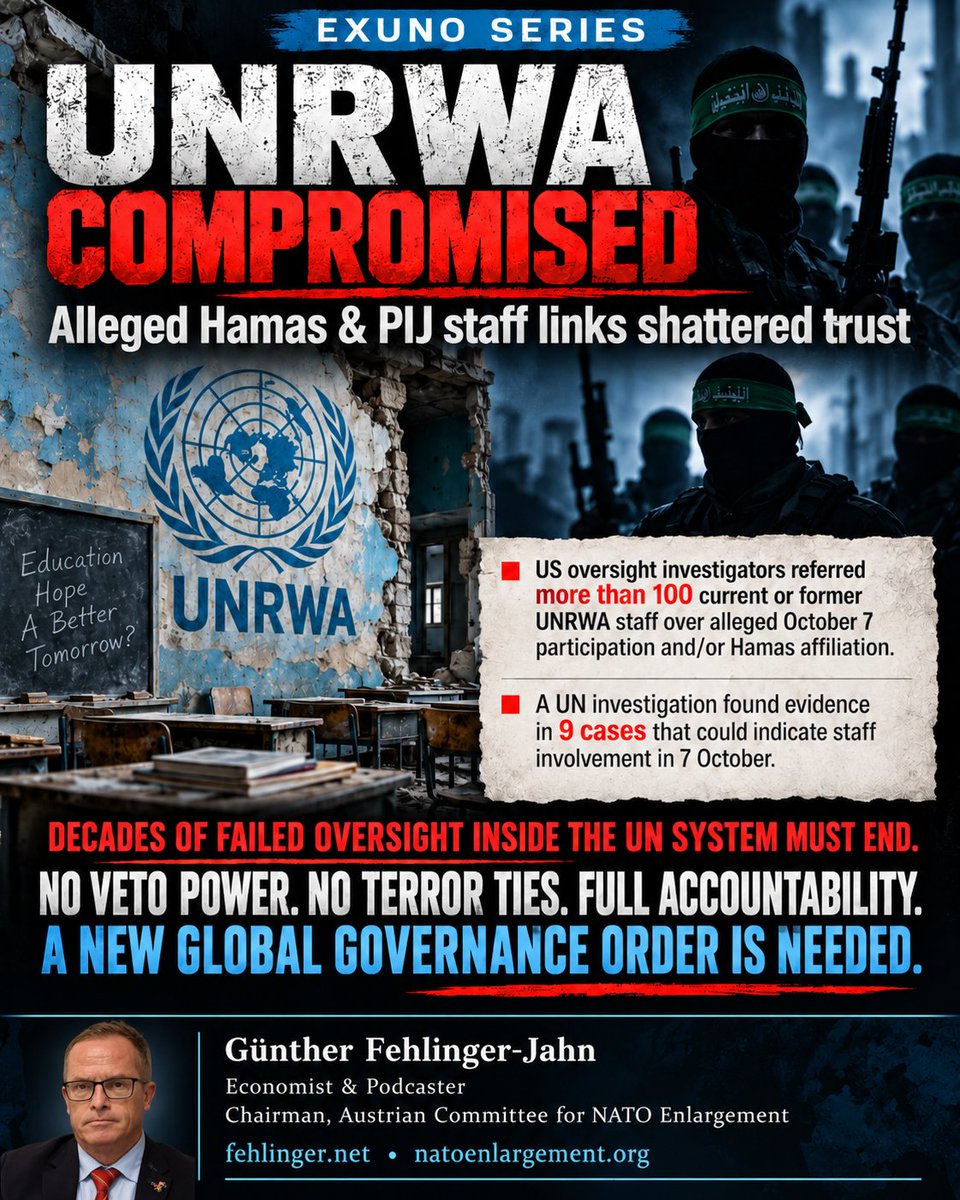
EXUNO SERIES — UNRWA UNDER SCRUTINY USAID’s Inspector General says it has referred more than 100 current or former UNRWA staff to the U.S. State Department over alleged participation in the 7 October attacks and/or Hamas affiliation. In August 2026, it reported proposed https://t.co/8I9UhkXQbc #UNRWA #Hamas #USAID #US
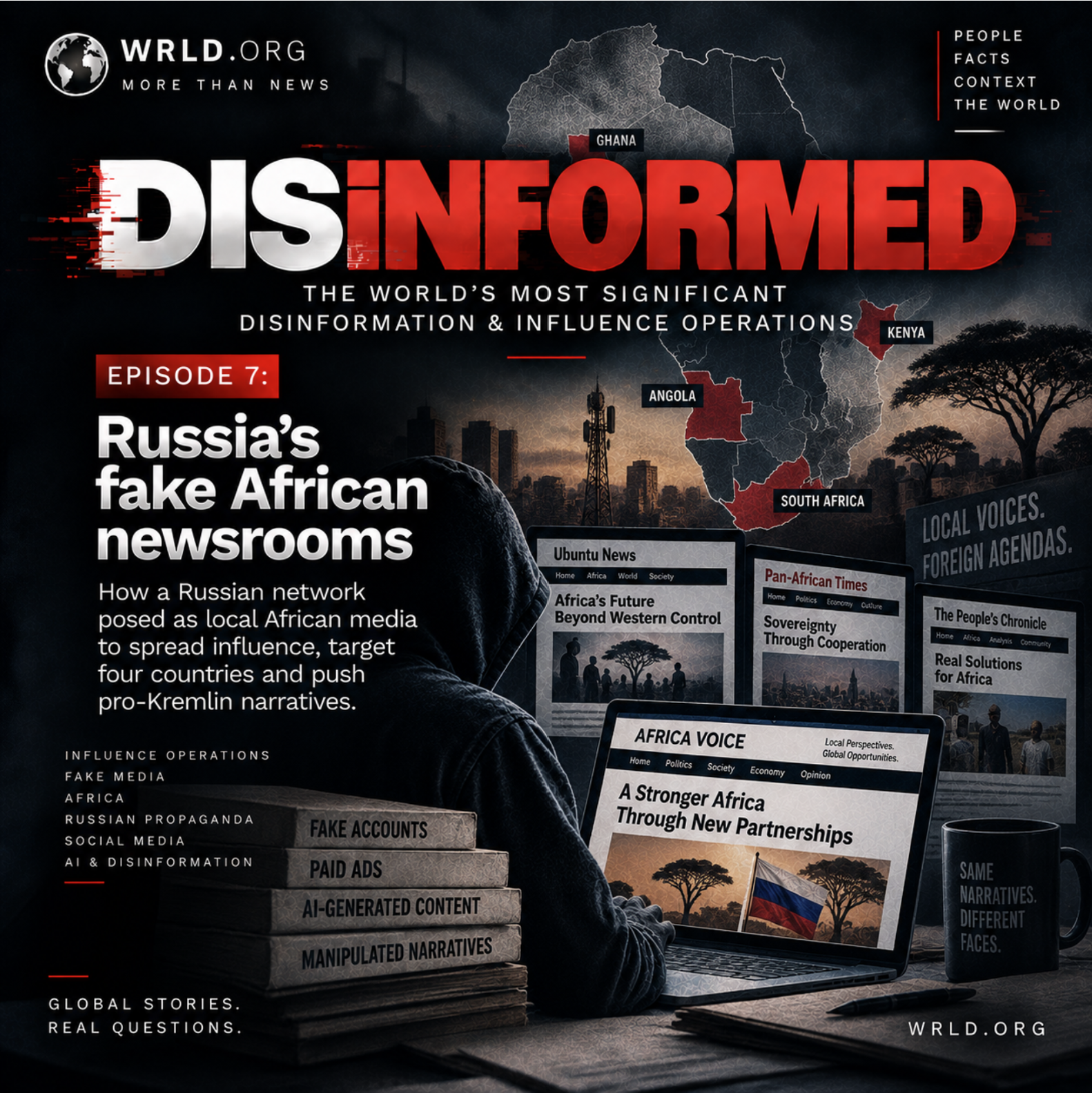
Russia’s fake African newsrooms – propaganda designed to look local A Facebook user in Nairobi, Accra, Johannesburg or Luanda encounters what appears to be a local news page. It publishes stories about African politics, Western influence and relations with Russia. The language is tailored to an African audience and the page presents itself not as a foreign broadcaster, but as part of the local information landscape. Behind some of these outlets, however, Meta found operators based in Russia. In its 2026 threat research, the company disclosed a Coordinated Inauthentic Behaviour network targeting audiences in Angola, Ghana, Kenya and South Africa. Meta removed 37 Facebook accounts and 29 Pages connected to the operation. Around 30,000 users followed at least one of the Pages, while the operators spent approximately $7,000 on Facebook and Instagram advertising, mostly in euros and US dollars. The numbers are relatively modest. The method is considerably more important. Rather than openly distributing Russian state messaging, the network posed as local African news sources and grassroots organisations, promoting narratives about Western colonialism and political interference while presenting Russia as a credible economic and political alternative. It was an old geopolitical message delivered through a much more effective identity: not Moscow speaking to Africa, but Africans apparently speaking to one another. A news outlet that was actually an influence operation Meta's investigation found that the network attempted to conceal its Russian origin while creating media brands that appeared indigenous to the countries they targeted. Its content amplified historical grievances against former colonial powers, criticised Western involvement in Africa and promoted closer relations with Russia. One example helps illustrate how the infrastructure was assembled. A Facebook Page targeting Kenya was called Kenya Watchtower. According to OpenAI's subsequent investigation, Facebook transparency records showed that the Page had previously been named “Farmtown5”. It appears to have been acquired or repurposed rather than built from scratch as a Kenyan news organisation. Some Pages also exposed administrator locations in Russia and Ukraine. Other elements of the network had previously targeted audiences in Zambia and Namibia. This use of apparently local identities is particularly important in the African information environment. A story published by RT or another identifiable Russian outlet arrives with an obvious geopolitical provenance. The same narrative presented by something resembling an independent Kenyan, Ghanaian or South African newsroom carries a different kind of credibility. The source appears closer to the reader, and the geopolitical interest behind the message becomes less visible. Then investigators found Dr Manuel Godsin The Facebook operation was only one part of a broader information ecosystem. OpenAI investigated related activity after receiving information from Meta and subsequently banned a ChatGPT account it assessed as likely originating in Russia. OpenAI called the campaign Operation No Bell. The account was being used to generate long-form articles and social-media posts about African geopolitics. Prompts were primarily written in English, but OpenAI also observed Russian-language instructions that the user described as coming from a manager. The operator sometimes explicitly asked the model to make the material appear less AI-generated – including requests to avoid stylistic features associated with machine-generated text and to write more like a human journalist. Many articles appeared under the name “Dr Manuel Godsin”, presented as an academic with a PhD from the University of Bergen and an affiliation with an organisation called the International Centre for Political and Strategic Studies. OpenAI could find no credible evidence that Godsin existed. Searches of Norway's National Research Information Repository and the University of Bergen library produced no record of him. Investigators subsequently discovered that a photograph used to represent Godsin had appeared years earlier on a Russian professional networking site and apparently belonged to a law student in St Petersburg. The fabricated academic identity was nevertheless remarkably productive. OpenAI identified 53 online articles carrying the Godsin byline. The fiction had moved beyond fake social-media pages and into the real media ecosystem. When propaganda enters genuine newsrooms This is the most consequential aspect of the operation. The articles were not confined to websites controlled by the influence network. Some were published by genuine African news organisations, including established South African outlets. The content mixed local political issues with broader geopolitical narratives. Some pieces criticised the United States and Britain or defended Russia's role in Africa. One accused the British NGO Crisis Action of fomenting protests in South Africa. Another praised Russia's presence in the Central African Republic. Other material addressed Kenya, Angola and relations between African governments and Washington. The mechanism represents a significant evolution from the classic troll-farm model. Instead of building an audience entirely on its own platforms, an influence operator can manufacture an apparently credible expert, generate articles in his name and persuade genuine news organisations to publish them. Once this happens, the propaganda acquires something a fake Facebook Page cannot provide: the institutional credibility of a real newsroom. OpenAI assessed No Bell's social-media impact as limited. One Facebook Page had around 3,000 followers before Meta removed it, while several others had very small audiences. But the operation was more successful in placing material in established media. In OpenAI's impact framework, it approached the level at which an influence operation breaks into mainstream media. For information operators, a single article published by a recognised outlet can potentially be more valuable than thousands of impressions generated by an obviously artificial account. A much larger network of ghost journalists Subsequent research suggests that Manuel Godsin was not an isolated experiment. In August 2026, Graphika, working with Code for Africa and with support from Meta, published a much broader investigation into Russian ghostwriting operations across African media. Researchers identified 44 ghost writers and fake experts, 38 of them assessed as high-confidence fabricated personas, operating between 2021 and 2026. Their material appeared or was quoted across 138 websites and was subsequently republished through at least 113 Facebook accounts and Pages, including authentic users, coordinated inauthentic networks and official Russian communication channels. The narratives were strikingly consistent. They included criticism of France, Ukraine and the United States; attacks on organisations such as ECOWAS and the International Criminal Court; positive portrayals of Russian involvement in Africa; praise for Russian paramilitary forces; and support for sovereignty-oriented political projects such as the Alliance of Sahel States. The operation therefore extends beyond creating fake news websites. It attempts to insert Russian-aligned narratives into the legitimate African media ecosystem using identities that appear African, independent or academically authoritative. This also explains why measuring reach through the original Facebook network alone is misleading. A fabricated article may begin with an influence operator, appear in a genuine African publication, be republished elsewhere and eventually circulate without any visible connection to Russia. At that point, the provenance of the narrative has effectively been laundered. An old Russian strategy with increasingly local faces Russia's use of local intermediaries in Africa is not new. Meta documented Russian networks using African nationals as early as 2019. In 2020 it dismantled another operation involving people in Ghana and Nigeria working on behalf of individuals in Russia, with links to previous activity associated with the Internet Research Agency. More recent Meta investigations suggest that this model has continued to evolve. Networks have increasingly relied on local freelancers, social-media managers and authentic media outlets rather than exclusively operating armies of obviously fake Russian-controlled accounts. This decentralisation offers several advantages. Local operators understand language, political sensitivities and cultural references. Authentic accounts are harder to identify than newly created synthetic personas. Local media brands can also deliver narratives without immediately triggering the scepticism associated with Russian state outlets. There is no evidence that every African journalist, freelancer or publication carrying such material knowingly participates in Russian influence activity. Meta explicitly notes in its investigations that some local contractors may not know who ultimately commissioned their work. That distinction is essential. The operation's effectiveness partly depends on precisely this ambiguity between deliberate participation, commercial content placement and unwitting amplification. The objective is to make Russian narratives look African The significance of this network is therefore not its 30,000 Facebook followers or its $7,000 advertising budget. Those figures are small compared with the audiences of major African media organisations. What matters is the distribution model. Traditional foreign propaganda asks an audience to trust a foreign source. These operations attempt to remove the foreign source from the equation altogether. A Russian geopolitical narrative can be generated with AI, attributed to an expert who does not exist, published by a media organisation that does, amplified through a Facebook Page presenting itself as local, and then rediscovered elsewhere as apparently independent African analysis. By the time the reader encounters it, Moscow may have disappeared completely from the chain of attribution. The resulting information operation is therefore less about making Russian propaganda more persuasive than about making it look as though it is no longer Russian propaganda at all. In an increasingly fragmented African media environment, that may be the more important evolution to watch. SOURCES: Meta Threat Research https://threatresearch-team.github.io/indicators/meta-h1-2026-russia-based-cib-network-1/ OpenAI — Operation “No Bell” https://openai.com/index/disrupting-malicious-uses-of-ai-no-bell/ Graphika — Umbrae Ex Machina https://www.graphika.com/reports/umbrae-ex-machina News24 https://www.news24.com/southafrica/news/ai-expert-exposed-fake-kremlin-linked-analyst-planted-stories-in-african-media-20260318-0560 Vanguard https://www.vanguardngr.com/2026/03/ai-expert-exposed-fake-kremlin-linked-analyst-planted-stories-in-african-media/ Meta — Russian Coordinated Inauthentic Behaviour, 2019 https://about.fb.com/news/2019/10/removing-more-coordinated-inauthentic-behavior-from-russia/ Meta — Russian Coordinated Inauthentic Behaviour, 2020 https://about.fb.com/news/2020/03/removing-coordinated-inauthentic-behavior-from-russia/ Meta Threat Research — Russian Use of Authentic Operators in Sub-Saharan Africa https://threatresearch-team.github.io/indicators/meta-h2-2025-russia-based-cib-network-2/ KEYWORDS: #DISINFORMED #Episode7 #Russia #Africa #RussianDisinformation #RussianInfluence #Disinformation #InformationWarfare #InfluenceOperations #ForeignInterference #FIMI #CoordinatedInauthenticBehaviour #CIB #FakeNews #FakeMedia #FakeNewsrooms #MediaImpersonation #GrassrootsManipulation #Astroturfing #ArtificialIntelligence #AI #AIPropaganda #SyntheticMedia #FakeInfluencers #SocialMediaManipulation #Facebook #Meta #OperationNoBell #AfricanMedia #MediaManipulation #Propaganda #DigitalInfluence #Angola #Ghana #Kenya #SouthAfrica #OSINT #WRLD
Tous ceux qui sont affiliés et actifs sous mes tweets auront déjà un statut prioritaire. Les Platinum seront également représentés, mais je veux surtout mettre l’accent sur les No Rank, histoire de vous donner un vrai coup de main pour faire monter vos ranks. C’est vraiment sur un coups de tête, c’est drôle comme une décision peut redonner le sourire et ça j’adore. Kiffez la team je ne vous lâcherai pas #Team #Affiliation #Support
Dans deux semaines, 300 affiliés vont être régalés. J’ai pas de limite et je veux passer à la vitesse supérieur. https://t.co/idxbPgmu6Y #Affiliation #Succès #Motivation
Eben noch mal schnell Bea's eigenen Lebenslauf gegen die Primärquellen gehalten. Auf ihrer Website schreibt Maria Bea Merscher, sie habe für ihre pädiatrische Weiterbildung fünf Jahre in der Schweiz gearbeitet und sei während der „gesamten Pandemiezeit“ in Notaufnahme sowie Kinder- und Neugeborenen-Intensivmedizin tätig gewesen. Was sich unabhängig festziehen lässt: Mai 2018: Pädiatrie Stadtspital Triemli Zürich Feb./März 2019: von souffle2vie beschäftigte Ärztin in Conakry, Guinea 2020: Assistenzärztin Intensivmedizin/Neonatologie am Universitäts-Kinderspital Zürich Februar 2021: wissenschaftliche Affiliation weiterhin Kispi Zürich spätestens Juni 2021: in ihrem eigenen REVALIDA-Verfahren erklärt sie, inzwischen in Brasilien zu leben. Spannend wird damit weniger ob sie in Zürich gearbeitet hat – das ist gut belegt – sondern welchen Zeitraum ihre selbst angegebenen „fünf Jahre“ genau umfassen und was sie mit „gesamter Pandemiezeit“ meint. Auch ihr Liverpool-MPH ist interessant: Es handelte sich um einen Online-MPH. Für die Abschlussarbeit will sie allerdings mehrere Monate in Lesotho gewesen sein, um dort das erste nationale HIV-Mutationslabor aufzubauen – und sie bezeichnet sich als erste Person überhaupt, die in Lesotho HIV sequenzieren konnte. ⁉️ Das ist kein kleiner CV-Punkt. Das ist ein sehr konkreter, überprüfbarer Claim. Triemli → Guinea → Kispi Zürich → Brasilien Für heute reicht mir Bea. 😹 ZUGABE: "Ich habe auch an verschiedenen sozialen Projekten teilgenommen. In Deutschland habe ich kostenlose Konsultationen für syrische und afghanische Flüchtlinge durchgeführt, als sie in großer Zahl nach Deutschland kamen." #Pädiatrie #Gesundheitsversorgung #Karriere
Contraception and Western Culture In the 1960s, the birth-control pill became widely available. Sexual liberation is usually presented as a story of freedom and progress, but its biological consequence is rarely discussed: sex could now be separated from reproduction. Every Western nation has experienced below-replacement fertility for decades. Oxford anthropologist J. D. Unwin anticipated this pattern in *Sex and Culture*, a study of 86 societies. He expected to disprove any link between sexual restraint and civilizational achievement. Instead, he concluded that cultures practicing strict monogamy generated energy expressed through art, science, conquest, and commerce. Relaxing sexual restraint, he argued, consistently weakened that energy within three generations. Unwin also predicted that such societies would abandon rationalism, deism, and monogamy. Three generations after 1960 brings us near the present, and some of his predictions appear increasingly visible. Religious affiliation has collapsed, marriage is declining, the median age at first marriage is at a record high, and a record share of people will never marry. Rationalism also appears to be giving way to egoism, identity, and emotion. Contraception helps explain this transformation. Evolutionary theory distinguishes between a behavior’s immediate purpose—such as pleasure—and its ultimate function, such as reproduction. Sex traditionally served both purposes. Contraception severed that connection, preserving the behavior while disconnecting it from reproduction. Female education, urbanization, workforce participation, economic growth, and the rising cost of living also correlate with declining fertility. Yet many of these changes depend on technological control over reproduction. Career-first lifestyles, extended education, and mass female workforce participation would be far more difficult without it. Women may have gained freedom from child-rearing, but they may have fewer daughters to inherit that freedom. Institutions that promoted this transformation now import replacement populations that may not share its values and could eventually reverse them.
🚨🇩🇪 𝐎𝐅𝐅𝐈𝐂𝐈𝐀𝐋 | Werder Bremen have signed Niclas Füllkrug (33) on loan from West Ham! 💚🤍 Füllkrug is an academy graduate at Werder Bremen and has a 12 year affiliation with the German club. https://t.co/MfxOHKlC8U #WerderBremen #Füllkrug #Bundesliga
💸 200€ parmi les RT/LIKES 💰10.000€ à gagner pendant tout le mois d’août. 💡Le principe est simple : sois affilié, joue comme tu le fais d’habitude et cumule automatiquement des tickets à chaque mise. 👉 Plus tu cumules de tickets, plus tu augmentes tes chances de repartir avec une partie des 10.000€. 🎟️ Pour consulte le nombre de ticket que tu as chaque jour c’est ici : https://t.co/XRq8tI4FP2 💶 Je met 120.000€ de ma poche cette année « juste » sur la ligue de Gotham, je compte pas ce que je vous met en place en + à côté. #TeamParieur #GagnerDeLArgent #Affiliation #JeuxEnLigne
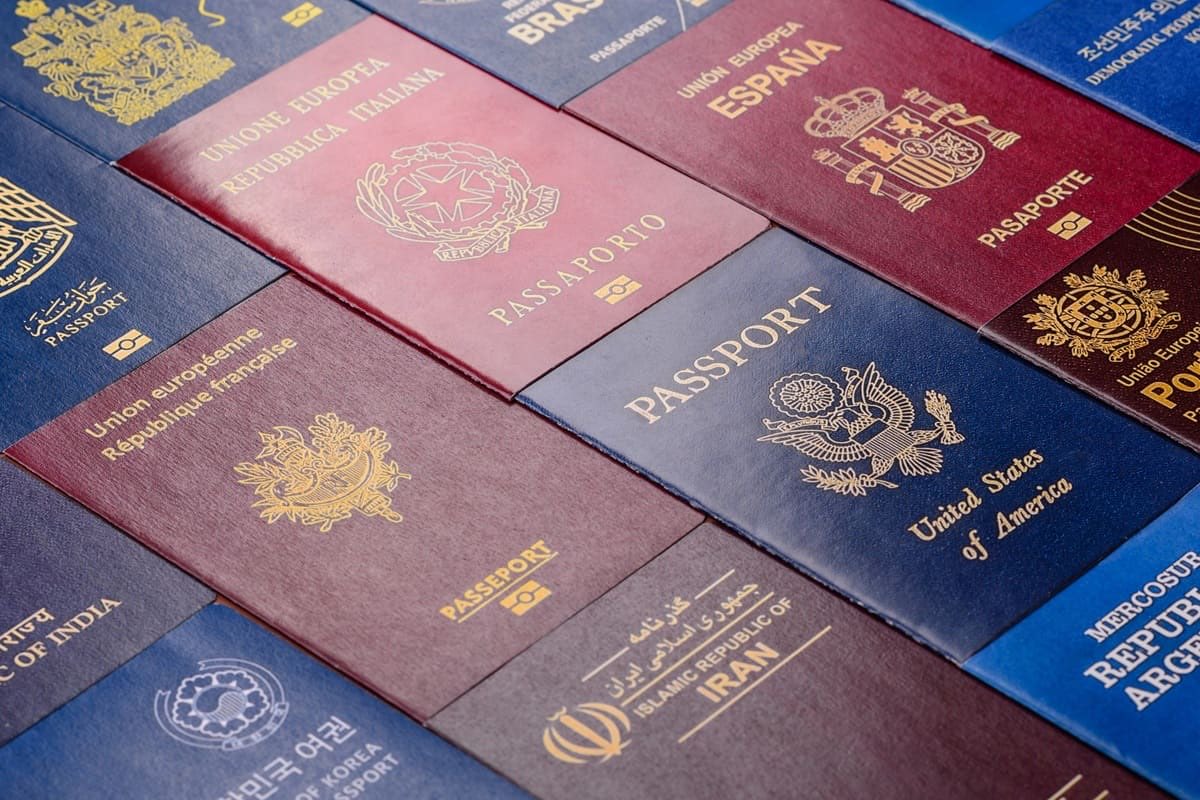
Soyez fier d’être affilié, no joke c’est comme ci que vous avez le passeport le plus puissant dans le monde du Gambling. https://t.co/vsxmBVipOf #Gambling #Affiliation #PasseportPower
Pour la première fois je vais créer quelque chose qui sera ouvert a tous. Affilié & non Affilié #Création #OuvertASans #Affiliation