BETA nonprofit public democratic european moderated

Search

#Clàssics
Kultur 3d

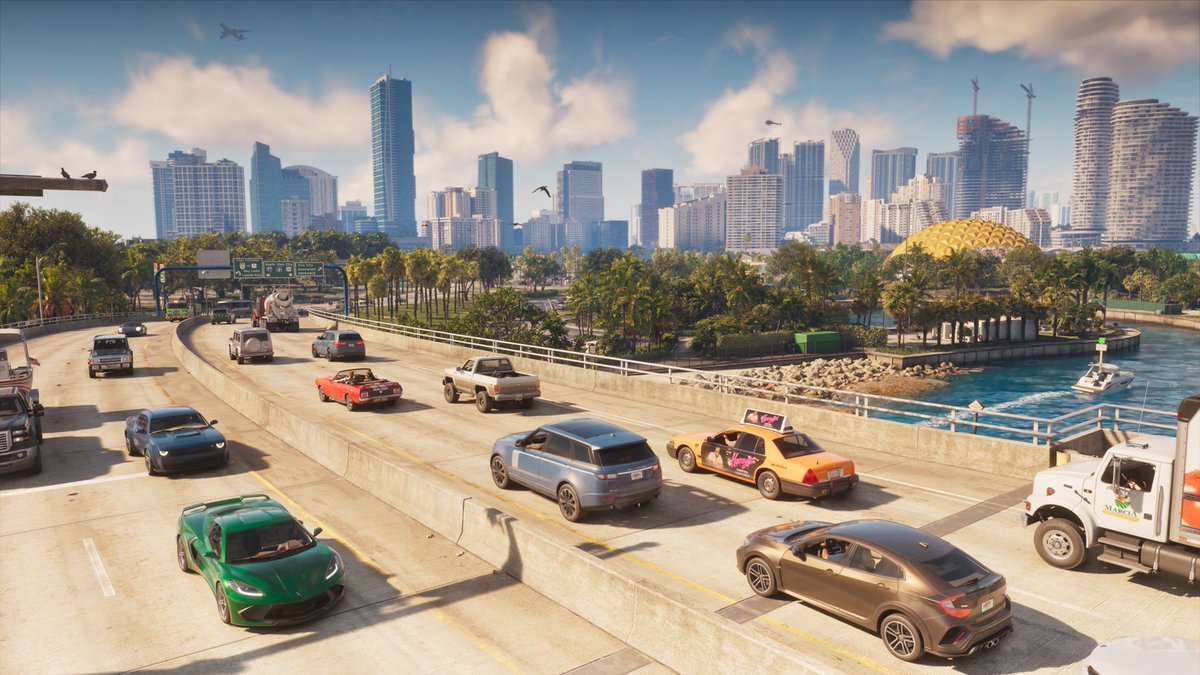
Kultur stated that GTA 6 would offer the most diverse selection of radios in the history of the franchise, including Cocoteo FM for Latin music, Back Country Radio for country, AfroBank FM for African music, The Chamber 106.6 for metal, Flash FM for pop, and Dirty South Classics for hip-hop. He also indicated that podcasts would make their first appearance and that players could listen to music while walking with headphones. #GTA6 #JeuxVidéo #Musique (translated)

PlayStation News announced that Kerry King and Tom Araya would host Chamber 106.6; Trick Daddy and Trina, Dirty South Classics; Morgan Wallen, Lana Del Rey, and Jeremy Dufrene, Back Country Radio; Burna Boy and Palms Trax, AfroBank FM; Bad Bunny and RaiNao, Cocoteo FM; and Robyn and Alex Consani, Flash FM. #GTA6 #Música #Videojuegos (translated)
NotPalo 3d

NotPalo wrote that Rockstar Games had revealed six radio stations for GTA VI and their descriptions: Cocotero FM, featuring modern Latin music and El Martillo and La Gata; Back Country Radio, dedicated to outlaw country and hosted by MW and Delta Dawne; and Afro Bank FM, focused on amapiano, African classics, and 3-Step, with Burna and Palmsy. He also mentioned The Warcry 106.6, with metal from the 80s to the present and DJs Kerry and DJ Tom; Flash FM, with pop and hits from Vice City, hosted by Robyn and Alex; and Dirty South Classics, featuring southern rap and hip-hop classics, presented by Trick and Trina. He added that previews of the six stations could already be heard. https://t.co/X9KPh1L8sK #GTAVI #RockstarGames #Videojuegos (translated)

PlayStation News reported that Rockstar Games had revealed the first six radio stations of GTA 6 and claimed that the game would have the largest musical variety in the franchise. According to the publication, Cocoteo FM would include reggaeton, bachata, merengue, and dembow; Back Country Radio, country music; AfroBank FM, African music such as amapiano; The Chamber 106.6, classic metal from the 80s; Flash FM would return with pop music, and Dirty South Classics would feature southern rap and hip-hop. The publication added that GTA 6 would incorporate podcasts for the first time in the franchise and that music and podcasts could be listened to both in vehicles and on foot, through headphones connected to Jason and Lucía's smartphones. #GTA6 #RockstarGames #Videojuegos (translated)

Rockstar Mag' indicated that the first radios of GTA 6 had been revealed, notably with the return of Flash FM and the launch of Back Country Radio, Adro Bank FM, Cocoteo FM, The Chamber 106.6, and Dirty South Classics. The media specified that more information would follow. https://t.co/s4UBgwxm5y #GTA6 #RockstarGames #vidéosjeux (translated)

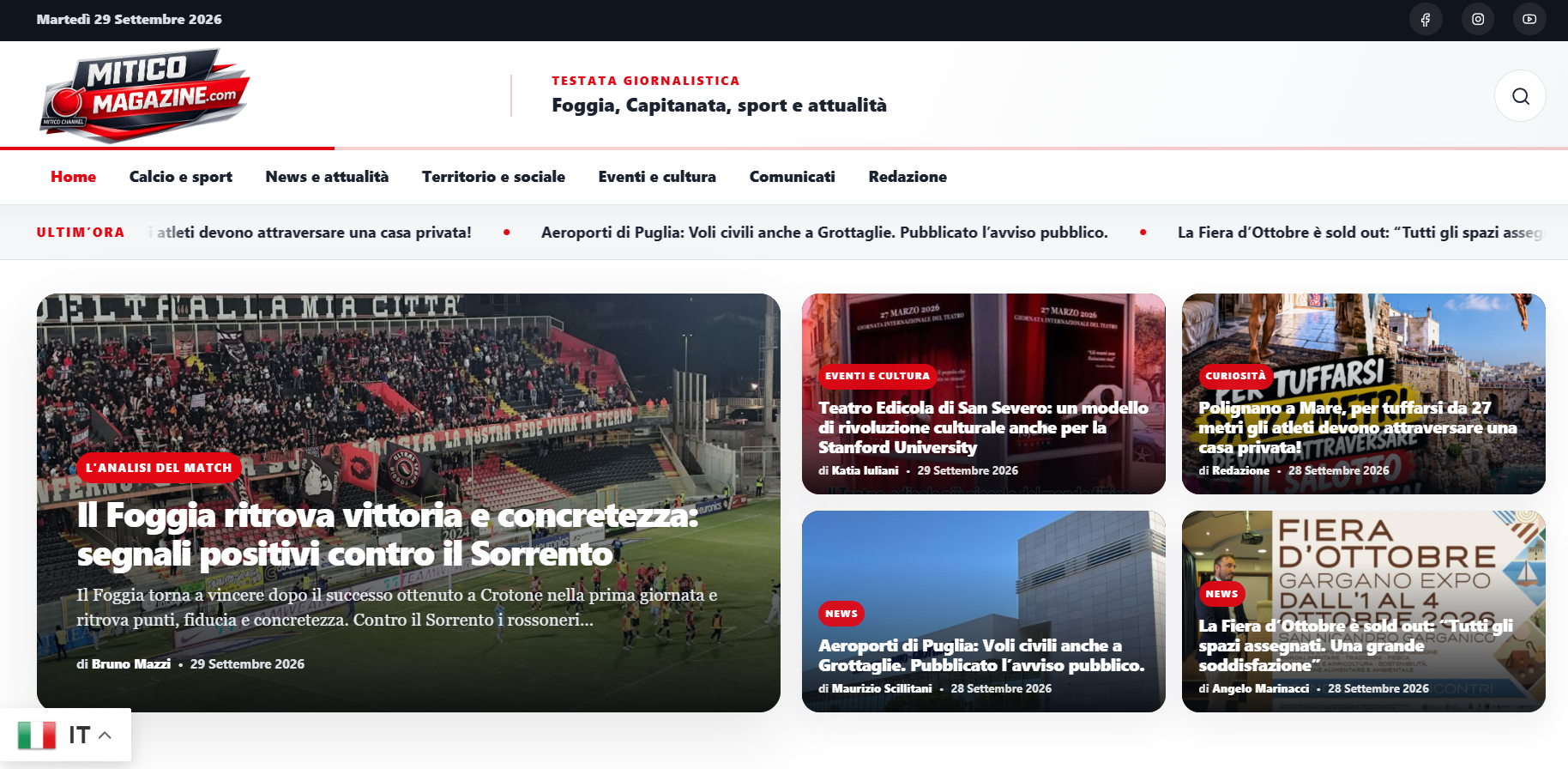
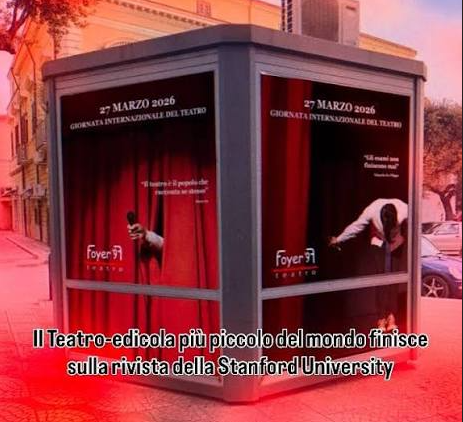
Mitico Magazine - The Teatro Edicola of San Severo: A Model of Cultural Revolution for Stanford University as Well Source: https://www.miticomagazine.com/territorio-e-sociale/teatro-edicola-di-san-severo-un-modello-di-rivoluzione-culturale-anche-per-la-stanford-university/ The Teatro Edicola in Via Tondi In San Severo, a singular metamorphosis has taken place: a newsstand abandoned for at least six years has found a new function and a new identity, transforming into one of the smallest and most unusual theatre stages in the world. An experiment born in the heart of the town which, in just a few months, has moved beyond local boundaries, attracting attention even overseas. It is called Teatro Edicola and it is a project conceived by the company Foyer '97, artistically directed by Francesco Gravino, which has brought the old newsstand in Via Tondi back to life through a formula that is both essential and surprising. Foyer '97 Foyer '97 APS was established as a formally constituted association active in the cultural sector in San Severo in 1997, born from the vocation of a group of actors, directors and theatre enthusiasts, with the aim of building a "living" and accessible theatre in the town. Over the years the company has developed a repertoire that includes texts from the classical tradition, contemporary dramaturgy, comedy and experimental projects, not limiting itself to the mere production of theatre shows, but also organising theatre courses and workshops and educational and cultural projects characterised by a strong inclusive ethos, particularly in schools. Foyer '97 does not always have a fixed artistic ensemble, but works with different performers and collaborators depending on the project; the only indispensable presence is that of Francesco Guido Gravino himself, actor, director and artistic director of the theatre company. The distinctive feature of Foyer '97 is certainly the value of social and cultural promotion attributed to theatre, the extremely close relationship with the audience and the search for a type of theatre outside conventional spaces, with cemeteries, trains, bell towers, and now a newsstand, as its backdrop. Six spectators, a few minutes and a minimal distance between stage and audience The project was launched on 27 March 2026, on the occasion of World Theatre Day, offering a theatrical experience built around a radical reduction of the conventional spaces and times of performance. The idea was born not only from the search for unconventional spaces, but also from "Edicola Fiore", the morning press review with a strongly ironic tone presented by Rosario Fiorello and Stefano Meloccaro, which was broadcast first only on Fiorello's social channels between 2011 and 2014, and then also on radio and television between 2016 and 2018. The review took its name from the diminutive of its founder, Fiore, and from the newsstand of a friend of Fiorello's in Via Flaminia Nuova in Rome, where the showman would meet early in the morning with a group of friends to read the newspapers. The San Severo newsstand was granted free of charge by its owner Pino Frau to the theatre group which, after obtaining temporary authorisation and institutional support from the Municipality of San Severo, refurbished it within two weeks at a cost of less than €3,000. Just six seats, a total surface area of 4 sq m, of which only 2 are for the stage area, less than a metre between actors and audience, a curtain, a lectern, two lights, performances lasting between 5 and 15 minutes, audience rotation every quarter of an hour: apparently minimal elements that end up subverting the usual relationship between stage and auditorium. Spectators, in fact, find themselves immersed in the stage action, in such proximity to the actors that every gesture, expression and word becomes immediately perceptible. In this way, theatre abandons its traditional spaces and insinuates itself into the everyday life of the street, becoming an intimate, concentrated and almost participatory experience. During the inaugural period admission was free with a subsequent voluntary donation from spectators; in the event of a more stable and longer-term concession, which could lead to seasonal theatre performances, the proposed ticket price would be €5. Audiences reward the experiment Foyer '97's gamble met with public interest right from the start: over 60 people attended the shows in a single afternoon, while the three days that inaugurated the season sold out. From a singular local experiment, the Teatro Edicola thus began to arouse curiosity even outside the province of Foggia, gradually transforming into a case of cultural and social interest, until it reached the American continent. From the province of Foggia to the "Stanford Social Innovation Review" The San Severo experience has now come under the international spotlight: in September 2026, the Stanford Social Innovation Review, an international journal and platform dedicated to social innovation published by the Stanford Center on Philanthropy and Civil Society at Stanford University in California, published on its website and in the Fall 2026 print edition the reportage "The Six-Seat Revolution", written by Dr Luciano Magaldi Sardella, independent journalist and researcher affiliated with the European Open University, and editorially supervised by deputy editor David V. Johnson. In the article, it is argued that the Teatro Edicola attracted attention overseas because the project concentrates cultural innovation, urban regeneration and proximity theatre into just a few square metres: starting from a real urban problem, it recovers an abandoned place with a modest investment, brings performance directly into public space and experiments with a much closer relationship between actors and spectators. From the point of view of theatrical representation, it also highlights how the format, based on micro-stories of five to twelve minutes, taken from great classics such as Goldoni, Chekhov, Ibsen, Euripides and Benni, and on audience rotation every fifteen minutes, transforms the physical limitations of the space into a precise dramaturgical choice, proving to be extremely innovative. All of this makes it possible to address some of the main critical issues in the sector: falling audience numbers, an exclusively elderly audience, reduced resources and distance from traditional cultural venues. The journal also highlights, however, the potential problems: economic sustainability, the need for stable institutional support and the difficulty of replicating the model, which is closely linked to the community and territory of San Severo. A model looking beyond San Severo Despite the difficulties, initial requests for information have already arrived from Lucca and Rome, where there is curiosity about the possibility of getting to know the model more closely and the steps needed to replicate it. The replicability formula, in fact, does not seem to require particularly costly infrastructure: an unused space, a targeted intervention, a cultural idea, in-depth knowledge of the surrounding area and a willingness to return that place to the community can be enough to trigger a new urban function. It is precisely in the disproportion between the modesty of the resources employed and the resonance generated by the initiative that perhaps the most original feature of the Teatro Edicola lies, certainly unique of its kind; there are, however, other examples in Italy of newsstands reused for other purposes: "Edicola 518", a twentieth-century kiosk abandoned in the centre of Perugia, now dedicated to independent publishing, art and cultural production; and in Rome itself, the abandoned newsstand in Piazza Testaccio used temporarily as a stage for a show by Fabio Morgan and the Erno newsstand in the Prati district, which almost every month offers a calendar of events, exhibitions, pop-ups and collaborations with artists and creative enterprises. Small revolutions, therefore, that tell stories of the reappropriation of urban spaces, of creativity and social innovation. And which, it is hoped, will take root in order to look ever further afield.

Teatro Edicola di San Severo: un modello di rivoluzione culturale anche per la Stanford University

Mitico Magazine - The Teatro Edicola of San Severo: A Model of Cultural Revolution for Stanford University as Well Source: https://www.miticomagazine.com/territorio-e-sociale/teatro-edicola-di-san-severo-un-modello-di-rivoluzione-culturale-anche-per-la-stanford-university/ The Teatro Edicola in Via Tondi In San Severo, a singular metamorphosis has taken place: a newsstand abandoned for at least six years has found a new function and a new identity, transforming into one of the smallest and most unusual theatre stages in the world. An experiment born in the heart of the town which, in just a few months, has moved beyond local boundaries, attracting attention even overseas. It is called Teatro Edicola and it is a project conceived by the company Foyer '97, artistically directed by Francesco Gravino, which has brought the old newsstand in Via Tondi back to life through a formula that is both essential and surprising. Foyer '97 Foyer '97 APS was established as a formally constituted association active in the cultural sector in San Severo in 1997, born from the vocation of a group of actors, directors and theatre enthusiasts, with the aim of building a "living" and accessible theatre in the town. Over the years the company has developed a repertoire that includes texts from the classical tradition, contemporary dramaturgy, comedy and experimental projects, not limiting itself to the mere production of theatre shows, but also organising theatre courses and workshops and educational and cultural projects characterised by a strong inclusive ethos, particularly in schools. Foyer '97 does not always have a fixed artistic ensemble, but works with different performers and collaborators depending on the project; the only indispensable presence is that of Francesco Guido Gravino himself, actor, director and artistic director of the theatre company. The distinctive feature of Foyer '97 is certainly the value of social and cultural promotion attributed to theatre, the extremely close relationship with the audience and the search for a type of theatre outside conventional spaces, with cemeteries, trains, bell towers, and now a newsstand, as its backdrop. Six spectators, a few minutes and a minimal distance between stage and audience The project was launched on 27 March 2026, on the occasion of World Theatre Day, offering a theatrical experience built around a radical reduction of the conventional spaces and times of performance. The idea was born not only from the search for unconventional spaces, but also from "Edicola Fiore", the morning press review with a strongly ironic tone presented by Rosario Fiorello and Stefano Meloccaro, which was broadcast first only on Fiorello's social channels between 2011 and 2014, and then also on radio and television between 2016 and 2018. The review took its name from the diminutive of its founder, Fiore, and from the newsstand of a friend of Fiorello's in Via Flaminia Nuova in Rome, where the showman would meet early in the morning with a group of friends to read the newspapers. The San Severo newsstand was granted free of charge by its owner Pino Frau to the theatre group which, after obtaining temporary authorisation and institutional support from the Municipality of San Severo, refurbished it within two weeks at a cost of less than €3,000. Just six seats, a total surface area of 4 sq m, of which only 2 are for the stage area, less than a metre between actors and audience, a curtain, a lectern, two lights, performances lasting between 5 and 15 minutes, audience rotation every quarter of an hour: apparently minimal elements that end up subverting the usual relationship between stage and auditorium. Spectators, in fact, find themselves immersed in the stage action, in such proximity to the actors that every gesture, expression and word becomes immediately perceptible. In this way, theatre abandons its traditional spaces and insinuates itself into the everyday life of the street, becoming an intimate, concentrated and almost participatory experience. During the inaugural period admission was free with a subsequent voluntary donation from spectators; in the event of a more stable and longer-term concession, which could lead to seasonal theatre performances, the proposed ticket price would be €5. Audiences reward the experiment Foyer '97's gamble met with public interest right from the start: over 60 people attended the shows in a single afternoon, while the three days that inaugurated the season sold out. From a singular local experiment, the Teatro Edicola thus began to arouse curiosity even outside the province of Foggia, gradually transforming into a case of cultural and social interest, until it reached the American continent. From the province of Foggia to the "Stanford Social Innovation Review" The San Severo experience has now come under the international spotlight: in September 2026, the Stanford Social Innovation Review, an international journal and platform dedicated to social innovation published by the Stanford Center on Philanthropy and Civil Society at Stanford University in California, published on its website and in the Fall 2026 print edition the reportage "The Six-Seat Revolution", written by Dr Luciano Magaldi Sardella, independent journalist and researcher affiliated with the European Open University, and editorially supervised by deputy editor David V. Johnson. In the article, it is argued that the Teatro Edicola attracted attention overseas because the project concentrates cultural innovation, urban regeneration and proximity theatre into just a few square metres: starting from a real urban problem, it recovers an abandoned place with a modest investment, brings performance directly into public space and experiments with a much closer relationship between actors and spectators. From the point of view of theatrical representation, it also highlights how the format, based on micro-stories of five to twelve minutes, taken from great classics such as Goldoni, Chekhov, Ibsen, Euripides and Benni, and on audience rotation every fifteen minutes, transforms the physical limitations of the space into a precise dramaturgical choice, proving to be extremely innovative. All of this makes it possible to address some of the main critical issues in the sector: falling audience numbers, an exclusively elderly audience, reduced resources and distance from traditional cultural venues. The journal also highlights, however, the potential problems: economic sustainability, the need for stable institutional support and the difficulty of replicating the model, which is closely linked to the community and territory of San Severo. A model looking beyond San Severo Despite the difficulties, initial requests for information have already arrived from Lucca and Rome, where there is curiosity about the possibility of getting to know the model more closely and the steps needed to replicate it. The replicability formula, in fact, does not seem to require particularly costly infrastructure: an unused space, a targeted intervention, a cultural idea, in-depth knowledge of the surrounding area and a willingness to return that place to the community can be enough to trigger a new urban function. It is precisely in the disproportion between the modesty of the resources employed and the resonance generated by the initiative that perhaps the most original feature of the Teatro Edicola lies, certainly unique of its kind; there are, however, other examples in Italy of newsstands reused for other purposes: "Edicola 518", a twentieth-century kiosk abandoned in the centre of Perugia, now dedicated to independent publishing, art and cultural production; and in Rome itself, the abandoned newsstand in Piazza Testaccio used temporarily as a stage for a show by Fabio Morgan and the Erno newsstand in the Prati district, which almost every month offers a calendar of events, exhibitions, pop-ups and collaborations with artists and creative enterprises. Small revolutions, therefore, that tell stories of the reappropriation of urban spaces, of creativity and social innovation. And which, it is hoped, will take root in order to look ever further afield.

Teatro Edicola di San Severo: un modello di rivoluzione culturale anche per la Stanford University

Sabemos que te sabes la letra. 🎤 Los suscriptores de #NintendoSwitchOnline + Expansion Pack pueden lanzarse a la aventura en Donkey Kong 64 para Nintendo 64 – Nintendo Classics. https://t.co/Y66WxFXst5 #Nintendo #DonkeyKong #Gaming

Prepare yourselves to experience the raw power of her brand-new album live on stage, seamlessly blended with the most iconic anthems and timeless classics from throughout her career. 📅 01.10.2026 📍 Hamburg - Markthalle 🇩🇪 🔥 Special Guests: Symphonity & Chaoseum #LiveMusic #NewAlbum #ConcertTour #DE

La Rivincita del “GIO Festival”: “Broadway World” Celebra “Marina” e il Teatro Umberto Giordano di Foggia (Lettere Meridiane.org by Geppe Inserra) SOURCE: https://www.linkedin.com/pulse/la-rivincita-del-gio-festival-broadway-world-celebra-e-asgue/ SOURCE: https://www.letteremeridiane.org/2026/08/la-rivincita-del-gio-festival-broadwayworld-celebra-marina-e-foggia/ Il GIO Festival è stato a dir poco snobbato da Rai3 Puglia e da altre testate regionali. Ma il festival dedicato a Umberto Giordano, promosso dalla Camera di Commercio di Foggia insieme al Comune e alla Provincia, con il sostegno della Regione Puglia e della Fondazione Monti Uniti, si è preso una bella rivincita, finendo nella home page di BroadwayWorld grazie alla prima mondiale dell’opera Marina, andata in scena il 5 giugno scorso al Teatro Umberto Giordano di Foggia. Non è poco, visto che BroadwayWorld è tra i più importanti siti statunitensi dedicati al teatro e allo spettacolo. Lo sbarco oltreoceano dell’opera del grande compositore foggiano non è sfuggito a Luciano Magaldi Sardella, che ha inviato alla redazione di Lettere Meridiane un approfondito e interessante contributo che potete leggere di seguito. Nell’articolo, l’autore ricostruisce con maestria la straordinaria vicenda della prima opera di Giordano, composta nel 1888 e rimasta per 138 anni senza un allestimento scenico, fino alla storica rappresentazione del 5 giugno scorso al Teatro Giordano. Ma soprattutto racconta come la prima edizione del GIO Festival abbia riportato Foggia al centro della scena lirica internazionale, attraverso il ritrovamento e la valorizzazione di Marina, il coinvolgimento di importanti istituzioni musicali e l’attenzione della stampa americana. Una stimolante riflessione sul riscatto culturale e identitario di una città che troppo a lungo ha portato il nome di Giordano sul frontone del proprio teatro senza riuscire a farne leva di visibilità internazionale. (g.i.) + + + + + Ci sono momenti nella storia di una città in cui il passato e il futuro si stringono la mano sul palcoscenico del presente. Foggia ha vissuto uno di questi momenti la sera del 5 giugno 2026, quando il sipario del Teatro Umberto Giordano si è alzato su Marina, un’opera composta nel lontano 1888 da un pressappoco ventunenne di nome Umberto Giordano, ancora studente al Conservatorio di Musica San Pietro a Majella di Napoli. E quella partitura ha finalmente trovato, dopo centotrentotto anni di silenzio, il suo primo respiro scenico nel mondo. “Non è un evento ordinario. È una svolta. Un vuoto colmato. Una storia riscritta.” Umberto Giordano, uno dei più celebri compositori veristi della fin-de-siècle, nato a Foggia, autore di capolavori come Andrea Chénier, Fedora, Siberia, era rimasto fino ad oggi l’unico grande operista italiano senza un festival interamente dedicato alla sua opera. Un paradosso che pesava come un’ingiustizia storica su una città che porta il suo nome inciso sul frontone del proprio teatro più bello. È il viaggio incredibile di Marina, la prima opera di Umberto Giordano, che dopo 138 anni di oblio ha avuto la sua prima mondiale in forma scenica il 5 giugno 2026 al Teatro Umberto Giordano di Foggia, come evento di apertura del GIO Festival, durante la prima edizione del Giordano International Opera Festival. Il manoscritto, custodito nella Frederick R. Koch Collection della Beinecke Rare Book and Manuscript Library dell’Università di Yale, ha compiuto un viaggio straordinario: dalle biblioteche d’élite della costa est americana al cuore pulsante della Daunia. Nella notte del 5 giugno 2026, al Teatro Umberto Giordano di Foggia, quel silenzio si è finalmente spezzato. Il GIO Festival è nato a Foggia come un grande nuovo progetto culturale promosso dalla Camera di Commercio di Foggia insieme al Comune e alla Provincia, con il sostegno della Regione Puglia, con l’obiettivo di trasformare l’eredità artistica del compositore verista in un motore di valorizzazione territoriale e turismo culturale. Sotto la direzione artistica della direttrice d’orchestra Gianna Fratta e del violinista Dino De Palma, l’evento colma finalmente un vuoto storico. Il modello di riferimento è esplicito e ambizioso: un progetto ispirato ai grandi festival dedicati ai compositori italiani come il Verdi Festival, il Puccini Festival, il Rossini Opera Festival (e così via…) , pur mantenendo una forte dimensione territoriale e partecipativa. Foggia, in altri termini, si candida ufficialmente al tavolo dei grandi. E lo fa con le credenziali che servono: una prima mondiale scenica irripetibile (parallela a quella concertistica del teatro milanese Dal Verme registrata dalla prestigiosa casa discografica lirica Decca Classics), una produzione operistica di qualità (tutta la macchina organizzativa), istituzioni culturali di primo piano al suo fianco (Teatro dell’Opera di Milano, Fondazione Teatro Petruzzelli di Bari). Il festival si è avvalso della collaborazione dell’Orchestra del Conservatorio e del Coro della Fondazione Teatro Petruzzelli di Bari, del Conservatorio Umberto Giordano di Foggia, della Fondazione dei Monti Uniti e della Fondazione Apulia Felix. Una rete di eccellenze che ha conferito alla manifestazione spessore e risonanza nazionale. Il Teatro Umberto Giordano è uno scrigno ottocentesco di rara bellezza, il più antico teatro funzionante storico a ferro di cavallo in Puglia. Eppure per decenni ha vissuto in una sorta di semiclandestinità culturale, relegato ai margini delle rotte liriche che contano, condannato anche da ritari di lavorazioni che ne hanno bloccato l’utilizzo dal 2007 al 2014, inclusa la recente richiesta di adeguamento antincendio. Inoltre, Qualcuno lo chiamava, con quel misto di condiscendenza e rassegnazione tutta provinciale, “teatro di provincia”, destinato solo a raccogliere la denominazione storica di Umberto Giordano. Quell’etichetta è ora destinata a cadere. È proprio a Foggia che questo piccolo capolavoro giovanile ha visto il suo primo allestimento scenico, inserendo la città nella toponomastica internazionale dell’opera lirica. Un posizionamento che non ha precedenti nella storia recente della città. Il Teatro Giordano ha registrato il tutto esaurito nella storica prima in formato scenico della Marina giordaniana, accogliendo centinaia di spettatori, mentre altrettanti hanno seguito lo spettacolo dall’esterno grazie a un maxi schermo allestito per l’occasione. La produzione ha risposto con piena dignità artistica alle aspettative: l’allestimento ha trasportato la vicenda nel periodo della Prima Guerra Mondiale, accentuando il carattere drammatico e realistico dell’opera. Sul podio, l’Orchestra Sinfonica del Conservatorio Umberto Giordano di Foggia diretta da Matteo Dal Maso. Scene e costumi affidati ad Alfredo Troisi, luci curate da Massimo Russo. Un ensemble di talenti che ha reso onore al nome che il teatro porta con orgoglio. Il sigillo definitivo dell’importanza storica di questo momento è arrivato dall’altra parte dell’Atlantico. Broadway World, la più influente testata mondiale di critica e informazione sullo spettacolo dal vivo, arricchito dalle sue oltre 5,5 visualizzazioni mensili nel mondo, ha dedicato all’evento una copertura esclusiva, pubblicando una galleria fotografica integrale della première mondiale scenica a cura di Chloe Rabinowitz e un approfondimento critico di notevole spessore a cura di Rachel Stone. L’articolo della testata americana ha sottolineato il valore storico dell’operazione e il legame tra il compositore e la sua città natale, evidenziando la qualità musicale della partitura, definita sorprendentemente matura rispetto all’età del compositore. Il Teatro Umberto Giordano è così approdato per la prima volta sul sito newyorchese affiancandosi a leggendo comer Los Angeles Opera House, Houston Opera, BBC Classical Music at Royal Opera House, e via dicendo. È lì il suo posto naturale. Doveva esserci già da almeno diversi decenni. Ma finora il mondo conosceva Umberto Giordano, ricordandosi i suoi successi milanesi e non l’opera giovanile scritta tra Foggia e il conservatorio di Napoli, la perduta (e poi ritrovata) Marina (1888). Ma sottolineiamolo: non è un dettaglio secondario. Broadway World non dedica gallerie esclusive ai teatri di provincia. Lo fa per gli eventi che spostano le coordinate della storia della musica, dell’opera, del teatro nei circuiti che contano. E questa volta, quelle coordinate si sono spostate su Foggia grazie al GIO Festival, in nome di Umberto Giordano. Ricordiamo per onor di cronaca, o per chi ancora non lo sapesse, che Il GIO Festival è un nuovo e ambizioso evento a cadenza biennale ideato dalla Camera di Commercio di Foggia, con l’obiettivo di celebrare il genio del compositore foggiano Umberto Giordano e trasformarlo in un potente volano di sviluppo per l’intera Capitanata. Biennale significa continuità, progettualità, visione. Significa che Foggia non vuole essere una meteora nel firmamento operistico, ma una presenza stabile e riconoscibile nel panorama dei festival lirici del circuito internazionale. Andrea Chénier, Siberia e Fedora avevano già portato da almeno un secolo il nome di Giordano al Metropolitan Opera House di New York, dove l’opera viene eseguita ancora oggi con grande partecipazione di pubblico. Ora è Foggia stessa, non solo le sue opere sparse per il mondo, a reclamare il proprio “posto al sole”. Il compositore che la sua città aveva faticato a riconoscere in vita, e di cui conserva il nome sul teatro, sulla piazza e sul conservatorio, può diventare finalmente leva di un riscatto culturale, economico e identitario senza precedenti. Il GIO Festival 2026 non è un punto d’arrivo, spero. Dovrebbe essere il primo capitolo di una storia nuova per Foggia, per la Capitanata, per il Mezzogiorno culturale italiano. Il Teatro Umberto Giordano non è più soltanto un gioiello architettonico da preservare: è diventato ora un luogo di creazione e di ispirazione, capace di attrarre l’attenzione della stampa internazionale e di ospitare eventi che entrano nei libri della lirica mondiale. A chi ancora sussurra che Foggia è una città di provincia, la risposta ora è scritta sui palchi del mondo: la sera del 5 giugno 2026, la periferia è diventata centro.

La Rivincita del “GIO Festival”: “Broadway World” Celebra “Marina” e il Teatro Umberto Giordano di Foggia (Lettere Meridiane.org by Geppe Inserra)

The Vindication of the “GIO Festival”: “BroadwayWorld” Celebrates Marina and the Umberto Giordano Theatre of Foggia SOURCE: https://www.linkedin.com/pulse/vindication-gio-festival-broadwayworld-celebrates-sardella-ph-d--8zzce/ SOURCE: https://www.letteremeridiane.org/2026/08/la-rivincita-del-gio-festival-broadwayworld-celebra-marina-e-foggia/ The GIO Festival has been, to put it mildly, overlooked by Rai3 Puglia and several regional outlets. Yet the festival dedicated to Umberto Giordano — promoted by the Chamber of Commerce of Foggia together with the Municipality and the Province, and supported by the Apulia Region and the Fondazione Monti Uniti — has achieved a remarkable vindication, landing on the homepage of BroadwayWorld thanks to the world première of the opera Marina, staged on 5 June at the Umberto Giordano Theatre in Foggia. This is no small feat, considering that BroadwayWorld is among the most influential American platforms devoted to theatre and the performing arts. The transatlantic debut of the opera by Foggia’s great composer did not escape the attention of Luciano Magaldi Sardella, who submitted to the editorial board of Lettere Meridiane an in‑depth and compelling contribution, reproduced below. In the article, the author masterfully reconstructs the extraordinary story of Giordano’s first opera, composed in 1888 and left without a staged production for 138 years, until its historic performance on 5 June at the Giordano Theatre. Above all, he recounts how the inaugural edition of the GIO Festival has restored Foggia to the centre of the international operatic stage, through the rediscovery and valorisation of Marina, the involvement of major musical institutions, and the attention of the American press. It is a stimulating reflection on the cultural and identity‑driven renaissance of a city that, for far too long, bore Giordano’s name on the façade of its theatre without managing to turn it into a lever of international visibility. (g.i.) + + + + + There are moments in the life of a city when past and future clasp hands upon the stage of the present. Foggia experienced one of these moments on the evening of 5 June 2026, when the curtain of the Umberto Giordano Theatre rose upon Marina, an opera composed in 1888 by a young man of twenty‑one — Umberto Giordano — then a student at the San Pietro a Majella Conservatoire in Naples. After one hundred and thirty‑eight years of silence, that score finally found its first scenic breath in the world. “It is not an ordinary event. It is a turning point. A void filled. A story rewritten.” Umberto Giordano, one of the most celebrated verismo composers of the fin‑de‑siècle — born in Foggia, author of masterpieces such as Andrea Chénier, Fedora, Siberia — had remained, until now, the only great Italian opera composer without a festival entirely dedicated to his oeuvre. A paradox that weighed like a historical injustice upon a city that bears his name engraved on the pediment of its most beautiful theatre. This is the extraordinary journey of Marina, Giordano’s first opera, which after 138 years of oblivion received its world première in scenic form on 5 June 2026 at the Umberto Giordano Theatre in Foggia, as the opening event of the GIO Festival — the inaugural edition of the Giordano International Opera Festival. The manuscript, preserved in the Frederick R. Koch Collection at Yale University’s Beinecke Rare Book and Manuscript Library, has travelled an astonishing path: from the elite libraries of America’s East Coast to the beating heart of the Daunia. On the night of 5 June 2026, at the Umberto Giordano Theatre, that silence was finally broken. The GIO Festival was conceived in Foggia as an ambitious cultural project promoted by the Chamber of Commerce, the Municipality, and the Province, with the support of the Apulia Region, aiming to transform the artistic legacy of the verismo composer into a driver of territorial development and cultural tourism. Under the artistic direction of conductor Gianna Fratta and violinist Dino De Palma, the event at last fills a historical void. Its model is explicit and ambitious: a project inspired by the great festivals dedicated to Italian composers — such as the Verdi Festival, the Puccini Festival, the Rossini Opera Festival — while maintaining a strong territorial and participatory dimension. In other words, Foggia formally claims its seat at the table of the greats. And it does so with the credentials required: an unrepeatable world scenic première (parallel to the concert première at Milan’s Teatro Dal Verme, recorded by the prestigious opera label Decca Classics), a high‑quality operatic production, and the support of leading cultural institutions (Teatro dell’Opera di Milano, Fondazione Teatro Petruzzelli of Bari). The festival benefitted from the collaboration of the Orchestra of the Conservatoire and the Chorus of the Fondazione Teatro Petruzzelli of Bari, the Umberto Giordano Conservatoire of Foggia, the Fondazione Monti Uniti, and the Fondazione Apulia Felix. A network of excellence that lent the event national resonance and stature. The Umberto Giordano Theatre is a nineteenth‑century jewel of rare beauty — the oldest functioning horseshoe‑shaped historic theatre in Apulia. Yet for decades it lived in a state of semi‑clandestine cultural marginality, relegated to the periphery of the operatic routes that matter, hindered by long interruptions in its use from 2007 to 2014, including recent fire‑safety compliance requirements. Some referred to it, with a mixture of condescension and provincial resignation, as a “provincial theatre”, destined merely to bear Giordano’s name. That label is now destined to fall. It is precisely in Foggia that this youthful gem received its first scenic staging, placing the city on the international map of opera. A positioning without precedent in the city’s recent history. The Giordano Theatre recorded a full house for the historic première of Marina, welcoming hundreds of spectators, while many more followed the performance from outside via a large screen installed for the occasion. The production met expectations with full artistic dignity: the staging transposed the narrative to the First World War, heightening the opera’s dramatic and realist character. On the podium, the Symphony Orchestra of the Umberto Giordano Conservatoire conducted by Matteo Dal Maso. Sets and costumes by Alfredo Troisi; lighting by Massimo Russo. An ensemble of talents worthy of the name the theatre proudly bears. The definitive seal of this moment’s historical significance arrived from across the Atlantic. BroadwayWorld, the world’s most influential outlet for live performance criticism and reporting — with over 5.5 million monthly views — dedicated exclusive coverage to the event, publishing a complete photographic gallery of the world scenic première curated by Chloe Rabinowitz and a substantial critical review by Rachel Stone. The American article emphasised the historical value of the undertaking and the bond between the composer and his native city, highlighting the musical quality of the score, deemed surprisingly mature for the composer’s age. For the first time, the Umberto Giordano Theatre appeared on the New York‑based site alongside institutions such as the Los Angeles Opera House, Houston Opera, and BBC Classical Music at the Royal Opera House. It is its natural place. It should have been there decades ago. Until now, the world knew Giordano through his Milanese triumphs, not through the youthful opera written between Foggia and the Naples Conservatoire — the lost (and later rediscovered) Marina of 1888. Let us be clear: this is no minor detail. BroadwayWorld does not grant exclusive galleries to provincial theatres. It does so for events that shift the coordinates of musical and theatrical history within the circuits that matter. This time, those coordinates shifted to Foggia thanks to the GIO Festival, in the name of Umberto Giordano. For the record — and for those who may not yet know — the GIO Festival is a new and ambitious biennial event conceived by the Chamber of Commerce of Foggia, with the aim of celebrating the genius of Umberto Giordano and transforming it into a powerful engine of development for the entire Capitanata. Biennial means continuity, planning, vision. It means that Foggia does not intend to be a meteor in the operatic firmament, but a stable and recognisable presence within the international festival circuit. Andrea Chénier, Siberia, and Fedora had already carried Giordano’s name to the Metropolitan Opera House in New York for more than a century, where his works are still performed to great acclaim. Now Foggia itself — not merely its scattered operatic legacy — claims its rightful “place in the sun”. The composer whom his city struggled to recognise in life, and whose name it preserves on its theatre, its square, and its conservatoire, may finally become the lever of an unprecedented cultural, economic, and identity‑driven renaissance. The GIO Festival 2026 is not, one hopes, a point of arrival. It should be the first chapter of a new story for Foggia, for the Capitanata, and for the cultural South of Italy. The Umberto Giordano Theatre is no longer merely an architectural jewel to be preserved: it has now become a place of creation and inspiration, capable of attracting international press attention and hosting events that enter the annals of world opera. To those who still whisper that Foggia is a provincial city, the answer is now written upon the world’s stages: on the evening of 5 June 2026, the periphery became the centre.

The Vindication of the “GIO Festival”: “BroadwayWorld” Celebrates Marina and the Umberto Giordano Theatre of Foggia

From Yale University to Foggia: World Staging Premiere of Umberto Giordano's “Marina” at Foggia's Teatro Umberto Giordano SOURCE: https://www.linkedin.com/pulse/from-yale-university-foggia-world-premi%C3%A8re-scenic-sardella-ph-d--id9de/ SOURCE: https://www.foggiareporter.it/dalla-yale-university-a-foggia-la-prima-mondiale-in-forma-scenica-di-marina-al-teatro-giordano.html (With heartfelt thanks to the distinguished journalist, Dr Christiana Lenoci…) From the Frederick R. Koch Collection of the Beinecke Rare Book and Manuscript Library at Yale University to Foggia. Such is the extraordinary journey of Marina, Umberto Giordano’s first opera, which—after 138 years of oblivion—received its World Première in scenic form on 5 June 2026 at the Umberto Giordano Theatre in Foggia, inaugurating the GIO Festival – Giordano International Opera Festival. This remarkable rediscovery is recalled by Luciano Magaldi Sardella, Contributing Review of Books Critic at the London School of Economics (LSE). The project, conceived by Gianna Fratta and the artistic direction of the GIO Festival, seeks to transform Foggia, the Tavoliere plain, the Monti Dauni and the Gargano into a widespread stage dedicated to the city’s native composer, following the model of the great festivals devoted to Verdi, Rossini and Bellini. The vanished score At the age of twenty‑one, Umberto Giordano entered the Sonzogno Competition in Milan with Marina, a one‑act melodrama. Among seventy‑two competitors, he ranked within the top twelve. The prize was awarded to Pietro Mascagni’s Cavalleria rusticana. Giordano received an honourable mention, withdrew the score, and recycled part of its music in his later Mala Vita (1892). After his death in 1948, the manuscript disappeared and—entirely legally—ended up catalogued and forgotten within Yale’s collection. It was brought back to light by the musicologist and conductor Andreas Gies who, while studying the works of Leoncavallo, identified the autograph score in Yale’s online catalogue. Together with his colleague from San Severo, Emanuele d’Angelo, Gies prepared a rigorous critical edition that restored the work’s readability. Following its absolute première in concert form at the Teatro Dal Verme in Milan in February 2026—the very theatre that witnessed the early steps of Puccini and Leoncavallo—recorded live by Decca Classics with Eleonora Buratto in the title role and Freddie De Tommaso as Giorgio, praised by Gramophone and The Times of London, Marina finally returned home. Foggia reclaims it On 5 June 2026, the Umberto Giordano Theatre hosted the World Première in scenic form. The production was directed by Giandomenico Vaccari, who transposed the action to the era of the First World War; conducted by Matteo Dal Maso, winner of the Donatella Flick LSO Conducting Competition; and featured Valeria Sepe as Marina. A historic event for a city that lends its name to both its Theatre and its Conservatoire, yet until now had been the only among the cities of Italy’s great opera composers without a festival entirely dedicated to its own. The GIO Festival, from 5 to 20 June, unfolded across sixteen days and more than twenty events in seven municipalities of the Capitanata—Foggia, Manfredonia, Peschici, Vieste, Biccari, Roseto Valfortore and Torremaggiore—uniting opera, jazz, cinema and dance. The finale: opera as urban intervention On the evening of 20 June 2026, thirteen lorries arrived in Piazza Cavour in Foggia from Milan. They carried the entire production apparatus of Teatro alla Scala. The square was transformed into an open‑air theatre for Giordano’s Andrea Chénier, conducted by Gianna Fratta and featuring Maria Agresta and Jorge de León, before thousands of citizens. The opera of a revolutionary, erupting into the summer air of the city where Giordano was born. A gesture of proximity theatre demonstrating what a manuscript can achieve: turning a forgotten archive into a driver of economic and touristic development for the region, with Confcommercio’s puzzle‑based itineraries, Giordano‑themed menus, and QR codes featuring a digital avatar of the composer. Marina was lost for 138 years. To bring it back, six months, a library card, and a festival were enough.

From Yale University to Foggia: World Staging Premiere of Umberto Giordano's “Marina” at Foggia's Teatro Umberto Giordano

Dalla Yale University a Foggia: la Prima Mondiale in forma scenica di “Marina” al Teatro Umberto Giordano di Foggia SOURCE: https://www.linkedin.com/pulse/dalla-yale-university-foggia-la-prima-mondiale-forma-sardella-ph-d--jjthe/ SOURCE: https://www.foggiareporter.it/dalla-yale-university-a-foggia-la-prima-mondiale-in-forma-scenica-di-marina-al-teatro-giordano.html (Ringraziando la meravigliosa giornalista dr.ssa Christiana Lenoci...) Dalla Frederick R. Koch Collection della Beinecke Rare Book and Manuscript Library della Yale University a Foggia. È il viaggio incredibile di Marina, la prima opera di Umberto Giordano, che dopo 138 anni di oblio ha avuto la sua prima mondiale in forma scenica il 5 giugno 2026 al Teatro Umberto Giordano di Foggia, come evento di apertura del GIO Festival – Giordano International Opera Festival. A ricordarlo è Luciano Magaldi Sardella, Contributing ” Review of Books” Critic, London School of Economics (LSE). Il progetto è stato ideato da Gianna Fratta e dalla direzione artistica del GIO Festival per trasformare Foggia, il Tavoliere, i Monti Dauni e il Gargano in un palcoscenico diffuso dedicato al compositore foggiano, sul modello dei grandi festival di Verdi, Rossini e Bellini. La partitura scomparsa Il ventunenne Umberto Giordano partecipa al Concorso Sonzogno di Milano con Marina, melodramma in un atto. Su 72 concorrenti, si piazza tra i primi dodici. Il premio va alla Cavalleria rusticana di Pietro Mascagni. Giordano ottiene una menzione d’onore, ritira la partitura e ne ricicla parte della musica nella successiva Mala Vita (1892). Dopo la sua morte, nel 1948, il manoscritto scompare e finisce, del tutto legalmente, catalogato e dimenticato nella collezione di Yale. A riportarla alla luce è stato il musicologo e direttore d’orchestra Andreas Gies che, studiando le opere di Leoncavallo, ha individuato la partitura autografa nel catalogo online di Yale. Insieme al collega sanseverese Emanuele d’Angelo, Gies ha curato una rigorosa edizione critica che ha restituito leggibilità all’opera. Dopo la prima assoluta in forma di concerto al Teatro Dal Verme di Milano nel febbraio 2026 – lo stesso teatro che vide gli esordi di Puccini e Leoncavallo – incisa dal vivo da Decca Classics con Eleonora Buratto nel ruolo del titolo e Freddie De Tommaso come Giorgio, lodata da Gramophone e dal Times di Londra, Marina è finalmente tornata a casa. Foggia se la riprende Il 5 giugno 2026, al Teatro Umberto Giordano, la prima scenica mondiale. Regia di Giandomenico Vaccari, che ha trasposto l’azione all’epoca della Prima Guerra Mondiale, direzione di Matteo Dal Maso, vincitore del Donatella Flick LSO Conducting Competition, e Valeria Sepe nel ruolo di Marina. Un evento storico per una città che dà il nome al suo Teatro e al suo Conservatorio, ma che fino ad oggi era l’unica tra le città dei grandi operisti italiani senza un festival interamente dedicato al suo compositore. Il GIO Festival, dal 5 al 20 giugno, si è diffuso in 16 giorni e oltre 20 eventi in sette comuni della Capitanata – Foggia, Manfredonia, Peschici, Vieste, Biccari, Roseto Valfortore e Torremaggiore – unendo opera, jazz, cinema e danza. Il finale: l’opera come intervento urbano La sera del 20 giugno 2026, tredici tir sono entrati in Piazza Cavour a Foggia da Milano. Trasportavano l’intero apparato produttivo del Teatro alla Scala. La piazza si è trasformata in un teatro a cielo aperto per Andrea Chénier di Umberto Giordano, diretto da Gianna Fratta con Maria Agresta e Jorge de León, davanti a migliaia di cittadini. L’opera di un rivoluzionario, esplosa nell’aria d’estate della città dove Giordano è nato. Un’operazione di teatro di prossimità che ha dimostrato cosa può fare un manoscritto: trasformare un archivio dimenticato in un motore di sviluppo economico e turistico per il territorio, con percorsi a enigmi di Confcommercio, menù a tema giordaniano e QR code con avatar digitale del compositore. Marina è stata perduta per 138 anni. Per riportarla indietro sono bastati sei mesi, una tessera di biblioteca e un festival.

Dalla Yale University a Foggia: la Prima Mondiale in forma scenica di “Marina” al Teatro Umberto Giordano di Foggia
Mr. Storywise Aug 24

I si llegir Jane Austen fos també una forma d’investigació? El lector observa els detalls, compara les paraules amb el comportament dels personatges, detecta contradiccions i intenta entendre allò que no es diu directament. Qui diu la veritat? Qui amaga alguna cosa? Quins petits detalls acabaran sent importants més endavant? Llegir un clàssic pot assemblar-se a la feina d’un detectiu: observar amb atenció, relacionar les pistes i treure les pròpies conclusions. #0188 #JaneAusten #Literatura #Lectura #Clàssics #Detectiu #Llibres #LiteraturaAnglesa #PsicologiaDelLector #Curiositat #LecturaAtenta #PensamentCrític #ArthurWren #Català

Mr. Storywise Aug 22

Whit if readin Jane Austen wis also a kind o investigation? The reader notices the wee details, compares whit folk say wi how they behave, spots contradictions, an tries tae understand whit isnae said outright. Wha’s tellin the truth? Wha’s hidin somethin? Which wee details turn oot tae matter later? Readin a classic can feel a bit like detective work: watch closely, piece the clues thegither, an draw yer ain conclusions. #0190 #JaneAusten #Literature #Readin #Classics #Detective #Books #ReaderPsychology #Curiosity #CloseReadin #CriticalThinkin #ArthurWren #Scots

Sentymentalny powrót dla kibiców, którzy pamiętają tamte czasy. Klasyczny styl odkrywany na nowo dla młodszego pokolenia 🫶☘️ https://t.co/fnLPH0L6dO #Sentimental #Nostalgia #ClassicStyle

Stirile ProTV Jul 10

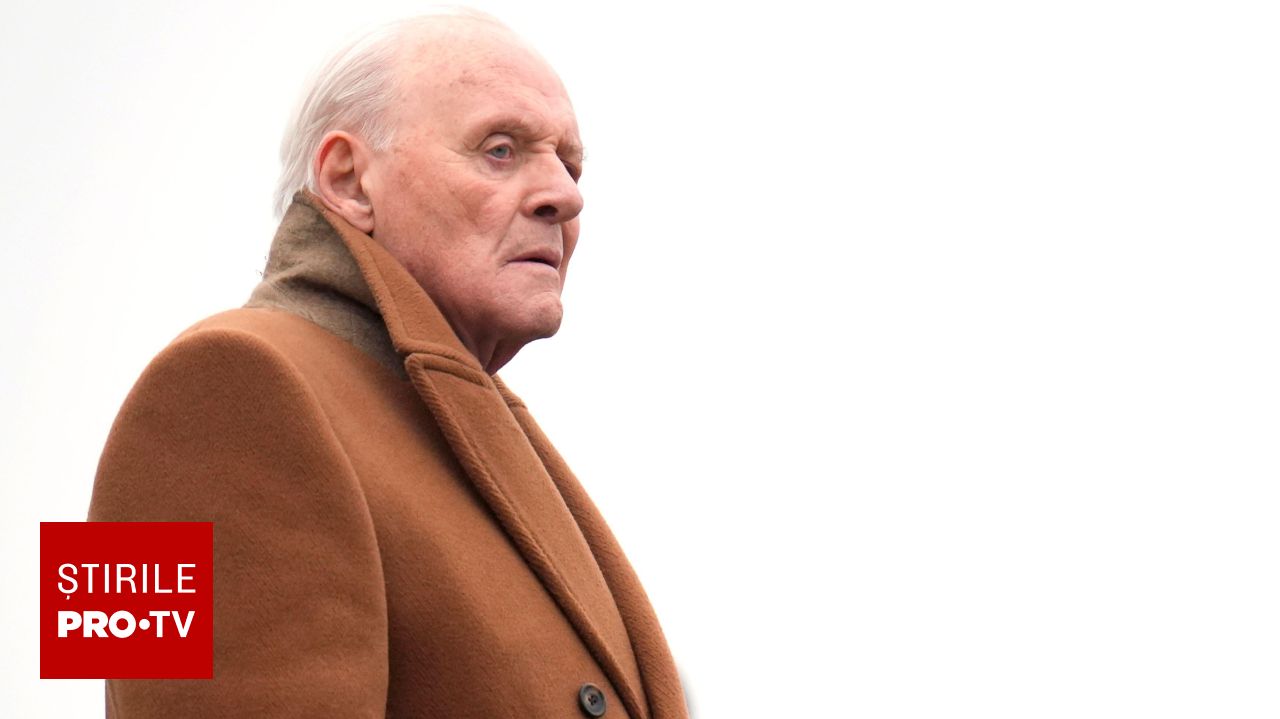
Anthony Hopkins, actor britanic câștigător al două Premii Oscar, lansează, la vârsta de 88 de ani, un album intitulat „Life Is a Dream”, care conține lucrări orchestrale compuse de-a lungul a peste 60 de ani, semnând un contract cu Decca Classics și având ca prim single piesa „Bracken Road”. #AnthonyHopkins #muzică #compozitor

Anthony Hopkins se lansează în muzică la 88 de ani. Va lansa compoziții scrise în ultimii 60 de ani: „E prima mea pasiune”
Mediafax.ro Jul 10

Actorul premiat cu Oscar Anthony Hopkins, în vârstă de 88 de ani, își face debutul în muzică prin semnarea unui contract cu casa de discuri Decca Classics și lansarea primului său album, „Life Is a Dream”, care include compoziții inspirate din amintirile sale din copilărie. #AnthonyHopkins #muzica #Hollywood

Un celebru actor de la Hollywood premiat cu Oscar, debutează în muzică la 88 de ani

Mary Beard, historian: There is a deeply far-right appropriation of the classics. Trump, as Hitler and Mussolini did in their day, uses the Roman Empire for his own purposes https://t.co/GXVhgMGEtd #MaryBeard #Classics #FarRight #US #IT

Tunite Music Jun 12

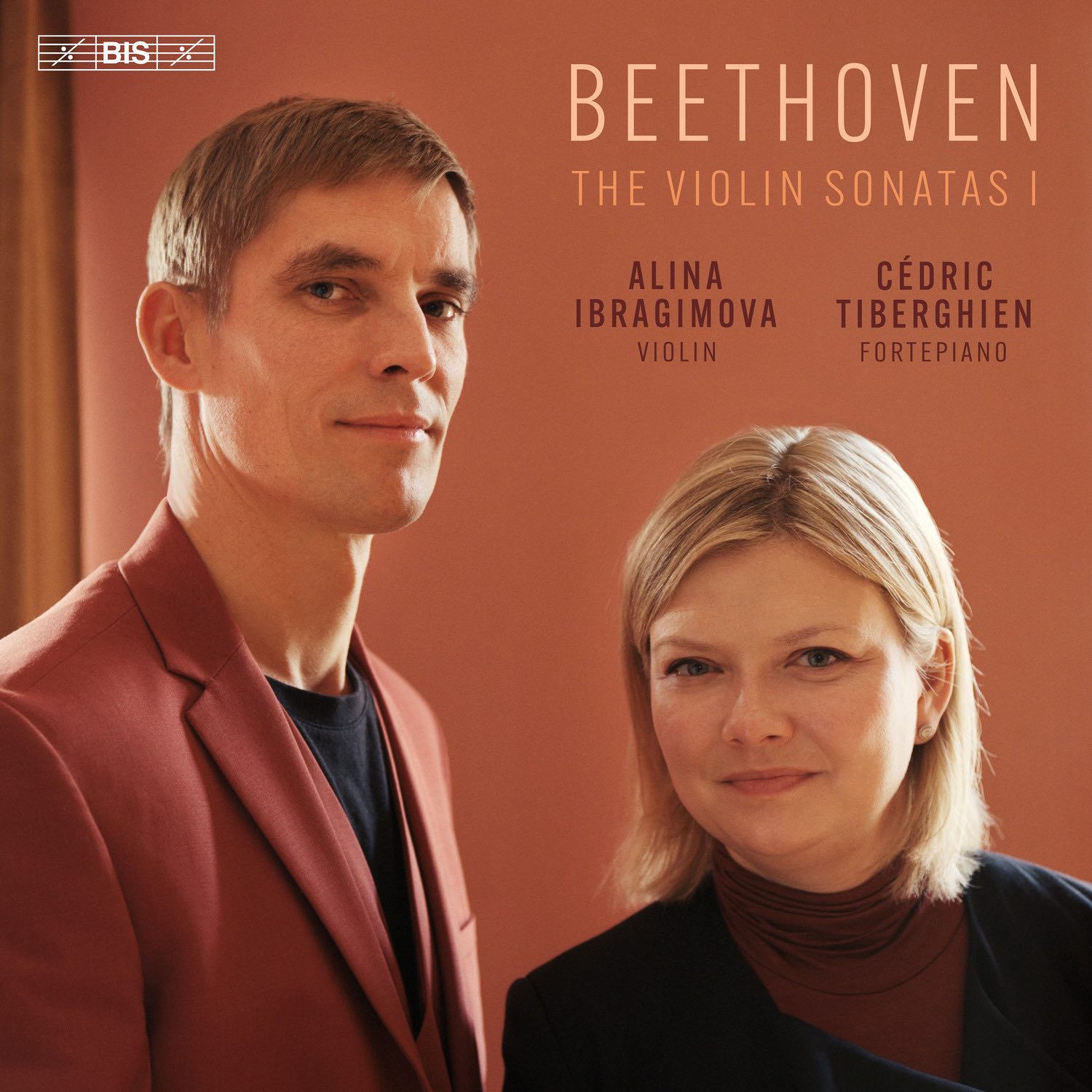
The first volume in an ambitious series of Beethoven’s complete violin sonatas has arrived, featuring a fresh partnership between soloist Alina Ibragimova and pianist Cédric Tiberghien. The recording marks Ibragimova’s debut as a solo artist for the prestigious BIS label and offers listeners a historically informed take on the classics. #Beethoven #ViolinSonatas #AlinaIbragimova #CédricTiberghien #BISRecords #HistoricalPerformance #GutStringViolin #Fortepiano #Guarneri #ChamberMusic #ClassicalMusic #MusicMagazine #2024Release #ViennaSound #MusicNews https://tunitemusic.com/post/beethoven-violin-sonatas-op-12-op-24-new-release/

Beethoven: Violin Sonatas Op. 12 & Op. 24 – New Release - Tunitemusic