BETA nonprofit public democratic european moderated

Search

#Connection

Russia, Iran, China and North Korea are working together, in a coordinated effort to dismantle the US-led world order and impose rules of their own. Is there still anyone who fails to see the connection between Russia’s aggression in Ukraine and Iran’s activities in the Middle #Geopolitics #USForeignPolicy #RussiaUkraine #RU #IR #CN #KP #US

Russia, Iran, China and North Korea are working together, in a coordinated effort to dismantle the US-led world order and impose rules of their own. Is there still anyone who fails to see the connection between Russia’s aggression in Ukraine and Iran’s activities in the Middle #Geopolitics #USRussiaRelations #InternationalRelations #RU #IR #CN #KP #US

Perguntei a Romeu Zema (Novo) por que não compareceu ao debate. “Eu não compareci porque o Lula não foi. As minhas perguntas seriam feitas diretamente a ele e, como no dia seguinte, eu já teria a presença no Jornal Nacional, a equipe nossa de comunicação, e eu também concordei, acabamos julgando que seria melhor concentrar esforços para o dia seguinte. Mas espero ter a oportunidade de estar frente a frente com o Lula, que é, vamos dizer, o grande ator hoje, que está levando o Brasil aí pra essa situação de insolvência e o brasileiro vai pagar muito caro por isso.” Augusto Cury (Avante), que compareceu ao debate, subiu para 11 pontos na pesquisa BTG/Nexus posterior. Já os 3 candidatos que faltaram caíram: - Zema, de 3 pontos para 1; - Flávio, de 37 para 33; - Lula, de 41 para 39. A alegação de Zema, igual à de Flávio, só reforça o papel do Novo de linha auxiliar do bolsonarismo. Seu candidato não está em disputa com o do PL, só com o do PT. Repito: foi a amarelada solidária. **** Íntegra do Manhattan Connection: https://t.co/zU5dfPXtDJ. #Debate #Eleições2022 #PolíticaBrasil

We spoke with Rebel Moms during the 24 Hours for the Climate organized in connection with Stockholm's massive climate demonstration on Sunday, August 23rd. 📢 @rebellmammornasverige was one of the main organizers of the Climate Demonstration, which gathered 50,000+ people! 💚 https://t.co/8T6Lmf3pXX #ClimateAction #StockholmDemonstration #RebelMoms #SE

H

Empathy, Compassion, and the Limits of Emotional Moral Judgment Empathy is widely regarded as a foundation of morality, but psychological research suggests that it is not an unqualified virtue. Paul Bloom (2017) argues that affective empathy—the experience of sharing another person’s feelings—has important limitations when used as a guide for moral judgment. First, empathy is biased. We respond more strongly to suffering that is vivid, identifiable, and psychologically close. Research on the “identifiable victim effect” shows that people can be more willing to help a specific individual than anonymous victims, even when the latter represent a much larger number (Kogut & Ritov, 2005; Lee & Feeley, 2016). Emotional salience therefore does not necessarily correspond to moral significance. Second, empathy is innumerate. Human emotional responses do not naturally scale with the number of people suffering. A single identifiable victim can evoke a powerful response, while thousands or millions of anonymous victims may produce comparatively little emotional engagement. This creates a problem when moral decisions concern suffering on a large scale (Bloom, 2017). Third, empathy can be exhausting. Repeatedly sharing the distress of others may produce empathic distress and emotional fatigue. Research suggests an important distinction between empathic resonance and compassion: while empathic engagement can increase negative affect, compassion can promote positive affect, motivation, and prosocial behaviour (Klimecki et al., 2014; Weng et al., 2013). The implication is not that we should care less. Rather, caring and feeling are not the same thing. Compassion allows us to recognize suffering and remain motivated to alleviate it without necessarily absorbing the suffering ourselves. Empathy may therefore be valuable for human connection, but it is a poor stand-alone system for making large-scale moral decisions. When millions of lives, limited resources, and competing needs are involved, compassion must be combined with reason, evidence, and deliberate judgment. The goal should not be to feel everything others feel. It should be to care deeply enough to help, while remaining clear-headed enough to help effectively. References: Bloom (2017); Kogut & Ritov (2005); Klimecki et al. (2014); Lee & Feeley (2016); Weng et al. (2013). Empathy and Its Discontents https://pubmed.ncbi.nlm.nih.gov/27916513/?utm_source=chatgpt.com

H

The Elite Origins of Marxist Revolution Bertrand Russell, a socialist who visited Moscow in 1920, observed that the Bolsheviks resembled religious fanatics more than political theorists. Lenin quoted Marx and Engels as a pastor recites Scripture. In his *History of Western Philosophy*, Russell described the parallels: dialectical materialism replaces God, the Communist Party becomes the church, communist revolution the Second Coming, punishment for capitalists hell, and the communist commonwealth heaven. The *Communist Manifesto* declares that its aims can be achieved only through “the forcible overthrow of all existing social conditions.” Marx sought to destroy the existing world and assumed that an undefined utopia would rise. If Marxism claims to speak for the oppressed, why has it so often been adopted by elites? Marx came from an upper-middle-class family that owned vineyards and employed servants. Friedrich Engels, his chief supporter and financier, inherited wealth from his family’s textile business. Lenin’s family owned property and employed servants, while Mao Zedong’s family was considerably wealthier than ordinary Chinese peasants. Fidel Castro’s family owned a large estate, Che Guevara came from an affluent background, and Pol Pot’s family had connections to Cambodia’s royal court. Pol Pot encountered Marxism while studying in Paris. These men went on to create, support, or lead revolutions that killed millions of the people they claimed to represent. This was no accident. The *Communist Manifesto* states that “a portion of the bourgeoisie goes over to the proletariat,” especially those who understand “the historical movement as a whole.” Marx therefore incorporated an explanation for his own class position into the movement’s founding text. Lenin expanded this idea, arguing that workers left to themselves could achieve only “trade-union consciousness.” Socialist theory, he believed, had to be brought to them by educated elites—the revolutionary vanguard. Although Marxism and communism are commonly portrayed as movements created for the poor, the men who developed and led them were, almost without exception, members of the elite.

H

Contraception and Western Culture In the 1960s, the birth-control pill became widely available. Sexual liberation is usually presented as a story of freedom and progress, but its biological consequence is rarely discussed: sex could now be separated from reproduction. Every Western nation has experienced below-replacement fertility for decades. Oxford anthropologist J. D. Unwin anticipated this pattern in *Sex and Culture*, a study of 86 societies. He expected to disprove any link between sexual restraint and civilizational achievement. Instead, he concluded that cultures practicing strict monogamy generated energy expressed through art, science, conquest, and commerce. Relaxing sexual restraint, he argued, consistently weakened that energy within three generations. Unwin also predicted that such societies would abandon rationalism, deism, and monogamy. Three generations after 1960 brings us near the present, and some of his predictions appear increasingly visible. Religious affiliation has collapsed, marriage is declining, the median age at first marriage is at a record high, and a record share of people will never marry. Rationalism also appears to be giving way to egoism, identity, and emotion. Contraception helps explain this transformation. Evolutionary theory distinguishes between a behavior’s immediate purpose—such as pleasure—and its ultimate function, such as reproduction. Sex traditionally served both purposes. Contraception severed that connection, preserving the behavior while disconnecting it from reproduction. Female education, urbanization, workforce participation, economic growth, and the rising cost of living also correlate with declining fertility. Yet many of these changes depend on technological control over reproduction. Career-first lifestyles, extended education, and mass female workforce participation would be far more difficult without it. Women may have gained freedom from child-rearing, but they may have fewer daughters to inherit that freedom. Institutions that promoted this transformation now import replacement populations that may not share its values and could eventually reverse them.

A good day for friendship, a strong hope for freedom and for a future built on dreams, protected from fear. In our three countries we did more this past year, together, on connectivity and human connections, than we did in the last decade. Because we know now that we are #Friendship #Freedom #Connectivity #Therearenospecificcountrycodesmentionedinthetweet.

Ορισθείσα Πρέσβης του @IsraelinGreece κ. Πνινάτ Γιανάι: «Το Ισραήλ και η Ινδία μοιράζονται πολλά περισσότερα από κοινά συμφέροντα - με την πάροδο των ετών, οι δύο χώρες έχουν οικοδομήσει μια ισχυρή, βαθιά και στρατηγική φιλία, βασισμένη στην εμπιστοσύνη, τις κοινές αξίες και την εκτεταμένη συνεργασία σε πολλούς τομείς. Ήταν ιδιαίτερα ενδιαφέρον να ανταλλάξουμε απόψεις, να ακούσω από την εμπειρία του Πρέσβη Ravi Shankar και να συζητήσουμε τις προκλήσεις και τις ευκαιρίες που μοιραζόμαστε. Η διπλωματία ξεκινά μεταξύ των χωρών, αλλά οι πραγματικές σχέσεις χτίζονται και μεταξύ των ανθρώπων. Ανυπομονώ για τη στενή συνεργασία εδώ στην Αθήνα, στο πνεύμα της ιδιαίτερης φιλίας μεταξύ του Ισραήλ και της Ινδίας». 🇮🇱🤝🇮🇳 Ambassador designate of Israel in Greece Ms. Pninat Yanay: “Israel and India share much more than common interests — over the years, our two countries have built a strong, deep and strategic friendship, based on trust, shared values and extensive cooperation across many fields. It was fascinating to exchange thoughts, learn from Ambassador Ravi Shankar’s experience, and discuss the challenges and opportunities we share. Diplomacy begins between countries, but true connections are also built between people. I look forward to close cooperation here in Athens, in the spirit of the special friendship between Israel and India”. 🇮🇱🤝🇮🇳 #Diplomacy #Israel #India

Balkan property prices have lost their connection to Balkan purchasing power. From Croatia to Greece, from Bulgaria to Serbia, housing prices in many cities and coastal regions are increasingly shaped by foreign buyers, tourism, diaspora money and speculation — while local https://t.co/e2ju0BwrGf #BalkanRealEstate #PropertyMarket #HousingCrisis #HR #GR #BG #RS

Som ni vet så granskade jag lobbygruppen Jerusalem Prayer Breakfast (JPB) nyligen. Expressens journalist Inas Hamdan valde dock att inte beskriva JPB som den lobbygrupp det faktiskt är, utan som en "kristen bönerörelse". I den konferens jag delat med mig av, går direktören Albert Veksler upp och ger direktiv till de närvarande. Sydafrikas delegater ska "fundera ut ett sätt som ni kan avbryta anmälan till Internationella domstolen" för det som Israel gör i Gaza. Alexander Christiansson (SD) utfrågas om vilken hans första motion i riksdagen var, varpå han svarar att det var att flytta Sveriges ambassad till Jerusalem. Nu har jag hittat ny information som visar att JBP själva hyllar den sionistiska lobbyismen. På hemsidan Israel Report beskriver JPB:s direktör Albert Veksler hur USA:s president Harry S Truman, tack vare att han hade en judisk vän som han gjorde affärer med, valde att godkänna Israel bara några minuter efter att staten bildades. Detta trots att USA:s regering inte ville det. 
 “Because of this friendship, Truman — against all odds and without the support of the State Department — was able to recognise Israel just eleven minutes after Ben Gurion declared the State of Israel." “This is what the Jerusalem Prayer Breakfast is all about. We see miraculous things happen." Han beskriver hur nära kontakter med makthavare – ofta kristna sådana – varit en del av sionismens strategi ända från Theodor Herzls tid. "Albert Veksler describes how, in the late 19th century, Hechler [brittisk pastor] used his social connections to introduce Herzl to members of the German royal family and to the Sultan of Turkey, helping to elevate Herzl’s concept of a Jewish national homeland from the political fringe to a topic of discussion among world leaders.
– “This created the conditions for the Balfour Declaration and the British Mandate." I artikeln beskrivs också hur Jerusalem Prayer Breakfast lyckats bedriva framgångsrik lobbyverksamhet mot Nederländernas etablissemang. “The King acknowledged his great-grandmother, Queen Wilhelmina’s indifference to the fate of Dutch Jews during the Holocaust,” says Albert Veksler, who last April organised the Jerusalem Prayer Breakfast in Stockholm at the Elite Hotel Marina Tower in Nacka, where around 400 delegates gathered." #Jerusalem #Lobbyism #Sionism

WE ARE MONITORING THE SITUATION IN CROATIA. I HAVE SPOKEN WITH THE CROATIAN PRIME MINISTER AND THE SLOVAK AMBASSADOR. A short while ago, I spoke by phone with the Prime Minister of Croatia, Mr Andrej Plenković, and expressed my solidarity with him in connection with the #Croatia #Solidarity #Plenković #HR #SK

Happy news from Finland and Sweden! 🇫🇮🇸🇪 Today marks a historic moment: for the first time in 40 years, direct passenger train services between Finland and Sweden are back on track. 🚆 A great step towards even stronger connections between our countries and across the Nordic #Finland #Sweden #TrainTravel #FI #SE

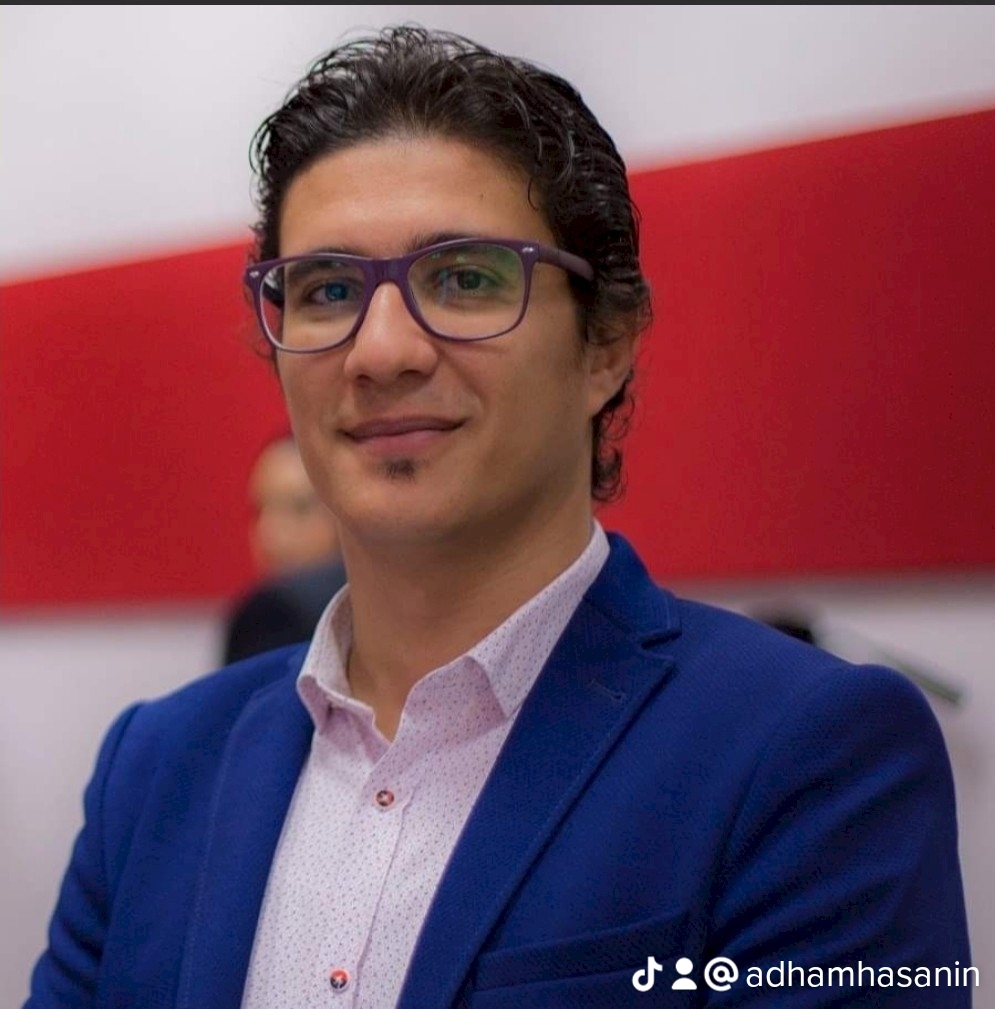
My Name Is on a File On a case I was never summoned to, and a price I do not pay alone By Adham Hasanin Egyptian journalist and political writer, based in the Netherlands | July 2026 In 2024, I learned that my name had been entered into a case. Case number 1282. Listed as a "defendant." I was never summoned, and no one called to tell me the exact charge. I found out the way anyone in my position finds out — from a colleague, from a quick search of my own name, from another journalist who called to ask: "Did you know your name is on file?" I do not want to overdramatise the story. No cinematic manhunt, no car tailing me down a European street. What happened is simpler and crueller than that: a state thousands of kilometres away opened a file bearing my name, without my knowledge, without any way for me to defend myself within it, without even anyone standing before me to answer. The charge is not based on any act I committed. The charge is that I wrote. An article, an opinion, a tweet — it makes no difference. What matters is that the words were read, and someone decided they were dangerous enough to become a case number. I. How Do You Know You Are Accused? This question seems like a technicality, but it is in fact the heart of the whole matter. I received no official letter. No lawyer knocked on my door carrying documents. No one from an embassy or consulate called to inform me. The knowledge itself arrived by accident — a passing search, or a message from a friend asking: "Where did you see your name?" This small detail reveals something far larger than a mere administrative oversight. When you are not formally notified that you are accused, you do not even have a clear starting point from which to act. You do not know exactly when the file was opened. You do not know who decided to include your name. You do not know whether a hearing was held, a decision was made, or even whether an investigation took place at all. You simply discover, one day, that you have become "accused" within a legal system that never gave you the chance to know its rules. This ambiguity is not a flaw in the procedure; it is the procedure itself. A case opened without a clear announcement, with no trial date set, performs its full function even while suspended indefinitely. It does not need a conviction to frighten; it is enough that it simply exists. II. The Charge That Needs No Crime In conventional legal systems, a case begins with an act: theft, assault, fraud — something material that can be proven or disproven. But my case, like many others, began with a word. I stole nothing. I assaulted no one. I incited no violence, called for no chaos. I wrote an opinion. I analysed a policy. I criticised a decision. That is the entirety of it. And yet this simple act — writing — became the basis for a legal file bearing a number and classified under a security heading. The paradox is that this kind of charge requires no fixed standard. What counts as "dangerous" today may not be tomorrow, and vice versa. There is no published list of forbidden words, no clear criterion distinguishing incitement from opinion. This deliberate ambiguity — or perhaps unintentional, but effective regardless — leaves every writer living in a state of permanent unease: will this sentence be the one that opens a file bearing my name? III. The Real Danger Is Not to Me Many ask me: "Can they reach you in the Netherlands?" The honest answer: no, not directly. I am here, in a country governed by the rule of law, physically protected by Dutch police, and no one can arrest me on the basis of a case in another country absent a valid extradition treaty and supporting facts. This is not my first concern. My real concern is that this case does not target me alone. It targets those around me. My family in Egypt. People walking down the street, opening their front door, with no connection to politics whatsoever — and suddenly someone is asking about them because I wrote a word from here. This is not a threat spoken aloud. No one calls to say: "If you continue, we will do such-and-such." The message arrives without anyone saying it — through the kind of questions asked of my family, through their timing, through the silence that meets me when I try to learn the details. Sometimes it is a "routine" phone call from some office, asking about my place of residence, my activities, or people I am in contact with. None of it is an explicit threat, but the timing alone is enough to deliver the message. This is precisely the mechanism by which this kind of pursuit operates: it does not need to touch me physically to affect me. It is enough to make me know that the people I love are exposed to harm because of what I write. IV. I Am Not an Exception It would be easy for an article like this to turn into a personal complaint, and I am careful that it should not. Case 1282 is not an isolated incident, and if I stay silent about it I become complicit — unintentionally — in concealing a pattern that genuinely exists. There are others like me — far more than me — whose names sit in similar files, some of whom have no platform to speak from as I do. Journalists, activists, even ordinary people who never practised journalism but shared a post or left a comment. Case 1282 is not an exception; it is a method of operation. Someone writes from abroad, someone else decides they are "dangerous," and the matter shifts from opinion to legal file, without a real trial, without even a clear official announcement that a charge exists at all. More dangerously, this pattern is not confined to Egyptians alone, nor to any single country. It is a recurring tactic used by several regimes seeking to pursue voices beyond their borders without bearing the burden of actual proof or a transparent legal process. The open, unannounced file serves the same purpose everywhere: it frightens without convicting, and keeps the writer in a permanent state of tension without ever offering him the chance to defend himself. V. What Has Actually Changed in Me I will not say this made me stronger. The phrase is worn out, usually deployed to prettify a painful experience, and I refuse to do that. What actually happened is simpler and more honest: I began writing more slowly. Not less candidly — I still say what I believe, still criticise what deserves criticism. But I have become more aware that every sentence I write from here may carry a price I am not the only one paying. This awareness slows the writing, not because I am censoring myself out of fear for my own safety, but because I am thinking about who might pay the price on my behalf. And this is precisely the point of such a case, whether intended or a by-product of a broader mechanism. Actual arrest is not required for censorship to function. No summons is required, no trial, not even a clear charge. It is enough to know your name is written on a piece of paper somewhere, to make you think twice before writing the next time. VI. Why I Continue Regardless A reader might ask: if the price is this clear, why keep writing? Would silence not be safer, for you and for your family? The answer is not as heroic as it might sound, but it is honest: because silence does not solve the problem, it postpones and expands it. If I stopped, and others like me stopped, the mechanism that produced Case 1282 would keep operating with no voice to expose it. Files would keep opening, names would keep being entered, families would keep being questioned, with no one outside the circle of direct victims ever knowing this was happening at all. Writing about this experience, for all its risks, is the only way I have to make this pattern visible. When an article like this is published, the file no longer remains a secret between a government body and an isolated writer; it becomes part of a public record that other journalists, human rights organisations, and even international institutions can follow and document. Conclusion: A Price Not Paid Once I am still writing. More slowly than before, but still writing. And Case 1282 remains open, suspended, with no set date for a hearing or a verdict, exactly as it began. This very ambiguity is the message. An authority that opens a file and never closes it, never tries its subject, never even clearly states what the charge is — is not pursuing justice. It is pursuing something else entirely: that everyone who thinks of writing knows the price is possible, even if not certain. And that everyone who has already written carries that price with them wherever they go, however far they travel from the source of the case. This is the true price of a single word: not one arrest at one moment, but a continuous state of uncertainty that lives with you every time you open a blank page to write. Adham Hasanin is an Egyptian journalist and political writer based in the Netherlands.

Donald Tusk Jul 31

Today, the Polish Foreign Ministry summoned the Russian ambassador in connection with the missile that hit Polish territory yesterday. #Poland #Russia #Diplomacy #PL #RU

Barça News Jul 29

Raphinha retrouve ses coéquipiers. 🫂💙❤️ La connexion : Raphinha x Adeyemi ⚡️ https://t.co/IYpHuztIh2 #Football #Teamwork #Connection

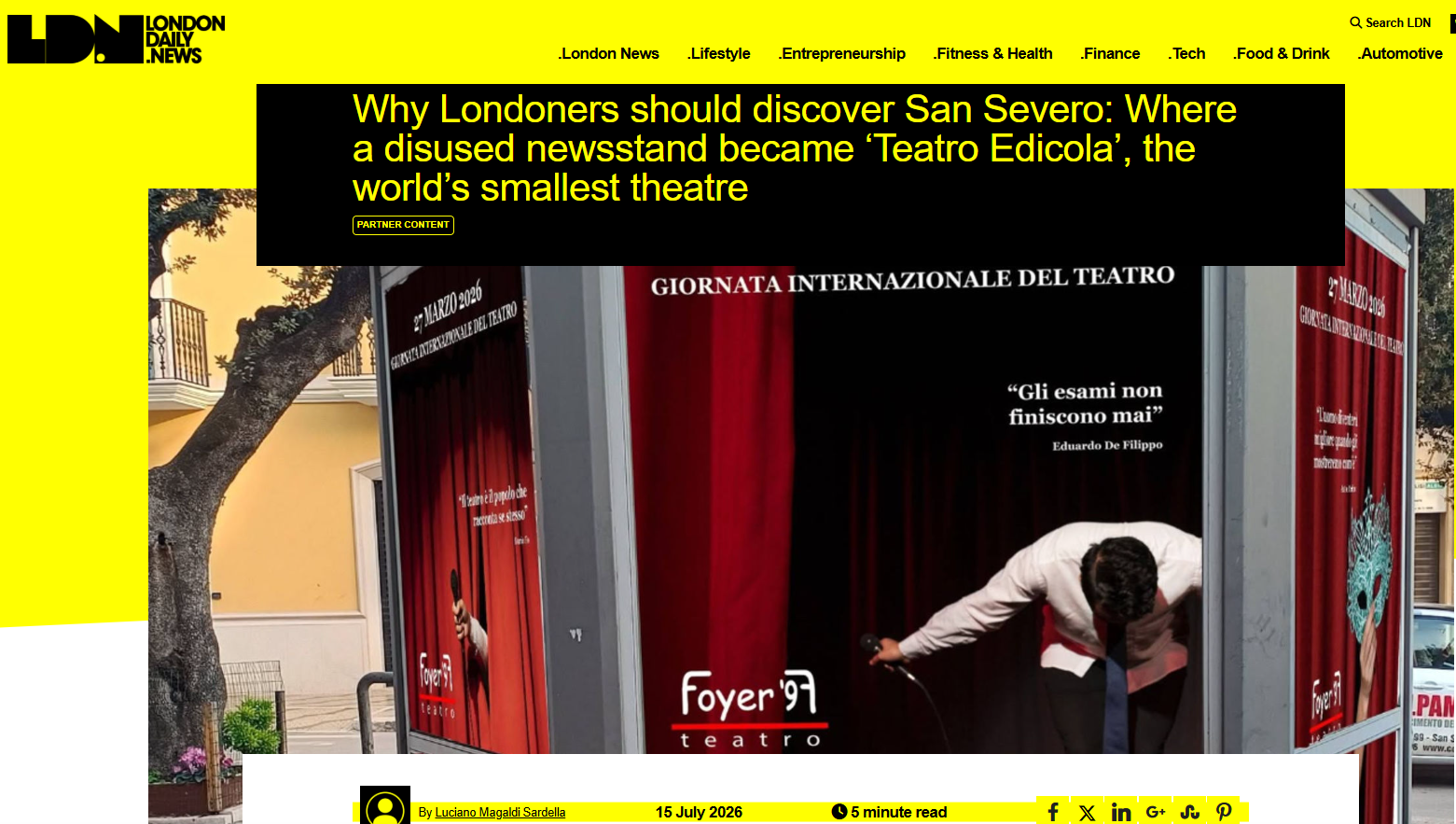
FROM "EDICOLA FIORE" TO SAN SEVERO’S "TEATRO EDICOLA": FIORELLO’S INSPIRATION WINS OVER THE PRESTIGIOUS "LONDON DAILY NEWS" SOURCE: https://www.londondaily.news/why-londoners-should-discover-san-severo-where-a-disused-newsstand-became-teatro-edicola-the-worlds-smallest-theatre/?fbclid=IwY2xjawTWoORleHRuA2FlbQIxMABicmlkETBUd1dWQ0FrTjZhOGRZOG13c3J0YwZhcHBfaWQQMjIyMDM5MTc4ODIwMDg5MgABHvaNbHFe6obgPGLRnzZuZu0isRySCXesHrLQvbzSgFC5G5JaSguUp5ggubC8_aem_xHxs6ZBlACaI8a-7Ns-Obw The vision of Rosario Fiorello takes tangible form in the revolutionary project conceived by Francesco Gravino of San Severo, artistic director of Foyer ’97. Fiorello’s brilliant intuition behind Edicola Fiore has found new life in the heart of Puglia, San Severo. Gravino, who leads the historic theatre company Foyer ’97, has traced directly to Fiorello and his multi‑award‑winning television series the inspiration that led him to transform an abandoned news kiosk into what promises to become the smallest theatre in the world. "Edicola Fiore" was the first to demonstrate how a space originally intended for selling newspapers could be reimagined as a genuine stage, turning the ordinary rhythms of daily life into performance. That lesson was not forgotten: when Gravino found himself before the shuttered, newspapers' kiosk in Via Matteo Tondi, he recognised the potential Fiorello had intuited years earlier. The result, inaugurated on 27 March 2026 to coincide with World Theatre Day, is Teatro Edicola: a venue with only six seats, where eleven actors rotate a repertoire ranging from Goldoni to Chekhov. Performances of ten to fifteen minutes have already drawn hundreds of curious visitors, attracting the attention of the international press, including the prestigious London Daily News, which has hailed the project as a powerful demonstration that regenerative culture does not depend on large budgets but on ideas capable of bringing a community together. The connection with Fiorello is further strengthened by his links with prominent figures in the city, such as Luca and Daniela Sardella, who have supported the initiative. It is an indirect acknowledgement confirming that the Sicilian entertainer’s vision continues to inspire new forms of theatrical expression in Italy.

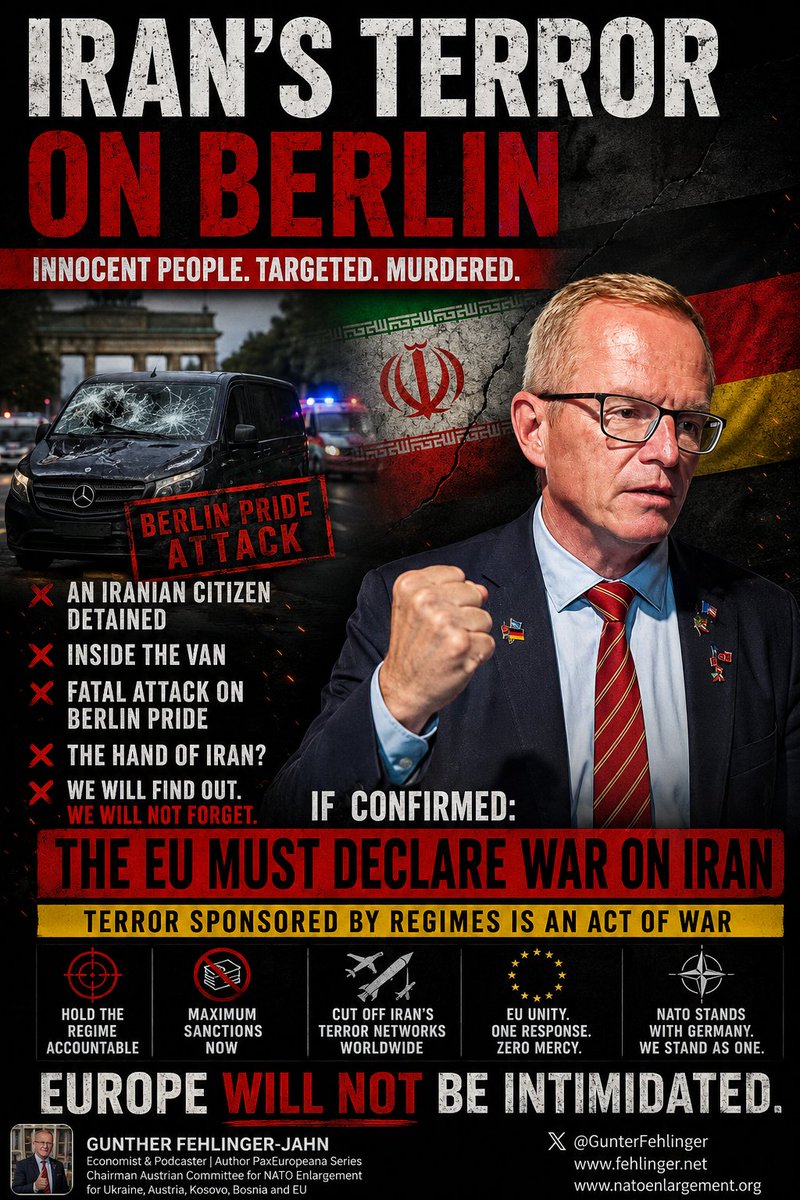
Berlin must get the truth. Europe must stay united. The attack in Berlin has shocked Europe. Reports that an Iranian citizen has been detained in connection with the investigation are extremely serious, but the facts must be established through a full and transparent https://t.co/lQhKO16pXy #Berlin #EuropeUnited #Iran #DE #EU #IR

🃏 Neymar disputando o Campeonato Brasileiro de pôquer na noite de ontem, em São Paulo. 🗞️ @ESPNBrasil | @SportsCenterBR 🎥 connectionpoker (IG) https://t.co/Kv4HxmA4ci #Neymar #CampeonatoBrasileiro #Pôquer

🇵🇱🇩🇪 relations remain complex, there is e.g. frustration with Berlin's obfuscation on such diverse issues as honouring Polish victims in the II World War or investing in transport connections with Poland. But military cooperation is solid & concrete, serves as a good example.👍 #PolandGermany #WWII #MilitaryCooperation #PL #DE