WRLD

Search

#Elites

The author wrote that, with the "Palestine Effect," people understood the situation, joined together, and mobilized beyond national borders against a system that, according to him, wanted them passive and exploitable for the benefit of predatory elites. He added that he discussed it in the latest issue of *This Week in Palestine* and called the case he was referring to a striking example. #Palestina #GiustiziaSociale #Mobilitazione #PS #IL (translated)

2179
Le Monde.fr 1d

The article argues that the idea of a "overproduction of elites" does not take into account the anger and frustrations of young people regarding inequalities and the difficulties of accessing real opportunities. #ProblemasDeConexión #NavegaciónWeb #SoporteTécnico (translated)

www.lemonde.fr
Pourquoi la thèse d’une « surproduction d’élites » passe à côté de la colère des jeunes
2143
La Libre.be 2d

In the run-up to the 2026 midterms, both Democrats and Republicans are fighting over the concept of the working class, which is becoming increasingly vague and no longer has a clear definition, while the sentiment of neglect by the elites continues. #ClasseOuvrière #PolitiqueAméricaine #Midterms2026 (translated)

www.lalibre.be
Midterms 2026 : “working class”, le mot fourre-tout de la politique américaine
2783
Peter Bajomi-Lazar 2d

COMPETENCES OF THE GOOD JOURNALIST 1 "Investigating US and UK television broadcasting, Brian McNair (1998, 119) finds that ‘the style of journalism has gradually come to take precedence over substance’. Competition, intensified by the emergence of cable and satellite television channels in the 1970s and 1980s, has turned the bulletins of traditional news organisations into entertainment, focusing on interesting, rather than important, stories. The rise of infotainment is a clear indication that competition on the media market does not necessarily improve quality. Pseudo-events, i.e. public appearances by politicians such as interviews, press conferences and political performances organised by spin doctors (cf. Boorstin 1961/1992), cost-efficient for media to cover, have become commonplaceon television. When broadcasting pseudo-events, however, journalists allow political actors to set and frame the news agenda and hence divert attention from abuses that they wish to hide from the public eye. One may add to McNair’s observation dating from the 1990s that the rise of social media platforms in the 2000s and 2010s enabled political elites to more efficiently impose their own agendas and frames on the public, as they can now bypass professional journalists and address voters directly and uninterruptedly. As a result, professional journalists may find themselves in a passive and reactive position. To take McNair’s line of thought further, we can suggest that good journalists have the competence of not letting politicians set and frame the news agenda. They should not only report on issues raised by political elites but also break stories based on independent sources. Of course, journalists cannot completely ignore pseudo-events, yet they can cover them critically and put them in context, noting that many pseudo-events have been orchestrated by campaign experts." (Péter Bajomi-Lázár - Dalma Boldog: Journalism Ethics in Eastern Europe. Anthem Press, 2026, pp. 78-79).

Eric Zemmour 3d

The author compared Roland Lescure to Marie Antoinette, writing that she responded to the suffering of the people by offering them brioche, whereas Lescure supposedly said that the ruin of the people did not prevent him from sleeping. He believed that the contempt of the elites for the people had, each time in history, delegitimized power. #Histoire #Politique #Élite #FR (translated)

3345
Paul St-Pierre Plamondon 4d

Paul St-Pierre Plamondon argued that the federal government had engaged in negotiations with the European Union directly affecting Quebec without consulting or giving it a place at the table. He said this approach contrasted with previous negotiations on the free trade area with the EU and reminded that Quebec had, in his view, played a pioneering role in supporting NAFTA. The leader of the Parti Québécois also reproached the federal government for wanting to impose economic decisions falling under Quebec’s jurisdiction, breaking with the Gérin-Lajoie doctrine. He condemned the fact that the Quebec premier was unable to speak at an event held in Quebec, and deemed insufficient the opportunity that may have been granted to him to influence Quebec interests by allowing cocktail shrimp service at a reception. Plamondon believed that this situation represented a lack of respect and a setback for Quebec's autonomy. He described the vision of Canada defended by Mark Carney as centralizing, even unitarian, and claimed it reduced the provinces to a role of observers in discussions affecting their interests and responsibilities. He recalled that Pierre Falardeau denounced, in "Le Temps des bouffons", the subordinate place of Quebecers in relation to financial elites, and mentioned the struggle for Quebec to decide its own development, notably under Jean Lesage, René Lévesque, Jacques Parizeau, and Bernard Landry. He concluded that Quebec must participate in decisions that defended its interests. #Québec #Autonomie #Démocratie (translated)

3488
Bonifacio Castellane 5d

Bonifacio Castellane argued that elections conferred power only in a formal sense, while in his opinion it was the elites that determined its allocation. He pointed out as instruments of power the loss of an election, the failure to respect human rights in the case of vaccination mandates, and the use of the penal code against enemies, with its suspension for friends. He wrote that elites fell when a new elite took the place of the previous one. #potere #élite #dirittiumani (translated)

2929
Gérard Araud 7d

The author mentioned dogmatic free trade, the triumph of individualism, the isolation of elites, the transition from the entrepreneurial state to the managerial state, social networks, the excessive indebtedness of states, the end of Western dominance in the world, and demographic imbalances, before questioning a possible upheaval of the nation-state. (translated)

3174
eldiario.es 1w

Clara Mattei, an Italian-American economist, argues in her new book Escape from Capitalism that both the working classes and the elites are enslaved by capitalism, and she advocates for self-organization and the pursuit of more just and egalitarian economic alternatives. #Capitalismo #EconomíaJusta #AlternativasEconómicas (translated)

www.eldiario.es
Clara Mattei, economista: "Incluso las élites están esclavizadas por el capitalismo"
2735
Eugénie Bastié 1w

The author mentioned the work of American historian Peter Turchin in *The Decline of Empires*, which he presented as a framework for understanding the "French chaos," centered on the loss of social cohesion, the overproduction of elites, and civil war. #Histoire #Société #Civilisation #FR (translated)

2968
Observador 1w

The Master Case exposed the fragility of the fight against corruption in Brazil, revealing the web of illicit influences of Daniel Vorcaro, which involved political and judicial elites, including judges of the Supreme Federal Court, and had major repercussions in the current electoral campaign. #Corrupção #Brasil #CasoMaster (translated)

observador.pt
Caso Master. A corrupção assombra a campanha eleitoral
2627
Babel TV 1w

Babel TV claimed that a video showed Jean Quatremer in tears after the opening, according to the media, of a German investigation into the sabotage of the Nord Stream pipelines. He estimated that the investigation risked undermining the Ukrainian and Western narrative, which has attributed responsibility to Russia from the beginning and has served to justify the war and support for Kiev. Babel TV added that the examination of long-hidden files could, according to him, bring to light other cases. He cited what he described as massive electoral fraud in the United States and elsewhere, the handling of the Covid crisis, the side effects of vaccines, the agendas of globalist networks, and the Epstein case. He predicted that these issues could shake other official narratives and wrote that Quatremer should be concerned about what could follow the investigation into Nord Stream. #NordStream #information #actualité #JeanQuatremer #Ukraine #Occident #EnquêteAllemande #FraudeÉlectorale #Covid #Vaccins #Mondialistes #Epstein #Vérité #Narratif #Propagande #Russie #Allemagne #Libération #Corruption #Élites #NordStream #Ukraine #Vérité (translated)

3541
Joel S. 1w

Antisemitism is structurally necessary for Musk's politics, because the right-wing populism he supports needs to frame itself as fighting for "the people" against "the elites," but as the world's wealthiest person, he needs a definition of "elite" not rooted in actual wealth or corporate ownership.

1942
mtsw 1w

Rising healthcare costs are a huge blind spot for our pundit class and elites because it's one of those things that's more noticeable the further down the income scale you are. Having your premiums rise $500/month year to year doesn't really rate if you're making $250k but kills you if you make $50k

2285
Dandi no Consignado 2w

Dandi from Consignado wrote that the 1988 Constitution expanded the electorate by millions of people but did not hold accountable, in his assessment, the elites who benefited from the regimes between 1930 and 1980. According to him, FHC and Lula I postponed the problem by making the economy more efficient and resorting to indirect redistribution, while Lula II postponed it with economic growth. The author stated that misguided decisions from Dilma I were followed by unsuccessful attempts from Dilma II and Michel Temer to manage the situation. He also mentioned that Bolsonaro began to transfer costs to the poorest and that Lula tried to do so with the wealthiest, but none of the initiatives succeeded because divided elites remained indecisive. Dandi stated that the fiscal problem and stagnation of productivity could no longer be postponed. As alternatives, he presented the opening of the economy, microeconomic reforms, a significant increase in taxation of the wealthiest, the end of inefficient sectoral policies, and a restrictive environmental agenda—measures that, according to him, would benefit the poorest and burden the richest. The other option, he wrote, would be to deeply cut social spending, allow the expansion of the agricultural frontier without correcting the inefficiencies of agribusiness, maintain industrial policy, and let inflation reduce the value of debt. He concluded that postponing this choice would no longer be possible without social conflict or the continuation of malaise. #Economia #Política #JustiçaSocial (translated)

2980
PutoMikel 2w

PutoMikel wrote that making things burn to combat inequality and the abandonment of the elites towards the majority represented the most beautiful aspect of "civilization" in France. https://t.co/KCiUS0x1bw #Desigualdad #JusticiaSocial #Civilización (translated)

2870
Mehdi (e/λ) 2w

Mehdi (e/λ) wrote that the idea of a completely peaceful revolt was, in his view, a comfortable myth intended to neutralize dissent. He added that, without a balance of power or economic or security costs for the elites in power, the outrage in the streets was quickly absorbed and reduced to a media background noise. #Politique #Révolte #Contestation (translated)

2987
Maarten Boudry 2w

The author said messages of this kind left them heartbroken, but that sadness soon turned to intense anger at what they called the cowardice of political and intellectual elites, whom they blamed for allowing a return to the conditions of the 1930s. They singled out progressive figures, saying they were unable to see what was happening.

2995
Chicago Boy 2w

Chicago Boy indicated that he had discussed that very morning with a Parisian leader about David Lisnard. According to him, the Parisian milieu despised him, reducing him notably to his image of a "Cannes redneck" and his jogging. He believed that this contempt could serve Lisnard and that he should rely on a discourse in favor of a return of power to the provinces and decentralization. He clarified that this would not be a discourse against the elites in general, but against the Parisian elite, which he described as disdainful and incompetent. #Politique #Décentralisation #Elites (translated)

2996
Stephen Nikola Bartulica 2w

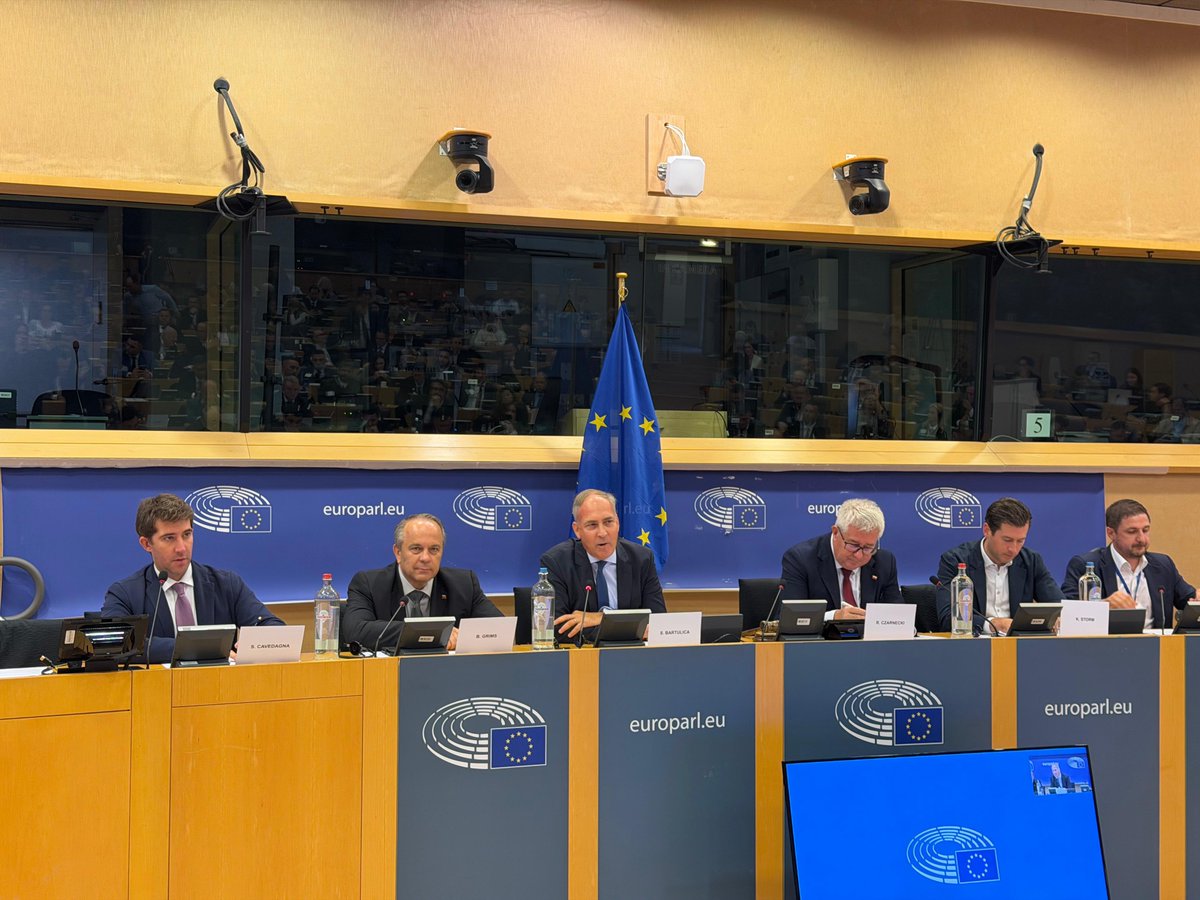
The author argued that Brussels elites preferred obedience to democracy and claimed that political persecution began when voters elected the “wrong” candidate. They described the treatment of Călin Georgescu as an abuse of power and invoked Croatia’s war for independence, saying it showed the value of freedom. https://t.co/uN25iOAMMF #Demokracija #Sloboda #Pravačovjeka #BE #HR

2998