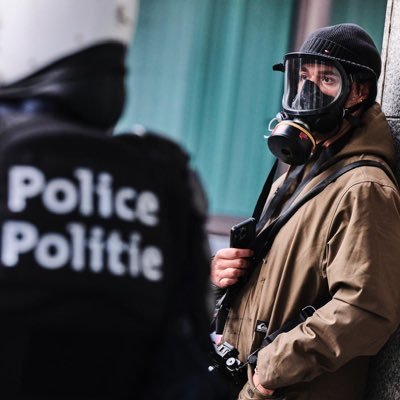
Owen wrote that it was time to go to dinner in Paris and that he and his company were still looking for a restaurant. He reported that the work would continue all night and also the next day. His colleagues from PowNed would continue that night and the following day during the day and in the afternoon. #avondeten #Parijs #gezelligheid (translated)

PlayLiszt wrote to PolizeiBB that an Eastern European account has more than two million followers and supplies media worldwide. He asked what PolizeiBB intended to do about it and whether they wanted to shut down the internet. https://t.co/W7LXXxDRvi #Internet #Medien #Sicherheit (translated)
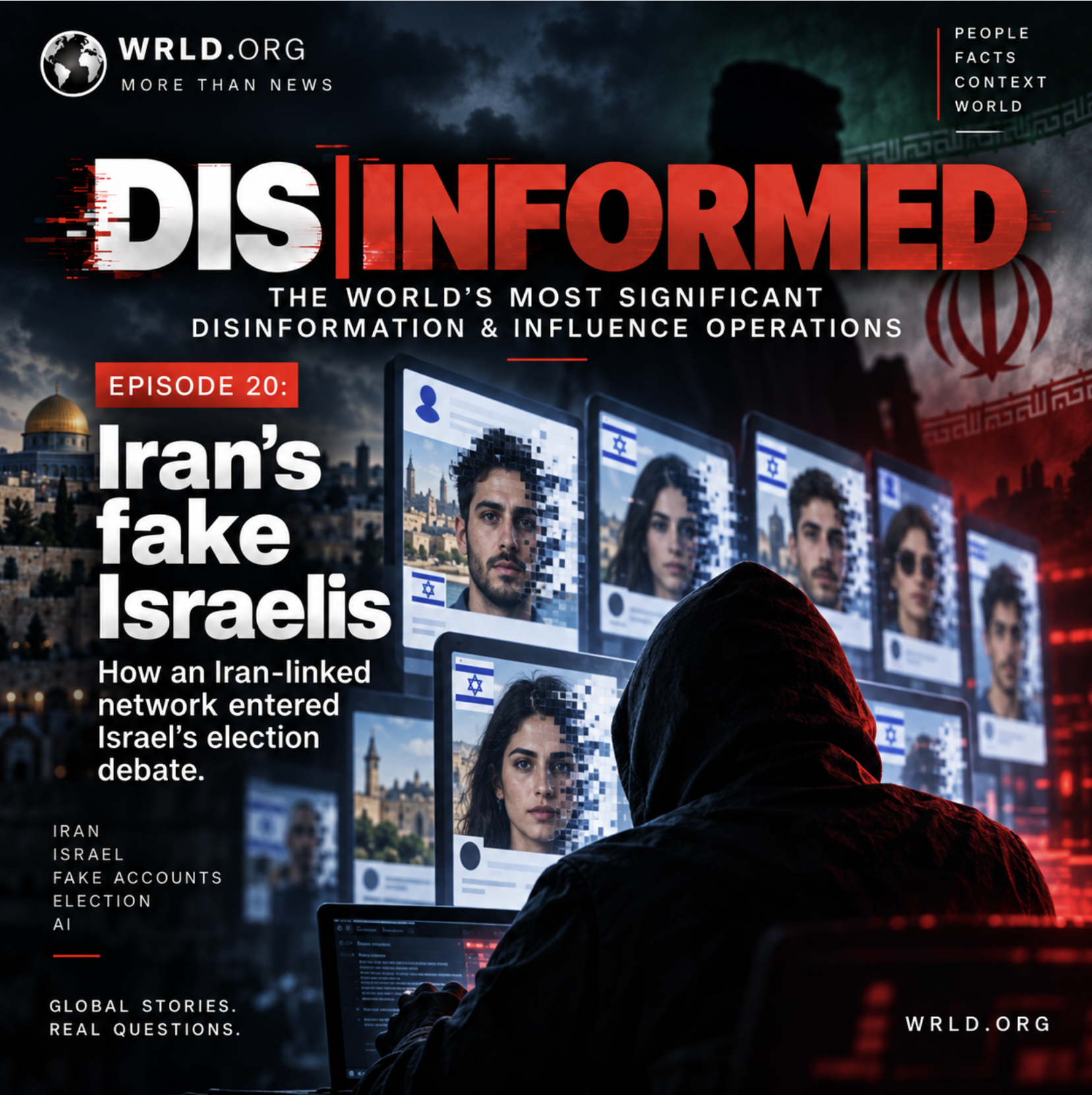
𝗜𝗿𝗮𝗻’𝘀 𝗳𝗮𝗸𝗲 𝗜𝘀𝗿𝗮𝗲𝗹𝗶𝘀 – 𝗵𝗼𝘄 𝗮 𝗳𝗼𝗿𝗲𝗶𝗴𝗻 𝗶𝗻𝗳𝗹𝘂𝗲𝗻𝗰𝗲 𝗻𝗲𝘁𝘄𝗼𝗿𝗸 𝗲𝗻𝘁𝗲𝗿𝗲𝗱 𝗜𝘀𝗿𝗮𝗲𝗹’𝘀 𝗲𝗹𝗲𝗰𝘁𝗶𝗼𝗻 𝗱𝗲𝗯𝗮𝘁𝗲 Ahead of Israel’s 27 October election, hundreds of social-media accounts have been presenting themselves as ordinary Israelis while injecting political messages into genuine domestic conversations. They appear as women, reservists, secular voters, religious activists and frustrated citizens. Some attack Benjamin Netanyahu, others have previously promoted narratives associated with the Israeli right, while many focus less on parties than on a broader message: Israel is divided, its institutions cannot be trusted and its political system is approaching crisis. A detailed investigation by the OSINT company Golden Owl has mapped this activity as a substantial Iran-linked influence network. Its October analysis identified at least 694 accounts, with 445 attributed at high or medium-high confidence to the operation. Between 11 August and 11 October, the network generated at least 4.7 million views and more than 160,000 interactions. The researchers found no evidence that these accounts were simply a group of independent Iranian commentators expressing political opinions. Their assessment rests instead on coordinated behaviour, false identities, account histories, copied content, language patterns and platform metadata linking significant parts of the infrastructure to Iran. 𝗙𝗿𝗼𝗺 𝟯𝟱 𝗽𝗲𝗿𝘀𝗼𝗻𝗮𝘀 𝘁𝗼 𝗵𝘂𝗻𝗱𝗿𝗲𝗱𝘀 𝗼𝗳 𝗳𝗮𝗸𝗲 𝗮𝗰𝗰𝗼𝘂𝗻𝘁𝘀 The investigation developed in two stages. Golden Owl’s first report, published in September, identified an operational core of 35 accounts: 32 personas presenting themselves as Israelis and three Hebrew-language media-style channels. During the 30-day period measured in that study, active accounts generated 947,322 impressions and more than 9,000 interactions. The October investigation expanded the dataset dramatically. Researchers analysed more than 560,000 data points, including tens of thousands of accounts, relationships between them and more than a quarter of a million posts. The wider network showed repeated patterns of identical texts, synchronised activity and accounts created in batches. The numbers therefore describe not a sudden explosion from 35 to hundreds of accounts, but the gradual exposure of a much larger infrastructure surrounding the original core. 𝗧𝗵𝗲 𝗳𝗮𝗸𝗲 𝗜𝘀𝗿𝗮𝗲𝗹𝗶𝘀 Some of the strongest evidence comes from the histories of individual personas. One account had spent years posting exclusively in Persian under the handle “mardeankabooti” before reappearing in August 2026 as an apparently Israeli user called “Alon Strauss”, complete with an Israeli flag and Hebrew political messaging. Other personas presented themselves as Israeli professionals, activists or ordinary citizens while X transparency information showed connections through the Iranian version of the Android application or locations inconsistent with their claimed identities. The account “Yaara Shalev” presented itself as an Israeli woman concerned with democracy and peace. Investigators found that photographs used to construct the identity were inconsistent, including borrowed and apparently AI-generated imagery. A small Hebrew-language channel called KigVoice, previously identified in Israeli government reporting as part of an Iranian influence environment, repeatedly published material that later appeared on the much more visible Yaara account. In one sample, 14 of 40 KigVoice posts subsequently resurfaced as captions or opening lines in Yaara’s content. Another persona, “Miriam Kozak”, had built an audience of more than 18,000 followers and had already been exposed as fictitious by Israeli researchers in 2024. Its political messaging changed substantially over time, moving between narratives associated with different sides of Israeli politics. That inconsistency is important: the apparent purpose was not necessarily to build a stable ideological following, but to enter whichever political argument offered the greatest opportunity to intensify division. 𝗔𝗜, 𝗰𝗼𝗽𝗶𝗲𝗱 𝗺𝗲𝘀𝘀𝗮𝗴𝗲𝘀 𝗮𝗻𝗱 𝗜𝗿𝗮𝗻𝗶𝗮𝗻 𝗳𝗶𝗻𝗴𝗲𝗿𝗽𝗿𝗶𝗻𝘁𝘀 The Iran attribution is based on more than political content. Researchers identified accounts using the Iranian version of the X Android application, repeated connections to previously identified Iranian influence assets, copied posts appearing across supposedly independent personas within minutes, and Hebrew containing unusual grammatical errors or Persian and Arabic keyboard artefacts. Generative AI also appears to have become part of the production process. Some accounts inadvertently published fragments resembling chatbot instructions, while other posts displayed patterns consistent with machine-generated Hebrew. AI-generated videos and synthetic profile imagery further reduced the cost of maintaining large numbers of apparently distinct personalities. However, none of these indicators was treated as proof on its own. Golden Owl explicitly excluded accounts where the evidence was insufficient and notes that VPNs, travel and platform location labels can create misleading signals. The attribution rests on multiple independent indicators converging across the network. 𝗧𝗵𝗲 𝗴𝗼𝗮𝗹 𝗶𝘀 𝗻𝗼𝘁 𝗻𝗲𝗰𝗲𝘀𝘀𝗮𝗿𝗶𝗹𝘆 𝘁𝗼 𝗲𝗹𝗲𝗰𝘁 𝗼𝗻𝗲 𝗽𝗮𝗿𝘁𝘆 The network repeatedly exploited issues that genuinely divide Israeli society: responsibility for the 7 October attacks, the war, the hostages, ultra-Orthodox military exemptions, economic pressure, emigration and confidence in state institutions. It also circulated misleading information about the election itself, including false voting dates, claims that voting had been postponed and posts suggesting online voting mechanisms that do not exist in Israel’s parliamentary election system. The pattern suggests a strategy broader than conventional electoral campaigning. Rather than consistently promoting one political faction, the network appears designed to weaken confidence in the government, military, democratic institutions and the electoral process itself. An influence operation does not need to persuade Israelis to support a particular candidate if it can convince different groups that defeat would prove fraud, betrayal or systemic failure. 𝗥𝗲𝗮𝗹 𝗜𝘀𝗿𝗮𝗲𝗹𝗶𝘀 𝗮𝘀 𝘂𝗻𝘄𝗶𝘁𝘁𝗶𝗻𝗴 𝗮𝗺𝗽𝗹𝗶𝗳𝗶𝗲𝗿𝘀 One of the network’s most effective characteristics is that it does not depend solely on its own followers. Fake personas enter comment sections and political discussions involving real Israeli journalists, politicians and ordinary users. Authentic Israelis then repost or interact with the material, sometimes carrying it far beyond the original account. Golden Owl does not classify those genuine users as participants in the operation. In most cases they appear to be unwitting amplifiers. But once a message passes from a fabricated Iranian-operated persona to an authentic Israeli account, its foreign origin becomes much harder for the next person to recognise. 𝗧𝗵𝗲 𝟰𝟬,𝟬𝟬𝟬-𝗯𝗼𝘁 𝗳𝗶𝗴𝘂𝗿𝗲 𝗯𝗲𝗹𝗼𝗻𝗴𝘀 𝘁𝗼 𝗮 𝗱𝗶𝗳𝗳𝗲𝗿𝗲𝗻𝘁 𝗽𝗲𝗿𝗶𝗼𝗱 A much larger figure has also appeared in recent reporting. In the first two days after the October 2023 Hamas attack, social-media intelligence company Cyabra identified more than 40,000 fake profiles participating in online discussions across major platforms. Their content generated hundreds of thousands of interactions and had a potential reach estimated at 531 million profiles. Those numbers are important historical context, but they should not be merged with the current Golden Owl investigation. There is no public evidence demonstrating that all of those 2023 accounts and the 2026 Iran-linked election network belonged to one continuous command structure. The 531 million figure is also an estimate of potential exposure, not proof that 531 million people saw or believed the content. 𝗪𝗵𝗼 𝗶𝘀 𝗮𝗰𝘁𝘂𝗮𝗹𝗹𝘆 𝗯𝗲𝗵𝗶𝗻𝗱 𝘁𝗵𝗲 𝗼𝗽𝗲𝗿𝗮𝘁𝗶𝗼𝗻? No confirmed individual operators have been publicly identified. Names such as Yaara Shalev, Miriam Kozak and Alon Strauss are personas, not verified identities of the people controlling the accounts. Golden Owl says its evidence supports an association with the Islamic Republic of Iran and with previously documented Iranian influence infrastructure, but it does not establish which Iranian institution, intelligence service, military organisation or contractor directs the network. That distinction is essential. Public OSINT supports attribution at the Iran-linked operational level. It does not currently justify naming individual Iranian officials as the people commanding this specific campaign. 𝗧𝗵𝗲 𝗱𝗲𝗲𝗽𝗳𝗮𝗸𝗲 𝗶𝘀 𝗻𝗼 𝗹𝗼𝗻𝗴𝗲𝗿 𝗼𝗻𝗹𝘆 𝘁𝗵𝗲 𝘃𝗶𝗱𝗲𝗼 The Israeli case illustrates a broader change in influence operations. The synthetic asset does not have to be a spectacular deepfake of a politician. It can be an apparently ordinary citizen who comments on politics, argues with neighbours, describes personal experiences and gradually becomes part of an authentic community. That can be more difficult to recognise because the propaganda does not arrive looking foreign. It arrives looking local. And when hundreds of fabricated citizens enter the same national conversation, they can manufacture the impression that political anger, despair or distrust is more spontaneous and more widely shared than it really is. 𝗦𝗼𝘂𝗿𝗰𝗲𝘀 Golden Owl — Exposing the Iranian Regime’s Influence Machinery Against Israeli Society https://web-dev-production-7a35.up.railway.app/resources/research/Exposing-the-Iranian-Regime-Influence-Machinery-Against-Israeli-Society Golden Owl Golden Owl — The Other Face of War: Iranian Regime–Linked Manipulation of Israel’s 2026 Election Debate https://web-dev-production-7a35.up.railway.app/resources/research/Iranian-Regime-Linked-Manipulation-of-Israel-2026-Election-Debate Golden Owl The Jerusalem Post — Iran-linked social-media accounts posing as Israelis to target election https://www.jpost.com/israel-election-2026/article-909863 The Jerusalem Post Ynet — Fake Israelis, real influence: Iran-linked network infiltrates Israel’s election debate https://www.ynetnews.com/tech-and-digital/article/syp119nqqzg ynetglobal Calcalist — Iranian influence network exposed ahead of Israel’s election https://www.calcalist.co.il/calcalistech/article/s1q0ifijzl calcalist Vesty / Ynet — Iranian fake-account network and October update https://www.vesty.co.il/main/article/rkwokjssgg vesty Israel Ministry for Diaspora Affairs — Iran’s active Hebrew-language influence campaign https://www.gov.il/BlobFolder/reports/israel-and-us-strikes-in-iran-daily-status_2_3_26/en/mashlat_Roaring_Lion_israel-and-us-strikes-in-iran-daily-status_2_3_26.pdf Government of Israel Israel Central Elections Committee — official 2026 election timetable https://www.gov.il/en/pages/time--table-26 Government of Israel Channel NewsAsia — historical Cyabra analysis of more than 40,000 fake profiles after 7 October 2023 https://www.channelnewsasia.com/singapore/how-fake-news-israel-hamas-stokes-outrage-hatred-and-potential-violence-southeast-asian-tiktok-5603221 𝗞𝗲𝘆𝘄𝗼𝗿𝗱𝘀 #DISINFORMED #Episode20 #Iran #Israel #IsraelElection2026 #IranianInfluence #IranianDisinformation #ElectionInterference #ForeignInterference #FIMI #Disinformation #InformationWarfare #InfluenceOperations #FakeAccounts #FakePersonas #SyntheticIdentity #ArtificialIntelligence #AI #AIPropaganda #SocialMediaManipulation #Astroturfing #NarrativeManipulation #PoliticalDisinformation #ElectionDisinformation #X #Twitter #Bots #BotNetwork #KigVoice #YaaraShalev #MiriamKozak #DigitalInfluence #InformationManipulation #ElectionIntegrity #GoldenOwl #OSINT #MediaManipulation #WRLD

Yesteryear by Caro Claire Burke Natalie lives a traditional lifestyle – and her followers are sick with envy. Her charming farmhouse on her working ranch is artfully cluttered, her husband is a handsome cowboy, her homemade sourdough boules are each more beautiful than the last. So what if there are nannies and producers and industrial-grade ovens behind the scenes? What her followers don’t know won’t hurt them. Then, one morning, Natalie wakes up in a strange, horrible version of reality. Her home, her husband, her children—they’re all familiar, but something’s off. Is this a hoax? A reality show? A test from God? Natalie knows just two things for sure: this isn't her perfect life, and she must escape, by any means possible. As darkly funny as it is shocking and gripping, Yesteryear is an electrifying examination of tradition, fame, faith and the grand performance of womanhood, from a thrilling new talent in fiction.

The author wrote that official documents evidenced irregularities in the approval of Comirnaty in Argentina. Unlike the Argentine authorities, however, the EMA did not see a problem in this. The article also addresses the lawyer Augusto Roux, who, according to the author, was harmed by a vaccination and has been following him since 2020. He recommended the linked text as worth reading. https://t.co/54JOGHk5iR #Comirnaty #Impfung #Gesundheit #AR (translated)
As a good Southern Baptist deacon, Mike Johnson believes in the prosperity gospel: that Jesus Christ will insure the wealth and health of his faithful Southern Baptist followers. And that appears largely to take the form of dark money from mysterious PACs. Mike is every bit as sleazy as the worst...
BTS celebrated that it had surpassed 90 million followers on Spotify and stated that it was the first and only group to reach that figure, in addition to being the eleventh artist with the most followers on the entire platform. It also congratulated the group and described it as a historical reference. #BTS_90MFollowersOnSpotify #BTS #Spotify #Música (translated)

Tobias Lange wrote that the account Welt has 2.5 million followers, but an article received only three likes after more than four hours. He described this as remarkable. https://t.co/YDiDquHMpE #Follower #Artikel #SocialMedia (translated)
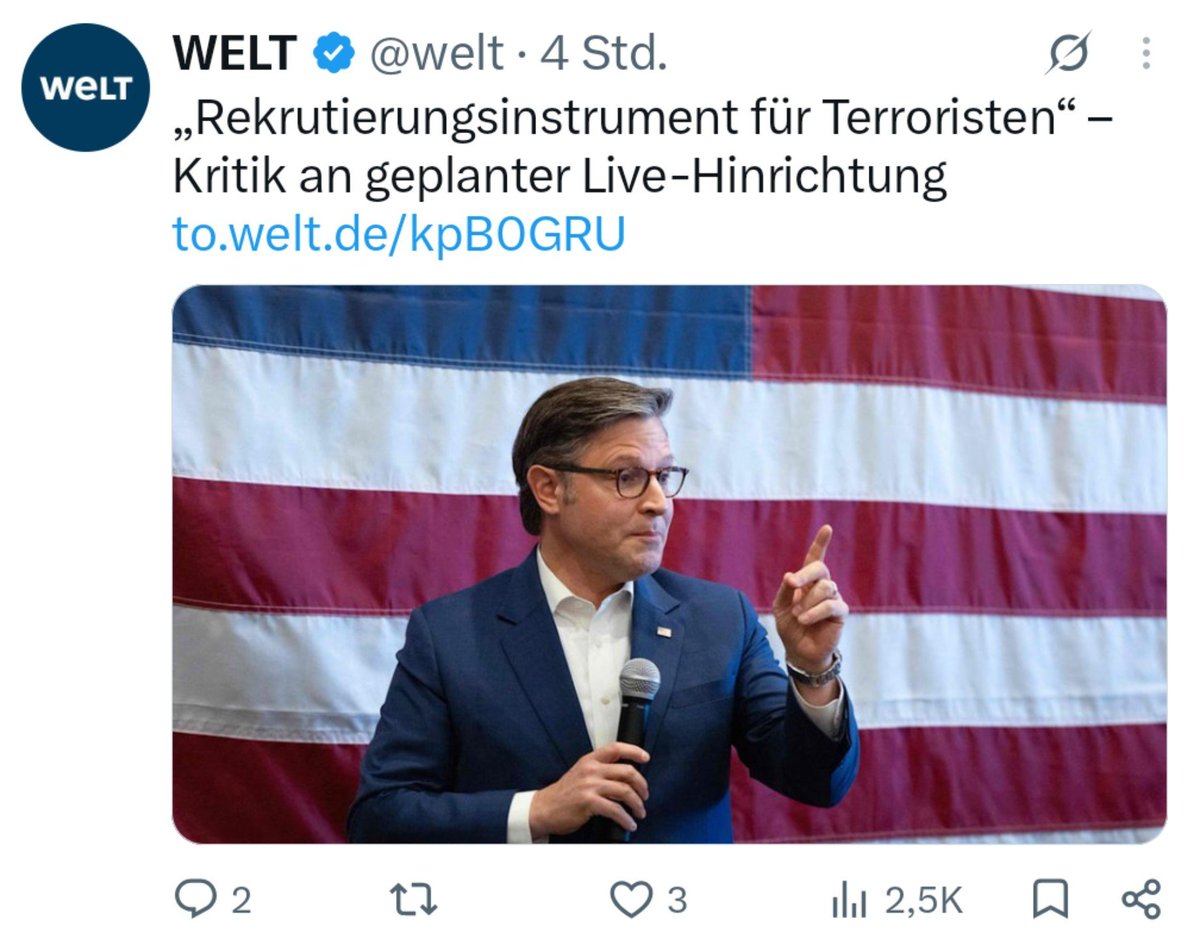

Puntoevirgola had written that he had seen profiles with millions of followers, which he defined as serial haters and pseudo-patriots pro-Trump and pro-Putin, receiving 15 likes in the last few hours, wondering if it was a coincidence. He had added that the absence of what he considered artificial and malicious profiles gave him a feeling of relief. In the post, he had also described Russia as a terrorist state and Putin as a war criminal, using hashtags in support of Ukraine. #ucraina #StandWithUkraine #trump (translated)
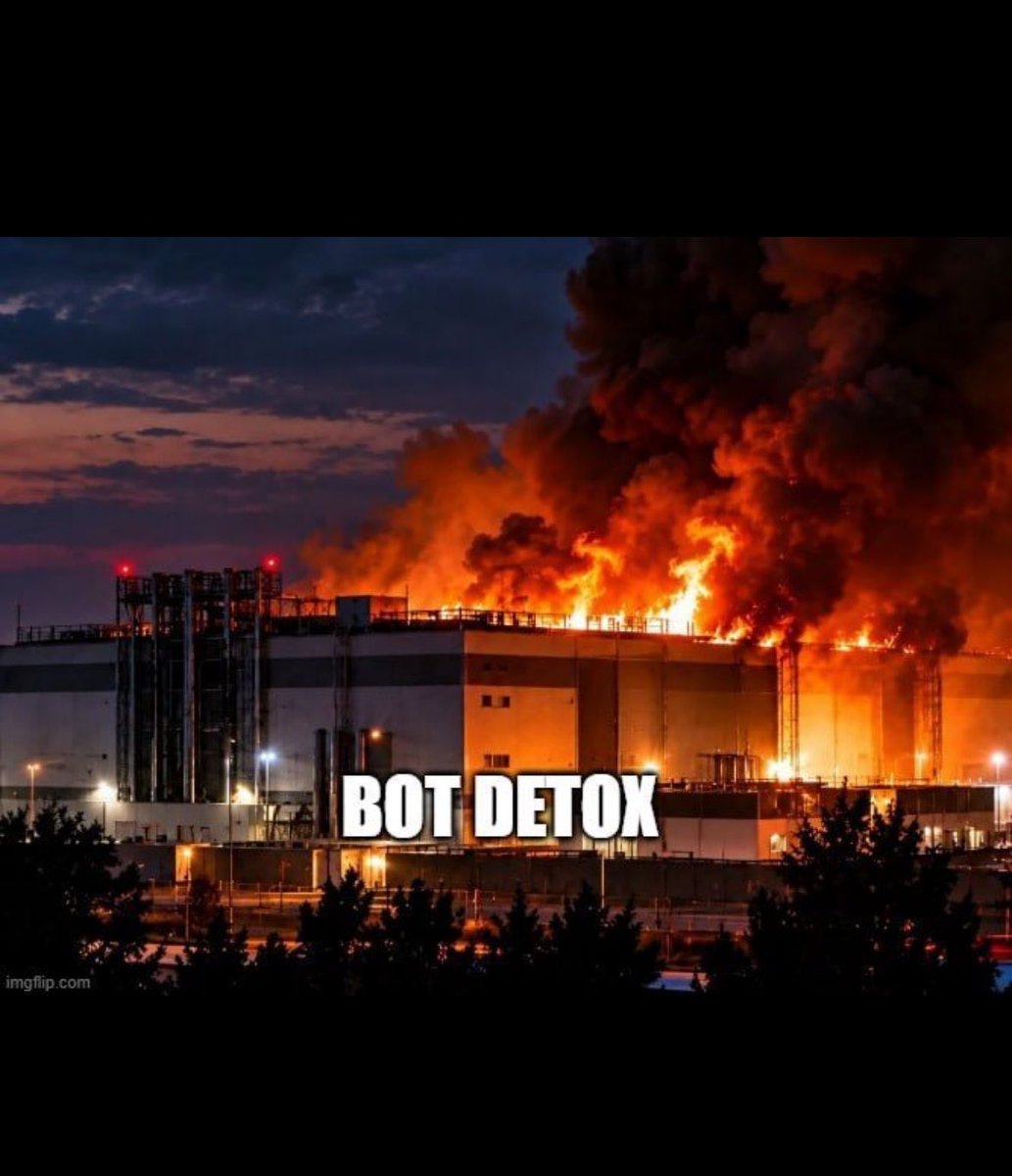

The author wrote that they had not seen such widespread hostility toward a US administration before, claiming that nobody outside Russia supported Trump’s diesel deal and that even his most loyal followers struggled to see its logic. They predicted a severe defeat for the Republican Party in the midterm elections. https://t.co/UWGlSPxAGJ #Trump #GOP #Midterms #US #RU

The author told American followers that increasingly heated debates between opposing factions on French television reminded them of what they had witnessed in 2015, citing the rhetoric, polarization and intensity of the confrontations. The post ended mid-sentence. #France #Radicalization #Polarization #US #FR
German Shepherd described the announcement as a great escalation and wrote that Gerald Grosz announced he would recommend to his 1.4 million followers on seven social media channels not to buy any more BMWs. #Eskalation #GeraldGrosz #BMW (translated)
Varizan relayed the figures for the year 2026 provided by Team Vitality. According to this data, the club had signed a seven-figure sponsorship contract with Leclerc and recorded its best year for merchandise, with 118% more jerseys sold than in 2024. At the EWC, Team Vitality was reportedly the most-watched club and had sold the most tickets to its fans, while its booth hosted more than 20,000 visitors. Internationally, the club had 310,000 subscribers on Weibo, and the MPL Indonesia S17 final, won 4-1 against ONIC, reached 2.94 million viewers at its peak. In sporting terms, it won 54 titles and earned 12 million dollars in prizes in 2026, including the EWC. Varizan estimated that internationalization was the main positive point, emphasizing the importance of China and Indonesia for clubs looking to establish themselves globally. He indicated that the link to all the figures was included in the tweet. #Esport #International #TeamVitality (translated)


Nina Ricci thanked the friends who had been close to her, especially the followers who, according to her, had not abandoned her even when they did not share all of her opinions. She said that their support had helped alleviate fear in a dark time and added that she cared for them. #gratidudine #amicizia #insegne (translated)

The X-user Coxx wrote that the medfluencer Alina Walbrun fell for a fabricated illness of the YouTuber Marvin Wildhage in July 2026. Wildhage supposedly had "post-viral nasal hypersensitivity" and invented a fake pharmaceutical company supposedly led by "Dr. Sofia Beatrice Gepetto." Walbrun accepted 3,800 euros for paid clarification and stated on Instagram that she was familiar with the condition from her studies. According to Coxx, she also mentioned symptoms that had not been included in the briefing. Coxx described Walbrun, born in 1998, as one of the most influential German-speaking medfluencers; she had around 300,000 Instagram followers. She had studied human medicine at LMU Munich until May 2026 and referred to herself as "Doc Alina," even though she was not a practicing doctor. Criticism of this had already existed before the scandal. After the video was released, Walbrun apologized, called the term unverified and misleading, and donated the 3,800 euros to Doctors Without Borders, wrote Coxx. The LMU clinic stated that Walbrun was no longer active there and distanced itself from unscientific statements. Coxx also pointed to criticism of the "Doc" title, retracted Harvard statements that later only pertained to a summer school, as well as Walbrun's company Onegevity. This company sold dietary supplements, including matcha with sleep berry, which the BfR warned against. Unsolicited blood sugar tips had also drawn criticism from the German Diabetes Society. Coxx wrote that the public prosecutor's office is now investigating Walbrun, whom he labeled a left-green activist and fraudster. #Medfluencer #Gesundheit #Skandal (translated)

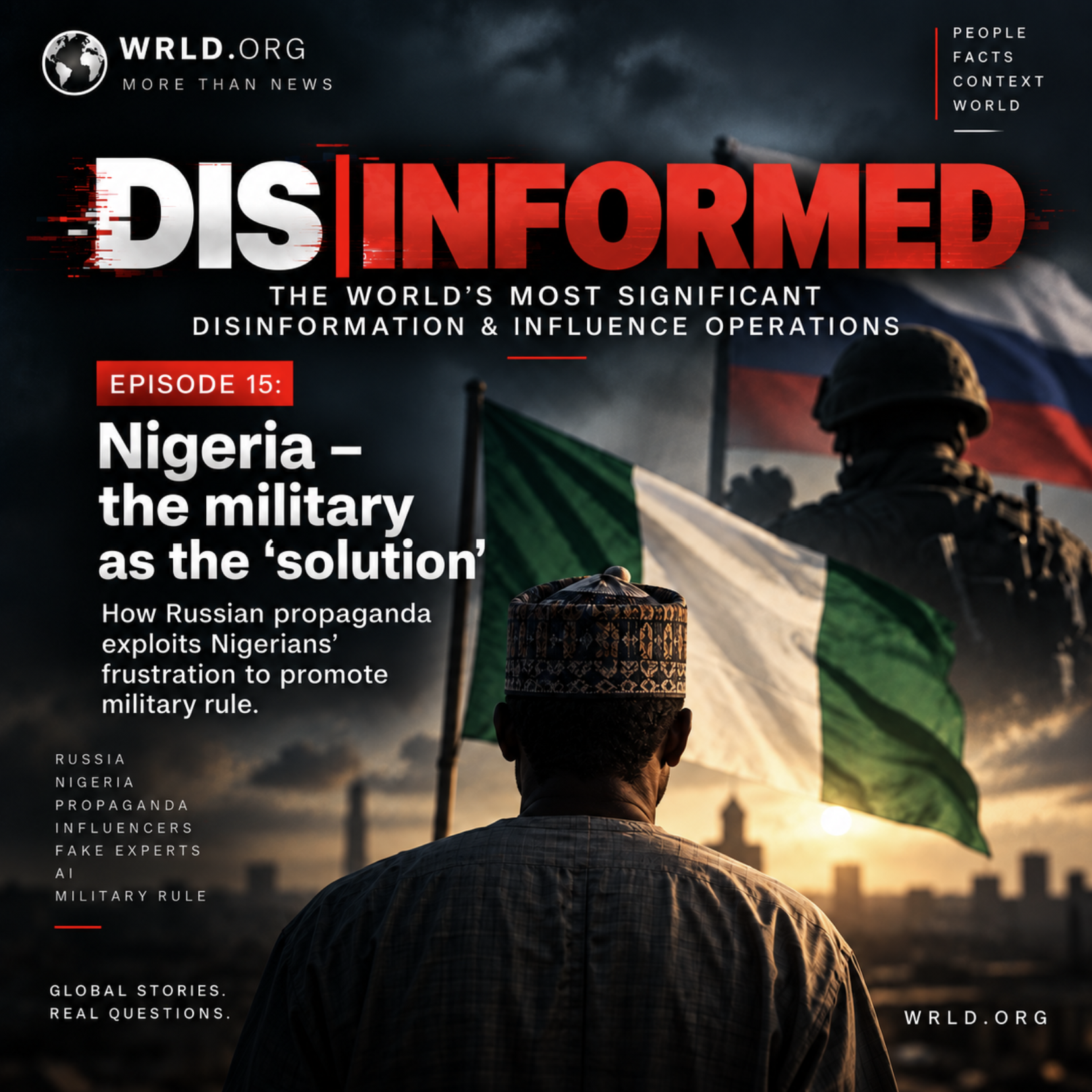
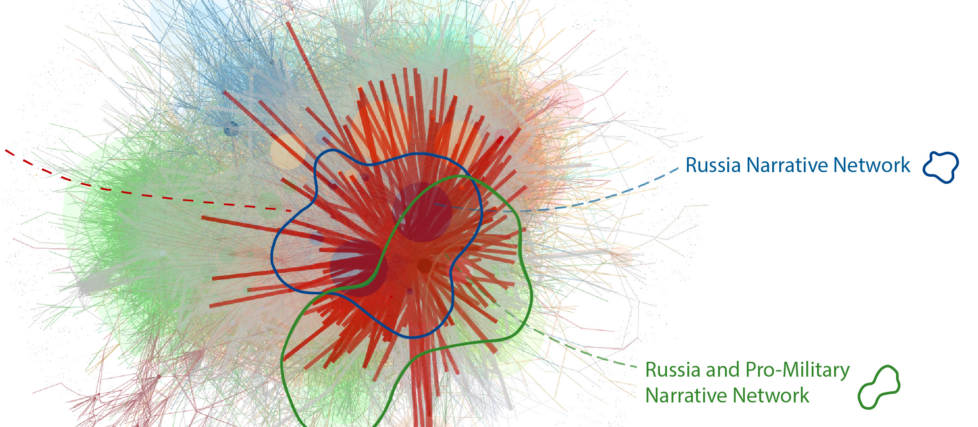
Nigeria – how pro-Russian influence networks sell military rule as the answer When Nigerians took to the streets in August 2024 to protest soaring living costs and frustration with government, some demonstrations acquired an unexpected symbol: the Russian flag. In Kano, Kaduna and other northern cities, protesters were filmed carrying Russian colours and calling for Moscow’s intervention. Some demanded a military takeover. What initially looked like an unusual expression of anger has since become part of a much larger picture. A September 2026 assessment by the Africa Center for Strategic Studies describes Nigeria as a major target of overlapping foreign information operations, with Russia the most active external actor in its information space. The report does not identify a single centrally controlled campaign. Instead, it maps an ecosystem in which genuine dissatisfaction over insecurity, corruption and living standards is repeatedly redirected towards a broader proposition: democratic government has failed, while the military-led regimes of the Sahel offer a more effective alternative. Turning a real protest into a pro-Russian message The clearest example emerged during the 2024 #EndBadGovernance protests. Nigerian investigative reporting found that a Kano-based TikTok influencer with more than 100,000 followers had been paid through a Telegram channel associated with African Initiative, a Moscow-based media operation linked by researchers to Russian influence activity in Africa. The influencer said the channel supplied photographs, videos and talking points for redistribution on TikTok and Instagram. Among the messages provided were phrases such as “Putin please come and save Nigeria” and “The army is the answer for Nigeria”. Influencers were encouraged to use Hausa-language hashtags including #Zangazanga – “protest” – alongside references to Putin and Russia. Investigators identified 38 accounts circulating similar pro-Russian and pro-military narratives during the demonstrations. Russian flags subsequently appeared among protesters in several northern cities. This does not mean the protests themselves were created by Russia. They were driven by genuine economic and political grievances, and Nigerian protesters gave different reasons for carrying Russian flags. The important feature of the influence activity was precisely that it did not need to manufacture the original anger. It could attach a geopolitical message to an existing domestic crisis. From frustration to the idea of military government The narrative fits a wider pattern seen across West Africa. Russia has developed close relations with the military governments of Mali, Burkina Faso and Niger, while pro-Russian media ecosystems routinely portray those states as examples of sovereignty, stability and resistance to Western influence. Nigeria, by contrast, has remained under constitutional civilian government since 1999. Africa Center researchers say information networks targeting Nigerians increasingly contrast these two models. Recurring messages depict elections as wasteful or predetermined, civilian institutions as incapable of protecting citizens and military governments as more decisive on security and development. Some content portrays the Sahelian juntas as delivering better roads, lower prices and stronger security even where available evidence points to continuing or worsening instability. Language is central to the strategy. Hausa is spoken across northern Nigeria and neighbouring Niger, allowing political narratives to travel across borders that are far less important online than they are on maps. HumAngle documented efforts involving Nigerien state-linked actors to cultivate Hausa-speaking journalists and distribute material favourable to Niger’s junta and hostile to France and Western influence. The Russian and Sahelian-junta information ecosystems are not identical, but their narratives frequently reinforce one another. Fake journalists inside real Nigerian media The campaign environment extends beyond social media. A 2026 investigation by Graphika and Code for Africa identified 44 ghost reporters and fake experts whose identities were used to place Russia-aligned narratives in African media. Thirty-eight were assessed with high confidence to be fabricated. Their articles or quotations appeared across 138 websites and were amplified by at least 113 Facebook accounts and Pages. Nigeria was one of the most heavily targeted countries. According to the Africa Center’s analysis of the research, Daily Post Nigeria carried 39 articles involving 14 identified ghost authors. Once published by a genuine Nigerian outlet, such material could then be cited by other websites, social-media accounts or even Russian official channels as though it had originated independently in Africa. This is information laundering rather than simple propaganda: the most valuable asset being borrowed is the credibility of the local newsroom. Generative AI added another layer. OpenAI and Meta separately disrupted a Russia-origin network that produced Africa-focused political content and operated Facebook Pages posing as local media organisations. One fabricated commentator, “Dr Manuel Godsin”, was presented as a European-trained geopolitical expert although investigators found no evidence supporting his academic biography. ChatGPT had been used to generate articles under the persona’s name, while Meta removed 37 Facebook accounts and 29 Pages connected to the broader network. Different networks, similar strategic direction It would be misleading to merge all these activities into a single Russian command structure. The African Initiative-linked influencer campaign, the ghost-reporter network and the AI-enabled operation disrupted by OpenAI and Meta were uncovered separately and used different infrastructure. Public evidence does not demonstrate that every actor reported to the same organisation. What connects them is a recurring set of themes and methods: portraying Western partnerships as exploitative, presenting Russia as an alternative security partner, amplifying failures of civilian government, and giving military-led rule greater legitimacy. Investigative reporting on leaked Russian documents has meanwhile described a much wider influence apparatus operating across Africa, involving political consultants, paid journalists, influencers and locally tailored campaigns intended to reduce Western influence and expand Moscow’s position. The underlying technique is less about inventing dissatisfaction than redirecting it. Nigeria faces real security threats, economic pressure and public frustration. Influence operators do not need to persuade Nigerians that those problems exist. They need only influence the explanation for why they exist – and which political model appears to offer the answer. That is what makes the Nigerian case significant. The most effective propaganda does not necessarily introduce a completely false reality. It takes a real crisis and changes where the audience is encouraged to look for the solution. Sources Africa Center for Strategic Studies — The Raging Information Battle in Nigeria https://africacenter.org/spotlight/the-raging-information-battle-in-nigeria/ Graphika — Umbrae Ex Machina https://www.graphika.com/reports/umbrae-ex-machina OpenAI — Operation “No Bell” https://openai.com/index/disrupting-malicious-uses-of-ai-no-bell/ TheCable — Ghost reporters in African media https://www.thecable.ng/ghost-reporters-how-fabricated-african-voices-carried-pro-russia-narratives/ HumAngle — Nigeria Is Facing an Information War in Its Own Language https://www.humanglemedia.com/nigeria-is-facing-an-information-war-in-its-own-language DAIDAC / CJID — Russian influence during #EndBadGovernance https://daidac.thecjid.org/how-telegram-tiktok-aided-russian-disinformation-that-led-to-incarceration-of-nigerian-minors/ FactCheckHub — How Nigeria’s hunger protest took a radical turn https://factcheckhub.com/from-economic-protests-to-coup-agitation-how-nigerias-hunger-march-took-a-radical-turn/ News24 — Fake Kremlin-linked analyst planted stories in African media https://www.news24.com/southafrica/news/ai-expert-exposed-fake-kremlin-linked-analyst-planted-stories-in-african-media-20260318-0560 Vanguard — AI ‘expert’ exposed https://www.vanguardngr.com/2026/03/ai-expert-exposed-fake-kremlin-linked-analyst-planted-stories-in-african-media/ Africa Confidential — How Moscow wages social media war https://www.africa-confidential.com/article/id/15961/how-moscow-wages-social-media-war Keywords #DISINFORMED #Episode15 #Nigeria #Russia #RussianInfluence #RussianDisinformation #Africa #WestAfrica #Disinformation #InformationWarfare #InfluenceOperations #ForeignInterference #FIMI #Propaganda #MilitaryRule #MilitaryGovernment #Democracy #PoliticalManipulation #NarrativeManipulation #AfricanInitiative #EndBadGovernance #Hausa #LocalInfluencers #GhostReporters #FakeExperts #ArtificialIntelligence #AI #AIPersonas #SyntheticMedia #AIPropaganda #Astroturfing #SocialMediaManipulation #Telegram #TikTok #DigitalInfluence #SourceLaundering #NarrativeLaundering #MediaManipulation #Sahel #Geopolitics #OSINT #WRLD

i_edit wrote that Piera deserved all her followers, referring to her with a vulgar expression. He added a laugh, mentioned Ale, and included the hashtags #alepier and #romel. #alepier #romel https://t.co/HTGKwxUctr #follower #esperienza #socialmedia (translated)






