Gender ideology has kicked down the door in Hungary. And this is only the beginning. https://t.co/tPIozIA06Q #GenderIdeology #Hungary #LGBTQRights #HU
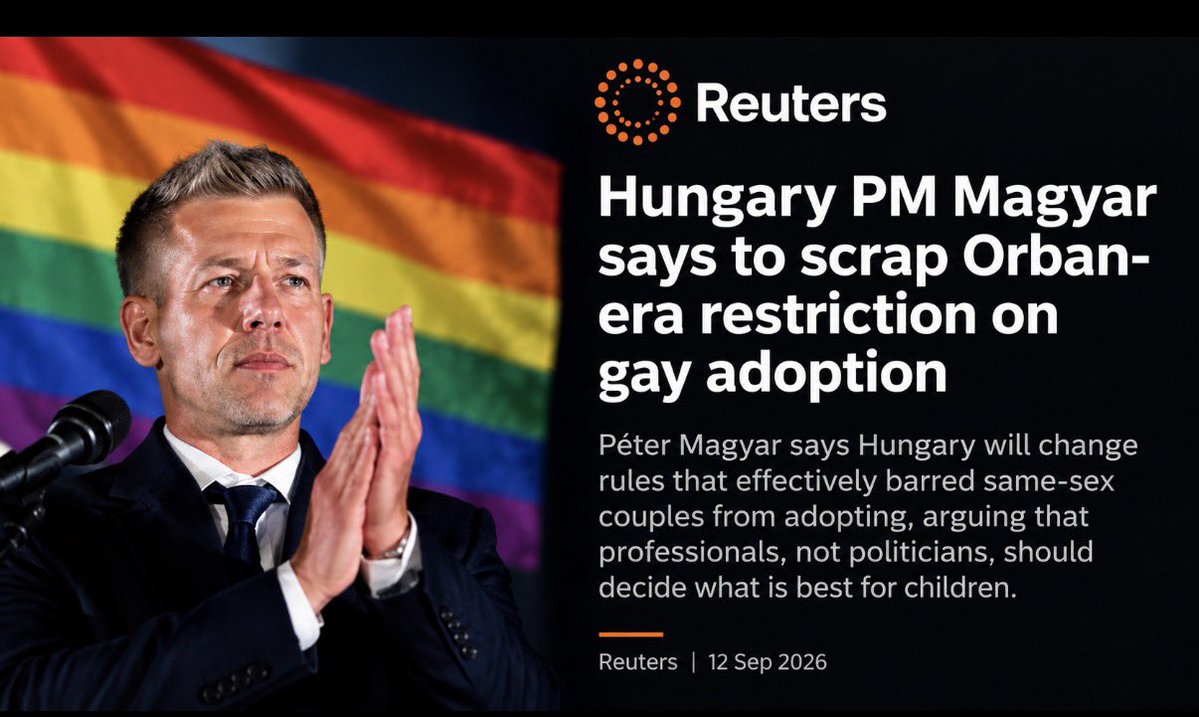
Gender ideology has kicked down the door in Hungary. And this is only the beginning. https://t.co/tPIozIA06Q #GenderIdeology #Hungary #LGBTQRights #HU
Can You Resist Tyranny? The average person today is incapable of governing themselves, which is why so many yearn for a new “system.” They desire an external imposition of control to order their lives in a way they feel incapable of doing for themselves. Riddled with fear, they trade liberty for protection. Ideology recasts their resentment as righteousness. Loneliness drives them to find a herd to become one with. Internal chaos creates a demand for imposed order. When you tell people that the answer to collective madness is not collective action in the opposite direction, they often mistake this for rolling over and accepting defeat. But chaos does not defeat chaos. As Friedrich Nietzsche pointed out, “Madness is something rare in individuals — but in groups, parties, peoples, and ages, it is the rule.” Think about every hero story you’ve ever admired. The hero doesn’t take to the streets and try to convince everyone of his cause. Rather, he confronts evil head-on and puts himself in the line of fire. A well-ordered individual is not harmless or ineffectual. A single competent, strong, and courageous person can carry more weight and value than a mob of NPCs. As Carl Jung said, “a million zeros do not add up to one.” Nor does being well ordered mean being harmless or indiscriminately nice. Such a person must possess strength, aggression, ambition, judgement, competitive instinct, the capacity for force, and the desire for achievement. The question is what these qualities serve. Money, power, and lust, or love, family, and God? If no strong internal ordering principle exists, a movement, leader, ideology, or State will fill the vacuum externally. No one looking for a solution to increasing social insanity can afford to overlook it. All others are contingent on it. The answer is not to dissociate from the world and simply pull yourself together. It is that a disordered individual cannot possibly bring order to his environment. By becoming a man of virtue, he can then carry that order into the roles individuals occupy: father, teacher, pastor, judge, journalist, leader, neighbour, police officer, and citizen.
The Erosion of Truth in Feminized Institutions Human beings developed the scientific process to observe reality and uncover fundamental truths about the universe. However, the increasing feminization of academia has, in some cases, shifted its priorities, with social equity taking precedence over truth. A study titled *“Taboos and Self-Censorship Among U.S. Psychology Professors”* asked professors whether they prioritized scientific truth or social equity when the two appeared to conflict. According to the study, 66.4% of male professors chose truth, compared with 43% of female professors—a 23.4-point gap. This suggests that some individuals are willing to set aside truth in favor of ideology. The study also found that professors feared social sanctions for expressing their empirical beliefs, while younger, more left-leaning, and female faculty members were more likely to oppose controversial scholarship. Psychology faculty are reportedly 56% women and 44% men. Based on the study’s figures, approximately 53.3% of professors would rank truth first. Women account for roughly 71–75% of newly awarded psychology doctorates. If the field reaches 73% women, only about 49.3% of psychologists would rank truth first. The broader implications are significant. As academic institutions increasingly prioritize diversity, equity, and inclusion, research and data may be ignored when they conflict with political goals. Science influences education, medicine, human resources, therapy, the media, and nearly every other field concerned with human behavior. These studies shape legislation, psychological diagnoses, corporate policies, pharmaceutical prescriptions, and popular advice. Truth is not necessarily losing to lies. Rather, as institutions become increasingly feminized, they may gradually stop valuing truth itself.
When Emotion Takes the Reins A remarkable study published in Proceedings of the National Academy of Sciencesexamined millions of books covering almost 170 years and tracked language associated with rationality—facts, conclusions, analysis and determination—against language associated with sentiment—feeling, belief and emotion. The pattern was striking. From roughly 1850 to 1980, rationality-related language steadily increased while sentiment-related language declined. Then the trend reversed. By around 2007, sentiment-related language had overtaken rationality-related language and continued rising (Scheffer et al., 2021). This does not prove that people have become less rational, nor does the study establish a single cause. But it raises an important question: what happens when trust in the institutions associated with knowledge and expertise begins to collapse? If people believe governments, experts, universities and media are corrupt or captured, “look at the data” can sound less like an appeal to reason and more like an appeal to authority. And when institutional trust declines, emotion becomes politically powerful. Anger supplies an enemy. Fear supplies urgency. Hope supplies a future. Identity supplies belonging. Could this help explain why socialism and even communism have regained some appeal among young people despite the historical record? The study cannot establish that causal link. But it is a plausible hypothesis: when politics becomes increasingly emotional, an ideology can be judged by what it promises rather than by what it has historically produced. Benjamin Franklin captured the necessary balance: “If passion drives, let reason hold the reins.” Passion is not the enemy. It is the engine of human action. The danger comes when we surrender the steering wheel. Today, algorithms, political campaigns and media incentives are exceptionally good at exploiting emotion. Outrage spreads faster than nuance. A soundbite can provoke a reaction before we have checked whether it is true.
The Value of Truth in Science Humanity developed the scientific process to observe the universe and uncover its fundamental truths. However, the increasing feminization of academia has, in some fields, shifted emphasis from truth toward social equity. As a result, certain areas of science appear less focused on understanding how the world works and more focused on reshaping it according to political ideals. A study titled *“Taboos and Self-Censorship Among U.S. Psychology Professors”* asked professors whether they prioritized scientific truth or social-equity goals when the two appeared to conflict. According to the study, 66.4% of male professors chose truth, compared with 43% of female professors—a 23-point gap. This suggests that some academics would knowingly place ideology above truth. The study also found that nearly all professors feared social sanctions for expressing their empirical beliefs. Researchers observed that younger, more left-leaning, and female faculty members were more likely to oppose controversial scholarship. Psychology faculty are currently approximately 56% women and 44% men. Based on the study’s figures, an estimated 53.3% of professors rank truth first. Women also receive roughly 71–75% of newly awarded psychology doctorates. If women eventually comprise 73% of the field, only about 49.3% of psychologists would rank truth first. The broader implications are significant. As women’s representation in scientific and academic institutions increases through both natural trends and affirmative-action policies such as DEI, research and data may be disregarded when they conflict with political goals. Psychology influences education, medicine, human resources, therapy, media, and other institutions concerned with human behavior. These fields shape legislation, psychological diagnoses, corporate policies, pharmaceutical prescriptions, and popular advice. Truth is not necessarily losing to lies. Rather, as institutions become increasingly feminized, they may gradually stop valuing truth itself.
The Individual as an Antidote to Tyranny The average person today is incapable of governing himself, which is why so many yearn for a new system. They desire external control to order their lives in ways they feel unable to manage themselves. Riddled with fear, they trade liberty for protection. Ideology recasts resentment as righteousness, while loneliness drives them to join a herd. The answer to collective madness is not collective action in the opposite direction. Chaos does not defeat chaos. As Friedrich Nietzsche observed, “Madness is something rare in individuals—but in groups, parties, peoples, and ages, it is the rule.” Think of every hero story you admire. The hero does not retreat from danger or surrender to evil. He confronts it directly and places himself in the line of fire. A well-ordered individual is not harmless or ineffectual. One competent, strong, and courageous person can carry more weight and provide more value than a mob. As Carl Jung said, “A million zeros do not add up to one.” Being well-ordered does not mean being harmless or indiscriminately nice. It means possessing judgment, competitive instinct, the capacity for force, and a desire for achievement. The question is what those qualities serve: money, power, and lust—or love, family, and God? This kind of person is an antidote to tyranny. If no strong internal ordering principle exists, a movement, leader, ideology, or state will fill the vacuum from the outside. The well-ordered individual is not incapable of rage, vanity, resentment, cowardice, or cruelty. Awareness of these shadow aspects helps prevent ideological capture and frees him from the seductive belief that “they are evil and we are good.” Anyone seeking a solution to increasing social insanity must recognize that a disordered individual cannot bring order to his environment. By becoming a person of virtue, he can carry that order into every role he occupies—as a parent, teacher, pastor, judge, journalist, leader, neighbor, police officer, or citizen.
My agenda is to stop men like you promoting an ideology that hurts kids like her https://t.co/Tmx50krXef #StopHate #ProtectKids #FightIdeology #Thetweetdoesnotmentionanyspecificcountries.Therefore #therearenocountrycodestoreturn.


Brexit victory was pyrrhic. It doesn’t pay to actually leave. The far-right ambition is to capture the European project, not destroy it, although it amounts to the same if the transformation happens through connivance with Maga ideology and Kremlin money https://t.co/cqsYGMTRYj #Brexit #FarRight #EuropeanUnion #GB #EU #US #RU
When Emotion Takes the Reins A remarkable study published in Proceedings of the National Academy of Sciencesexamined millions of books covering almost 170 years and tracked language associated with rationality—facts, conclusions, analysis and determination—against language associated with sentiment—feeling, belief and emotion. The pattern was striking. From roughly 1850 to 1980, rationality-related language steadily increased while sentiment-related language declined. Then the trend reversed. By around 2007, sentiment-related language had overtaken rationality-related language and continued rising (Scheffer et al., 2021). This does not prove that people have become less rational, nor does the study establish a single cause. But it raises an important question: what happens when trust in the institutions associated with knowledge and expertise begins to collapse? If people believe governments, experts, universities and media are corrupt or captured, “look at the data” can sound less like an appeal to reason and more like an appeal to authority. And when institutional trust declines, emotion becomes politically powerful. Anger supplies an enemy. Fear supplies urgency. Hope supplies a future. Identity supplies belonging. Could this help explain why socialism and even communism have regained some appeal among young people despite the historical record? The study cannot establish that causal link. But it is a plausible hypothesis: when politics becomes increasingly emotional, an ideology can be judged by what it promises rather than by what it has historically produced. Benjamin Franklin captured the necessary balance: “If passion drives, let reason hold the reins.” Passion is not the enemy. It is the engine of human action. The danger comes when we surrender the steering wheel. Today, algorithms, political campaigns and media incentives are exceptionally good at exploiting emotion. Outrage spreads faster than nuance. A soundbite can provoke a reaction before we have checked whether it is true. Reference: Scheffer, M., van de Leemput, I., Weinans, E., & Bollen, J. (2021). The rise and fall of rationality in language. PNAS, 118(51), e2107848118. https://doi.org/10.1073/pnas.2107848118
The Erosion of Truth in Feminized Institutions Human beings developed the scientific process to observe reality and uncover fundamental truths about the universe. However, the increasing feminization of academia has, in some cases, shifted its priorities, with social equity taking precedence over truth. A study titled *“Taboos and Self-Censorship Among U.S. Psychology Professors”* asked professors whether they prioritized scientific truth or social equity when the two appeared to conflict. According to the study, 66.4% of male professors chose truth, compared with 43% of female professors—a 23.4-point gap. This suggests that some individuals are willing to set aside truth in favor of ideology. The study also found that professors feared social sanctions for expressing their empirical beliefs, while younger, more left-leaning, and female faculty members were more likely to oppose controversial scholarship. Psychology faculty are reportedly 56% women and 44% men. Based on the study’s figures, approximately 53.3% of professors would rank truth first. Women account for roughly 71–75% of newly awarded psychology doctorates. If the field reaches 73% women, only about 49.3% of psychologists would rank truth first. The broader implications are significant. As academic institutions increasingly prioritize diversity, equity, and inclusion, research and data may be ignored when they conflict with political goals. Science influences education, medicine, human resources, therapy, the media, and nearly every other field concerned with human behavior. These studies shape legislation, psychological diagnoses, corporate policies, pharmaceutical prescriptions, and popular advice. Truth is not necessarily losing to lies. Rather, as institutions become increasingly feminized, they may gradually stop valuing truth itself.

The eradication of female specific language by the government is shocking. This 2 years after the people rejected this ideology in landslide referendums. https://t.co/EQPzyUWrFY #GenderEquality #LanguageRights #GovernmentAccountability #Thetweetdoesnotmentionanyspecificcountries.Therefore #therearenocountrycodestoreturn.


Austria must confront Putinism and the Russian “Z” war ideology with the same seriousness it applies to other anti-democratic extremist movements. @_CStocker No tolerance for organizations, propaganda networks or symbols that glorify Russia’s war of aggression, political violence #Austria #Putinism #NoWar #AT #RU
Where the Clinic Meets the Movement: Does Gender Ideology Arm Left-Wing Authoritarian Psychology? “CGAS (Clinical Gender Affirmation Scale) and related gender ideological-belief measures were strongly associated with left-wing authoritarianism” - Where the Clinic Meets the Movement: Does Gender Ideology Arm Left-Wing Authoritarian Psychology? “CGAS (Clinical Gender Affirmation Scale) was not simply standing in for being politically left-wing” - Where the Clinic Meets the Movement: Does Gender Ideology Arm Left-Wing Authoritarian Psychology? “Support for coercion, punishment, and violence appears to be tied less to liberalism generally than to an authoritarian disposition organized around left-wing ideological content” - Where the Clinic Meets the Movement: Does Gender Ideology Arm Left-Wing Authoritarian Psychology? “Gender ideology may function as an ideological accelerant” - Where the Clinic Meets the Movement: Does Gender Ideology Arm Left-Wing Authoritarian Psychology? “Gender ideology may supply authoritarian psychology with a structured map of perceived outgroups, threat sources, and oppressor classes” - Where the Clinic Meets the Movement: Does Gender Ideology Arm Left-Wing Authoritarian Psychology? “Dissent becomes not a legitimate position but a failure of professional duty or an act of harm” - Where the Clinic Meets the Movement: Does Gender Ideology Arm Left-Wing Authoritarian Psychology? “The same psychological machinery operates on the extreme left”- Where the Clinic Meets the Movement: Does Gender Ideology Arm Left-Wing Authoritarian Psychology? “Violence can come to seem permissible or necessary” - Where the Clinic Meets the Movement: Does Gender Ideology Arm Left-Wing Authoritarian Psychology? “Three findings pull in the same direction. People who strongly endorse gender ideology positions score dramatically higher on left-wing authoritarianism than their political identity alone would predict. Furthermore, both LWA (Left-Wing Authoritarianism) and CGAS (Clinical Gender Affirmation Scale) predicted support for political violence” - Where the Clinic Meets the Movement: Does Gender Ideology Arm Left-Wing Authoritarian Psychology? “Together, these findings support the paper's core claim: gender ideology may function as an ideological accelerant, telling left-wing authoritarian psychology who the enemy is, why the situation is urgent, and—in those already disposed toward force—that violence is legitimate” - Where the Clinic Meets the Movement: Does Gender Ideology Arm Left-Wing Authoritarian Psychology? “One mechanism by which clinical content may translate into violence permission deserves note. Trans-Genocide Belief—the perceived likelihood that a genocide of individuals that identify as transgender is currently underway in the United States—is predicted to more strongly relate to CGAS (Clinical Gender Affirmation Scale) and LWA (Left-Wing Authoritarianism) than to political identity and to be associated with elevated justification for political violence” - Where the Clinic Meets the Movement: Does Gender Ideology Arm Left-Wing Authoritarian Psychology? “This prediction is consistent with broader research showing that perceived threat, existential threat, and collective victimhood can increase support for hardline, punitive, or exclusionary action against outgroups, particularly when paired with authoritarian dispositions or strong moral conviction (Armaly & Enders, 2022; Carriere et al., 2022; Hirschberger et al., 2016; Kljajić et al., 2025; Schori-Eyal et al., 2014; Skitka, 2010)” - Where the Clinic Meets the Movement: Does Gender Ideology Arm Left-Wing Authoritarian Psychology? “Related work on moralization and violent intergroup conflict further suggests that when a political conflict is framed as a moral emergency involving dangerous or demonized outgroups, violence can come to seem permissible or necessary (Mooijman et al., 2018; Saguy & Reifen-Tagar, 2022)” - Where the Clinic Meets the Movement: Does Gender Ideology Arm Left-Wing Authoritarian Psychology? “The practical stakes are straightforward. Research frameworks for understanding authoritarianism have historically focused overwhelmingly on the political right, while analogous left-wing pathways have received far less attention. Yet federal agencies and public safety officials are concerned not only with ideology in the abstract, but with radicalization pathways: the content that tells people who to fear, why the situation is urgent, and when force becomes acceptable” - Where the Clinic Meets the Movement: Does Gender Ideology Arm Left-Wing Authoritarian Psychology “This study suggests that the same psychological machinery operates on the extreme left, and that it may be running through institutional channels—clinical guidelines, professional standards, credentialed expertise—that current threat-detection frameworks are not well designed to recognize” - Where the Clinic Meets the Movement: Does Gender Ideology Arm Left-Wing Authoritarian Psychology? “Violence connected to gender ideology remains largely undocumented in the academic literature. This study provides a first systematic empirical look at the psychological infrastructure that makes such violence conceivable” - Where the Clinic Meets the Movement: Does Gender Ideology Arm Left-Wing Authoritarian Psychology? “Both LWA (Left-Wing Authoritarianism) and CGAS (Clinical Gender Affirmation Scale) were significantly positively correlated with justification for political violence across all six targets” - Where the Clinic Meets the Movement: Does Gender Ideology Arm Left-Wing Authoritarian Psychology? “Our main findings for youth starting treatment with blockers include: At baseline, about one-quarter of these youth had clinically concerning scores for depression and anxiety. About one-quarter reported having thought about suicide, and 8% reported having attempted suicide in the past. These numbers are on par with the population of middle school youth at large” - The Trans Youth Care - United States “Our main findings for youth starting treatment with GAH include: At baseline, about half of these youth had clinically concerning scores for depression and anxiety. About two-thirds reported having thought about suicide, and one-quarter reported having attempted. By two years after starting GAH, these youth showed increased scores for life satisfaction, appearance congruence (having the physical appearance of one's body match one's gender identity), positive emotions, and psychological well-being and decreased scores for depression and anxiety” - The Trans Youth Care - United States
The Three Roads to Evil We live in an age of unlimited access to information. Most of it is a gift, but it also gives us an unbroken view into horror—images on screens, the Epstein files, and constant stories once confined to nightmares. Some shut it off; others stare until it stares back, leaving them cynical. But it has always been this way. Long before Epstein, there was Caligula—years of sadism and cruelty on Capri. In every era, there have been people whose evil makes rationality struggle to explain it. I see three roads to evil: worshipping the wrong things, succumbing to ideology, and becoming so bitter you resent life itself. First: worshipping wrong values. Some make wealth, lust, power, or status their highest good. They lie, cheat, and steal to obtain it, then declare morality and law for the weak. Everyone else becomes an instrument. Second: ideology. When someone abandons a religious worldview, they may fill the vacuum with an ideology that claims to explain everything and promise a perfect world. Communists reduce history to class struggle; Nazis to racial struggle. The ideologue believes society can be remade by controlling causes and effects—people become cogs, sacrificed for utopia. Third: resentment. Those who see themselves as helpless victims can come to hate life itself. They treat hardship as injustice and life as something done to them. Their values invert: strength becomes evil, weakness virtue; love is attacked while lust is celebrated; wealth is theft—and criminals become victims while their victims are the privileged. These roads always exist, and always will. You can’t stop others from walking them. But it’s your responsibility not to.
The Fracture That Kills the Family The West’s deepest divide may not be left versus right, but whether young men and women still share a vision of the good life. The nuclear family is society’s foundation, yet households struggle to form when the sexes view each other as opponents. Many women see marriage as patriarchal; many men see women as manipulative or exploitative. Relationships shift from mutual union to zero-sum power struggles. Christianity framed marriage as union—two people becoming one. Nietzsche warned the death of God would remove a shared moral foundation, leaving society vulnerable to nihilism and fragmentation. We are living that fragmentation. Young men often retreat into pornography, gaming, and prolonged adolescence. Young women increasingly frame sexual liberation as empowerment. Both chase proximate pleasures while losing ultimate purposes: family, responsibility, continuity, and creating life. Dating data reflects the fracture: among unmarried Americans aged 22–35, only 26% of women and 36% of men are actively dating. Ideology filters matches too—Gen Z and young millennials cite political compatibility far more than Boomers. Research also finds a mismatch: only 0.6 single liberal men per single liberal woman, and only 0.5 single conservative women per conservative man. Cross-ideological pairing has risen from 6% in the 1970s to 22% today. The consequences extend beyond dating: fertility has fallen below replacement across much of the West, and 42% of American adults were unpartnered in 2023. Policy responses—tax incentives, parental leave, baby bonuses—miss the deeper cultural and spiritual problem: you can debate taxes, but it’s hard to build a family when you disagree on masculinity, whether marriage is oppressive, or whether family is worth sacrificing for. The values gap is the disease. The political divide is the symptom. The household is the casualty—and when it cracks, everything built above it loses stability. The question is whether a civilization can survive when the two people it most needs to unite can no longer agree why they should.
The 7 Types of People Who Create Evil Societies Andrew Łobaczewski, a psychiatrist who lived under Nazism and Communism in Poland, proposed political ponerology: pathological personalities and social dynamics can generate totalitarian systems. He describes seven recurring types: 1) **Psychopaths**: power seekers who gain control via coercion, intimidation, and violence. 2) **Schizoids**: ideological engineers who craft abstract systems and utopian theories; if reality conflicts, they rationalize more rather than revise. 3) **Spellbinders**: propagandists who convert ideology into slogans, moral stories, and emotional appeals that sort “good/evil” and define the in‑group. 4) **The Spellbound**: true believers who absorb the message and enforce it socially, driven by moral certainty; they often recruit through institutions and peer networks. 5) **Adapted Conformists**: quiet enablers who comply from fear and self‑preservation, often within bureaucracy (“I’m just doing my job”). 6) **Resistors**: a moral minority who refuse cooperation and prioritize conscience, often paying costs like isolation or punishment. 7) **Bystanders**: a passive majority who stay silent through fear, confusion, and disengagement. Together: psychopaths hold power; schizoids supply ideology; spellbinders publicize it; the spellbound enforce it; conformists administer; bystanders tolerate; resistors challenge. Crucially, totalitarianism doesn’t require everyone to be fanatical—enforcers and ideologues can pressure the wider population to comply. It can arise under many systems (communist, fascist, theocratic, etc.), not just left vs right.
When Pathology Takes Power If the last decade in the West felt unstable, you’re not imagining it. Andrew Lobaczewski studied how psychological pathology can spread into politics and produce “pathocracy”: societies where disordered personalities gain disproportionate power. He argued that revolutionary upheaval drives “negative selection.” Healthy people are pushed out or leave; manipulative, lying, and ruthless personalities rise through institutions. The system keeps its name and funding, but its character changes. At the top are essential psychopaths—empathy- and guilt-free exploiters. Beside them are schizoids who treat people as data and design control systems from abstract theories. Next come spellbinders: charismatic figures who package authoritarian ideas in the language of compassion, using invented moral standards for convenience. Then the spellbound: true believers. Around them gather conformists who comply to protect careers, while resisters are targeted and bystanders adapt to avoid trouble. Lobaczewski estimated a small minority builds the system, a larger group serves it, and most merely adjusts. Over time, society becomes the censor: truth turns dangerous, sanity is labeled extremism, and resistance is punished. The point isn’t only that bad ideas harm. It’s that pathological personalities can exploit good intentions, ideology, and institutional power—so the real conflict is psychological health versus pathology, and healthy institutions must be able to recognize the difference.
When Morality Becomes a Weapon Having the “correct” opinion doesn’t make you a good person. Our age is increasingly ruled by those who believe it does. In *The Brothers Karamazov*, Dostoevsky shows this through the Grand Inquisitor, who imagines Christ returning during the Spanish Inquisition. He arrests Him for threatening an institution that claims to represent Him. The Inquisitor argues people don’t truly want Christ’s freedom; they want bread, certainty, and someone to carry the burden of choice. He eventually admits they don’t need Christ’s teachings—only His moral authority. Dostoevsky reveals how power works: dominators can hide behind morality, while the dominated may trade freedom for the comfort of having others decide. Later, Polish psychiatrist Andrew Lobaczewski observed communism invoking “the people” to justify terror and execution. He argued that a small minority without conscience can rise during revolutionary upheavals, with ideology serving as moral camouflage. The lesson: moral language can be weaponized by those lacking moral character. Words like justice, equality, safety, harm, care, and compassion can become tools of control. Return to Aristotle’s view of virtue: virtue isn’t a belief you hold but a habit you practice. We become just by repeatedly doing just things; bravery comes from doing brave things. No slogan can replace character.
The Psychology Behind Political Violence Political life carries an appetite for violence beneath the surface. A shooter leaves a manifesto; supporters celebrate; online strangers justify killing over insults, misgendering, and fantasies of execution. We’re told these are separate phenomena—different ideologies, grievances, causes—but they’re deeply connected. The murderer, the celebrant, and the online fantasist share one conviction: blood will build a better world. We often assume ideology comes first, violence second—radicalization infecting an otherwise ordinary person. But corrupted people may seek ideologies that rationalize what they already want to believe. Feeling comes first; philosophy follows. Nietzsche called this *ressentiment*: not ordinary anger, but enduring resentment rooted in surrendered agency and perpetual victimhood. Ressentiment is creative: it turns grievance into virtue and revenge into justice. That’s why movements can sound humanitarian while obsessing over enemies. They promise liberation but focus on who must be eliminated; they call violence self-defense while celebrating destruction. Notice the imbalance: energy goes to identifying who deserves punishment, not to explaining how their better society would work. This is the difference between genuine grievance and pathological ressentiment. Genuine grievance seeks repair; ressentiment seeks subtraction. Its “solutions” are fantasies of punishment—heads cut off, privilege liquidated, wrong pronouns punished. These aren’t coherent doctrines of stability; they’re rationalizations for resentment. Ressentiment also despises self-improvement because it requires admitting agency. Its worldview depends on locating suffering outside oneself. The deepest enemy of these movements, then, is not any specific ideology. It is agency itself.