BETA nonprofit public democratic european moderated

Search

#Invitation

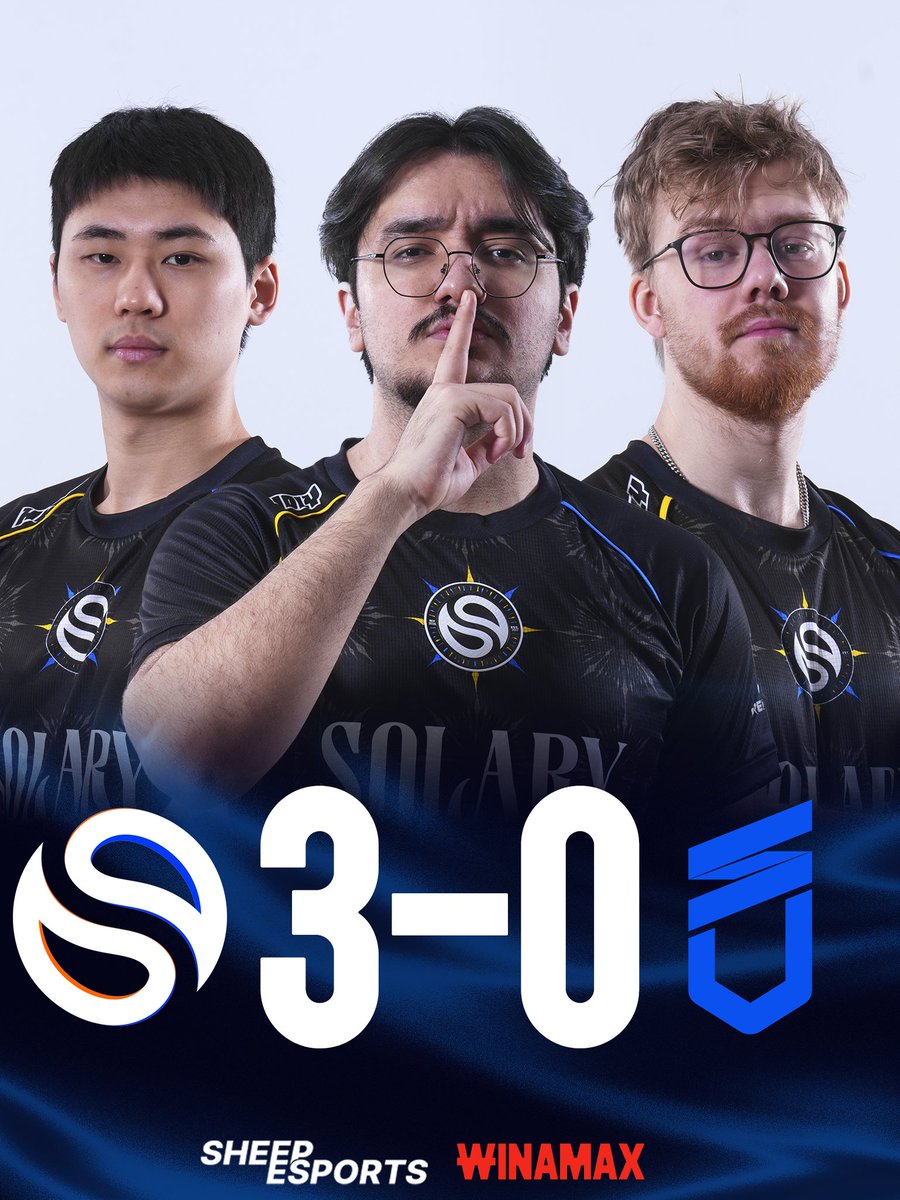
VKS ACADEMY NO INTERNACIONAL DO T2 🛫 É com muito orgulho que anunciamos que a VKS Academy está classificada para o World Star Challengers Invitational, novo torneio do Tier 2 que reunirá 16 equipes das principais regiões do mundo! SEREMOS O BRASIL NA WSCI! 💚💛 https://t.co/pUj5BGOF5D #VKS #WSCI #Esports

URGENTE 🚨 Riot Games acaba de anunciar o World Star Challengers Invitational, um campeonato MUNDIAL para times do tier 2 global. A Vivo Keyd Stars será a representante do Brasil no campeonato por ser a equipe Academy que chegou mais longe no 2º Split Circuito Desafiante. https://t.co/4BVvYiNNvW #RiotGames #WorldStarChallengers #esports

🆕 La réponse de Mika Godts à l’invitation de Campos pour venir à Porto : «Je prends l’avion, j’ai un vol direct, je déjeune et je passe l’après-midi avec vous. » 📞 📞 En plein repas, il lui passe LuisEnrique. Le coach échange avec l’attaquant pour tester le courant, et vérifier si l’alchimie humaine et tactique peut prendre. 🫡 Autour de la table, Campos découvre un joueur déterminé, parfaitement conscient de la dimension du défi et habitué par une envie débordante de rallier la capitale pour rejoindre le double champion d’Europe en titre. 🗞 L’Equipe #MikaGodts #FCPorto #Football

L'Obs 2d

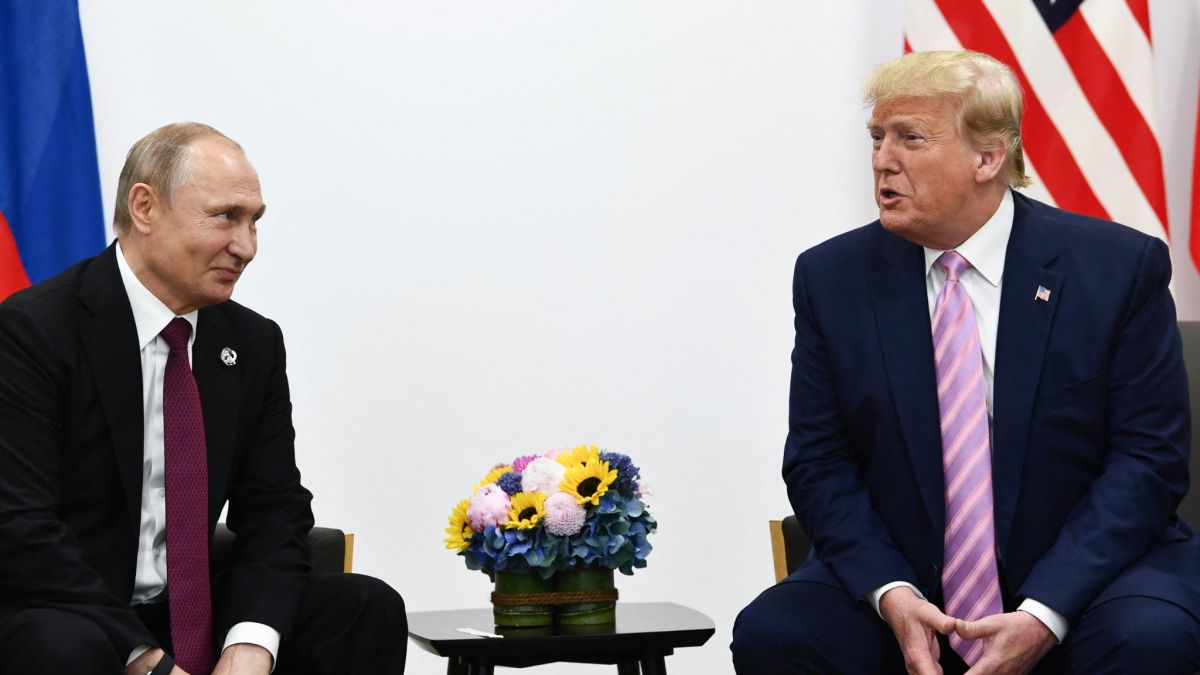
The presence of the Russian Minister of Finance at the G20 Finance has caused discomfort among many countries, particularly European and Canadian, due to the war in Ukraine, despite the justification of his invitation by his American counterpart. (translated)

La présence d’un ministre russe au G20 Finance crée le malaise de plusieurs pays

The Russian Finance Minister, Anton Siluanov, has angered European countries by attending the G20 summit in the United States, despite tensions due to the war in Ukraine, because of the invitation extended by the Trump administration. (translated)

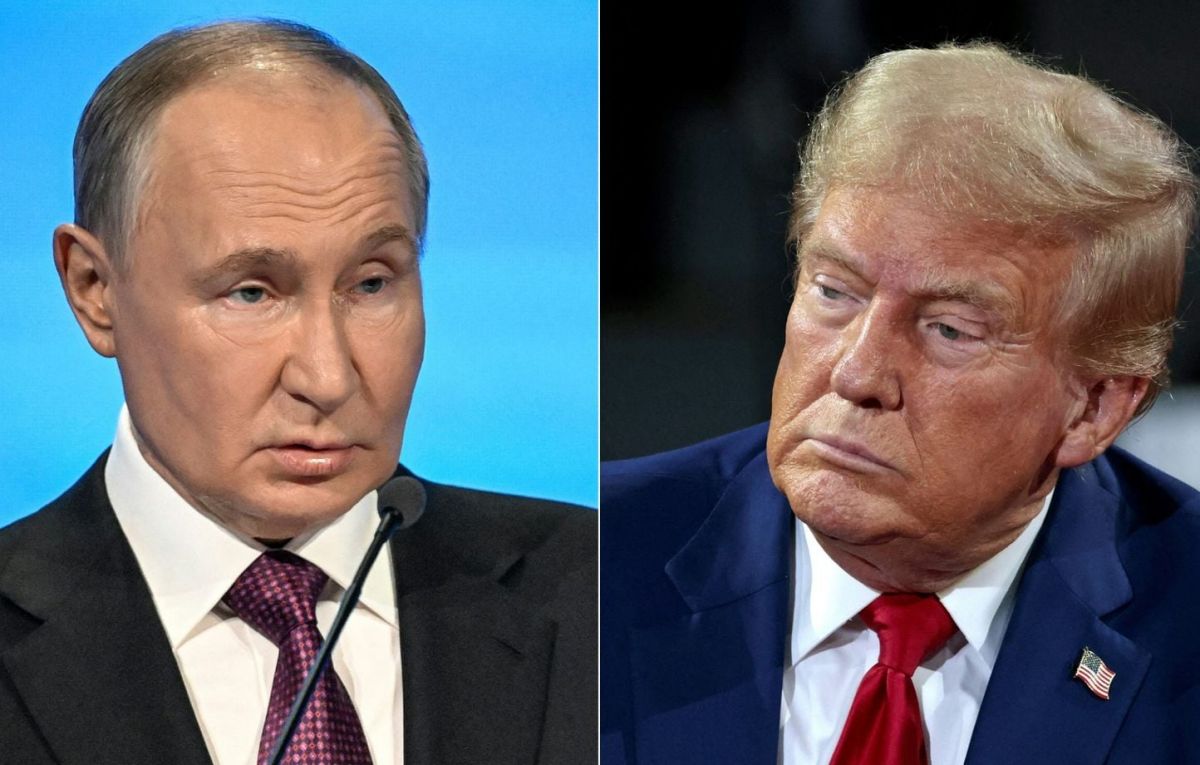
Trump met en colère les Européens en invitant le ministre russe des Finances au G20

♦️ 🇺🇸🇷🇺 Les États-Unis invitent la Russie à une réunion du G20. Tollé chez les Européens. Interrogé sur cette invitation, Trump répond : « Nous aimons nous entendre avec tout le monde. » Tout le monde ? Sauf le Canada. Sauf le Danemark. Sauf l’Espagne. Sauf l’Italie. Sauf le Royaume-Uni. Sauf une bonne partie de l’Europe. Sauf la Corée du Sud… Sauf l’Ukraine Avec Trump, les alliés sont traités en adversaires… et la Russie en invitée. #Trump #USA #Russie #G20 https://t.co/TvBR3DTzNP #G20 #USA #Russie

J

Russia’s finance minister made a surprise appearance at a gathering of top global economic policymakers on Monday after a prolonged absence, an invitation that was extended by the Trump administration but drew rebukes and protests from European officials committed to isolating Moscow for its war against Ukraine. @nytimes

On September 4, 2026, the Special Olympics Sweden Invitational Games will be inaugurated in Malmö, a historic sports event that brings together approximately 2,000 participants from 26 countries to celebrate community and inclusion in sports. (translated)

Svensk idrottshistoria när Special Olympics Sweden Invitational Games 2026 drar igång i Malmö
Impact 1w

🚨🇫🇷📺 L’ARCOM VA-T-ELLE DÉJÀ ÉPINGLER SONIA MABROUK, ARRIVÉE IL Y A SEULEMENT QUELQUES JOURS SUR BFM TV ? 😬 À peine ses premières émissions diffusées, la journaliste déclenche déjà UNE VAGUE D’INDIGNATION SUR LES RÉSEAUX SOCIAUX ET UNE VÉRITABLE TEMPÊTE EN INTERNE À BFM TV. 👉 Alors que Bruno Retailleau venait de qualifier La France insoumise de parti de "COLLABOS" qui "PACTISE AVEC LES ISLAMISTES", Sonia Mabrouk lui a déclaré : "Je pense ce soir comme vous, M. Retailleau." Une séquence qui n’a pas manqué de faire réagir les internautes, plusieurs d’entre eux interpellant directement l’Arcom sur les réseaux sociaux. La journaliste est déjà contestée en interne : après les invitations de Sophie de Menthon et Céline Pina, la SDJ de BFMTV a dénoncé certains choix éditoriaux, tandis que la direction a reconnu des "erreurs" et assuré que ces deux invitées ne reviendraient pas à l’antenne. 👉 Les syndicats SNJ et CGT de RMC BFM accusent également Sonia Mabrouk d’"importer la ligne CNews". Est-ce réellement du journalisme ? #Journalisme #BFMTV #Indignation

BFMTV 1w

A strange invitation published on the website of the American embassy in Iceland, shortly before a crucial referendum on joining the European Union, raises questions about Donald Trump's intentions towards Iceland, a country of key geostrategic importance in the context of tensions with Russia and China's growing interest. (translated)

Après le Groenland, Trump veut-il faire main basse sur l'Islande? Une étrange invitation publiée sur le site de l'ambassade américaine jette le trouble à Reykjavík

"Je suis vraiment ravi d'accepter cette invitation pour l'US Open 2026 et j'ai hâte de disputer à nouveau ce tournoi devant les supporters new-yorkais"

US Open : d'abord oublié des invitations, Stanislas Wawrinka disputera finalement son dernier tournoi du Grand Chelem
www.franceinfo.fr
Tweekz 1w

Vraiment super heureux de participer, merci beaucoup pour l'invitation 10 ans après le premier c'est un honneur Y aller avec Splinter en duo me hype infiniment 😋 #SuperHeureux #Honneur #Duo

"Cette conclusion fait suite à un examen approfondi des circonstances entourant son arrestation, le 3 juin, dans la province du Yunnan, en Chine, où Min Zin s’était rendu pour participer à un colloque universitaire à l’invitation du gouvernement chinois"

Les États-Unis assurent qu'un de leurs ressortissants est détenu "arbitrairement" en Chine et demandent sa libération
www.bfmtv.com

Danske skattekroner og udviklingsbistand er gået til at aflønne medarbejdere i den venstreradikale NGO 'Sex & Samfund'. Det afslører @btdk i dag i en artikel på deres hjemmeside. I et svar til BT skriver @SexogSamfund at ud af de 1,5 mio. kr. som blev givet i bevilling, så er knap 1/3 brugt på aflønning af medarbejdere - i alt 424.700 kr. Derudover er der brugt 340.000 kr. på 'kommunikation og kampagner', herunder betalte onlineannoncer med invitation til barnevognsmarch. Adspurgt om Sex & Samfund kan forstå dem der mener pengene kunne være brugt bedre, kommer de med et svar som man lige præcis kan forvente af en skattefinansieret venstreradikal NGO: "Altså, jeg skal da være den første til at bakke op om, hvis Folketinget og regeringen begynder at øge udviklingsbistanden i Danmark" Så det handler ikke om at pengene kunne være brugt bedre, men derimod om at man bare kan bruge flere penge... De har ingen skam i livet de her mennesker og NGO'er. #NGO #Udviklingsbistand #Skattepenge

H

🇺🇸 RFK Jr. revealed the Biden administration gutted anti-fraud oversight at his agency. There used to be 80 people watching over $2.2 trillion in annual payments across 50 states. Xavier Becerra transferred 76 of them out. When RFK Jr. took over, only six were left. He said it was an open invitation for fraudsters. Fake hospices billed for thousands of phantom patients. Durable medical equipment and autism services scams ran into the tens of billions, especially in LA. The old policy was literally “pay and chase.” Send the money first, then try to get it back later. https://x.com/MarioNawfal/status/2087356394299420918

Mario Nawfal (@MarioNawfal) on X

A Crown Instead of the Barracks: An Idea From Outside the Box Could Egypt’s exiled opposition use constitutional monarchy to dismantle the legitimacy of the 1952 coup? By Adham Hasanin Egyptian journalist and political writer, based in the Netherlands To understand what follows, a reader unfamiliar with Egypt needs one basic fact: since 1952, Egypt has never been governed by anyone who did not first wear a military uniform. Gamal Abdel Nasser, Anwar Sadat, Hosni Mubarak, and today Abdel Fattah el-Sisi four men, four eras, one common origin. All rose through the armed forces. All inherited a state built by a coup that year, when a group of officers calling themselves the "Free Officers" overthrew King Farouk I and, within a year, abolished the monarchy altogether and declared a republic. For seventy-three years, the underlying equation has not changed: the army rules, power passes from one officer to the next, and legitimacy is drawn from the barrel of a gun rather than the ballot box. Every conceivable form of opposition has been tried legal parties and banned ones, Islamist movements, liberal and leftist coalitions, the 2011 popular uprising, and the 2013 elections whose result was overturned by force within a year. All of them hit the same wall: a military institution that reproduces itself under different names, while the core of the system remains untouched. So what if the problem, all along, has not simply been who rules, but the constitutional framework that makes military rule possible in the first place? And what if the answer lies not in swapping one president for another, but in dismantling the underlying equation itself, through a framework Egyptian opposition movements have never seriously tried: a purely ceremonial constitutional monarchy, on the model of Belgium, the Netherlands, or Spain where the head of state becomes a symbol above the political fray, while the army is permanently expelled from politics and returned to its barracks. This is not a call to revive a particular family, nor nostalgia for a golden age that never quite existed. It is a proposal for a political and strategic tool that has not yet been used in the intellectual arsenal of Egypt’s opposition in exile a tool that deserves serious discussion, regardless of whether it is ever literally realised or simply serves to expand the boundaries of what is politically thinkable. I. Why 1952, Not 2013 or 2011, Is the Root The strategic error made by most Egyptian opposition movements from the Muslim Brotherhood to the April 6 Youth Movement to the various civil opposition parties has been treating each political crisis as an isolated case: Mubarak was corrupt and had to be toppled; Sisi staged a coup that must be condemned; the interim military council was a transitional phase to be endured. This piecemeal approach treats the symptoms while leaving the original illness untouched. That original illness is the very structure of legitimacy established by the coup of 23 July 1952. The Egyptian republican system, from Nasser to today, has never built its legitimacy on a genuine democratic social contract. Instead, it has rested on a fixed trinity: the rhetoric of "revolution against feudalism and colonialism," charismatic individual leadership, and military protection of the regime framed as the guarantor of stability. This trinity has repeated itself from Nasser to Sadat to Mubarak to Sisi, with only cosmetic variations. Each new president was never a break from the system he was its continuation. When the opposition says "let us return to the constitutional framework that preceded the coup," it is not criticising a particular policy. It is declaring that the legal foundation of everything that came after 1952 was illegitimate from the start. Here lies the rhetorical power of "returning to the pre-1952 order": it does not merely demand swapping one ruler for another. It withdraws historical legitimacy from the entire republican military system including today’s regime, which draws its own declared legitimacy from that same "1952 legacy." II. Why a "Ceremonial Crown," Not "the Return of a Ruling Family" Here is the most important distinction anyone advocating this idea seriously must grasp: the project does not rest on restoring any particular individual from the Muhammad Ali dynasty, nor on nostalgia for King Farouk or his ancestors. The real power of the idea lies in the constitutional form, not in the person who happens to sit on the throne. Three successful European democracies illustrate the model clearly. Belgium, where King Philippe is a purely constitutional symbol with no real executive power, while the state is run through an elected parliament and a complex coalition government reflecting the country’s linguistic and political diversity. The Netherlands, where King Willem-Alexander formally opens the parliamentary year and signs laws, but where actual decision-making rests with the prime minister and the elected parliament. And Spain, where the king represents symbolic continuity of the state above party politics, while the military and security services answer entirely to civilian authority a transition achieved after the death of the dictator Francisco Franco in 1975, when King Juan Carlos I voluntarily relinquished the extensive executive powers he had inherited and backed free elections, most dramatically in February 1981, when he personally ordered the armed forces to remain loyal to the constitution during an attempted military coup, causing it to collapse within hours. The common thread across these three models is not "the presence of an ancient royal family." It is the principle of separating symbol from power. The monarch in these countries does not rule; he represents. He issues no political decisions; he provides the continuity and symbolic stability that allows party political competition to revolve beneath him, without every transfer of power becoming an existential crisis of legitimacy. This is precisely what Egypt’s military republican system lacks: a neutral mechanism for guaranteeing state continuity that does not depend on the person of the ruler or his security apparatus. When Egypt’s military-republican president is absent, it is always the army that fills the vacuum, because it is the only institution built to be the "guarantor of stability." Under a ceremonial monarchical model, by contrast, it is the king not the army who represents that symbolic guarantee, genuinely opening the door to removing the military institution from the political equation altogether. III. Egypt’s Standing Under the Monarchy: An Honest Reckoning, Not Blind Nostalgia For a Western reader with little prior knowledge of Egypt’s monarchical period (1922–1952), it helps to know this: Egypt was nominally independent under its own king from 1922, but Britain retained enormous informal control over the country’s foreign policy, military bases, and the Suez Canal throughout the period a reality that shaped everything that follows. Any honest invocation of "Egypt’s standing under the monarchy" must avoid the trap of mythologised nostalgia that many advocates of this idea fall into. Egypt in that era was no lost paradise, and any honest article must say so plainly. The Egyptian pound, for instance, often invoked as a symbol of "national currency strength" in that period, was not strong because of independent Egyptian monetary policy. It was pegged to the British pound sterling as part of Egypt’s complete colonial financial dependency until 1947, with Egypt exercising no independent oversight of its own currency whatsoever. The pound’s strength, in other words, was not a sovereign Egyptian achievement it was a reflection of British imperial power ruling Egypt from behind the throne. But this does not mean Egypt lacked a genuine regional standing worth studying. Cairo, in the 1930s and 1940s, was the undisputed cultural capital of the entire Arab world: the Egyptian film industry produced more than half of all Arabic-language cinema; its theatre scene, led by figures like Youssef Wahbi and Naguib al-Rihani, and its music, with Umm Kulthum and Mohammed Abdel Wahab, set the standard across the region; Cairo University was the first modern university in the Arab world; and the Egyptian press was the reference point for Arab public opinion from the Atlantic to the Gulf. Cairo was, quite simply, to the Arab world what Paris was to Francophone Europe: an unrivalled centre of cultural and intellectual gravity. This standing was not necessarily a product of monarchy itself, so much as a product of a relative space of political and press pluralism that allowed Egyptian civil society to flourish, despite all the flaws of the political system and the interference of both palace and occupier. The lesson here is not "bring back the king and the standing will return." It is: when even a limited margin of civic freedom exists, Egypt flourishes culturally and intellectually almost by its own nature. And that margin is precisely what has been entirely absent across the past seven decades of unchallenged military rule. IV. What Reform Would Actually Require Not Repeating the Old Mistakes Any serious advocacy of this model must include, even briefly, a clear vision for avoiding the flaws of the old monarchical system itself otherwise the proposal collapses into simply replacing one form of authoritarianism with another wearing a different crown. First, the armed forces would need to be placed fully under a civilian ministry of defence, with its budget subject to transparent parliamentary oversight the exact opposite of its current status as a state-within-a-state, and equally opposed to its role under the monarchy, when it often served as an instrument of British influence. Second, a judiciary fully independent of both palace and government alike, unlike the old model, which saw direct royal interference in political life as when King Fuad I dismissed the elected government of Prime Minister Saad Zaghloul’s successor, Mustafa al-Nahhas, in 1928, in one of the clearest "constitutional coups" in modern Egyptian history. Third, a parliament that genuinely represents the people rather than landowners and the aristocracy, as was the case before 1952, when membership in the Senate was effectively conditional on the ability to pay land taxes meaning political representation was, by law, restricted to the wealthy. Fourth, genuine economic sovereignty, with a truly independent national currency rather than one pegged to a foreign power’s currency, unlike the historical dependency of the Egyptian pound on sterling. These four principles are enough to clarify that the project on offer is not a literal "return to the past," but a borrowing of the constitutional form (symbolic monarchy) combined with an explicit rejection of its old substance (colonial dependency, palace interference, parliamentary feudalism). V. The Role of Egyptian Movements in Exile: Between Goal and Instrument This raises the most practical question of all: how might Egypt’s opposition abroad actually adopt this idea, and in what capacity? The honest answer is that the power of this proposal does not necessarily lie in its literal fulfilment, but in its dual strategic function. On one hand, it can be advanced as a genuine political goal adopted by broad coalitions of Egyptian movements coalitions that might include Islamists, liberals, leftists, and traditional monarchists, united around a single shared premise: rejecting the legitimacy of the 1952 order and everything that followed from it, even if they later disagree over the precise final shape of the state. On the other hand and this matters more in practice the idea can be deployed as a rhetorical instrument of pressure to widen a Egyptian political debate currently trapped between two false choices: "continued military rule" or "no alternative, chaos awaits." When the opposition puts forward a clearly defined third model a European-style constitutional monarchy it breaks this false binary and opens new intellectual space in Egyptian public discourse, even if the project is never realised in its literal form. This kind of "leverage idea" is common in the history of political movements worldwide: it is not necessarily proposed to be fulfilled immediately in full, but to redraw the boundaries of the politically possible, and to force the existing regime to defend its legitimacy rather than simply assume it. Conclusion: An Invitation to Debate, Not a Ready-Made Prescription This article does not claim that restoring a monarchical form would magically resolve Egypt’s chronic crisis of legitimacy, nor does it ignore the immense difficulties facing any transformative project under a military institution as economically and securitywise entrenched as Egypt’s is today. But it raises a question that deserves serious debate among Egypt’s opposition in exile, rather than automatic dismissal simply for being unfamiliar: Has the Egyptian opposition exhausted every available tool for dismantling the legitimacy of 1952, or has it remained trapped in the same old binary swapping one ruler for another while the framework that makes military rule possible remains untouched? The idea is on the table now, not as a finished solution, but as an overdue invitation to think outside the box.

Back in #Washington at the invitation of @SecRubio. As the world faces growing disorder and geopolitical uncertainty, Europe and the US must remain closely engaged. Looking forward to discussing common interests and how we can further strengthen our transatlantic partnership. #Transatlantic #Geopolitics #USEurope #US #EU

Bonjour @realDonaldTrump Mille mercis pour ton invitation à la Maison-Blanche pour parler de mon livre « Mon Dieu comme je les hais ». Je rappelle qu’il est toujours en vente (avec les lunettes) sur https://t.co/kweHFpSmpt et que je suis sur le point de dépasser @JLMelenchon 🤞 https://t.co/ITja7pAhXK #Livre #MaisonBlanche #Politique

Califat 4w

Merci beaucoup à @FRANCE24 et à Kalidou Sy pour l’invitation ce soir. #Paris8Aout https://t.co/sFAA9lQCgB #Merci #Paris #Invitation

Je ferai finalement mon retour en double à l’Open de Cincinnati; j’ai également reçu une invitation à participer au simple dans l’Ohio.

WTA Cincinnati : Serena et Venus Williams feront finalement leur retour en double
www.lesoir.be
Залужни отписа НАТО: Алиансът изостава от Русия, Украйна да забрави за присъединяване