

@MichaelBroecker @peterthiel @axelspringer But we're not talking here about a scientist, a journalist, or the average person. Peter Thiel is a libertarian multibillionaire who feels his freedom is being restricted. He is buying political power in order to do away with the control exercised by a liberal democracy #PeterThiel #Libertarianism #PoliticalPower #Nospecificcountriesarementionedinthetweet #sotherearenocountrycodestoreturn.
But we're not talking here about a scientist, a journalist, or the average person. Peter Thiel is a libertarian multibillionaire who feels his freedom is being restricted. He is buying political power in order to do away with the control exercised by a liberal democracy #PeterThiel #Libertarian #PoliticalPower #Nospecificcountrycodesarepresentinthetweet.
"Kom ikke her med ytringsfrihed. Det er en libertariansk idé fra dele af USA som jeg ikke deler. Vi skal kunne stoppe “falske oplysninger, nedværdigelse og diskrimination” - Friedrich Merz

"RadioText-RadioSoftware (1983–1989)": The First (Forgotten) Radio Programme of Computer Science Dissemination in Italy SOURCE: https://www.linkedin.com/pulse/radiotext-radiosoftware-19831989-first-forgotten-sardella-ph-d--eqief/ Radiosoftware represents Italy's absolute pioneer in broadcasting digital literacy education over the airwaves in the Belpaese. Abstract This paper reconstructs the history of Radiosoftware, the first Italian radio programme which anticipated by over a decade the dissemination of microtelematics, computing, and digital technology, as well as modern methods of digital software distribution. Established in 1983 at Radio Popolare and subsequently developed as a national initiative on Rai Radio 3 from 1984 to 1989, Radiosoftware represents the first Italian radio programme to broadcast educational content and transmit executable software for home computers over the airwaves. Through analysis of its technical evolution, educational content, and cultural impact, this article demonstrates how the initiative constituted a significant precedent in national computer literacy, the democratisation of access to software, and the development of amateur programming communities, establishing itself as the progenitor of a media ecosystem dedicated to technological dissemination that has extended into the contemporary era. Keywords: history of Italian computing, technological dissemination, digital broadcasting, computer literacy, Radio Popolare Introduction: The Dawn of Computing Dissemination in Italy In the landscape of Italian digital media history, a fundamental chapter remains little explored in academic literature: that of computing dissemination through radio broadcasting in the 1980s. In an era characterised by the absence of network connectivity and economic and geographical barriers to accessing computer technologies, radio configured itself as a democratic instrument for the diffusion of nascent digital culture. Radiosoftware emerges in this context as an absolutely pioneering initiative in Italy, anticipating not only analogous Italian experiences but also positioning itself amongst the first European experiments in software transmission over the airwaves. Its genesis at Radio Popolare in 1983 and subsequent evolution as a national programme on Rai Radio 3 bear witness to a trajectory of technical and pedagogical innovation that merits in-depth analysis. Contenuto dell’articolo The Original Phase: Radio Popolare (1983) The birth of Radiosoftware at Radio Popolare in 1983 constitutes the foundational moment of radio-based computing dissemination in Italy. In a period when personal computers still represented niche objects, the programme set out to systematically explore programming languages, hardware architectures, and practical applications of home computing, addressing a heterogeneous audience composed of students, teachers, hobbyists, and professionals. This first incarnation established the conceptual paradigms that would characterise the entire subsequent tradition: linguistic accessibility, pedagogical vocation, attention to the social and cultural dimensions of technology, and promotion of active listener participation. Contenuto dell’articolo The National Evolution: From Radiotext to Radiosoftware (1984–1989) The experience gained at Radio Popolare found systematic development in the national initiative coordinated by Rai Radio 3. The pilot phase, denominated Radiotext, commenced on 11 May 1984 as an experimental segment within the current affairs programme Un certo discorso, presented by Pasquale Santoli. Eight 30-minute episodes, broadcast on Fridays at 16:00 with Sunday repeats, tested the technical feasibility and public interest in the transmission of executable software through audio signals. Curated by Luigi Grimaldi and Giovanni Sighele of the Lega Informatica of Florence, in collaboration with Arci Media, the pilot phase demonstrated the viability of the concept. In autumn 1984, the format consolidated with the definitive denomination Radiosoftware, expanding to one-hour episodes and maintaining its placement within Un certo discorso. Contenuto dell’articolo The third season, inaugurated on 7 February 1986, introduced a thematic structuring articulated in three distinctive segments: "Hard & soft news" (updates and reviews), "Studiare con il computer" (educational applications), and "Radio + informatica" (experimental intersections between broadcasting and computing). This phase evidenced a growing pedagogical sophistication and greater attention to formal educational applications. In late 1986, the programme acquired editorial autonomy, transforming into an independent transmission with nocturnal weekend scheduling. 1987 marked a significant technical innovation with the introduction of the 4800 bit/s hardware interface developed by the RAI Research Centre in Turin, which enabled direct connection to the RS-232 serial port, overcoming the limitations of the audio-cassette method. The concluding phase, from February to June 1989, adopted a brief daily format (10 minutes, Monday to Friday at 19:45), concentrating on MS-DOS-compatible software. Despite the announcement of a cycle for 1990, no national transmission is documented beyond June 1989. Contenuto dell’articolo The Audio-Cassette Method (1984–1987) The initial methodology replicated the cassette loading mechanisms typical of 1980s home computers. Programmes were encoded as sequences of audio impulses—electronic noises incomprehensible to the human ear—which listeners recorded onto blank audiocassettes by connecting a tape recorder to the radio's audio output. The recorded cassette was subsequently played through the computer's cassette interface, which decoded the signals, loading the software into memory. This approach, based on modulation techniques similar to frequency-shift keying (FSK), guaranteed compatibility with heterogeneous platforms such as the ZX Spectrum 48K, Commodore 64, Olivetti M10, subsequently extended to the Apple II, MSX, BBC Micro, Olivetti M24 and M28. Each episode transmitted sequentially platform-specific versions for each system. Whilst accessible and revolutionary for mass distribution in pre-Internet Italy, this method presented significant limitations: low transmission speed, susceptibility to errors induced by radio interference or ambient noise, and the necessity for precise volume and timing adjustments. Contenuto dell’articolo The RAI-Radiosoftware Hardware Interface (1987) In 1987, the RAI Research Centre in Turin developed an advanced interface documented in CCIR reports as the RAI-Radiosoftware system. The principal innovation consisted of direct transmission at 4800 bits/s utilising biphase modulation organised in packets, enabling connection to the computer's RS-232 serial port without cassette intermediation. The interface was designed for operating system independence, with management software adaptable for MS-DOS, CP/M, and potential future extensions to Macintosh. For Olivetti M24 and M28 computers, a version with an internal card was available. The Research Centre additionally developed management software, test cassettes, and manuals, considering initial commercialisation at approximately 90,000 lire. This technical evolution represented a significant advancement in terms of speed, reliability, and usability, whilst maintaining the audio-cassette method in parallel to guarantee universal access. Contenuto dell’articolo Types of Software Transmitted The catalogue of software distributed through Radiosoftware reflected a broad range of applications: practical utilities (thematic databases on fashion, music, itineraries, and personalised diets), educational tools (didactic programmes for secondary schools, upper secondary schools, and conservatoires), recreational software (games such as the Olympic pentathlon for the Commodore 64), graphic demonstrations, and creative tools (bases for musical composition and digital comics). Particularly significant was the introduction, from the third season onwards, of educational software developed in collaboration with the Ministry of Public Education, designed specifically for scholastic use across various disciplines, not limited to computing. Contenuto dell’articolo Community Participation: The ORSA Section The Osservatorio Radiofonico del Software Autoprodotto (ORSA) [Radio Observatory of Self-Produced Software], reintroduced in the third season from February 1986, constituted a space dedicated to the transmission of programmes created by listeners. This feature transformed Radiosoftware into a bidirectional platform, anticipating collaborative logics that would characterise, decades later, open-source communities and participatory digital cultures. The "listeners' post" section within "Hard & soft news" additionally facilitated continuous dialogue with the public, integrating feedback, questions, and suggestions into the programming. Questionnaires distributed at the end of cycles and surveys conducted by specialist magazines such as Sperimentare con l'elettronica e il computer provided further mechanisms for evaluation and editorial orientation. Contenuto dell’articolo Institutional Collaborations and School Experiments In 1987, Radiosoftware collaborated with the ITIS Enrico Fermi in Rome to produce a series of transmissions dedicated to the development and application of educational software in scholastic contexts. The initiative involved experimental reception centres in 60 Italian schools, where students and teachers utilised the specialised interfaces developed by the RAI Research Centre to capture and load directly the transmitted software. These experiments positioned Radiosoftware as an operational instrument of pedagogical innovation, extending its impact beyond the hobbyist user base towards formal integration within the national education system. Contenuto dell’articolo Comparison with European Experiences Although Radiosoftware represents the first Italian national initiative, it was not the first European experiment in radio transmission of software. In the Netherlands, the programme Hobbyscoop on the public broadcaster NOS began transmitting computer programmes via radio around 1979–1980, subsequently developing the Basicode standard (from 1982). This standardised format utilised a restricted subset of BASIC commands and platform-specific translation routines, guaranteeing portability across heterogeneous architectures through FSK modulation at 1200 bps. Contenuto dell’articolo In the United Kingdom, The Chip Shop on BBC Radio 4, presented by Barry Norman and launched in 1984, included a "takeaway" service that transmitted Basicode programmes during nocturnal hours on VHF. Contenuto dell’articolo Technical and Cultural Differentiation Unlike approaches based on Basicode, which privileged portability at the interpreted language level, Radiosoftware transmitted platform-specific executable files, often in machine code, encoded as audio tones analogous to cassette loading signals. This choice reflected different priorities: maximising performance and the specific capabilities of each architecture rather than guaranteeing universal compatibility through a standardised language. The subsequent introduction of the 4800 bit/s interface with RS-232 connection represented a further differentiation, bypassing cassette recording entirely. These technical specificities bear witness to an autonomous development pathway, oriented towards the characteristics of the Italian computing market and ecosystem. Contenuto dell’articolo Transition towards Telesoftware Between 1988 and 1989, Radiosoftware was progressively accompanied and superseded by telesoftware transmitted through Televideo, RAI's teletext system. Technically defined by the RAI Research Centre in collaboration with Olivetti, the system became operational in 1989 following scholastic experiments coordinated with the Ministry of Public Education and Seleco in 1988. Telesoftware represented a natural evolution that shifted distribution from radio to television, offering advantages in terms of bandwidth capacity and already widespread reception infrastructure. This transition reflected broader trends in media convergence and the evolution of digital broadcasting technologies. Contenuto dell’articolo Obsolescence and the Rise of the Internet The emergence of the Internet in the 1990s rendered obsolete both radio-based and teletext-based methods of software distribution. Bidirectional digital networks offered incomparable speed, scalability, and interactivity, radically transforming the paradigms of software access and distribution. However, the conceptual legacy of Radiosoftware persists: the idea of mass distribution of executable digital content through broadcasting channels anticipated logics that re-emerge in modern over-the-air distributions of firmware and software updates for mobile devices and IoT. Contenuto dell’articolo The Ecosystem of Italian Radio-Based Computing Dissemination COMPLETE TIMELINE From the birth of computing dissemination on radio to the contemporary digital ecosystem 🟦 1983 — THE ORIGIN Radiosoftware – Radio Popolare (1983) The first Italian programme entirely dedicated to computing, programming languages, and personal computers. The absolute progenitor of the Italian tradition of radio-based technological dissemination. 🟦 THE 1980s — THE FIRST HEIRS 1984–1989 — Bit, Byte & Musica – Radio Popolare Technology, electronics, early networks, hacker culture. Continues the pioneering spirit of Radiosoftware, exploring the countercultural and communal dimensions of nascent computing. 1987–1990 — Decoder / Cyberpunk – Radio Popolare First systematic discussions of BBS, cryptography, alternative telematics, anticipating themes that would become central in the Internet era. 🟩 THE 1990s — THE INTERNET ERA 1993 — Golem – Radio3 Critical reflection on media and digital technologies, situating technological transformation within a broader cultural and philosophical framework. 1994 — Eta Beta – Radio1 Innovation, information society, digital transformation. Technological dissemination for a general audience in the phase of initial digital literacy. 1995 — Internetworkcity – Radio Deejay Presented by Claudio Cecchetto and Marco Camisani Calzolari, represents the first pop-commercial programme dedicated to the Internet, introducing email, websites, chat, and cyber culture to the mass public with accessible language and a massified educational approach. 1996–1999 — Mediamente (radio version) – RAI Dissemination on the Internet, networks, digital culture, with particular attention to the social and cognitive implications of emerging technologies. 1997–2000 — Cybernet / Tecnologie e Libertà – Radio Sherwood Free software, digital rights, civic networks. Continuation of the critical and communal tradition inaugurated by Radio Popolare, with focus on the political and libertarian dimensions of technology. This timeline evidences how Radiosoftware does not represent an isolated phenomenon, but rather the point of origin of a continuous tradition that has traversed over four decades. From the programming languages and over-the-air software transmission of the 1980s, through explorations of BBS and alternative telematics, to mass literacy on the Internet in the 1990s and critical reflections on free software and digital rights, a connecting thread emerges that testifies to the role of radio as a privileged space for the cultural mediation of emerging technologies. Contenuto dell’articolo Contemporary Recognition and Archival Preservation In recent years, Radiosoftware has acquired renewed attention as a pioneering initiative in the history of Italian computing. In 2024, contributions by scholars such as Andrea Fortuna have described the programme as a fascinating chapter in the diffusion of personal computing in Italy, underscoring its innovative approach to the distribution of executable software in the pre-Internet era. RAI has preserved selections from the initial phase of the programme through digital platforms such as RaiPlay Sound, where a dedicated playlist in the "Via Asiago 10" series includes several pilot episodes from 1984, originally broadcast on Rai Radio 3. Preservation efforts by enthusiasts have further contributed to maintaining accessible portions of the programme's legacy, with partial audio recordings and listener interviews available on dedicated websites. Radiosoftware constitutes a significant case study from multiple disciplinary perspectives. From the standpoint of media history, it represents an innovation in the utilisation of radio broadcasting, extending its functionalities beyond the transmission of audio content towards the distribution of executable code. In computing history, it testifies to strategies of democratisation of software access in contexts characterised by scarcity of resources and infrastructure. From a pedagogical standpoint, it anticipates models of distributed and community learning that re-emerge in modern online educational platforms. The participatory dimension embodied by the ORSA section prefigures collaborative dynamics that would characterise open-source cultures. Its position as progenitor of a continuous media ecosystem dedicated to technological dissemination—from Radio Popolare through national public broadcasters to the experiences of the 1990s—underscores the role of radio broadcasting as essential cultural infrastructure in the processes of national digital literacy. In an era when over-the-air distribution of software updates has become ordinary practice for billions of connected devices, Radiosoftware emerges not as an antiquarian curiosity, but as a conceptual antecedent that illuminates often-neglected technological genealogies. Its rediscovery and archival preservation constitute essential operations for a complete understanding of the roots of Italian digital culture.

Why Weak Societies Choose Tyranny The pinnacle of tyranny would be a system that allows politicians, elites, and bureaucrats to control a population without force or coercion because the people love their servitude. Aldous Huxley wrote Brave New World, an eerily relatable dystopian novel, with this idea at the forefront. Unlike Orwell’s 1984, there is no overt oppression. The state does not have to stamp on human faces with its jackboots or erect an inescapable surveillance state. Rather, the people of Brave New World happily chain themselves with meaningless pleasure and distractions. The authorities do not rule through terror and rage, the central elements of 1984, but instead give the people everything they ever wanted. A pharmaceutical called Soma becomes the opiate of the masses. Mustapha Mond, the World Controller, likens it to Christianity without tears. While religion requires years of moral training, Soma allows citizens to achieve peace simply by swallowing tablets. It is the perfect escape from reality, a holiday from the facts. Lenina, the female counterpart to the protagonist Bernard, cannot comprehend why he refuses Soma, preferring discomfort to something that can remove it. When Bernard states, “I’d rather be myself, myself and nasty, not somebody else, however jolly,” Lenina sees this as a sort of pathology and repeatedly encourages him to take the wonder drug. Bernard explains, “I want to know what passion is.” He understands that there is more to life than merely being content, craving genuine experience, including suffering and intensity, rather than being emotionally regulated by the World State. Lenina’s bewilderment stems from her conditioning to regard unhappiness as a technical problem, encapsulated in the society’s common saying that “a gram is better than a damn.” The people of Brave New World are not captives but satisfied customers. Children are produced by the scientific state, relieving people of the responsibility of parenthood. This grants them the ability to engage in promiscuity, where everyone belongs to everyone else, while filling their free time with cheap entertainment and endless sporting events—what would be referred to as slop today. As Neil Postman observed, Orwell saw totalitarianism through the lens of fear, while Huxley saw it through pleasure. There was no need to ban a book in Brave New Worldbecause there was no one who wanted to read one. An abundance of low-quality information rendered censorship unnecessary because no one could hear the truth through all the noise. Huxley threw shade at civil libertarians who passionately opposed tyranny because they failed to take into account man’s almost infinite appetite for distractions. Humanity in its rawest form is portrayed by John the Savage, an outsider free from the World State’s conditioning. Upon coming face-to-face with this spiritually neutered society, he completely rejects it: “I don’t want comfort, I want God, I want poetry, I want real danger, I want freedom, I want goodness, I want sin.” Huxley’s dystopia is not imposed on an unwilling population but instead requested by a hollow one. Which leads us to the question: How do people become so weak that they get on their knees and beg for totalitarianism? Good times make bad times possible. Once a certain level of luxury and safety is achieved, people start to resemble the hobbits from the Shire. They are so far removed from evil that they forget it even exists and become defenseless in the face of it. Andrew Lobaczewski, who studied the psychology of totalitarianism from inside Poland’s communist takeover, wrote: “During good times, people progressively lose sight of the need for profound reflection. They lose the capacity to differentiate human nature, and emotion begins to dominate intellect. Once a critical mass starts operating on the pleasure principle, any excess mental effort seems like pointless labor.” Lobaczewski warned that it is not as simple as some people losing the ability to think rationally. It is worse, because those people then shame anyone capable of doing so. A clever, liberal, and merry individual is a good sport. A more far-sighted person predicting dire results becomes a wet blanket, a killjoy. The ability to have uncomfortable conversations without emotion taking over is, in Lobaczewski’s view, an indicator of whether a society’s future will be good or bad. It is easier to think about pleasant things. This leads people to eliminate any data or facts that cause them discomfort. That becomes a habit and eventually a custom accepted by society at large. Once the general populace accepts that inconvenient truths should be left unsaid, it becomes incapable of reaching correct conclusions. After all, how could you ever describe a picture that you refuse to look at? “Catastrophe waits in the wings of the communities that lose the capacity for psychological reason and moral criticism,” Lobaczewski wrote. “It is on the other side of this weakening of thought that the processes of the generation of evil are intensified at every social scale until they give rise to bad times.” It is precisely man’s dreams of happiness that can lead to chaos and suffering. This hedonistic view of happiness contains the seeds of misery, feeding the eternal cycle whereby good times give birth to bad times. Friedrich Nietzsche viewed socialism as demanding comfort for the greatest number of people possible. To question whether it is good for the masses to live in comfort has become a form of heresy. This reveals the spiritual atrophy that so many suffer from. Considering only the weak believe comfort to be a virtue, it is what Carl Jung would describe as the infantile dream state of mass dependency: the desire to gently slip back into the kingdom of childhood, into the paradise of parental care. Except this lack of friction has consequences. The perfect state destroys the soil in which great intellect grows. Genius, struggle, passion, strength, and wisdom are required to build a safe and abundant society. Yet once a certain level of comfort is achieved, it can destroy the very virtues required to obtain it. Nietzsche observed that it is the warmest heart that aims to alleviate suffering and hardship but fails to realize that it thereby wills the destruction of its own foundation. Comfort breeds mediocrity, which is then called good. Small people want one thing above all: that no one hurt them. We have taken this pathology to such a degree that we now obsess over hurt feelings and call this virtue. Pleasure, in its proper place, is a byproduct of meaningful goals, not a goal in itself. Aristotle saw that pleasure and comfort distort perception and proper judgment. While they do not cause us to misjudge something like geometry or mathematics, they can destroy our ability to decide what is worth pursuing and, therefore, what to do. Consider The Odyssey. Homer depicts Odysseus’ men on the island of the Lotus-Eaters, where they taste the fruit and lose all desire to go home. Much like Huxley’s Brave New World, they are not imprisoned. Rather, they simply stop wanting anything more. Odysseus has to drag his men back to the ships while they weep to stay. This is what comfort can do to men. It empties them of purpose. We intuitively understand this but fail to apply it to our own lives. We must make the same choice as Odysseus when he refuses Calypso’s offer of endless comfort and immortality. He knows she is more beautiful than his wife Penelope waiting at home. He knows that he and Penelope will grow old and die, a fate he could avoid by staying with Calypso. No one who reads these stories wishes he had stayed. We want him to choose the hard way home because if he took the offer, he would stop being admirable. Yet staying is exactly what our modern society asks of us. We are told that the island is the good life. But what happens to the man who caves to this temptation? In Thus Spoke Zarathustra, Nietzsche imagines a risk-averse society taken to its logical endpoint. The elimination of all struggle produces a man so diminished that he fails to possess even self-contempt or higher aspiration. Safety and sameness become the highest goals, creating “no shepherd in one herd.” Anyone who seeks to be anything more than normal becomes an aberration to be dealt with. Or, as Nietzsche puts it, they have “made the wolf a dog in man himself, man’s best domestic animal.”

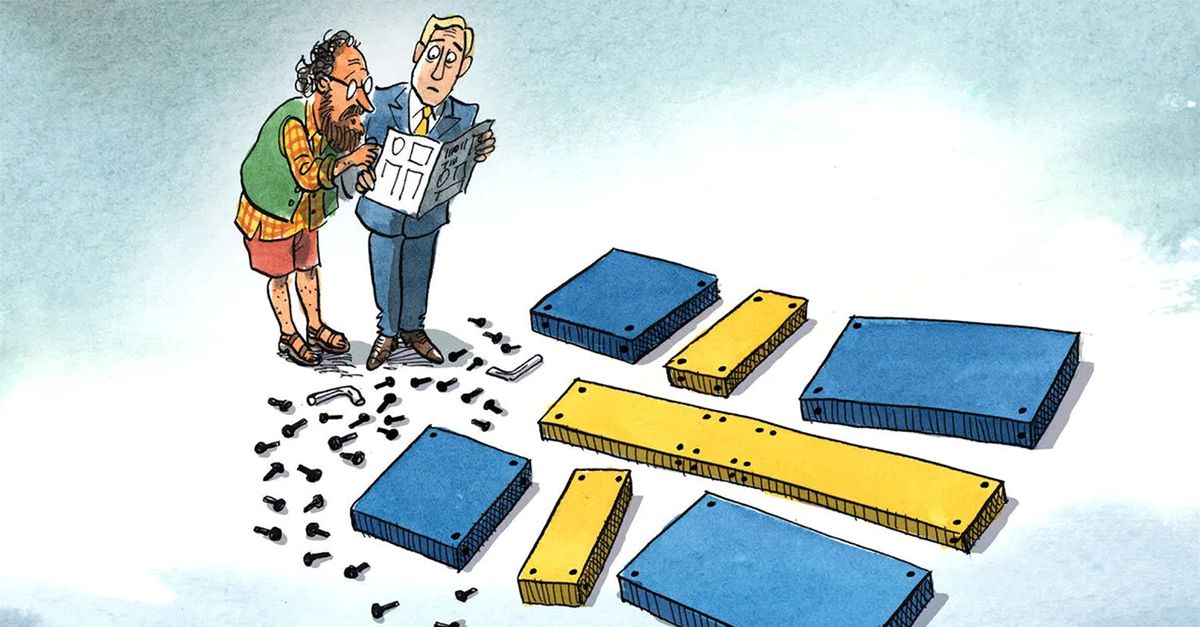
Článek z The Economist zkoumá paradoxní povahu Švédska jako země, kde se zastánci velkého státu a libertariáni shodují na úspěšnosti modelu, který spojuje výraznou státost s individuálními svobodami, přičemž státní intervence jsou vnímány jako posílení autonomie občanů. #ZweedseModel #Socialisme #IndividueleVrijheid
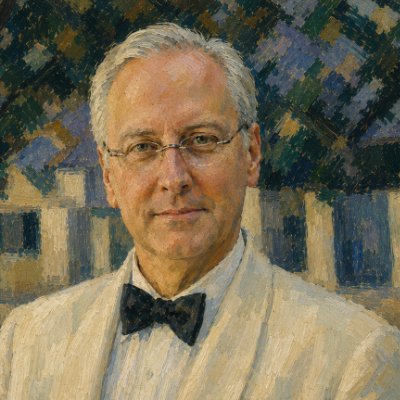
Eine schmerzliche Geschichtsvergessenheit präsentiert ausgerechnet der legendäre Bayerische Hof in München. Er beendet die langjährig turnusmäßige Beherbergung des Ludwig-von-Mises-Instituts. Mises war einer der brillantesten Ökonomen des 20. Jahrhunderts. Er mußte - ebenso wie sein Schüler Hayek - vor den Nationalsozialisten fliehen. Genau wie der Nobelpreisträger Hayek war Mises einer der härtesten Kritiker des Faschismus und jeder sonstigen Art staatlicher Zwangsverwaltungswirtschaft. Einer lautstarken Minderheit radikaler Publizisten, die mit der intellektuellen Bedeutung und Erfassung des antitotalitären Werkes von Mises überfordert sind, ist nun augenscheinlich gelungen, einige Journalisten der örtlichen Presse zu verunsichern. In unserer an Lektüre substantieller Bücher so armen Zeit scheint die Verwirrung der Lokalredaktion die Marketingabteilung des Hotels infiziert zu haben: Wie schon nach 1933 wird Mises jetzt erneut verjagt; diesmal postmortal vom Bayerischen Hof. Denn sie wissen nicht, was sie tun? Bayerischer Hof beendet Zusammenarbeit mit libertärem Ludwig-von-Mises-Institut https://t.co/4chwtbGEn7 #Mises #Libertarianismus #Freiheit


Why I love Sweden, too//How Sweden became a country of big-state libertarians https://t.co/7fEGnvn1XB from The Economist #Sweden #Libertarianism #Economics #SE
Článek popisuje návrhy radikálních libertariánů v Argentině, včetně návrhu na sterilizaci a využití ostřelovačů k ochraně vyšších vrstev společnosti v Buenos Aires před chudšími oblastmi, což evokuje narůstající rasové a sociální napětí v zemi. #Milei #Discriminación #Argentina


Me escribe una amiga: “Milei afirma siempre en todas sus entrevistas. No soy de derecha ni de izquierda; soy libertario. La derecha pretende regular la vida privada de las personas y la izquierda pretende regular su vida económica. Yo no creo en ninguna de las dos. Creo en que cada persona debe ser libre para vivir como quiera y para emprender como quiera, siempre que respete la libertad de los demás” #Libertad #Libertarianismo #Política

Fakt, że na grillu pana Morawieckiego był panel poświęcony "lewicowej perspektywie" na społeczeństwo i gospodarkę, ale nie było żadnej dyskusji skupionej na wolności gospodarczej i osobistej oraz na perspektywie liberalnej i nawet libertariańskiej, jest - jak słusznie zauważył wczoraj @MikolajPisarski - bardzo znaczący. (Pan @mhorala nawet o tej jednostronności wspomniał, prowadząc dyskusję, ale jedynie w tonie kpinki.) Po prostu Rozwój Plus to PiS bis pod tym względem, a lider ugrupowania (tak to chyba już można nazywać) nie bez powodu w 2019 r. pokrzykiwał, że "robotnicza myśl socjalistyczna" jest głęboko obecna w "filozofii Prawa i Sprawiedliwości". Jeśli ktoś się łudzi, że twór pana Morawieckiego to jakieś nowe centrum, to niech przestanie. To ugrupowanie niosące z sobą wszystkie te bardzo złe tendencje i przekonania, które pan Morawiecki wdrażał w życie jako premier, regulując gospodarkę, przymilając się do globalistycznych elit czy nakładając kolejne podatki. #Polska #Gospodarka #Wolność


Článek popisuje, jak se Asociace Národního Rifu (NRA) v USA metamorfovala z organizace původně zaměřené na střeleckou dovednost na silný politický subjekt hájící právo na držení zbraní, s důrazem na spojení s libertariánskými ideologiemi a vládou George W. Bushe a Donalda Trumpa, zatímco se rozvíjely kultury násilí a ozbrojených milicí. #NRA #Armas #Libertarismo


Jak ja się cieszę, że lata 90. w mediach się skończyły. Dla młodszych - wyobraźcie sobie, że jedyne medium w Polsce, które decydowało o tym co należy myśleć to Gazeta Wyborcza. Nauczyciele, telewizje, urzędnicy, politycy wszyscy myśleli i mówili Wyborczą. Każde odchylenie od linii Wyborczej to była ekstrema - wg oczywiście samej Wyborczej. Potem przyszedł @R_A_Ziemkiewicz i napisał Michnikowszczyznę - ta książka czytana na przełomie 2006 i 2007 r. to było coś tak orzeźwiającego, że trudno po 20 latach w to uwierzyć. Monopol na nieomylność Wyborczej był burzony rok po roku, a internet już wprowadził klasyczną wymianę opinii, którego @K_Stanowski jest idealnym i przykładem i jednocześnie beneficjentem. Dla mnie jest takim polskim Howardem Sternem (który przeszedł od dziennikarstwa muzycznego do społeczno-politycznego; natomiast Pan Krzysztof od dziennikarstwa sportowego) - trochę się powygłupia, trochę ośmieszy, trochę zaangażuje w politykę aktywnie (Stern startował na Gubernatora w ramach Parii Libertariańskiej), ale często dotyka spraw, których inni nie chcą/boją się dotknąć używając dosadnego języka. Oby czasy, do których tęskni Pani Redaktor nigdy nie wróciły - pluralizm i konkurencja ZAWSZE jest lepsza od monopolu, szczególnie w wyrażaniu opinii. Jak dla mnie to jest miejsce na rynku dla Wyborczej, ale tym bardziej jest dla Kanału Zero. I ja bardzo boję się ludzi, którzy chcieliby żeby istniała jedna partia, jedna gazeta, jedna telewizja. Rozwój bierze się z wymiany i ścierania myśli - takiej ogólnopolskiej burzy mózgów, a nie z kiszenia się we własnym sosie i poklepywania po plecach. #media #pluralizm #opinie

Peter Thiel, multimiliarder i radykalny libertarianin, stał się symbolem nowego typu wpływów w Dolinie Krzemowej, wykorzystując swój kapitał i sieć kontaktów, aby omijać państwowe reguły i dostarczać rządom narzędzia cyfrowej inwigilacji, co ukazuje jego skomplikowaną rolę w amerykańskiej polityce i technologii. #PeterThiel #libertarianizm #technokracja


Isso aqui é bem sério. Eles estão tentando dominar o sistema de saúde inglês e ter os dados de todos os cidadãos do país. O dono, Peter Thiel, defende o fim total dos Estados, a submissão de todos às big techs e faz parte da nova extrema direita Ele é libertarianismo e anti-democracia #Saúde #Liberdade #Tecnologia

Republicański kongresmen Thomas Massie, znany z libertariańskich poglądów i współautorstwa ustawy dotyczącej Jeffrey'a Epsteina, przegrał partyjne prawybory w Kentucky, gdzie Donald Trump aktywnie wspierał jego rywala, prowadząc do najdroższej wewnątrzpartyjnej kampanii w historii USA. #DonaldTrump #JeffreyEpstein #Wybory


Thomas Massie, znany z libertariańskich poglądów, przegrał prawybory w Kentucky dzięki interwencji Donalda Trumpa, który z pomocą gigantycznych funduszy i osobistych ataków nazywał go najgorszym kongresmenem w historii, co wpisuje się w szerszą strategię byłego prezydenta eliminującą z Partii Republikańskiej osoby uznawane za nielojalne. #ThomasMassie #DonaldTrump #Kentucky

RT @seanmdav: Why did Massie lose tonight? Massie went from principled libertarian during COVID, to GOP leadership lapdog under McCarthy,… #Massie #GOP #Libertarian #Thetweetdoesnotmentionanyspecificcountries.

President Trump's influence is at stake in upcoming Republican primary races, particularly in Louisiana, where Senator Bill Cassidy, a Trump impeachment supporter, faces off against his Trump-backed opponent Julia Letlow, and in Kentucky, where libertarian-leaning Representative Thomas Massie seeks to fend off Trump-backed Ed Gallrein, with Massie's anti-war stance resonating with some voters as a sign of his integrity despite Trump's criticism. #RepublicanPrimary #TrumpInfluence #ForeignPolicy #US #IR





