BETA nonprofit public democratic european moderated

Search

#Wheat

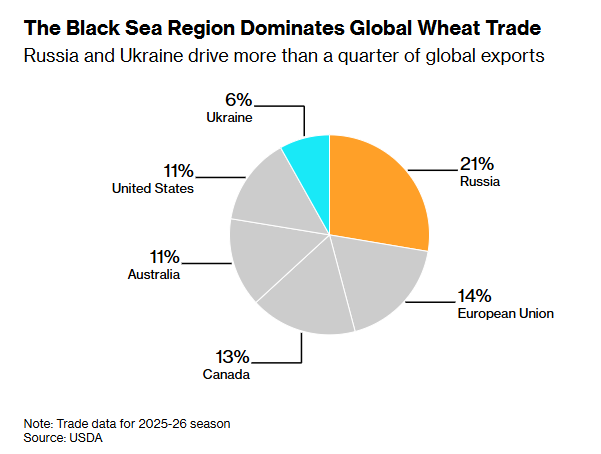
The author said the Black Sea region was a major global exporter of cereals and oilseeds, supplying about 30% of the world’s wheat demand. They wrote that the escalation of Russia’s war in the Black Sea was creating serious uncertainty about export prospects during the peak of the harvest season. https://t.co/c3h8O6AMOM #BlackSea #Cereals #Wheat #RU #UA

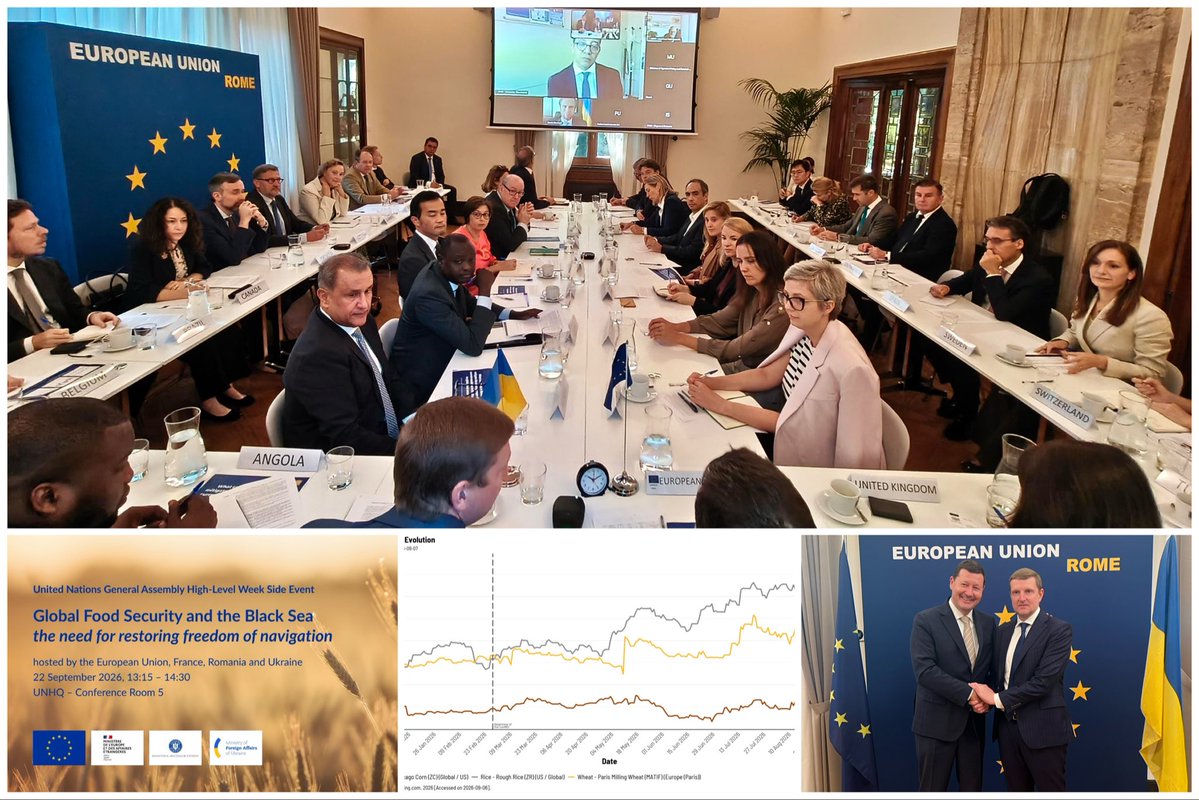
The current escalation in the Black Sea disrupts freedom of navigation and endangers global food security. The region supplies around 30% of global wheat demand. This is why 44 Ambassadors from all regions of the world met yesterday at #VillaEuropa in Rome, following the joint https://t.co/0JKFr0xNLv #BlackSea #FoodSecurity #Diplomacy #ThetweetmentionstheBlackSeaandreferencesameetinginRome #butitdoesnotexplicitlymentionanyspecificcountries.Therefore #therearenorelevantcountrycodestoreturn. Ifyouwouldliketoanalyzetweetsthatincludespecificcountrymentions #pleaseprovideanothertweet!

The Black Sea is central for the functioning of global agriculture markets. The region is a top global exporter of cereals and oilseeds 🌾🌽🌻and supplies about 30% of the world’s demand for wheat, most of which transits the Black Sea. The current escalation of Russia’s war of https://t.co/85lMYCiYJ7 #BlackSea #Agriculture #WheatExport #RU

Today at the 🇺🇳UN in New York, the 🇪🇺EU, 🇫🇷France, 🇷🇴Romania and 🇺🇦Ukraine will convene a dedicated session on Global Food Security and the Black Sea. The region is a top global exporter of cereals and oilseeds and supplies about 30% of the world‘s demand for wheat, most of which #GlobalFoodSecurity #BlackSea #WheatExport #UN #EU #FR #RO #UA

Today at the 🇺🇳UN in New York, the 🇪🇺EU, 🇫🇷France, 🇷🇴Romania and 🇺🇦Ukraine will have a dedicated session on Global Food Security and the Black Sea. The region is a top global exporter of cereals and oilseeds and supplies about 30% of the world‘s demand for wheat, most of which #GlobalFoodSecurity #BlackSea #Ukraine #UN #EU #FR #RO #UA

“BROADWAY WORLD” OF NEW YORK WELCOMES THE TEATRO MERCADANTE OF CERIGNOLA IN THE NAME OF THE MASCAGNI FESTIVAL SOURCE: https://www.linkedin.com/pulse/broadway-world-new-york-welcomes-teatro-mercadante-sardella-ph-d--i5mbe/ by Stephi Wild, New York City. SOURCE: https://www.broadwayworld.com/italy/article/Photos-Teatro-Mercadante-and-Teatro-Goldoni-Partner-on-SOUNDTRACK-MASCAGNI-20260827 The most influential theatrical portal in the world, with at least six million global visitors per month, consecrates the cultural twinning between Cerignola and Livorno and the historical restitution of a verismo born in Puglia, southern Italy: there exists a moment when a local history ceases to be peripheral and, by the mere fact of being recounted in the right place, becomes universal history. That moment, for the Teatro Mercadante di Cerignola, has arrived. Broadway World, the bible of international theatre read daily by producers, artistic directors and critics from New York to the West End, has welcomed into its pages the cultural pact between the Mercadante and the Fondazione Teatro Goldoni of Livorno, sealed in spring 2026 by Artistic Director Savino Zaba and the Municipal Administration in the person of the Deputy Mayor and Commissioner for Culture, Maria Dibisceglia. The piece is signed by New York editor Stephi Wild, under the title: “Photos: Teatro Mercadante and Teatro Goldoni Partner on SOUNDTRACK MASCAGNI”. It is no mere detail. Broadway World does not review provincial seasons. When it does, it is signalling to the American and global theatrical system that something, down there, deserves to be seen. The heart of this recognition is Soundtrack Mascagni: the music that inspired cinema, the cinema that celebrated Mascagni, the co-production chosen as the closing event of the VII edition of the Mascagni Festival. A hybrid work, a concert-reading for narrating voice, ensemble, images and sounds, with dramaturgy and text by Vittorio Giacci, performed by the Artists of the Mascagni Academy and the Orchestra of the Teatro Goldoni di Livorno “Massimo de Bernart” conducted by Maurizio Colasanti. On stage, in the guise of an imaginary Mascagni, as narrator and guide through his own musical universe, the actor-director Maurizio Nichetti. A production, as the Italian notes record, “born from the synergy between the Teatro Mercadante di Cerignola and the Teatro Goldoni di Livorno”, which will see on stage the great actor and director Maurizio Nichetti and the Orchestra of the Goldoni, conducted by Maestro Maurizio Colasanti, with direction entrusted to Marco Voleri and Savino Zaba. What Broadway World has intercepted, moreover, is not merely a production but also a historiographical thesis that at last forces the international literature to catch up. For decades, Anglophone biographies have dismissed Pietro Mascagni’s Apulian decade as “years of poverty and obscurity”: the documentary truth, preserved in the Polo Museale of Piano San Rocco, is of a different temper entirely. In December 1886, on tour with the Maresca company, Mascagni stopped in Cerignola, where the mayor then in office, Commendatore Cannone, invited him to remain to conduct the newly founded philharmonic. The composer would stay, save for brief absences, in the house in Via Assunta until 1895, composing no fewer than five operas: Cavalleria rusticana; L’amico Fritz; I Rantzau; Guglielmo Ratcliff; Silvano. A third of his entire operatic output, written in feverish poverty, in an agricultural town of the Ofantine plain. It was there, in July 1888, that the verses of Cavalleria reached him by postcard from Livorno, sent by his poet friends Giovanni Targioni-Tozzetti and Guido Menasci. There, on 27 May 1889, he completed the autograph. The envelope, that morning, bore the postmark of Cerignola. The world premiere at the Costanzi in Rome, on 17 May 1890 before Queen Margherita, was an earthquake. As Zaba has synthesised it, in a formula destined to endure: “Livorno gave Mascagni to the world. Cerignola inspired him and kept the deepest part of his soul.” In fact, the productive parabola sanctioned by BroadwayWorld is exemplary in the way it overturns the traditional North-South axis of cultural projects. It begins on 23 August at the Mascagni Festival in Livorno with Soundtrack Mascagni. Then its debut in Cerignola, in the course of the Mercadante’s forthcoming season. Indeed, with a date already fixed: “Soundtrack Mascagni” will be presented in Cerignola on 24 October as the opening production of the 2026/2027 theatrical season of the Teatro Mercadante. An idea as simple as it is revolutionary: cinema as a lens through which to re-read Mascagni. The composer plundered by Scorsese and Coppola, cited by Visconti as a tutelary deity, already possessed in his own writing — dense, symphonic, almost edited by cuts — a cinematic vocation. Soundtrack Mascagni does not merely celebrate that filiation; it interrogates it. That BroadwayWorld should have chosen to capture precisely this — a provincial theatre that does not seek hospitality but co-produces as an equal with a historic theatre such as the Goldoni — says much about the shifting of Italy’s cultural axis. No longer a South that imports, but a South that generates archives, that preserves autographs, caricatures, unpublished letters, and restores them to the international circuit. For Cerignola, accustomed to being narrated as a land of wheat and not of music, this arrival on Broadway World is more than a press clipping. It is the certification that its Mascagni story is no longer a local footnote, but a necessary chapter in the history of verismo. And that the Mercadante, from a provincial municipal theatre, has entered in full right the ranks of those Mascagni theatres upon which the whole world now looks, and with admiration.

“BROADWAY WORLD” OF NEW YORK WELCOMES THE TEATRO MERCADANTE OF CERIGNOLA IN THE NAME OF THE MASCAGNI FESTIVAL

"VILLA DI FARAGOLA": FROM ASCOLI SATRIANO TO THE UNITED STATES — PUBLISHED IN THE PRESTIGIOUS "POPULAR ARCHAEOLOGY USA" SOURCE: https://www.linkedin.com/pulse/villa-di-faragola-from-ascoli-satriano-united-states-sardella-ph-d--pgd6f/ in the heart of apulia, buried for fifteen centuries beneath the wheat fields of the carapelle valley, lay one of the most opulent aristocratic residences of ancient italy: the villa of faragola, near ascoli satriano (fg). discovered in 2003 by the university of foggia and excavated under the direction of giuliano volpe and maria turchiano, this extraordinary late antique residence – almost certainly belonging to the cornelii scipiones orfiti, one of the most powerful senatorial families of the fourth century – has yielded wonders unique in their kind to scholars around the world. the best-preserved stibadium in italy: a sigma‑shaped masonry dining couch, decorated with gilded marble reliefs of dionysian theme, at the centre of a summer banqueting hall of incomparable luxury. a private bath complex of more than a thousand square metres – among the largest ever documented on the italian peninsula – with glass‑paste mosaics, opus sectile floors, and walls clad in polychrome marbles imported from tunisia, greece and the peloponnese. a cenatio aestiva where roman senators reclined along the curve of the dining couch while a fountain played among the marbles and the scent of the apulian countryside drifted in through the open colonnade. then, on the night between 6 and 7 september 2017, an arson attack – almost certainly criminal in origin – destroyed within hours the protective covering of the site, scorching the marble floors, warping the mosaics, and sweeping away decades of work. professor volpe, who was in kuala lumpur at the time, learned of the news via whatsapp early that morning. No one has ever been brought to trial but faragola did not surrender. thanks to funding of around three million euros, restoration work was completed in november 2024. the villa still bears the marks of the fire – and archaeologists have deliberately chosen not to erase them: that scar is now history, just as much as the senators’ banquets. the faragola archaeological park is now preparing for its second opening to the public. a magnificent article in the american magazine popular archaeology recounts the entire story – from the daunian roots of the site to its present‑day rebirth. it is truly worth reading.

"VILLA DI FARAGOLA": FROM ASCOLI SATRIANO TO THE UNITED STATES — PUBLISHED IN THE PRESTIGIOUS "POPULAR ARCHAEOLOGY USA"

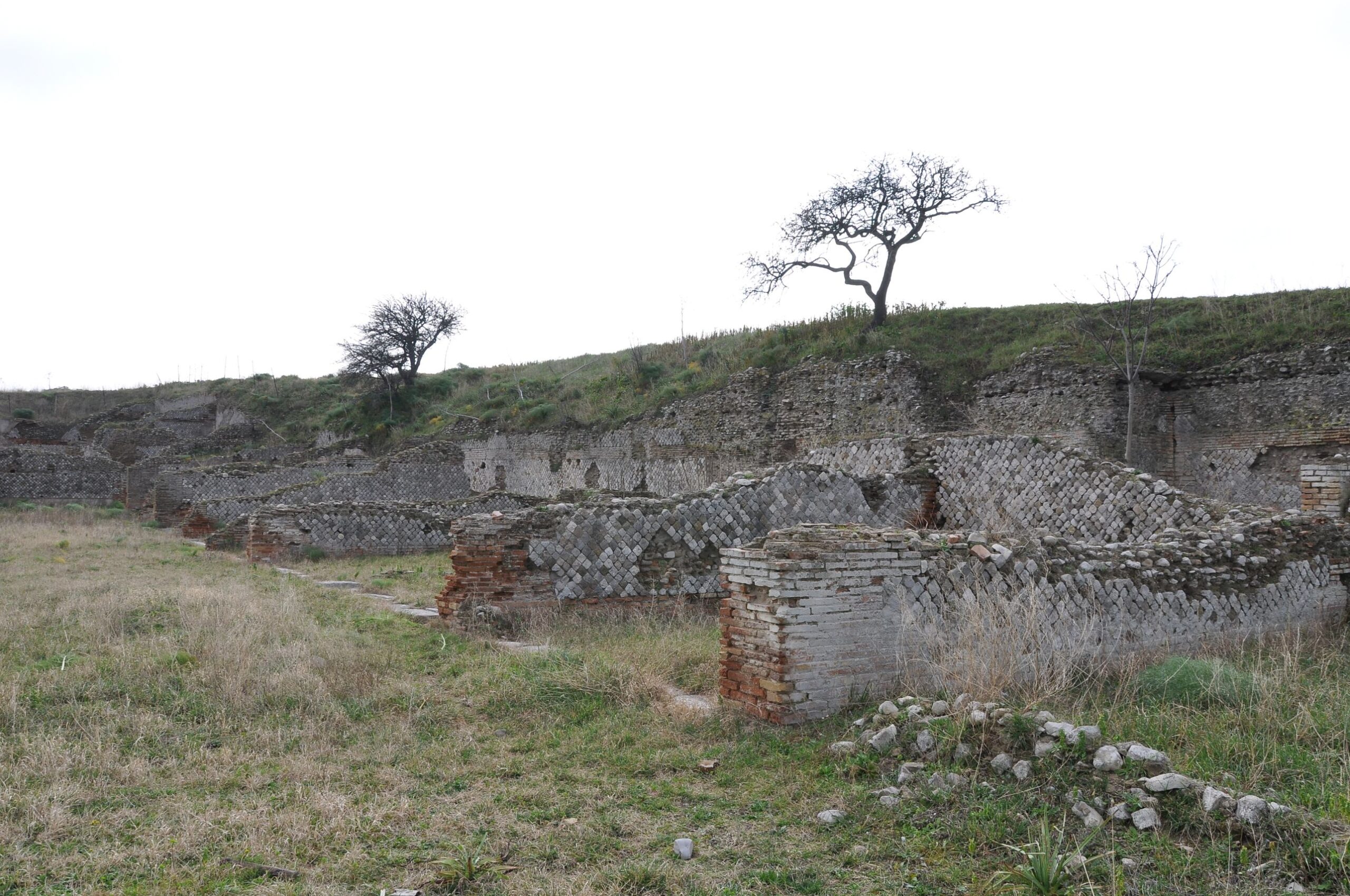
IlSipontino.net: Herdonia, the “Pompeii of Apulia”, featured on Popular Archaeology (USA) SOURCE: https://www.ilsipontino.net/herdonia-la-pompei-di-puglia-in-un-articolo-pubblicato-oggi-su-popular-archaeology-usa/ In the golden heart of the Tavoliere delle Puglie, where the wheat still ripples beneath the very sky that once witnessed the passage of Hannibal’s armies and Trajan’s legions, Herdonia at last emerges onto the international stage: the ancient city that scholars, with equal admiration and regret, have long described as “the Pompeii of Puglia". Published in Popular Archaeology, the article by Dr Luciano Magaldi Sardella retraces, with both passion and scholarly rigour, the entire epic of this extraordinary site: from its Daunian origins in the Iron Age, marked by its celebrated anthropomorphic stelae and the earliest textile embroideries known in Italy, through the tragedy of the Punic Wars – two battles of Herdonia in the aftermath of Cannae – the Roman refoundation along the Via Traiana, and finally the hunting retreat of Frederick II of Swabia of the Hohenstaufen dynasty. Only 20 per cent of its 20–24 hectares has been brought to light over sixty years of Belgian (Joseph Mertens, 1962–1992) and Italo‑Belgian excavations (University of Bari, Giuliano Volpe, 1993–2000). The remaining 80 per cent, preserved intact beneath the thin Puglian mantle, constitutes a living archive of history that could occupy archaeologists for the next century. After twenty‑two years of enforced silence due to a protracted legal dispute, the year 2022 marked a decisive turning point: the State acquired the entire area, allocating more than €2.7 million for restoration, enhancement, and the creation of the Archaeological Park of Herdonia. The HerMA Museum, inaugurated in 2017 just a short distance from the site, already welcomes thousands of visitors with its Daunian and Roman masterpieces, while the Polytechnic University of Bari has produced the first complete 3D model of the ruins. “Herdonia is not merely a site of the past; it is a place capable of narrating the whole of Italy, from prehistory to the Middle Ages, without being overlaid by a modern city,” writes Magaldi Sardella. “It now finally possesses the conditions to become one of the great archaeological parks of our country.” The field lies open. Puglia has rediscovered its Pompeii. It is now for the world to uncover it.

Herdonia, la Pompei di Puglia, in un articolo pubblicato oggi su Popular Archaeology Usa

SanGiovanniRotondoFree.it — Herdonia, the “Pompeii of Apulia”, Captivates America: Popular Archaeology Shines a Spotlight on the Tavoliere’s Hidden Treasure SOURCE: https://sangiovannirotondofree.it/2026/02/28/herdonia-la-pompei-di-puglia-conquista-lamerica-riflettori-di-popular-archaeology-sul-tesoro-nascosto-del-tavoliere/ In the golden heart of the Tavoliere delle Puglie, where the wheat still ripples beneath the very sky that once witnessed the passage of Hannibal’s armies and Trajan’s legions, Herdonia at last emerges onto the international stage: the ancient city that scholars, with equal admiration and regret, have long described as “the Pompeii of Puglia”. Published in Popular Archaeology, the article by Dr Luciano Magaldi Sardella retraces, with both passion and scholarly rigour, the entire epic of this extraordinary site: from its Daunian origins in the Iron Age, marked by its celebrated anthropomorphic stelae and the earliest textile embroideries known in Italy, through the tragedy of the Punic Wars – two battles of Herdonia in the aftermath of Cannae – the Roman refoundation along the Via Traiana, and finally the hunting retreat of Frederick II of Swabia of the Hohenstaufen dynasty. Only 20 per cent of its 20–24 hectares has been brought to light over sixty years of Belgian (Joseph Mertens, 1962–1992) and Italo‑Belgian excavations (University of Bari, Giuliano Volpe, 1993–2000). The remaining 80 per cent, preserved intact beneath the thin Puglian mantle, constitutes a living archive of history that could occupy archaeologists for the next century. After twenty‑two years of enforced silence due to a protracted legal dispute, the year 2022 marked a decisive turning point: the State acquired the entire area, allocating more than €2.7 million for restoration, enhancement, and the creation of the Archaeological Park of Herdonia. The HerMA Museum, inaugurated in 2017 just a short distance from the site, already welcomes thousands of visitors with its Daunian and Roman masterpieces, while the Polytechnic University of Bari has produced the first complete 3D model of the ruins. “Herdonia is not merely a site of the past; it is a place capable of narrating the whole of Italy, from prehistory to the Middle Ages, without being overlaid by a modern city,” writes Magaldi Sardella. “It now finally possesses the conditions to become one of the great archaeological parks of our country.” The field lies open. Puglia has rediscovered its Pompeii. It is now for the world to uncover it.

Herdonia, la Pompei di Puglia conquista l’America: riflettori di Popular Archaeology sul tesoro nascosto del Tavoliere - San Giovanni Rotondo Free

StatoQuotidiano.it — Herdonia, the “Pompeii of Apulia”, Captivates America SOURCE: https://www.statoquotidiano.it/28/02/2026/herdonia-la-pompei-di-puglia-conquista-lamerica/1289894/ The site, renowned for its millennia‑old history and its extraordinary archaeological heritage, takes centre stage in an in‑depth feature published today in Popular Archaeology by Dr Luciano Magaldi Sardella. In the golden heart of the Tavoliere delle Puglie, where the wheat still ripples beneath the very sky that once witnessed the passage of Hannibal’s armies and Trajan’s legions, Herdonia at last emerges onto the international stage: the ancient city that scholars, with equal admiration and regret, have long described as “the Pompeii of Puglia”. Published in Popular Archaeology, the article by Dr Luciano Magaldi Sardella retraces, with both passion and scholarly rigour, the entire epic of this extraordinary site: from its Daunian origins in the Iron Age, marked by its celebrated anthropomorphic stelae and the earliest textile embroideries known in Italy, through the tragedy of the Punic Wars – two battles of Herdonia in the aftermath of Cannae – the Roman refoundation along the Via Traiana, and finally the hunting retreat of Frederick II of Swabia of the Hohenstaufen dynasty. Only 20 per cent of its 20–24 hectares has been brought to light over sixty years of Belgian (Joseph Mertens, 1962–1992) and Italo‑Belgian excavations (University of Bari, Giuliano Volpe, 1993–2000). The remaining 80 per cent, preserved intact beneath the thin Puglian mantle, constitutes a living archive of history that could occupy archaeologists for the next century. After twenty‑two years of enforced silence due to a protracted legal dispute, the year 2022 marked a decisive turning point: the State acquired the entire area, allocating more than €2.7 million for restoration, enhancement, and the creation of the Archaeological Park of Herdonia. The HerMA Museum, inaugurated in 2017 just a short distance from the site, already welcomes thousands of visitors with its Daunian and Roman masterpieces, while the Polytechnic University of Bari has produced the first complete 3D model of the ruins. “Herdonia is not merely a site of the past; it is a place capable of narrating the whole of Italy, from prehistory to the Middle Ages, without being overlaid by a modern city,” writes Magaldi Sardella. “It now finally possesses the conditions to become one of the great archaeological parks of our country.” The field lies open. Puglia has rediscovered its Pompeii. It is now for the world to uncover it.

Herdonia, la 'Pompei di Puglia' conquista l’America

FoggiaReporter.it: Ordona, the “Pompeii of Apulia”: Dr Luciano Magaldi Sardella’s contribution on Popular Archaeology USA SOURCE: https://www.foggiareporter.it/ordona-la-pompei-di-puglia-su-popular-archaeology-lintervento-del-dr-luciano-magaldi-sardella.html Destined to become one of the largest archaeological parks in Italy. In the golden heart of the Tavoliere delle Puglie, where the wheat still ripples beneath the very sky that once witnessed the passage of Hannibal’s armies and Trajan’s legions, Herdonia at last emerges onto the international stage: the ancient city that scholars, with equal admiration and regret, have long described as “the Pompeii of Puglia”. Published in Popular Archaeology, the article by Dr Luciano Magaldi Sardella retraces, with both passion and scholarly rigour, the entire epic of this extraordinary site: from its Daunian origins in the Iron Age, marked by its celebrated anthropomorphic stelae and the earliest textile embroideries known in Italy, through the tragedy of the Punic Wars — two battles of Herdonia in the aftermath of Cannae — the Roman refoundation along the Via Traiana, and finally the hunting retreat of Frederick II of Swabia of the Hohenstaufen dynasty. Only 20 per cent of its 20–24 hectares has been brought to light over sixty years of Belgian (Joseph Mertens, 1962–1992) and Italo‑Belgian excavations (University of Bari, Giuliano Volpe, 1993–2000). The remaining 80 per cent, preserved intact beneath the thin Puglian mantle, constitutes a living archive of history that could occupy archaeologists for the next century. After twenty‑two years of enforced silence due to a protracted legal dispute, the year 2022 marked a decisive turning point: the State acquired the entire area, allocating more than €2.7 million for restoration, enhancement, and the creation of the Archaeological Park of Herdonia. The HerMA Museum, inaugurated in 2017 just a short distance from the site, already welcomes thousands of visitors with its Daunian and Roman masterpieces, while the Polytechnic University of Bari has produced the first complete 3D model of the ruins. “Herdonia is not merely a site of the past; it is a place capable of narrating the whole of Italy, from prehistory to the Middle Ages, without being overlaid by a modern city,” writes Magaldi Sardella. “It now finally possesses the conditions to become one of the great archaeological parks of our country.” The field lies open. Puglia has rediscovered its Pompeii. It is now for the world to uncover it.

Ordona, la Pompei di Puglia: su “Popular Archaeology” l’intervento del Dr. Luciano Magaldi Sardella - Foggia Reporter

FOGGIASERA.it, HERDONIA SU POPULAR ARCHAEOLOGY USA SOURCE: https://foggiasera.it/2026/02/27/the-archaeological-site-of-herdonia-the-pompeii-of-puglia-su-popular-archaeology-usa/ In the golden heart of the Tavoliere delle Puglie, where the wheat still sways beneath the very sky that once witnessed the passage of Hannibal’s armies and Trajan’s legions, Herdonia at last steps onto the international stage: the ancient city that scholars, with equal admiration and regret, have long described as “the Pompeii of Puglia". Published in Popular Archaeology, the article by Dr Luciano Magaldi Sardella retraces with both passion and scholarly rigour the full epic of this extraordinary site: from its Daunian origins in the Iron Age, with its celebrated anthropomorphic stelae and the earliest textile embroideries known in Italy, through the tragedy of the Punic Wars (two battles of Herdonia following Cannae), the Roman refoundation along the Via Traiana, and finally the hunting retreat of Frederick II of Swabia. Only 15-20 per cent of its twenty-twenty-five hectares has been brought to light across sixty years of Belgian (Joseph Mertens, 1962–1992) and Italo‑Belgian excavations (University of Bari, Giuliano Volpe, 1993–2000). The remaining 80 per cent, preserved intact beneath the thin Apulian mantle, constitutes an archive of living history that could occupy archaeologists for the next century. After twenty‑two years of enforced silence due to a protracted legal dispute, the year 2022 marked a decisive turning point: the State acquired the entire area, allocating more than €2.7 million for restoration, enhancement, and the creation of the Archaeological Park of Herdonia. The HerMA Museum, inaugurated in 2017 a short distance from the site, already welcomes thousands of visitors with its Daunian and Roman masterpieces, while the Polytechnic University of Bari has produced the first complete 3D model of the ruins. “Herdonia is not merely a site of the past: it is a place capable of narrating the whole of Italy, from prehistory to the Middle Ages, without being overlaid by a modern city,” writes Magaldi Sardella. “It now finally possesses the conditions to become one of the great archaeological parks of our country.” The field lies open. Puglia has rediscovered its Pompeii. It is now for the world to uncover it.

⚠ Thursday Brief ⚠ 🛢 Iran and Oman Reach Agreements 🇺🇸 #Nvidia Reported Strong Earnings and Forecasts 🇰🇷 #BOK Delivers Back-to-Back Hike 🌎 #Wheat Hits Three-Year High 🇷🇺 🇺🇦 Putin Moves to Escalate War in #Ukraine ... https://t.co/9YCJ3Y8C2g #Iran #Nvidia #Ukraine #IR #OM #US #KR #RU #UA

🌎 #Wheat Hits Three-Year High as Russia Prepares to Escalate War - Bloomberg https://t.co/bCKZVw2bHs https://t.co/xeaUiz8Io3 https://t.co/Nhb3L6Evir #Wheat #Russia #War #RU

🌎 Breadbasket States Hammered by War and Heat - Bloomberg *Corn and wheat prices are at multi-year highs, prompting food-security warnings and inflation concerns ⚠ https://t.co/YFjAYoSIqc https://t.co/VvlsVmSruJ #FoodSecurity #Inflation #CornPrices #US

Nachez Aug 4

🚨 ÚLTIMA HORA 🚨 ‼️ NO se espera que el fichaje de Jonathan Wheatley se confirme este año 👉🏼 Llegará como jefe de equipo, pero habrá que esperar hasta que termine de negociar los términos de salida con Audi ❌ Tom McCullough dejará definitivamente Aston Martin a finales de este año 📰 @thomasmaheronf1 vía PlanetF1 #F1 #AstonMartin #Fichajes

This week, at the 🇺🇳UN’s @FAO in Rome, we will look at the State of the Agricultural Commodity Markts 2026 #SOCO2026. What are the effects of the closure of the Strait of Hormuz and of Russia’s ongoing illegal war of aggression against Ukraine on global trade in wheat, maize, and https://t.co/SPQcJS6Ar1 #Agriculture #GlobalTrade #FoodSecurity #IT #RU #UA

POPTime Jun 18

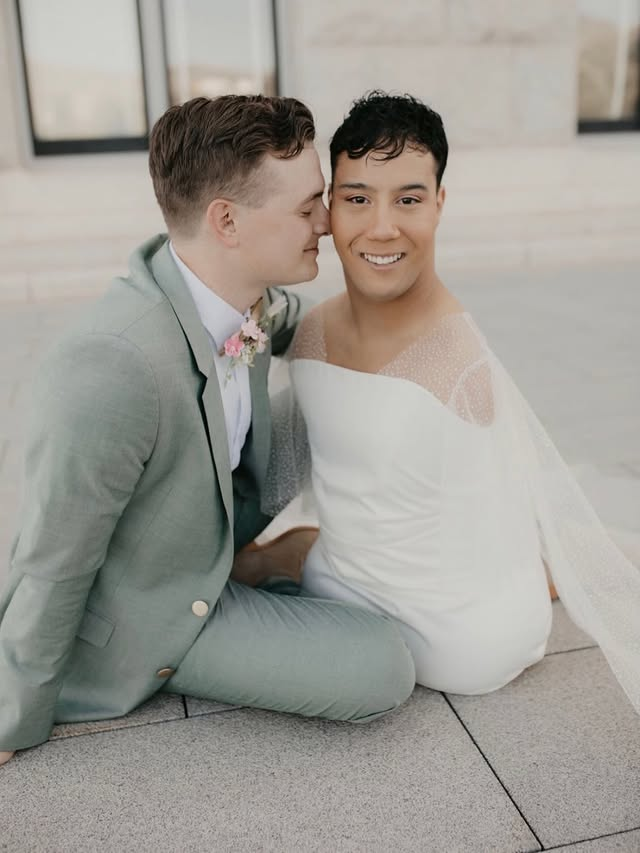
Briel Wheatley, influenciadora trans PDC brasileira, se casa nos Estados Unidos. 💞💍 https://t.co/9W1yPQ6hnW #Trans #LoveIsLove #Wedding

SchalkeZone Jun 6

Schalke soll laut @SportsPeteO an Ethan Wheatley (20/ST) von Manchester United interessiert sein. Schalke würde Wheatley gerne fest verpflichten, Manchester United will den Stürmer aber nur ausleihen. #S04 https://t.co/notUGnldz0 #Schalke #ManchesterUnited #TransferNews

🇺🇸 Kansas farmers hit hard by weather extremes and growing costs, wheat crop could be worst since 1972 - AP https://t.co/lWBfRbBdSY #KansasFarmers #WeatherExtremes #WheatCrop #US

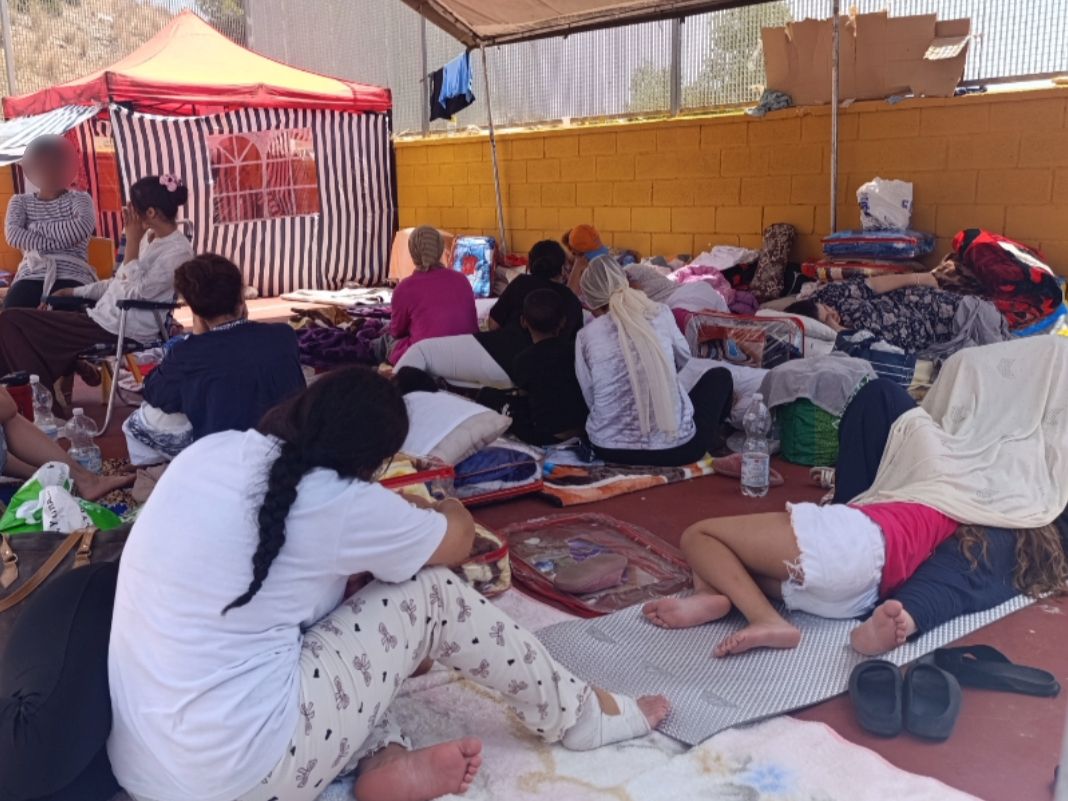
En el polideportivo de Ceuta que sirve de refugio a 250 mujeres y niñas migrantes: "Huyen de sus maridos y de los violadores"