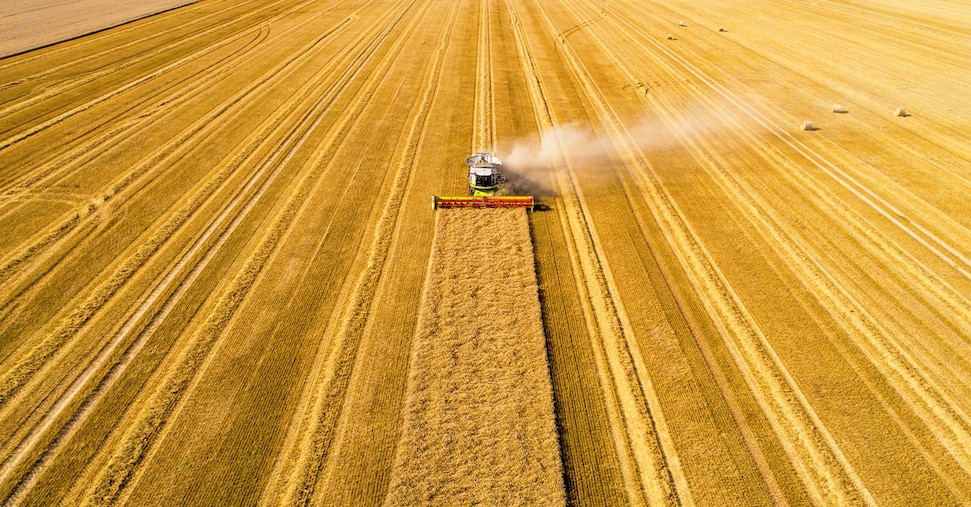
According to a World Bank report, a 5.3% increase in global agricultural prices is expected in 2027, with geopolitical tensions and climate issues continuing to impact commodity markets. #commodity #agroalimentare #prezzialimentari (translated)
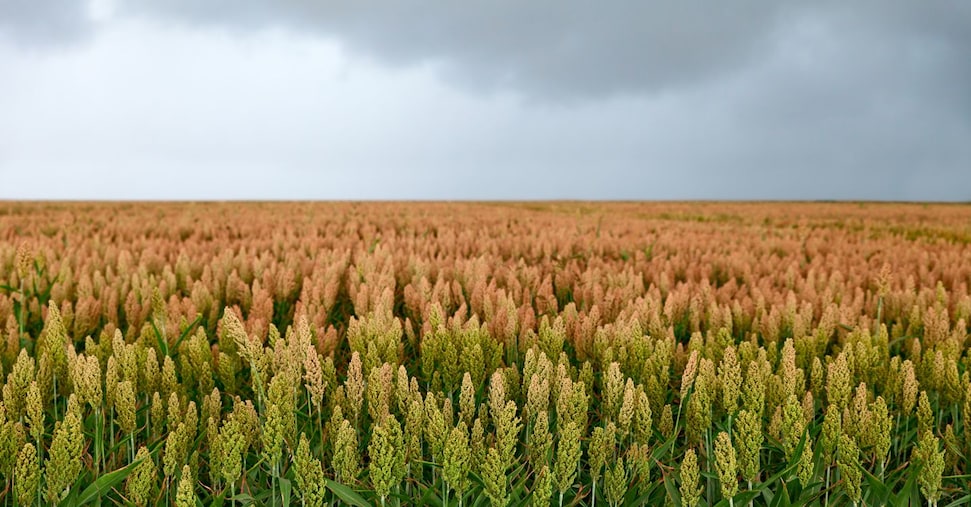
According to a World Bank report, a 5.3% increase in global agricultural prices is expected in 2027, with geopolitical tensions and climate issues continuing to impact commodity markets. #commodity #agroalimentare #prezzialimentari (translated)

The author wrote that cyberattacks on supermarkets and threats to grain shipping in the Black Sea showed that food was a security issue as well as an essential commodity. They said a strong Common Agricultural Policy was important for the future, not an outdated relic, and shared a link to their full speech. https://t.co/VaphczsmU7 https://t.co/mj3hyT8ze4 #FoodSecurity #Cybersecurity #GrainShipping #UA #RU
In October, global agricultural prices fell by 1.2% due to declines in cereals, despite rising prices for sugar and vegetable oils, according to the FAO's monthly report. #PrezzAgricoli #MadeInItaly #CommodityAgricole (translated)

The author criticized what they described as repeated attempts to present the E3 as the only important grouping in Europe, saying this was disingenuous and risked sowing division within the EU. They described unity as the EU’s most valuable asset and shared a report saying the bloc would host Ukraine reconstruction talks with the US and UK. https://t.co/emLyNKDEJj #E3 #Europe #Ukraine #EU #UA #US #UK
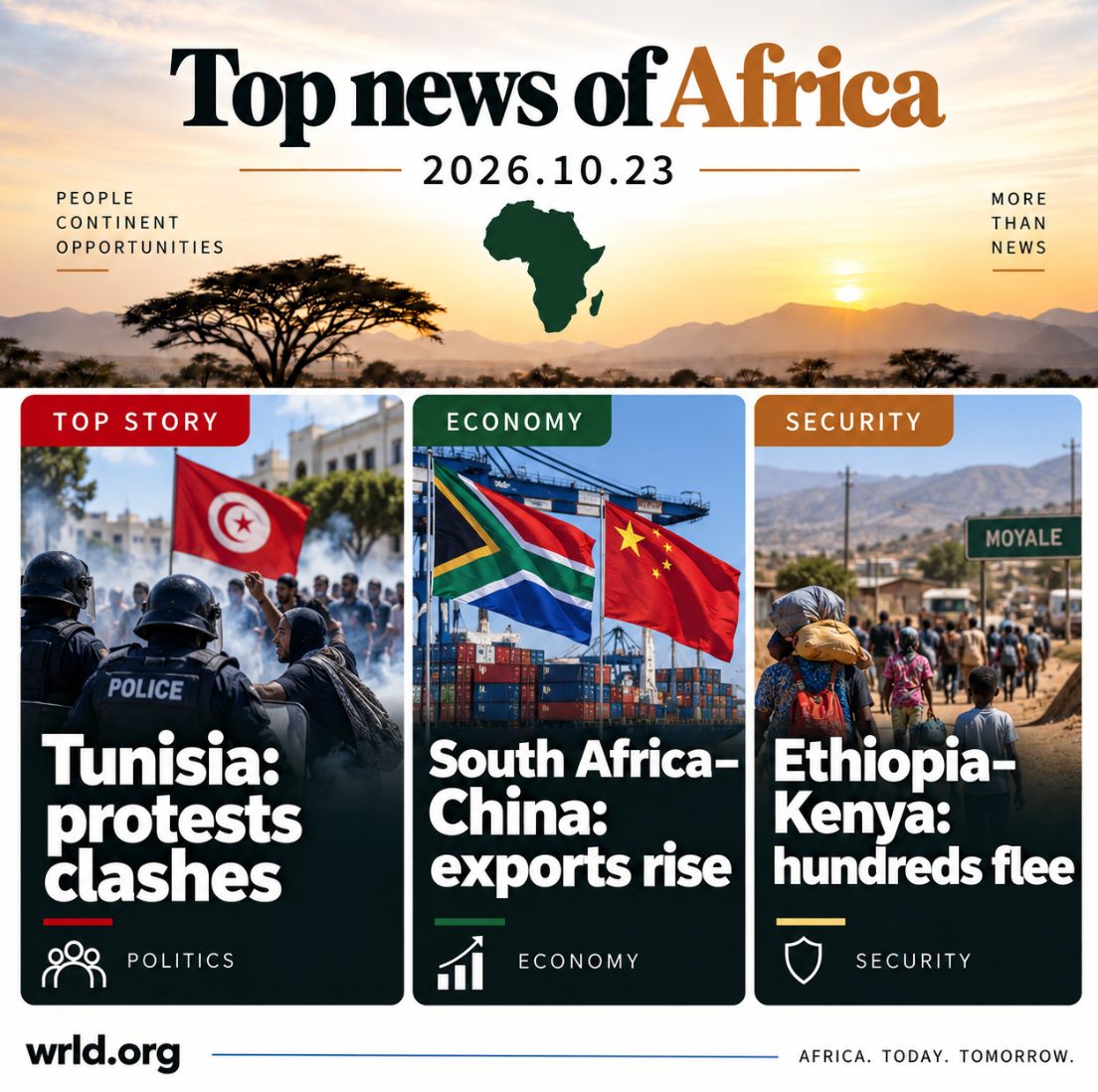
AFRICA DAILY REPORT — 23 OCTOBER 2026 1. Nigeria — 13-day Ebola diagnosis delay raises regional containment concerns Importance: 10/10 — Critical Reuters reported that Nigeria's first Ebola patient in more than a decade was not tested until 13 days after symptoms began. The patient visited several healthcare facilities before diagnosis, complicating contact tracing; 44 contacts had been identified. The outbreak, first detected in DR Congo in May, has also affected Uganda and Kenya. The Bundibugyo strain has no approved vaccine or treatment. The source of the patient's infection is still being investigated. Source: Reuters, 22 October 2026 https://www.reuters.com/business/healthcare-pharmaceuticals/late-detection-nigeria-raises-alarm-ebola-spreads-across-africa-2026-10-22/ 2. Ethiopia–Kenya — Hundreds flee clashes in border town of Moyale Importance: 9/10 — Very High Hundreds of Ethiopians, mainly women and children, crossed into Kenya after fighting broke out in Moyale on Wednesday and continued on Thursday. The cause of the clashes in southern Ethiopia's Oromiya region was not established. Kenya Red Cross began assessing humanitarian needs; no dedicated displacement camp was ready. The incident is geographically separate from the fighting in northern Tigray. Source: Reuters, 22 October 2026 https://www.reuters.com/world/africa/hundreds-ethiopians-flee-into-kenya-after-border-town-fighting-2026-10-22/ 3. South Africa — Police investigate killing during anti-migrant unrest in Durban Importance: 9/10 — Very High Police said a foreign national was beaten to death by a crowd of about 50 people during a march in central Durban. The victim's nationality and the precise motive had not been established. The killing follows months of anti-migrant protests, including recent looting and vehicle fires in Durban and Johannesburg. Authorities are investigating the attack. Source: Reuters, 22 October 2026 https://www.reuters.com/world/africa/south-african-police-investigate-killing-foreign-national-by-crowd-2026-10-22/ 4. Tunisia — Police clash with protesters in Tunis suburb and southern towns Political / governance development — neutral coverage Police used tear gas against protesters in Ettadhamen following the death of a man after his detention. His family alleged police violence; local media reported a different possible cause, and the interior ministry had not commented. Further clashes occurred in Jebeniana and Agareb, while students in Sfax protested emergency-care delays after a student's death. The unrest unfolds amid economic and political tensions; responsibility for the disputed deaths remains unproven. Source: Reuters, 22 October 2026 https://www.reuters.com/world/africa/tunisian-police-clash-with-protesters-capital-day-heightened-tensions-2026-10-22/ 5. Libya — Dispute over central-bank leadership exposes institutional divisions Political / governance development — neutral coverage Libya's eastern-based parliament said it approved in principle central-bank governor Naji Issa's resignation and backed board member Fowzi Musbah Abukhzam as interim replacement. A deputy leader of the western High Council of State rejected the move, while the council's head supported the interim appointment. The competing positions could reopen a dispute over control of the bank, a key institution in Libya's divided governance system. Source: Reuters, 22 October 2026 https://www.reuters.com/world/africa/libyas-eastern-parliament-accepts-central-bank-governor-resignation-spokesperson-2026-10-22/ 6. South Africa–China — Exports increase after Chinese zero-tariff initiative Importance: 8/10 — High China's ambassador said South African exports to China rose nearly 25% year on year from May through August after Beijing introduced zero tariffs on qualifying African exports. South African imports from China rose 23%. Pretoria is seeking to reduce its trade imbalance and diversify export markets as it faces uncertainty over continued access to US AGOA preferences; an announcement is expected in early November. Source: Reuters, 22 October 2026 https://www.reuters.com/world/asia-pacific/south-africas-trade-with-china-surges-after-duty-free-deal-2026-10-22/ 7. Nigeria — Dangote refinery IPO could expand stock-market participation Importance: 9/10 — Very High The Nigerian Exchange Group's chief executive said Dangote's $1.6 billion refinery initial public offering could multiply the country's active investor base three- to fivefold. The offer, scheduled to run until the end of October, is being promoted through accessible channels and could deepen links with stock exchanges in Kenya, Egypt, Botswana and Ethiopia. The projections are expectations, not confirmed outcomes. Source: Reuters, 22 October 2026 https://www.reuters.com/world/africa/nigeria-bourse-ceo-says-dangote-refinery-ipo-widen-investor-base-2026-10-22/ 8. Namibia — Government cuts 2026 growth outlook to 2.3% Importance: 8/10 — High Namibia reduced its 2026 GDP growth forecast from 3.1% to 2.3% after weaker-than-expected first-half activity. Its mid-year budget review kept the fiscal deficit forecast at 5.5% of GDP but raised the public-debt projection to 68.7% of GDP. Officials cited weak global demand, commodity-price uncertainty, high fuel costs, possible El Niño effects and foot-and-mouth disease as risks. Source: Reuters, 22 October 2026 https://www.reuters.com/world/africa/namibia-cuts-2026-growth-forecast-23-after-weak-first-half-2026-10-22/ 9. Uganda — August export earnings jump 36%, driven by gold Importance: 8/10 — High A finance-ministry report published Thursday showed Uganda's August merchandise exports reached $1.5 billion, up from $1.1 billion a year earlier. Gold shipments were worth $889 million, a 68.9% increase. The figures reinforce Uganda's role as a regional gold-processing and trading hub, while the government expects planned commercial oil production to strengthen foreign-exchange earnings over the medium term. Source: Reuters, 22 October 2026 https://www.reuters.com/world/africa/uganda-export-earnings-up-36-august-higher-gold-receipts-2026-10-22/ 10. Africa / United States — New Ebola travel declarations required from November 3 Importance: 9/10 — Very High According to a CDC memo reported by Reuters, all US-bound airline passengers will have to declare whether they were in DR Congo during the preceding 21 days. The digital or paper attestation requirement takes effect November 3. Existing US restrictions already address recent travel to DR Congo, Uganda and South Sudan. Airlines are due to receive implementation briefings, making the change relevant to African travel and aviation operators. Source: Reuters, 22 October 2026 https://www.reuters.com/business/healthcare-pharmaceuticals/us-impose-ebola-attestation-requirement-international-air-passengers-2026-10-22/ #Africa #AfricaNews #TopNewsOfAfrica #Tunisia #TunisiaProtests #Tunis #PoliticalUnrest #PoliceClashes #SouthAfrica #China #SouthAfricaChinaTrade #ChinaAfricaRelations #AfricanExports #ZeroTariffs #InternationalTrade #AfricanEconomy #Ethiopia #Kenya #Moyale #BorderClashes #ForcedDisplacement #HumanitarianCrisis #Nigeria #EbolaOutbreak #PublicHealth #DangoteRefinery #Namibia #Uganda #AfricanSecurity #wrldorg
Gianclaudio Torlizzi reported having met the day before with a client, a small and medium-sized enterprise in the mechanical sector with a turnover of 30 million, whose ten-year plan involved reducing employees from 100 to 20. According to what he wrote, the company would gradually abandon commodity products to focus on niche products with very high added value, entrusting the rest of the production to countries outside the EU. Torlizzi asserted that the entire industry would follow this direction and wondered what would happen to the unemployed. He added that a press produced in China cost a third of one made in Italy, and stated that Brussels did not want to address these issues. #Industria #Occupazione #PMI (translated)
"essentially pushes the world's second largest diesel exporter out of the market" This was supported by oil market analyst Rory Johnson from Commodity Context, who stated that the Ukrainian attacks "essentially push the world's second largest diesel exporter out of the market." #dyzelinas #Ukraina #energijosrinka (translated)
Errr.... right, so UK is having to find more money for defence against Russia... by cutting funding for heat pumps that get us off gas... thereby keeping us dependent on an energy commodity *weaponised* by Russia & international conflict. Smart thinking guys www.theguardian.com/environment/...
The author said that the European Parliament’s plenary debate on the KIDS Act had demonstrated a determination to make the online world safer for children and future generations. They described protecting children online as one of the Commission’s top priorities and said children’s attention should not be treated as a commodity.
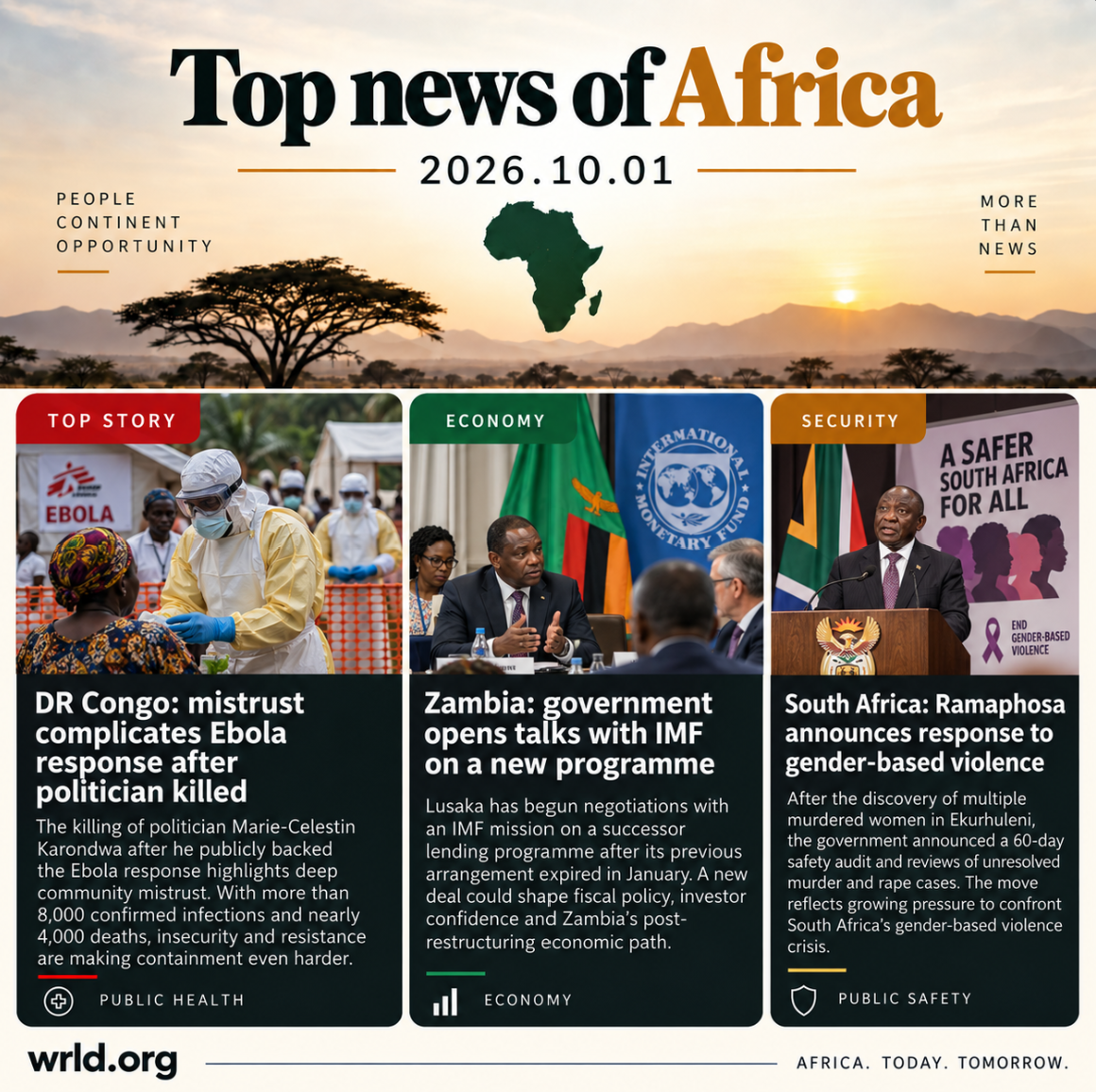
Africa Daily Report — 1 October 2026 Major developments reported during the previous 24 hours 1. Kenya / East Africa — $16 billion Dangote refinery breaks ground in Lamu. Five African heads of state joined the groundbreaking of Dangote Group's planned $16 billion refinery in Lamu. The plant is designed to process 700,000 barrels per day and is expected to take about 40 months to complete. It is intended to reduce East Africa's dependence on imported refined petroleum, but the project still faces land-rights litigation and environmental concerns. Importance: VERY HIGH — the project could materially reshape East African fuel supply, trade flows, infrastructure investment and regional industrialisation. Direct source: https://apnews.com/article/a0ae7108ae4f4144222aea101baed3a5 2. South Africa — Ramaphosa announces response to gender-based violence. President Cyril Ramaphosa announced additional measures after the discovery of multiple murdered women in Ekurhuleni. Measures include a 60-day local-government safety audit and reviews of unresolved murder, rape and other gender-based-violence cases. Police have not established that the recent killings were committed by a single perpetrator. Importance: VERY HIGH — gender-based violence remains a major public-safety and criminal-justice challenge in South Africa. Direct source: https://www.reuters.com/world/africa/violence-against-women-south-africa-is-national-shame-president-says-2026-09-30/ 3. DR Congo — Mistrust complicates Ebola response after politician killed. Congolese politician Marie-Célestin Karondwa was killed after publicly supporting the government's Ebola response, according to AP. The killing illustrates the severe community mistrust confronting health authorities as the Bundibugyo-virus outbreak continues. Congo has recorded more than 8,000 confirmed infections and nearly 4,000 deaths in the current outbreak. Importance: CRITICAL — the combination of rapid transmission, very high mortality, insecurity and resistance to health measures poses a major regional public-health risk. Direct source: https://apnews.com/article/1ff629474298a62db44438c6eb178270 4. Zambia — Government opens talks with IMF on a new programme. Zambia began discussions with a visiting IMF mission on a successor lending programme. The country's previous $1.7 billion IMF arrangement expired in January, and Lusaka wants a new agreement before year-end. The IMF mission is scheduled to remain through October 10. Importance: HIGH — a new IMF programme could affect Zambia's fiscal policy, investment environment and economic strategy after its sovereign-debt restructuring. Direct source: https://www.reuters.com/world/africa/zambia-starts-talks-with-visiting-imf-mission-new-loan-programme-2026-09-30/ 5. South Africa / United States — Pretoria summons US ambassador. South Africa's foreign ministry summoned US Ambassador Leo Brent Bozell III over what it described as “undiplomatic conduct.” It was the third such summons in nine months, reflecting continuing strain in bilateral relations. Both governments have nevertheless indicated that dialogue is continuing. Direct source: https://www.reuters.com/world/africa/south-africa-summons-us-ambassador-again-over-undiplomatic-conduct-official-says-2026-09-30/ 6. South Africa — Anti-immigration protests held in Durban. Hundreds of demonstrators marched in Durban calling for more deportations of undocumented migrants and tighter border controls. The demonstration comes amid heightened tensions over migration and previous violence against foreign nationals. Authorities did not recognise an ultimatum previously issued by organisers demanding that undocumented migrants leave the country. Direct source: https://apnews.com/article/c086e617b555643510541f9c9906ca4b 7. Africa — WHO data show sharp increase in cholera deaths. New WHO surveillance data show that reported cholera deaths globally rose by about 30% in 2025 despite fewer reported cases. The African Region experienced a particularly sharp deterioration: reported cases increased by 34% and deaths by 58%. Angola, DR Congo, Nigeria, South Sudan and Sudan were among seven countries accounting for roughly 90% of reported global cases and deaths. Importance: VERY HIGH — the figures highlight persistent weaknesses in water, sanitation, surveillance and access to timely treatment across several African states. Direct source: https://allafrica.com/stories/202609300113.html 8. Zambia — New cholera outbreak reaches 304 cases and 11 deaths. Zambian health authorities reported 304 cholera cases across seven districts in five provinces as of September 29, with 11 deaths. Lusaka was among the affected areas. The government said eight deaths occurred in communities, pointing to delays in patients reaching treatment. Importance: HIGH — Zambia only recently ended its previous outbreak, making renewed transmission a significant public-health concern. Direct source: https://www.mwebantu.com/11-die-as-cholera-hits-seven-districts-in-five-provinces-says-ministry-of-health/ 9. Burkina Faso — Country opens its first gold refinery. Burkina Faso inaugurated its first domestic gold refinery, RAFFINOR-BF, in Ouagadougou. The facility cost more than 11 billion CFA francs and has an initial annual refining capacity of about 164 tonnes, with plans for substantial expansion. The project is intended to retain more value from the country's gold production through domestic refining, certification and processing. Importance: HIGH — the refinery is part of a wider African trend toward local mineral beneficiation and greater domestic control of commodity value chains. Direct source: https://apnews.com/article/f39f714232e1784bb5051cdf44f0b992 10. Zimbabwe — Helicopter crash reported with six people aboard. A helicopter carrying four passengers and two crew members crashed in Zimbabwe's Marondera district southeast of Harare. Government and police officials said initial information indicated there were no survivors. Authorities had not immediately released all identities or a cause for the crash. Importance: MODERATE — a significant domestic aviation accident, with investigation and identification of those aboard still pending. Direct source: https://abcnews.com/International/wireStory/helicopter-6-aboard-crashes-zimbabwe-survivors-officials-136898678 #Africa #AfricaNews #TopNewsOfAfrica #DRCongo #Ebola #EbolaOutbreak #PublicHealth #HealthSecurity #CommunityTrust #DiseaseResponse #Zambia #IMF #InternationalMonetaryFund #EconomicReform #DebtRestructuring #FiscalPolicy #AfricanEconomy #SouthAfrica #CyrilRamaphosa #GenderBasedViolence #Femicide #PublicSafety #CriminalJustice #Ekurhuleni #ViolenceAgainstWomen #AfricanSecurity #RegionalStability #Geopolitics #AfricaToday #wrldorg
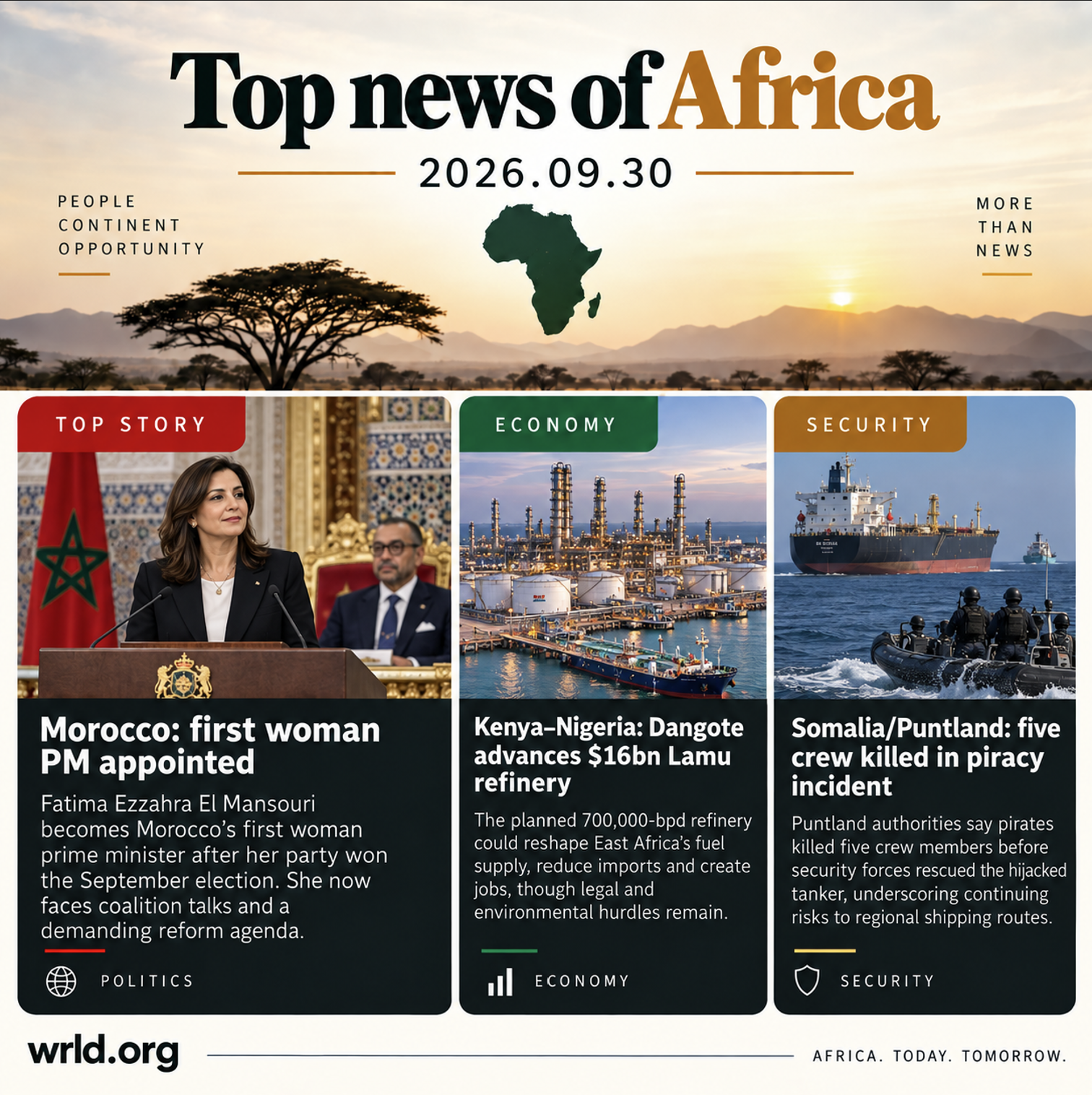
Africa Daily Report — 30 September 2026 Major developments reported during the previous 24 hours. 1. Morocco — Fatima Ezzahra El Mansouri appointed first woman prime minister. King Mohammed VI appointed El Mansouri following the September 23 parliamentary election. Her Authenticity and Modernity Party won the largest number of seats, and she now has to form a coalition. The appointment is historic, while the next government will also inherit major economic reforms and preparations for the 2030 World Cup. Direct source: https://www.reuters.com/world/africa/moroccos-king-appoints-first-woman-pm-following-sept-23-election-2026-09-29/ 2. Ethiopia — Fighting intensifies around Tigray amid wider regional accusations. Fighting between federal and Tigrayan forces has escalated, with territorial shifts and concern that the conflict could again spread across northern Ethiopia. Ethiopian officials have accused regional rivals of supporting armed groups, while communications disruptions and displacement are complicating independent assessment and humanitarian access. The renewed conflict threatens the fragile post-2022 settlement. Direct source: https://www.aljazeera.com/news/2026/9/29/fighting-in-ethiopia-intensifies-whats-the-latest 3. Somalia/Puntland — Five tanker crew members killed in piracy incident. Puntland authorities said Somali pirates killed five crew members of the petroleum-products tanker MT Honour 25 before security forces rescued the hijacked vessel. The incident is a serious reminder that piracy remains an operational security threat off the Horn of Africa despite years of international maritime-security efforts. Importance: HIGH — maritime security and Red Sea/Indian Ocean trade routes. Direct source: https://www.reuters.com/world/africa/somali-pirates-killed-5-crew-members-hijacked-tanker-before-rescue-mission-2026-09-29/ 4. Kenya/Nigeria — Dangote advances $16 billion Lamu refinery. Dangote is moving ahead with the planned 700,000-barrel-per-day refinery at Lamu. The project is intended to reduce East Africa's dependence on imported refined fuels and could generate more than 50,000 jobs, but it faces infrastructure, environmental and land-rights challenges. A Kenyan court dispute could restrict some site activity pending an October 14 hearing. Importance: VERY HIGH — potentially transformative for East African energy supply, fuel imports, logistics and industrial development. Direct source: https://www.reuters.com/business/energy/dangote-begin-construction-16-billion-east-africa-refinery-kenya-2026-09-30/ 5. South Africa — Foreign direct investment more than doubles in Q2. South Africa's central bank reported FDI inflows of 49.8 billion rand in the second quarter, up from 20.3 billion rand in Q1. The increase is an encouraging investment signal, although it needs to be considered alongside the country's broader growth, fiscal and structural indicators. Importance: HIGH — investment flows are a key indicator for Africa's most industrialised economy. Direct source: https://www.reuters.com/world/africa/south-africas-foreign-direct-investment-inflows-pick-up-q2-2026-09-29/ 6. Ghana — Environmental regulator intensifies mining-sector enforcement. Ghana's Environmental Protection Authority issued a pre-closure notice to Chinese-owned Cardinal Namdini Mining over an alleged unreported incident and is reviewing an inspection of Gold Fields' Tarkwa operation. The regulator says it is moving from periodic inspections toward continuous monitoring and enforcement as Ghana seeks stronger environmental compliance, state revenue and local participation in its gold industry. Importance: HIGH — regulatory tightening can materially affect major international mining investors and Ghana's gold industry. Direct source: https://kfgo.com/2026/09/29/exclusive-ghanas-environmental-authority-targets-chinese-owned-cardinal-and-others-in-mining-crackdown/ 7. DR Congo — Annual audits of major miners planned from 2027. The DRC plans annual audits of major mining companies' subcontracting practices and compliance with local-content requirements beginning in 2027. The world's largest cobalt producer and Africa's leading copper producer is tightening oversight to direct more procurement and contracts toward Congolese-owned businesses. Importance: HIGH — potentially significant for global copper/cobalt supply chains and mining contractors operating in DRC. Direct source: https://ca.marketscreener.com/news/congo-to-audit-major-miners-annually-from-2027-as-part-of-local-content-drive-regulator-says-ce785adddc81f221 8. Tunisia/Mediterranean — Migrant shipwreck leaves at least two dead. Sea-Watch said it rescued 28 people after a shipwreck off Tunisia and recovered two bodies, including a child. Survivors reported at least six people missing, including three children. More than 1,970 people have died or gone missing attempting Mediterranean crossings in 2026, according to Sea-Watch, even as arrivals in Italy have fallen sharply from 2025. Importance: HIGH — migration, humanitarian protection and EU–North Africa policy remain closely linked. Direct source: https://www.straitstimes.com/world/europe/migrant-shipwreck-off-tunisia-leaves-at-least-two-dead-six-reported-missing 9. Guinea-Bissau — Ousted president plans return ahead of December election. Former president Umaro Sissoco Embalo, removed in the November 2025 coup, plans to return on October 4 and seek the presidency in elections scheduled for December 6, according to a source cited by Reuters. A recently approved constitutional residency requirement could become relevant to his eligibility. The military-led authorities have reportedly said he is welcome to return. Direct source: https://kfgo.com/2026/09/29/ousted-guinea-bissau-leader-to-run-in-december-election-source-says/ 10. Sudan — Currency collapse brings fuel queues back to Khartoum. Long fuel queues have returned in Khartoum and several other areas as the Sudanese pound reportedly weakened beyond 8,000 to the US dollar on the parallel market. The currency deterioration is adding to transport and commodity pressures in an economy already devastated by war and disrupted production and trade. Importance: VERY HIGH — the currency/fuel shock compounds Sudan's humanitarian and economic crisis. Direct source: https://sudantribune.com/article/319408 #TopNewsOfAfrica #Africa #AfricaNews #AfricaDaily #Morocco #FatimaEzzahraElMansouri #WomenInLeadership #FirstWomanPrimeMinister #MoroccanPolitics #NorthAfrica #Kenya #Nigeria #Dangote #LamuRefinery #EastAfrica #EnergySecurity #RefineryProject #IndustrialDevelopment #Infrastructure #Investment #Somalia #Puntland #Piracy #MaritimeSecurity #HornOfAfrica #ShippingSecurity #IndianOcean #RedSea #AfricanEconomy #AfricanSecurity #Geopolitics #wrldorg
Deutschlands Strompreise ziehen vor dem Winter massiv an. Für Unternehmen wächst der Kostendruck erneut deutlich. #Strompreis #Energiekrise #Deutschland #Industrie Preissprung: Der Großhandelspreis für Stromlieferungen im Januar 2027 liegt in Deutschland bei mehr als 180 Euro je Megawattstunde und damit über 60 Prozent höher als vor einem Jahr. Steigende Gaspreise infolge unterbrochener LNG Lieferungen erhöhen zusätzlich den Druck auf den Strommarkt. Winterrisiko: Deutschlands Gasspeicher sind aktuell nur zu rund 56 Prozent gefüllt und damit für diese Jahreszeit historisch niedrig. Bei einem kalten Winter und anhaltenden Lieferengpässen könnten die Großhandelspreise für Strom laut Northlander Commodity Advisors noch einmal um bis zu 50 Prozent steigen. Für energieintensive Arbeitgeber in Deutschland wächst damit das Risiko deutlich höherer Kosten im kommenden Winter. Vielen Dank für den wichtigen Hinweis! Quelle: (Ostdeutsche Allgemeine Zeitung) https://t.co/n7oqiw0D0T #Strompreis #Energiekrise #Deutschland
Il petrolio si sta portando dietro un aumento dei prezzi di tutte le commodity che si riverserà sull’inflazione. Come sempre accade i più colpiti saranno i lavoratori a reddito fisso medio basso. Questa deve essere l’ossessione delle forze politiche. @Azione_it ha fatto proposte #inflazione #prezzi #lavoro #IT
🌎 Commodity prices near 18-year high, threatening global inflation - Nikkei Asia https://t.co/KWR3zpboDg #CommodityPrices #GlobalInflation #EconomicImpact #N/A
Europe doesn’t need to win the frontier race for artificial intelligence. But it cannot afford to become dependent on those who do. AI, becoming a commodity like electricity, needs to be plentiful and secure in supply just for enabling our everyday business, our security and https://t.co/IWDD02OxHe #ArtificialIntelligence #TechDependency #EuropeAI #EU
🌾 The agricultural market is starting to wake up quite violently and the timing is particularly interesting given that Warsh just stressed at Jackson Hole that the Fed should also monitor commodity prices to detect potential inflationary pressures upstream. ➡️ I would frame https://t.co/CZrZoabyiG #Agriculture #CommodityPrices #Inflation #Nospecificcountriesarementionedinthetweet.
| JULY 2026 | The Guard State How the largest Arab nation became a security contractor at the gates of its own people By Adham Hasanin Egyptian journalist and political writer, based in the Netherlands In June 2025, hundreds of activists from forty countries landed at Cairo airport. Doctors from France, lawyers from Australia, students from the United States, pensioners from the Netherlands. They carried no weapons and no banned slogans; they carried backpacks, walking shoes, and a single intention: to march from Arish to the Rafah crossing — entirely on Egyptian soil — to demand that food be allowed through to a people starving behind the gate. Not one of them reached Rafah. More than two hundred were detained before the march could begin. Around five hundred foreign nationals were deported from airports, hotels, and checkpoints. Passports were confiscated, activists were pulled out of downtown Cairo cafés, and the Global March to Gaza was cancelled on 16 June without taking its first step. And the world watched. This was no secret operation in a dark basement; it happened in the open, documented by the deportees’ own phone cameras, carried by every international news agency. The world watched an Arab state arrest Europeans, Americans, and Africans for wanting to walk towards Palestine. A state guarding the gate of a siege — from the side that was supposed to be the side of rescue. Hold that image, because it is the key to everything that follows. This was not an aberration in Egyptian policy, nor an isolated security decision. It is the function — the complete function around which the Egyptian state has been redefined over the past decade, and which it is time to call by its proper name: the Guard State. I. The Name — What Do We Mean by the Guard State? Political economy has long described states that live off the rent of their location rather than the production of their people. But what has crystallised in Egypt over the past decade goes beyond traditional geographic rent — the Suez Canal, say — into something far graver: the conversion of sovereignty itself into a commodity for hire. The Guard State does not sell its location; it sells its function. It collects its wages not for what it produces, but for what it prevents: it prevents the refugee from reaching Europe, the activist from reaching Gaza, its own people from reaching politics, and the resistance’s weapons from reaching their destination. Four gates, guarded by a single machine, whose wages are paid in loans, deposits, and perpetually renewed rescue packages. This is not a rhetorical metaphor; it is an economic structure with numbers attached. When the Egyptian economy collapsed in 2024, it was rescued not by productive reform but by a single deal whose subject was location: Ras el-Hekma — thirty-five billion dollars for a stretch of coastline. And whenever negotiations with the IMF stall, the tranches are unlocked by explicit European pressure whose subject is migration: nine billion euros from the European Union in the 2024 “Strategic Partnership,” whose own documents place “migration management” at its core. Europe does not pay Egypt to prosper. It pays Egypt to guard. Thus the model is complete: income in exchange for prevention, external legitimacy in exchange for guarding, and international silence about domestic tyranny in exchange for keeping the gates controlled. To see how the model works on the ground, consider the bloodiest gate of all: the gate of Gaza. II. The Gaza Gate — The Guard Who Is Himself Searched The first paradox must be nailed down with facts: Egypt is not a sovereign guard of its own crossing; it is a searched guard. Egyptian relief trucks — ninety-two thousand food parcels in a single convoy this month — are subject to Israeli inspection before entering the Strip: from Egyptian soil, through a crossing that bears an Egyptian name. The state that guards the gate does not hold its key. It owns the threshold, but not the door. Then the October 2025 truce added a new layer to the function. Under the fifteen-point roadmap sponsored by the international envoy together with the “guarantor states” — Egypt foremost among them — Cairo is to train the civilian police force that will replace Hamas in administering the Strip, under the slogan of “one authority, one law, one weapon.” Let us call things by their names: the state that could not — or would not — deliver a loaf of bread without Israeli permission is now qualifying to graduate the security apparatus that will oversee the disarming of the resistance. From guarding the siege to administering what comes after the siege — a promotion within the same project. And meanwhile, what is happening behind the guarded gate? Since the truce, more than one thousand one hundred Palestinians have been killed by Israeli fire — the latest, just two days ago, a ten-year-old boy named Motaz Abu Shaar, carried to his grave in Khan Younis by his mother, Warda. A United Nations commission of inquiry has concluded that Israel is “deliberately targeting children in an ongoing genocide.” This is what the guarantors’ official language calls a “ceasefire.” What meaning is left in the word “guarantor”? A guarantor that the gate stays firmly shut — however high the dead pile up behind it. III. The Mediterranean Gate — The Guard Europe Pays For The second gate faces north. Since 2016, Cairo has boasted — through its officials at every European forum — that “not a single irregular migration boat has departed from Egyptian shores.” This is very nearly true. But the forbidden question is: at what political price has this “efficiency” become an instrument of mutual blackmail? Europe — which condemns Egypt’s human rights record in its parliamentary resolutions — is the same Europe that signed the nine-billion-euro partnership, and the same Europe that stays silent about sixty thousand political prisoners because the alternative, in its calculations, is boats that never stop. And Cairo understands the game and has mastered it: whenever human rights pressure intensifies, the official discourse turns up the volume on “Egypt hosts millions of refugees” and “the last line of defence.” The result is a perfect structure of mutual blackmail: Europe buys its conscience’s silence, the regime sells its location, and the people — Egyptian and refugee alike — are the commodity in the transaction. The democracies that lecture on values are financing the guard who keeps the victims from knocking on their doors. This is not passing hypocrisy; it is a structural partnership in the Guard State model — one that makes Brussels and Berlin shareholders in everything this state produces, from domestic repression to external siege. IV. The Interior Gate — Guarding the People Against Politics But the most dangerous gate is not on any border; it is inside. The Guard State cannot perform its external function unless it first guards an internal gate: the people’s gate to politics. The function requires a people that does not ask: why are we guarding the siege of our brothers? Why are our trucks searched on our own soil? Why are guests deported for coming to walk in peace? To guarantee the question is never asked, the largest silencing machine in the country’s history was built: sixty thousand prisoners of opinion, a press ranked 166th out of 180 worldwide, and a state security case number waiting for anyone who writes. I write these lines from experience, not from reading reports. When I continued writing from my Dutch exile, the machine reached me across continents: accounts shut down by coordinated mass-reporting campaigns, documented threats, a family harassed inside Egypt as leverage — and my name entered into Case 1282 of 2024, not for any act I committed, but for opinions written from free European soil. This is not a personal complaint; it is a job description: the Guard State guards even beyond its borders, because the free word — wherever it is written — threatens the entire contract of guardianship. The logic is perfectly self-consistent: a regime that sells “stability” abroad cannot tolerate a voice revealing that the stability on offer is the stillness of graveyards. This is why the arrest of the foreign activists in June 2025 was inevitable, not incidental: a peaceful march reaching Rafah would have revealed, before the world’s cameras, that the gate opens when it is wanted open — and that the one keeping it shut is a partner, not a mediator. V. What Has Egypt Lost? — The Guard’s Bill An apologist might argue: what is the harm? A state monetising its location as Norway monetises its oil. The answer lies in the essential difference: Norway sells a resource; Egypt leases its will. And the difference between the two is the difference between trade and bondage. Let us tally what Egypt has paid for this model, in bare facts. It lost its water sovereignty: the Renaissance Dam was completed and filled without the state — owner of “the largest defence headquarters in the world” — daring anything beyond statements of concern; for the guard does not make trouble for the international order that employs him. It lost its regional standing: in the Iran–America war halted just weeks ago, Cairo was neither party nor mediator nor even consultant — Pakistan brokered the deal, while Egypt absorbed the economic shrapnel of Hormuz’s closure like a bystander caught in a battle whose parties it does not know. It lost its place in the conscience of its nation: the state that liberated its land in 1973 and led the Arab world for a century has become, in the eyes of the Arab street from the Atlantic to the Gulf, the gatekeeper of the siege. This loss, specifically, no loan or deposit can repay — because it is the only capital that cannot be printed. And it lost — here is the crux — the very national security in whose name the guarding is justified. The model proved its fragility at the moment of testing: when Israel feared an Iranian response last year, it cut off Egypt’s gas by unilateral decision within hours. The guard who believed himself a partner discovered he was merely a hireling whose wages stop the moment danger arrives. VI. The Alternative Is Not a Slogan — It Is the Recovery of the Original Function I will not close with an essay on “the solution lies in Arab unity”; worn-out words kill more surely than silence. The alternative is specific, and it begins with redefining the function. The state is not a guard; the state is the agent of its people’s will. Every foreign policy not derived from that will is — by definition — functional servitude, however it is wrapped in the language of wisdom and moderation. And the Egyptian will is known and needs no referendum: no people in this region accepts that its country serve as warden of the siege of Gaza, or as Europe’s border post. Practically, the recovery begins with three measurable steps. Open the Rafah crossing fully and sovereignly, by purely Egyptian decision — that alone would overturn the equation of the siege. Break the negotiating bondage by linking any cooperation on migration to concrete European positions on Palestine, not statements of concern. And open the interior gate — release the prisoners and lift the hand from the written word — because a state that fears an article will never dare face an occupier. I know the current regime will do none of this; guarding is its founding contract and its financial artery. But this article is not written for the regime. It is written for memory, and for the generation that will inherit the gates — so that it knows that what is presented to it today as “the fate of geography” is no fate at all. It is an employment contract, signed by a regime without a mandate from its people. And contracts, however long they run, end when one of their parties does. And the world — I return to where I began — is a witness that requires no further proof. It watched the deportees at Cairo airport; it watched the searched trucks; it watched Warda Abu Shaar carry her son to his grave behind a firmly guarded gate. The question is no longer: what is happening? The only question left is: who dares to name it? This article is a naming. Adham Hasanin is an Egyptian journalist and political writer based in the Netherlands, covering Arab and European political affairs.
This week, the effects of war, conflict, climage change and export restrictions on global agrifood trade were on the agenda of the Committee on Commodity Problems (CCP), the oldest Committee of the UN’s Food and Agriculture Organization (@FAO) in Rome. The impact of Russia’s war https://t.co/NhThIfYwBS #FoodSecurity #GlobalTrade #Agriculture #RU #IT