WRLD

Search

#comunicati
Il Fatto Quotidiano 3d

In 2027, the Universal Allowance will be adjusted for families with a potential increase of up to 209.70 euros per month for each minor child, accompanied by new income thresholds, with final amounts that will be communicated by Inps. #AssegnoUnico #Isee #Inflazione (translated)

www.ilfattoquotidiano.it
Assegno unico 2027, aumenti e nuove soglie Isee: quanto spetterà alle famiglie e quando arriveranno i soldi
3127
Mediafax.ro 4d

Ukraine and Russia are developing alternatives to Starlink, with Ukraine launching an experimental satellite to create its own communications network, while Russia is developing a similar system called Rassvet. #Ucraina #Rusia #tehnologie (translated)

www.mediafax.ro
O nouă etapă în războiul tehnologic dintre Ucraina și Rusia. Ambele țări dezvoltă alternative la Starlink
2920
Mediafax.ro 5d

The US government is accused of concealing a court ruling regarding the surveillance of American citizens' communications, and two senators are calling for its publication, arguing that the deadline for declassification has expired. #Supraveghere #FISA #Transparență (translated)

www.mediafax.ro
Guvernul SUA ține secretă o hotărâre despre modul în care sunt supravegheați americanii. Doi senatori acuză administrația Trump că încalcă legea
2931
adevarul.ro 6d

The article analyzes how the war in Ukraine unfolds on multiple levels, highlighting the interaction between military technology, communication control, and political influences on the situation in Crimea. #RăzboiUcraina #Crimeea #Starlink (translated)

adevarul.ro
Lumina de pe orbită și întunericul din Crimeea
2489
G
Gelu 7d

Don't change the time! Change the schedule, not the time! The biological rhythm is regulated by the Sun, not the clock. Time is not a work schedule that we can shift at will. Time is the measure by which we organize our lives, and nature has its own rhythm. The Earth does not change its rotation twice a year. The sun does not rise earlier because we decided to move the clock forward. Animals, birds, insects, and plants follow their biological rhythms related to light, darkness, and the natural succession of seasons. Humans are part of this nature. Our bodies have their own biological clock, fundamentally influenced by light. And when we officially move the clocks by one hour, we are not changing the course of nature, but rather asking humans to abruptly adapt to an administrative convention. Why do this every spring and reverse it every autumn? Is it natural to change the time or to adapt our schedules? Let's consider the majority of people: workers, farmers, students, teachers, parents, retirees, people who must adhere to a schedule set by others. They cannot always modify their schedules at will. They need to wake up at a certain hour, get to work, take a child to school, or comply with the public transport timetable. In contrast, there are people and organizations that have the opportunity to adapt their schedules based on the season, natural light, or the needs of their activities. If, for some people, changing their schedule is feasible, why impose the time change on everyone? Let's take a hypothetical example: if 10% of people have the freedom to adapt their schedule, is it fair to change the time for all those who do not have this freedom? Would it not be more logical to change the schedule where needed, rather than change the time by which the entire society organizes itself? Stores can modify their opening hours. Factories can adapt their shifts. Institutions can adjust their schedules, and schools and public transport can analyze timetables according to local conditions and people's needs. We do not all have to operate on the same schedule to live by the same time. Nature does not need our approval to follow its rhythm. In spring, the days lengthen. In autumn, the days shorten. This is the natural rhythm of the Earth, which we can observe without moving even a single clock hand. If we want to start activities earlier in summer, we can start sooner. If winter requires a different schedule, we can adapt it. But why change the official time, get used to a new convention, and then revert to the old one? Would it not be simpler to keep the same time all year round and organize our activities according to the season? I do not claim that all living beings measure time in hours and minutes. I assert something more important: their biological rhythms are linked to the natural cycle of light and darkness, not to the numbers we display on the clock. And humans should take this truth into account when organizing their lives. The economy must serve people, not people be permanently forced to adapt to the economy. One argument presented in favor of changing the time is the more efficient use of natural light or the reduction of energy consumption. But the actual effects depend on the country, season, population habits, and how energy is used. If we want to save energy, let's examine actual consumption. If we want more light during activities, let's adapt the schedules. If we want to improve work organization, let's change the timetables where possible. There is no need to change the time for the whole society to achieve flexibility in certain areas. The schedule is a tool we can adapt. The time should be a stable reference. We cannot stop the seasons. We cannot modify the Earth's rotation. We cannot ask nature to adapt to our clock. But we can organize our lives more wisely. Instead of moving the clock hands twice a year, we can learn to adapt our schedules to the reality around us. Instead of changing the time for everyone, we can allow each field to find the appropriate schedule, within the bounds of the law and with respect for people's rights. Let's keep the time stable and make the schedules flexible! Let's leave time in peace. Twice a year, millions of people are forced to change their clocks, schedules, and biological rhythms to adapt to an administrative decision. It is said that changing the time brings economic or energy benefits. However, in modern society, these advantages are increasingly contested, while the disadvantages are felt by nearly the entire population. People, animals, and plants do not live by the clock on the wall, but by the natural rhythms of the Earth. The human body is regulated by the alternation of light and darkness. When we artificially move the time forward or back, we disturb this balance. Many people sleep worse, feel more tired, and need days or weeks to readjust. Living beings do not change their schedules twice a year. Birds do not migrate by the clock, cows do not produce milk according to the official hour, and dogs do not understand why their owner takes them for a walk an hour earlier. Nature follows the sun, not administrative decisions. There is also a principle issue. For a relatively small percentage of people and activities that would benefit from more light in the evening, the schedule of the entire society is modified. About 90% of people are forced to adapt, even though they did not ask for this and do not gain direct advantages. It would be more logical for the sectors that need a different schedule to adapt it themselves. Stores can open earlier or later. Factories can modify their work shifts. Schools, institutions, and companies can adjust their schedules as needed. It is much easier for certain organizations to change the schedule in a targeted manner than to change the official time for the entire population. Moreover, modern technology has greatly diminished the argument for saving energy. Lighting now represents a smaller proportion of total consumption, while air conditioning, computers, and other equipment operate regardless of time changes. The time should serve people, not people be obliged to serve the time. A modern society can function efficiently without moving the clock hands twice a year. Stability, health, and respect for natural rhythms are stronger arguments than the tradition of a measure introduced in another era. Therefore, the most rational solution is to keep the same time throughout the year and adapt schedules where necessary, rather than changing the lifestyle rhythm of an entire population. Why should we keep the same time all year? Changing the time twice a year represents an artificial intervention in the natural rhythm of society. Although it was introduced with the intention of saving energy, numerous modern studies show that the benefits are minimal, while the social, medical, and economic costs are significant. 1. The biological rhythm is regulated by the Sun, not the clock. The human body operates according to an internal biological clock, synchronized with the natural alternation of day and night. Research in chronobiology shows that artificial changes in time disrupt sleep, concentration, and metabolism. In the days following the switch to summer time: - sleep disorders increase; - more traffic accidents occur; - productivity at work decreases; - there is an increase in the risk of heart attacks and other cardiovascular problems. In practice, millions of people are forced to suffer a slight "jet lag" without having traveled anywhere. 2. Nature does not change the time. Animals and plants regulate their activity according to light. Birds, insects, domesticated and wild animals do not change their schedules just because the government decides to move the clock forward by one hour. Farmers often observe that cows continue to adhere to their biological schedule regardless of the change in official time. The same happens with many other living beings. In reality, we are changing the clock display, not the position of the Sun in the sky. 3. Economic benefits are diminishing. Changing the time was introduced in an era when lighting consumed a significant proportion of the energy used by the population. Today: - lighting is much more energy-efficient; - the main consumption comes from air conditioning, heating, servers, computers, and appliances; - estimated savings are very low or even nonexistent in many states. In contrast, the economic costs are real: - employee productivity decreases after the time change; - absenteeism increases; - additional costs associated with accidents and medical problems arise; - computer and logistics systems need to be periodically adjusted. 4. It is unfair to change the schedule of all for the needs of a minority. If certain economic sectors find it useful to start activities earlier in summer, they can adapt their schedules. For example: - stores can operate from 07:00 to 21:00 instead of 08:00 to 22:00; - factories can alter shifts; - public institutions can temporarily adjust working hours; - schools and companies can decide locally what schedule is optimal. It is much simpler for 10% of organizations to change their schedule than for 100% of the population to change their biological clock. 5. Stability means efficiency. Transport, information systems, international economic activities, and public services function more smoothly when the official time remains constant. One hour throughout the year: - reduces scheduling errors; - simplifies transport and communications; - eliminates confusion regarding timetables; - provides predictability for citizens and companies. Conclusion The sun does not change its time. The Earth does not change its time. Nature does not change its time. Only humans move the clock hands and then endure the consequences of this decision. Instead of modifying the schedule of an entire society twice a year, it is more logical to keep the same time constantly and allow those fields that need a different schedule to adapt their programs individually. This way, natural biological rhythms are respected, economic costs are reduced, and the comfort of the majority of the population is increased. A modern society needs flexibility in scheduling, not the constant change of the clock. (translated)

908
Mediafax.ro 1w

Ukraine has managed to restore a stable connection to the Starlink and Starshield systems after a week of limitations that affected speed and military operations. #Ucraina #Starlink #Comunicații (translated)

www.mediafax.ro
Ucraina are din nou „conexiune stabilă” la Starlink și Starshield, după o săptămână de limitări
2842
HotNews.ro 1w

Ukraine announced that it has restored a "stable connection" to the Starlink system, essential for its military, after the connection speed was limited in recent days due to tensions with Washington. #Ucraina #Starlink #comunicatii (translated)

hotnews.ro
Ucraina are din nou „conexiune stabilă” la Starlink. Ce viteză suportă acum sistemul
2729
HotNews.ro 1w

Donald Trump promised that he would solve the access problems to the Starlink communication systems in Ukraine, stating that he knows Elon Musk well and that he would not do anything wrong. #Trump #Starlink #Ucraina (translated)

hotnews.ro
Trump promite că va rezolva orice problemă de acces la Starlink în Ucraina. „Elon n-ar face niciodată ceva rău, îl cunosc”
2846
Mediafax.ro 1w

Ukraine intends to develop an independent satellite communications system following persistent issues with Starlink services, collaborating with Finnish companies for this initiative. #Ucraina #ComunicatiiPrinSatelit #Zelenski (translated)

www.mediafax.ro
Ucraina vrea să construiască un sistem independent de comunicații prin satelit, în contextul în care problemele cu Starlink persistă
2961
adevarul.ro 1w

The EU urges Elon Musk to urgently restore Starlink services in Ukraine, considering the situation to be "deeply concerning," given the importance of these communications for the country's military operations. #Ucraina #ElonMusk #Starlink (translated)

adevarul.ro
UE îi cere lui Elon Musk să restabilească Starlink în Ucraina. Situația, considerată „profund îngrijorătoare”
2857
eldiario.es 2w

The current president of the Generalitat, Juan Francisco Pérez Llorca, demonstrates a more proactive and communicative management in response to the current disaster, in contrast to the ineffective actions of his predecessor Carlos Mazón during the catastrophe of October 29, 2024, which resulted in 233 deaths. #Emergencias #Valencia #Inundaciones (translated)

www.eldiario.es
El contraste de Adam con la dana de los 233 fallecidos: confinamientos y un president desde el principio en el Cecopi
2402
Digi24 2w

The largest mobile network operators in Europe, Deutsche Telekom, Orange, Telefónica, and Vodafone, have joined forces to develop satellite communication services to compete with Starlink, Elon Musk's initiative, in the context of growing concerns about dependence on American infrastructure. #telecomunicații #satelit #Europa (translated)

www.digi24.ro
Cei mai mari operatori de telefonie mobilă din Europa își unesc forțele pentru a concura cu Starlink, proiectul lui Musk
3323
HotNews.ro 2w

The U.S. Ambassador to the European Union, Andrew Puzder, warned that Washington will react "devastatingly" to any restrictions imposed by Brussels on American companies' access to the European market, in the context of a dispute related to the use of frequency spectrum for satellite communications, including affecting Starlink services. #Starlink #ElonMusk #SUA (translated)

hotnews.ro
SUA amenință Europa cu un răspuns „devastator” dacă va restricționa accesul Starlink pe piața UE
2867
MindaugasSinkevičius 2w

"We will learn more about who commissioned it, how it all happened, and who was behind it. It is likely already clear who commissioned it – the Russian side." Lithuanian authorities thwarted an arson attempt at a company that stores Starlink communications equipment, announced Prime Minister Mindaugas Sinkevicius on Sunday, according to The Kyiv Independent. #Lituania #sabotaj #securitate (translated)

Lituania anunță dejucarea unui act de sabotaj. „Este probabil să fie deja clar cine l-a comandat”
hotnews.ro
2641
Il Fatto Quotidiano 2w

The Ministry of Education's website has stopped publishing essential reports on the educational system, replacing them with triumphant press releases that hide crucial data and make it difficult to verify the state of education in Italy. #Scuola #Istruzione #Trasparenza (translated)

www.ilfattoquotidiano.it
Dove sono i numeri dell’Istruzione? Sul sito spariti i report, al loro posto comunicati trionfali
2757
adevarul.ro 2w

The article discusses the importance of the Starlink network for the Ukrainian army and the potential impact of the interruption of satellite communications by the Trump administration, which could severely affect Ukraine's military operations. #Starlink #Ucraina #Trump (translated)

adevarul.ro
Starlink, vital pentru armata ucraineană. Ce s-ar întâmpla dacă Trump ar întrerupe comunicațiile prin satelit
2643
Mediafax.ro 2w

Ukraine is negotiating with the United States and SpaceX to lift the restrictions imposed on the Starshield satellite communications military system, which affects the operation of Ukrainian drones in intercepting Russian attacks. #Ucraina #Starshield #SpaceX (translated)

www.mediafax.ro
Ucraina negociază cu SUA eliminarea restricțiilor Starshield
2758
Digi24 2w

Meanwhile, interruptions in Starlink services severely affect the communications of the Ukrainian army, making it difficult to coordinate operations and transmit essential information during the conflict. #Starlink #Ucraina #ComunicatiiMilitare (translated)

www.digi24.ro
Întreruperile Starlink perturbă comunicațiile armatei ucrainene: „Legătura cu comandamentul s-a deteriorat considerabil”
2532
Il Fatto Quotidiano 2w

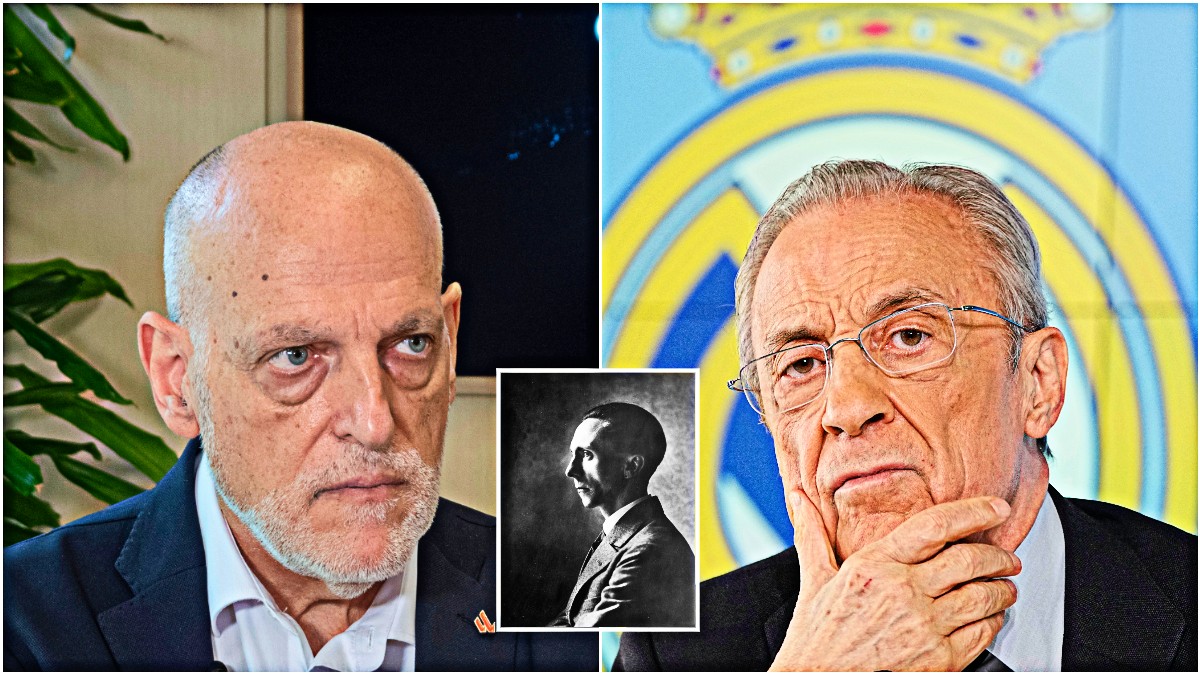
The president of La Liga, Javier Tebas, has sparked a controversy with Real Madrid by comparing its communication strategies to those of Joseph Goebbels, leading the club to demand his immediate resignation for his statements considered deeply offensive. #RealMadrid #Tebas #Calcio (translated)

www.ilfattoquotidiano.it
Bufera su Tebas: attacca il Real Madrid paragonandolo al nazismo. La furia del club: “Dimissioni immediate”
2877
Digi24 2w

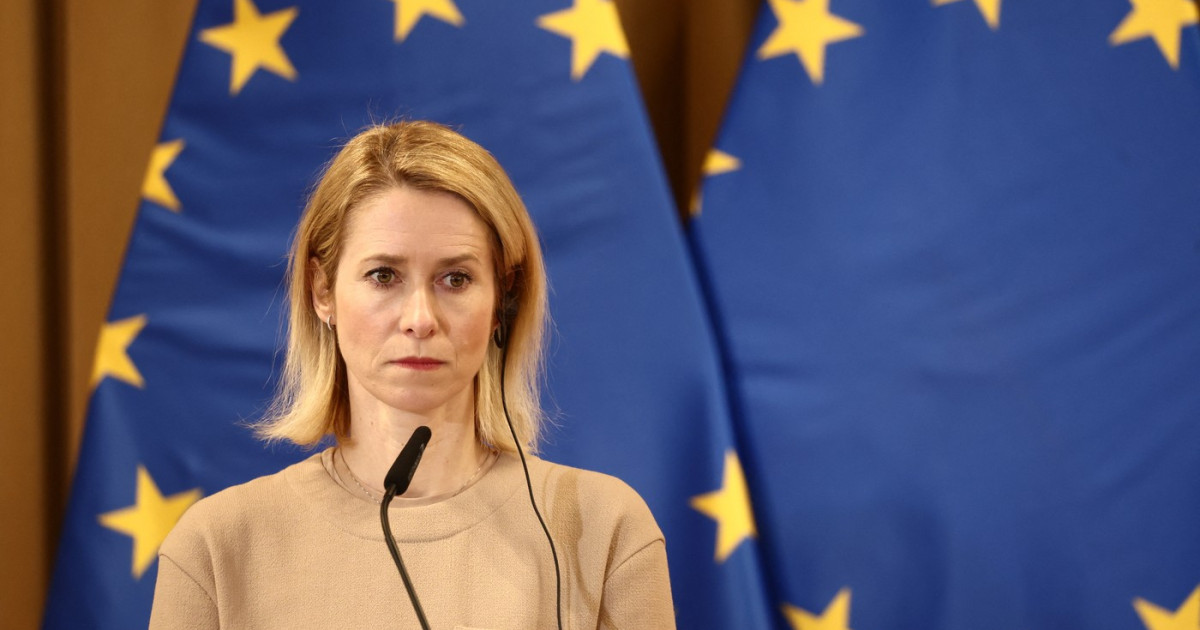
Kaja Kallas, the head of EU diplomacy, stated that Starlink is indispensable for Ukraine and that the European Union cannot replace this service in the short term, emphasizing the negative impact of restrictions on Ukrainian military communications. #Starlink #Ucraina #KajaKallas (translated)

www.digi24.ro
„Starlink este cu adevărat indispensabil pentru Ucraina”. UE nu îl poate înlocui pe termen scurt, susține Kaja Kallas
2763