BETA nonprofit public democratic european moderated

Search

#expertise

Health is one of the priority sectors where Europe wants to accelerate the use of industrial AI. We have the data, science & expertise. Now we need to translate them into innovation that strengthens our healthcare systems and reaches patients faster. 🔗https://t.co/u5EFdjxnuT #HealthTech #AIinHealthcare #Innovation #EU

Je ziet wel dat er nu echte experts met diepe kennis aan het roer zitten. Terug naar de plaggenhutten. Omgeven door medicijnmannen in tipi’s die zorgen dat je minstens 90 wordt. Dan kunnen de plannen van reductie in aantal ziekenhuizen doorgevoerd worden. Goed bezig. Chapeau 😉 #gezondheidszorg #expertise #medicijnen

Ohne die Sichtbarmachung der Pandemie hätte sie keiner bemerkt Teil 2 - der angekündigten BfArM Aktenauswertung: Der Maskenzwang — oder was der Staat über seine eigenen Masken wusste Eine Pandemie ist unsichtbar. Man sieht kein Virus. Man sieht keine Inzidenz. Man sieht keinen R-Wert. Das muss erst kreativ erschaffen werden - also her mit dem PCR - Test - Regime für die Etablierung der Testplandemie (ich berichtete https://t.co/PcyzKjW28d Was man sah, waren Masken. Die mussten her, weil sich nur so eine nicht existente Testplandemie auch in den Köpfen der Bürger einfräst. Drei Jahre lang war das Stück Stoff, OP Maske bis FFP3 vor dem Gesicht das einzige physische Zeichen dafür, dass etwas Außergewöhnliches im Gange sei. Es hing in der Bahn, im Supermarkt, im Klassenzimmer, im Wartezimmer, auf dem Bahnsteig. Es war das Dauersignal, dass die Lage ernst sei. Wer die Maske abnahm, widersprach nicht einer Hygieneregel — er widersprach der Lage selbst und jene die es sahen befürchteten den eiligen Tod, weil es da einen gab, der die Regeln nicht befolgte. Genau deshalb lohnt sich der Blick in die Akten der BfArM (einer Bundesoberbehörde unter der Fachaufsicht des Bundesministerium der Gesundheit - seinerzeit also unter Jens Spahn, derzeit eine Vertrauensperson für Fragen des Deutschen Haushalts - soweit der Parallelblick zur Lernkurve) . Denn dort steht, was die zuständige Behörde über diese Masken tatsächlich wusste. Und es steht nicht das, was am Bahnsteig zu lesen war. Genau deshalb lohnt sich der Blick in die Akten der BfArM (einer Bundesoberbehörde unter der Fachaufsicht des Bundesministerium der Gesundheit - seinerzeit also unter Jens Spahn, derzeit eine Vertrauensperson für Fragen des Deutschen Haushalts - soweit der Par . Denn dort steht, was die zuständige Behörde über diese Masken tatsächlich wusste. Und es steht nicht das, was am Bahnsteig zu lesen war. Zum Stichtag 2. April 2020 lagen dem Bundesinstitut für Arzneimittel und Medizinprodukte 43 Anträge auf Sonderzulassung für Atemschutzmasken vor — medizinische Masken wie FFP-Masken [BfArM-Akten, BER p936/p942; Lagebild Bundeskanzleramt, 06.04.2020]. Die Prüfung erfolgte, so die Akte wörtlich, „nach internen Kriterien". Halten wir das fest. Nicht nach der Norm EN 149. Nicht nach einer Konformitätsbewertung durch eine Benannte Stelle. Nicht nach einem veröffentlichten Prüfmaßstab, den irgendein Bürger hätte nachlesen können. Sondern nach internen Kriterien, die bis heute nicht im Volltext veröffentlicht sind. Möglicherweise ist der Punkt - Prüfung wer am meisten Geld zahlt enthalten - niemand weiß es bis heute. Das war der Marktzugang für das Produkt, das wenige Wochen später bundesweit zur Rechtspflicht wurde. „Nicht an Formalien scheitern" Es blieb nicht bei der Sonderzulassung der Masken. Der Bund beantragte in der 93. Gesundheitsministerkonferenz die Ergänzung der Medizinischer-Bedarf-Versorgungssicherstellungsverordnung (MedBVSV). Der Beschlussvorschlag ist in den Akten. Er lautet, sinngemäß und in Teilen wörtlich: Ein fehlendes oder unvollständiges Konformitätsbewertungsverfahren einschließlich fehlender CE-Kennzeichnung sei für das Inverkehrbringen „unschädlich", sofern das BMG oder eine von ihm beauftragte Stelle in einem vom BMG gebilligten Verfahren festgestellt habe, dass die Ware den Anforderungen entspreche [T3 p74; 93. GMK, Beschlussvorschlag Bund, Ziff. 1a]. Die Begründung dafür steht direkt daneben. Sie ist nicht medizinisch. Sie ist nicht epidemiologisch. Sie lautet: Der Einsatz qualitativ geeigneter Schutzmasken solle „nicht an Formalien scheitern" [T3 p74]. Übersetzt heißt das, dass der Staat Millionen Masken gekauft hatte, die formal nicht verkehrsfähig waren. Statt sie zu vernichten, änderte Spahn die Regel, an der sie gescheitert waren. Das ist der Vorgang in einem Satz — und er stammt nicht von einem Kritiker, sondern aus dem Beschlussvorschlag des Bundes. Der Haftungstrick, den kaum jemand bemerkt hat Im selben GMK-Beschluss steht eine Zeile, die juristisch mehr wiegt als alles andere: „Bund und Länder stellen fest, dass sie bei der Beschaffung, Bevorratung und Abgabe von Persönlicher Schutzausstattung [...] hoheitlich und im Wege der Amtshilfe handeln." [T3 p75; 93. GMK Beschluss Nr. 2] Man muss wissen, was dieser Satz bewirkt. Wer ein mangelhaftes Produkt in Verkehr bringt, haftet nach dem Produkthaftungsgesetz — verschuldensunabhängig. Der Geschädigte muss keinen Vorwurf beweisen, nur den Fehler, den Schaden und die Ursächlichkeit. Wer dagegen „hoheitlich" handelt, haftet nach § 839 BGB in Verbindung mit Art. 34 GG. Und da gilt: Verschulden erforderlich. Amtspflichtverletzung erforderlich. Dazu die Subsidiaritätsklausel des § 839 Abs. 1 Satz 2 BGB. Der Bund hat sich mit einem Federstrich aus der Gefährdungshaftung in die Verschuldenshaftung bewegt — für Produkte, die er zeitgleich zur Rechtspflicht machte, und deren Konformitätsmängel er zeitgleich für „unschädlich" erklärte. Das ist kein Zufall. Das ist Handwerk. 15 Masken pro Woche — der eigentliche Treiber Woher kam die Nachfrage? Nicht aus einer neuen Studienlage. Das Protokoll der 20. Bund-Länder-Besprechung (Gewaltendurchbrechung) Medizinprodukte vom 16. Dezember 2020 hält fest: Das BMG informiert über die Entscheidung der Ministerpräsidenten und der Bundeskanzlerin, vulnerable Personen über die Wintermonate mit insgesamt 15 FFP2-Masken auszustatten — eine Maske pro Woche, ausgegeben über die Apotheken [T3 p103]. Eine Maske pro Woche. Für ein Produkt, dessen Schutzwirkung wesentlich vom korrekten Sitz, von Dichtsitzprüfung und von der Tragedauer abhängt. Die Zahl 15 folgt aus dem Kalender, nicht aus der Aerosolforschung. Der Treiber war ein politischer Zielwert. Die Evidenz kam gar nicht vor. Der doppelte Maßstab war, dass dieselbe Behörde, dieselbe Woche sich widerprach. Am 27. März 2020 übermittelte der BfArM-Präsident dem BMG einen Bericht zum Regelungsbedarf. In einem einzigen Dokument stehen beide Maßstäbe nebeneinander. Zu Arzneimitteln heißt es: Eine weitere Vereinfachung oder Beschleunigung des Zulassungsverfahrens sei „nicht erforderlich". Das AMG sehe mit § 28 Abs. 3 AMG bereits die beschleunigte bzw. vorzeitige Zulassung vor; unter Berücksichtigung des Zwecks, die Bevölkerung mit „ausreichend geprüften und damit sicheren Arzneimitteln" zu versorgen, seien die bestehenden Regelungen ausreichend [BER p306]. Wenige Seiten weiter, zu Schutzausrüstung: Man solle überlegen, die Bundesoberbehörde zu ermächtigen, Sonderzulassungen auch an andere als die Hersteller zu erteilen. Das BfArM habe derartige Sonderzulassungen „jüngst bereits erteilt; dies begegnet jedoch rechtlichen Bedenken" [BER p310]. Für Arzneimittel galt ausreichend geprüft und damit sicher. Für Masken kann man die Norm nachträglich ausweiten, weil man sie schon überschritten hatte. Dieselbe Behörde. Derselbe Bericht. Dasselbe Datum. Und die Wirksamkeit? Jetzt die Frage, die man eigentlich zuerst hätte stellen müssen. Die maßgebliche systematische Übersichtsarbeit ist der Cochrane-Review von Jefferson u. a., veröffentlicht am 30. Januar 2023 (Cochrane Database Syst Rev 2023;1:CD006207). Er wertet randomisierte und cluster-randomisierte Studien zu physikalischen Maßnahmen aus. Ergebnis für das Maskentragen in der Allgemeinbevölkerung: Es macht wahrscheinlich wenig oder keinen Unterschied für grippeähnliche bzw. COVID-ähnliche Erkrankungen. Auch für den Vergleich FFP2/N95 gegen medizinische Masken blieb das Ergebnis unsicher. Nun die faire Gegenrede, die man kennen muss, bevor man diesen Satz zitiert: Die Chefredakteurin der Cochrane Library, Karla Soares-Weiser, stellte am 10. März 2023 klar, die Behauptung, der Review zeige „Masken wirken nicht", sei eine unzutreffende und irreführende Auslegung. Zutreffend sei: Untersucht worden sei, ob Maßnahmen zur Förderung des Maskentragens die Ausbreitung verlangsamen — und das Ergebnis sei ergebnisoffen („inconclusive"). Angesichts der Grenzen der Primärstudien könne der Review die Frage, ob das Maskentragen selbst das Risiko senke, nicht beantworten. Man lese diesen Satz zweimal. Die Klarstellung, die als Verteidigung der Maskenpflicht zitiert wird, ist ihre schärfste Anklage. Denn Gegenstand jeder staatlichen Maßnahme ist nicht das Maskentragen als Naturvorgang. Gegenstand ist genau das, was Cochrane untersucht hat: die Maßnahme zur Durchsetzung des Maskentragens. Der Bußgeldbescheid. Das Hausverbot. Die 3G-Kontrolle. Die Schulordnung. Cochrane sagt zu genau dieser Maßnahme: Die Evidenz ist ergebnisoffen. Ein Grundrechtseingriff, der Millionen Menschen über Jahre traf, ruht auf einer Evidenzbasis, die die weltweit angesehenste Institution für Evidenzsynthese als ergebnisoffen bezeichnet. Das ist kein Randbefund. Das ist der Befund. Die Einzelstudien passen dazu. Die dänische DANMASK-19-Studie (Bundgaard u. a., Annals of Internal Medicine 2021) fand bei rund 4.800 ausgewerteten Teilnehmern keinen statistisch signifikanten Unterschied: 1,8 Prozent Infektionen in der Maskengruppe, 2,1 Prozent in der Kontrollgruppe. Man kann über diese Zahlen streiten. Man kann nicht behaupten, sie trügen einen jahrelangen bundesweiten Zwang. Was am Ende übrig blieb Die Bilanz der Beschaffung ist inzwischen öffentlich, und sie stammt vom Bundesrechnungshof. Unter Bundesgesundheitsminister Jens Spahn wurden 5,8 Milliarden Masken beschafft — ohne Verhandlung, zu Festpreisen. Bis 2024 hat der Bund dafür rund 5,9 Milliarden Euro ausgegeben. Im Inland verteilt wurden etwa 1,7 Milliarden Masken. Mehr als die Hälfte der Beschaffungsmenge musste vernichtet werden oder steht zur Vernichtung an. Der Bundesrechnungshof nennt das eine massive Überbeschaffung. Aus nicht abgenommener Ware laufen nach dessen Bericht rund 100 Klagen mit einem Gesamtstreitwert von 2,3 Milliarden Euro. Der Bericht der Sonderbeauftragten Margaretha Sudhof — rund 170 Seiten, im Auftrag des damaligen Ministers Lauterbach erstellt — wurde monatelang im Ministerium zurückgehalten, dem Haushaltsausschuss als Verschlusssache und in geschwärzter Fassung zugeleitet. Einzelne Seiten sind vollständig unlesbar. Sudhof selbst durfte im Ausschuss nur vertraulich aussagen; eine unbeschränkte Aussagegenehmigung hatte sie nicht. Ein Untersuchungsausschuss nach Art. 44 GG ist bis heute nicht zustande gekommen. Grüne und Linke erreichen das Quorum nicht; die Regierungsfraktionen machen den Weg nicht frei. Die am 10. Juli 2025 eingesetzte Enquete-Kommission „Aufarbeitung der Corona-Pandemie" soll ihren Abschlussbericht erst Ende Juni 2027 vorlegen — sie erhebt keine Beweise mit den Mitteln des Strafprozesses. Über 170 Strafanzeigen bei der Generalstaatsanwaltschaft Berlin wurden nach Pressedarstellung am 9. März 2026 ohne Aufnahme von Ermittlungen eingestellt: kein Anfangsverdacht - so geht ministeriales Weisungsrecht für Staatsanwaltschaften. Fünf Komma neun Milliarden Euro. Die Hälfte der Ware in der Verbrennung. Kein Untersuchungsausschuss. Keine Ermittlungen. Ein geschwärzter Bericht. Alle warten mutmaßlich sehnsüchtig auf den Eintritt der Verjährung. Jens Spahn indes gelangt wegen seiner besonderen Expertise wieder in den Haushaltsausschuss. Dort - so finden die Genossen und Christdemokraten - hat er sein größtes Talent schon im BMG unter Beweis gestellt. Der Kern Fassen wir zusammen, was aus den Akten der eigenen Behörde folgt: Der Staat erklärte fehlende Konformitätsbewertungen für unschädlich, damit seine Bestände in den Verkehr durften. Er erklärte sich beim Vertrieb zum Hoheitsträger, damit er nicht nach Produkthaftungsrecht einstehen musste. Er setzte eine politische Zielzahl fest, bevor er eine Evidenzfrage stellte. Und er machte das Produkt, für das er all das tat, zur bußgeldbewehrten Pflicht für 83 Millionen Menschen. Zur Wirksamkeit dieses Zwangs sagt die beste verfügbare Evidenzsynthese: ergebnisoffen. Invertiert gesprochen: "evidenzlos". Die Maske hat vieles getan. Sie hat eine unsichtbare Lage sichtbar gemacht. Sie hat Zustimmung durch Panikmache organisiert, Abweichung markiert und so Coronaleugner und "Staatsfeinde" sichtbar gemacht, die es zu unterdrücken galt. Die Dringlichkeit wurde permanent gehalten. Sie hat die Pandemie in jedem Bus, jedem Klassenzimmer, jedem Supermarkt präsent gehalten — dort, wo kein Mensch je einen Ct-Wert oder eine Intensivbelegung zu Gesicht bekam. Alle sollten Todesangst bekommen. Was sie nachweislich nicht getan hat, ist das, wofür sie angeordnet wurde, nämlich die Infektionszahlen eindämmen. Quellen BfArM-Aktenbestand (nach IFG freigegebenes Konvolut Referat 93, Zitierschema [Quelle pSeite; Datum; Betreff]): BER p306, p310 (27.03.2020, Regelungsbedarf Rechtsverordnung nach IfSG) · BER p936/p942 (06.04.2020, Lagebild Bundeskanzleramt) · T3 p73–75 (93. GMK, Beschlussvorschlag Bund) · T3 p103 (16.12.2020, 20. Bund-Länder-Besprechung, TOP II) Evidenz:Jefferson T u. a., Physical interventions to interrupt or reduce the spread of respiratory viruses, Cochrane Database of Systematic Reviews 2023, Issue 1, Art. No. CD006207 (DOI 10.1002/14651858.CD006207.pub6) · Soares-Weiser K, Statement on „Physical interventions…" review, Cochrane, 10.03.2023 · Bundgaard H u. a., Effectiveness of Adding a Mask Recommendation to Other Public Health Measures to Prevent SARS-CoV-2 Infection in Danish Mask Wearers, Ann Intern Med 2021;174:335–343 · Abaluck J u. a., Impact of community masking on COVID-19: a cluster-randomized trial in Bangladesh, Science 2022;375:eabi9069 Beschaffung und Aufarbeitung:Bericht des Bundesrechnungshofes zur Maskenbeschaffung (Zahlen nach Berichterstattung t-online v. 08.07.2025 und https://t.co/hlBH271abv v. 13.09.2026) · Bericht der Sonderbeauftragten Margaretha Sudhof (Deutsches Ärzteblatt v. 10.07.2025; Tagesspiegel v. 08./09.07.2025) · Deutscher Bundestag, Einsetzung der Enquete-Kommission „Aufarbeitung der Corona-Pandemie und Lehren für zukünftige pandemische Ereignisse", BT-Drs. 21/562, Beschluss v. 10.07.2025 · S. Michel, (Kein) Untersuchungsausschuss Masken, JuWissBlog Nr. 96/2025 v. 21.10.2025 #Pandemie #Maskenpflicht #COVID19

Il serait honnête de rappeler qu’Emmanuelle Cosse est l'ancienne secrétaire nationale d’EELV et une ancienne ministre de F. Hollande, et que son expertise revendiquée en matière de logement social repose uniquement sur le recasage des cadres de gauche. https://t.co/DqULgjOZ6N #Politique #Logement #EELV

H

When Emotion Takes the Reins A remarkable study published in Proceedings of the National Academy of Sciencesexamined millions of books covering almost 170 years and tracked language associated with rationality—facts, conclusions, analysis and determination—against language associated with sentiment—feeling, belief and emotion. The pattern was striking. From roughly 1850 to 1980, rationality-related language steadily increased while sentiment-related language declined. Then the trend reversed. By around 2007, sentiment-related language had overtaken rationality-related language and continued rising (Scheffer et al., 2021). This does not prove that people have become less rational, nor does the study establish a single cause. But it raises an important question: what happens when trust in the institutions associated with knowledge and expertise begins to collapse? If people believe governments, experts, universities and media are corrupt or captured, “look at the data” can sound less like an appeal to reason and more like an appeal to authority. And when institutional trust declines, emotion becomes politically powerful. Anger supplies an enemy. Fear supplies urgency. Hope supplies a future. Identity supplies belonging. Could this help explain why socialism and even communism have regained some appeal among young people despite the historical record? The study cannot establish that causal link. But it is a plausible hypothesis: when politics becomes increasingly emotional, an ideology can be judged by what it promises rather than by what it has historically produced. Benjamin Franklin captured the necessary balance: “If passion drives, let reason hold the reins.” Passion is not the enemy. It is the engine of human action. The danger comes when we surrender the steering wheel. Today, algorithms, political campaigns and media incentives are exceptionally good at exploiting emotion. Outrage spreads faster than nuance. A soundbite can provoke a reaction before we have checked whether it is true.

One can assume that an SD-dominated government will dismantle the climate policy council. Åkesson apparently knows more and better than the gathered expertise. (translated)

Space is increasingly important for security, defence and European competitiveness. France and Sweden are the only EU countries with operational spaceports. By combining our expertise and infrastructure, we can strengthen Europe’s independent access to space. (2/2) #SpaceSecurity #EuropeanCompetitiveness #Spaceports #FR #SE #EU

Votre marketing ne manque probablement pas d’outils. Il manque surtout d’un système. Je rencontre régulièrement des dirigeants qui utilisent déjà LinkedIn, l’e-mailing, la publicité, un CRM et quelques outils d’intelligence artificielle. Chaque élément fonctionne plus ou moins bien de son côté. Mais l’ensemble manque de cohérence. Les contenus ne conduisent pas naturellement vers une offre. Les prospects ne sont pas toujours relancés. Certaines tâches sont répétées manuellement. Et l’intelligence artificielle est souvent utilisée ponctuellement, sans véritable méthode. C’est précisément pour répondre à cette situation que j’ai créé Marketing Système IA. L’objectif n’est pas de vous imposer davantage d’outils ni de vous transformer en expert technique. Il s’agit de construire, avec vous, un système marketing clair, cohérent et adapté à votre entreprise : • une offre et une cible mieux définies ; • des messages plus clairs ; • des contenus réguliers et utiles ; • un parcours de conversion structuré ; • des relances mieux organisées ; • une utilisation concrète et maîtrisée de l’IA. L’intelligence artificielle vient renforcer le système. Elle ne remplace ni votre expertise, ni votre personnalité, ni la relation humaine avec vos clients. Avant de vouloir tout automatiser, encore faut-il savoir où vous en êtes. J’ai donc créé un test gratuit qui vous permet d’évaluer, en quelques minutes, la maturité de votre marketing et d’identifier vos principales priorités. 👉 Faites le test ici : (c'est totalement anonyme et ne laisse aucune trace) https://lnkd.in/e9DgjspX Vous découvrirez peut-être que votre prochain progrès ne dépend pas d’un nouvel outil… mais d’une meilleure organisation de ceux que vous utilisez déjà.

LinkedIn
NOS 1w

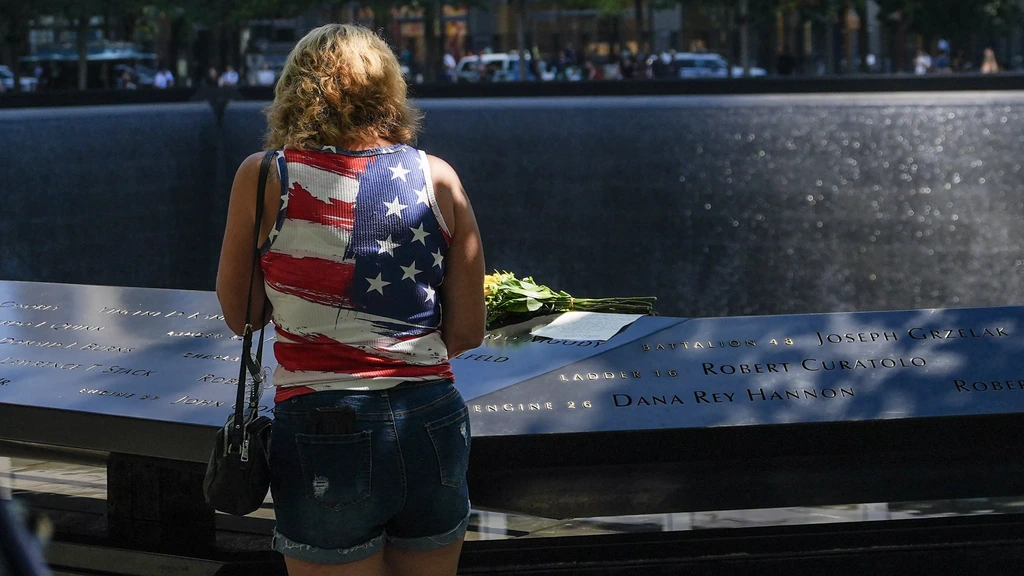
Fifteen years after the 9/11 attacks, experts are concerned about the effects of Trump's policies on counter-terrorism in the U.S., as crucial resources and expertise fade. (translated)

25 jaar na de aanslagen van 9/11 zet Trump het mes in terreurbestrijding
H

When Emotion Takes the Reins A remarkable study published in Proceedings of the National Academy of Sciencesexamined millions of books covering almost 170 years and tracked language associated with rationality—facts, conclusions, analysis and determination—against language associated with sentiment—feeling, belief and emotion. The pattern was striking. From roughly 1850 to 1980, rationality-related language steadily increased while sentiment-related language declined. Then the trend reversed. By around 2007, sentiment-related language had overtaken rationality-related language and continued rising (Scheffer et al., 2021). This does not prove that people have become less rational, nor does the study establish a single cause. But it raises an important question: what happens when trust in the institutions associated with knowledge and expertise begins to collapse? If people believe governments, experts, universities and media are corrupt or captured, “look at the data” can sound less like an appeal to reason and more like an appeal to authority. And when institutional trust declines, emotion becomes politically powerful. Anger supplies an enemy. Fear supplies urgency. Hope supplies a future. Identity supplies belonging. Could this help explain why socialism and even communism have regained some appeal among young people despite the historical record? The study cannot establish that causal link. But it is a plausible hypothesis: when politics becomes increasingly emotional, an ideology can be judged by what it promises rather than by what it has historically produced. Benjamin Franklin captured the necessary balance: “If passion drives, let reason hold the reins.” Passion is not the enemy. It is the engine of human action. The danger comes when we surrender the steering wheel. Today, algorithms, political campaigns and media incentives are exceptionally good at exploiting emotion. Outrage spreads faster than nuance. A soundbite can provoke a reaction before we have checked whether it is true. Reference: Scheffer, M., van de Leemput, I., Weinans, E., & Bollen, J. (2021). The rise and fall of rationality in language. PNAS, 118(51), e2107848118. https://doi.org/10.1073/pnas.2107848118

BFMTV 1w

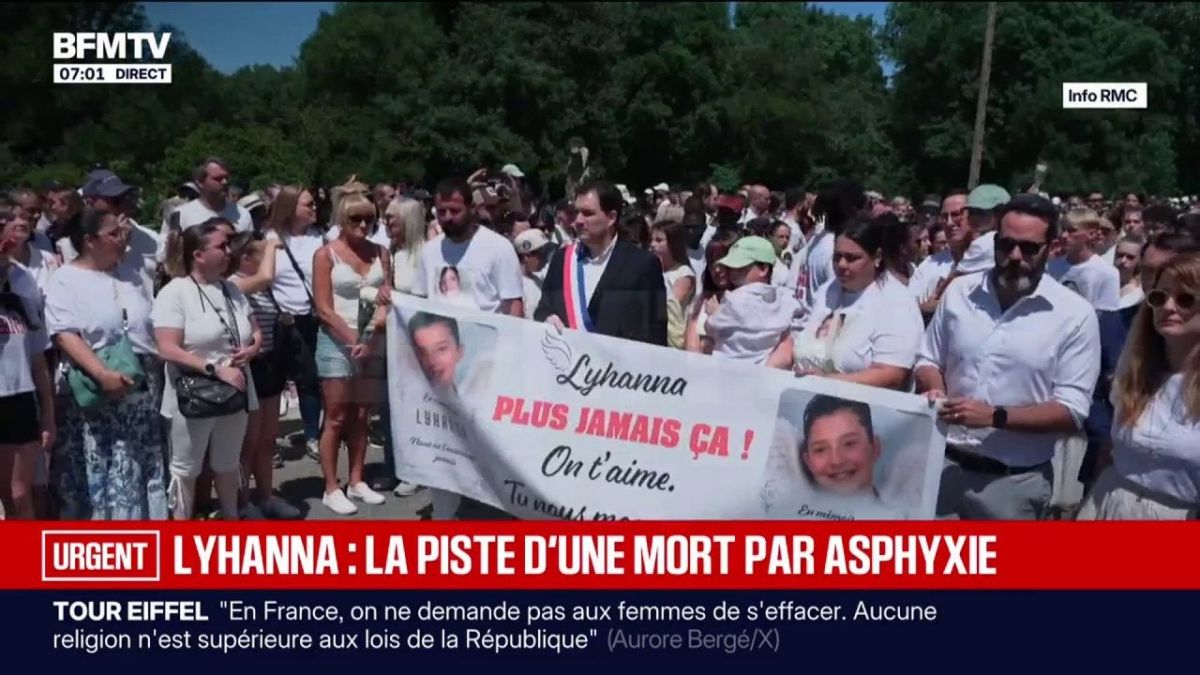
The investigation into the death of little Lyhanna revealed that a suffocation syndrome was highlighted by the expert assessments. (translated)

INFO RMC. Affaire Lyhanna: un "syndrome d'asphyxie" mis en évidence par les expertises pour expliquer son décès

The investigations finally reveal how little Lyhanna may have been killed by Jérôme Barella, the main suspect who has been charged with murder and sexual assault on a minor under 15 years old. (translated)

ERR 1w

Annika Valkna argues that the removal of a centuries-old oak tree near the Tammsaare Museum in Kadriorg, Tallinn, reflects systemic issues in Estonian project management and planning culture, as the decision to cut the tree resulted from a focus on cost rather than quality and expertise in the planning process. #projekteerimiskultuur #kadrioru_tamm #arhitektuur

Annika Valkna: Kadrioru tamm ei langenud ühe inimese vea tõttu

J’ai cartographié la chaîne de valeur des robots humanoïdes Gardez-la en mémoire, elle est beaucoup plus large que ce que je pensais Voici les trois goulots d’étranglement que je relève : 1. Les actionneurs et la mécanique de précision Le rôle de cette brique clé, c’est de permettre aux bots d’obtenir suffisamment de force et de précision dans des articulations compactes, légères et fiables. Il faut faire tenir les moteurs, les transmissions et les capteurs dans un corps aux dimensions humaines, sans sacrifier les performances. Le sujet, c’est de produire des articulations qui tiennent dans la durée, à un coût compatible avec un déploiement massif Trois noms ressortent : $SKF, Leaderdrive et Schaeffler ($SHA0). Le suédois SKF et le chinois Leaderdrive ont annoncé une coentreprise dédiée aux transmissions de précision pour les articulations des humanoïdes, en combinant expertise des roulements, savoir-faire robotique et capacités industrielles. L’allemand Schaeffler développe de son côté des actionneurs linéaires et rotatifs, avec des accords de développement et de fourniture déjà signés 2. Les mains et le sensing Voir un objet ne suffit pas pour le manipuler. Il faut aussi doser la force, détecter qu’il glisse et corriger le mouvement avant de le lâcher. Figure explique justement avoir développé ses propres capteurs tactiles après avoir jugé les solutions disponibles insuffisamment robustes pour les usages réels. Le problème n’est pas seulement la dextérité, c’est la dextérité qui résiste à une utilisation répétée Je m’étais intéressé à $VPG, notamment pour Micro-Measurements et ses jauges de contrainte utilisées dans la mesure des forces et des couples. Mais il existe d’autres plays plus larges : Novanta ($NOVT), via ATI sur les capteurs de force et de couple, et TE Connectivity ($TEL), à la fois sur les capteurs et la connectique nécessaire à leur intégration 3. La vision et les capteurs de perception Reconnaître une tasse sur une image et savoir précisément où elle se trouve dans une cuisine sont deux problèmes différents. Le robot doit estimer les distances, repérer les obstacles et suivre ses propres mouvements pour garder l’équilibre. C’est là qu’interviennent les capteurs d’image, les capteurs de profondeur et les centrales inertielles. Le vrai sujet va être de combiner ces données pour obtenir une perception fiable en temps réel, même quand le robot bouge ou que son environnement change. Et le marché est mûr, on a déjà eu l'incident caméra vs LiDar donc je pense qu'on verra moins de gros repricing sur ce domaine. Ce qui m’intéresse ici, c’est cette capacité à fournir plusieurs briques ensemble, plutôt qu’un capteur isolé comme chez $STM, car les équipementiers vont chercher à centraliser les "suppliers" Quelques noms à retenir : STMicroelectronics ($STM la stack est folle d'ailleurs, onsemi ($ON), Ouster ( $OUST ) -- Le narratif prendra probablement du temps à s’installer. On a déjà eu, et on aura encore, des phases de hype puis de repli. La temporalité peut très bien se décaler vers la droite. Mais à mon sens, ce thème restera l’un des narratifs les plus puissants des prochaines années C’est justement pour cela qu’il est crucial de comprendre qui fait quoi dans la stack, où se situent la demande et surtout quelles sociétés pourront capter cette dernière. #robots #technologie #innovation

BFMTV 1w

In the context of an industrial crisis, Volkswagen manages to prove its product expertise with the launch of its new electric models, the ID.3 Neo and the ID.7 Tourer, despite significant challenges in the global market. (translated)

ESSAI. En pleine tempête industrielle, Volkswagen démontre sa maîtrise sur le plan produit avec ses nouveaux modèles électriques ID.3 Neo et ID.7 Tourer

Over the coming years, more and more people will see parts of their expertise replicated by AI, and many of them are going to be extremely upset about it and shame you for thinking it's neat. The software profession is in the middle of this right now, and it's pretty ugly. It's #AI #SoftwareDevelopment #Automation #Therearenospecificcountrymentionsintheprovidedtweet.Therefore #theresultis:

Surtout, ce type qui se fait photographier dans un cockpit pour signifier « je suis un pilote », n’est qu’un radariste et joue sur l’ambiguïté du terme « aviateur » pour tromper son monde. Et ça marche : @LCI et @franceinfo le font régulièrement intervenir en tant « qu’expert » en stratégie militaire et en géopolitique. Il raconte absolument n’importe quoi et pour cause. Dans le milieu de l’aviation, où je compte quelques amis pilotes de chasse, il est surnommé « l’hôtesse de l’air ». Rien d’autre. @jaclostermann @HogardJacques #Aviation #Geopolitique #Expertise

The Psychologist – The British Psychological Society – When Walls Become Wellness SOURCE: https://www.linkedin.com/pulse/psychologist-british-psychological-society-when-walls-sardella-ph-d--pu8sf/ Dr Luciano Magaldi Sardella and Professor Matteo Mantuano on how ‘Stramurales Participatory Street Art’ transforms urban mental health. Link: https://www.bps.org.uk/psychologist/when-walls-become-wellness The Psychologist, The British Psychological Society by esteemed Dr. Joe Sutton, Head of Science Communication at BPS Contenuto dell’articolo On a sweltering afternoon in June 2018, we stood in the central square of Stornara, a small agricultural town in Puglia, Southern Italy, watching something extraordinary unfold. Local artist Lino Lombardi was facilitating a heated discussion among residents about which mural designs should adorn their town's crumbling walls. What struck us wasn't the art itself, but the transformation we witnessed in the eyes of people who, just months before, had described their hometown as a place to escape. These were individuals reclaiming their narrative, voting on their future, literally painting over decades of decline. We are environmental and community psychologists who have spent over a decade studying how built environments shape mental health outcomes. Dr Luciano Magaldi Sardella's research focuses on participatory arts interventions in declining rural communities, while Professor Matteo Mantuano specialises in the psychological mechanisms of community empowerment and collective agency. When we first learned about the Stramurales festival in early 2018, we recognised it as a rare opportunity to observe participatory urban art as a potential tool for addressing the mental health crisis plaguing Southern Italy's depopulating towns. Over the past seven years, we have conducted extensive fieldwork in Stornara – interviewing residents, documenting the festival's evolution, and analysing its psychological and social impacts. What we found in Stornara was something far more significant than an innovative community-led arts initiative. It was environmental psychology in action – reshaping how we understand the relationship between built environments, participatory arts, and mental health. The Crisis Hiding in Plain Sight Recent research reveals an alarming convergence of environmental and mental health crises that remains curiously underexamined in psychological discourse. Mental health research receives a mere 2.3 per cent of overall National Institute of Health funding. We cannot know how much of that concerns our environments – both natural and built – which fundamentally shape our psychological wellbeing. The newly proposed field of 'EnvironMental Health' emphasises that deteriorating built environments correlate significantly with elevated stress, social isolation, and worsening mental health outcomes. Southern Italy's rural communities embody this crisis. Between 2002 and 2017, South Italy region lost approximately two million residents to migration, predominantly young adults aged 15-34. This exodus created what Johan Galtung described as 'structural violence' – systematic arrangements preventing communities from realising their potential. The mental health toll manifests not just in individual diagnoses, but in collective despair, eroded social capital, and communities watching their futures literally emigrate. Stornara exemplified this trajectory. By 2017, this municipality of 6,000 residents faced the familiar spiral: economic contraction precipitating youth emigration, accelerating infrastructure deterioration, driving further decline. Walls crumbled. Businesses shuttered. Hope evaporated. Then something changed. The Stramurales Revolution: Democracy through Design What emerged in Stornara transcends conventional cultural tourism. The Stramurales International Street Art Festivalworks through three foundational democratic mechanisms that distinguish it from superficial beautification projects. Organised through Stornara Life APS – an open-membership association founded by Maestro Lino Lombardi – the festival prevents elite capture through voluntary property owner participation ensuring no coercion; democratic content selection through annual community voting on festival themes and mural proposals; and transparent, inclusive governance that gives all residents a voice in the festival's direction. This participatory architecture facilitates what the World Health Organization describes as 'community empowerment' – processes enabling communities to increase control over determinants affecting their health. Recent field studies in Vienna demonstrate that urban art interventions reduce stress and anxiety while improving mood states, but Stramuralesgoes further by embedding art creation within democratic decision-making structures. When residents voluntarily offer walls and vote on content, they perform acts of material and psychological investment. This restoration of collective agency – the belief that residents can shape their hometown's future rather than merely witnessing decline – directly addresses the structural violence that erodes mental health. Between 2020 and 2025, Stornara experienced a huge increase in tourism revenue despite pandemic disruption. New businesses opened. A Stornara-born emigrant who returned reluctantly in 2017 to provide parental care, now works as a tour guide and describes Stornara as 'the coolest town in Italy'. These aren't just economic indicators. They're mental health outcomes. The Science behind the Transformation Contemporary research across multiple disciplines validates what Stornara residents experience viscerally. A 2024 systematic review examining 79 peer-reviewed articles identified how arts places – from permanent museums to temporary public installations – stimulate community engagement, enhance cultural identity, and foster social cohesion. Community-driven mural projects specifically strengthen local identity and pride, creating new routines for individuals to interact and build relationships. Recent experimental research in Berlin found that sidewalk-level art exhibitions significantly altered visitors' connection to and satisfaction with their neighbourhoods, improving overall wellbeing. This aligns with emerging theories on art viewing's impact on mental health, which identifies five key mechanisms: affective processes regulating emotions and stress; cognitive processes providing sensory stimulation and learning; social processes creating shared experiences; self-transformation through reflection; and resilience building for coping with challenges. Environmental psychology research demonstrates that built environments operate as therapeutic interventions. Studies on mental health inpatient facilities reveal that design elements affecting privacy, control, daylight access, and particularly the inclusion of artwork significantly impact patient outcomes. If hospital walls matter therapeutically, how much more do the walls we encounter daily in our communities? The Stramurales model harnesses these mechanisms through the recent concept of 'visual health activism'. Several murals explicitly engage health and human rights themes: Alaniz Niz's 'Refuge for All Migrants' represents exploited African agricultural workers; Sabotaje al Montaje's 'Turning Our Backs on Migration' challenges exclusionary policies; Devil Art Design's 'African Child at Sunset' portrays migrant youth seeking dignified futures. These works address social determinants of health through human rights advocacy. Migration policies denying basic rights create health vulnerabilities – including restricted healthcare access, hazardous working conditions, and psychological trauma from discrimination. The murals perform dual public health functions, in addressing residents' mental health while advocating for populations whose health rights face systematic violation. Place Attachment and Community Resilience The relationship between environmental perception, cultural identity, and community resilience has received substantial scholarly attention in 2024-2025. Research in rural China demonstrates that environmental perception of public spaces influences community resilience through chain mediating effects of cultural identity and place attachment. When communities transform their physical environments through participatory processes, they simultaneously strengthen the psychological bonds that underpin resilience. This explains why Stramurales succeeds where traditional economic development approaches falter. The festival doesn't just create economic value – though over 150 murals by international artists now attract thousands of visitors annually. It fundamentally reshapes residents' relationship with their environment, transforming narratives of decline into evidence of vitality. Each democratically selected mural becomes what resilience researchers call an 'anchor of hope' – tangible proof contradicting despair. Contemporary resilience theory emphasises that strength resides not merely in physical infrastructure but in social cohesion. A recent analysis of resilient urban design in marginalised American neighbourhoods found that residents' message – 'We like our neighbours, we like the character of where we live' – revealed that resilience is fundamentally about people and community. Design interventions succeed when they preserve and strengthen these social bonds, rather than imposing external visions. Stramurales embodies this principle. The democratic voting mechanisms ensure art reflects genuine community values rather than artist or curator preferences. This prevents the cultural displacement often accompanying urban regeneration, where improvements benefit newcomers while alienating existing residents. By centering resident agency, Stramuralesbuilds what researchers describe as 'critical resilience' – capacity addressing underlying inequalities rather than merely adapting to them. The Participation Gap and Universal Access These findings resonate profoundly with longstanding concerns about arts accessibility. The 2015 Warwick Commission documented that the wealthiest, most educated 8 per cent of the UK population accounted for 44 per cent of live music attendance and 28 per cent of visual art visits. This participation gap particularly affects communities that would benefit most from arts engagement for health and wellbeing. But Stramurales challenges this narrative. Street art as public health infrastructure requires no admission fees, no advance booking, no cultural capital to appreciate. It exists where people live, transforming daily commutes into encounters with beauty and meaning. The democratic selection process ensures accessibility extends beyond consumption to co-creation – residents don't just view art, they determine what appears on their walls. Recent research on participatory arts and social cohesion emphasises that successful interventions share common features: delivery in local communities, non-stigmatising approaches, flexibility, promoting social engagement, involvement of exhibitions, and delivery within specific timeframes. Stramurales incorporates all these elements while adding genuine democratic governance. This matters urgently. Mental health conditions among young people globally are rising, and traditional mental health services remain chronically underfunded. If we cannot scale clinical interventions to meet demand, we must invest in preventive public health approaches targeting social determinants. From Stornara to the World: Implications for Practice The Stramurales model offers a replicable template requiring modest financial investment but substantial community participation. Essential elements include voluntary engagement, democratic decision-making, strategic social media use for marketing, and integration of local narratives with global artistic practices. Several cities have implemented variations with promising results. Research on artistic interventions in urban spaces across Europe and Asia demonstrates that participatory art projects can serve as 'social prescribing', improving psychological resilience and enhancing public engagement. Tactical urbanism approaches – small-scale, low-cost interventions improving public spaces – increasingly incorporate art as core rather than supplementary elements. The implications extend beyond individual communities. International frameworks including the International Covenant on Economic, Social and Cultural Rights enshrine rights to health and cultural participation. State obligations to conserve, develop and diffuse culture should support community-driven cultural initiatives demonstrably impacting health outcomes. As pandemic governance analyses emphasise, future health policy reforms must address not only biomedical preparedness but underlying vulnerabilities in community resilience and social cohesion. Street art operating through participatory structures directly strengthens these dimensions. What Psychologists Can Do We have roles to play at multiple levels. First, we must conduct research documenting the mental health impacts of participatory arts interventions. While promising evidence exists, methodologically rigorous studies with adequate sample sizes and long-term follow-up remain scarce. We need experimental designs, not just observational studies, examining mechanisms through which environmental transformations affect psychological outcomes. Second, we should advocate for policy recognising arts engagement as health intervention. This means supporting public health funding for community arts initiatives, particularly in economically deprived areas where traditional development approaches have failed. We should work with urban planners, architects, and artists to integrate participatory arts into neighbourhood regeneration from inception, not as afterthoughts. Third, we must ensure interventions embody genuine participation rather than tokenistic consultation. The Stramuralesmodel succeeds because residents hold real power. Without this, arts interventions risk replicating existing power structures and potentially accelerating gentrification that displaces the communities they ostensibly serve. Fourth, we should employ arts-based research methods that centre community voices. Collaborative approaches like participatory theatre, photovoice, and collaborative poetics enable communities to articulate their experiences and aspirations in ways traditional psychological assessments cannot capture. These methods acknowledge that communities possess expertise about their own needs and potential solutions. Finally, we must situate arts interventions within broader frameworks addressing social justice. Art should not function as a 'sticking plaster' masking underlying inequalities. Instead, we should harness arts' disruptive potential to promote what researchers term 'critical resilience' – capacity challenging systemic injustices rather than merely helping people adapt to them. This means addressing not just symptoms (mental distress) but causes (structural violence, economic abandonment, policy failures). Reimagining Health Infrastructure The Stramurales case compels fundamental reconsideration of what constitutes health infrastructure. We typically envision clinics, hospitals, pharmacies – biomedical institutions delivering treatments for diagnosed conditions. But what if the most effective mental health intervention for a declining community isn't a new psychiatric facility, but democratic processes enabling residents to transform their visual environment? Walls covered with democratically selected art, created through genuine community participation, demonstrably improve community mental health while operationalising cultural rights described in international law. The modest financial investment required pales beside costs of clinical services treating preventable distress. For communities experiencing decline where traditional economic development has failed, participatory street art may offer the most cost-effective, accessible, and sustainable mental health intervention available. This isn't about romanticising art or dismissing serious mental illness requiring clinical care. It's about acknowledging that population mental health requires addressing social determinants – and that participatory arts targeting built environments, social capital, and collective agency directly address these determinants. The question facing psychology isn't whether art can function as health intervention – Stramurales and growing evidence demonstrate it can. Rather, the question is whether we possess imagination to rethink health infrastructure, recognising that effective mental health promotion may require democratic decision-making and community participation as much as clinical expertise. As we watched Stornara residents voting on murals that June afternoon, we witnessed people exercising a fundamental human capacity too often denied in our field: the power to shape their own environments and, through that shaping, to heal. Perhaps that's the most vital lesson Stramurales offers psychology – that sometimes the most therapeutic intervention isn't administered by professionals, but created by communities reclaiming their agency… one democratically selected wall at a time. Dr Luciano Magaldi Sardella holds a PhD in Cognitive Leadership at Aspire Institute, Harvard Business School. Professor Matteo Mantuano is Professor of Social Sciences and Psychoeducational Health, Unitré University of Milan, Italy. Photo: 'Kid trapped in a box' mural by Leticia Mandragora References: All-Party Parliamentary Group on Arts, Health and Wellbeing (2017). Creative Health: The Arts for Health and Wellbeing (2nd ed.). Belfiore, E. & Bennett, O. (2024). The social impact of the arts: An intellectual history. London: Palgrave Macmillan. Bone, J.K., Bu, F., Fluharty, M.E., Paul, E., Sonke, J.K. & Fancourt, D. (2024). Who engages in the arts in the United States? A comparison of several types of engagement using data from The General Social Survey. PLOS ONE, 19(1), e0296743. doi:10.1371/journal.pone.0296743 Chatterjee, H.J. & Noble, G. (2024). Museums, health and well-being: A preliminary report for Phase I. UCL Museums & Public Health Research Group. Cohen, G.D., Perlstein, S., Chapline, J., Kelly, J., Firth, K.M. & Simmens, S. (2006). The impact of professionally conducted cultural programs on the physical health, mental health, and social functioning of older adults. The Gerontologist, 46(6), 726–734. Daykin, N., Mansfield, L., Meads, C., Julier, G., Tomlinson, A., Payne, A., Grigsby Duffy, L., Lane, J., D'Innocenzo, G., Burnett, A., Kay, T., Dolan, P., Testoni, S. & Victor, C. (2024). What works for wellbeing? A systematic review of wellbeing outcomes for music and singing in adults. Perspectives in Public Health, 138(1), 39–46. doi:10.1177/1757913917740391 Fancourt, D. & Finn, S. (2019). What is the evidence on the role of the arts in improving health and well-being? A scoping review. World Health Organization, Health Evidence Network Synthesis Report 67. Flores González, L.M. & Rodríguez Sánchez, I. (2024). The transformative power of art in marginalized communities: Case studies from Latin America. International Journal of Community Well-Being, 7(2), 145–167. Galtung, J. (1969). Violence, peace, and peace research. Journal of Peace Research, 6(3), 167–191. Hart, A., Gagnon, E., Eryigit-Madzwamuse, S., Cameron, J., Aranda, K., Rathbone, A. & Heaver, B. (2016). Uniting resilience research and practice with an inequalities approach. Sage Open, 6(4), 1–13. Johnson, H., Carson-Apstein, E., Banderob, S. & Macualay-Rettino, X. (2017). 'You kind of have to listen to me': Researching discrimination through poetry. Forum Qualitative Sozialforschung/Forum Qualitative Social Research, 18(2). doi:10.17169/fqs-18.3.2864 Kaplan, S. (1995). The restorative benefits of nature: Toward an integrative framework. Journal of Environmental Psychology, 15(3), 169–182. Kim, J. (2017). Effects of community-based group music therapy for children exposed to ongoing child maltreatment and poverty in South Korea: A block randomized controlled trial. Arts Psychotherapy, 54, 69–77. doi:10.1016/j.aip.2017.01.001 Li, Y., Zhang, H. & Chen, T. (2024). Environmental perception, cultural identity and community resilience: Chain mediating effects of place attachment in rural China. Journal of Rural Studies, 98, 103– 115. Marmot, M., Atkinson, T., Bell, J., Black, C., Broadfoot, P., Cumberlege, J., Diamond, I., Gilmore, I., Ham, C., Meacher, M. & Mulgan, G. (2010). Fair society, healthy lives: The Marmot Review. Strategic Review of Health Inequalities in England Post-2010. Mulligan, M., Scanlon, C. & Welch, N. (2008). Renegotiating community life: Arts, agency, inclusion and wellbeing. Gateways: International Journal of Community Research and Engagement, 1, 99–115. doi:10.5130/ijcre.v1i0.591 Neelands, J., Belfiore, E., Firth, C., Hart, N., Perrin, L., Brock, S., Holdaway, D. & Woddis, J. (2015). Enriching Britain: Culture, creativity and growth. The 2015 Report by the Warwick Commission for the Future of Cultural Value. Packer, J. & Ballantyne, R. (2024). The role of museums and art galleries in promoting wellbeing: Insights from the United Kingdom and Australia. International Journal of Heritage Studies, 30(3), 234–251. Papies, E.K., Best, M., Gelibter, E. & Stroebe, W. (2024). The role of mental simulation in desire and motivation: A systematic review. Motivation Science, 10(1), 1–18. Pykett, A.A., Osborne, T., Resch, B., Nielek, R., Krukar, J. & Malleson, N. (2024). From smart to sustainable cities: The role of environmental psychology in urban transformation. Cities, 144, 104644. Roe, J. & Aspinall, P. (2024). The restorative benefits of walking in urban and rural settings in adults with good and poor mental health. Health & Place, 71, 102654. Stuckey, H.L. & Nobel, J. (2010). The connection between art, healing, and public health: A review of current literature. American Journal of Public Health, 100(2), 254–263. Theorell, T. (2024). Psychological health effects of musical experiences: Theories, studies and reflections in music health science. Stockholm: Springer Nature. Ulrich, R.S., Simons, R.F., Losito, B.D., Fiorito, E., Miles, M.A. & Zelson, M. (1991). Stress recovery during exposure to natural and urban environments. Journal of Environmental Psychology, 11(3), 201–230. Van den Berg, A.E., Wesselius, J.E., Maas, J. & Tanja-Dijkstra, K. (2024). Green space as a buffer between stressful life events and health: A longitudinal analysis. Social Science & Medicine, 310, 115270. WHO (2019). WHO housing and health guidelines. Geneva: World Health Organization. Zarobe, L. & Bungay, H. (2024). The role of arts activities in developing resilience and mental wellbeing in children and young people: A rapid review of the literature. Perspectives in Public Health, 137(6), 337–347. doi:10.1177/1757913917712283.

The Psychologist – The British Psychological Society – When Walls Become Wellness

L'ingegner Paolo Reale dimostra (in onda e fuori onda) di interpretare le mie parole a suo piacimento. Prima dice di aver sentito dei video in cui accuso Marco Poggi, Stefania Cappa e compagnia cantante. Poi si mette a ridere quando gli contesto che - se parla di cose che non gli competono - non vado certo a criticarlo come ha fatto lui con me. Ora, ripetiamo tutti insieme: aver scritto decine di articoli sulle intercettazioni telefoniche, non fa di lui - che è un ingegnere informatico - un esperto di intercettazioni telefoniche. Così come io, che ho scritto decine di articoli sul DNA, non sono un esperto di DNA Per fare un esempio calzante, è come se un esperto di intercettazioni telefoniche (uno vero, non Reale) accettasse un incarico da parte di una procura per analizzare un malware informatico. Potrà anche aver scritto decine di articoli. Ma non è un esperto. #Garlasco #Intercettazioni #Expertise #Garlasco

My colleagues @bjerde_anna and @Gaurav__Nayyar make the case for how AI can help developing countries accelerate progress—expanding access to expertise, improving services and potentially achieving in a decade what might otherwise take a century. More 👇 #AI #DevelopingCountries #Innovation #Therearenospecificcountrycodesmentionedinthetweet.