BETA nonprofit public democratic european moderated

Search

#fato

History in Paint stated that if Flávio fulfilled 30% of what he claimed he would do, the country would enter a civil war in six months. He also assessed it as likely that his government would be similar to his father's, with some privatizations, agreements with the Centrão, and widespread corruption. #Política #Brasil #Governo (translated)

Alberto Gonçalves analyzes the results of the first round of the Brazilian presidential elections, highlighting the possible defeat of Lula da Silva in the second round and the factors that caused 56 million Brazilians to reject his candidacy and the PT, including economic discontent and concerns about corruption. #Eleições2026 #Lula #Bolsonaro (translated)
56 milhões de brasileiros não fizeram o "L"

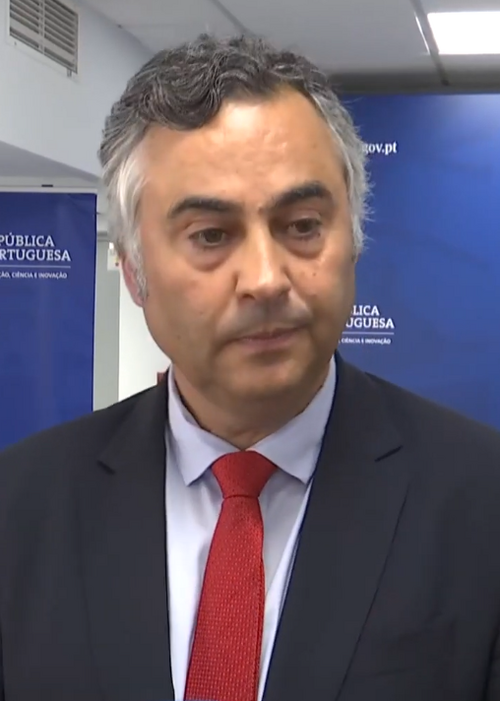
"The loss of learning did not happen by chance." Among the main factors, Fernando Alexandre points to early access to social networks and the use of smartphones, with negative impacts on children's ability to concentrate, particularly affecting reading skills and, consequently, the entire educational journey of students. #Educação #PISA #Avaliação (translated)

PISA: ministro responsabiliza redes sociais e governos PS
observador.pt
Pri 5h

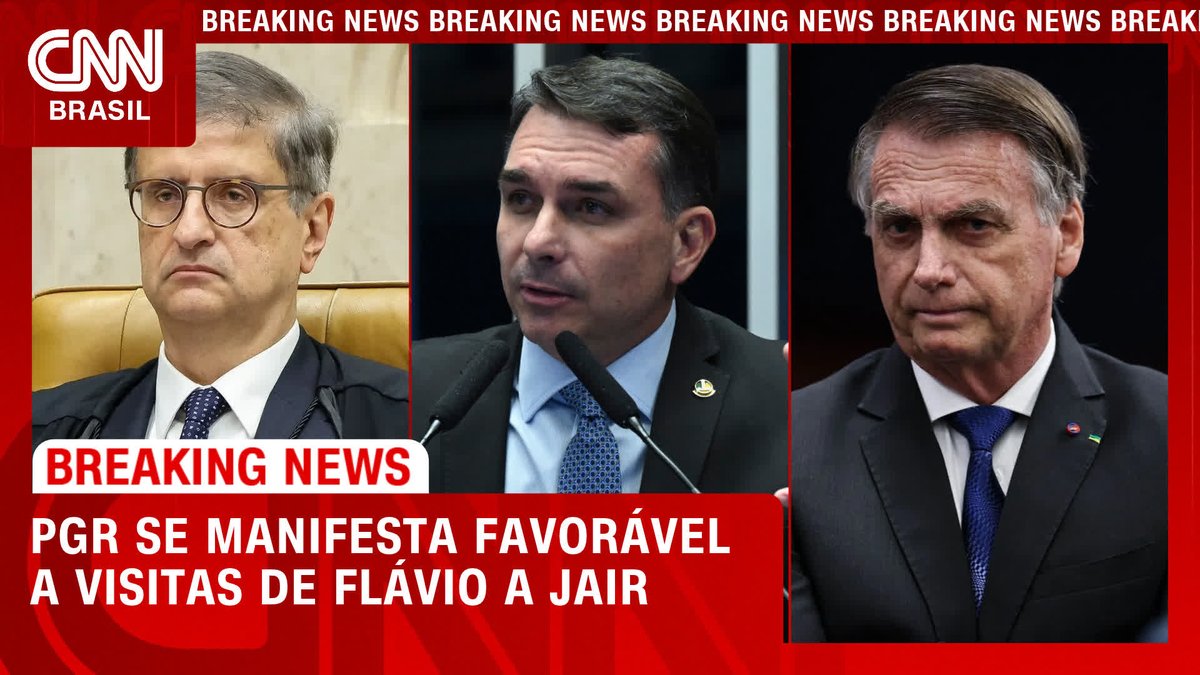
Pri stated that the Attorney General's Office did not oppose Flávio's visit to Jair Bolsonaro. According to her, Gonet assessed that there was no new fact that justified maintaining the restriction, imposed in July after the reading of a letter during a live broadcast. Pri added that the deadline expired on Sunday and that the opinion paved the way for the visit, but the decision rested with Alexandre de Moraes. https://t.co/M6mPBEfEV9 #Política #JairBolsonaro #AlexandredeMoraes (translated)

Thais 5h

Thais stated that the debate should focus on combating disinformation, rather than attacking the Northeast. She said that some people believed that Flávio Bolsonaro would cut Bolsa Família or that Donald Trump would lead Brazil, and classified these claims as false. She also argued that the response should be based on facts and clarity, without treating voters as enemies, and called for them to work together to elect Flávio Bolsonaro president. #Desinformação #BolsaFamília #União (translated)
poponze 8h

Poponze wrote that Erika Hilton assessed that Lula's campaign failed to show voters the relationship between Flávio Bolsonaro and the Master case. According to Hilton, there was a lack of better translation of the difference between each side's proposals and, according to her, to point out Flávio's involvement in the Master case and in other corruption and militia scandals. #Política #Corrupção #Eleições (translated)
The info profile aespa Brasil stated that it intended to take a stand considering there was a serious risk of losing voice and democracy. It claimed that the artists it represents should not be held responsible, but that the profile could use its influence among thousands of followers to defend truth and social responsibility. According to the profile, silence could open space for hate, prejudice, and terror, in addition to affecting the lives of thousands of young Brazilians. It also stated that many teenagers who followed it were fighting for better days and depended on social programs to survive. Finally, it expressed hope that the fans would recognize who was by their side in the fight for the defense of Brazil. #Democracia #VozAtiva #JusticaSocial (translated)

Camilla de Lucas stated that public policies reached her in 2016 and that the promised opportunity transformed her life. She urged voters to press 13 and confirm their vote. https://t.co/7PmZWAbePi #PolíticasPúblicas #Oportunidade #Transformação (translated)

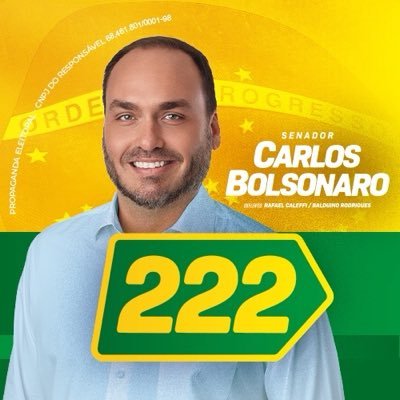
Carlos Bolsonaro stated that the current political movement was cyclical and that there was a sneaky action around the imprisonment and isolation of Jair Bolsonaro, the exile of Eduardo Bolsonaro, and what, according to him, some considered the capture of Flávio Bolsonaro. He said it was not speculation, but facts, and described the dispute as a new confrontation between Jair Bolsonaro and the people on one side and the system on the other. He stated that there was still a mission to fulfill and that previous attempts had failed. He also reported realizing, at a certain moment, that he was at the center of an environment he described as hostile. He said that since then, he had survived and continued to follow Jair Bolsonaro's orders. Finally, he asserted that there was an obligation to save Brazil. #Brasil #Bolsonaro #Política (translated)

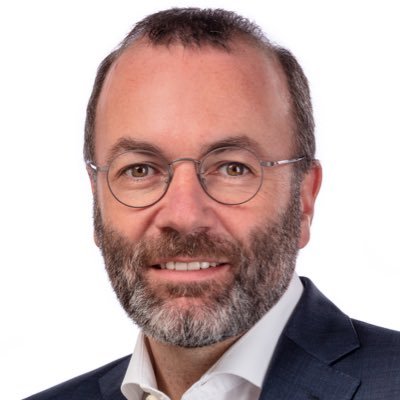
"As a German, I am a little envious." #Portugal #UniãoEuropeia #Coesão (translated)

Montenegro recusa "pedinchice", mas usa trunfos de bom aluno
observador.pt

Karina Michelin wrote that a CNN report released on Tuesday, October 6, pointed out that a faction of the Supreme Court (STF) was seeking dialogue with bolsonarism after the election, in light of the new composition of the Senate and the possibility of impeachment of ministers. According to the investigation by Jussara Soares and Caio Junqueira, cited by Michelin, Flávio Bolsonaro’s circle reportedly identified signs of a possible negotiation to spare ministers of the Court in exchange for the review of Jair Bolsonaro's imprisonment and the acceptance of amnesty for those convicted for January 8. Michelin stated that the PL party rejected the proposal and, according to CNN, did not intend to negotiate the permanence of Alexandre de Moraes in the STF. The party was reportedly working to promote his impeachment in 2027. In the PL's calculations, there would be 49 favorable votes for his removal in the new Senate, five less than the 54 considered necessary. Flávio Dino was also on the party's radar, depending on his actions. Michelin added that, according to Caio Junqueira, Michel Temer's support for Flávio Bolsonaro was interpreted as one of the first gestures to establish bridges. Temer appointed Moraes to the STF in 2017 and, according to the report she cited, would be a political link between the minister and the Bolsonaro family. The author noted that the impeachment of STF ministers has become an explicit electoral agenda for Flávio Bolsonaro and that the right also concentrated efforts on the election of senators, who are responsible for processing and judging Supreme Court ministers for crimes of responsibility. Michelin argued that any attempt at an agreement would have to take into account that millions of Brazilians voted to change the balance of power in the Senate. She advocated for Brasília to respect the electoral results, reestablish limits between the branches of government, and seek to pacify the country. #Brasil #Política #STF (translated)

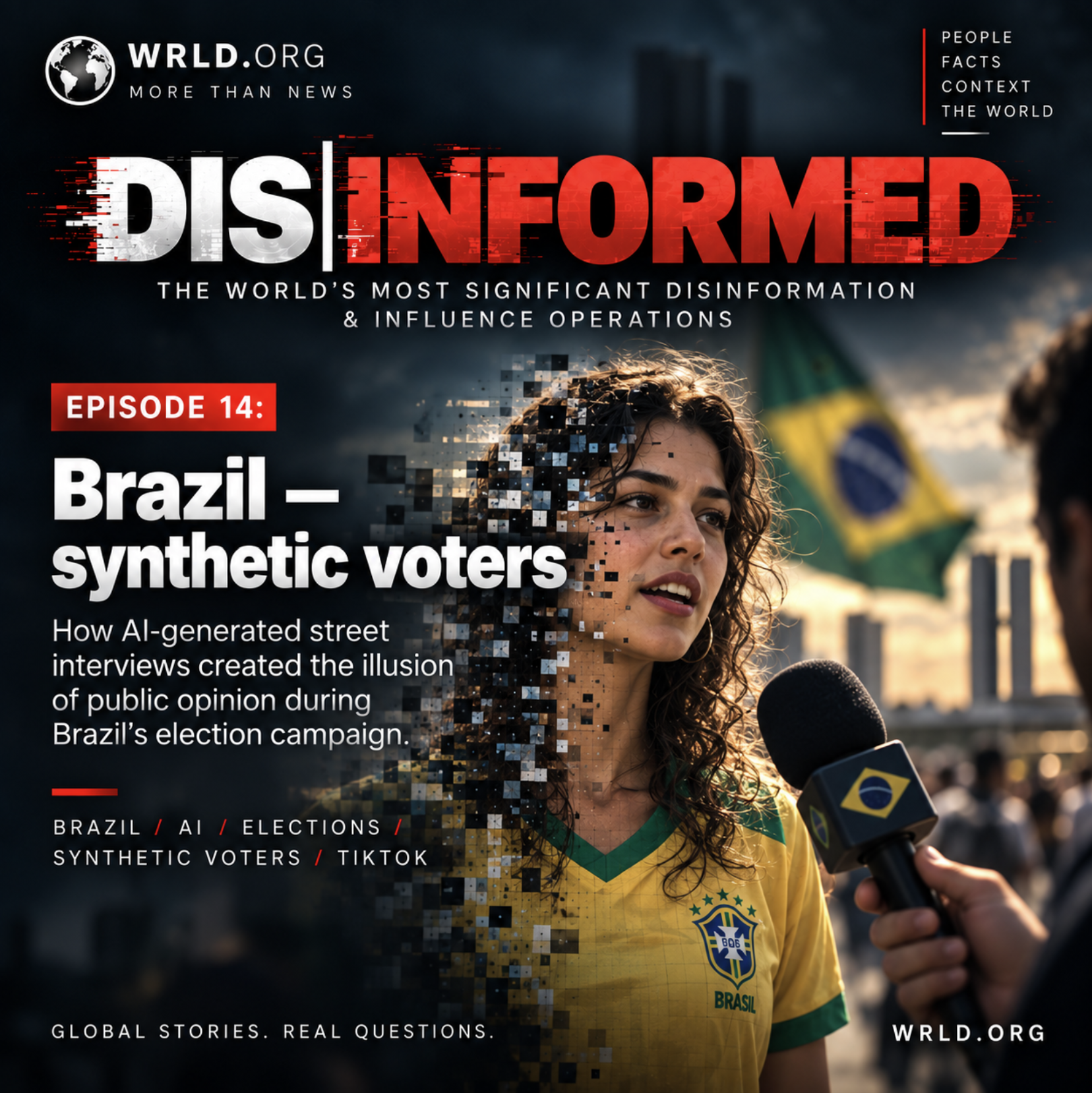
Brazil’s synthetic voters – when AI manufactures public opinion They look like ordinary street interviews. A reporter approaches a passer-by in a Brazilian square and asks a simple question: who will you vote for? A young voter explains why Luiz Inácio Lula da Silva deserves another term. An elderly woman says Brazil needs Flávio Bolsonaro because he represents political renewal and greater security. The locations look plausible, the microphones are visible and the answers sound much like the brief political opinions heard in television vox pops around the world. None of the people are real. Ahead of Brazil’s presidential election on 4 October, fact-checking organisation Aos Fatos identified at least 50 TikTok videos in which artificial intelligence was used to manufacture voters, reporters and apparently spontaneous political interviews. Together, the videos had accumulated around 7.4 million views by mid-August. Some promoted Lula, others Flávio Bolsonaro, while another group used synthetic characters to ridicule or stereotype supporters of one side. Aos Fatos found no apparent evidence linking the accounts producing the videos to either presidential campaign. The opinion poll that never took place The format is important. These were not conventional deepfakes in which a recognisable politician is made to say something he never said. Instead, the creators reproduced the visual language of the vox pop – the short street interview used by broadcasters and social-media creators to illustrate what ordinary people supposedly think. In pro-Lula videos, synthetic voters described themselves as beneficiaries of social programmes or credited the president with improving their lives. In videos supporting Flávio Bolsonaro, artificial interviewees associated him with political renewal, public security and fighting corruption. Other clips were openly hostile: AI-generated characters presented as poor or living in parts of Brazil’s north-east were shown in dirty clothes or run-down surroundings, declaring support for Lula because they supposedly preferred welfare payments to work. The deception is therefore subtler than fabricating a candidate’s statement. It manufactures something that political communication normally treats as evidence of public sentiment. A real vox pop may be unscientific, but the people interviewed at least exist. These videos created the appearance that identifiable social groups – young people, pensioners, welfare recipients or residents of particular regions – were spontaneously expressing political preferences when no such encounters had taken place. An electoral-law specialist interviewed by Aos Fatos described the technique as the fabrication of a “social fact that never occurred”. That captures the central innovation: AI is being used not merely to falsify political speech, but to manufacture the impression of grassroots opinion. Fifty videos, but not one proven network The available evidence does not support describing the 50 posts as a centrally controlled influence operation. Aos Fatos located them through TikTok searches and recommendations produced by the platform itself, then examined the accounts responsible for publication. Most had relatively small individual audiences, although their combined reach was substantial. The first examples identified by the investigation appeared as early as March 2026. Activity increased in June and was concentrated particularly in July and the first half of August as Brazil’s election calendar intensified. Some accounts specialised in AI-generated videos generally, including fabricated podcast-style material. Others were explicitly political or supportive of a candidate, but Aos Fatos found no apparent links between those profiles and the official Lula or Bolsonaro campaigns. That distinction is essential. The evidence demonstrates a common technique and a shared political environment, not a single command structure. Some creators may have been motivated by ideology, others by engagement or monetisation. Publicly available evidence does not establish who commissioned the individual videos or whether any coordination existed between the accounts. This decentralised model also creates a different enforcement problem from a traditional bot network. There may be no headquarters to expose and no infrastructure whose removal disables the entire operation. The format itself can be copied by anyone with access to inexpensive generative-video tools. When the algorithm mixes real and synthetic citizens Aos Fatos documented another important feature of the phenomenon: TikTok’s recommendation system placed AI-generated interviews alongside genuine street interviews. For a user scrolling quickly through the platform, the transition between an authentic citizen and an entirely fabricated one could therefore be almost invisible. In 18 per cent of the 50 videos analysed, there was no indication that the people shown had been generated using AI. After Aos Fatos provided TikTok with the videos, the company said it had removed all of them for violating its rules on edited and AI-generated media. TikTok said its policies require creators to identify synthetic content and prohibit manipulated media capable of misleading users about matters of public importance or impersonating genuine journalistic material. The issue extends beyond one platform. Factchequeado’s review of Brazil’s 2026 election campaign found that synthetic endorsements and other deepfakes had become one of the most visible forms of AI-assisted electoral misinformation, alongside fabricated candidate statements and invented scenes. Brazil already had rules for synthetic politics Brazil entered the campaign with unusually detailed electoral rules governing artificial intelligence. The Superior Electoral Court, the TSE, requires electoral propaganda using synthetic multimedia to disclose clearly that AI was used. More importantly for the fake-voter videos, its rules prohibit synthetic audio or video used to favour or harm a candidacy when it creates or alters the image or voice of a living, deceased or fictitious person. The difficulty is attribution and enforcement. When a synthetic video is published by an official campaign, responsibility can be relatively straightforward to investigate. When it comes from an apparently independent account with no demonstrated relationship to a candidate, lawyers interviewed by Aos Fatos said responsibility is more likely to fall on the individual creator, while imposing electoral sanctions on a campaign would require evidence of a connection. For the final 72 hours before the election and the 24 hours following it, the TSE has imposed additional restrictions on newly published or republished synthetic material involving candidates or public figures, reflecting the particular difficulty of correcting fabricated content immediately before voting. From deepfake politicians to synthetic electorates The Brazilian case illustrates a broader change in political manipulation. The first generation of electoral deepfakes concentrated on famous people: make a politician appear to say something damaging, or fabricate an endorsement from a celebrity. Synthetic vox pops reverse the perspective. The politician can remain completely authentic; it is the electorate around the politician that is fabricated. That changes the psychological proposition of the message. Instead of saying the candidate believes this, the video suggests people like you believe this. Age, clothing, accent, neighbourhood and social class can all be generated to construct an artificial constituency around almost any political claim. There is no evidence that the 50 Brazilian videos identified by Aos Fatos constitute a single centrally directed campaign, nor evidence that they changed voting intentions. What they demonstrate is a technique whose barrier to entry has become extremely low. AI no longer needs to forge the politician. #DISINFORMED #Episode14 #Brazil #BrazilElection2026 #Elections #ElectionDisinformation #ArtificialIntelligence #AI #GenerativeAI #SyntheticVoters #SyntheticMedia #AIAvatars #AIGeneratedVideo #VoxPop #FakeInterviews #Astroturfing #AIPropaganda #PoliticalDisinformation #InfluenceOperations #InformationWarfare #SocialMediaManipulation #TikTok #PublicOpinion #ManufacturedConsent #SyntheticPublicOpinion #DigitalInfluence #Deepfakes #ElectionIntegrity #TSE #AosFatos #FactChecking #OSINT #MediaManipulation #WRLD (translated)

Eleitores gerados por IA fazem campanha no TikTok e põem em xeque regra do TSE
Yoo 18h

Yoo stated that it was about time she sued the recipients of the criticism. She said that she was neither a Zionist nor a supporter of Trump and that she felt disgusted by them trivializing something serious because she did not meet their fanciful expectations. https://t.co/oF3gtAyidn #Justiça #DireitosHumanos #LiberdadeDeExpressão (translated)

Yoo 19h

Yoo stated that it was already time for her to sue the recipients of the message. She said that she was neither a Zionist nor a supporter of Trump and that she felt disgust for what she considered a trivialization of a serious issue, motivated by her not meeting their expectations. https://t.co/MCAii2HqcX #Justiça #LiberdadeDeExpressão #DireitosHumanos (translated)

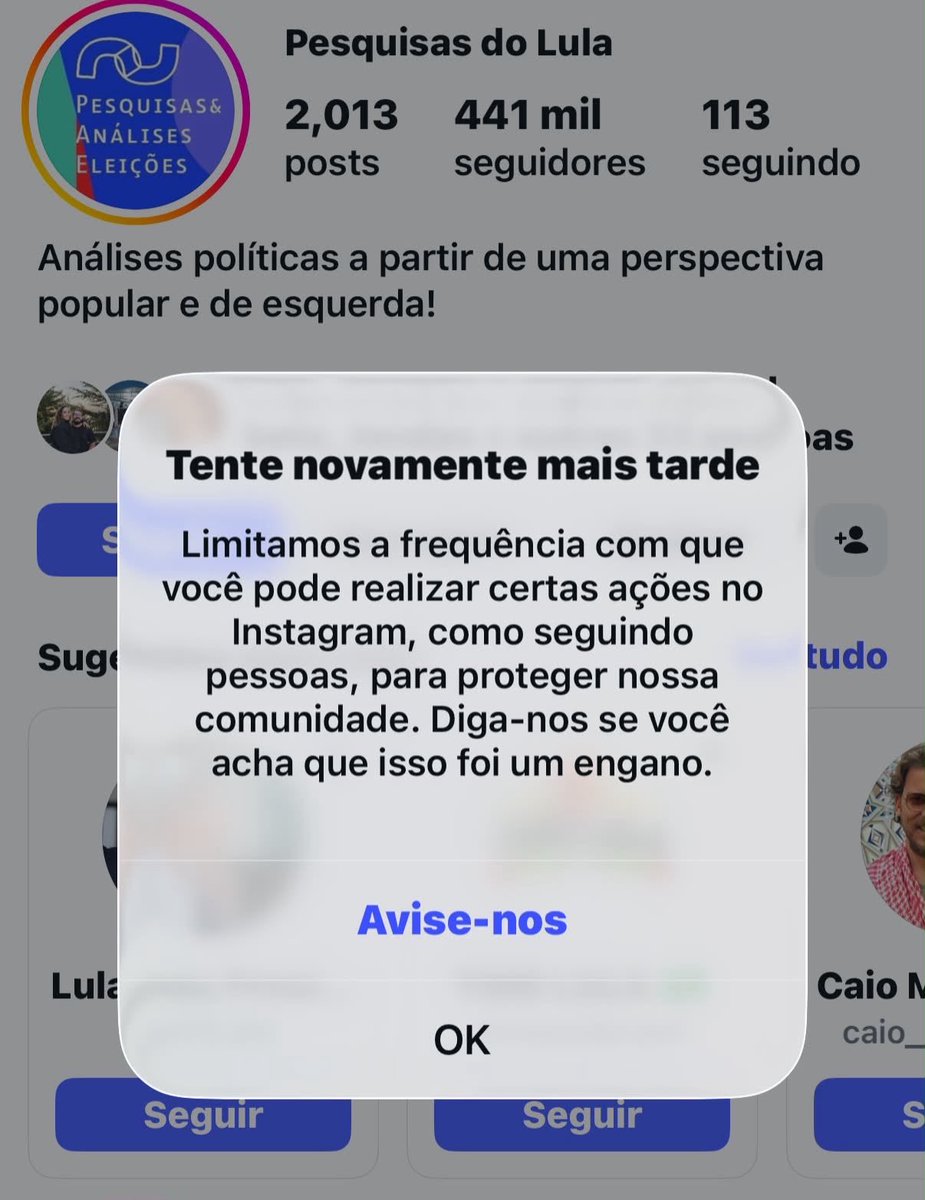
RESEARCH AND ANALYSES ELECTIONS stated that Instagram was boycotting Lula's Research page and preventing new users from following it. The author stated that the page had gained 120 thousand followers that day and declared to be very upset. https://t.co/FcVZIAQcje #Instagram #Boicote #Política (translated)

Gustavo Tutinha stated that Judge Adriana Marques had denied Vasco's request based on technical criteria related to the Maracanã's pitch and suggested Nilton Santos as an alternative. He said that the Public Prosecutor's Office recommended Maracanã, based on a statement from the Military Police regarding public safety, and argued that the bid allowed for refusals based on technical criteria without limiting them to the pitch. According to Tutinha, the recommendation did not annul the first-instance decision but could be presented to the Court in a potential new appeal. He questioned which criterion should prevail: the state of the pitch, associated with GreenLeaf, or public safety. #SegurançaPública #Vasco #Maracanã (translated)

gabriel 1d

Gabriel stated that it was necessary to have clear communication with the people who would receive that. https://t.co/uZ09B2fgks #Comunicação #Transparência #Brasil (translated)

Guilherme Derrite stated that he would only truly celebrate when he could do what a child asked for in a video and when Flávio, whom he claimed wanted to honor his father's legacy, could celebrate with him. Derrite said he saw Flávio grow stronger, listen, engage in dialogue, bring people together, and, above all, fight. https://t.co/DKMRpMCr2G #comemoração #legado #luta (translated)

Carlos Bolsonaro wrote that public statements about the protection of women should be confronted with the facts and the history of those making them. He asked the public to watch the video until the end and draw their own conclusions, tagging Flávio Bolsonaro and identifying him as "President 22." https://t.co/NzRucwveTF #ProteçãoÀsMulheres #DireitosDasMulheres #JustiçaSocial (translated)

Renata Barreto questioned Marcelo Adnet about what she called disrespectful rhetoric towards those who, according to her, have suffered one of the greatest atrocities ever committed on the planet. https://t.co/thJL2c0fRA #Respeito #Justiça #DireitosHumanos (translated)