According to the Associated Press news agency, Minister Marcin Kierwinski did not provide details about the man's identity or the type of planned attack. #Polónia #Segurança #Ameaças (translated)
The article discusses how some schools in Portugal are carrying out the gender transition of students without parental consent, reflecting a practice that is already occurring in other countries, such as the United States, and raising concerns about parental autonomy and child protection. #IdentidadeDeGénero #Educação #DireitosDasCrianças (translated)
BAS⁷ ⊙⊝⊜ cited Kim Namjoon saying that a text written by him the day before did not refer only to Peru or Latin America, but also to situations that frequently occurred in Europe and the United States and that could happen in Asia. BAS asked people to stop attributing words to them, to respect the request for privacy, and not to associate an entire continent with a minority that they considered out of touch. #Respeito #Diversidade #Identidade (translated)
This intervention is the recognition of the central place that sport occupies in the identity of Braga and the realization of a long-held ambition by successive directions of ABC, by athletes, fans, and by all those who have always believed that the ‘cathedral of Portuguese handball’ deserved conditions worthy of its greatness. "The Flávio Sá Leite Pavilion is part of the history of Braga and the pride of several generations, and this is the moment to ensure it a future worthy of its importance," says the mayor, João Rodrigues. #Andebol #Braga #Desporto (translated)
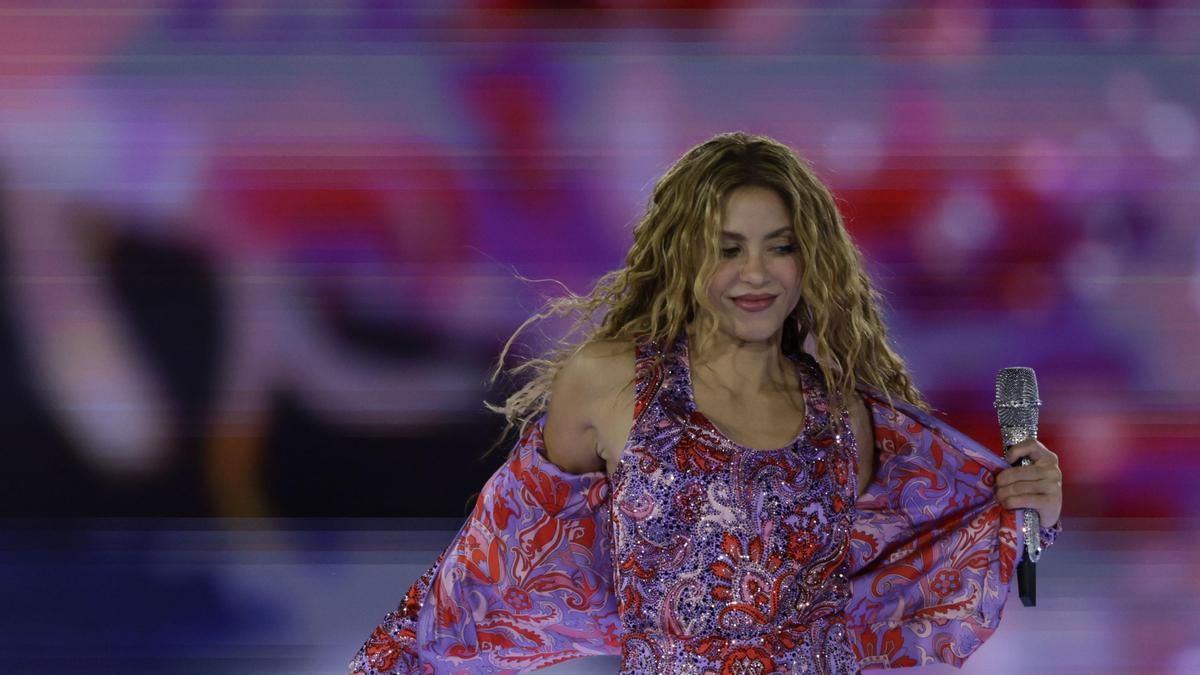
In the context of the celebration of Hispanic Day in Madrid, the tension between Hispanic identity, seen as a colonial wound, and Shakira's proposal to adopt the term Latinidad is highlighted, thus emphasizing the contradiction between a pro-colonial festival and cultural initiatives that seek to make visible the diverse Latin American identities. #Hispanidad #Latinidad #Colonialismo (translated)

Thinking History stated that Meta had prevented the page from publishing on Facebook after a series of posts went viral. According to the page, new posts were blocked until identity verification was completed, but Facebook did not provide the option to send the required documents. The author said they would continue posting on X and Instagram as long as they could. #Meta #Facebook #Identidade (translated)
Juliette wrote that if she could be born again, she would ask the Divine Saint to come back as a girl, daughter of a woman she described as "of the plague" and with roots in the Northeast. She also stated that she felt happy for being from the Northeast. #Nordeste #Cultura #Identidade (translated)
What does a place leave in us after we leave it? An image? A story? A building? A memory? ... What captures your gaze? The feminine trait? The strength of nature? The simple flight of butterflies? ... It is from these questions that I work on the paper filigree. I am Patrícia H., a Portuguese visual artist. I transform paper, time, and technique into art about memory, places, and identity. First publication in WRLD. ❤️ Let's see what conversations arise from here. #darticha #paperart #portugal (translated)
Santos FC announced a partnership with Paramount Pictures to promote the new Street Fighter movie. The club stated that posts about the match against Flamengo, scheduled for a Thursday at Alçapão, would feature the movie's visual identity, and that Vila Belmiro would host special activations before the game. According to Santos, the film would include Blanka, a character the club referred to as a "santista," and an exclusive excerpt had already been released on its social media. The premiere in cinemas across Brazil was scheduled for October 15, 2026. #SantosFC #StreetFighter #Games (translated)
Maya Massafera declared that she would vote for Lula in the second round of the 2026 elections. She said that Flávio did not guarantee her rights as a transgender woman and that Lula was the only option that ensured them, adding that her identity was non-negotiable. https://t.co/rtv08hKC3W #Eleições2026 #Lula #DireitosHumanos (translated)
UpdateCharts reported that Maya Massafera declared her vote for Lula. According to the publication, she stated that Flávio would not guarantee her rights as a trans woman and that Lula would be the only person to do so. She also said that her identity was non-negotiable. https://t.co/0X8xnppEYX #Lula #Eleições2022 #DireitosHumanos (translated)
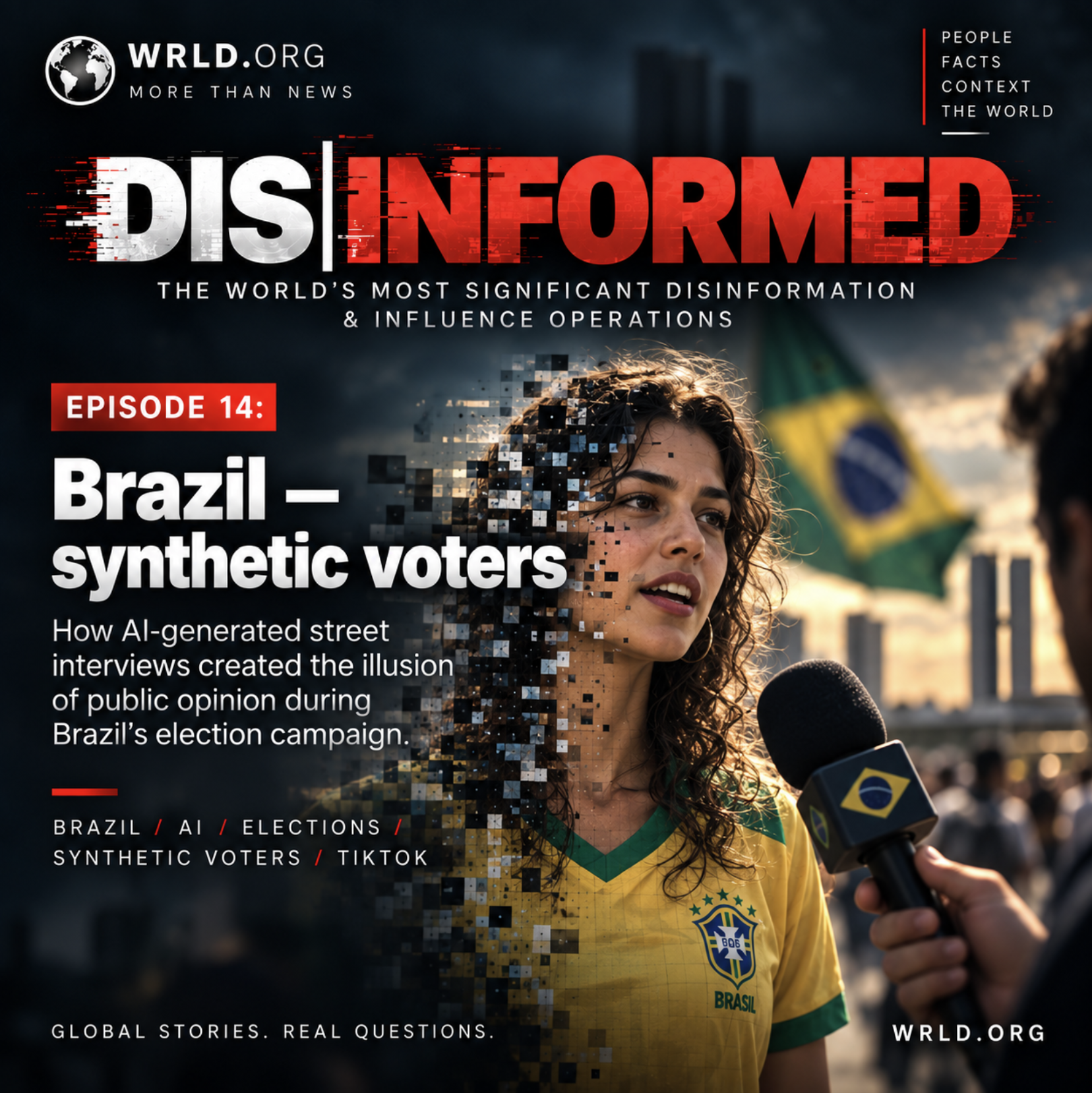
Brazil’s synthetic voters – when AI manufactures public opinion They look like ordinary street interviews. A reporter approaches a passer-by in a Brazilian square and asks a simple question: who will you vote for? A young voter explains why Luiz Inácio Lula da Silva deserves another term. An elderly woman says Brazil needs Flávio Bolsonaro because he represents political renewal and greater security. The locations look plausible, the microphones are visible and the answers sound much like the brief political opinions heard in television vox pops around the world. None of the people are real. Ahead of Brazil’s presidential election on 4 October, fact-checking organisation Aos Fatos identified at least 50 TikTok videos in which artificial intelligence was used to manufacture voters, reporters and apparently spontaneous political interviews. Together, the videos had accumulated around 7.4 million views by mid-August. Some promoted Lula, others Flávio Bolsonaro, while another group used synthetic characters to ridicule or stereotype supporters of one side. Aos Fatos found no apparent evidence linking the accounts producing the videos to either presidential campaign. The opinion poll that never took place The format is important. These were not conventional deepfakes in which a recognisable politician is made to say something he never said. Instead, the creators reproduced the visual language of the vox pop – the short street interview used by broadcasters and social-media creators to illustrate what ordinary people supposedly think. In pro-Lula videos, synthetic voters described themselves as beneficiaries of social programmes or credited the president with improving their lives. In videos supporting Flávio Bolsonaro, artificial interviewees associated him with political renewal, public security and fighting corruption. Other clips were openly hostile: AI-generated characters presented as poor or living in parts of Brazil’s north-east were shown in dirty clothes or run-down surroundings, declaring support for Lula because they supposedly preferred welfare payments to work. The deception is therefore subtler than fabricating a candidate’s statement. It manufactures something that political communication normally treats as evidence of public sentiment. A real vox pop may be unscientific, but the people interviewed at least exist. These videos created the appearance that identifiable social groups – young people, pensioners, welfare recipients or residents of particular regions – were spontaneously expressing political preferences when no such encounters had taken place. An electoral-law specialist interviewed by Aos Fatos described the technique as the fabrication of a “social fact that never occurred”. That captures the central innovation: AI is being used not merely to falsify political speech, but to manufacture the impression of grassroots opinion. Fifty videos, but not one proven network The available evidence does not support describing the 50 posts as a centrally controlled influence operation. Aos Fatos located them through TikTok searches and recommendations produced by the platform itself, then examined the accounts responsible for publication. Most had relatively small individual audiences, although their combined reach was substantial. The first examples identified by the investigation appeared as early as March 2026. Activity increased in June and was concentrated particularly in July and the first half of August as Brazil’s election calendar intensified. Some accounts specialised in AI-generated videos generally, including fabricated podcast-style material. Others were explicitly political or supportive of a candidate, but Aos Fatos found no apparent links between those profiles and the official Lula or Bolsonaro campaigns. That distinction is essential. The evidence demonstrates a common technique and a shared political environment, not a single command structure. Some creators may have been motivated by ideology, others by engagement or monetisation. Publicly available evidence does not establish who commissioned the individual videos or whether any coordination existed between the accounts. This decentralised model also creates a different enforcement problem from a traditional bot network. There may be no headquarters to expose and no infrastructure whose removal disables the entire operation. The format itself can be copied by anyone with access to inexpensive generative-video tools. When the algorithm mixes real and synthetic citizens Aos Fatos documented another important feature of the phenomenon: TikTok’s recommendation system placed AI-generated interviews alongside genuine street interviews. For a user scrolling quickly through the platform, the transition between an authentic citizen and an entirely fabricated one could therefore be almost invisible. In 18 per cent of the 50 videos analysed, there was no indication that the people shown had been generated using AI. After Aos Fatos provided TikTok with the videos, the company said it had removed all of them for violating its rules on edited and AI-generated media. TikTok said its policies require creators to identify synthetic content and prohibit manipulated media capable of misleading users about matters of public importance or impersonating genuine journalistic material. The issue extends beyond one platform. Factchequeado’s review of Brazil’s 2026 election campaign found that synthetic endorsements and other deepfakes had become one of the most visible forms of AI-assisted electoral misinformation, alongside fabricated candidate statements and invented scenes. Brazil already had rules for synthetic politics Brazil entered the campaign with unusually detailed electoral rules governing artificial intelligence. The Superior Electoral Court, the TSE, requires electoral propaganda using synthetic multimedia to disclose clearly that AI was used. More importantly for the fake-voter videos, its rules prohibit synthetic audio or video used to favour or harm a candidacy when it creates or alters the image or voice of a living, deceased or fictitious person. The difficulty is attribution and enforcement. When a synthetic video is published by an official campaign, responsibility can be relatively straightforward to investigate. When it comes from an apparently independent account with no demonstrated relationship to a candidate, lawyers interviewed by Aos Fatos said responsibility is more likely to fall on the individual creator, while imposing electoral sanctions on a campaign would require evidence of a connection. For the final 72 hours before the election and the 24 hours following it, the TSE has imposed additional restrictions on newly published or republished synthetic material involving candidates or public figures, reflecting the particular difficulty of correcting fabricated content immediately before voting. From deepfake politicians to synthetic electorates The Brazilian case illustrates a broader change in political manipulation. The first generation of electoral deepfakes concentrated on famous people: make a politician appear to say something damaging, or fabricate an endorsement from a celebrity. Synthetic vox pops reverse the perspective. The politician can remain completely authentic; it is the electorate around the politician that is fabricated. That changes the psychological proposition of the message. Instead of saying the candidate believes this, the video suggests people like you believe this. Age, clothing, accent, neighbourhood and social class can all be generated to construct an artificial constituency around almost any political claim. There is no evidence that the 50 Brazilian videos identified by Aos Fatos constitute a single centrally directed campaign, nor evidence that they changed voting intentions. What they demonstrate is a technique whose barrier to entry has become extremely low. AI no longer needs to forge the politician. #DISINFORMED #Episode14 #Brazil #BrazilElection2026 #Elections #ElectionDisinformation #ArtificialIntelligence #AI #GenerativeAI #SyntheticVoters #SyntheticMedia #AIAvatars #AIGeneratedVideo #VoxPop #FakeInterviews #Astroturfing #AIPropaganda #PoliticalDisinformation #InfluenceOperations #InformationWarfare #SocialMediaManipulation #TikTok #PublicOpinion #ManufacturedConsent #SyntheticPublicOpinion #DigitalInfluence #Deepfakes #ElectionIntegrity #TSE #AosFatos #FactChecking #OSINT #MediaManipulation #WRLD (translated)
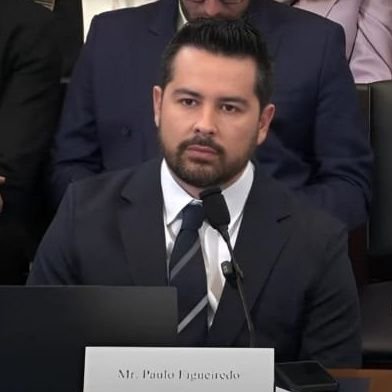
Paulo Figueiredo criticized John Kiriakou for comments about alleged CIA interference in Brazil. According to Figueiredo, Kiriakou confused a conversation involving Jair Bolsonaro with another involving Luiz Inácio Lula da Silva, and the source of the accusation would be Lula himself. The author also accused the press of promoting this version and acting in favor of the Brazilian president. Figueiredo stated that Kiriakou worked for Sputnik, a Russian state media outlet, and noted that the producer of the channel in the United States received a mandate from the Department of Justice to register as a foreign agent. He also mentioned a report from The New Republic that described Kiriakou as a former CIA agent who became a Russian propagandist. According to Figueiredo, Kiriakou claimed to have contractually guaranteed independence but did not present the document when requested. The author further cited reports from Kiriakou that he claimed were later corrected. He said Kiriakou stated that Abu Zubaydah confessed after a simulated drowning application, but documents indicated at least 83 applications in one month. Figueiredo added that ABC corrected the report and that Kiriakou clarified he did not witness the procedure. He also stated that Kiriakou acknowledged as false a claim that Hillary Clinton arranged a $20 million payment to the Ecumenical Patriarchate, linked to the Ukrainian church. Figueiredo also mentioned that Kiriakou pleaded guilty and was sentenced to 30 months in prison for revealing the identity of a CIA undercover agent. Regarding Brazilian politics, he asserted that the PT party was using the allegation of foreign interference to attempt to annul the opposing coalition in the Supreme Federal Court. In contrast, he noted that Lula met, outside of the official agenda, with Nikolai Patrushev, advisor to Vladimir Putin and former head of the FSB, and that Patrushev visited the NAM Atlântico, Brazil's largest warship. For Figueiredo, the press did not give equivalent coverage to these connections and to Kiriakou's work for Sputnik. #CIA #Lula #Bolsonaro (translated)
The Caprichoso Bull stated that its identity brought together Black people, quilombolas, Indigenous people, caboclas, and riverside communities, as well as other forest peoples, and that its art expressed resistance and memory. It said that, since its inception, it has brought stories and denunciations to the Bumbódromo about the protection of the forest, violence, and the erasure of Indigenous peoples. It also advocated for the appreciation of Black and quilombola peoples and asserted that its star would continue to be alongside those who resisted and preserved the Amazon. #Amazônia #Cultura #Resistência (translated)
Jones Manoel stated that communism was a program and a political action, not an identity, aesthetic, or fantasy. He said he had been elected defending the Brazilian Revolution, socialism, and popular power, and that, before his election this year and that of other comrades, like Elias Jabbour, no one had reached the National Congress with a campaign focused on these themes. Addressing Cynara, Manoel said she should explain the electoral defeat of the progressivism she defended, which he classified as shameful, citing Haddad's result in São Paulo. #Socialismo #Revolução #Política (translated)
Normose stated that voting for Pavanato, Nikolas, or Eduarda was a choice deeply connected to identity. He also said that those who still considered identity to be the problem had not understood the topic, politics, the internet, or recent years, and were repeating a ready-made narrative created by the right. #Identidade #Política #Direita (translated)
Two people have died and at least 35 have been injured in a shooting during a neighborhood party in Vienna, Georgia, and the police are investigating the incident without having disclosed the identities of the deceased or the attackers. #Tiroteo #Georgia #Policía (translated)

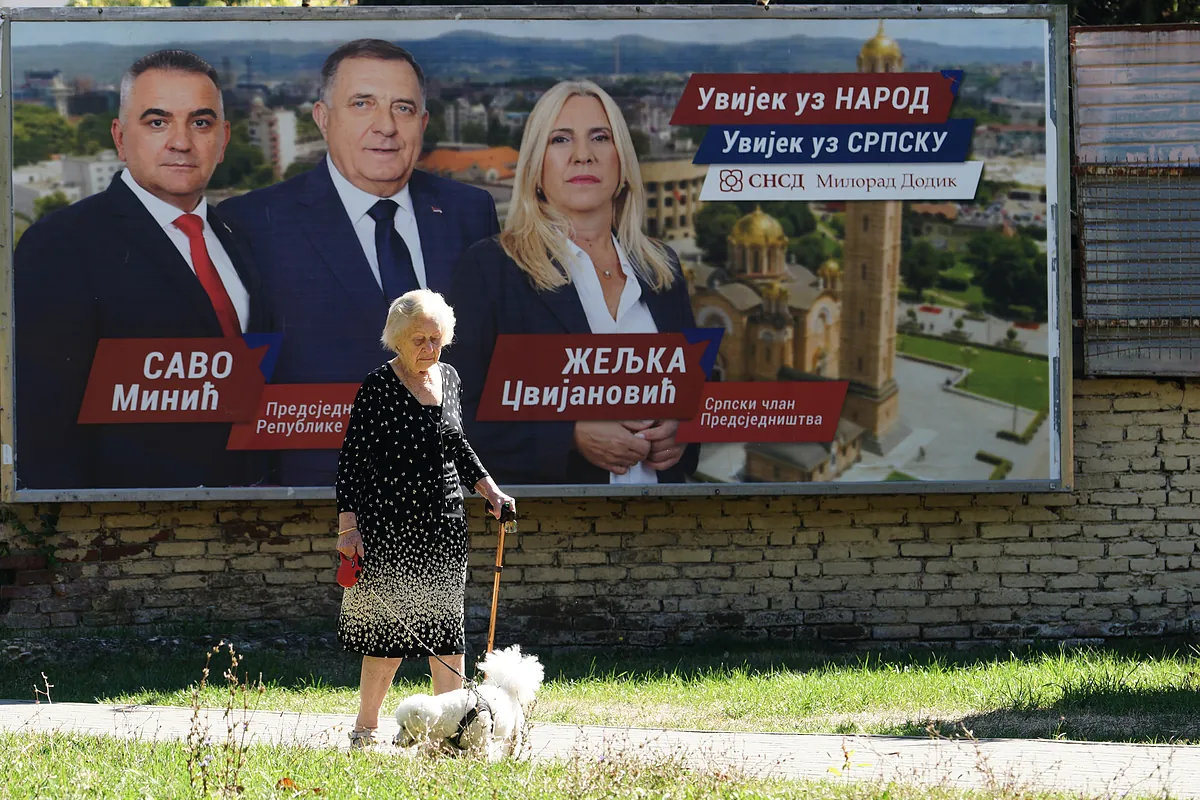
Bosnia faces an electoral context marked by a political system inherited from the Dayton Peace Agreement that perpetuates ethnic tensions and limits modernization, generating discouragement and resignation among the population after years of stagnation and unfulfilled promises. #Bosnia #Elecciones #IdentidadÉtnica (translated)

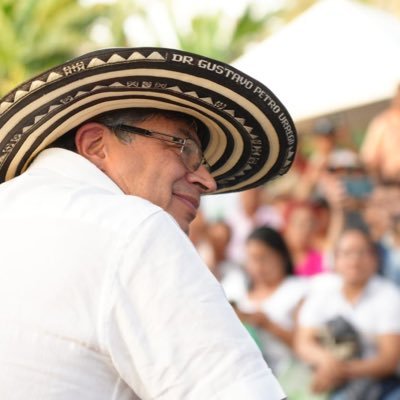
Gustavo Petro stated that a Wald-Wolfowitz statistical analysis, or streak analysis, reviewed by peers, indicated with 95% confidence that the results of thousands of consecutive tables within polling places were not random. He argued that, in light of these indications of fraud in the presidential election, the justice system could order a comparison of the physical votes with the E14 forms and clarify the identities of the voters and jurors recorded on them. He also requested to review practically the entire voting process abroad, table by table, both regarding the jurors and the identification of the voters. https://t.co/3KisYSm8Kz #Elecciones2023 #FraudeElectoral #TransparenciaElectoral (translated)
Sérgio Santos shared a message in which Sophie Charlotte stated that Sunday would be election day and highlighted the importance of celebrating democracy. She advised voters to check their identification and documents and to bring a note with the numbers of their candidates, as they could not use their cell phones. She also said that religious leaders, bosses, and husbands should not accompany them and urged women to vote for what they considered best for themselves and their children. #Eleições2023 #VotoConsciente #Democracia (translated)