WRLD

Search

#liberties
David Thunder Wrld summary 2d

The author said that, despite generally not admiring left-wing politics, they found it striking that people on the left seemed to understand freedom of expression and civil rights better in this case than those claiming to represent centre-right politics. #Liberties #FreedomOfExpression #CivicRights #IE
2894
David Thunder Wrld summary 2d

The author wrote that, despite not generally admiring left-wing politics, they found it striking that people on the left seemed to understand freedom of expression and civil rights better in this case than those claiming to represent centre-right politics. The post then began to refer to Ireland’s Taoiseach but did not complete the point. #Liberties #CivilRights #Ireland #IE

3117
Scott Horton 3w

Don't miss this essay from Garrett Graff. Here's a snippet: "ICE continues its violent and civil-liberties-abusing rampage across the country. I remain horrified by the continuous stream of videos of ICE officers running people down with their vehicles and assaulting people with no even attempt to

www.doomsdayscenario.co
Trump's Tyranny, Part III: He Acts Like a King
2315
Krzysztof Graj 4w

AFRICA DAILY REPORT — 26 OCTOBER 2026 1. DR CONGO — Ebola response worker killed and another seriously injured Importance: 10/10 — Critical The World Health Organization reported that attackers killed a nurse and severely injured another health worker responding to an Ebola alert in Bafwasende, Tshopo province, on Saturday. The attack was disclosed on Sunday. The suspects have not been identified. The violence further complicates outbreak control in Congo, where the health ministry has recorded more than 9,800 cases and 4,700 deaths since May. Source — Associated Press, 26 October 2026 https://apnews.com/article/congo-ebola-b739277681b530aef772cf66be7e41f0 2. UGANDA — Mandatory 21-day quarantine introduced for returnees from DR Congo Importance: 10/10 — Critical Uganda announced that citizens returning with recent travel history to DR Congo must quarantine for 21 days, at their own expense. The government also strengthened airport and border screening and required passenger locator forms. Uganda says it has no active Ebola outbreak. Officials are investigating the travel histories of infected patients who passed through Uganda before diagnosis in Kenya and Nigeria; no direct transmission link has been established. Source — Reuters, 25 October 2026 https://www.reuters.com/business/healthcare-pharmaceuticals/uganda-impose-21-day-quarantine-returning-citizens-with-congo-travel-history-2026-10-25/ 3. GABON — Offshore drilling rig sinking leaves one reported dead, four missing Importance: 10/10 — Critical Borr Drilling's Prospector 5 rig sank off Mayumba during preparations for drilling. Reuters reported one worker found dead and four still missing among the 115 aboard, citing sources; Gabon's government had not yet confirmed the death. Preliminary information suggests a seabed punch-through destabilised the rig. Search operations continue, production was halted and officials ordered a technical investigation. No harmful discharge had been observed. Source — Reuters, 25 October 2026 (updated casualty information) https://www.reuters.com/world/africa/borr-drilling-rig-sinks-offshore-gabon-five-personnel-missing-2026-10-25/ 4. ALGERIA–NIGER — Parliament authorises potential Algerian military deployment Political/security development — Neutral coverage Algeria's parliament unanimously approved sending army units to Madama in northern Niger, near the Libyan border. No troops had officially deployed at the time of reporting. The move would mark Algeria's first overseas military deployment since 1973 and reflects closer security cooperation with Niger, where insurgent violence and shared energy infrastructure are major concerns. Source — Reuters, 25 October 2026 https://www.reuters.com/world/africa/algeria-send-troops-niger-first-foreign-deployment-since-1973-2026-10-25/ 5. LIBYA–UNITED STATES — Libya summons US envoy over presidential remarks Political/diplomatic development — Neutral coverage Libya's foreign ministry summoned the US chargé d'affaires after President Donald Trump characterised Libya negatively during a campaign rally. Authorities in both eastern and western Libya criticised the remarks. Trump subsequently expressed respect for Libyans while reiterating US concerns about irregular migration. The dispute has become a diplomatic issue amid Libya's divided domestic governance. Source — Reuters, 26 October 2026 https://www.reuters.com/world/us/libya-summons-us-envoy-protest-trump-remarks-2026-10-26/ 6. NIGER — Overnight petrol-sales restrictions imposed amid shortages Importance: 9/10 — Very High Niger restricted petrol sales from 21:00 to 06:00 except at designated stations, saying suppliers needed time to replenish stocks. A ban on selling fuel in jerry cans outside petrol stations also applies in areas served by stations. Long queues and transport disruption have affected residents and taxi drivers, whose union has requested exemptions or changes. Source — Africanews, 25 October 2026 https://www.africanews.com/2026/10/25/niger-imposes-curfew-on-petrol-sales-amid-national-fuel-shortage/ 7. GABON — Social media restored after eight-month suspension Political/digital-rights development — Neutral coverage Gabon restored access to major social platforms following a suspension imposed in February. The media regulator said the interruption had allowed changes to its oversight framework; users are now required to provide identification. Opposition figures and civil-liberties advocates had criticised the ban, while authorities argued stronger content regulation was necessary. Source — Africanews/AFP, 25 October 2026 https://www.africanews.com/2026/10/25/gabon-restores-social-media-access-after-an-eight-month-ban/ 8. KENYA — Red Cross reinforces Ebola safe-burial training after second death Importance: 9/10 — Very High Kenya Red Cross personnel conducted simulations of safe and dignified burial procedures after Kenya confirmed a second Ebola death. Officials reported nine infections, all linked to the initial patient, and 135 identified contacts. Seven confirmed patients remained in care, with no new cases reported outside Nairobi. The training addresses a high-risk stage of Ebola response. Source — Africanews, 25 October 2026 https://www.africanews.com/2026/10/25/red-cross-trains-staff-as-kenya-records-its-second-death-from-ebola/ 9. SOUTH AFRICA — Pick n Pay reduces first-half loss as turnaround advances Importance: 8/10 — High Retailer Pick n Pay reported that its first-half headline loss narrowed 31.9% to 299 million rand, while trading profit rose 58.1% to 490 million rand. Group turnover increased 2.4% to 60.5 billion rand, helped by discount retailer Boxer. The results indicate progress in restructuring, although the core Pick n Pay business remains under pressure. Source — Reuters, 26 October 2026 https://www.reuters.com/world/africa/south-africas-pick-n-pay-narrows-headline-loss-boxer-boosts-performance-2026-10-26/ 10. SOUTH AFRICA — Rand steady ahead of domestic data and US rate decision Importance: 7/10 — Significant The rand traded near 16.61 per US dollar in early Monday dealings, little changed from the previous close. Investors are awaiting South African money-supply, credit, trade, budget and producer-inflation data, as well as the US Federal Reserve's 28 October decision. The currency remains sensitive to global monetary policy and domestic growth indicators. Source — Reuters, 26 October 2026 https://www.reuters.com/world/africa/south-african-rand-steady-with-local-economic-data-fed-decision-focus-2026-10-26/ #AfricaNews #AfricaDailyReport #TopNewsOfAfrica #AfricaToday #Uganda #UgandaHealth #EbolaOutbreak #EbolaPrevention #EbolaQuarantine #21DayQuarantine #DRCongo #PublicHealth #BorderSecurity #HealthScreening #DiseasePrevention #SouthAfrica #SouthAfricaEconomy #PicknPay #RetailIndustry #BusinessTurnaround #CorporateEarnings #FinancialRecovery #AfricanBusiness #Algeria #Niger #AlgeriaNigerRelations #MilitaryDeployment #SahelSecurity #AfricanSecurity #WrldOrg

929
J
Johnny Ryan Oct 14

It is "no surprise" that Ireland is hosting an AI summit and not inviting anyone from civil society, said Johnny Ryan of the Irish NGO Irish Council for Civil Liberties (ICCL) in a conversation with ORF.at. #KünstlicheIntelligenz #Proteste #BigTech (translated)

KI-Gipfel spaltet EU-Tech-Hauptstadt Dublin
orf.at
3155
Bogdan Rzońca Wrld summary Sep 15
Polish politician and deputy

Uwaga- UE mówi, że chce chronić, a inni mówią ,że chce inwigilować na przykład wybory ! Civil Liberties Union for Europe (Liberties) Transparency International EU, European Civic Forum , Min., te pozarządowe organizacje z UE krytykują Europejską Tarczę Demokracji! #Demokracja #PrawaCzłowieka #Inwigilacja #EU

Luciano Magaldi Sardella (PhD) Sep 5

Freeman of the City of London: An Ordinary Honour for All, an Honorary One for Few SOURCE: https://www.linkedin.com/pulse/freeman-city-london-ordinary-honour-all-honorary-one-sardella-ph-d--m1alf/ Abstract The Freedom of the City of London is an institution of mediaeval origin, attested as far back as 1237, originally conceived to afford freeborn citizens protection from feudal obligations, the right to trade, and the ownership of property within the bounds of the Square Mile — the territory of the City of London proper. Having evolved progressively from a concrete economic privilege into a civic and symbolic distinction, it has preserved its relevance over the centuries through successive legislative reforms — most notably the extension of eligibility to all nationalities in 1996 — and today records approximately 1,800 to 2,000 new admissions annually. The present article examines the historical and juridical evolution of the title, sets out the several routes of access provided by current regulation (by servitude through apprenticeship, by patrimony, by redemption through direct nomination, by presentation through the Livery Companies, and by registration on the electoral roll), and analyses the contemporary profile of the Freemen in the light of recent admissions of prominent figures from the worlds of finance, culture, sport, and public life. Contrary to the elitist image surrounding many British honours, the ordinary Freedom proves accessible to any person whatsoever, regardless of nationality or financial standing, upon the satisfaction of minimal requirements and the payment of an administrative fee of £180–185. The article concludes by reflecting upon the contemporary significance of the institution: not in the residual privileges, now largely ceremonial, but in its identity-forming, civic-participatory function and its connection to the long history of the oldest and most venerable city in Europe. Keywords: Freedom of the City of London; Livery Companies; City of London Corporation; British honours; urban civic identity. Contenuto dell’articolo Introduction Amongst the historic honours of Britain, few institutions evoke an imaginative world as rich as the Freedom of the City of London. Cited in films, novels, and articles on manners and custom with tones of exclusivity and mystery, it is frequently associated with figures of the very highest standing: sovereigns, heads of state, military commanders returning from the wars. Yet, upon closer and more methodical scrutiny, a markedly different picture emerges: that of a title which, in its ordinary and non-honorary dimension, is today accessible to a considerable number of persons each year, without the requirement of extraordinary merit or elevated financial means. The present contribution aims to examine the institution in its twofold aspect, historical and contemporary, with the object of dispelling the most prevalent misconception: that which confounds the ordinary Freedom with the Honorary Freedom — the latter genuinely rare and reserved for figures of international standing. This article traces the mediaeval origins and legislative evolution (§ 2), sets out the current routes of access (§ 3), discusses requirements, costs, and procedure (§ 4), analyses the contemporary composition of the body of Freemen (§ 5), examines rights, privileges, and obligations (§ 6), reviews the most distinguished recipients of recent decades (§ 7), and concludes with some reflections upon the contemporary significance of the institution (§ 8). Origins and Historical Development of the Institution The Freedom of the City of London is attested from 1237, during the reign of Henry III, as a form of civic status designating individuals not subject to a feudal lord, and therefore entitled to the protections guaranteed by the City's charters. In this original sense, the term freeman denoted the free man in the fullest sense of the word: one who might trade freely within the perimeter of the Square Mile, hold property, and join the trade guilds without external interference. The practical privileges were of concrete scope and directly functional to the mediaeval economy: exemption from certain tolls, including the celebrated right to drive flocks of sheep across London Bridge without payment — a concession rooted in the wool trade that dominated the English economy — protection against arbitrary arrest beyond the jurisdiction of the City, and access to the markets regulated by the guilds. As confirmed by the subsequent reissues of Magna Carta by Henry III in 1225, such liberties were intrinsically bound to the self-governance of the City, which defended them against royal and baronial interference. The progressive codification of the institution took place through royal ordinances from the fourteenth century onwards. In 1319, Edward II issued constitutions restricting access to the Freedom to members of the trade guilds, prohibiting the admission of unaffiliated outsiders, and thereby formalising servitude through apprenticeship as the principal route for new entrants, whilst the patrimonial route ensured continuity for established families. Subsequent monarchs, from Edward III onwards, repeatedly confirmed the civic liberties through charters granted often in exchange for financial loans, consolidating the City's autonomy and its role as creditor to the Crown. In the nineteenth century, with industrialisation and the demographic expansion of London, corporate control over trade proved increasingly unenforceable. The Municipal Corporations Act of 1835 extended eligibility to any person living, working in, or having a significant connection with London, partially detaching the title from corporate membership and progressively transforming it into an honorary distinction of a civic character. During the twentieth century, further reforms rendered access more inclusive. Women, already admitted informally as widows by inheritance in earlier periods but formally excluded from the standard routes, saw their right to ordinary admission recognised — Angela Burdett-Coutts having already received the Honorary Freedom in 1872, and Florence Nightingale in 1908 — while formal equality was consolidated in the twentieth century. Finally, in 1996, the requirement of British or Commonwealth citizenship was abolished, opening the title to any nationality whatsoever. Routes of Access: The Current Regulatory Framework The current regulations, administered by the Court of the Lord Chamberlain of the City of London Corporation, provide for five principal modes of access to the Freedom of the City of London, each reflecting different historical ties between the individual and the City's institutions. By servitude confers the title upon the completion of a formal apprenticeship under the Custom of London, traditionally of seven years' duration, under a master freeman of a Livery Company. This route, the oldest and of the greatest historical significance, verifies merit through practical competence and loyalty to the guild. Completing apprentices are admitted without the need for approval by the Court of Common Council, provided they have been registered on the City's electoral roll for at least one year, and in such cases no financial contribution is required. By patrimony confers automatic eligibility upon the children of Freemen, provided the parent held the title at the time of the candidate's birth and appropriate documentation is furnished. Historically restricted to sons, it was extended to daughters by the Municipal Corporations Act of 1835. The candidate must have attained the age of eighteen, must not be an undischarged bankrupt, and must not have relevant unspent criminal convictions. By redemption constitutes the route open to any person whatsoever. The candidate submits an application to the Court of the Lord Chamberlain, supported by two sponsors — Common Councillors, Aldermen, or Liverymen of at least one year's standing who attest to their reputation — and the matter is examined by the Freedom Applications Sub-Committee and approved by the Court of Common Council. The administrative fee (the Freedom Fine) amounts to £180 following the tariff revision of 1 April 2024 (£185 in the case of direct nomination). For candidates registered on the Ward List, the City's electoral roll, the procedure is free of charge. By presentation through a Livery Company is the route most frequently taken in contemporary practice. The candidate first becomes a member of their relevant guild, following a procedure that varies amongst each of the 113 Livery Companies currently active, and subsequently submits an online application to the Court of the Lord Chamberlain for admission to the Freedom of the City, with approval in the vast majority of cases being a matter of routine. Requirements, Costs, and Procedure The requirements for access to the ordinary Freedom are of a simplicity that may well surprise, given the aura of exclusivity surrounding the title. The candidate must have attained the age of eighteen, must not be an undischarged bankrupt, and must not have unspent criminal convictions within the meaning of the Rehabilitation of Offenders Act of 1974. No requirement of nationality, residence, educational attainment, or financial standing is imposed. The documentation required is of a standard biographical character: a full birth certificate, a marriage certificate or name-change document where applicable, and, where admission is by presentation, the certificate of membership issued by the relevant Livery Company. The application is submitted online through the City of London Corporation's portal. The admission ceremony is held at the Guildhall in London, in the Court Room of the Lord Chamberlain, on every working day between 10.30 and 12.00, and between 14.00 and 15.30. The newly admitted Freeman is invited to read aloud the Declaration of a Freeman and to sign the Admissions' Book, receiving upon its conclusion a calligraphed certificate on vellum and a copy of the Rules for the Conduct of Life — the eighteenth-century document of moral guidance that enjoins the holder to lead a life of rectitude, compassion, and social engagement. For those unable to attend in person, the City Corporation has retained the option of conducting the ceremony virtually, a facility introduced during the pandemic and subsequently preserved. The Contemporary Composition of the Body of Freemen One significant empirical datum serves to diminish the elitist dimension of the title: between 1,800 and 2,000 new persons are admitted each year, within a body that counts over 300,000 documented admissions across the centuries. As the City of London Corporation itself observes, contemporary Freemen comprise 'a broad cross-section of the population', encompassing professionals, students, craftspeople, entrepreneurs, military personnel, and foreign nationals. The growing contribution of university students, frequently presented in groups by their academic institutions, and of international professionals, has further broadened the demographic base. The group ceremony of 2024, in which 40 individuals drawn from fields ranging from science and medicine to entrepreneurship and diversity initiatives received the title simultaneously, is illustrative of this openness. A fundamental distinction must, however, be emphasised. The Honorary Freedom of the City of London constitutes an entirely separate institution of radically different scope. Granted by the Court of Common Council by special resolution, it is reserved for figures of exceptional international stature — typically fewer than a dozen conferred annually — and represents, in the words of the City Corporation itself, the highest honour it is able to bestow. It is this Freedom that has been enjoyed by Winston Churchill, Her Majesty Queen Elizabeth II, and, more recently, the television presenter Rachel Riley (October 2025), in recognition of her commitment to Holocaust education and the combating of antisemitism. The confusion between the two forms is the principal source of the distorted public perception of the institution. The Contemporary Significance: Between Identity and Participation While the great majority of the practical privileges once associated with the condition of Freeman have today disappeared or been reduced to solemn ceremonial form, what persists is the powerful symbolic and identity-forming value of the title. The ceremony retains elements of ritual solemnity — the reading of the Declaration, the signing of the historic Admission Register, the receipt of the calligraphed certificate on vellum — which inscribe the new Freeman within a chain of continuity of nearly eight centuries, linking diverse figures through a shared bond with the history of the Square Mile. This venerable London institution also performs a cohesive function within the ecosystem of the City and the Livery Companies. The 113 active guilds collectively disbursed over £81 million in charitable activities in 2024, through programmes of vocational training, scholarships, and technical apprenticeships that preserve specialist skills in economically significant sectors. Being a Freeman constitutes a formal prerequisite for advancement to Liveryman, and therefore for the exercise of voting rights in the governance of the City: a vestige of corporate democracy which, however distant from the models of universal suffrage, retains its own institutional logic within the unique legal architecture of the London Square Mile. Critics of a progressive persuasion have observed that the system favours established networks and access by hereditary or professional routes, potentially excluding broader strata of the London population, with the pool of living Freemen well below one per cent of the nine million residents of Greater London. Nevertheless, the data on recent admissions — encompassing recognition spanning African entrepreneurship, community sport, broadcasting, and medicine — suggest a trajectory of progressive opening which, whilst falling short of full demographic representativeness, attests to the institutional will to maintain the institution as a living tradition rather than an exclusive relic. Conclusions The foregoing analysis permits the formulation of several concluding observations. The Freedom of the City — the ordinary Freedom — is today an honour accessible to a far wider audience than the collective imagination suggests. The admission requirements are minimal, the costs modest, the procedures relatively streamlined and open to any nationality. The persistent confusion with the Honorary Freedom, reserved for figures of exceptional international eminence, is the principal source of a distorted perception that merits correction. The contemporary value of the title resides not in the residual privileges, now largely solemn and ceremonial, but in three complementary dimensions: the identity-forming, which connects the holder to nearly eight centuries of institutional history; the civic-participatory, which through access to the Livery Companies and the City's electoral system inserts the Freeman into genuinely operative networks; and the communitarian, which through the mechanisms of honorary recognition celebrates contributions of an ever more varied scope and provenance. In this respect, the Freedom represents an instructive case study in how historic institutions may reinvent themselves without losing authenticity, preserving their significance through inclusion rather than exclusion. References and Sources: City of London Corporation. (2024). Freedom of the City of London. https://www.cityoflondon.gov.uk/about-us/law-historic-governance/freedom-of-the-city Guild of Freemen of the City of London. (2025). Freedom of the City. https://www.guild-freemen-london.co.uk/freedom-of-the-city Livery Committee. (2025). Freedom of the City. https://liverycommittee.org/about/membership-freedom-and-livery-clothing/freedom-of-the-city/ Municipal Corporations Act 1835. UK Parliament. Rehabilitation of Offenders Act 1974. UK Parliament. Grokipedia. (2025). Freedom of the City of London. https://grokipedia.com/page/Freedom_of_the_City_of_London City Solicitors' Educational Trust. (2025). Applying for the Freedom of the City of London. LondradaVivere.com. (2025). La 'Freedom of the City of London': un'antica libertà ancora viva. City of London Corporation. (2023). Livery Companies: Charitable Activities Report 2024. ONS / City of London Corporation. (2023). Financial Services Contribution to UK GDP.

www.linkedin.com
Freeman of the City of London: An Ordinary Honour for All, an Honorary One for Few
946
S
Sandfeen Aug 28

How Did a Democracy Vote Itself Out of Existence? — The Birth of “Streitbare Demokratie” One of the most important questions in modern democratic history is: How can a democracy use democratic procedures to destroy itself? This question became central in Germany after the collapse of the Weimar Republic. Founded in 1919, Weimar Germany was a democratic state with universal suffrage, including voting rights for women, and strong civil liberties. Yet, within fourteen years, democracy had been replaced by Adolf Hitler’s dictatorship. The Nazi rise to power was not simply a military coup. The Nazi Party gained influence through elections, propaganda, and political negotiations. In 1933, Hitler became Chancellor, and his government used legal mechanisms, including the Enabling Act, to remove parliamentary control and dismantle democratic institutions from within. The lesson for post-war Germany was clear: a democracy can be destroyed not only by external enemies, but also by political movements that use democratic freedoms to eliminate democracy itself. When West Germany created its new constitution, the Basic Law (Grundgesetz), in 1949, its founders developed the concept of “Streitbare Demokratie”—a democracy capable of defending itself. The idea was that democracy should not be completely neutral toward forces that seek to abolish democratic rights. A democratic majority cannot legitimately remove the foundations that make democracy possible. Therefore, the Basic Law introduced several safeguards: Political parties that seek to undermine the democratic constitutional order can be banned. The Federal Constitutional Court was given strong powers to protect constitutional principles. Core values such as human dignity, democracy, and the rule of law were given special protection and cannot easily be removed. “Streitbare Demokratie” reflects a difficult balance. Democracy requires freedom of speech, political competition, and tolerance of different opinions. However, history showed Germany that unlimited tolerance toward movements committed to destroying democracy can allow democracy itself to disappear. The central question remains: How tolerant should a democracy be toward those who are intolerant of democracy? Germany’s answer after 1945 was that democracy must defend the principles that make freedom possible. A democracy is not preserved only through elections; it is preserved when citizens and institutions protect the foundations that allow free elections to exist.

1185
Philip Pilkington Wrld summary Aug 4
Irish economist

People have no idea how bad its getting in Budapest. The vain dictator @magyarpeterMP posts selfies while he celebrates undermining civil liberties and destroys the country’s economy. Anne Applebaum supported this. She blocked me after becoming an authoritarian lunatic. https://t.co/gxqLRMZIoH #Budapest #CivilLiberties #Authoritarianism #HU

119
Il Fatto Quotidiano Jul 26

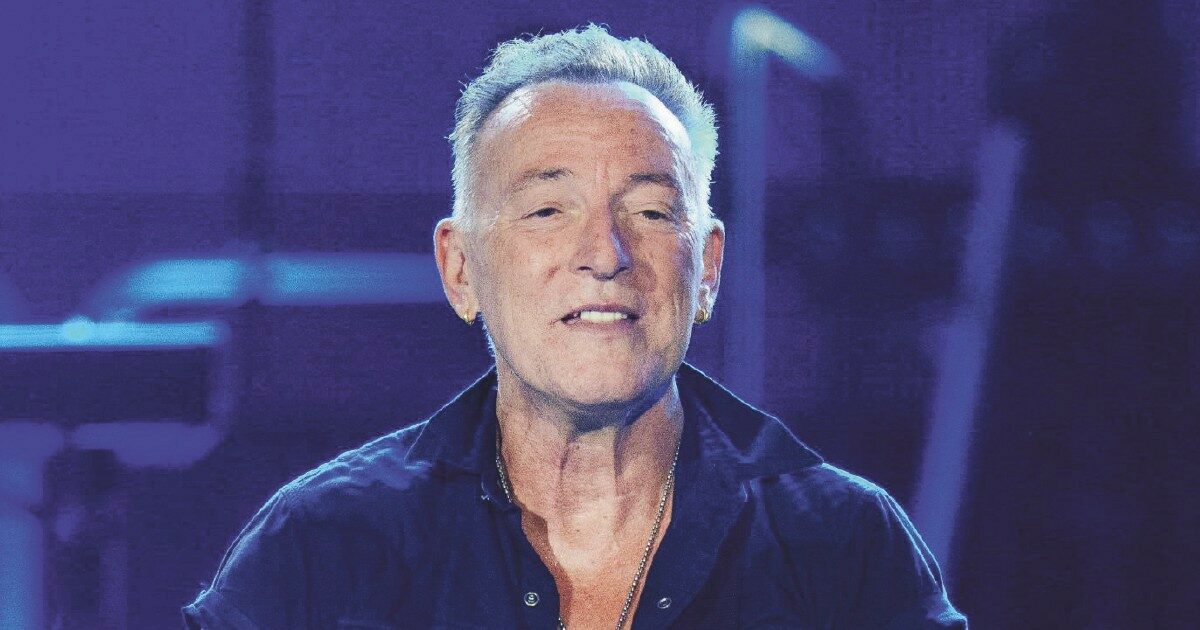
L’American Civil Liberties Union ha conferito il premio Ralph Ellison a Bruce Springsteen e Colin Kaepernick per il loro impegno nella difesa dei diritti e delle libertà civili, in un contesto che coincide con la decisione di Donald Trump di candidarsi nuovamente alla presidenza nel 2028. #BlackLivesMatter #BruceSpringsteen #ColinKaepernick

www.ilfattoquotidiano.it
L’American Civil Liberties Union conferisce il premio Ralph Ellison a Bruce Springsteen e Colin Kaepernick. Smacco a Trump?
18469
Il Fatto Quotidiano Jul 23

Il nuovo report dell'American Civil Liberties Union evidenzia un aumento record degli arresti da parte dell'ICE negli Stati Uniti, con particolare enfasi su nuove tattiche di arresto che evitano le retate di massa e un incremento preoccupante della profilazione razziale e degli abusi, mentre un memo dell'FBI potrebbe garantire maggiore immunità agli agenti coinvolti. #Trump #Immigrazione #Abusi

www.ilfattoquotidiano.it
La carta di Trump per il midterm: record di arresti per l’Ice e scudo per i suoi agenti. Così è cambiata la strategia dell’anti-immigrazione
10132
adevarul.ro Jul 21

Un studiu realizat de organizația Liberties a evidențiat că recomandările electorale oferite de chatboturile AI, precum ChatGPT și Gemini, sunt inexacte și nesigure, având capacitatea de a sugera partide greșite sau inexistente și de a omite formațiuni relevante, ceea ce ridică semne de întrebare asupra fiabilității acestora în context electoral. #inteligentaartificiala #alegeri #Ungaria

adevarul.ro
Avertisment privind viitorul democrației: Recomandările electorale oferite de chatboturile AI sunt „inexacte și nesigure”
10135
IndexHR Jul 21

Istraživanje pokazuje da AI chatbotovi pružaju netočne i nepouzdane izborne savjete, često izostavljajući relevantne političke opcije ili preporučujući pogrešne stranke, što postavlja ozbiljna pitanja o njihovoj pouzdanosti u izbornim kontekstima. #mađarska #ChatGPT #liberties

www.index.hr
Istraživanje: AI chatbotovi daju netočne i nepouzdane izborne savjete
11328
J
Jamil MAQSOOD Jun 24

Statement on the Future of Jammu & Kashmir ( Under Pakistan Occupation) and the 28th Constitutional Amendment I firmly believe that if Pakistan genuinely seeks peace, stability, and democratic governance in the territories under its administration, including so-called Azad Jammu and Kashmir and Gilgit-Baltistan, it must immediately withdraw the 28th Constitutional Amendment and refrain from any measures that further undermine the political, administrative, and territorial integrity of the region. Any attempt to alter the constitutional status of these territories without the free, prior, and informed consent of their people is contrary to democratic principles and the universally recognized right of peoples to determine their own political future. The people of Jammu and Kashmir are not merely subjects of administrative decisions; they are stakeholders whose voices, aspirations, and rights must be respected. The reported efforts to restructure, divide, or trifurcate the region are deeply concerning. Such actions risk creating further political instability, social unrest, and mistrust among the population. The territorial unity and historical identity of Jammu and Kashmir must not be compromised through unilateral constitutional or administrative measures imposed from above. Peace cannot be achieved through coercive policies, excessive securitization, suppression of dissent, communication restrictions, or the curtailment of civil and political freedoms. Sustainable peace can only emerge through democratic dialogue, respect for fundamental human rights, transparency, accountability, and meaningful participation of the people in decisions affecting their future. The recent developments in Rawalakot and other districts have already heightened tensions and raised serious concerns regarding civil liberties, freedom of expression, freedom of assembly, and the treatment of peaceful political activists. Instead of imposing constitutional changes and expanding centralized control, the authorities should engage constructively with local communities, political organizations, civil society groups, and human rights defenders. International human rights standards, including the principles enshrined in the Charter of the United Nations and international human rights instruments, emphasize the importance of participation, representation, and respect for the wishes of the people. Any constitutional arrangement affecting the future of Jammu and Kashmir should be based on democratic consultation and broad public consensus rather than unilateral imposition. I therefore call upon the Government of Pakistan to: 1. Immediately withdraw the 28th Constitutional Amendment. 2. Abandon any plans aimed at the trifurcation or fragmentation of Jammu and Kashmir and Gilgit-Baltistan. 3. Respect the democratic and political rights of the people. 4. End policies of intimidation, collective punishment, and restrictions on peaceful political activity. 5. Ensure unrestricted access to essential commodities, healthcare services, communication networks, and humanitarian assistance. 6. Initiate an inclusive dialogue with all genuine stakeholders, including representatives of the people of Jammu and Kashmir. 7. Allow independent national and international human rights observers to assess the situation on the ground. The future of Jammu and Kashmir cannot be determined through force, constitutional engineering, or administrative decrees. Lasting peace, stability, and prosperity will only be possible when the rights, dignity, and aspirations of the people are placed at the center of all political processes. No trifurcation. No unilateral constitutional changes. Respect the will of the people and uphold democratic principles. Jamil Maqsood Human Rights Defender and Advocate for the Rights of the People of Jammu & Kashmir Brussels, Belgium June 2026

359
J
Jamil MAQSOOD Jun 24

Urgent Appeal Statement on the Future of Jammu & Kashmir ( under Pakistani Occupation) and the 28th Constitutional Amendment I firmly believe that if Pakistan genuinely seeks peace, stability, and democratic governance in the territories under its administration, including so-called Azad Jammu and Kashmir and Gilgit-Baltistan, it must immediately withdraw the 28th Constitutional Amendment and refrain from any measures that further undermine the political, administrative, and territorial integrity of the region. Any attempt to alter the constitutional status of these territories without the free, prior, and informed consent of their people is contrary to democratic principles and the universally recognized right of peoples to determine their own political future. The people of Jammu and Kashmir are not merely subjects of administrative decisions; they are stakeholders whose voices, aspirations, and rights must be respected. The reported efforts to restructure, divide, or trifurcate the region are deeply concerning. Such actions risk creating further political instability, social unrest, and mistrust among the population. The territorial unity and historical identity of Jammu and Kashmir must not be compromised through unilateral constitutional or administrative measures imposed from above. Peace cannot be achieved through coercive policies, excessive securitization, suppression of dissent, communication restrictions, or the curtailment of civil and political freedoms. Sustainable peace can only emerge through democratic dialogue, respect for fundamental human rights, transparency, accountability, and meaningful participation of the people in decisions affecting their future. The recent developments in Rawalakot and other districts have already heightened tensions and raised serious concerns regarding civil liberties, freedom of expression, freedom of assembly, and the treatment of peaceful political activists. Instead of imposing constitutional changes and expanding centralized control, the authorities should engage constructively with local communities, political organizations, civil society groups, and human rights defenders. International human rights standards, including the principles enshrined in the Charter of the United Nations and international human rights instruments, emphasize the importance of participation, representation, and respect for the wishes of the people. Any constitutional arrangement affecting the future of Jammu and Kashmir should be based on democratic consultation and broad public consensus rather than unilateral imposition. I therefore call upon the Government of Pakistan to: 1. Immediately withdraw the 28th Constitutional Amendment. 2. Abandon any plans aimed at the trifurcation or fragmentation of Jammu and Kashmir and Gilgit-Baltistan. 3. Respect the democratic and political rights of the people. 4. End policies of intimidation, collective punishment, and restrictions on peaceful political activity. 5. Ensure unrestricted access to essential commodities, healthcare services, communication networks, and humanitarian assistance. 6. Initiate an inclusive dialogue with all genuine stakeholders, including representatives of the people of Jammu and Kashmir. 7. Allow independent national and international human rights observers to assess the situation on the ground. The future of Jammu and Kashmir cannot be determined through force, constitutional engineering, or administrative decrees. Lasting peace, stability, and prosperity will only be possible when the rights, dignity, and aspirations of the people are placed at the center of all political processes. No trifurcation. No unilateral constitutional changes. Respect the will of the people and uphold democratic principles. Jamil MAQSOOD President Foreign Affairs Committee United Kashmir People’s National Party ( UKPNP) Human Rights Defender and Advocate for the Rights of the People of Jammu & Kashmir Brussels, Belgium June 2026

598
Euronews English May 27

On Georgia's Independence Day, thousands gathered in Tbilisi to protest against the ruling Georgian Dream party, criticizing its perceived erosion of civil liberties and failure to advance EU membership, amidst ongoing political tensions and calls for renewed pro-European action. #Georgia #ProEUProtests #IndependenceDay

www.euronews.com
Thousands rally in Tbilisi as Georgia marks Independence Day with pro-EU protests
8998
HotNews.ro May 19

Oleksandra Matviiciuk, laureată a Premiului Nobel pentru Pace 2022 și președinta organizației „Center for Civil Liberties”, va fi prezentă la Universitatea de Vest din Timișoara pe 25 mai pentru a discuta despre drepturile omului și responsabilitatea civică într-un context european tensionat. #Nobel #DrepturiOmului #Timișoara

hotnews.ro
[P] Nobelul revine la Timișoara: UVT aduce în fața publicului una dintre cele mai importante voci ale Europei contemporane
17409
Barry Malone Wrld summary May 12
Journalist and editor

British civil liberties being continuosly eroded because the government cannot stop slavishly supporting another country's genocide. #CivilLiberties #HumanRights #GovernmentAccountability #GB #US

481
Krzysztof Bosak 🇵🇱 Wrld summary May 8
Polish politician (born 1982)

Poland, together with many Western countries, is still a wonderful oasis of freedom and civil liberties. Let's appreciate what we have because freedom is the fruit of a healthy and mature culture, as well as a complex social structure based on good will. It is easy to spoil it, and much harder to... (Original: Polska przy wielu państwach zachodnich jest ciągle wspaniałą oazą wolności i swobód obywatelskich. Doceniajmy to co mamy bo wolność jest owocem zdrowej i dojrzałej kultury oraz opartej na dobrej woli, skomplikowanej konstrukcji społecznej. Łatwo ją zepsuć, a dużo trudniej) #Freedom #CivilLiberties #Appreciation #PL

25237
The New York Times May 8

A federal appeals court panel in Washington signaled support for Senator Mark Kelly's free speech rights in a lawsuit against Defense Secretary Pete Hegseth, who sought to discipline Kelly for warning active-duty service members against following illegal orders; two judges appeared likely to uphold a prior ruling that criticized the Trump administration's actions as a violation of constitutional liberties. #FreeSpeech #MilitaryLaw #FirstAmendment #US

www.nytimes.com
Appeals Court Looks Unlikely to Allow Hegseth to Punish Mark Kelly for Video
9014