During student protests in France, 625 people were detained, as the demonstrations spread to several cities and provoked a harsh police response. (translated)
Při studentských protestech ve Francii zadrželi 625 lidí
During student protests in France, 625 people were detained, as the demonstrations spread to several cities and provoked a harsh police response. (translated)

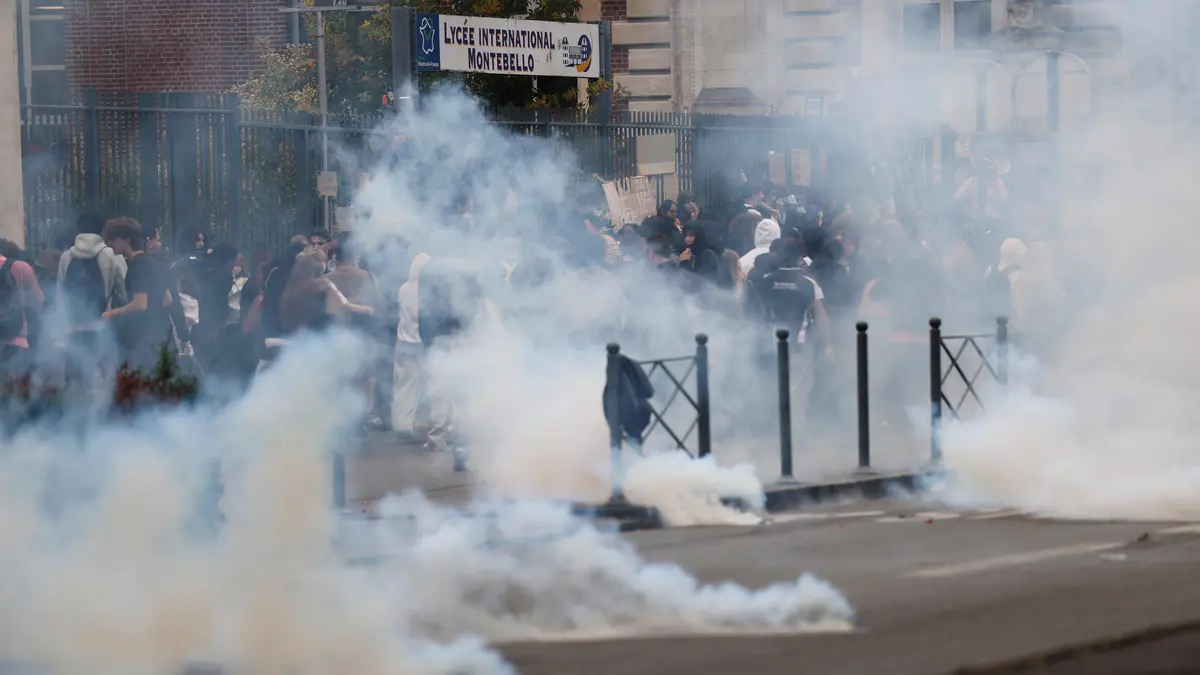
Student protests in France, originally focused on school budgets and a lack of teachers, have turned into violent clashes with the police in recent days, resulting in the detention of over 400 individuals and riots in several cities. (translated)
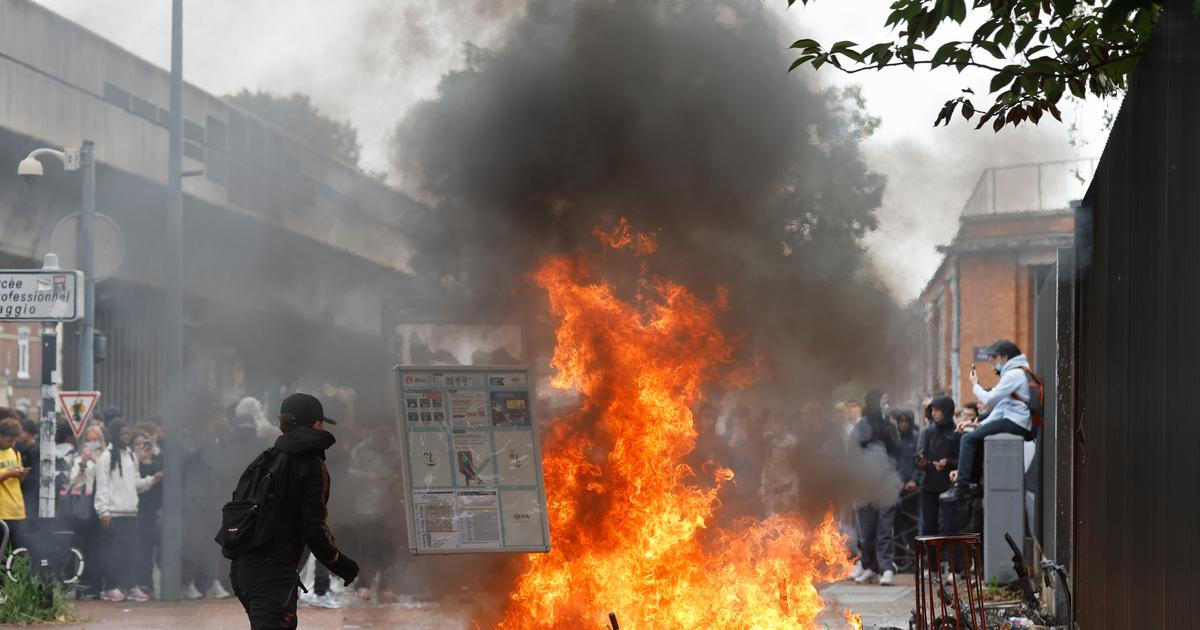

Students have been protesting conditions and resources in high schools since last week. #StudentProtests #FranceEducation #YouthActivism

Students have been protesting conditions and resources in high schools since last week. #StudentProtests #France #EducationReform


Hundreds of secondary school students blocked school entrances in Rennes and Paris during a national day of action, calling for more staff and funding for education. #StudentProtests #EducationFunding #FranceProtests
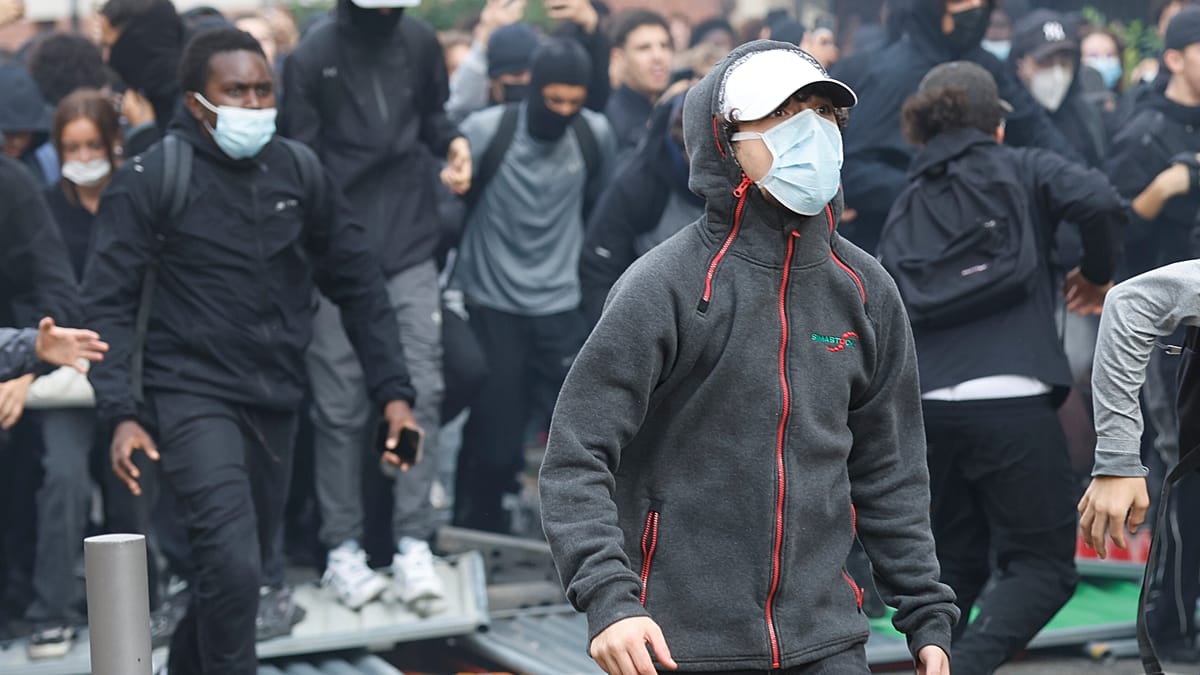
Students are protesting over issues such as overcrowded classes, but the prime minister has condemned reports of violence. #StudentProtests #EducationSystem #FranceViolence
Researchers proved AI has deleted every reason universities exist. Harvard University ran a controlled experiment pitting a custom AI against their own top-tier classrooms. And the results are going to collapse the higher education bubble. They took 194 undergraduates and split them up. One group learned physics in one of Harvard’s best hands-on, active-learning physical classrooms. Group work. Instructor support. The premium university experience. The other group went home and learned the exact same material with an AI tutor. The AI didn't just win. It embarrassed the institution. Students using the AI learned more than twice as much as the students in the elite Harvard classroom. They scored 30% higher on the final assessment. And they did it in less time. Let that sink in. A piece of software sitting on a laptop outperformed a world-class faculty in one of the most elite learning environments on Earth. Universities have always justified their exorbitant tuition with two things: access to elite knowledge and the physical classroom experience. This study just proved both of those moats are gone. When software can teach you complex physics twice as well as a $60,000-a-year institution, the math of higher education breaks permanently. The AI didn't just give the students answers. It used strict pedagogical guardrails. It guided. It questioned. It forced the students to do the cognitive work. It offered perfect, one-to-one tutoring, personalized to the exact moment a student misunderstood a concept. That level of attention is mathematically impossible to scale in a physical lecture hall. For a thousand years, the university was the only place to get a premium education. Now, it’s the bottleneck. If AI can double your learning speed for a fraction of the cost, what exactly are students taking on decades of debt to pay for? https://x.com/thesupermannx/status/2104519995292344521


The student list Students Win is presenting itself as a challenger to President Aleksandar Vucic in the upcoming new election on October 25, after he announced his resignation, and is advocating for democracy, the rule of law, as well as educational and healthcare reforms. (translated)

Students are protesting over issues such as overcrowded classes, but the prime minister has condemned reports of violence. #StudentProtests #France #EducationCrisis

Urbanová (STAN) joined the popular lynching of the elite Cornell University. The case is an ideal spark for the people's anger: elite student club, rape, drugs, inactive authorities. According to the NY Times, however, the investigation is ongoing; everything is unclear. This surfing on the lynch of the elite depresses me. (translated)

Students are screen hostages. They’re losing the ability to switch off and knuckle down - https://t.co/w85rnMtvnc #ScreenTime #MentalHealth #StudentLife #Nospecificcountrycodescanbeidentifiedfromthetweetprovided.

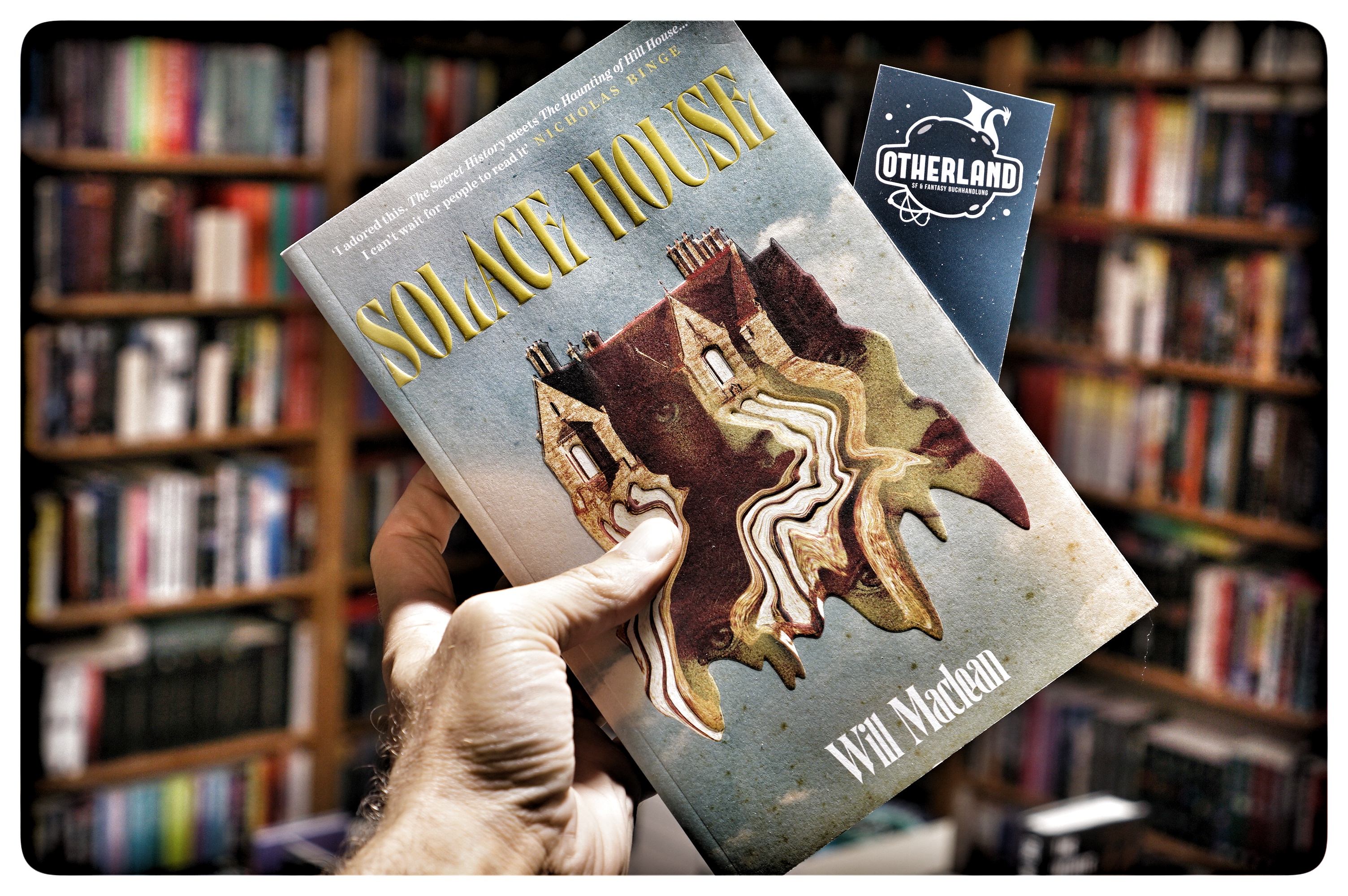
Solace House by Will Maclean In the summer of 1993, broke student Alex Lane joins a team clearing out Solace House, a Victorian mansion bequeathed to the university by a reclusive hoarder called Flayne. The other students are a mixed bunch, but Alex quickly falls into a close friendship with the lively, redheaded Ella. When the crew begins sorting through piles of junk, they stumble upon Flayne's journals, in which he details his obsession with his missing mother, his discovery of a place called Bewise, and - most mysteriously - his belief in another realm lying parallel to ours, along with coded instructions as to how it might be reached. As the students delve deeper into the house's secrets, one of them becomes obsessed with deciphering Flayne's strange opus and its promise of another world... and they may be willing to sacrifice everything, and everyone, to get there.
IL TEATRO-EDICOLA (FRANCESCO GRAVINO) SU “LA STAMPA (SPECCHIO)”, “SIX CHAIRS AT THE TEATRO-EDICOLA” by FRANCESCA TAMBURRINO SOURCE: https://www.lastampa.it/specchio/rubriche/segue-buffet/2026/09/27/news/sei_sedie_al_teatro_-_edicola-15748967/ To the delight of lovers of the genre, the news is reassuring: theatres are back in fashion. Perhaps they had never gone out of fashion but were slightly tarnished by interest in other genres considered more contemporary. Wrong, theatre after millennia withstands wear and negativity reinvigorates it. Halls thought lost are reopening and new spaces are flourishing. Because theatre can be made anywhere, in houses, in streets, on the ashes of spaces born for other purposes. For example in newsstands: in many cities these kiosks sell everything except what they were conceived for, newspapers. The ingenious wheeze is to be found in the Foggia area with the Teatro-Edicola, the smallest theatre in the world, six chairs, less than two square metres, careful programming, performances every fifteen minutes and sold-out is easily guaranteed. A happy experiment that has intrigued even the noble journal of the American Stanford University. The wheeze from San Severo in the Foggia area pleased the students of Stanford so much that they made it a case study. The result was published in the “Stanford Social Innovation Review (SSIR)” quarterly journal and award-winning website given its specific specialisation in covering multisectoral solutions to global problems, considered one of the world reference points for social innovation. The article “The Six-Seat Revolution”, that is to say the Revolution of the Six Chairs, was curated by the Foggian (Orta Nova) researcher Luciano Magaldi Sardella, supervised by editor David V. Johnson and can be retrieved in the Dispatches section of the “Stanford Social Innovation Review”. Imagine the satisfaction of the theatre company Foyer 97 which sees itself projected into global fame and planetary interest, matured into a shower of requests for duplication. After all, who does not have a disused space in a state of abandonment to be recovered worthy of rising to a cultural garrison? Meanwhile the meritorious creators of the winning idea will return to the stage in October and are already preparing the thirtieth anniversary of the company which falls next year. On those six chairs, they assure us, young and old have sat in equal albeit meagre measure. An experiment which in the universe of entertainment is followed with attention. So much so that Biagio Antonacci made a surprise stop at the Teatro-Edicola where he sang his “Iris”. Passers-by in a huddle beyond the sold-out.


Here's the video clip of philosopher Freddy Mortier being booed by students after making some remarks about the Cofnas affair, preventing him from continuing his speech. The dean then takes the stage to condemn Mortier’s remarks as “completely inappropriate” and apologize to the #Philosophy #FreedomOfSpeech #UniversityDebate #Thetweetdoesnotmentionanyspecificcountries.Therefore #theresultis:
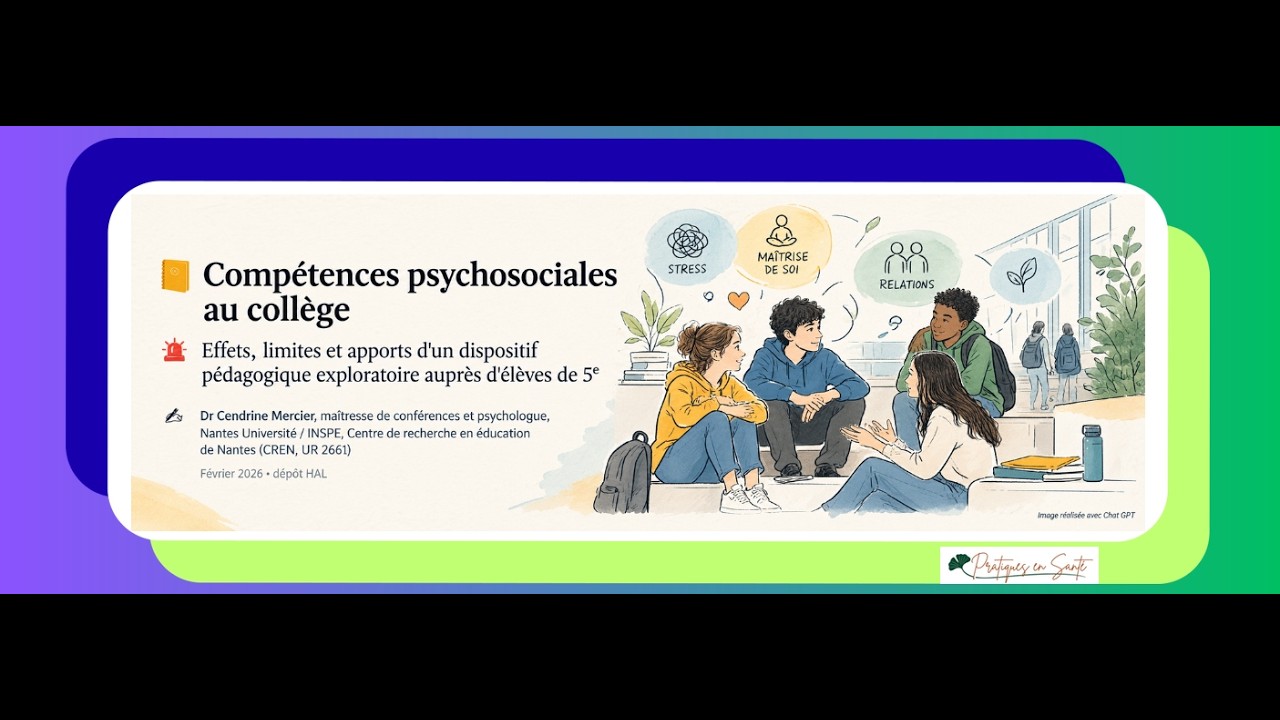
🚨 Stress, maîtrise de soi, relations : ce que des élèves de 5ᵉ choisissent de travailler 📒 Compétences psychosociales au collège : effets, limites et apports d'un dispositif pédagogique exploratoire auprès d'élèves de 5ᵉ ✍️ Dr Cendrine Mercier, maîtresse de conférences et psychologue, Nantes Université / INSPE, Centre de recherche en éducation de Nantes (CREN, UR 2661) - Février 2026 dépôt HAL - étude quasi-expérimentale exploratoire (pré-test / post-test sans groupe contrôle), année scolaire 2024-2025 Capsules Audio de Pratiques en Santé 🎙️🎥 https://www.youtube.com/watch?v=z4o2WrInBJg 🔍💡 CPS au collège : un cycle de 9 séances en REP+ où les élèves votent pour les compétences à travailler. 🧠 La gestion du stress arrive en tête des besoins exprimés, et reste la dimension la moins bien auto-évaluée après l'intervention. 📉 Une lecture utile pour évaluer sans surinterpréter. Analyse de Pratiques en Santé et lien vers la source ℹ️➕ https://www.pratiquesensante.com/blog/pratiques-15/competences-psychosociales-au-college-effets-limites-et-apports-d-un-dispositif-pedagogique-exploratoire-aupres-d-eleves-de-5e-6219 📌 Ce rapport décrit, séance par séance, un cycle de neuf heures sur les compétences psychosociales mené avec une classe de 5ᵉ en éducation prioritaire. Son intérêt pratique tient moins aux chiffres qu'au protocole : faire voter les élèves sur les compétences à travailler, les ancrer dans des situations vécues, puis les entraîner en groupe. Il montre aussi pourquoi un questionnaire d'auto-évaluation peut donner des scores en baisse après une intervention. Il peut servir à construire un cycle CPS au collège et à anticiper les pièges de son évaluation. 🇬🇧: Psychosocial skills in secondary school: effects, limitations and contributions of an exploratory educational device for Year 5 students - https://www.pratiquesensante.com/en/blog/practices-15/psychosocial-skills-in-secondary-school-effects-limitations-and-contributions-of-an-exploratory-educational-device-for-year-5-students-6219 #️⃣ #pratiquesensante #CompétencesPsychosociales #SantéMentaleJeunes #PromotionSantéÉcole #Collège #ÉducationPrioritaire #ÉvaluationDesActions #GestionDuStress
"We really love the mountains. We started hiking while we were still students. Even Denis proposed to me in the mountains," says Anastasia about their decision. (translated)

My prediction: Students in 20 years will be protesting the unethical treatment of machines by our generation 👴👵 #FutureProtests #EthicsInAI #StudentActivism #Thetweetdoesnotmentionanyspecificcountries.Therefore #therearenocountrycodestoreturn.

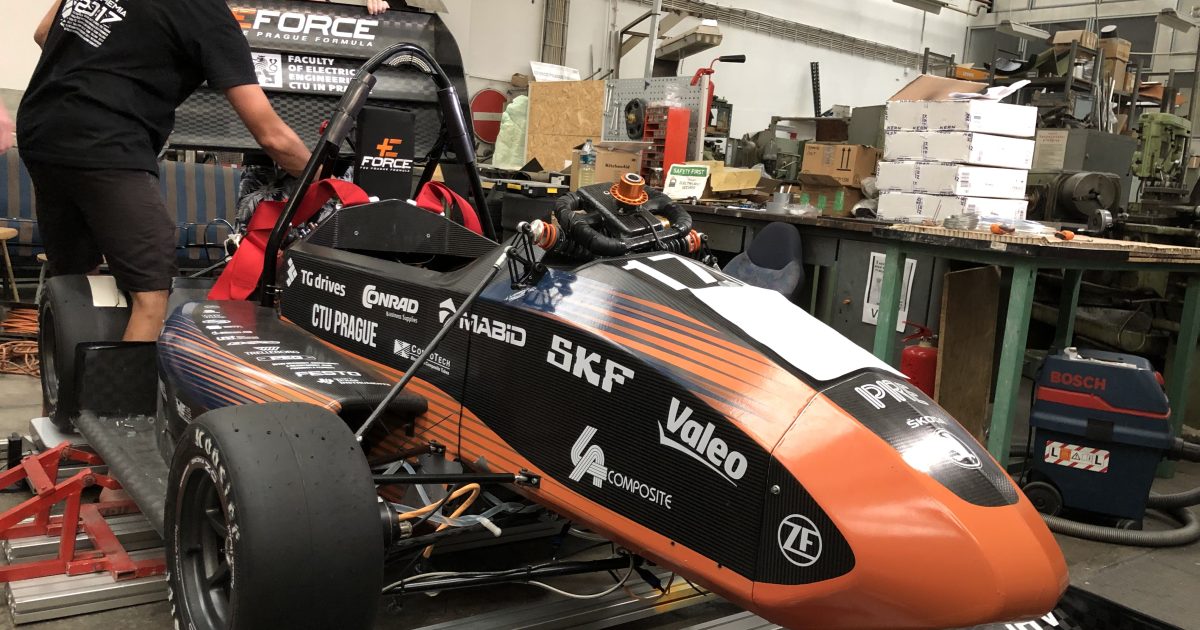
The student formula from the Czech Technical University in Prague, equipped with autonomous driving and capable of accelerating from zero to a hundred in 2.5 seconds, recently won the autonomous category at international competitions in Italy and Spain, with the entire car design created by students. (translated)

The Ants’ Treasure: Where the Paths Meet — English Edition www.amazon.com/dp/B0GXGNPD87 Visual Math Made Clear: Visually Explained Algebra Series Title Math Made Clear for Kids (Ages 9–12) The Ants’ Treasure: Where the Paths Meet is a visual math story that turns equations, graphs, and coordinates into an adventure children can actually see and understand. This is the English Edition. This book is also available in other language editions. When Mia and Alex discover two mysterious ant paths crossing the beach, they meet Mr. Numberwise — a quiet guide who shows them that math is not just numbers on a page, but stories, paths, patterns, and discoveries. Through ants, treasure maps, staircases, colorful paths, and exciting “Aha!” moments, children are introduced to: • linear equations • slope • coordinates • graphing • intersections and meeting points This book uses original visual models to make algebra easier to understand: • slope becomes a staircase • an equation becomes the recipe of a path • +b becomes the starting floor • coordinates become the address of a point • an intersection becomes the place where two different path-stories meet This book combines: ✔ story ✔ visual explanations ✔ solved exercises ✔ step-by-step learning ✔ drawings and graphs ✔ practice worksheets ✔ “Math Made Clear” style explanations ✔ memorable “Aha!” moments Instead of memorizing formulas, children begin to see how math moves. Perfect for curious learners, visual thinkers, homeschool families, classrooms, and children discovering algebra for the first time. Designed mainly for ages 10–14, this book can also help older students who find algebra difficult and need a clearer, more visual explanation. And honestly… many adults may finally understand slope better with this book too. A visual math story with solved exercises — designed to make algebra finally feel clear. #BeachVacation #MathAdventureForKids9_12 #GraphingAlgebra #CoordinateAlgebra #SlopeAlgebra #visually #explained #algebra #StorytellerUK2026 #SummerAdventure #StoriesForKids9_12 #VisualMath #0249 #AntsOnTheBeach #BrightonBeach #BournemouthBeach #BlackpoolBeach #FistralBeach #SandsendBeach #WhitbyBeach #RhossiliBay #BarafundleBay #TenbyNorthBeach #LlangennithBeach #OxwichBay #ManorbierBeach #SantaMonicaBeach #VeniceBeach #HuntingtonBeach #LagunaBeach #CoronadoBeach #SouthBeachMiami #ClearwaterBeach #SiestaKeyBeach #DaytonaBeach #CocoaBeach #WaikikiBeach #KaanapaliBeach #LanikaiBeach #Kids #TreasureIsland #AntTreasure #BeachAdventure #HiddenTreasure #TreasureHunt #TreasureMap #SecretBeach #IslandAdventure #LittleExplorers