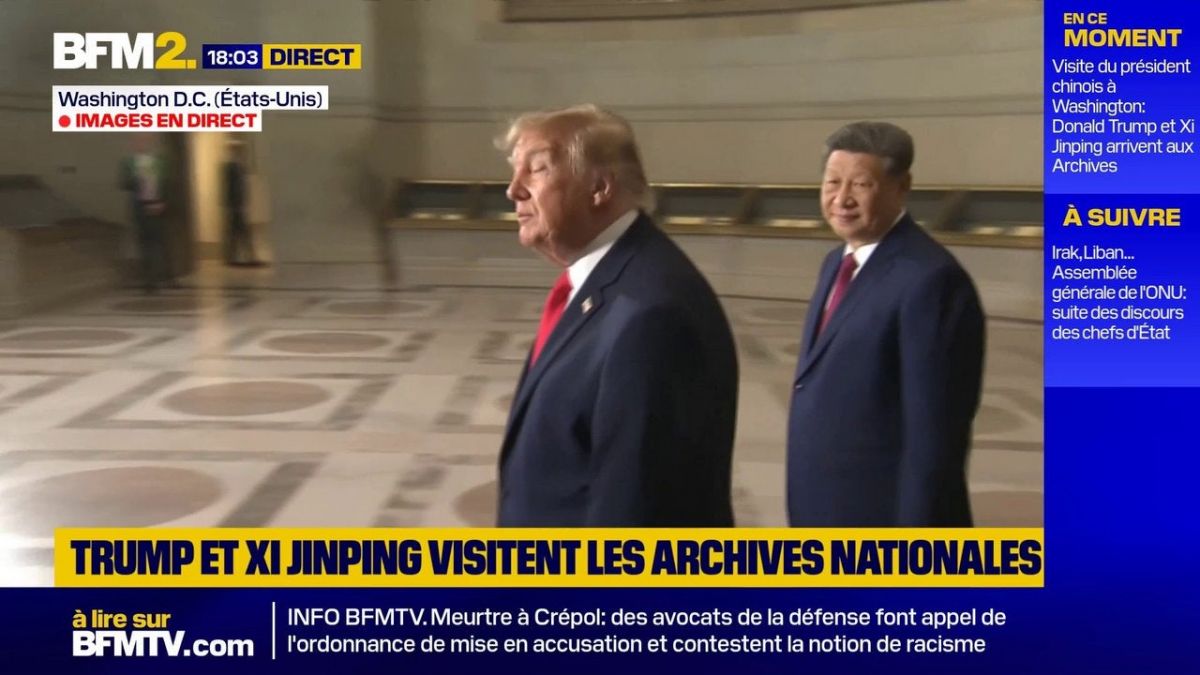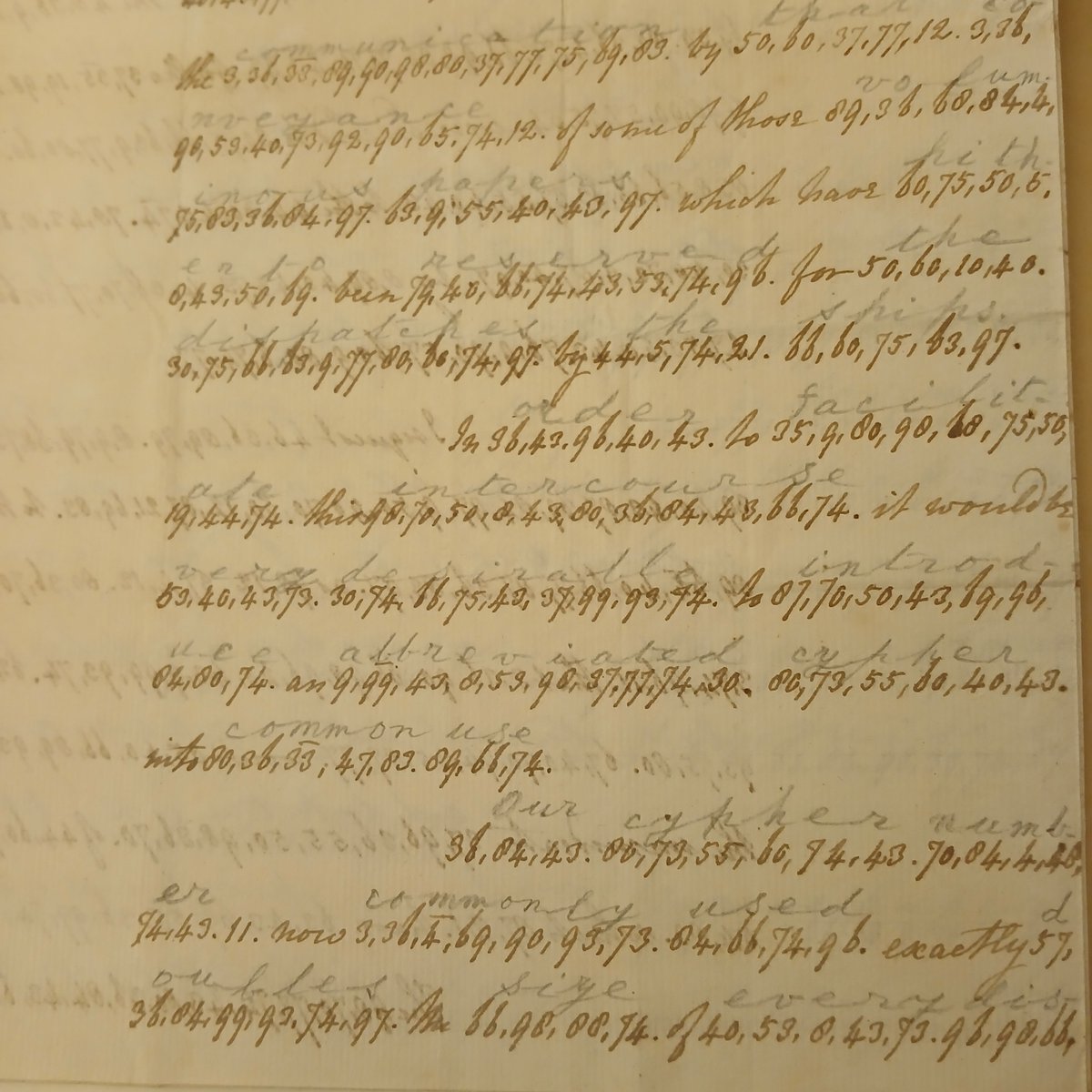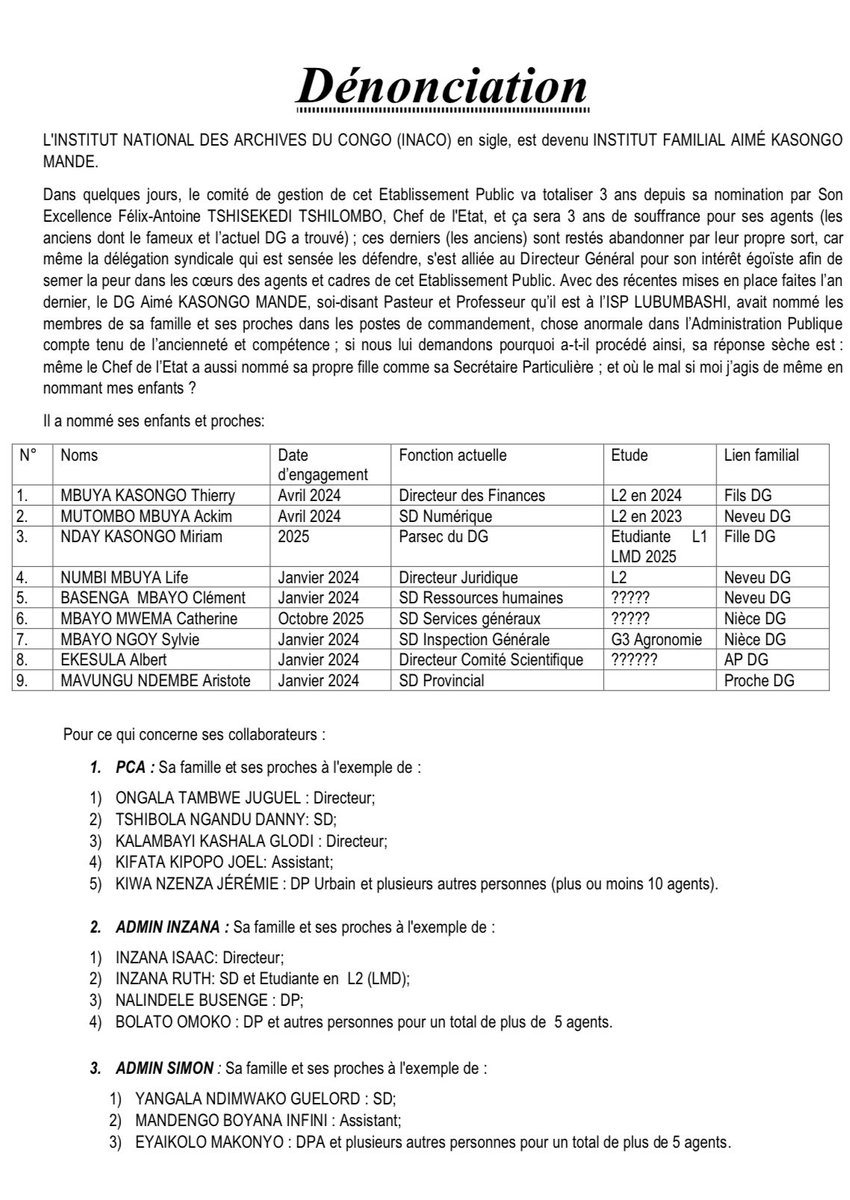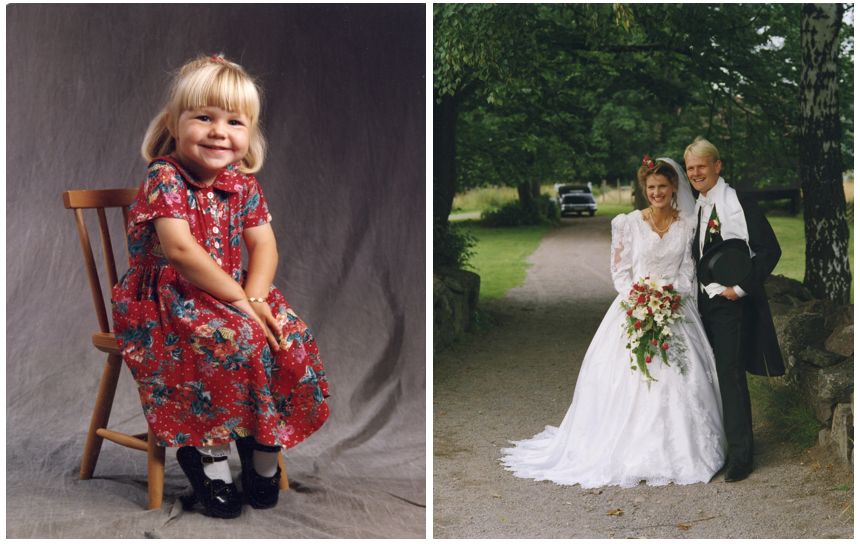
📁 ARCHIVE | Vous les reconnaissez ? 👀 Le joueur à gauche vous dit sûrement quelque chose… mais celui à droite, impossible de ne pas le reconnaître. 🐐 https://t.co/JaCh8BSv4r #Football #Sport #Archives
A massive data leak revealing 12 terabytes of Valve archives has shed light on famous or abandoned projects, including the highly anticipated Half-Life 2: Episode 3, as well as revelations about games such as Portal 2 and Counter Strike: Global Offensive. (translated)
En enquêtant sur l’enseignement supérieur ultramarin, la Cour des comptes a demandé des documents relatifs aux appels d’offres lancés par l’université de Mayotte. Réponse des responsables de la fac : une cyberattaque a rendu nos archives inaccessibles... Sauf qu’un audit a constaté depuis que tous les documents étaient bien disponibles. Alors pourquoi avoir voulu faire croire le contraire aux magistrats financiers ? ➡ https://t.co/smQtgFi0Yp #EnseignementSupérieur #Mayotte #CourDesComptes
5 buts face à Lille ! PSG Archives (Lille 1-5 Paris 06/02/2022) Disponible pour les membres YouTube et MyParis. 📺 👉 https://t.co/YD1i7QBReo https://t.co/P2285lbzOt #PSG #Lille #Football
Thanks to donors Japan 🇯🇵, the EU 🇪🇺, and contributions through GMDF, IPDC and MDP, @UNESCO helps Ukrainian media, journalists & memory institutions with emergency grants, safety equipment, psychological support, legal training and equipment to protect archives. @JapanUNESCO #Ukraine #MediaSupport #UNESCO #JP #EU #UA
Bonjour, ça va @richard_flurin ? C’est du journalisme ? 1) la plainte bidon de Bellamy a été classée sans suite, bien sûr Monsieur Flurin n’en fait pas mention. 2) money money money faisait référence au contenu de la vidéo que le journaliste ne partage pas ici et qui portait sur les partenariats engagés avec Israël (les intérêts financiers étant priorisés face aux demandes de boycott des citoyens et organisations de la société civile), si vous y voyez de l’antisémitisme il faut consulter, je ne suis pas psy. 3) le journaliste indique que je refuse de m’exprimer dans les médias « traditionnels », prenons l’exemple du Figaro qui a consacré de nombreux contenus à mon sujet, comme cette vidéo, mais qui ne m’a en réalité jamais donné la parole. 4) ce même journaliste ne fait nullement mention des vagues de harcèlement des menaces de mort et de viol que j’ai subies avant et après mon entrée en politique. Des centaines de messages et de numéros sont archivés et peuvent être consultés par un journaliste qui souhaiterait réellement enquêter sur le sujet. Mais cela ne l’intéresse manifestement pas. 5) Il ne fait pas non plus mention des organisations pro israéliennes qui ont recours au lawfare largement documenté, 20 procédures engagées pour me détourner de mon combat et ce pourquoi j’ai été élue, dont l’écrasante majorité ont été classées. 6) « La meute »… on se demande de quel bord elle est. 🤭 #journalisme #antisémitisme #harcèlement
LE PROBLÈME QUAND ON PARLE DE SONKO, C’EST SOUVENT LE MANQUE DE RIGUEUR DOCUMENTAIRE. Beaucoup d’arguments circulent sans recherche préalable. Résultat : il suffit parfois de retourner aux archives pour qu’ils ne tiennent même pas 24 heures. Prenons simplement la question de la déclaration de patrimoine. Dans son livre Solutions, aux pages 27 et 28, Ousmane Sonko faisait déjà sa déclaration de patrimoine qu’il avait rendue publique en 2016. Et il a cette époque, il n’était pas tenu de faire une telle déclaration puisqu’il n’exerçait aucun mandat électif ni responsabilité publique. Il était dans l’opposition. Pourtant, il avait choisi de le rendre publics : On peut être pour ou contre Ousmane Sonko. On peut critiquer son bilan, ses choix ou ses positions mais en terme de transparence il a toujours été cohérent Citez-moi un autre responsable politique sénégalais qui, alors qu’il était dans l’opposition et sans y être légalement obligé, a volontairement rendu public son patrimoine avec ce niveau de détail. Je vous écoute. #OusmaneSonko #Transparence #PolitiqueSénégalaise
🇫🇷🎬 FLASHBACK ÉRIC CIOTTI FACE À ÉRIC CIOTTI : LES ARCHIVES SONT PARFOIS CRUELLES 😭 Il y a encore quelques années, Éric Ciotti, aujourd’hui maire de Nice, 𝗔𝗦𝗦𝗨𝗥𝗔𝗜𝗧 qu’il ne s’allierait 𝗝𝗔𝗠𝗔𝗜𝗦 avec le RN. "Je ne suis pas quelqu’un qui change de conviction au fil du temps ou du vent", déclarait-il en direct à la télévision. 😭 En 2023, face au président du RN Jordan Bardella, il lançait même : "Moi, je ne me renierai pas, je ne dirai pas des choses inverses de ce que j’ai dit hier." 👉 Quelques mois plus tard, en juin 2024, Éric Ciotti annonçait finalement son alliance avec le RN… #ÉricCiotti #PolitiqueFrançaise #Flashback
C'est le feu le plus long qu'il y a eu dans le Var depuis que nous avons des archives sur les feux de forêt et de végétation
🫵 L' INGÉRENCE EXTÉRIEURE, C'EST EMMANUEL MACRON ✅ On nous rebat les oreilles de fariboles sur les "ingérences extérieures" qui menaceraient la démocratie française. Russie, Chine, bots, deepfakes… Le récit est rodée : l’étranger, c’est toujours l’autre, celui qui n’aime pas assez les "valeurs de la République" (version 2017, édition limitée). Mais la principale ingérence extérieure, la moins documentée par la presse d'État, c’est @EmmanuelMacron lui-même. ✅ Regardez-le : artefact de l’ombre transatlantique, propulsé non par le peuple souverain mais par un cocktail savoureux de réseaux, de médias enamourés et, surtout, de démocrates américains de haut vol. @HillaryClinton et @BarackObama en tête de cortège, comme deux parrains bienveillants d’une promotion Young Leaders de la French-American Foundation (celle-là même qui a formé Hillary en 1983 et accueilli notre héros en 2012). Un programme d’élite franco-américaine où l’on cultive "l’amitié" des deux côtés de l’océan, et où les futurs grands de ce monde se font des petits signes de tête complices autour de cocktails. ✅ Et les mails, ah les mails ! Ces petits messages diplomatiques américains de 2012, sortis des archives d’État, qui, avant même que la France entière ne sache, murmuraient déjà le nom d’un certain banquier Rothschild, "jeune, brillant", inspecteur des finances, comme un possible "top civil servant" à Bercy. Macron savait-il avant tout le monde qu’il serait ministre de l’Économie ? Les documents américains le plaçaient déjà dans le paysage, tandis que Hollande peaufinait encore son équipe. Un prescience presque divine… mais laissons le mystère intact : le sourire de Jupiter suffit. ✅ Ajoutez-y les médias français, soudain amoureux d’un "French Obama", les méthodes de campagne calquées sur les data analytics d’outre-Atlantique, les coups de fil amicaux de Barack en pleine campagne 2017, le soutien public d’Hillary après la victoire ("Victory for Macron… Defeat to those interfering with democracy", ironie sublime), les cabinets de conseil américains qui rôdent, les tech giants chouchoutés… Et voilà : l’ingérence n’est plus un complot sombre, c’est un ballet raffiné. Macron n’est pas le défenseur de la démocratie contre l’étranger ; il est l’étranger installé au cœur du système, le cheval de Troie le plus charmant que l’on ait jamais vu. ✅ Alors, chers gardiens de la pureté, avant de crier à l’ingérence russe pour altérer en bonne conscience le cours de la démocratie, regardez dans le miroir de l’Élysée. La principale interférence extérieure, c’est peut-être celle qui a réussi : celle qui a transformé un banquier en président en s’appuyant sur les réseaux et les bons amis démocrates d’Amérique. Drolatique comme un vaudeville où le héros, propulsé par l’ombre, se drape dans la lumière de la souveraineté. 🕵️ @XavierPoussard #Macron #Démocratie #Ingérence
C’est le feu le plus long qu’il y a eu dans le Var depuis que nous avons des archives sur les feux de forêt et de végétation
C'est le feu le plus long qu'il y a eu dans le Var depuis que nous avons des archives sur les feux de forêt et de végétation
C’est le feu le plus long qu’il y a eu dans le Var depuis que nous avons des archives sur les feux de forêt et de végétation
A Generation That Forgot the Shape of the Square On memory left to die alone By Adham Hasanin Egyptian journalist and political writer, based in the Netherlands In a house near mine, there is a boy of thirteen. Born in 2013 just a few months younger than the July coup itself, younger than the new republic under whose shadow we now live. I asked him once, with no preamble, no test, out of nothing more than passing curiosity: do you know what January was? He answered simply, without hesitation, without any sense that he was missing something: "An old revolution, against Mubarak, right?" Not entirely wrong. But it is everything he knows. The name Tahrir Square means nothing specific to him. The sound of the crowd chanting has no echo in his mind. He does not know that his own family whom he sees every day saying "thank God for stability," who warn him against "chaos" whenever a political headline crosses the screen once, at a moment two years before he was born, went down into the street, betting their entire lives on the possibility that something might change. This article is not about politics. It is about memory, and about who decides what gets told and what is left to die in silence. I. Who Erases the Picture? The first question that comes to mind is the easiest and most deceptive one: who erases this memory? And where do we begin holding them accountable? But the truth is too complex to reduce to a single actor. No one actually erases memory, in the literal sense of the act. There is no ministry called the "Ministry of Forgetting," no presidential decree ordering January struck from the collective consciousness. What happens is simpler than that, and more dangerous at once: the subject is simply never told. School says nothing. The textbook leaps from one period to another without pausing on January for more than two faded lines, composed with deliberate neutrality, devoid of any detail that might make the event feel alive to its young reader. Television no longer has any reason to return to it; the programmes that once hosted witnesses and activists stopped years ago, replaced by an official discourse that mentions January only in passing, as an unfortunate prelude to the "stability" that supposedly followed. And the home the most dangerous link of all has become afraid of the subject. Speech now carries a price, and many families, whether consciously or by sheer survival instinct, have decided that silence is safer than the story. The father who marched fears passing on to his son a curiosity that might one day lead him into trouble the family cannot afford. The mother who lost a friend in the events prefers not to reopen the wound before a child who does not yet grasp the weight of loss. And so, generation after generation, the circle of those who know shrinks, and the circle of those who do not even ask because they do not know there is anything worth asking widens. No one decided to erase the memory through an explicit decision. The memory was simply left to die alone, with no one tending it. And it is precisely this decentralised absence of responsibility that makes this kind of erasure more dangerous than any direct official ban: there is no single decision to challenge, no single body to hold accountable. Responsibility is distributed across thousands of small decisions made by thousands of individuals, each within their own context, each seeming reasonable when viewed in isolation. II. Why This Is More Dangerous Than Direct Repression An objection might be raised: is direct repression arrest, imprisonment, publishing bans not far more lethal than mere gradual forgetting? The answer is complex, and deserves calm unpacking. Direct repression can be seen. It can be documented, and the victim can know they are a victim, can tell their story, and their pain can become a testimony added to the collective memory, even if it never reaches justice. The political prisoner knows he is a political prisoner. The journalist banned from writing knows he is banned, and can tell the world he is banned. Direct repression, for all its cruelty, leaves a trace that can be followed. But a generation that has forgotten something happened at all does not even have a starting point from which to ask. This thirteen-year-old boy will never ask "why were we repressed?" because he does not know there is anything deserving that question in the first place. He feels no absence, because he does not know there is anything absent. He simply lives in a version of reality stripped of an entire chapter of his country’s history, and never for a moment suspects that this void is a void at all. Here lies the essence of the danger: direct repression creates victims who know they are victims. Erasure of memory, when it succeeds, creates a generation that does not even know it has been deprived of anything. And deprivation that is not felt cannot be resisted, because resistance always begins with an awareness of loss. The regime that came after 2013 does not need to convince the new generation that January was a mistake. That would be an arduous, costly task, requiring sustained propaganda and continuous effort to persuade each individual one by one. It is far easier, and strategically far more efficient, simply to ensure they never know it was anything at all. The void requires no defence; it requires only silence, and silence is free and always available. III. The Four Mechanisms of Erasure Four complementary mechanisms can be identified working together to produce this collective void not as an organised conspiracy, but as a system of incentives that pushes each party, consciously or not, to contribute to the same process. The first mechanism: formal education. The curriculum, as currently designed, treats January as a passing footnote rather than a founding event deserving detail and analysis. The student memorises two dates the start of the revolution and its presumed end without understanding why people took to the streets, what they were demanding, or how they felt in that pivotal moment. The second mechanism: broadcast media. The channels that once hosted live discussions on January, featuring varied perspectives, have gradually disappeared, or transformed their discourse entirely. Today’s televised image either ignores the anniversary altogether, or invokes it only to frame it as a prelude to chaos that must be avoided. The third mechanism: the silence of homes. This is the most dangerous of all, precisely because it is the most human and understandable. Parents who lived through the experience protect it with silence, not out of aversion to the story, but out of fear of its price. This silence, however legitimate its motives, achieves exactly the same effect as official censorship: it blocks the transmission of knowledge from one generation to the next. The fourth mechanism: the absence of alternative spaces. Even those among the new generation who wish to know cannot easily find places to look. Archives are scattered, trustworthy websites are blocked or require effort to reach, and personal testimonies are dispersed across corners of the internet that an ordinary student at an ordinary school will never stumble upon. These four mechanisms require no central coordination to work together. Each naturally serves the others, and all converge on a single result: a growing void in the consciousness of every new generation. IV. Memory as an Act of Resistance If erasure operates without a centre, then resisting it must also be decentralised. No one waits for a government decision to restore January to the curriculum, nor for a television programme to revive the testimonies. Resistance here is necessarily individual, happening in small details, in passing conversations, in the simple decision to tell rather than to stay silent. This is exactly what I try to do, without any claim to heroism, without any grand mission. I try, whenever I can, to tell the thirteen-year-old boy and others like him details that are never written in official reports or in schoolbooks: what the voices in the square sounded like, how someone felt the first time they realised change was possible, what that moment of hope was like before everything changed. The goal is not to bring back the past; the past cannot be brought back. The goal is that this boy, when he grows older and asks again and he will ask, because the questions always return at some point finds someone to tell him the full story, not two faded lines in a schoolbook. That he knows the stability he is told is the fruit of "wisdom" has a prior history, that this history carried other possibilities, and that real people bet their lives on those possibilities. V. Why This Matters Now Talking about the memory of a generation not yet aware might seem an intellectual luxury next to more urgent matters: arrests, a collapsing economy, regional wars. But the truth is that this issue is the foundation on which every other issue is built. A people who do not know they once rose up will not understand why they should ever think of rising again. A generation raised to believe "stability" is the only natural state possible will never ask itself what drove its own parents, shortly before it was born, to risk everything for an alternative that was never guaranteed. Memory is not a luxury; it is the reference point by which every generation measures its present, and through which it determines what is possible and what is not. And whoever understands this understands why erasing memory, not direct repression alone, is among the most important tools of any regime seeking to guarantee its permanence: because a people who have forgotten they were once free will not even know they are missing freedom. Memory, like the word, needs someone to tell it in order to survive. And when the tellers stop, memory does not die suddenly; it withers slowly, generation after generation, until the day comes when a boy asks an innocent question, and finds no one to answer him but two faded lines in a schoolbook.