The author argued that socialism was no more inherently evil than Christianity, writing that neither ideology necessarily prescribed the actions associated with Joseph Stalin and his secret police or the Spanish Inquisition.
The author argued that socialism was no more inherently evil than Christianity, writing that neither ideology necessarily prescribed the actions associated with Joseph Stalin and his secret police or the Spanish Inquisition.
Regina Laska criticized that Donald Trump once again accused Volodymyr Zelensky of not wanting to end the war. According to Laska, Trump overlooked that Vladimir Putin has been bombing Ukraine for four and a half years. Instead, Trump is concerned about Russian refineries, US diesel prices, and Putin's feelings, she wrote. Citing the Wall Street Journal, Laska reported that Putin proposed a meeting between Trump and Chinese leader Xi Jinping, possibly in November in Shenzhen. The meeting would be about the future of Ukraine, which, like Europe, would not be invited. The Kremlin has confirmed that the proposal is being discussed; Trump has not yet agreed. However, a senior US government representative believes he is open to it, according to Laska. A source from the Wall Street Journal described Putin's proposal as a "second Yalta." Laska compared the proposal to the 1945 conference, where Stalin, Roosevelt, and Churchill negotiated Europe's post-war order while the affected countries were not at the table. Putin's plan envisions a negotiation between the aggressor and the great powers regarding the fate of the victim – without European involvement. She urged Europe to discuss possible political and economic leverage. China is reliant on the European market, Ukraine is fighting with weapons that are largely financed by Europe, and the majority of frozen Russian central bank assets are held in Europe, she wrote. Laska argued that Europe must thwart the plan before it turns into a summit and warned that those who are not given a seat at such negotiations could end up being the subject of the agreements. #Trump #Putin #Ukraine (translated)
"Honecker!" "Hitler!" "Stalin!" The CDU will not settle for anything less than that. The CDU is no longer a serious party. I have never voted for them. But that is alarming. (translated)
The author presented Costa-Gavras as a storyteller of the century marked by Nazism, Stalinism, and imperialism, who would not have missed any major political issue of his time. He wrote that the series dedicated to his cinema explored what it said about history, hopes, and resistances. https://t.co/nu3BG3rp5D #Cinéma #Histoire #Résistance #FR #DE #RU (translated)
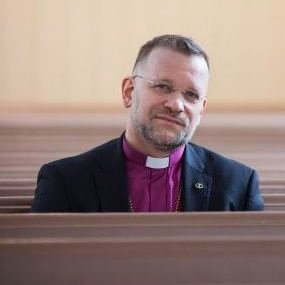
The author referred to a story in which Joseph Stalin ironically asked how many divisions the pope had. According to him, one of the most influential figures in the fall of communism was Pope John Paul II, who inspired the Polish people and guided the Solidarity movement towards peaceful resistance. The author believed that John Paul II stripped the Polish dictatorship of its power. #historia #kommunismi #PaaviJohannesPaavaliII (translated)
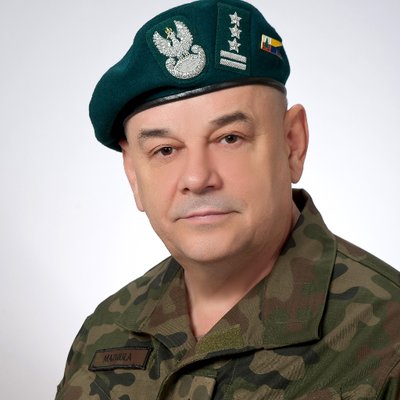
Adam Mazguła criticized those protesting in defense of the Constitutional Tribunal, claiming they were manipulated by the politics of PiS and Karol Nawrocki. According to him, the protesters defended abuses related to the Tribunal, which — as he wrote — PiS had previously destroyed and subordinated to party interests. Mazguła reminded that the Constitutional Tribunal consists of 15 judges elected individually by the Sejm for 9 years, according to Article 194, paragraph 1 of the Constitution. He asked why Nawrocki does not accept the oaths of the judges if he does not elect them. He argued that the Tribunal should protect citizens against abuses of power, including from the government of Donald Tusk. The author accused Jarosław Kaczyński, Nawrocki, and the television stations he described as spreading Russian propaganda of inciting protests. He urged Poles not to support — as he put it — political oppression, and encouraged photographing and documenting the participants of the protests. #PrawdąWOczy #WPoczuciuOdpowiedzialności #TarczaWolnościSłowa #BronimyKonstytucji #ŻołnierzGorszegoSortu #PrawaCzłowieka #WolnośćSłowa #ŚwieckośćPaństwa #PrawaKobiet #BronimyKonstytucji #PrawaCzłowieka #WolnośćSłowa (translated)
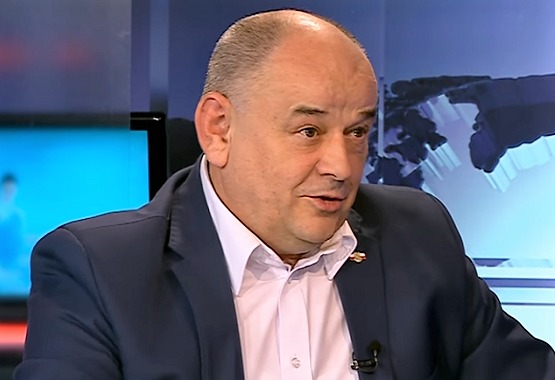
Comunismul a ucis aproximativ 60–100 milioane: Mao: 40–70 mil., mai ales prin foametea Marelui Salt. Stalin: 6–20 mil. Khmerii Roșii: 1,5–2 mil. Și nu este interzis.
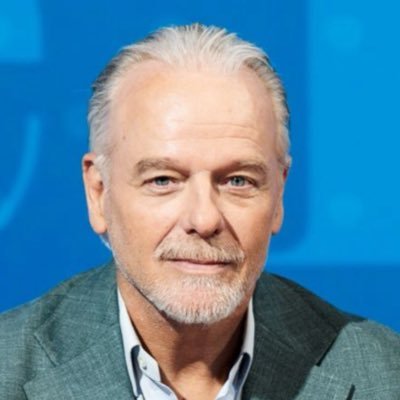
Weird Duk wondered why, according to him, almost no one was watching the program. He wrote that the approach where a complete panel collectively attacked someone with a differing opinion was no longer effective, and urged TV makers to take that to heart. #media #vrijheidvanmeningsuiting #opinie (translated)
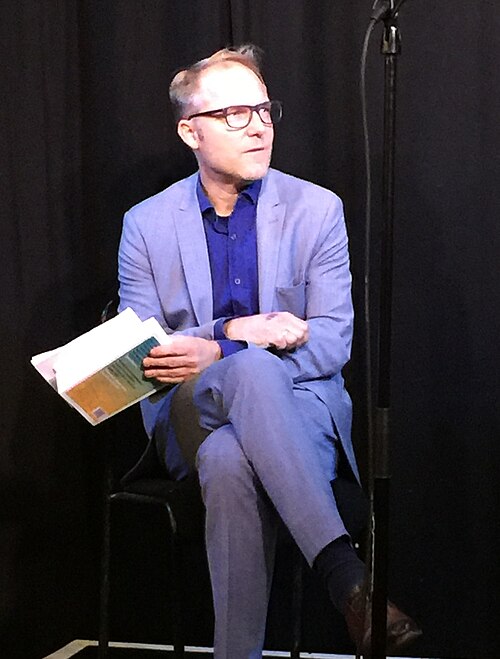
Some time ago, journalist and writer Pieter van Os spoke on the radio about what happened in Albania when the Stalinist dictator Enver Hoxha died in 1985. #Trump #Oorlog #Politiek (translated)

Kamil Krilov wrote that Trump would like to divide the world with Putin so that they could economically exploit their parts and enrich themselves, their families, and their "mafias." He added that if it were 1939 and both were in power, they could draw lots to decide who would be Hitler and who would be Stalin. According to Krilov, the world complicated their plans with moral considerations and the deaths of innocent children that were not theirs. #politika #Trump #Putin (translated)
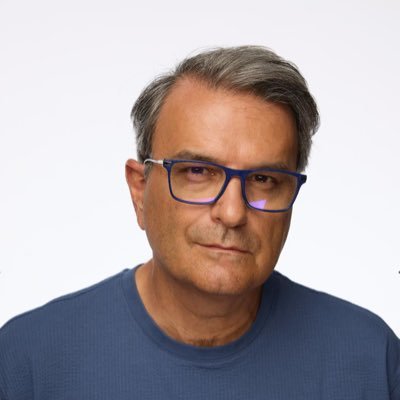
Lucian Mîndruță questioned the value of the strategic partnership with the USA, arguing that MAGA leaders chose to get closer to Russia while commercial vessels were being hit in Romanian territorial waters without a response from allies. He said he feared that Romania could also be abandoned in turn. Mîndruță stated that getting close to the Trump family would have been a way to stay close to Russia without it being obvious. He described it as a form of indirect submission and argued that the Romanian state system aimed to preserve itself, regardless of whom it had to submit to. In his opinion, what ensured the endurance of a country was its moral fiber, not just military capability. #politică #diplomație #relatiiInternaționale (translated)
SVT's Rapport provided a misleading picture of the Chinese steel industry by omitting the extensive state subsidies that distort competition and negatively affect the European and Swedish steel markets. #KinesisktStål #Ståltullar #Konkurrenssituation (translated)

Don Alphonso wrote that one should not trust Stalinists. According to his portrayal, the Left Party does not want a coalition but rather aims to assert itself against the SPD and Greens and continue its anti-Semitic course. He evaluated other statements from the party as mere lip service, with which they wish to come to power. https://t.co/endjtZnd0F #Linkspartei #Politik #Antisemitismus (translated)

The author said their presidential pledge was to champion the creation of a Museum of Soviet and Stalinist Crimes at Schwedenplatz in Vienna, commemorating victims of the Gulag, the Holodomor, mass executions, forced deportations and political persecution. https://t.co/RD4Os7arr5 #Österreich #Geschichte #Erinnerung #AT #RU


French Carcan accused L’Humanité of censoring an intervention by Louise Montangon on LCI, by allegedly cutting the words "her gas professor" from her sentence. He compared this omission to the retouching of photographs under Stalin and wondered if the newspaper was trying to avoid the topic of fuel prices. He also mentioned the show "Le Sens de l’Actu" and B. Rieth. #Censure #LibertéDeExpression #Journalisme (translated)

World columnist Hans Ulrich-Jörges called Bärbel Bas a "social state Stalinist." To understand why such blatant statements clearly cross the red line of decency, I recommend reading the series "Archipelago Gulag" by Alexander Solzhenitsyn. (translated)

BBR VIBES accused Bally Bagayoko of refusing to vote against excision and Mathilde Panot of not supporting the fight against breast cancer. It also claimed that Jean-Luc Mélenchon was presenting Joseph Stalin's agricultural program, before mocking those who considered LFI to be the party of youth and progress. #LFI #politique #progrès (translated)
Сделката на Тръмп и Путин напомня за сделката на Сталин и Хитлер през 1939 г. https://offnews.bg/politika/sdelkata-na-tramp-i-putin-napomnia-za-sdelkata-na-stalin-i-hitler-prez-876215.html

The author wrote that Putin has dreamt since 2000 of a Western partner who would offer him something similar to what Napoleon provided to Alexander I, and initially Hitler, then Roosevelt and Churchill to Stalin. After September 11, according to the author, he briefly received this from George W. Bush Jr. He stated that it will only become clear what he will gain now, and that Europe will undoubtedly suffer a loss as a result. #Putin #Západ #Evropa #CZ #RU #US #FR #DE (translated)
Daniel Schatz criticized the Social Democrats, the Left Party, the Green Party, as well as ETC and Aftonbladet for a campaign against Alice Medce. He claimed that they had contributed to hatred and demonization that forced her to take more extensive security measures than any other elected official in Sweden, and that she was attacked again when she tried to deal with a security threat that they themselves had helped create. Schatz described the approach as taken from a Stalinist handbook and urged those responsible to be ashamed. https://t.co/k1qx29iT2m #politik #svenskpolitik #debatt (translated)






