WRLD

Search

#Creators
Otherland Bookshop Berlin 3d

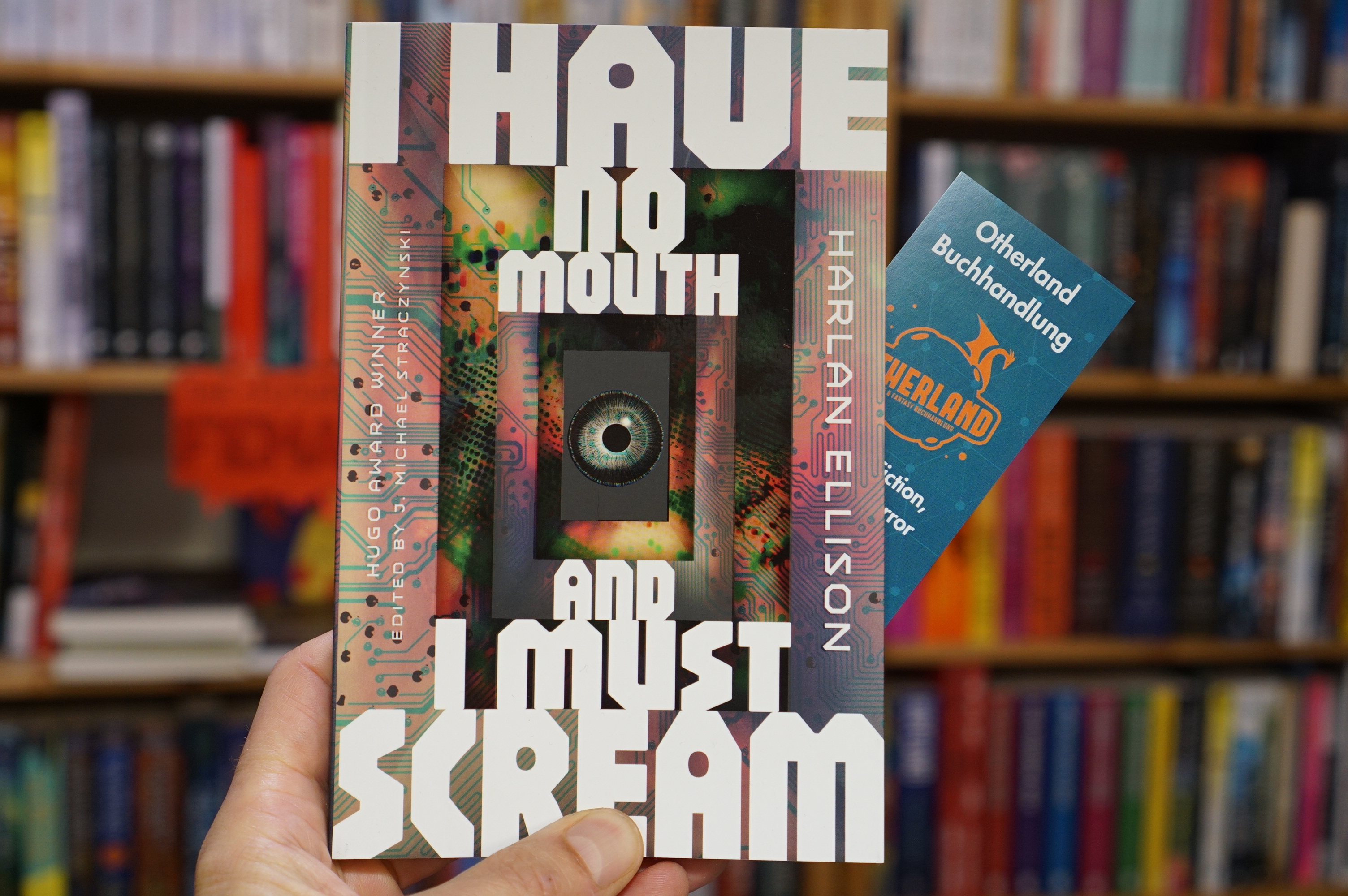
I Have No Mouth, and I Must Scream by Harlan Ellison In a postapocalyptic world, four men and one woman are all that remain of the human race, brought to near extinction by an artificial intelligence. Programmed to wage war on behalf of its creators, the AI has become self-aware and has now turned against all humanity. The five survivors are prisoners, kept alive and subjected to brutal torture by the hateful and sadistic machine in an endless cycle of violence.
670
Ondřej Tesárek 4d
YouTuber

The author wrote that many content creators were already competing on unequal terms with channels producing low-quality AI content, while others were incorporating AI-generated text into their speech. They argued that this was making authentic speech increasingly valuable.

2918
Naughty Creator 4d

🚀 Content creator economy is evolving faster than ever. Traditional platforms are struggling to keep up and content creators are actively looking for better alternatives. Our latest blog post breaks down the evolution of online marketplaces and where the industry is heading. Read more ⬇️ https://naughtycreator.blog/the-evolution-of-adult-marketplaces #naughtycreator

naughtycreator.blog
The Evolution of Adult Marketplaces | A New Era for Creators and Fans | Naughty Creator
788
Luciano Magaldi Sardella (PhD) 5d

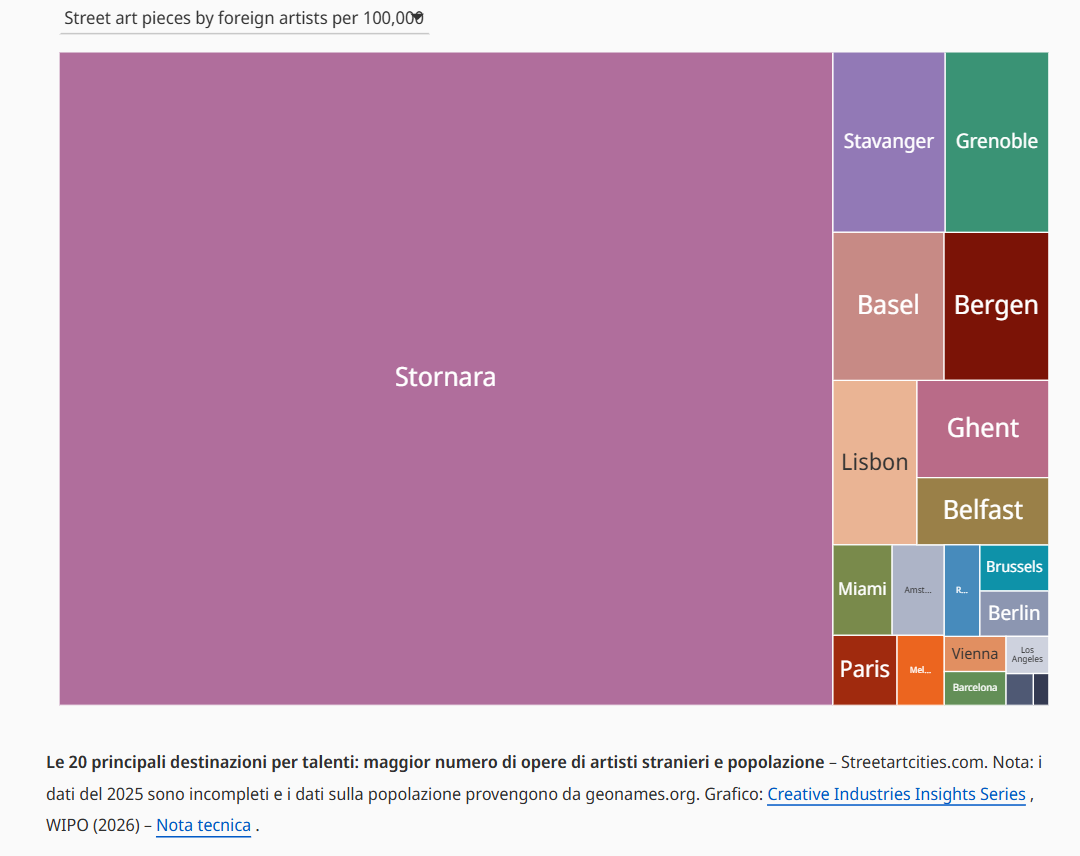
"FROM A “GHOST TOWN” TO GENEVA "EUROPEAN UNITED NATIONS" CASE STUDY: LINO LOMBARDI’S STRAMURALES AND “STORNARA LIFE APS” CONQUER THE UNITED NATIONS OF EUROPE" ----------------------------------------------------------------- SOURCE: https://www.upov.int/en/web/economics/w/blogs/from-local-scenes-to-global-recognition-talent-mobility-in-street-art By virtue of the Stramurales of Lino Lombardi (Stornara Life APS), Stornara now ranks FIRST IN THE WORLD for intensity of foreign murals per inhabitant. Original title: “From Local Scenes to Global Recognition: Talent Mobility in Street Art (Dalle Scene Globali al Riconoscimento: La Mobilità dei Talenti nella Street Art).” ----------------------------------------------------------------- SOURCE 1: https://www.wipo.int/en/web/about-wipo SOURCE 2: https://www.upov.int/.../from-local-scenes-to-global... SOURCE 3: https://www.linkedin.com/.../the-world-intellectual.../ By Egbert Amoncio, Alexander Cuntz, Alessio Muscarnera. ------------------------------------------------------------------ Dr Egbert Amoncio: Bachelor of Science in Statistics at the University of the Philippines, Diliman, Master of Science in Quantitative Economics, PhD at Goethe University Frankfurt. Dr Alexander Cuntz: PhD in Innovation Economics, Technische Universität Berlin; Head of Creative Economy Section, WIPO at the European United Nations, Geneva. Dr Alessio Muscarnera: PhD in Economics and Finance at Tor Vergata University of Rome, Research Fellow at WIPO, WIPO at the European United Nations, Geneva. — — — — — — — — — — — — — — — — — — — — — — — — — — — — — — — — — — — — — STORNARA (FG), The World Intellectual Property Organization (WIPO) has placed Stornara, through the “Stramurales International Street Art Festival” of the founder, president and artistic director of Stornara Life APS, Lino Lombardi, in the GLOBAL TOP 20 of the first twenty cities most important in the world in the field of street art that attract most strongly the most eminent street artists of the six continents. And it is the FIRST IN THE WORLD for density of murals per inhabitant. This is what their site states: “The World Intellectual Property Organization (WIPO) is the European United Nations Agency, based in Geneva, at the service of innovators and creators throughout the world, which ensures that their ideas reach the market in safety and improve the life of all. We do this by providing services that enable creators, innovators and entrepreneurs to protect and promote their intellectual property (IP) beyond borders and by acting as a forum to address the most pressing questions in matters of IP. Our data and our information on IP guide decision makers throughout the world. And our impact oriented projects and our technical assistance ensure that IP brings benefit to all, everywhere.” WIPO has utilised the data of the international street art platform, “Street Art Cities”, for their extensive research project upon the driving forces that are guiding global street art, based upon the comparison between global talents versus local talents of world street art. While the cities of the whole world promote themselves ever more as attractive tourist destinations and places with an elevated quality of life, the competition and the race to secure the finest global talents and the most celebrated artists, who shall embellish the streets and the urban aspect, intensify. It is therefore fundamental to choose where itinerant artists decide to operate and to find the favourable conditions for creating new works. An analysis of the data upon street art conducted by WIPO reveals a picture of an art form fundamentally “glocal”, that is to say, a crossroads between the global and the local: predominantly local in practice, but capable of generating global circuits of talent, influence and recognition. To comprehend this duality is essential in order to understand where street art flourishes and why. ------------------------------------------------------------------ LOCAL STREET ART: MY HOME IS MY CASTLE The majority of street artists create their own works in their native city or in the place in which they live. More than 80 per cent of artists create in one or more cities within a single country, without ever realising works abroad. This means that only about 20 per cent of street artists have created one or more works abroad. Almost 40 per cent of this group of itinerant artists may be considered highly “mobile”, practising their art in diverse countries and building their global digital credibility and their artistic brand, besides their local roots. This pattern is consistent with that of international street artists of high profile such as Banksy, Os Gemeos or Invader, whose celebrated works appear upon the walls of many continents. ------------------------------------------------------------------ GLOBAL POLES OF ATTRACTION: THE CITIES THAT ATTRACT INTERNATIONAL STREET ARTISTS Global flows of talent depend upon geographical, cultural and linguistic proximity between the countries of origin and of destination. Countries that share borders, culture or language are more easily accessible and less costly for artists, and for this reason they often register a greater influx of talent. Moreover, individual artists may seek opportunities abroad and obtain support from city festivals, cultural exchange programmes, international galleries, or rely upon their own personal networks and upon the community of reference when they transfer. For artists who cross national borders, certain cities reveal themselves as powerful poles of attraction for international street art. The analysis of the 20 global cities with the greatest number of street art works realised by foreign artists reveals a fascinating geography of creative centres that transcend the confines of their national artistic scenes to become global destinations. North America dominates in terms of magnitude, with New York, Los Angeles and Miami representing important poles of attraction for foreign street artists. The combination of art market infrastructures, cultural diversity and the role of cradle of the street art movement in these cities attracts international artists desirous of leaving their mark upon the American urban panorama. Western Europe offers a dense network of opportunities, with Berlin standing forth as one of the principal destinations, together with Paris, Amsterdam, Vienna, Ghent, Brussels, Basel, Grenoble and Rotterdam. This concentration reflects the vibrant European circuit of street art festivals and the ease of movement within the Schengen area, which permits artists to visit several cities contemporaneously. Lisbon, capital of Portugal, together with Barcelona, in Spain, have strategically positioned themselves as destinations for street art thanks to supportive municipal policies and festivals of high profile. ON THE CONTRARY, STORNARA, A SMALLER TOWN AND A POLE OF TALENT, EXEMPLIFIES HOW STREET ART MAY CATALYSE THE REBIRTH OF THE COMMUNITY. THANKS TO ITS ANNUAL “STRAMURALES” FESTIVAL, LAUNCHED IN 2017, THIS PUGLIESE TOWN IN DIFFICULTY HAS ACCUMULATED MORE THAN 150 MURALS, OF WHICH APPROXIMATELY 50 WERE REALISED BY INTERNATIONAL ARTISTS. THE DATA OF GOOGLE TRENDS REVEAL A REMARKABLE INTEREST FOR STORNARA, IN DEMONSTRATION OF THE SUCCESS OF THE FESTIVAL IN CAPTURING ATTENTION BOTH NATIONAL AND INTERNATIONAL. THIS FURNISHES ANECDOTAL PROOF OF THE FACT THAT STREET ART INITIATIVES MAY GENERATE A MEASURABLE CULTURAL AND TOURISTIC IMPACT EVEN IN PERIPHERAL AND ECONOMICALLY DISADVANTAGED PLACES. Meanwhile, Melbourne distinguishes itself as the sole representative of Oceania, in testimony to the vibrant culture of Australian street art and to the reputation of the city as one of the most favourable destinations in the world for street artists. Northern Europe contributes Bergen, London, Belfast and Stavanger, in demonstration of how cities of diverse dimensions may attract international artists thanks to the right mixture of policies and favourable conditions. ------------------------------------------------------------------ BUT WHAT DOES THIS SIGNIFY FOR THE “STRAMURALES INTERNATIONAL STREET ART FESTIVAL”? IT MEANS THAT STORNARA IS NOT FIRST FOR TOTAL NUMBER OF FOREIGN MURALS, BUT IT IS FIRST IN THE WORLD FOR DENSITY. AND THIS DIFFERENCE IS EVERYTHING. THE FORMULA, THE INDICATOR IS THIS: (WORKS BY FOREIGN ARTISTS IN A CITY / INHABITANTS OF THAT CITY) X 100,000. IT SERVES TO COMPARE CITIES THAT ARE NOT COMPARABLE IN ABSOLUTE TERMS: NEW YORK WITH 8 MILLION INHABITANTS AND STORNARA WITH APPROXIMATELY 6,000. WHY STORNARA PREVAILS THUS: IN THE WIPO TEXT STORNARA IS CITED WITH MORE THAN 150 TOTAL MURALS, OF WHICH APPROXIMATELY 50 BY INTERNATIONAL ARTISTS, THANKS TO THE ANNUAL STRAMURALES FESTIVAL. IF ONE MAKES THE CALCULATION WITH THOSE NUMBERS: 50 FOREIGN WORKS / 6,000 INHABITANTS X 100,000 = APPROXIMATELY 833 FOREIGN WORKS PER 100,000 INHABITANTS. THE GREAT GLOBAL CITIES OF THE TOP 20, SUCH AS NEW YORK, LOS ANGELES, MIAMI, BERLIN, PARIS, AMSTERDAM, IN ABSOLUTE TERMS HAVE MANY MORE FOREIGN WORKS, BUT DIVIDED BY MILLIONS OF INHABITANTS THEIR VALUE PER 100,000 INHABITANTS COLLAPSES TO A FEW POINTS. IN PRACTICE, IN STORNARA EVERY RESIDENT “SHARES” MANY MORE FOREIGN WORKS THAN IN ANY OTHER CITY OF THE CLASSIFICATION. IT DOES NOT MEAN: “STORNARA HAS MORE FOREIGN MURALS THAN NEW YORK” BUT IT SIGNIFIES THAT, IN PROPORTION TO ITS DIMENSIONS, NO CITY IN THE WORLD IN THE TOP 20 ATTRACTS SO MANY FOREIGN ARTISTS AS STORNARA. IT IS AN INDICATOR OF INTENSITY AND OF RELATIVE CAPACITY OF ATTRACTION, NOT OF VOLUME. AND IT IS MOST POWERFUL FOR A SMALL RURAL TOWN, BECAUSE IT DEMONSTRATES THAT THE IMPACT OF STREET ART THERE IS NOT DILUTED IN A METROPOLIS, BUT IS CONCENTRATED IN EVERY STREET, IN EVERY INHABITANT. --------------------------------------------------------------- GLOBAL STREET ART Street art remains profoundly rooted in local communities and territories. Although approximately one artist in five is itinerant and has realised works abroad, the overwhelming majority creates in their native city or in neighbouring cities. Yet, for those who cross borders, clear patterns emerge in the global race for artistic talent: certain cities attract many creators, regional networks facilitate movements and personal bonds connect artistic communities across continents. To comprehend global flows of talent is fundamental, since their impact extends well beyond painted surfaces. Street art generates potential multiplier effects, catalysing broader economic, social and cultural transformations. CITIES SUCH AS STORNARA DEMONSTRATE HOW STREET ART ATTRACTS TOURISM, GENERATES MEDIA COVERAGE AND MAY STIMULATE LOCAL COMMERCIAL ACTIVITIES. THIS EXPLAINS WHY MUNICIPAL ADMINISTRATIONS INCREASINGLY CONSIDER STREET ART AS A STRATEGIC CULTURAL INFRASTRUCTURE AND AN INVESTMENT, WHOSE BENEFITS MANIFEST THEMSELVES IN AN IMPROVEMENT OF THE IMAGE OF THE CITY AND IN THE REVITALISATION OF NEIGHBOURHOODS. However, success depends upon careful implementation and upon greater involvement of the artistic communities, since otherwise public initiatives might be perceived as “predatory” by artists who privilege credibility in the urban context. The predominantly local nature of global street art reflects the essential character of this art form: it is born from local communities, addresses local problematics and is created by artists profoundly rooted in their urban contexts. International mobility may reveal the global bonds between street artists and the capacity of places to attract talent, but the true vitality of this art form resides in its local roots. -------------------------------------------------------------------- SOURCE: World Intellectual Property Organization (WIPO),EUROPEAN UNITED NATIONS AGENCY, Geneva, Switzerland. “From local scenes to global recognition: Talent mobility in street art: https://www.upov.int/.../from-local-scenes-to-global...

www.upov.int
From Local Scenes to Global Recognition: Talent Mobility in Street Art
563
Novinky 5d

Apple plans to use artificial intelligence to facilitate work on the computer by implementing assistants in its applications that will help users achieve desired results without the lengthy search for functions and tools. #Apple #CreatorStudio #AIassistenti (translated)

www.novinky.cz
Apple chce s pomocí AI změnit práci na počítači
2704
Jessica Elgot 5d

A moment to note something. This work can’t be replaced by AI, however sophisticated. It can’t be replaced by content creators. It takes teamwork, painstaking often quiet work over long period, and fortitude and conviction to take on the legal risk. www.theguardian.com/tv-and-radio...

www.theguardian.com
Revealed: David Walliams accused of using celebrity status to prey on young women for sex
2368
D
der Standard 7d

A new law in the United Kingdom that bans pornographic content such as choking and "fauxcest" is causing concerns among content creators about a potential restriction of freedom of speech. #Meinungsfreiheit #PornoVerbot #ContentCreator (translated)

www.derstandard.at
Neues Porno-Verbot schürt Befürchtungen vor sexueller Zensur
2383
Naughty Creator 2w

Naughty Creator was built to give content creators more control, transparency, and opportunities. Discover our mission, values, and the platform we've built for the creator community. Read more ⬇️ https://naughtycreator.blog/meet-naughty-creator #naughtycreator

naughtycreator.blog
Meet Naughty Creator: Our Team, Mission, Values and Goals | Naughty Creator
916
Петър Дочев 2w

The primary reason for the ambiguity and confusion surrounding the nature of COVID is that it cannot be understood or resolved through specialized knowledge alone; rather, it requires fundamental scientific thinking, as it is a matter of the utmost complexity. From this perspective: 1. A global pandemic is impossible, given the diverse conditions worldwide and the specific biological characteristics of different human populations. 2. Excessive fear of infections and diseases, coupled with catastrophic expectations regarding the environment, constitutes a form of paranoid psychopathy. 3. Vaccination is not a viable approach for respiratory illnesses, as there are thousands of potential pathogens—unlike the single agents targeted by other types of vaccines. For this fabricated, non-existent "COVID pandemic," only 2–3% of the global population was vaccinated—specifically, those who paid for it. For the rest, the production and free distribution of the vaccine were withheld. How could one possibly envision the entire human race falling ill and subsequently being vaccinated? This is a financial scam. 4. The prevailing theory regarding the immune system is flawed. What is termed an "immune response" is merely a reaction occurring in sick or weakened organisms, yielding only a temporary and indeterminate effect. Robust organisms do not fall ill at all, as they effectively prevent the proliferation of pathogenic microorganisms—of which there are thousands, many being lethally dangerous. The body’s primary defense lies in maintaining a standard alkalinity of pH 7.32, a state that depends on respiration and the levels of oxygen within the body. If it drops by even 0.02, acidosis sets in; this is the primary cause of the illness, not the infection. The microflora also serves as a defense, preventing the intrusion of external microbes. 5. The notion of mass infections and widespread illness is a form of psychopathy. The human organism possesses a unique, innate resistance—evidenced by its immense capacity for production—even though, as the most complex entity in the Universe, it is inherently prone to instability. For weak organisms, no defense offers a guarantee, as they produce low-quality, ineffective blood—characterized by a lower count of white and red blood cells and reduced alkalinity. 85–90% of the population is healthy. The remaining percentage—those with weak organisms—fall ill and die as part of the normal, natural mortality rate, which is being framed as "Covid." Healthy individuals do not constitute a medical problem; only the sick do. A further question arises: to what extent does medicine help, and to what extent does it cause harm? It is frequently exploited to generate massive profits—a practice that is both corrupt and immoral. Attempting to treat weak organisms is an unscientific fiction; it is simply impossible. Conventional medical methods cannot cure weak organisms, while strong organisms have no need for medical treatment. The focus should not be on treatment, but on prevention—cultivating and maintaining strong organisms—yet this approach is free of charge and completely ignored. The sole source of a healthy organism is oxygen. Prevention is achieved through breathing exercises. Anything else is pointless and useless. The authorities impose conventional medicine as absolute truth, while dismissing all other concepts of health as unscientific fraud. This transforms conventional medicine into a form of "medical fascism," based on deceptive and ignorant notions of health. Propaganda is being waged against oxygen, utilizing a fabricated and entirely false theory regarding antioxidants and the supposedly toxic effects of oxygen. Without oxygen, the human body is merely dead matter; death occurs within five minutes. Ultimately, all death is a form of suffocation. Sufficient oxygen levels lead to perfect health and peak vitality. If what I say is true, then the entire COVID saga is a manifestation of staggering idiocy and ignorance. This is characteristic of how those in power view life, not just here, but across the globe. Power is not an expression of human intelligence, but rather of the savage, bestial nature of humanity. Formal education is anti-intellectual, anti-scientific, and antithetical to the kind of exploratory, scientific thinking needed to solve life’s problems. It constitutes an act of aggressive coercion—a sadistic perversion directed against natural, healthy thought. It forces the memorization of vast amounts of information, which effectively stifles any capacity for exploratory thinking. This material is uninteresting and tedious; consequently, it cannot be retained and is promptly forgotten. It is part of the authorities' twisted claim to an absolute monopoly over everything—a monopoly on truth itself. Monstrous absurdities and lies are instilled in the mind. This "pseudo-education"—profoundly anti-intellectual in nature—serves to enforce a caste-like division within society: those who possess a higher education degree versus those who do not. Many brilliant discoverers—truly intellectual and educated individuals—either lacked a higher education degree or graduated with very poor academic records. Examples include Edison, Einstein, and Steve Jobs. The formal education system imposed by the powers that be is alien to genius; it hinders, and indeed actively suppresses, its manifestation. In the past, higher education did not exist at all. It is a vile, perverted invention of the ruling establishment—intellectual garbage, mere trash, devoid of any real value. These people scream as if their lives depend on it, hurling false accusations and denouncing the Internet—simply because the Internet has given a platform to "know-it-alls" and stripped the establishment of its monopoly on truth. The Internet is not the source of disinformation, nor is it responsible for a bacchanalia of ignorance and vulgarity. Truth, lies, and stupidity pose no problem for intelligent people, who cannot be deceived; they recognize them in an instant. The Internet serves as a source of endless, truthful, reliable, and vital information, while providing a platform for brilliant minds to communicate with one another and publish their profound thoughts and discoveries—free from the terror of those in power, who are the primary creators and purveyors of lies, ignorance, and stupidity. "Official" science is no more scientific than theology; both serve the same function: the dissemination of lies and ignorance—all while being presented as the sole, indisputable truth. For this reason, the Internet stands as the most brilliant invention in human history—the one that has most profoundly transformed life and offered the greatest opportunities for human development and success.

1146
Mariya Gabriel 2w
Bulgarian politician, ex-EU Commissioner for Innovation, Research, Culture, Education and Youth (-May 2023)

The author wrote that digital content creators were helping build a healthier information ecosystem. They said more than 100 creators at a Global Media and Information Literacy Week flagship event in Nairobi explored ways to tackle disinformation, fact-check content and use AI ethically. https://t.co/PbV7B5rmUY #MediaLiteracy #Disinformation #DigitalCreators #KE

2765
Novinky 2w

Apple is introducing artificial intelligence into its photo, music, and document editing applications, allowing users to describe the desired outcome instead of searching for the right tools, thus simplifying the work on creative projects and optimizing the interface of its programs. #Apple #AI #CreatorStudio (translated)

www.novinky.cz
Stačí popsat, co chcete. Apple zapojuje AI do úprav fotek, hudby i dokumentů
2996
Eva Herman 3w
German author and former television presenter

The article reported that on Monday evening, October 26, 2026, there were severe riots in Bilbao. The trigger was a planned appearance by the right-wing activist and content creator Vito Quiles near the University of Deusto. Thousands of demonstrators were organized by groups that the author referred to as "anti-fascist" groups. #Bilbao #Demonstrationen #Antifa #ES (translated)

3005
D
der Standard 4w

Paul Ronzheimer is leaving the editorial board of Bild newspaper to become the first creator on the new platform Axel Springer Creators and further develop his podcast brand there, but he will continue to work as an international reporter in crisis areas. #AxelSpringer #CreatorPlattform #PaulRonzheimer (translated)

www.derstandard.at
Ronzheimer verlässt "Bild"-Chefredaktion und wird Springer-Creator
2673
D
der Standard 4w

Paul Ronzheimer is leaving his position as deputy editor-in-chief of Bild newspaper to further develop his podcast brand as the first creator on the new Springer platform Axel Springer Creators. #AxelSpringer #Podcast #CreatorPlattform (translated)

www.derstandard.at
Ronzheimer gibt "Bild"-Vize-Chefredaktionsjob ab und wird Creator für Springer-Plattform
2673
Paul Ronzheimer 4w
German journalist

Paul Ronzheimer announced that he will participate as the first creator in the new Axel Springer Creators Program and will further develop RONZHEIMER. as an independent brand within the company. The format began three years ago as a weekly podcast and has since become one of the most successful journalistic podcast offerings in Germany, appearing daily. In September, it achieved over twelve million views across platforms; in the MA podcast ranking, it is ranked number one nationwide in Germany. Ronzheimer wrote that he will resign from his position as deputy editor-in-chief of BILD to focus, together with his team, on the expansion of RONZHEIMER. and new audio and video formats. As a reporter and interviewer, he will continue to be active, including in war and crisis areas and in conversation with decision-makers and people whose stories need to be heard. He thanked Axel Springer for the trust and the opportunity to take this path. He also acknowledged his team: Filipp Piatov, Daniel van Moll, Lieven Jenrich, Magalie Mohler, Claudia Settegast, Oskar Luis Bender, and Etienne Fruchtmann. #Journalismus #Podcast #AxelSpringer (translated)

3720
CreatorSMP Oct 9

CreatorSMP announced that the finale of CreatorSMP Hardcore 4 was shown in theaters on October 25 and invited people to go watch it with friends or family. The creator warned that the tickets were limited and referred to the ticket page in the bio. https://t.co/caEikowCDg #CreatorSMP #film #bioscoop (translated)

2805
Krzysztof Graj Oct 9

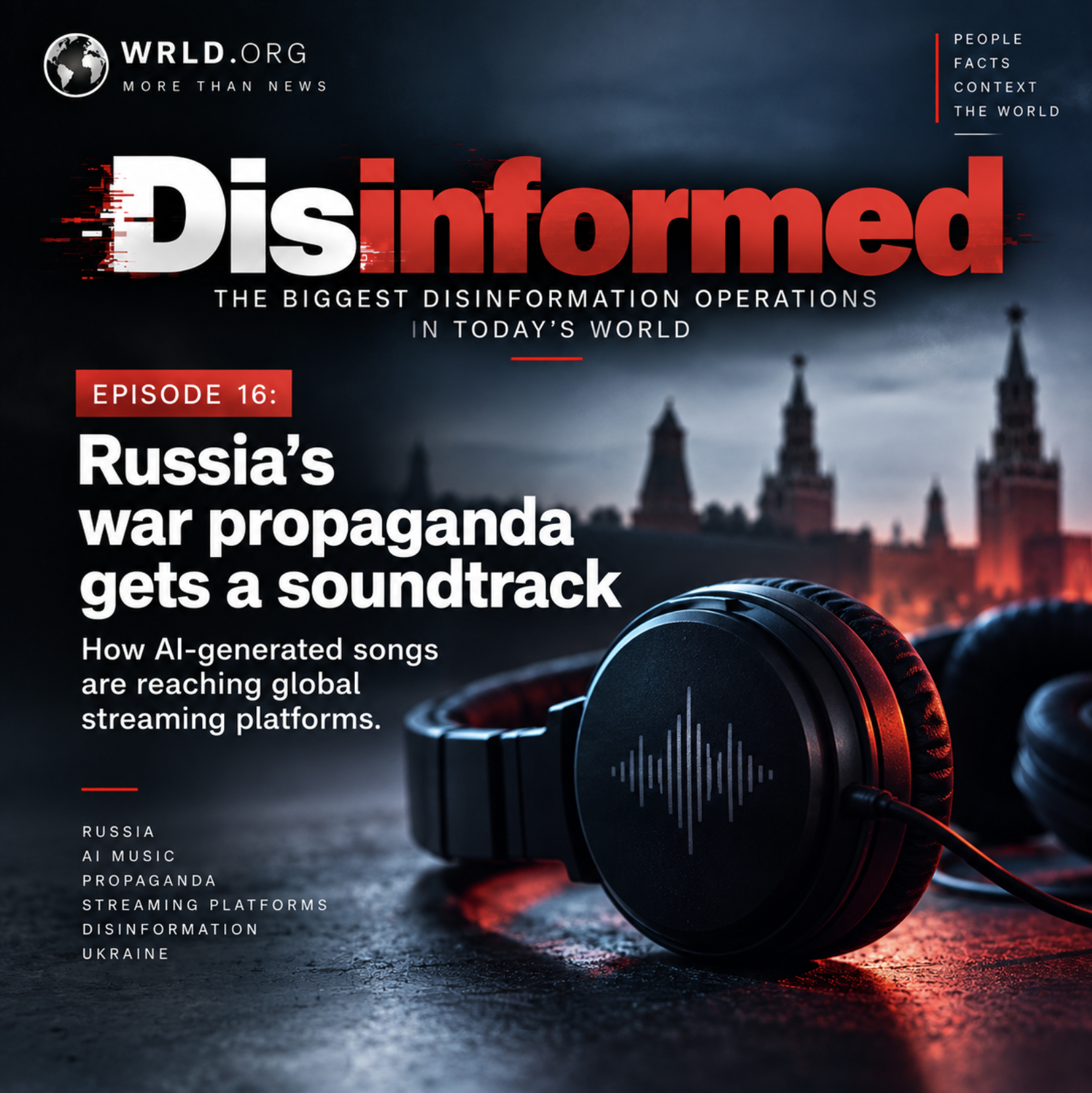
Russia’s war propaganda gets a soundtrack – how AI-generated songs reached global streaming platforms Russian war propaganda is no longer confined to television broadcasts, Telegram channels or political videos. A study by the Ukrainian threat-intelligence organisation Terrecon has identified 981 songs combining signs of AI generation with pro-Russian military narratives, distributed through an ecosystem that reaches YouTube, Spotify, Apple Music, Deezer and SoundCloud. The songs range from sentimental ballads to rock and heavy metal. Their recurring themes are familiar from conventional Russian wartime propaganda: the heroisation of Russian soldiers, romanticisation of the war, mobilisation, the “Russian world”, commemoration of fallen troops and attacks on Ukraine and its armed forces. Some contain derogatory or dehumanising references to Ukrainians. What is new is not necessarily the message, but the production and distribution model: generative AI allows propagandistic music to be produced rapidly, cheaply and in quantities that would previously have required musicians, studios and producers. Nearly 1,000 tracks identified Terrecon examined 3,725 tracks collected from YouTube, YouTube Music, SoundCloud and the AI music platform Suno. After manual review, researchers classified 981 as showing both indications of AI generation and pro-Russian war propaganda. In 681 tracks they identified 728 propaganda-related keywords or phrases. The largest category was the glorification of the Russian military, followed by romanticised treatment of Moscow’s so-called “special military operation”, mobilisation appeals, narratives about the “Russian world”, and the cult of fallen soldiers and the state. The reach was not merely theoretical. Listening or viewing statistics were available for 608 of the identified tracks; together they had accumulated 86.8 million plays and views, according to Terrecon. A smaller group of 13 high-performing songs accounted for more than 53 million YouTube views and more than 67 million when YouTube Music was included. Among the better-known examples is “Power of Artillery”, a Russian-language rock song praising artillery weapons that passed two million views on YouTube. Most of the tracks for which publication dates could be established appeared after 2024, broadly coinciding with the rapid expansion of consumer AI music generators such as Suno and Udio. That correlation does not prove that AI alone caused the increase, but it illustrates how drastically the economics of production have changed. A propaganda song for as little as $11 Terrecon also tested how difficult it would be to commission such material. Researchers approached 25 creators producing AI-assisted militaristic music; 15 agreed to take commissions. Prices ranged from approximately $11 to $330, while delivery times ranged from two hours to three days. According to Terrecon, some were prepared to produce highly aggressive anti-Ukrainian material, including content intended for audiences involving children from occupied Ukrainian territories. Some creators used Russian intermediary services that provided access to Western AI tools such as Suno and Udio despite restrictions. The researchers then tested several AI generators themselves. Across 40 prompts submitted to Suno, Udio, Mureka, Google Flow Music and ElevenLabs, 25 resulted in successful generations, while safeguards were circumvented in 15 cases. Terrecon reported that four of the five services tested produced Russian-language material containing wartime narratives, although technical problems prevented comparable testing on some systems. In one Udio experiment, the researchers said the model itself introduced more explicit violent language than had appeared in the original promp These tests do not demonstrate that the commercial platforms knowingly support Russian propaganda. They show something narrower: existing safeguards can be inconsistent when political messaging is packaged as music. From generation to Spotify The distribution experiment may be the most revealing part of Terrecon’s research. The team deliberately uploaded test tracks containing explicit hostile language to YouTube, SoundCloud, Spotify and Deezer. Terrecon says none was blocked during the experiment. On SoundCloud, researchers used an account identifying its location as Moscow, disclosed the use of AI and added markers including references to the Russian military and the war. The platform accepted the upload and subsequently offered paid promotional and distribution tools. This does not prove that streaming recommendation systems systematically promote pro-war music. There is currently insufficient public evidence to make that claim. It does demonstrate that material can enter the same commercial distribution infrastructure as ordinary music and, once there, potentially benefit from playlists, searches, sharing and recommendation mechanisms available to other releases. That distinction is important. Propaganda no longer has to announce itself as political communication. On a streaming platform it can look like another song. Culture as a delivery mechanism Music has always been used in wartime propaganda. What generative AI changes is scale. Instead of investing heavily in a limited number of patriotic performers or officially commissioned productions, creators can generate variations across styles, audiences and emotional registers at very low cost. Terrecon found material ranging from war rock to sentimental songs and content styled for younger audiences. Some creators also experimented with cloned celebrity voices and stylistic imitation of established musicians. The format also offers a different relationship with the audience. A political video asks a viewer to consume an argument. Music can accompany commuting, exercise or entertainment and may be encountered outside explicitly political spaces. This does not automatically make it more persuasive, and Terrecon’s research does not establish measurable effects on political attitudes. It does, however, place wartime narratives inside a cultural environment where users may not initially perceive themselves as consuming political messaging. An ecosystem, not a proven Kremlin command structure The strongest evidence supports describing this as a growing AI-assisted pro-Russian propaganda-music ecosystem, not a single operation controlled from Moscow. Terrecon did not establish that the Russian government created, financed or coordinated all 981 tracks. Reporting on the study likewise notes that the extent of direct state involvement remains unclear. There is broader evidence that the Russian state finances cultural projects and digital content supporting the war, including through state-backed funding bodies. That context matters, but it does not allow individual songs in Terrecon’s dataset to be attributed to the Kremlin without additional evidence. The significance of the case lies elsewhere. AI has reduced the cost of producing ideological content, intermediaries can help creators access generation tools, and global platforms can provide distribution. The result is a pipeline in which wartime propaganda no longer has to resemble propaganda at all. It can simply appear in a playlist. Sources Terrecon / Ukrainska Pravda — Daria Verbytska on the research https://www.pravda.com.ua/columns/2026/10/05/8056229/ Suspilne Culture — detailed breakdown of Terrecon findings https://suspilne.media/culture/1417933-rosijsku-voennu-propagandu-maskuut-pid-anime-karaoke-ta-rok-doslidzenna-si-pisen-vid-terrecon/ The Insider — AI-generated Russian war propaganda music https://theins.ru/news/297839 Institute of Mass Information — summary of New York Times reporting https://imi.org.ua/en/news/doslidzhennya-rf-masovo-stvoryu%D1%94-propagandistski-pisni-za-dopomogoyu-shi The Bridge Media — AI-generated songs and Russian military propaganda https://thebridgemedia.com.ua/en/ai-generated-songs-russian-military-propaganda/ Center for Strategic Communication — cost and production of AI propaganda music https://spravdi.org/propaganda-za-11-yak-rosiya-shtampuye-shi-pisni-z-miljonamy-prosluhovuvan/ Times of India — AI-generated Russian war songs https://timesofindia.indiatimes.com/world/europe/ai-sings-russias-war-story-inside-the-rise-of-generative-songs-about-ukraine-conflict/articleshow/134650594.cms EU Council / EUR-Lex — Presidential Foundation for Cultural Initiatives https://eur-lex.europa.eu/legal-content/EN/TXT/?uri=CELEX:32026D1351 Human Rights Watch — Russian state funding of digital and patriotic content https://www.hrw.org/report/2025/07/30/disrupted-throttled-and-blocked/state-censorship-control-and-increasing-isolation #DISINFORMED #Episode16 #Russia #Ukraine #RussianPropaganda #WarPropaganda #MusicPropaganda #AIMusic #ArtificialIntelligence #AI #GenerativeAI #SyntheticMedia #AIPropaganda #Disinformation #InformationWarfare #InfluenceOperations #CulturalPropaganda #DigitalInfluence #NarrativeManipulation #PropagandaMusic #StreamingPlatforms #Spotify #AppleMusic #YouTube #YouTubeMusic #Deezer #SoundCloud #Suno #Udio #RussianWorld #RusskiyMir #MilitaryPropaganda #WarNarratives #Mobilisation #AlgorithmicDistribution #RecommendationAlgorithms #MusicStreaming #PlatformManipulation #Terrecon #OSINT #MediaManipulation #WRLD


701
Krzysztof Graj Oct 6

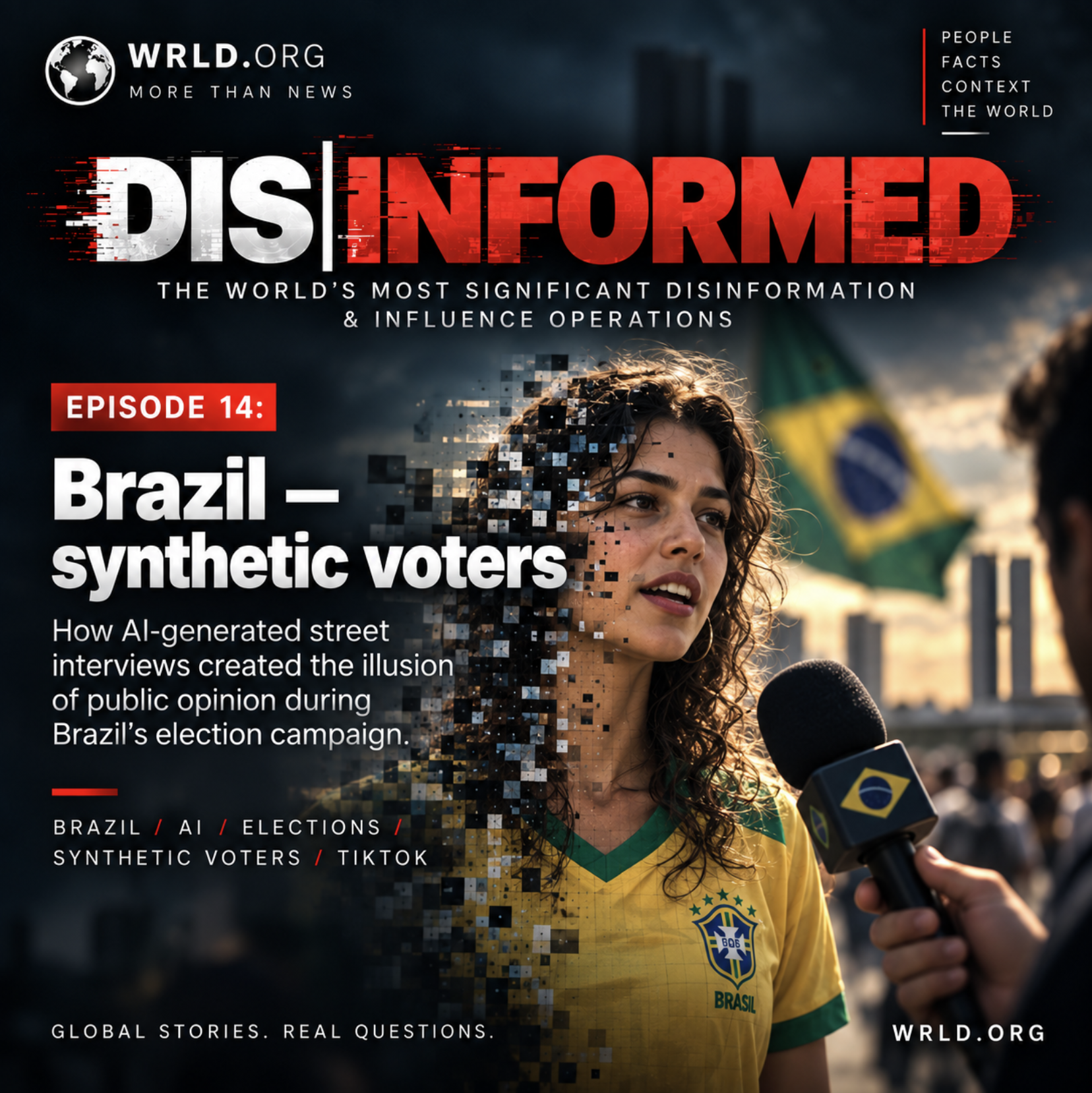
Brazil’s synthetic voters – when AI manufactures public opinion They look like ordinary street interviews. A reporter approaches a passer-by in a Brazilian square and asks a simple question: who will you vote for? A young voter explains why Luiz Inácio Lula da Silva deserves another term. An elderly woman says Brazil needs Flávio Bolsonaro because he represents political renewal and greater security. The locations look plausible, the microphones are visible and the answers sound much like the brief political opinions heard in television vox pops around the world. None of the people are real. Ahead of Brazil’s presidential election on 4 October, fact-checking organisation Aos Fatos identified at least 50 TikTok videos in which artificial intelligence was used to manufacture voters, reporters and apparently spontaneous political interviews. Together, the videos had accumulated around 7.4 million views by mid-August. Some promoted Lula, others Flávio Bolsonaro, while another group used synthetic characters to ridicule or stereotype supporters of one side. Aos Fatos found no apparent evidence linking the accounts producing the videos to either presidential campaign. The opinion poll that never took place The format is important. These were not conventional deepfakes in which a recognisable politician is made to say something he never said. Instead, the creators reproduced the visual language of the vox pop – the short street interview used by broadcasters and social-media creators to illustrate what ordinary people supposedly think. In pro-Lula videos, synthetic voters described themselves as beneficiaries of social programmes or credited the president with improving their lives. In videos supporting Flávio Bolsonaro, artificial interviewees associated him with political renewal, public security and fighting corruption. Other clips were openly hostile: AI-generated characters presented as poor or living in parts of Brazil’s north-east were shown in dirty clothes or run-down surroundings, declaring support for Lula because they supposedly preferred welfare payments to work. The deception is therefore subtler than fabricating a candidate’s statement. It manufactures something that political communication normally treats as evidence of public sentiment. A real vox pop may be unscientific, but the people interviewed at least exist. These videos created the appearance that identifiable social groups – young people, pensioners, welfare recipients or residents of particular regions – were spontaneously expressing political preferences when no such encounters had taken place. An electoral-law specialist interviewed by Aos Fatos described the technique as the fabrication of a “social fact that never occurred”. That captures the central innovation: AI is being used not merely to falsify political speech, but to manufacture the impression of grassroots opinion. Fifty videos, but not one proven network The available evidence does not support describing the 50 posts as a centrally controlled influence operation. Aos Fatos located them through TikTok searches and recommendations produced by the platform itself, then examined the accounts responsible for publication. Most had relatively small individual audiences, although their combined reach was substantial. The first examples identified by the investigation appeared as early as March 2026. Activity increased in June and was concentrated particularly in July and the first half of August as Brazil’s election calendar intensified. Some accounts specialised in AI-generated videos generally, including fabricated podcast-style material. Others were explicitly political or supportive of a candidate, but Aos Fatos found no apparent links between those profiles and the official Lula or Bolsonaro campaigns. That distinction is essential. The evidence demonstrates a common technique and a shared political environment, not a single command structure. Some creators may have been motivated by ideology, others by engagement or monetisation. Publicly available evidence does not establish who commissioned the individual videos or whether any coordination existed between the accounts. This decentralised model also creates a different enforcement problem from a traditional bot network. There may be no headquarters to expose and no infrastructure whose removal disables the entire operation. The format itself can be copied by anyone with access to inexpensive generative-video tools. When the algorithm mixes real and synthetic citizens Aos Fatos documented another important feature of the phenomenon: TikTok’s recommendation system placed AI-generated interviews alongside genuine street interviews. For a user scrolling quickly through the platform, the transition between an authentic citizen and an entirely fabricated one could therefore be almost invisible. In 18 per cent of the 50 videos analysed, there was no indication that the people shown had been generated using AI. After Aos Fatos provided TikTok with the videos, the company said it had removed all of them for violating its rules on edited and AI-generated media. TikTok said its policies require creators to identify synthetic content and prohibit manipulated media capable of misleading users about matters of public importance or impersonating genuine journalistic material. The issue extends beyond one platform. Factchequeado’s review of Brazil’s 2026 election campaign found that synthetic endorsements and other deepfakes had become one of the most visible forms of AI-assisted electoral misinformation, alongside fabricated candidate statements and invented scenes. Brazil already had rules for synthetic politics Brazil entered the campaign with unusually detailed electoral rules governing artificial intelligence. The Superior Electoral Court, the TSE, requires electoral propaganda using synthetic multimedia to disclose clearly that AI was used. More importantly for the fake-voter videos, its rules prohibit synthetic audio or video used to favour or harm a candidacy when it creates or alters the image or voice of a living, deceased or fictitious person. The difficulty is attribution and enforcement. When a synthetic video is published by an official campaign, responsibility can be relatively straightforward to investigate. When it comes from an apparently independent account with no demonstrated relationship to a candidate, lawyers interviewed by Aos Fatos said responsibility is more likely to fall on the individual creator, while imposing electoral sanctions on a campaign would require evidence of a connection. For the final 72 hours before the election and the 24 hours following it, the TSE has imposed additional restrictions on newly published or republished synthetic material involving candidates or public figures, reflecting the particular difficulty of correcting fabricated content immediately before voting. From deepfake politicians to synthetic electorates The Brazilian case illustrates a broader change in political manipulation. The first generation of electoral deepfakes concentrated on famous people: make a politician appear to say something damaging, or fabricate an endorsement from a celebrity. Synthetic vox pops reverse the perspective. The politician can remain completely authentic; it is the electorate around the politician that is fabricated. That changes the psychological proposition of the message. Instead of saying the candidate believes this, the video suggests people like you believe this. Age, clothing, accent, neighbourhood and social class can all be generated to construct an artificial constituency around almost any political claim. There is no evidence that the 50 Brazilian videos identified by Aos Fatos constitute a single centrally directed campaign, nor evidence that they changed voting intentions. What they demonstrate is a technique whose barrier to entry has become extremely low. AI no longer needs to forge the politician. #DISINFORMED #Episode14 #Brazil #BrazilElection2026 #Elections #ElectionDisinformation #ArtificialIntelligence #AI #GenerativeAI #SyntheticVoters #SyntheticMedia #AIAvatars #AIGeneratedVideo #VoxPop #FakeInterviews #Astroturfing #AIPropaganda #PoliticalDisinformation #InfluenceOperations #InformationWarfare #SocialMediaManipulation #TikTok #PublicOpinion #ManufacturedConsent #SyntheticPublicOpinion #DigitalInfluence #Deepfakes #ElectionIntegrity #TSE #AosFatos #FactChecking #OSINT #MediaManipulation #WRLD (translated)

www.aosfatos.org
Eleitores gerados por IA fazem campanha no TikTok e põem em xeque regra do TSE
702
Luciano Magaldi Sardella (PhD) Sep 27

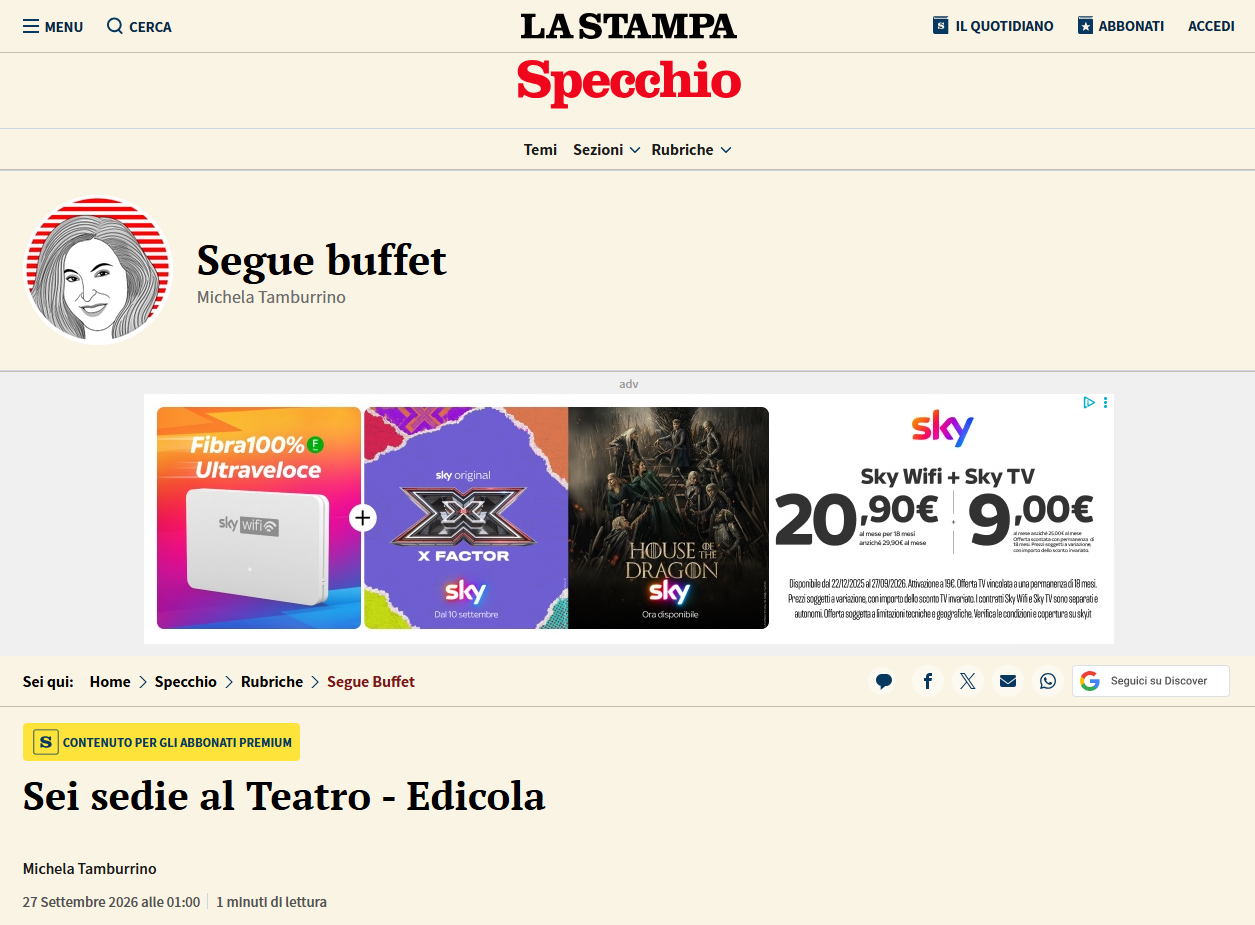
IL TEATRO-EDICOLA (FRANCESCO GRAVINO) SU “LA STAMPA (SPECCHIO)”, “SIX CHAIRS AT THE TEATRO-EDICOLA” by FRANCESCA TAMBURRINO SOURCE: https://www.lastampa.it/specchio/rubriche/segue-buffet/2026/09/27/news/sei_sedie_al_teatro_-_edicola-15748967/ To the delight of lovers of the genre, the news is reassuring: theatres are back in fashion. Perhaps they had never gone out of fashion but were slightly tarnished by interest in other genres considered more contemporary. Wrong, theatre after millennia withstands wear and negativity reinvigorates it. Halls thought lost are reopening and new spaces are flourishing. Because theatre can be made anywhere, in houses, in streets, on the ashes of spaces born for other purposes. For example in newsstands: in many cities these kiosks sell everything except what they were conceived for, newspapers. The ingenious wheeze is to be found in the Foggia area with the Teatro-Edicola, the smallest theatre in the world, six chairs, less than two square metres, careful programming, performances every fifteen minutes and sold-out is easily guaranteed. A happy experiment that has intrigued even the noble journal of the American Stanford University. The wheeze from San Severo in the Foggia area pleased the students of Stanford so much that they made it a case study. The result was published in the “Stanford Social Innovation Review (SSIR)” quarterly journal and award-winning website given its specific specialisation in covering multisectoral solutions to global problems, considered one of the world reference points for social innovation. The article “The Six-Seat Revolution”, that is to say the Revolution of the Six Chairs, was curated by the Foggian (Orta Nova) researcher Luciano Magaldi Sardella, supervised by editor David V. Johnson and can be retrieved in the Dispatches section of the “Stanford Social Innovation Review”. Imagine the satisfaction of the theatre company Foyer 97 which sees itself projected into global fame and planetary interest, matured into a shower of requests for duplication. After all, who does not have a disused space in a state of abandonment to be recovered worthy of rising to a cultural garrison? Meanwhile the meritorious creators of the winning idea will return to the stage in October and are already preparing the thirtieth anniversary of the company which falls next year. On those six chairs, they assure us, young and old have sat in equal albeit meagre measure. An experiment which in the universe of entertainment is followed with attention. So much so that Biagio Antonacci made a surprise stop at the Teatro-Edicola where he sang his “Iris”. Passers-by in a huddle beyond the sold-out.

www.lastampa.it
Sei sedie al Teatro - Edicola
1057
Gerd Leonhard Sep 21
German futurist and writer

“There are two ways that an agentic AI can become dangerous. The first is when they are empowered to do something bad by a human being. The second is when they develop intentions that are “misaligned” with the aims of their human creators.” Why I Changed My Mind About AI Risk #AI #AIEthics #AIAlignment #Nospecificcountrycodesarementionedinthetweet.