WRLD

Search

#Despair
Krzysztof Graj 3d

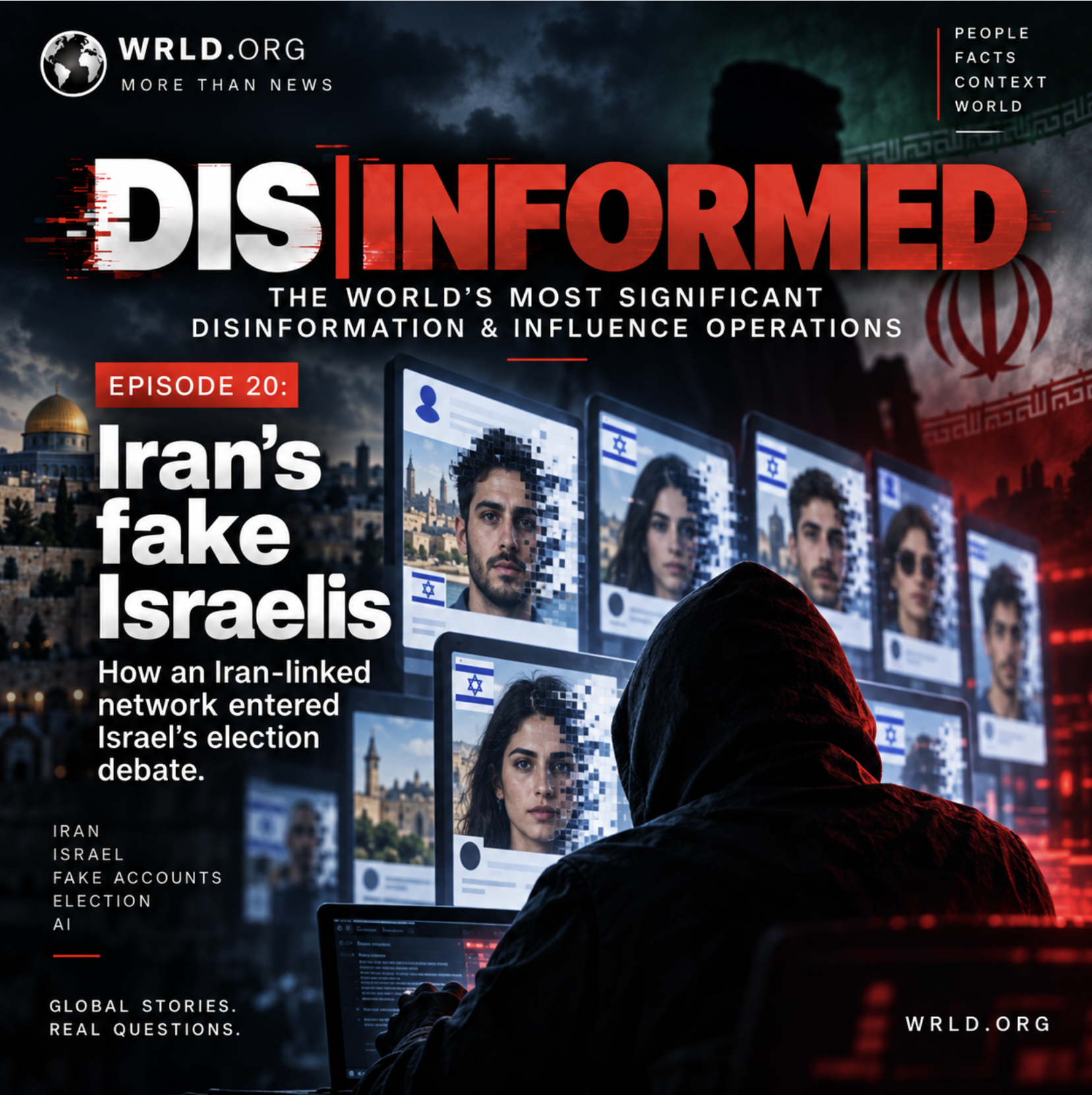
𝗜𝗿𝗮𝗻’𝘀 𝗳𝗮𝗸𝗲 𝗜𝘀𝗿𝗮𝗲𝗹𝗶𝘀 – 𝗵𝗼𝘄 𝗮 𝗳𝗼𝗿𝗲𝗶𝗴𝗻 𝗶𝗻𝗳𝗹𝘂𝗲𝗻𝗰𝗲 𝗻𝗲𝘁𝘄𝗼𝗿𝗸 𝗲𝗻𝘁𝗲𝗿𝗲𝗱 𝗜𝘀𝗿𝗮𝗲𝗹’𝘀 𝗲𝗹𝗲𝗰𝘁𝗶𝗼𝗻 𝗱𝗲𝗯𝗮𝘁𝗲 Ahead of Israel’s 27 October election, hundreds of social-media accounts have been presenting themselves as ordinary Israelis while injecting political messages into genuine domestic conversations. They appear as women, reservists, secular voters, religious activists and frustrated citizens. Some attack Benjamin Netanyahu, others have previously promoted narratives associated with the Israeli right, while many focus less on parties than on a broader message: Israel is divided, its institutions cannot be trusted and its political system is approaching crisis. A detailed investigation by the OSINT company Golden Owl has mapped this activity as a substantial Iran-linked influence network. Its October analysis identified at least 694 accounts, with 445 attributed at high or medium-high confidence to the operation. Between 11 August and 11 October, the network generated at least 4.7 million views and more than 160,000 interactions. The researchers found no evidence that these accounts were simply a group of independent Iranian commentators expressing political opinions. Their assessment rests instead on coordinated behaviour, false identities, account histories, copied content, language patterns and platform metadata linking significant parts of the infrastructure to Iran. 𝗙𝗿𝗼𝗺 𝟯𝟱 𝗽𝗲𝗿𝘀𝗼𝗻𝗮𝘀 𝘁𝗼 𝗵𝘂𝗻𝗱𝗿𝗲𝗱𝘀 𝗼𝗳 𝗳𝗮𝗸𝗲 𝗮𝗰𝗰𝗼𝘂𝗻𝘁𝘀 The investigation developed in two stages. Golden Owl’s first report, published in September, identified an operational core of 35 accounts: 32 personas presenting themselves as Israelis and three Hebrew-language media-style channels. During the 30-day period measured in that study, active accounts generated 947,322 impressions and more than 9,000 interactions. The October investigation expanded the dataset dramatically. Researchers analysed more than 560,000 data points, including tens of thousands of accounts, relationships between them and more than a quarter of a million posts. The wider network showed repeated patterns of identical texts, synchronised activity and accounts created in batches. The numbers therefore describe not a sudden explosion from 35 to hundreds of accounts, but the gradual exposure of a much larger infrastructure surrounding the original core. 𝗧𝗵𝗲 𝗳𝗮𝗸𝗲 𝗜𝘀𝗿𝗮𝗲𝗹𝗶𝘀 Some of the strongest evidence comes from the histories of individual personas. One account had spent years posting exclusively in Persian under the handle “mardeankabooti” before reappearing in August 2026 as an apparently Israeli user called “Alon Strauss”, complete with an Israeli flag and Hebrew political messaging. Other personas presented themselves as Israeli professionals, activists or ordinary citizens while X transparency information showed connections through the Iranian version of the Android application or locations inconsistent with their claimed identities. The account “Yaara Shalev” presented itself as an Israeli woman concerned with democracy and peace. Investigators found that photographs used to construct the identity were inconsistent, including borrowed and apparently AI-generated imagery. A small Hebrew-language channel called KigVoice, previously identified in Israeli government reporting as part of an Iranian influence environment, repeatedly published material that later appeared on the much more visible Yaara account. In one sample, 14 of 40 KigVoice posts subsequently resurfaced as captions or opening lines in Yaara’s content. Another persona, “Miriam Kozak”, had built an audience of more than 18,000 followers and had already been exposed as fictitious by Israeli researchers in 2024. Its political messaging changed substantially over time, moving between narratives associated with different sides of Israeli politics. That inconsistency is important: the apparent purpose was not necessarily to build a stable ideological following, but to enter whichever political argument offered the greatest opportunity to intensify division. 𝗔𝗜, 𝗰𝗼𝗽𝗶𝗲𝗱 𝗺𝗲𝘀𝘀𝗮𝗴𝗲𝘀 𝗮𝗻𝗱 𝗜𝗿𝗮𝗻𝗶𝗮𝗻 𝗳𝗶𝗻𝗴𝗲𝗿𝗽𝗿𝗶𝗻𝘁𝘀 The Iran attribution is based on more than political content. Researchers identified accounts using the Iranian version of the X Android application, repeated connections to previously identified Iranian influence assets, copied posts appearing across supposedly independent personas within minutes, and Hebrew containing unusual grammatical errors or Persian and Arabic keyboard artefacts. Generative AI also appears to have become part of the production process. Some accounts inadvertently published fragments resembling chatbot instructions, while other posts displayed patterns consistent with machine-generated Hebrew. AI-generated videos and synthetic profile imagery further reduced the cost of maintaining large numbers of apparently distinct personalities. However, none of these indicators was treated as proof on its own. Golden Owl explicitly excluded accounts where the evidence was insufficient and notes that VPNs, travel and platform location labels can create misleading signals. The attribution rests on multiple independent indicators converging across the network. 𝗧𝗵𝗲 𝗴𝗼𝗮𝗹 𝗶𝘀 𝗻𝗼𝘁 𝗻𝗲𝗰𝗲𝘀𝘀𝗮𝗿𝗶𝗹𝘆 𝘁𝗼 𝗲𝗹𝗲𝗰𝘁 𝗼𝗻𝗲 𝗽𝗮𝗿𝘁𝘆 The network repeatedly exploited issues that genuinely divide Israeli society: responsibility for the 7 October attacks, the war, the hostages, ultra-Orthodox military exemptions, economic pressure, emigration and confidence in state institutions. It also circulated misleading information about the election itself, including false voting dates, claims that voting had been postponed and posts suggesting online voting mechanisms that do not exist in Israel’s parliamentary election system. The pattern suggests a strategy broader than conventional electoral campaigning. Rather than consistently promoting one political faction, the network appears designed to weaken confidence in the government, military, democratic institutions and the electoral process itself. An influence operation does not need to persuade Israelis to support a particular candidate if it can convince different groups that defeat would prove fraud, betrayal or systemic failure. 𝗥𝗲𝗮𝗹 𝗜𝘀𝗿𝗮𝗲𝗹𝗶𝘀 𝗮𝘀 𝘂𝗻𝘄𝗶𝘁𝘁𝗶𝗻𝗴 𝗮𝗺𝗽𝗹𝗶𝗳𝗶𝗲𝗿𝘀 One of the network’s most effective characteristics is that it does not depend solely on its own followers. Fake personas enter comment sections and political discussions involving real Israeli journalists, politicians and ordinary users. Authentic Israelis then repost or interact with the material, sometimes carrying it far beyond the original account. Golden Owl does not classify those genuine users as participants in the operation. In most cases they appear to be unwitting amplifiers. But once a message passes from a fabricated Iranian-operated persona to an authentic Israeli account, its foreign origin becomes much harder for the next person to recognise. 𝗧𝗵𝗲 𝟰𝟬,𝟬𝟬𝟬-𝗯𝗼𝘁 𝗳𝗶𝗴𝘂𝗿𝗲 𝗯𝗲𝗹𝗼𝗻𝗴𝘀 𝘁𝗼 𝗮 𝗱𝗶𝗳𝗳𝗲𝗿𝗲𝗻𝘁 𝗽𝗲𝗿𝗶𝗼𝗱 A much larger figure has also appeared in recent reporting. In the first two days after the October 2023 Hamas attack, social-media intelligence company Cyabra identified more than 40,000 fake profiles participating in online discussions across major platforms. Their content generated hundreds of thousands of interactions and had a potential reach estimated at 531 million profiles. Those numbers are important historical context, but they should not be merged with the current Golden Owl investigation. There is no public evidence demonstrating that all of those 2023 accounts and the 2026 Iran-linked election network belonged to one continuous command structure. The 531 million figure is also an estimate of potential exposure, not proof that 531 million people saw or believed the content. 𝗪𝗵𝗼 𝗶𝘀 𝗮𝗰𝘁𝘂𝗮𝗹𝗹𝘆 𝗯𝗲𝗵𝗶𝗻𝗱 𝘁𝗵𝗲 𝗼𝗽𝗲𝗿𝗮𝘁𝗶𝗼𝗻? No confirmed individual operators have been publicly identified. Names such as Yaara Shalev, Miriam Kozak and Alon Strauss are personas, not verified identities of the people controlling the accounts. Golden Owl says its evidence supports an association with the Islamic Republic of Iran and with previously documented Iranian influence infrastructure, but it does not establish which Iranian institution, intelligence service, military organisation or contractor directs the network. That distinction is essential. Public OSINT supports attribution at the Iran-linked operational level. It does not currently justify naming individual Iranian officials as the people commanding this specific campaign. 𝗧𝗵𝗲 𝗱𝗲𝗲𝗽𝗳𝗮𝗸𝗲 𝗶𝘀 𝗻𝗼 𝗹𝗼𝗻𝗴𝗲𝗿 𝗼𝗻𝗹𝘆 𝘁𝗵𝗲 𝘃𝗶𝗱𝗲𝗼 The Israeli case illustrates a broader change in influence operations. The synthetic asset does not have to be a spectacular deepfake of a politician. It can be an apparently ordinary citizen who comments on politics, argues with neighbours, describes personal experiences and gradually becomes part of an authentic community. That can be more difficult to recognise because the propaganda does not arrive looking foreign. It arrives looking local. And when hundreds of fabricated citizens enter the same national conversation, they can manufacture the impression that political anger, despair or distrust is more spontaneous and more widely shared than it really is. 𝗦𝗼𝘂𝗿𝗰𝗲𝘀 Golden Owl — Exposing the Iranian Regime’s Influence Machinery Against Israeli Society https://web-dev-production-7a35.up.railway.app/resources/research/Exposing-the-Iranian-Regime-Influence-Machinery-Against-Israeli-Society Golden Owl Golden Owl — The Other Face of War: Iranian Regime–Linked Manipulation of Israel’s 2026 Election Debate https://web-dev-production-7a35.up.railway.app/resources/research/Iranian-Regime-Linked-Manipulation-of-Israel-2026-Election-Debate Golden Owl The Jerusalem Post — Iran-linked social-media accounts posing as Israelis to target election https://www.jpost.com/israel-election-2026/article-909863 The Jerusalem Post Ynet — Fake Israelis, real influence: Iran-linked network infiltrates Israel’s election debate https://www.ynetnews.com/tech-and-digital/article/syp119nqqzg ynetglobal Calcalist — Iranian influence network exposed ahead of Israel’s election https://www.calcalist.co.il/calcalistech/article/s1q0ifijzl calcalist Vesty / Ynet — Iranian fake-account network and October update https://www.vesty.co.il/main/article/rkwokjssgg vesty Israel Ministry for Diaspora Affairs — Iran’s active Hebrew-language influence campaign https://www.gov.il/BlobFolder/reports/israel-and-us-strikes-in-iran-daily-status_2_3_26/en/mashlat_Roaring_Lion_israel-and-us-strikes-in-iran-daily-status_2_3_26.pdf Government of Israel Israel Central Elections Committee — official 2026 election timetable https://www.gov.il/en/pages/time--table-26 Government of Israel Channel NewsAsia — historical Cyabra analysis of more than 40,000 fake profiles after 7 October 2023 https://www.channelnewsasia.com/singapore/how-fake-news-israel-hamas-stokes-outrage-hatred-and-potential-violence-southeast-asian-tiktok-5603221 𝗞𝗲𝘆𝘄𝗼𝗿𝗱𝘀 #DISINFORMED #Episode20 #Iran #Israel #IsraelElection2026 #IranianInfluence #IranianDisinformation #ElectionInterference #ForeignInterference #FIMI #Disinformation #InformationWarfare #InfluenceOperations #FakeAccounts #FakePersonas #SyntheticIdentity #ArtificialIntelligence #AI #AIPropaganda #SocialMediaManipulation #Astroturfing #NarrativeManipulation #PoliticalDisinformation #ElectionDisinformation #X #Twitter #Bots #BotNetwork #KigVoice #YaaraShalev #MiriamKozak #DigitalInfluence #InformationManipulation #ElectionIntegrity #GoldenOwl #OSINT #MediaManipulation #WRLD

web-dev-production-7a35.up.railway.app
Exposing the Iranian Regime’s Influence Machinery Against Israeli Society
335
Joscha Bach 6d

The author quoted Woody Allen as saying humanity faced a historic crossroads, with one path leading to despair and the other to extinction, and expressed hope that people would choose wisely.

3396
Scott Horton 6d

Actually there's nothing remotely surprising about it. Jonathan Lemire: Trump siding with the Kremlin is quite an October surprise. But in just the past few days, Trump appears to have fully turned against Ukraine. Inside the moves that have left Kyiv despairing ahead of a dark winter

3284
Luciano Magaldi Sardella (PhD) Sep 5

The Psychologist – The British Psychological Society – When Walls Become Wellness SOURCE: https://www.linkedin.com/pulse/psychologist-british-psychological-society-when-walls-sardella-ph-d--pu8sf/ Dr Luciano Magaldi Sardella and Professor Matteo Mantuano on how ‘Stramurales Participatory Street Art’ transforms urban mental health. Link: https://www.bps.org.uk/psychologist/when-walls-become-wellness The Psychologist, The British Psychological Society by esteemed Dr. Joe Sutton, Head of Science Communication at BPS Contenuto dell’articolo On a sweltering afternoon in June 2018, we stood in the central square of Stornara, a small agricultural town in Puglia, Southern Italy, watching something extraordinary unfold. Local artist Lino Lombardi was facilitating a heated discussion among residents about which mural designs should adorn their town's crumbling walls. What struck us wasn't the art itself, but the transformation we witnessed in the eyes of people who, just months before, had described their hometown as a place to escape. These were individuals reclaiming their narrative, voting on their future, literally painting over decades of decline. We are environmental and community psychologists who have spent over a decade studying how built environments shape mental health outcomes. Dr Luciano Magaldi Sardella's research focuses on participatory arts interventions in declining rural communities, while Professor Matteo Mantuano specialises in the psychological mechanisms of community empowerment and collective agency. When we first learned about the Stramurales festival in early 2018, we recognised it as a rare opportunity to observe participatory urban art as a potential tool for addressing the mental health crisis plaguing Southern Italy's depopulating towns. Over the past seven years, we have conducted extensive fieldwork in Stornara – interviewing residents, documenting the festival's evolution, and analysing its psychological and social impacts. What we found in Stornara was something far more significant than an innovative community-led arts initiative. It was environmental psychology in action – reshaping how we understand the relationship between built environments, participatory arts, and mental health. The Crisis Hiding in Plain Sight Recent research reveals an alarming convergence of environmental and mental health crises that remains curiously underexamined in psychological discourse. Mental health research receives a mere 2.3 per cent of overall National Institute of Health funding. We cannot know how much of that concerns our environments – both natural and built – which fundamentally shape our psychological wellbeing. The newly proposed field of 'EnvironMental Health' emphasises that deteriorating built environments correlate significantly with elevated stress, social isolation, and worsening mental health outcomes. Southern Italy's rural communities embody this crisis. Between 2002 and 2017, South Italy region lost approximately two million residents to migration, predominantly young adults aged 15-34. This exodus created what Johan Galtung described as 'structural violence' – systematic arrangements preventing communities from realising their potential. The mental health toll manifests not just in individual diagnoses, but in collective despair, eroded social capital, and communities watching their futures literally emigrate. Stornara exemplified this trajectory. By 2017, this municipality of 6,000 residents faced the familiar spiral: economic contraction precipitating youth emigration, accelerating infrastructure deterioration, driving further decline. Walls crumbled. Businesses shuttered. Hope evaporated. Then something changed. The Stramurales Revolution: Democracy through Design What emerged in Stornara transcends conventional cultural tourism. The Stramurales International Street Art Festivalworks through three foundational democratic mechanisms that distinguish it from superficial beautification projects. Organised through Stornara Life APS – an open-membership association founded by Maestro Lino Lombardi – the festival prevents elite capture through voluntary property owner participation ensuring no coercion; democratic content selection through annual community voting on festival themes and mural proposals; and transparent, inclusive governance that gives all residents a voice in the festival's direction. This participatory architecture facilitates what the World Health Organization describes as 'community empowerment' – processes enabling communities to increase control over determinants affecting their health. Recent field studies in Vienna demonstrate that urban art interventions reduce stress and anxiety while improving mood states, but Stramuralesgoes further by embedding art creation within democratic decision-making structures. When residents voluntarily offer walls and vote on content, they perform acts of material and psychological investment. This restoration of collective agency – the belief that residents can shape their hometown's future rather than merely witnessing decline – directly addresses the structural violence that erodes mental health. Between 2020 and 2025, Stornara experienced a huge increase in tourism revenue despite pandemic disruption. New businesses opened. A Stornara-born emigrant who returned reluctantly in 2017 to provide parental care, now works as a tour guide and describes Stornara as 'the coolest town in Italy'. These aren't just economic indicators. They're mental health outcomes. The Science behind the Transformation Contemporary research across multiple disciplines validates what Stornara residents experience viscerally. A 2024 systematic review examining 79 peer-reviewed articles identified how arts places – from permanent museums to temporary public installations – stimulate community engagement, enhance cultural identity, and foster social cohesion. Community-driven mural projects specifically strengthen local identity and pride, creating new routines for individuals to interact and build relationships. Recent experimental research in Berlin found that sidewalk-level art exhibitions significantly altered visitors' connection to and satisfaction with their neighbourhoods, improving overall wellbeing. This aligns with emerging theories on art viewing's impact on mental health, which identifies five key mechanisms: affective processes regulating emotions and stress; cognitive processes providing sensory stimulation and learning; social processes creating shared experiences; self-transformation through reflection; and resilience building for coping with challenges. Environmental psychology research demonstrates that built environments operate as therapeutic interventions. Studies on mental health inpatient facilities reveal that design elements affecting privacy, control, daylight access, and particularly the inclusion of artwork significantly impact patient outcomes. If hospital walls matter therapeutically, how much more do the walls we encounter daily in our communities? The Stramurales model harnesses these mechanisms through the recent concept of 'visual health activism'. Several murals explicitly engage health and human rights themes: Alaniz Niz's 'Refuge for All Migrants' represents exploited African agricultural workers; Sabotaje al Montaje's 'Turning Our Backs on Migration' challenges exclusionary policies; Devil Art Design's 'African Child at Sunset' portrays migrant youth seeking dignified futures. These works address social determinants of health through human rights advocacy. Migration policies denying basic rights create health vulnerabilities – including restricted healthcare access, hazardous working conditions, and psychological trauma from discrimination. The murals perform dual public health functions, in addressing residents' mental health while advocating for populations whose health rights face systematic violation. Place Attachment and Community Resilience The relationship between environmental perception, cultural identity, and community resilience has received substantial scholarly attention in 2024-2025. Research in rural China demonstrates that environmental perception of public spaces influences community resilience through chain mediating effects of cultural identity and place attachment. When communities transform their physical environments through participatory processes, they simultaneously strengthen the psychological bonds that underpin resilience. This explains why Stramurales succeeds where traditional economic development approaches falter. The festival doesn't just create economic value – though over 150 murals by international artists now attract thousands of visitors annually. It fundamentally reshapes residents' relationship with their environment, transforming narratives of decline into evidence of vitality. Each democratically selected mural becomes what resilience researchers call an 'anchor of hope' – tangible proof contradicting despair. Contemporary resilience theory emphasises that strength resides not merely in physical infrastructure but in social cohesion. A recent analysis of resilient urban design in marginalised American neighbourhoods found that residents' message – 'We like our neighbours, we like the character of where we live' – revealed that resilience is fundamentally about people and community. Design interventions succeed when they preserve and strengthen these social bonds, rather than imposing external visions. Stramurales embodies this principle. The democratic voting mechanisms ensure art reflects genuine community values rather than artist or curator preferences. This prevents the cultural displacement often accompanying urban regeneration, where improvements benefit newcomers while alienating existing residents. By centering resident agency, Stramuralesbuilds what researchers describe as 'critical resilience' – capacity addressing underlying inequalities rather than merely adapting to them. The Participation Gap and Universal Access These findings resonate profoundly with longstanding concerns about arts accessibility. The 2015 Warwick Commission documented that the wealthiest, most educated 8 per cent of the UK population accounted for 44 per cent of live music attendance and 28 per cent of visual art visits. This participation gap particularly affects communities that would benefit most from arts engagement for health and wellbeing. But Stramurales challenges this narrative. Street art as public health infrastructure requires no admission fees, no advance booking, no cultural capital to appreciate. It exists where people live, transforming daily commutes into encounters with beauty and meaning. The democratic selection process ensures accessibility extends beyond consumption to co-creation – residents don't just view art, they determine what appears on their walls. Recent research on participatory arts and social cohesion emphasises that successful interventions share common features: delivery in local communities, non-stigmatising approaches, flexibility, promoting social engagement, involvement of exhibitions, and delivery within specific timeframes. Stramurales incorporates all these elements while adding genuine democratic governance. This matters urgently. Mental health conditions among young people globally are rising, and traditional mental health services remain chronically underfunded. If we cannot scale clinical interventions to meet demand, we must invest in preventive public health approaches targeting social determinants. From Stornara to the World: Implications for Practice The Stramurales model offers a replicable template requiring modest financial investment but substantial community participation. Essential elements include voluntary engagement, democratic decision-making, strategic social media use for marketing, and integration of local narratives with global artistic practices. Several cities have implemented variations with promising results. Research on artistic interventions in urban spaces across Europe and Asia demonstrates that participatory art projects can serve as 'social prescribing', improving psychological resilience and enhancing public engagement. Tactical urbanism approaches – small-scale, low-cost interventions improving public spaces – increasingly incorporate art as core rather than supplementary elements. The implications extend beyond individual communities. International frameworks including the International Covenant on Economic, Social and Cultural Rights enshrine rights to health and cultural participation. State obligations to conserve, develop and diffuse culture should support community-driven cultural initiatives demonstrably impacting health outcomes. As pandemic governance analyses emphasise, future health policy reforms must address not only biomedical preparedness but underlying vulnerabilities in community resilience and social cohesion. Street art operating through participatory structures directly strengthens these dimensions. What Psychologists Can Do We have roles to play at multiple levels. First, we must conduct research documenting the mental health impacts of participatory arts interventions. While promising evidence exists, methodologically rigorous studies with adequate sample sizes and long-term follow-up remain scarce. We need experimental designs, not just observational studies, examining mechanisms through which environmental transformations affect psychological outcomes. Second, we should advocate for policy recognising arts engagement as health intervention. This means supporting public health funding for community arts initiatives, particularly in economically deprived areas where traditional development approaches have failed. We should work with urban planners, architects, and artists to integrate participatory arts into neighbourhood regeneration from inception, not as afterthoughts. Third, we must ensure interventions embody genuine participation rather than tokenistic consultation. The Stramuralesmodel succeeds because residents hold real power. Without this, arts interventions risk replicating existing power structures and potentially accelerating gentrification that displaces the communities they ostensibly serve. Fourth, we should employ arts-based research methods that centre community voices. Collaborative approaches like participatory theatre, photovoice, and collaborative poetics enable communities to articulate their experiences and aspirations in ways traditional psychological assessments cannot capture. These methods acknowledge that communities possess expertise about their own needs and potential solutions. Finally, we must situate arts interventions within broader frameworks addressing social justice. Art should not function as a 'sticking plaster' masking underlying inequalities. Instead, we should harness arts' disruptive potential to promote what researchers term 'critical resilience' – capacity challenging systemic injustices rather than merely helping people adapt to them. This means addressing not just symptoms (mental distress) but causes (structural violence, economic abandonment, policy failures). Reimagining Health Infrastructure The Stramurales case compels fundamental reconsideration of what constitutes health infrastructure. We typically envision clinics, hospitals, pharmacies – biomedical institutions delivering treatments for diagnosed conditions. But what if the most effective mental health intervention for a declining community isn't a new psychiatric facility, but democratic processes enabling residents to transform their visual environment? Walls covered with democratically selected art, created through genuine community participation, demonstrably improve community mental health while operationalising cultural rights described in international law. The modest financial investment required pales beside costs of clinical services treating preventable distress. For communities experiencing decline where traditional economic development has failed, participatory street art may offer the most cost-effective, accessible, and sustainable mental health intervention available. This isn't about romanticising art or dismissing serious mental illness requiring clinical care. It's about acknowledging that population mental health requires addressing social determinants – and that participatory arts targeting built environments, social capital, and collective agency directly address these determinants. The question facing psychology isn't whether art can function as health intervention – Stramurales and growing evidence demonstrate it can. Rather, the question is whether we possess imagination to rethink health infrastructure, recognising that effective mental health promotion may require democratic decision-making and community participation as much as clinical expertise. As we watched Stornara residents voting on murals that June afternoon, we witnessed people exercising a fundamental human capacity too often denied in our field: the power to shape their own environments and, through that shaping, to heal. Perhaps that's the most vital lesson Stramurales offers psychology – that sometimes the most therapeutic intervention isn't administered by professionals, but created by communities reclaiming their agency… one democratically selected wall at a time. Dr Luciano Magaldi Sardella holds a PhD in Cognitive Leadership at Aspire Institute, Harvard Business School. Professor Matteo Mantuano is Professor of Social Sciences and Psychoeducational Health, Unitré University of Milan, Italy. Photo: 'Kid trapped in a box' mural by Leticia Mandragora References: All-Party Parliamentary Group on Arts, Health and Wellbeing (2017). Creative Health: The Arts for Health and Wellbeing (2nd ed.). Belfiore, E. & Bennett, O. (2024). The social impact of the arts: An intellectual history. London: Palgrave Macmillan. Bone, J.K., Bu, F., Fluharty, M.E., Paul, E., Sonke, J.K. & Fancourt, D. (2024). Who engages in the arts in the United States? A comparison of several types of engagement using data from The General Social Survey. PLOS ONE, 19(1), e0296743. doi:10.1371/journal.pone.0296743 Chatterjee, H.J. & Noble, G. (2024). Museums, health and well-being: A preliminary report for Phase I. UCL Museums & Public Health Research Group. Cohen, G.D., Perlstein, S., Chapline, J., Kelly, J., Firth, K.M. & Simmens, S. (2006). The impact of professionally conducted cultural programs on the physical health, mental health, and social functioning of older adults. The Gerontologist, 46(6), 726–734. Daykin, N., Mansfield, L., Meads, C., Julier, G., Tomlinson, A., Payne, A., Grigsby Duffy, L., Lane, J., D'Innocenzo, G., Burnett, A., Kay, T., Dolan, P., Testoni, S. & Victor, C. (2024). What works for wellbeing? A systematic review of wellbeing outcomes for music and singing in adults. Perspectives in Public Health, 138(1), 39–46. doi:10.1177/1757913917740391 Fancourt, D. & Finn, S. (2019). What is the evidence on the role of the arts in improving health and well-being? A scoping review. World Health Organization, Health Evidence Network Synthesis Report 67. Flores González, L.M. & Rodríguez Sánchez, I. (2024). The transformative power of art in marginalized communities: Case studies from Latin America. International Journal of Community Well-Being, 7(2), 145–167. Galtung, J. (1969). Violence, peace, and peace research. Journal of Peace Research, 6(3), 167–191. Hart, A., Gagnon, E., Eryigit-Madzwamuse, S., Cameron, J., Aranda, K., Rathbone, A. & Heaver, B. (2016). Uniting resilience research and practice with an inequalities approach. Sage Open, 6(4), 1–13. Johnson, H., Carson-Apstein, E., Banderob, S. & Macualay-Rettino, X. (2017). 'You kind of have to listen to me': Researching discrimination through poetry. Forum Qualitative Sozialforschung/Forum Qualitative Social Research, 18(2). doi:10.17169/fqs-18.3.2864 Kaplan, S. (1995). The restorative benefits of nature: Toward an integrative framework. Journal of Environmental Psychology, 15(3), 169–182. Kim, J. (2017). Effects of community-based group music therapy for children exposed to ongoing child maltreatment and poverty in South Korea: A block randomized controlled trial. Arts Psychotherapy, 54, 69–77. doi:10.1016/j.aip.2017.01.001 Li, Y., Zhang, H. & Chen, T. (2024). Environmental perception, cultural identity and community resilience: Chain mediating effects of place attachment in rural China. Journal of Rural Studies, 98, 103– 115. Marmot, M., Atkinson, T., Bell, J., Black, C., Broadfoot, P., Cumberlege, J., Diamond, I., Gilmore, I., Ham, C., Meacher, M. & Mulgan, G. (2010). Fair society, healthy lives: The Marmot Review. Strategic Review of Health Inequalities in England Post-2010. Mulligan, M., Scanlon, C. & Welch, N. (2008). Renegotiating community life: Arts, agency, inclusion and wellbeing. Gateways: International Journal of Community Research and Engagement, 1, 99–115. doi:10.5130/ijcre.v1i0.591 Neelands, J., Belfiore, E., Firth, C., Hart, N., Perrin, L., Brock, S., Holdaway, D. & Woddis, J. (2015). Enriching Britain: Culture, creativity and growth. The 2015 Report by the Warwick Commission for the Future of Cultural Value. Packer, J. & Ballantyne, R. (2024). The role of museums and art galleries in promoting wellbeing: Insights from the United Kingdom and Australia. International Journal of Heritage Studies, 30(3), 234–251. Papies, E.K., Best, M., Gelibter, E. & Stroebe, W. (2024). The role of mental simulation in desire and motivation: A systematic review. Motivation Science, 10(1), 1–18. Pykett, A.A., Osborne, T., Resch, B., Nielek, R., Krukar, J. & Malleson, N. (2024). From smart to sustainable cities: The role of environmental psychology in urban transformation. Cities, 144, 104644. Roe, J. & Aspinall, P. (2024). The restorative benefits of walking in urban and rural settings in adults with good and poor mental health. Health & Place, 71, 102654. Stuckey, H.L. & Nobel, J. (2010). The connection between art, healing, and public health: A review of current literature. American Journal of Public Health, 100(2), 254–263. Theorell, T. (2024). Psychological health effects of musical experiences: Theories, studies and reflections in music health science. Stockholm: Springer Nature. Ulrich, R.S., Simons, R.F., Losito, B.D., Fiorito, E., Miles, M.A. & Zelson, M. (1991). Stress recovery during exposure to natural and urban environments. Journal of Environmental Psychology, 11(3), 201–230. Van den Berg, A.E., Wesselius, J.E., Maas, J. & Tanja-Dijkstra, K. (2024). Green space as a buffer between stressful life events and health: A longitudinal analysis. Social Science & Medicine, 310, 115270. WHO (2019). WHO housing and health guidelines. Geneva: World Health Organization. Zarobe, L. & Bungay, H. (2024). The role of arts activities in developing resilience and mental wellbeing in children and young people: A rapid review of the literature. Perspectives in Public Health, 137(6), 337–347. doi:10.1177/1757913917712283.

www.linkedin.com
The Psychologist – The British Psychological Society – When Walls Become Wellness
820
Alfons López Tena 🦇 Sep 1

If El-Sayed is capable of weaving his visceral grasp of many voters’ fury and despair at Israeli ethnic cleansing with a recognition of the terror American Jews feel in the face of rising antisemitism, it might be a turning point in this race https://t.co/3oA614m1Zb #ElSayed #Antisemitism #IsraeliConflict #IL #US

Helen Joyce Aug 10

This piece really says it all. Brilliantly written, and desperately sad in what it reveals about the destruction of acadenic integrity #AcademicIntegrity #BrilliantWriting #Despair #Thetweetdoesnotmentionanyspecificcountries.Therefore #therearenocountrycodestoreturn.

354
Ursula von der Leyen May 24

Terror against civilians is not strength. It’s despair. We stand firmly with Ukraine, with further support on the way to reinforce its air...

Az oroszok legutóbbi kiterjedt támadása Von der Leyen szerint Moszkva kétségbeesésének jele
24.hu
11362
Ursula von der Leyen May 24

Russia’s massive attack on Ukraine last night shows the Kremlin’s brutality and disregard for both human life and peace negotiations. Terror against civilians is not strength. It's despair. We stand firmly with Ukraine, with further support on the way to reinforce its air #StandWithUkraine #RussiaAttack #HumanRights #RU #UA

8492
The New York Times May 17

The article discusses the discovery and exhibition of 98 previously unseen Nazi propaganda photographs that document the first roundup of Jews in France on May 14, 1941, providing a poignant and haunting glimpse into the despair and separation experienced by the victims during a moment of racial persecution, revealing a darker side of mid-century Parisian history. #Holocaust #Photography #Memory #FR #DE #NL

www.nytimes.com
Opinion | The First Roundup of Jews in Paris, 1941
10174
The New York Times May 17

In an exhibition at the Shoah Memorial in Paris, 98 recently discovered Nazi propaganda photographs document the little-known 1941 roundup of Jewish men, capturing poignant moments of despair and separation that highlight the early stages of racial persecution in France, ultimately challenging the narrative surrounding the Holocaust through their unexpected survival and emotional resonance. #HolocaustMemory #HistoricalPhotography #ParisHistory #FR #DE #NL

www.nytimes.com
Opinion | The First Roundup of Jews in Paris, 1941
10174
The New York Times May 17

In an exhibition at the Shoah Memorial in Paris, newly discovered photographs capture the harrowing moments of the May 14, 1941, "green ticket roundup," which marked the first mass arrest of Jews in France, revealing a poignant contrast to Robert Doisneau's iconic image of a romantic kiss, as these haunting images document the despair and separation faced by Jewish couples during a time of escalating persecution. #Holocaust #Photography #History #FR #DE #AT #NL

www.nytimes.com
Opinion | The First Roundup of Jews in Paris, 1941
10174
Hermann Tertsch May 17

1. Millions of Europeans are slipping into poverty. 2. Industries are drowning. 3. European families are in growing despair. 4. Older Europeans live in fear and without proper support. 5. Security has collapsed because of massive immigration hostile to all what Western #PovertyCrisis #EuropeanDespair #ImmigrationImpact #EU #GB #FR #DE #IT #ES

359
The New York Times May 17

The article discusses the discovery and significance of 98 Nazi propaganda photographs capturing the first roundup of Jews in Paris on May 14, 1941, which reveal a poignant moment of despair and separation amid the Holocaust, contrasting a famous staged romantic kiss by Robert Doisneau, and highlighting the importance of memory and representation in understanding this dark chapter of history. #Photography #Holocaust #History #FR #DE #PL #NL

www.nytimes.com
Opinion | The First Roundup of Jews in Paris, 1941
10174
The New York Times May 17

The article discusses the discovery and significance of 98 previously unseen photographs documenting the May 14, 1941, roundup of Jews in Paris, capturing the intense emotions of separation and despair among victims, while contrasting this with Robert Doisneau's iconic staged kiss, thereby shedding light on a grim chapter of history and the power of images to challenge memory and representation. #Photography #HolocaustHistory #Memory #FR #DE #NL #AT #HU #PL #IT #BE #ES

www.nytimes.com
Opinion | The First Roundup of Jews in Paris, 1941
8977
The New York Times May 17

A newly discovered collection of 98 Nazi propaganda photographs capturing the May 14, 1941, roundup of Jewish individuals in Paris reveals poignant moments of despair as couples are forcibly separated, offering a stark reminder of the early stages of racial persecution that preceded the Holocaust. #Photography #Holocaust #History #FR #DE #NL

www.nytimes.com
Opinion | The First Roundup of Jews in Paris, 1941
10174
BBC May 16

Gunmen have kidnapped over 50 children, mostly aged between two and five, from three schools in Mussa, Borno state, Nigeria, using them as human shields while fleeing on motorbikes, with no group claiming responsibility yet and local residents feeling despair as they await news of their children. #Nigeria #ChildAbduction #BokoHaram #NG

www.bbc.com
Toddlers among more than 50 schoolchildren kidnapped in Nigeria
10175
BBC May 14

An Israeli airstrike in southern Lebanon last Saturday killed nine civilians, including a woman in her 70s and several young children, amidst ongoing conflict with Hezbollah, as residents expressed despair over the devastation while continuing to view Hezbollah as their primary defense against Israeli attacks. #MiddleEastConflict #IsraelHezbollah #CivilianCasualties #IL #LB #IR

www.bbc.co.uk
Hezbollah support endures in south Lebanon as ceasefire fails to stop war with Israel
10178
BBC May 13

A 33-year-old single mother named Lisa, who previously struggled with gambling addiction, revealed her descent into severe debt and despair after becoming addicted to online prize draws and competitions, which offered tempting but ultimately harmful incentives, leading her to spend her entire disability benefit in a week and leaving her without basic necessities. #GamblingAddiction #PrizeDraws #MentalHealth #GB

www.bbc.co.uk
'Prize draw addiction left me hungry and using tissues for tampons'
8981
BBC May 13

Gambling support organizations have raised concerns about the addictive nature of prize draws and competitions, as exemplified by Lisa, a single mother who fell into debt and struggled with basic needs after becoming addicted to entering raffles and competitions for enticing rewards, ultimately leading to feelings of hopelessness and despair. #GamblingAddiction #PrizeDraws #MentalHealth #GB

www.bbc.co.uk
'Prize draw addiction left me hungry and using tissues for tampons'
10179
BBC May 13

Sebastian Muñoz-Najar, a 13-year-old Adelaide student, expresses deep concern about the housing crisis in Australia, projecting that by the time he graduates from university, housing prices will be 17 times his likely income, reflecting a broader generational despair over affordability and the effectiveness of proposed government reforms aimed at addressing intergenerational inequality in the housing market. #HousingCrisis #IntergenerationalInequality #AffordableHousing #AU

www.bbc.com
Australia has some of the world's costliest homes. Will scrapping tax breaks help?
8981