
🇺🇲 *US SEPT. AVERAGE HOURLY EARNINGS RISE 0.1% M/M; EST. +0.3% - BBG *US SEPT. AVERAGE HOURLY EARNINGS RISE 3.0% Y/Y; EST. +3.1% *TRADERS PARE BETS ON OCTOBER FED RATE HIKE https://t.co/uedoNtcfTr #Economy #Finance #Employment #US
🇺🇲 *US SEPT. AVERAGE HOURLY EARNINGS RISE 0.1% M/M; EST. +0.3% - BBG *US SEPT. AVERAGE HOURLY EARNINGS RISE 3.0% Y/Y; EST. +3.1% *TRADERS PARE BETS ON OCTOBER FED RATE HIKE https://t.co/uedoNtcfTr #Economy #Finance #Employment #US
⚠ Friday Brief⚠️ 🇺🇸 Focus on U.S. Employment Report 🌎 Global Credit Market Starts to Sputter 🇯🇵 #Tokyo Inflation Acceleration 🇪🇺 #Eurozone CPI Beat Expectations ... https://t.co/nZI2TpoWzz #Employment #MarketNews #Inflation #US #JP #EU
“If everything you offered wasn’t enough, offer your absence” - Mario Benedetti “The 15 Million Men America Has Lost to Marriage America has a problem that is remarkably difficult to discuss without changing the subject: young men are disappearing from marriage. In 2000, there were 20.7 million unmarried men aged 20–39 and 18.1 million married men—a gap of 2.6 million. By 2025, there were 30.4 million unmarried men but only 15.4 million married men. The gap had exploded to roughly 15 million. That is not a minor cultural adjustment. It is a demographic earthquake. The explanation cannot simply be that men have become unwilling to “grow up.” Economic and educational changes matter. Unpartnered men have lower education, employment and earnings than partnered men. In 2019, 26% of unpartnered prime-working-age men had a bachelor’s degree, compared with 37% of partnered men. Meanwhile, women have made enormous gains in education and economic independence. Marriage is therefore no longer an economic necessity for women to the same extent it once was. The consequences are visible. In 1980, 63% of Americans aged 25 were married; by 2021, only 22% were. The share with a child fell from 39% to 17%. By 2021, one quarter of 40-year-olds had never married, compared with 6% in 1980. And 39.5% of U.S. births in 2024 occurred outside marriage. None of this proves that marriage guarantees happiness, or that being unmarried makes someone dysfunctional. Nor does the 15-million figure mean 15 million men will never marry. But pretending that family formation is irrelevant is equally absurd. A society cannot manufacture spouses for people. Nor should it. But it can create conditions in which work, competence, responsibility, commitment and family formation are attainable—and respected. Instead, we have increasingly normalised economic dependence, digital isolation and permanent adolescence while treating personal choice as though it has no social consequences. The 15-million gap is therefore more than a marriage statistic. It is a warning that millions of young men are failing to make the transition into the responsibilities of adult life” - ChatGPT

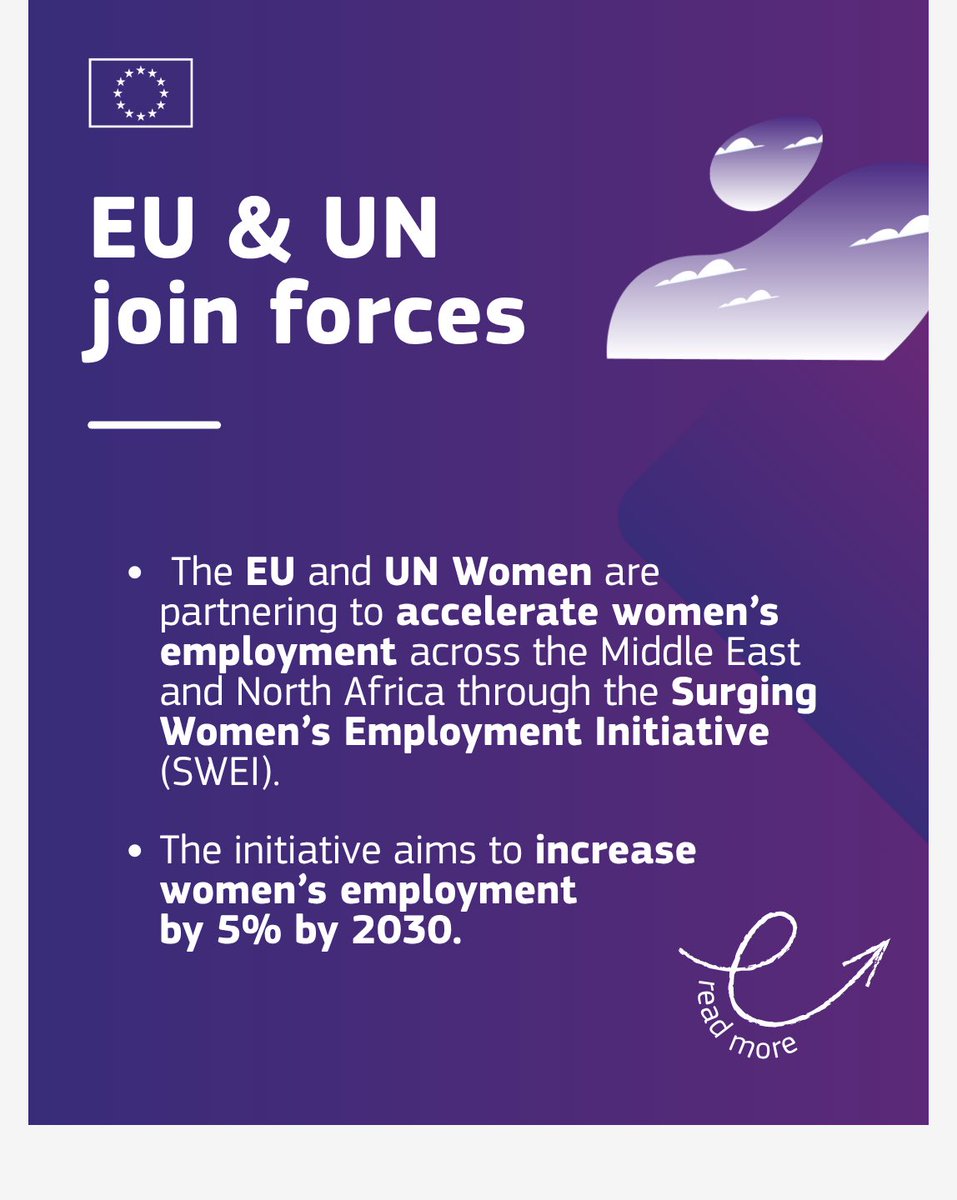
Today at #UNGA81 with @UN_Women I was proud to co-launch the Surging Women’s Employment Initiative - a new flagship under our #PactForTheMediterranean. Our ambition is concrete: 👩💼 500,000 additional jobs for women 📈 +5% women’s employment by 2030 💶 €25 million mobilised, https://t.co/a7QTVNBlRk #WomensEmployment #UNGA81 #PactForTheMediterranean #MT #EU
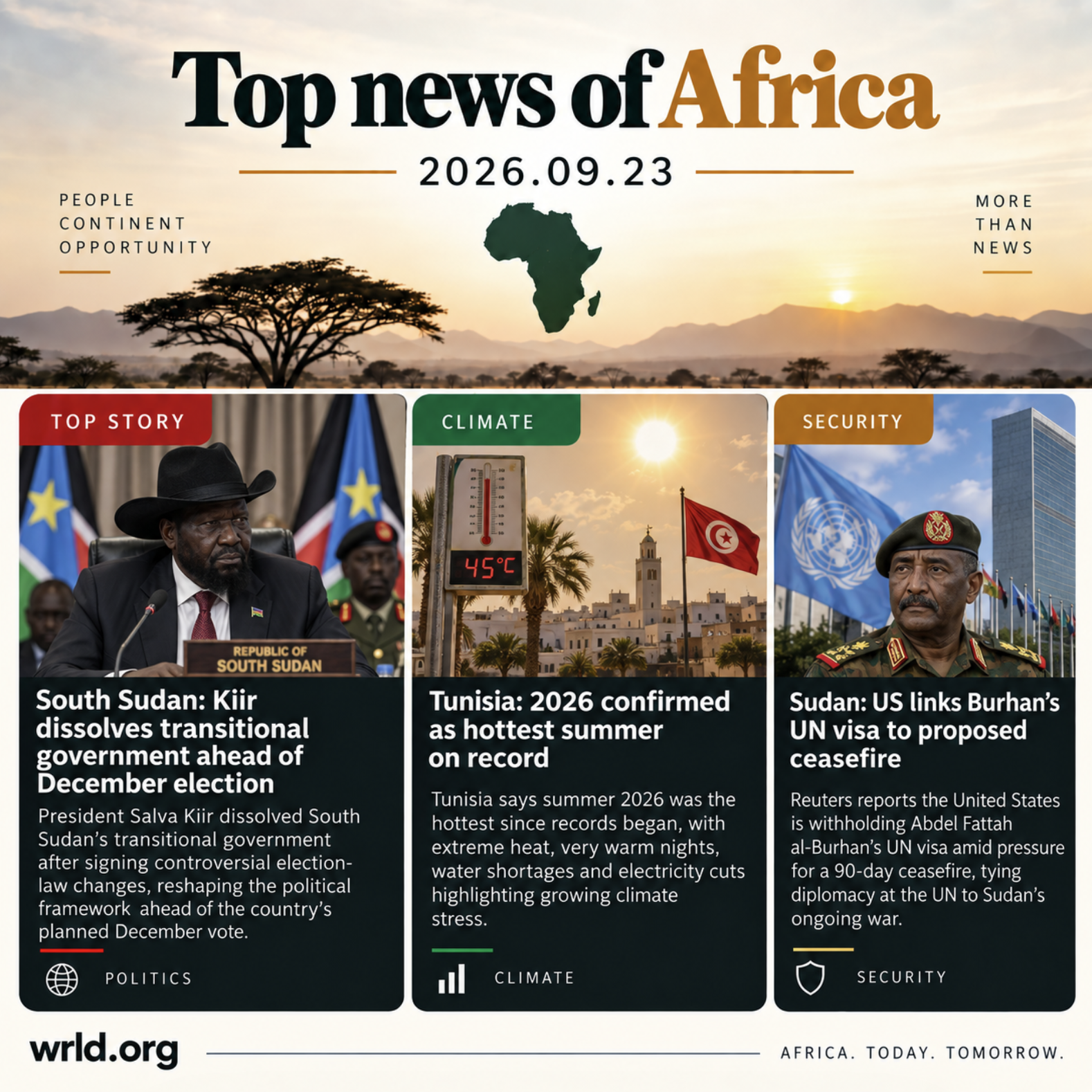
AFRICA DAILY REPORT — 23 SEPTEMBER 2026 Major developments reported during the previous 24 hours 1. SOUTH SUDAN — Kiir dissolves transitional government ahead of December election Importance: 10/10 — Critical President Salva Kiir dissolved South Sudan’s transitional government after signing amendments that remove requirements to complete a permanent constitution and census before the long-delayed national election. The opposition has challenged the changes, while the move fundamentally reshapes the political framework ahead of what is intended to be the country’s first national election since independence. Source: Reuters — https://www.reuters.com/world/africa/south-sudans-president-signs-election-law-changes-ahead-december-vote-2026-09-22/ Additional source: Africanews — https://www.africanews.com/2026/09/22/south-sudan-president-dissolves-govt-as-controversy-engulfs-december-poll/ 2. SUDAN — US links Burhan’s UN visa to proposed ceasefire Importance: 9.5/10 — Very High The United States is withholding a visa for Sudanese army chief Abdel Fattah al-Burhan ahead of the UN General Assembly, according to Reuters sources, in connection with a US-backed proposal for a 90-day ceasefire that Khartoum has resisted. Sudan has asked the UN to intervene, and its foreign minister is expected to address the General Assembly instead if the dispute is not resolved. Source: Reuters — https://www.reuters.com/world/africa/us-withholding-sudanese-leaders-visa-over-ceasefire-plan-sources-say-2026-09-22/ 3. SUDAN — Currency collapse deepens civilian economic crisis Importance: 9/10 — Very High Sudan’s pound has lost nearly half its value in army-controlled territory since May, trading at around 7,500 pounds to the dollar on the black market versus about 4,100 in May. Reuters links the collapse to the economic fragmentation created by the war, reduced state revenues and wartime spending. The depreciation is driving up the cost of basic goods and worsening hardship for civilians and returning refugees. Source: Reuters — https://www.reuters.com/world/africa/currency-collapse-heaps-more-pain-civilians-divided-sudan-2026-09-22/ 4. DR CONGO — Government orders investigation into violence at anti-government protest Importance: 8.5/10 — Very High DR Congo’s justice minister ordered a judicial investigation into violence during the September 15 opposition protest in Kinshasa, including reports of injuries, arrests, property destruction and a death. The demonstration opposed a proposed constitutional change that could allow President Félix Tshisekedi to seek another term. Police used tear gas, while clashes were also reported between opposition demonstrators and pro-government groups. Source: Africanews — https://www.africanews.com/2026/09/22/dr-congo-to-probe-violence-death-of-protestor-at-anti-govt-rally/ 5. RWANDA / BELGIUM — Diplomatic relations restored after 18-month rupture Importance: 8/10 — High Belgium and Rwanda have resumed diplomatic relations 18 months after breaking ties amid their dispute over the conflict in eastern DR Congo. The restoration is diplomatically significant because Belgium has been a prominent European actor in the Great Lakes region and relations deteriorated sharply over allegations concerning Rwanda’s role in the Congolese conflict. Source: Reuters — https://www.reuters.com/world/africa/belgium-rwanda-resume-diplomatic-relations-after-drc-conflict-dispute-2026-09-22/ 6. LIBYA — Armed group shuts pipeline valve, reducing Sharara oil production Importance: 8/10 — High An unidentified armed group closed a valve on the pipeline connecting Libya’s major Al-Sharara oil field with Zawiya, reducing production. The National Oil Corporation warned that a prolonged shutdown could force it to declare force majeure and could also affect the Zawiya refinery. The disruption again demonstrates the vulnerability of Libya’s oil-dependent economy to armed-group pressure and political fragmentation. Source: Africanews — https://www.africanews.com/2026/09/22/libya-oil-production-hit-after-armed-group-shuts-pipeline-valve/ 7. MOROCCO — Parliamentary election puts youth participation and social pressures in focus Importance: 7.5/10 — High Nearly 16 million registered voters are eligible to elect Morocco’s 395-member House of Representatives today. Youth disengagement is a major issue: Africanews/AFP reports that only around 4% of registered voters are aged 18–24. Employment, housing, public services and the legacy of the Gen Z-led protests are central themes surrounding the vote. Source: Africanews — https://www.africanews.com/2026/09/23/i-expect-nothing-morocco-elections-test-young-peoples-faith-in-politics/ 8. TUNISIA — 2026 confirmed as hottest summer on record Importance: 7.5/10 — High Tunisia’s National Meteorological Institute says summer 2026 was the country’s hottest since records began in 1950. Average temperatures were about 2.9°C above the previous record, with prolonged heatwaves, exceptionally warm nights, water shortages and electricity cuts. Kairouan reached 49.7°C in July. Source: AFP via FMT — https://www.freemalaysiatoday.com/category/world/2026/09/22/tunisia-says-2026-summer-hottest-on-record 9. GUINEA — Exiled opposition leader says authorities revoked his passport Importance: 7/10 — Significant Guinean opposition figure Cellou Dalein Diallo says his passport was revoked as he prepared to travel from Abidjan to New York for meetings on the sidelines of the UN General Assembly. Diallo has lived in exile since 2022. His UFDG party was dissolved in March along with other opposition parties, adding the passport case to wider concerns about political restrictions under President Mamady Doumbouya. Source: Africanews — https://www.africanews.com/2026/09/22/exiled-guinean-opposition-leader-says-his-passport-has-been-revoked/ 10. KENYA / AFRICA AT UNGA — Ruto presses for reform of global financial architecture Importance: 7/10 — Significant At the Partners for Multilateralism summit during UN General Assembly High-Level Week, Kenyan President William Ruto argued that international financial institutions should act more as catalysts for African capital rather than simply as lenders. The intervention forms part of a broader African push at UNGA for reforms to global financial governance and greater representation in multilateral institutions. Source: Africanews / AP — https://www.africanews.com/2026/09/22/ruto-pushes-for-global-finance-reforms-at-summit-for-multilateralism/ #Africa #AfricaNews #TopNewsOfAfrica #SouthSudan #SalvaKiir #SouthSudanElections #PoliticalTransition #TransitionalGovernment #ElectoralReform #AfricanPolitics #Tunisia #NorthAfrica #ClimateChange #ClimateCrisis #RecordHeat #ExtremeHeat #Heatwave #GlobalWarming #WaterScarcity #ClimateSecurity #Sudan #SudanConflict #AbdelFattahAlBurhan #UnitedStates #Ceasefire #PeaceNegotiations #Diplomacy #UnitedNations #UNGA2026 #AfricanSecurity #RegionalStability #Geopolitics #AfricaToday #wrldorg
⚠ Friday Brief ⚠ 🇺🇸 Focus on U.S. Employment Report; 🇳🇴🌎 Norway Wealth Fund Proposes Lower Bond Holdings 🇩🇪 German Factory Orders Beat Expectations 🇩🇪 Focus on German State Election ... https://t.co/NgQ4ogGMRp #USEmployment #NorwayWealthFund #GermanFactoryOrders #US #NO #DE
⚠ Friday Brief ⚠ Focus on U.S. Employment Report; Norway Wealth Fund Proposes Lower Bond Holdings German Factory Orders Beat Expectations Focus on German State Election ... https://t.co/NgQ4ogGMRp #USEmployment #NorwayWealthFund #GermanEconomy #US #NO #DE
🧵 Today’s Exchequer numbers reflect the fundamental strength of our economy and a labour market that has been running at full capacity for the last 4½ years, the longest stretch of ‘full employment’ in the history of the State. https://t.co/43QH9pB6QG #Exchequer #Economy #FullEmployment #IE

⚠ #WeekAhead #Preview: Week 36 (2026) ⚠ 🌎 #G20 Ministers Gathering 🇨🇦 🇳🇿 #BoC and #RBNZ Meetings 🇺🇸 #Fed Beige Book 🇺🇸 🇨🇦 U.S. and Canada Employment Reports 🇪🇺 🇰🇷 #Eurozone, #Switzerland and #SouthKorea CPIs ... https://t.co/rKnvpYBKit #WeekAhead #G20 #BoC #CA #NZ #US #EU #KR #CH
Hvor højt tror du staten er parat til at lade topskatten stige til? The Kennedy Tax Cuts of 1963–1964 In early 1963, the top marginal individual income tax rate in the United States stood at an extraordinary 91 percent—a legacy of the exceptionally high tax rates established during and after World War II. President John F. Kennedy proposed a sweeping tax overhaul, arguing that excessively high marginal rates were holding back private investment, risk-taking, employment, and economic growth. His original proposal would have reduced individual income tax rates across the board, lowering them from a range of 20–91 percent to 14–65 percent. It also called for reductions in corporate tax rates and stronger incentives for investment. Kennedy’s administration explicitly argued that lower tax rates would stimulate private economic activity, increase investment, and expand production and employment. The goal was not simply to reduce taxes, but to remove what Kennedy called the “heavy drag” that the existing tax system placed on private initiative. (Fraser) The proposal faced substantial opposition in Congress, particularly because of concerns about its fiscal implications and accompanying tax reforms. Nevertheless, the business community and many economic organizations strongly supported the central idea of substantial rate reductions. (Fraser) Kennedy did not live to see his proposal enacted. After his assassination in November 1963, President Lyndon B. Johnson made passage of the legislation a priority. The final measure, the Revenue Act of 1964, reduced the top marginal tax rate from 91 percent to 70 percent and substantially lowered individual and corporate tax rates. (Fraser) The economy subsequently entered a powerful and sustained expansion. Contemporary economic analyses attributed a significant portion of the improvement in production, employment, investment, and tax revenues to the cuts, although monetary policy and other factors also contributed. (Judiciary Committee)

It's surely at least arguable that the Employment Tribunal was biased against Sandie - the judgment included invented and misrepresented references from several legal authorities and some genuinely bizarre legal interpretations #EmploymentTribunal #LegalBias #JusticeForSandie #Nospecificcountrycodesarementionedinthetweet.

What does it actually mean to live from music in Estonia? For an independent musician, the answer is more complicated than it sounds. I have recently been fortunate enough to experience something that many musicians dream of: I can live from my music. I compose, produce, perform, write, run a music label and organise concerts. After years of combining music with other jobs, I finally have the freedom to make my living from the thing I have always wanted to do. It sounds wonderful. Well, it is wonderful. But it is also a struggle that is rarely visible from the outside. As an independent artist and entrepreneur, I do not simply receive money for making music. I have to create that income through my company, pay the costs of running the business, pay taxes, and then pay myself a salary. There is no employer absorbing the administrative and financial burden behind my work. I am simultaneously the artist, producer, promoter, employer and employee. At the moment, my income is modest. I pay myself roughly €900 because that is what my business can realistically sustain. Yet for my company to pay me that amount, the actual cost is around €1,370. Approximately €470 goes towards social tax and other mandatory employment related payments. And this comes after VAT has already taken its share of my business activity. That is the part of the discussion that is often missing when we talk about taxation. #estonia #estonianculture #music #tax #eutax #musictax #concert https://tunitemusic.com/post/an-independent-artists-view-of-estonias-24-vat/

Taliban won Afghanistan 5 years ago, women and girls have been systematically erased from most public life. More than 160 decrees bar them from secondary and higher education, restricting their employment, movement, dress, speech, decision-making https://t.co/52gW6hoFsk #Afghanistan #WomenRights #Taliban #AF
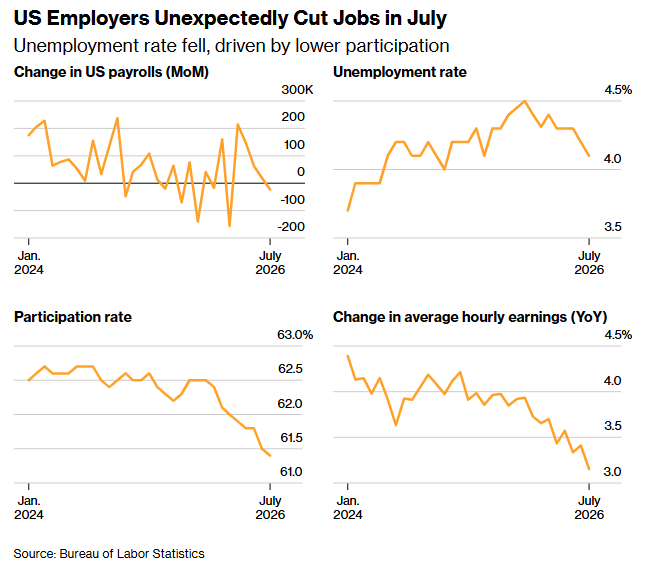
🌎 Charting the Global Economy: US Employment Declines Unexpectedly - Bloomberg https://t.co/Zm35h4i2g8 https://t.co/QjRX2GQFed #GlobalEconomy #USEmployment #Bloomberg #US

Argentina's central bank now lets companies pay salaries in US dollars, into payroll accounts where the dollars pile up indefinitely at no cost to the worker. The move activates a labor-reform change that rewrote Argentina's employment contract law to permit wages "in national or #Argentina #Finance #LaborReform #AR #US
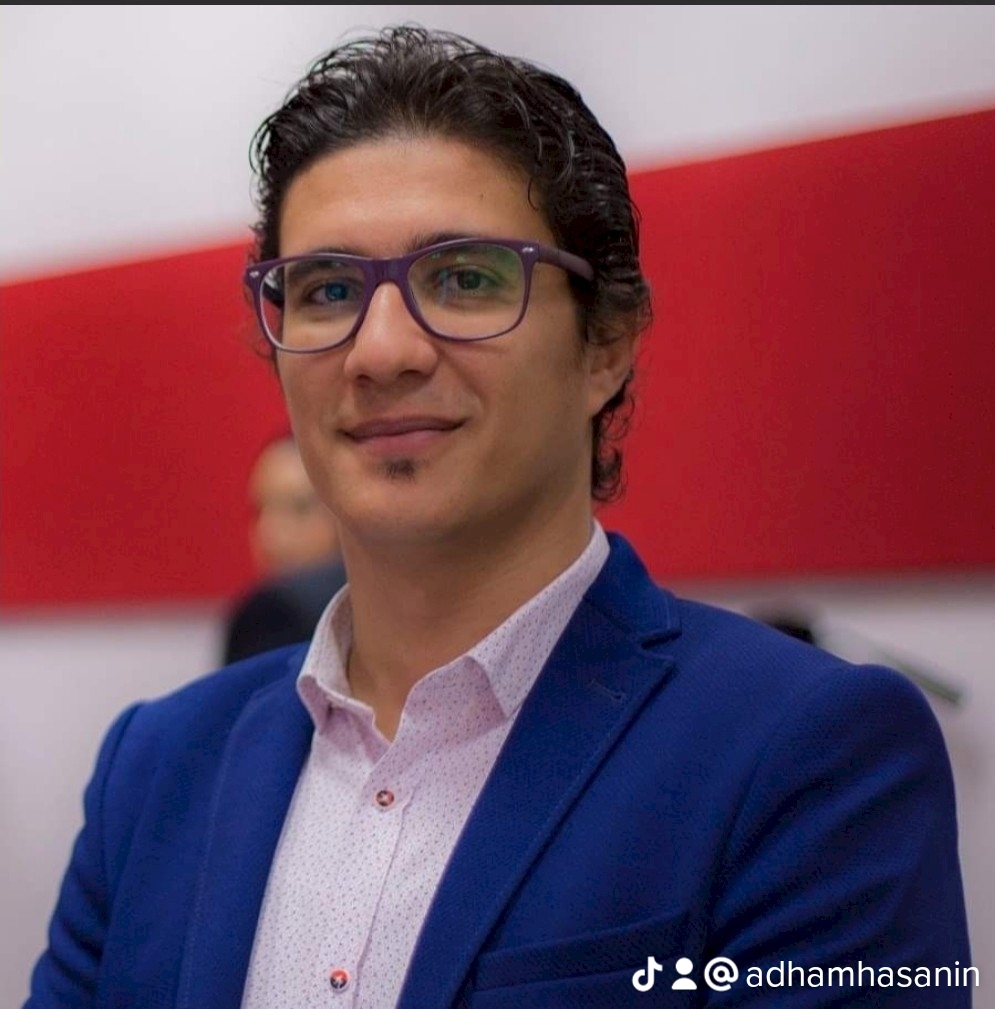
| JULY 2026 | The Guard State How the largest Arab nation became a security contractor at the gates of its own people By Adham Hasanin Egyptian journalist and political writer, based in the Netherlands In June 2025, hundreds of activists from forty countries landed at Cairo airport. Doctors from France, lawyers from Australia, students from the United States, pensioners from the Netherlands. They carried no weapons and no banned slogans; they carried backpacks, walking shoes, and a single intention: to march from Arish to the Rafah crossing — entirely on Egyptian soil — to demand that food be allowed through to a people starving behind the gate. Not one of them reached Rafah. More than two hundred were detained before the march could begin. Around five hundred foreign nationals were deported from airports, hotels, and checkpoints. Passports were confiscated, activists were pulled out of downtown Cairo cafés, and the Global March to Gaza was cancelled on 16 June without taking its first step. And the world watched. This was no secret operation in a dark basement; it happened in the open, documented by the deportees’ own phone cameras, carried by every international news agency. The world watched an Arab state arrest Europeans, Americans, and Africans for wanting to walk towards Palestine. A state guarding the gate of a siege — from the side that was supposed to be the side of rescue. Hold that image, because it is the key to everything that follows. This was not an aberration in Egyptian policy, nor an isolated security decision. It is the function — the complete function around which the Egyptian state has been redefined over the past decade, and which it is time to call by its proper name: the Guard State. I. The Name — What Do We Mean by the Guard State? Political economy has long described states that live off the rent of their location rather than the production of their people. But what has crystallised in Egypt over the past decade goes beyond traditional geographic rent — the Suez Canal, say — into something far graver: the conversion of sovereignty itself into a commodity for hire. The Guard State does not sell its location; it sells its function. It collects its wages not for what it produces, but for what it prevents: it prevents the refugee from reaching Europe, the activist from reaching Gaza, its own people from reaching politics, and the resistance’s weapons from reaching their destination. Four gates, guarded by a single machine, whose wages are paid in loans, deposits, and perpetually renewed rescue packages. This is not a rhetorical metaphor; it is an economic structure with numbers attached. When the Egyptian economy collapsed in 2024, it was rescued not by productive reform but by a single deal whose subject was location: Ras el-Hekma — thirty-five billion dollars for a stretch of coastline. And whenever negotiations with the IMF stall, the tranches are unlocked by explicit European pressure whose subject is migration: nine billion euros from the European Union in the 2024 “Strategic Partnership,” whose own documents place “migration management” at its core. Europe does not pay Egypt to prosper. It pays Egypt to guard. Thus the model is complete: income in exchange for prevention, external legitimacy in exchange for guarding, and international silence about domestic tyranny in exchange for keeping the gates controlled. To see how the model works on the ground, consider the bloodiest gate of all: the gate of Gaza. II. The Gaza Gate — The Guard Who Is Himself Searched The first paradox must be nailed down with facts: Egypt is not a sovereign guard of its own crossing; it is a searched guard. Egyptian relief trucks — ninety-two thousand food parcels in a single convoy this month — are subject to Israeli inspection before entering the Strip: from Egyptian soil, through a crossing that bears an Egyptian name. The state that guards the gate does not hold its key. It owns the threshold, but not the door. Then the October 2025 truce added a new layer to the function. Under the fifteen-point roadmap sponsored by the international envoy together with the “guarantor states” — Egypt foremost among them — Cairo is to train the civilian police force that will replace Hamas in administering the Strip, under the slogan of “one authority, one law, one weapon.” Let us call things by their names: the state that could not — or would not — deliver a loaf of bread without Israeli permission is now qualifying to graduate the security apparatus that will oversee the disarming of the resistance. From guarding the siege to administering what comes after the siege — a promotion within the same project. And meanwhile, what is happening behind the guarded gate? Since the truce, more than one thousand one hundred Palestinians have been killed by Israeli fire — the latest, just two days ago, a ten-year-old boy named Motaz Abu Shaar, carried to his grave in Khan Younis by his mother, Warda. A United Nations commission of inquiry has concluded that Israel is “deliberately targeting children in an ongoing genocide.” This is what the guarantors’ official language calls a “ceasefire.” What meaning is left in the word “guarantor”? A guarantor that the gate stays firmly shut — however high the dead pile up behind it. III. The Mediterranean Gate — The Guard Europe Pays For The second gate faces north. Since 2016, Cairo has boasted — through its officials at every European forum — that “not a single irregular migration boat has departed from Egyptian shores.” This is very nearly true. But the forbidden question is: at what political price has this “efficiency” become an instrument of mutual blackmail? Europe — which condemns Egypt’s human rights record in its parliamentary resolutions — is the same Europe that signed the nine-billion-euro partnership, and the same Europe that stays silent about sixty thousand political prisoners because the alternative, in its calculations, is boats that never stop. And Cairo understands the game and has mastered it: whenever human rights pressure intensifies, the official discourse turns up the volume on “Egypt hosts millions of refugees” and “the last line of defence.” The result is a perfect structure of mutual blackmail: Europe buys its conscience’s silence, the regime sells its location, and the people — Egyptian and refugee alike — are the commodity in the transaction. The democracies that lecture on values are financing the guard who keeps the victims from knocking on their doors. This is not passing hypocrisy; it is a structural partnership in the Guard State model — one that makes Brussels and Berlin shareholders in everything this state produces, from domestic repression to external siege. IV. The Interior Gate — Guarding the People Against Politics But the most dangerous gate is not on any border; it is inside. The Guard State cannot perform its external function unless it first guards an internal gate: the people’s gate to politics. The function requires a people that does not ask: why are we guarding the siege of our brothers? Why are our trucks searched on our own soil? Why are guests deported for coming to walk in peace? To guarantee the question is never asked, the largest silencing machine in the country’s history was built: sixty thousand prisoners of opinion, a press ranked 166th out of 180 worldwide, and a state security case number waiting for anyone who writes. I write these lines from experience, not from reading reports. When I continued writing from my Dutch exile, the machine reached me across continents: accounts shut down by coordinated mass-reporting campaigns, documented threats, a family harassed inside Egypt as leverage — and my name entered into Case 1282 of 2024, not for any act I committed, but for opinions written from free European soil. This is not a personal complaint; it is a job description: the Guard State guards even beyond its borders, because the free word — wherever it is written — threatens the entire contract of guardianship. The logic is perfectly self-consistent: a regime that sells “stability” abroad cannot tolerate a voice revealing that the stability on offer is the stillness of graveyards. This is why the arrest of the foreign activists in June 2025 was inevitable, not incidental: a peaceful march reaching Rafah would have revealed, before the world’s cameras, that the gate opens when it is wanted open — and that the one keeping it shut is a partner, not a mediator. V. What Has Egypt Lost? — The Guard’s Bill An apologist might argue: what is the harm? A state monetising its location as Norway monetises its oil. The answer lies in the essential difference: Norway sells a resource; Egypt leases its will. And the difference between the two is the difference between trade and bondage. Let us tally what Egypt has paid for this model, in bare facts. It lost its water sovereignty: the Renaissance Dam was completed and filled without the state — owner of “the largest defence headquarters in the world” — daring anything beyond statements of concern; for the guard does not make trouble for the international order that employs him. It lost its regional standing: in the Iran–America war halted just weeks ago, Cairo was neither party nor mediator nor even consultant — Pakistan brokered the deal, while Egypt absorbed the economic shrapnel of Hormuz’s closure like a bystander caught in a battle whose parties it does not know. It lost its place in the conscience of its nation: the state that liberated its land in 1973 and led the Arab world for a century has become, in the eyes of the Arab street from the Atlantic to the Gulf, the gatekeeper of the siege. This loss, specifically, no loan or deposit can repay — because it is the only capital that cannot be printed. And it lost — here is the crux — the very national security in whose name the guarding is justified. The model proved its fragility at the moment of testing: when Israel feared an Iranian response last year, it cut off Egypt’s gas by unilateral decision within hours. The guard who believed himself a partner discovered he was merely a hireling whose wages stop the moment danger arrives. VI. The Alternative Is Not a Slogan — It Is the Recovery of the Original Function I will not close with an essay on “the solution lies in Arab unity”; worn-out words kill more surely than silence. The alternative is specific, and it begins with redefining the function. The state is not a guard; the state is the agent of its people’s will. Every foreign policy not derived from that will is — by definition — functional servitude, however it is wrapped in the language of wisdom and moderation. And the Egyptian will is known and needs no referendum: no people in this region accepts that its country serve as warden of the siege of Gaza, or as Europe’s border post. Practically, the recovery begins with three measurable steps. Open the Rafah crossing fully and sovereignly, by purely Egyptian decision — that alone would overturn the equation of the siege. Break the negotiating bondage by linking any cooperation on migration to concrete European positions on Palestine, not statements of concern. And open the interior gate — release the prisoners and lift the hand from the written word — because a state that fears an article will never dare face an occupier. I know the current regime will do none of this; guarding is its founding contract and its financial artery. But this article is not written for the regime. It is written for memory, and for the generation that will inherit the gates — so that it knows that what is presented to it today as “the fate of geography” is no fate at all. It is an employment contract, signed by a regime without a mandate from its people. And contracts, however long they run, end when one of their parties does. And the world — I return to where I began — is a witness that requires no further proof. It watched the deportees at Cairo airport; it watched the searched trucks; it watched Warda Abu Shaar carry her son to his grave behind a firmly guarded gate. The question is no longer: what is happening? The only question left is: who dares to name it? This article is a naming. Adham Hasanin is an Egyptian journalist and political writer based in the Netherlands, covering Arab and European political affairs.

The principle is simple: job-to-job transitions, not unemployment-to-job. When industries restructure, we shouldn’t wait for people to lose their jobs before offering support. (3/3) https://t.co/P1VmWTgkBq #JobTransition #EmploymentSupport #WorkplaceRestructuring #Thetweetdoesnotmentionanyspecificcountries.Therefore #theresponseis:

🇨🇳 #CHINA'S PREMIER CHAIRS SEMINAR ON ECONOMIC SITUATION: CCTV - BBG *CHINA'S LI VOWS TO STEP UP COUNTERCYCLICAL POLICY ADJUSTMENT:TV *CHINA'S LI URGES STABILIZING EMPLOYMENT IN 2H: CCTV *CHINA CALLS ON UNLEASHING POTENTIAL OF DOMESTIC DEMANDS: CCTV #China #EconomicPolicy #EmploymentStability #CN
⚠ Thursday Brief ⚠ 🇺🇸 Focus on U.S. Employment Report 🇯🇵 🇺🇸 #Yen Strengthens Sharply Against #Dollar 🇨🇭 Swiss #Inflation Eases for First Time in 8 Months ... https://t.co/y7Q16wqngf #EmploymentReport #Yen #Inflation #US #JP #CH





