BETA nonprofit public democratic european moderated

Search

#Geography

The author described Israel’s expanding network of checkpoints as unlawful and called for its immediate dismantling. They said it formed part of what they called the “carceral geography of apartheid” and made Palestinians’ daily lives dependent on arbitrary decisions. The author also thanked WIRED for reporting on the issue. https://t.co/b9kHQ4YHHe https://t.co/VuuaLM2IFg #Israel #Palestine #HumanRights #IL #PS


🇷🇴🇧🇬🇭🇷🇬🇷 Four countries, one strategic space. From the Black Sea to the Aegean and Adriatic, our connectivity is also our resilience. Today in New York, we discussed how to turn shared geography into concrete action: stronger transport links, secure energy routes and https://t.co/kZdNTVzDuY #BlackSea #Connectivity #EnergySecurity #RO #BG #HR #GR

P

The Return to Feudalism in 21st Century Garb A simple observer's viewpoint, with no claim to hold any absolute truth. The Veneer Cracks There is something strangely archaic about the world unfolding before our eyes, despite its satellites, artificial intelligence, and promises of infinite progress. Here and there, we witness heads of state behaving like feudal lords of another age, patiently nibbling away at the neighboring territory, redrawing borders through force rather than law, as if governing a nation mattered less than expanding one's fiefdom. No names need be mentioned here: current events provide plenty of illustration, and each reader will recognize, according to their own geography and moment of reading, the faces that embody this observation. But this return to the archaic is not confined to grand geopolitical stages. It also permeates the most ordinary daily life—that of social media, where anyone can pour out venom against another without filter, without form, and often without the slightest argument. The verbal jousting of yesteryear, with its codes, its rhetoric, its tacit limits, has given way to raw invective, snap judgment, instant condemnation. We no longer debate: we execute, verbally—and sometimes it doesn't stop at words. The Vanished Inhibition What strikes one, in this dual observation—macro-political and micro-social—is the lifting of an inhibition we thought firmly anchored. Centuries of cultural construction, education, philosophy, sometimes religion, had patiently shaped mechanisms of restraint: politeness as social ritual, argumentation as a mode of resolving disagreement, respect for one's opponent as the very foundation of democratic debate. This civilizational veneer, however fragile it always was, seemed to hold. Today it is cracking, and the question—which for me remains a simple hypothesis, not a certainty—is why. A convenient explanation would blame social media: anonymity, the distance of the screen, the instantaneousness of publication would favor verbal acting-out without the usual mediation of reflection. This is probably true, but likely insufficient. For technology here is only an accelerant, an amplifier—not necessarily a root cause. A Poorly Formatted Neocortex? The more unsettling hypothesis—and I frame it explicitly as hypothesis, not scientifically established fact—is that of a failure in the formation of moral judgment and tolerance toward otherness. The human brain possesses the neural structures enabling empathy, the distancing of impulsive reaction, the acceptance of difference—but these capacities are not innate in their full exercise: they must be built, educated, cultivated, like a muscle that needs patient training from childhood onward. If this education in otherness, nuance, and tolerance of disagreement erodes—for multiple and undoubtedly complex reasons that are not mine to settle here—then older reflexes resurface: instinctive distrust of the stranger outside the clan, the law of the strongest, the logic of territorial or symbolic predation. The other ceases to be a possible interlocutor and becomes once again a potential threat, unless they belong to my tribe, my clan, my party, my digital bubble. Two Scales, One Logic What is striking, in this deliberately provocative reading, is the structural similarity between these two scales. The leader who invades a neighbor in the name of a rediscovered greatness or a reinvented historical right, and the anonymous internet user who insults a stranger in the name of an unnegotiable conviction, may obey the same underlying grammar: that of territory to defend, clan to protect, the other to subdue or exclude rather than understand. The form has changed—satellites instead of horses, tweets instead of heralds—but the substance, in this reading that remains mine alone and commits no one else, seems strangely identical to that of feudal rivalries: the absence of a recognized third party, of an accepted common rule, of a respected arbitrating authority. Everyone becomes judge and party, lord of their own digital or territorial fiefdom. A Civilization on a Knife's Edge Norbert Elias, in his Civilizing Process, showed how Western societies had historically built, with remarkable slowness, an increasing control over impulses and direct violence, in favor of more sublimated forms of social regulation. What we may be observing today—and I stress again the conditional—is a form of regression in this process, or at least a fragilization of the veneer it had patiently laid down. Should we see this as an effect of great technological accelerations, which shake up our cognitive rhythms without leaving education time to adapt? A deeper crisis of the institutions tasked with transmitting these values of tolerance—school, family, religion, the rule of law? Or simply a cyclical movement of human history, where phases of policed civilization alternate with darker backlashes? I have no certain answer, and I would be wary of anyone claiming to hold one. In Conclusion, a Shared Concern This text is only a viewpoint, necessarily partial and subjective, on a world that sometimes seems to replay ancient logics in new clothing. Perhaps I am wrong to perceive a continuity between the feudal lord and the contemporary dictator, between the anonymous online insult and the absence of education in nuance. Perhaps these phenomena are unrelated, or too complex to be thus summarized. But if this reading, even partially, hits the mark, then the question that arises is less one of technological regulation—though necessary—than the far more arduous question of how to rebuild, generation after generation, this capacity to accept the other in their difference, to debate without destroying, to coexist without necessarily dominating. This undertaking, if it exists, will not be resolved by an algorithm nor by an international treaty. It plays out, patiently, in the most elementary education—the one that teaches a child that the other is not a threat, but a possibility. Bibliography Elias, N. (1939). Über den Prozess der Zivilisation [The Civilizing Process]. Oxford: Blackwell (Eng. trans. 1978-1982). Lorenz, K. (1963). Das sogenannte Böse [On Aggression]. London: Methuen (Eng. trans. 1966). Arendt, H. (1970). On Violence. New York: Harcourt, Brace & World. Han, B.-C. (2013). Im Schwarm [In the Swarm: Digital Prospects]. Cambridge, MA: MIT Press (Eng. trans. 2017).

Vasily Klyuchevsky thus sketches Russia’s geographical position: “So much of Asia in European Russia. Historically, Russia is, of course, not Asia; geographically, however, it is not entirely Europe either. It is a transitional country, an intermediary between two worlds. Its #Russia #Geography #AsiaEurope #RU

DN ledarsida ägnar nu femtioelfte artikeln åt att misstänkliggöra själva frågan om etnisk gruppmobilisering kan vara en av flera förklaringar till valresultat på över 90 procent för S och V i vissa invandrartäta valdistrikt. ”Tänk om det är så enkelt att många i förorterna agerar precis som andra väljare? Att de helt enkelt lyssnar på politiker som pratar med och om dem, och sedan drar slutsatser av det”, skriver Amanda Sokolnicki. Ja, tänk om. Det kan mycket väl vara en viktig del av förklaringen. Men opinionsjournalistikens uppgift borde knappast vara att på förhand bestämma vilka hypoteser som är respektabla nog att undersökas. Frågan om etnisk och gruppbaserad politisk mobilisering är varken ny, suspekt eller någon svensk högerfixering. Den har studerats av statsvetare i flera europeiska demokratier. När svenska valdistrikt uppvisar exceptionellt koncentrerade röstningsmönster är det därför fullt legitimt att fråga vilka mekanismer som ligger bakom dem – socioekonomi, ideologi, diskriminering, politisk mobilisering, sociala nätverk eller en kombination av flera faktorer. Liknande frågor har länge studerats internationellt. I Norge fann valforskarna Johannes Bergh och Tor Bjørklund att hypotesen om gruppbaserat röstande fick starkare stöd än förklaringar utifrån ideologi och socioekonomisk bakgrund när de undersökte icke-västliga invandrares starka stöd för vänsterpartier (Bergh & Bjørklund, 2011, Political Studies). Senare forskning har studerat hur detta mönster förändrats över tid (Bergh & Kleven, 2026, Politics). I Storbritannien fann statsvetaren Nicole Martin ingen sådan effekt för de flesta minoritetsgrupper – men pakistanska väljare gick oftare och röstade när Labour ställde upp en pakistansk kandidat. Effekten kunde kopplas till försök att påverka hur människor röstade inom väljarnas egna sociala nätverk. Martin tolkar resultaten som etnisk mobilisering genom släktnätverk (Martin, 2016, Parliamentary Affairs). Brittiska statsvetare har också undersökt hur pakistanska släktbaserade nätverk har mobiliserats inom Labour, framför allt kring partimedlemskap och kandidatnomineringar (Akhtar & Peace, 2019, Journal of Ethnic and Migration Studies). Annan europeisk forskning har undersökt hur gemensam etnisk bakgrund mellan väljare och kandidater kan påverka röstningen (van der Zwan, Tolsma & Lubbers, 2020, Political Geography). Inget av detta visar vad som ligger bakom resultaten i Sverige. Men alla relevanta förklaringsfaktorer bör diskuteras och undersökas. Och det är en självklarhet att också fråga hur de politiska partierna förhåller sig till denna utveckling. Vänsterdebattörer invänder att 90 procent för S och V i ett invandrartätt område inte är mer anmärkningsvärt än höga siffror för Moderaterna i Danderyd. Men det är inte siffran i sig som är intressant. Det är vilka mekanismer som ligger bakom. Att människor med liknande erfarenheter och politiska uppfattningar röstar likadant är fullständigt oproblematiskt. Men om socialt tryck eller släktbaserade nätverk påverkar hur människor röstar är det en annan mekanism – och just sådana skillnader har forskare i andra länder försökt undersöka. Frågan är inte vem som röstar. Frågan är hur. Jag trodde att svensk debatt hade lämnat tiden bakom sig då frågor stämplades som suspekta innan de ens undersökts. I andra europeiska länder studeras och debatteras detta sedan länge. Varför skulle Sverige vara undantaget? Det är hög tid att vänsterns tyckonomer vänjer sig vid att de inte har vetorätt över vilka frågor som får ställas i den offentliga debatten. #PolitiskMobilisering #EtniskGruppröstning #Opinionsjournalistik

The 🇪🇺European Union is deepening its ties with its closest neighbours who share our history, our values and our geography and voluntarily align with the EU at the UN and in other multilateral organisations. On 19 October, we will finally sign the Association Agreement with 🇸🇲San #EU #AssociationAgreement #SanMarino #EU #SM

Immigration, innovation, and the geography of growth: Lessons from the Age of Mass Migration https://t.co/buBi87Z1Br #Immigration #Innovation #EconomicGrowth #Thetweetdoesnotmentionanyspecificcountries.Therefore #therearenocountrycodestoreturn.

Mika Aaltola Aug 19

Europe’s defense industry is no longer protected by geography or passports. When a quiet engineer in Bavaria must write his will and live underground, the war has already arrived inside our borders. This is the new normal Moscow is testing. How many more names before we treat #Defense #Europe #WarCrime #DE #RU

Last week the State Dept published a map of African countries and got *every single one* wrong. Now the US Vice President thinks Ceuta is in Northern Spain and the whole country has been invaded. US ignorance of geography is legendary but perhaps its top institutions could take #GeographyFail #USPolitics #GlobalAwareness #US #ES

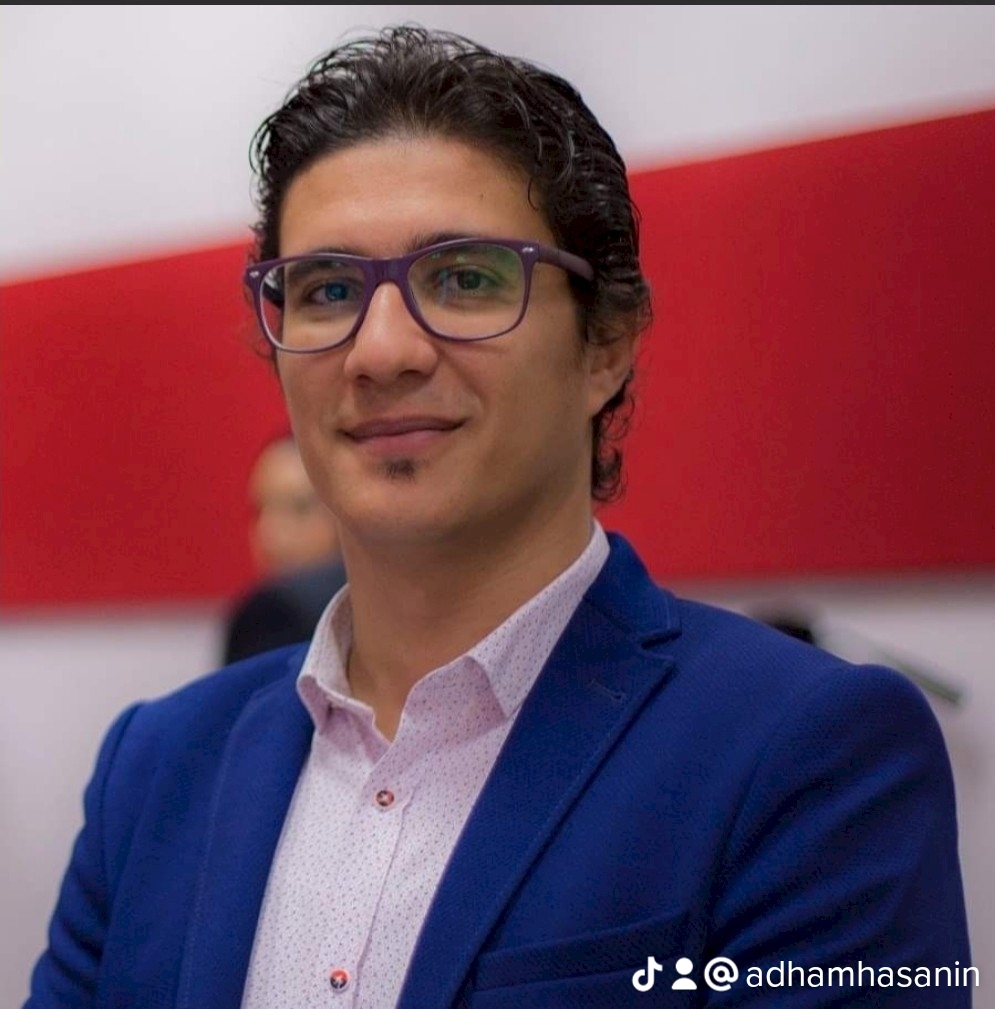
Adham Hasanin Jul 21

| JULY 2026 | The Guard State How the largest Arab nation became a security contractor at the gates of its own people By Adham Hasanin Egyptian journalist and political writer, based in the Netherlands In June 2025, hundreds of activists from forty countries landed at Cairo airport. Doctors from France, lawyers from Australia, students from the United States, pensioners from the Netherlands. They carried no weapons and no banned slogans; they carried backpacks, walking shoes, and a single intention: to march from Arish to the Rafah crossing — entirely on Egyptian soil — to demand that food be allowed through to a people starving behind the gate. Not one of them reached Rafah. More than two hundred were detained before the march could begin. Around five hundred foreign nationals were deported from airports, hotels, and checkpoints. Passports were confiscated, activists were pulled out of downtown Cairo cafés, and the Global March to Gaza was cancelled on 16 June without taking its first step. And the world watched. This was no secret operation in a dark basement; it happened in the open, documented by the deportees’ own phone cameras, carried by every international news agency. The world watched an Arab state arrest Europeans, Americans, and Africans for wanting to walk towards Palestine. A state guarding the gate of a siege — from the side that was supposed to be the side of rescue. Hold that image, because it is the key to everything that follows. This was not an aberration in Egyptian policy, nor an isolated security decision. It is the function — the complete function around which the Egyptian state has been redefined over the past decade, and which it is time to call by its proper name: the Guard State. I. The Name — What Do We Mean by the Guard State? Political economy has long described states that live off the rent of their location rather than the production of their people. But what has crystallised in Egypt over the past decade goes beyond traditional geographic rent — the Suez Canal, say — into something far graver: the conversion of sovereignty itself into a commodity for hire. The Guard State does not sell its location; it sells its function. It collects its wages not for what it produces, but for what it prevents: it prevents the refugee from reaching Europe, the activist from reaching Gaza, its own people from reaching politics, and the resistance’s weapons from reaching their destination. Four gates, guarded by a single machine, whose wages are paid in loans, deposits, and perpetually renewed rescue packages. This is not a rhetorical metaphor; it is an economic structure with numbers attached. When the Egyptian economy collapsed in 2024, it was rescued not by productive reform but by a single deal whose subject was location: Ras el-Hekma — thirty-five billion dollars for a stretch of coastline. And whenever negotiations with the IMF stall, the tranches are unlocked by explicit European pressure whose subject is migration: nine billion euros from the European Union in the 2024 “Strategic Partnership,” whose own documents place “migration management” at its core. Europe does not pay Egypt to prosper. It pays Egypt to guard. Thus the model is complete: income in exchange for prevention, external legitimacy in exchange for guarding, and international silence about domestic tyranny in exchange for keeping the gates controlled. To see how the model works on the ground, consider the bloodiest gate of all: the gate of Gaza. II. The Gaza Gate — The Guard Who Is Himself Searched The first paradox must be nailed down with facts: Egypt is not a sovereign guard of its own crossing; it is a searched guard. Egyptian relief trucks — ninety-two thousand food parcels in a single convoy this month — are subject to Israeli inspection before entering the Strip: from Egyptian soil, through a crossing that bears an Egyptian name. The state that guards the gate does not hold its key. It owns the threshold, but not the door. Then the October 2025 truce added a new layer to the function. Under the fifteen-point roadmap sponsored by the international envoy together with the “guarantor states” — Egypt foremost among them — Cairo is to train the civilian police force that will replace Hamas in administering the Strip, under the slogan of “one authority, one law, one weapon.” Let us call things by their names: the state that could not — or would not — deliver a loaf of bread without Israeli permission is now qualifying to graduate the security apparatus that will oversee the disarming of the resistance. From guarding the siege to administering what comes after the siege — a promotion within the same project. And meanwhile, what is happening behind the guarded gate? Since the truce, more than one thousand one hundred Palestinians have been killed by Israeli fire — the latest, just two days ago, a ten-year-old boy named Motaz Abu Shaar, carried to his grave in Khan Younis by his mother, Warda. A United Nations commission of inquiry has concluded that Israel is “deliberately targeting children in an ongoing genocide.” This is what the guarantors’ official language calls a “ceasefire.” What meaning is left in the word “guarantor”? A guarantor that the gate stays firmly shut — however high the dead pile up behind it. III. The Mediterranean Gate — The Guard Europe Pays For The second gate faces north. Since 2016, Cairo has boasted — through its officials at every European forum — that “not a single irregular migration boat has departed from Egyptian shores.” This is very nearly true. But the forbidden question is: at what political price has this “efficiency” become an instrument of mutual blackmail? Europe — which condemns Egypt’s human rights record in its parliamentary resolutions — is the same Europe that signed the nine-billion-euro partnership, and the same Europe that stays silent about sixty thousand political prisoners because the alternative, in its calculations, is boats that never stop. And Cairo understands the game and has mastered it: whenever human rights pressure intensifies, the official discourse turns up the volume on “Egypt hosts millions of refugees” and “the last line of defence.” The result is a perfect structure of mutual blackmail: Europe buys its conscience’s silence, the regime sells its location, and the people — Egyptian and refugee alike — are the commodity in the transaction. The democracies that lecture on values are financing the guard who keeps the victims from knocking on their doors. This is not passing hypocrisy; it is a structural partnership in the Guard State model — one that makes Brussels and Berlin shareholders in everything this state produces, from domestic repression to external siege. IV. The Interior Gate — Guarding the People Against Politics But the most dangerous gate is not on any border; it is inside. The Guard State cannot perform its external function unless it first guards an internal gate: the people’s gate to politics. The function requires a people that does not ask: why are we guarding the siege of our brothers? Why are our trucks searched on our own soil? Why are guests deported for coming to walk in peace? To guarantee the question is never asked, the largest silencing machine in the country’s history was built: sixty thousand prisoners of opinion, a press ranked 166th out of 180 worldwide, and a state security case number waiting for anyone who writes. I write these lines from experience, not from reading reports. When I continued writing from my Dutch exile, the machine reached me across continents: accounts shut down by coordinated mass-reporting campaigns, documented threats, a family harassed inside Egypt as leverage — and my name entered into Case 1282 of 2024, not for any act I committed, but for opinions written from free European soil. This is not a personal complaint; it is a job description: the Guard State guards even beyond its borders, because the free word — wherever it is written — threatens the entire contract of guardianship. The logic is perfectly self-consistent: a regime that sells “stability” abroad cannot tolerate a voice revealing that the stability on offer is the stillness of graveyards. This is why the arrest of the foreign activists in June 2025 was inevitable, not incidental: a peaceful march reaching Rafah would have revealed, before the world’s cameras, that the gate opens when it is wanted open — and that the one keeping it shut is a partner, not a mediator. V. What Has Egypt Lost? — The Guard’s Bill An apologist might argue: what is the harm? A state monetising its location as Norway monetises its oil. The answer lies in the essential difference: Norway sells a resource; Egypt leases its will. And the difference between the two is the difference between trade and bondage. Let us tally what Egypt has paid for this model, in bare facts. It lost its water sovereignty: the Renaissance Dam was completed and filled without the state — owner of “the largest defence headquarters in the world” — daring anything beyond statements of concern; for the guard does not make trouble for the international order that employs him. It lost its regional standing: in the Iran–America war halted just weeks ago, Cairo was neither party nor mediator nor even consultant — Pakistan brokered the deal, while Egypt absorbed the economic shrapnel of Hormuz’s closure like a bystander caught in a battle whose parties it does not know. It lost its place in the conscience of its nation: the state that liberated its land in 1973 and led the Arab world for a century has become, in the eyes of the Arab street from the Atlantic to the Gulf, the gatekeeper of the siege. This loss, specifically, no loan or deposit can repay — because it is the only capital that cannot be printed. And it lost — here is the crux — the very national security in whose name the guarding is justified. The model proved its fragility at the moment of testing: when Israel feared an Iranian response last year, it cut off Egypt’s gas by unilateral decision within hours. The guard who believed himself a partner discovered he was merely a hireling whose wages stop the moment danger arrives. VI. The Alternative Is Not a Slogan — It Is the Recovery of the Original Function I will not close with an essay on “the solution lies in Arab unity”; worn-out words kill more surely than silence. The alternative is specific, and it begins with redefining the function. The state is not a guard; the state is the agent of its people’s will. Every foreign policy not derived from that will is — by definition — functional servitude, however it is wrapped in the language of wisdom and moderation. And the Egyptian will is known and needs no referendum: no people in this region accepts that its country serve as warden of the siege of Gaza, or as Europe’s border post. Practically, the recovery begins with three measurable steps. Open the Rafah crossing fully and sovereignly, by purely Egyptian decision — that alone would overturn the equation of the siege. Break the negotiating bondage by linking any cooperation on migration to concrete European positions on Palestine, not statements of concern. And open the interior gate — release the prisoners and lift the hand from the written word — because a state that fears an article will never dare face an occupier. I know the current regime will do none of this; guarding is its founding contract and its financial artery. But this article is not written for the regime. It is written for memory, and for the generation that will inherit the gates — so that it knows that what is presented to it today as “the fate of geography” is no fate at all. It is an employment contract, signed by a regime without a mandate from its people. And contracts, however long they run, end when one of their parties does. And the world — I return to where I began — is a witness that requires no further proof. It watched the deportees at Cairo airport; it watched the searched trucks; it watched Warda Abu Shaar carry her son to his grave behind a firmly guarded gate. The question is no longer: what is happening? The only question left is: who dares to name it? This article is a naming. Adham Hasanin is an Egyptian journalist and political writer based in the Netherlands, covering Arab and European political affairs.

AI is accelerating all of this. It's a great equaliser - raising the bar for everyone while making geography irrelevant for European founders for the first time. The pace has changed. The ambition has changed. #AI #Innovation #Entrepreneurship #EU

Tunite Music Jun 15

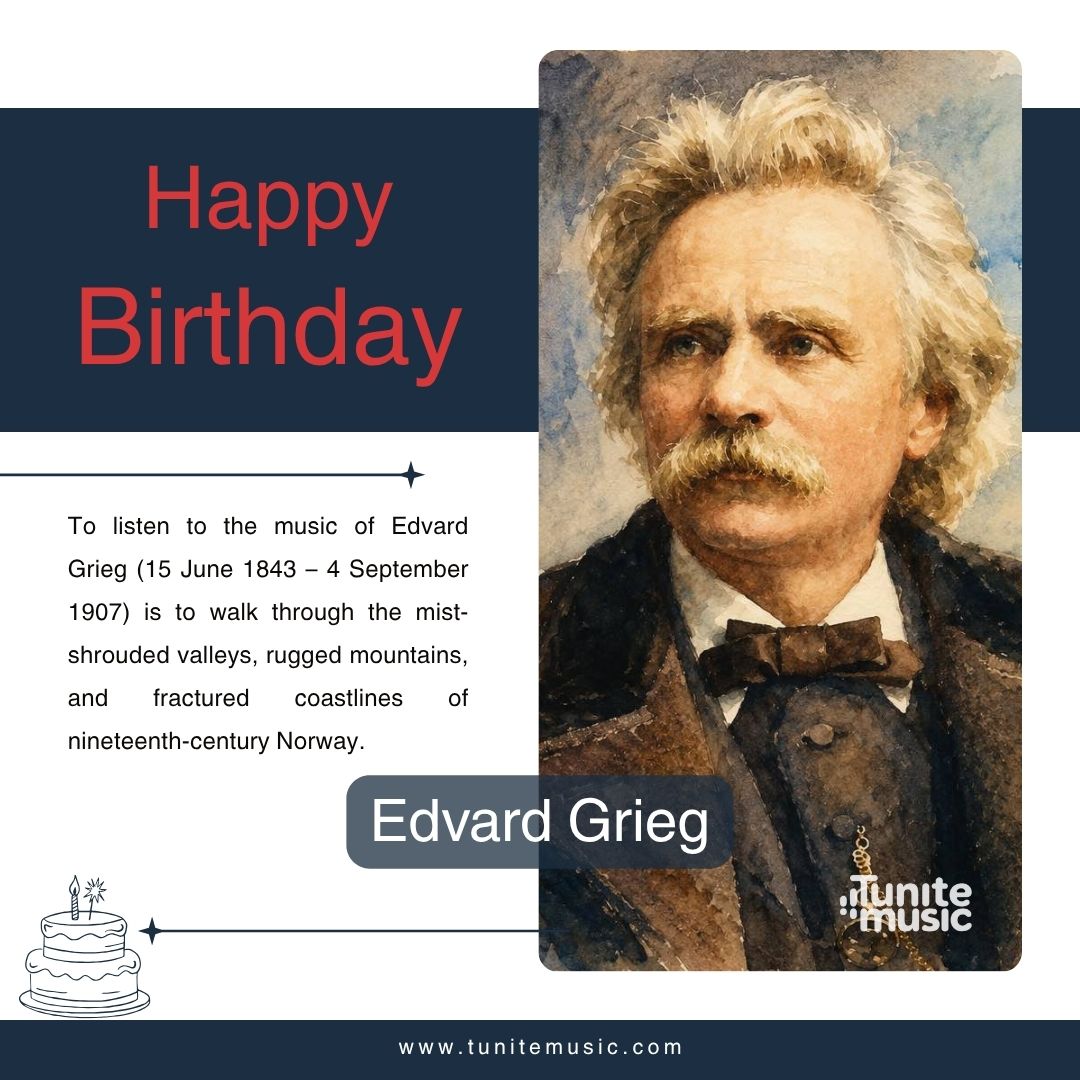
To listen to the music of Edvard Grieg (15 June 1843 – 4 September 1907) is to walk through the mist-shrouded valleys, rugged mountains, and fractured coastlines of nineteenth-century Norway. At a time when European classical music was heavily dominated by the structural and harmonic traditions of Germany, Grieg emerged as a revolutionary cultural force. He did not merely compose music; he translated the geography, folklore, and psychological identity of his homeland into a universal auditory language. #EdvardGrieg #ClassicalMusic #RomanticEra #MusicHistory #NorwegianComposer #PeerGynt #PianoConcerto #RomanticNationalism #Troldhaugen #NordicCulture #OrchestralMusic #Musicology #NineteenthCentury #PianoMusic #FolkTraditions

Pål Jonson Jun 6

FLF Finland is a robust answer to Russia’s provocations along NATO’s Eastern Flank. It also marks a new chapter in Swedish-Finnish defence cooperation, built on shared history, geography and values. To the soldiers serving: you are NATO, and your efforts matter. (2/2) #NATO #Finland #DefenseCooperation #FI #RU #SE

It seems that events are turning against Russia. The Russian military advantage is beginning to dissipate, and Ukraine is expanding the geography of its attacks and their intensity.

Priznali poraz, rat ide u krivom smjeru: Kreće li nova mobilizacija diljem Rusije?
www.vecernji.hr

RT @Mylovanov: Budanov: Ukraine is fighting the most brutal war on the European continent since World War II. By casualties, geography, an… #Ukraine #WarInUkraine #WorldWarII #UA #EU

BBC May 17

The Pakistani military responded to the recent statement by the Indian army chief regarding Pakistan, asserting that threatening to erase a sovereign nuclear-armed neighbor from geography reflects "the bankruptcy of intellectual capabilities and the madness of war," and emphasized that such a course of action would inevitably be mutually destructive. #NuclearConflict #MilitaryRelations #Geopolitics #PK #IN

'भूगोल-इतिहास' वाली जनरल द्विवेदी की चेतावनी पर पाकिस्तान ने ख़ुद को बताया परमाणु शक्ति - BBC News हिंदी

The influence on the geography of Polish food exports is shaped by events such as Poland's accession to the European Union in 2004 and the Russian embargo in 2014. During this time, the value of food exports from Poland rose from just under 5 billion euros annually to 53 billion for the last year. (Original: wpływ na geografię eksportu polskiej żywności mają takie wydarzenia jak wejście Polski do Unii Europejskiej w 2004 r. oraz embargo rosyjskie w 2014 r. W tym czasie wartość eksportu żywności z Polski wzrosła z niecałych 5 mld euro rocznie do 53 mld za ostatni rok. Natomiast) #PolishFoodExports #EUAccession #EconomicGrowth #PL #RU

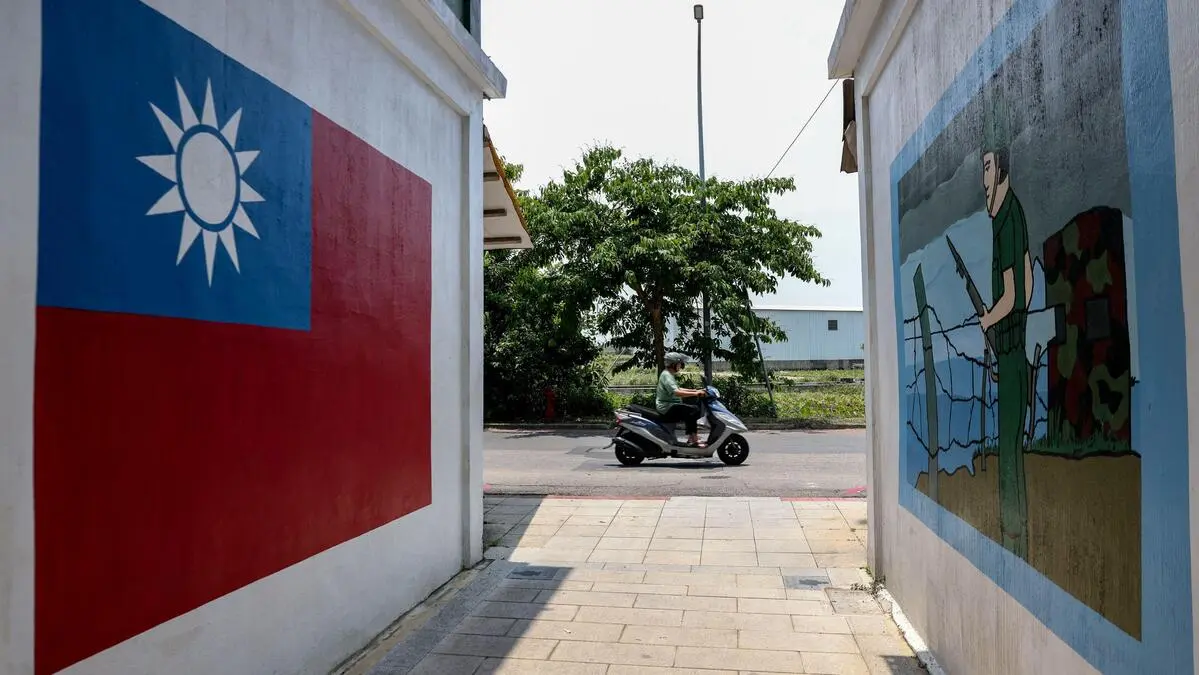
China will Taiwan einnehmen, doch Taiwaner haben auch andere Sorgen [premium]

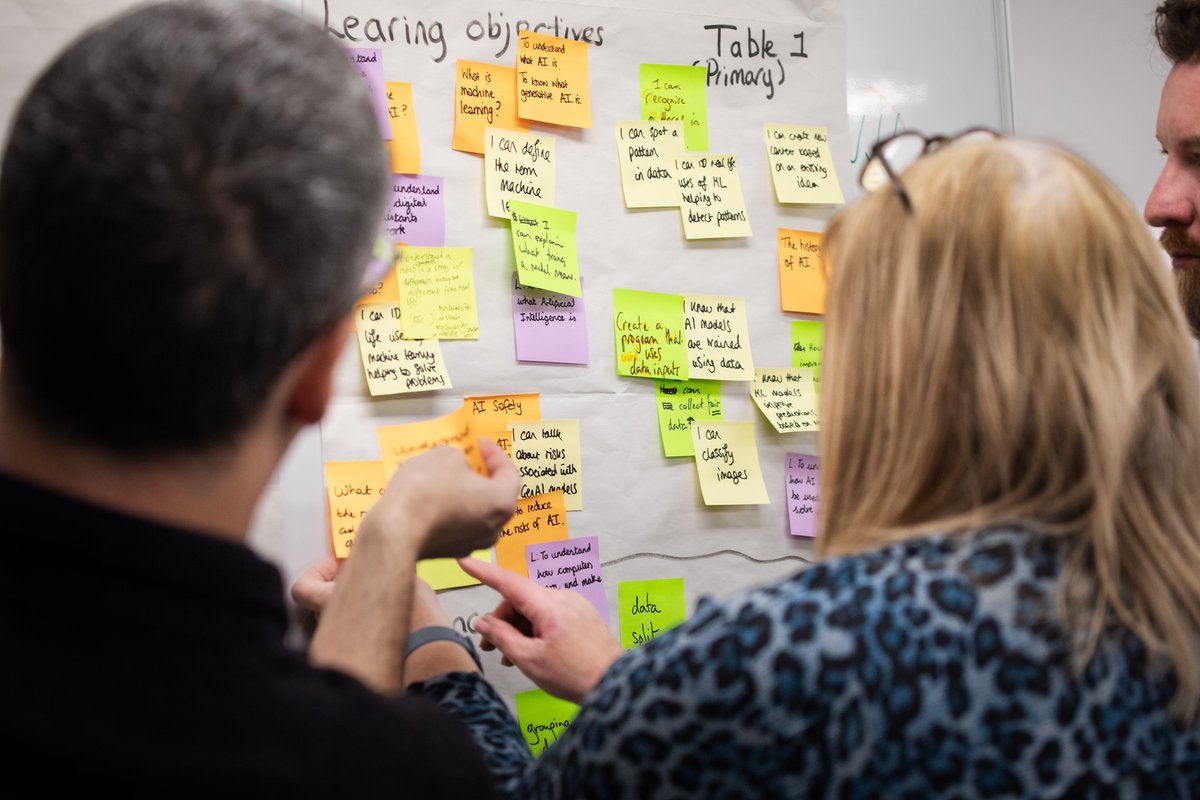
Our new 'Applied AI' series of monthly research seminars will explore how AI is applied across disciplines and what this means for teaching in art, geography, history, and more. 🔗Read our latest blog to find out how to sign up: https://t.co/yNXV7ZPdUa #AIEducation https://t.co/KHOjKzaVaM -