BETA nonprofit public democratic european moderated

Search

#Growth

🚨🚨💣 C'EST UNE BONNE NOUVELLE POUR LES LYONNAIS !!! L'OL ENTERRE « EAGLE FOOTBALL GROUP » ET TOURNE LA PAGE JOHN TEXTOR 🇺🇸 !!! 👋 LA SOCIÉTÉ MÈRE DU CLUB REDEVIENT OL GROUPE, actant la rupture avec John Textor après la reprise par Michele Kang 🇺🇸. Le transfert vers Euronext Growth sera voté le 16 octobre, avec une gestion sous contrôle DNCG/UEFA jusqu'en 2028. (via @RMCsport) #OL #Lyon #Football

🇩🇪 #GERMANY JULY FACTORY ORDERS RISE 13.1% Y/Y; EST. +10.5% - BBG *GERMANY JULY FACTORY ORDERS RISE 2.5% M/M; EST. +0.3% It seems coherent with ⬇ 1️⃣ Germany's IfW raises 2026 growth forecast as economy regains momentum - Reuters https://t.co/vzUldD2C8K 2️⃣ Germany's RWI #Germany #Economy #FactoryOrders #DE

Spain has quite successfully promoted immigration as a force for good in recent years, driving economic growth and social dynamism, even as most governments in Europe have moved in the opposite direction. The mismanagement of Ceuta will impair that message https://t.co/buej1QxLkF #Spain #Immigration #EconomicGrowth #ES

Asia's next growth chapter is still being written. In a world of technological change, demographic shifts, and uncertainty, opportunity abounds. The latest F&D magazine explores the choices that can shape the region’s future. Read it here: https://t.co/d64wRGN20J https://t.co/Rlz78FIJtk #AsiaGrowth #Innovation #FutureTrends #Thetweetdoesnotmentionanyspecificcountries.Therefore #therearenocountrycodestoreturn.

🇨🇦 Bank of Canada Holds Rates as Tariffs Cloud Growth Outlook - Bloomberg https://t.co/KbxO4VZpgN #BankOfCanada #InterestRates #Tariffs #CA

Productive discussions at this year's G20 FMCBG meeting in Asheville, North Carolina. I welcome the U.S. G20 Presidency's pro-growth agenda which aligns with IMF priorities on productivity growth, debt sustainability, global imbalances. Read my statement: https://t.co/Nb6rtcnLRq https://t.co/PIJifpnq49 #G20 #Productivity #IMF #US #G20

Excellent exchange of views with India’s Finance Minister @nsitharaman - reflecting on India’s stellar growth performance, the global outlook, and our shared resolve to work ever-more-closely together. https://t.co/m0hKmuGZ2B #India #FinanceMinister #GlobalGrowth #IN

Busy day at the G20. Good to meet with Canada’s Finance Minister Champagne & Singapore’s Minister Rajah. We discussed strengthening even further our economic links and opportunities for growth, trade and investment. In these uncertain times, it’s so important to work together https://t.co/yLoFn4ES2n #G20 #EconomicGrowth #TradeRelations #CA #SG

⚠ Tuesday Brief ⚠ 🌎 Global Yields Hit the Highest Level Since 2008 🌏 AI Boom Fuels Asian Growth 🇪🇺 Focus on #Eurozone CPI ... https://t.co/TufXtqzwTv #GlobalEconomy #AIBoom #EurozoneCPI #EU #AS

🇺🇸 #OpenAI’s ad business shows blistering growth, hits $1 billion annualized revenue run rate - CNBC https://t.co/yzggp2ZvL3 #OpenAI #Advertising #Revenue #US

Trump's deportation campaign is a historic reversal for a nation of immigrants. It is contributing to a shrinking workforce and slower growth https://t.co/EHjZ9mhr15 #Immigration #Workforce #Economy #US

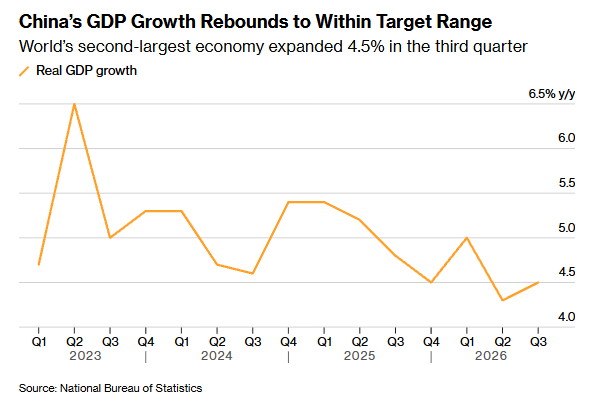
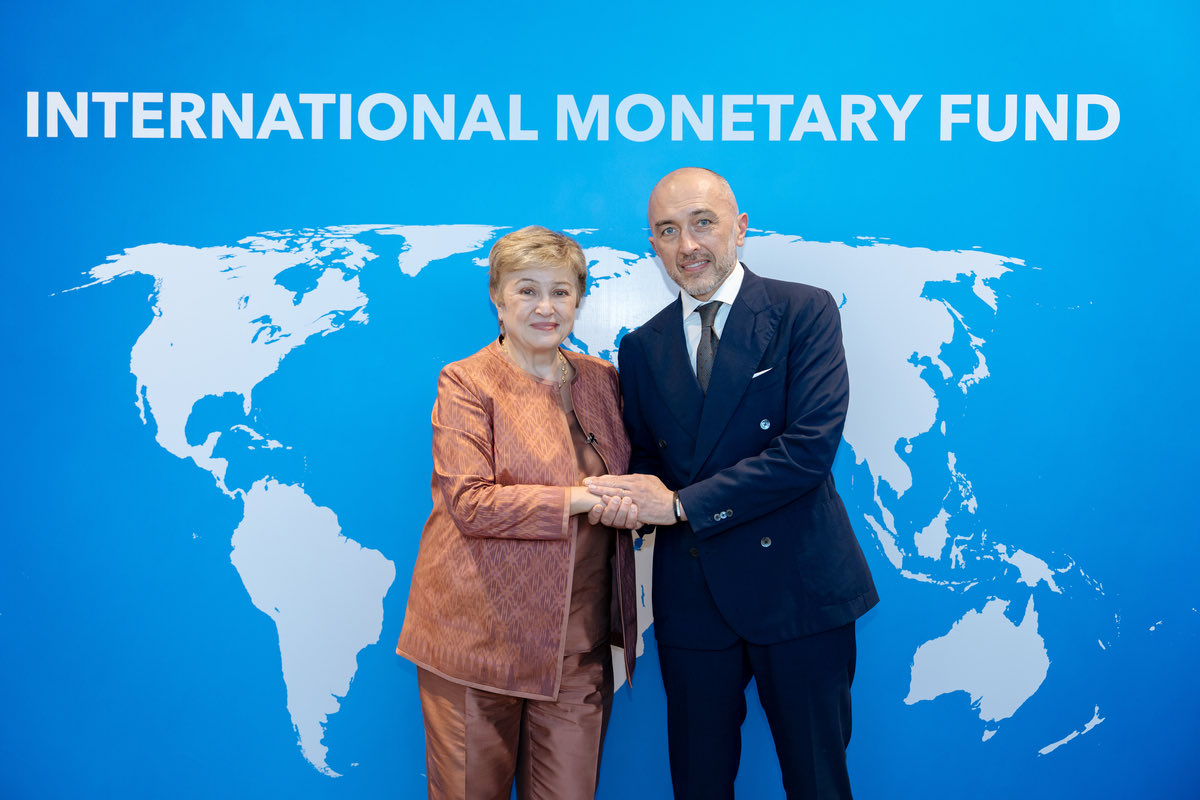
A very constructive discussion with PBOC Governor Pan Gongsheng on the sidelines of the G20 FMCBG meeting. We exchanged views on China’s economic outlook, shifting to a consumption-led growth model, and the role of AI. https://t.co/KrhVkI9x4S #G20 #ChinaEconomy #AI #CN

Finland keeps throwing obscure and detrimental tax hurdles at growth companies, almost as if to ensure nothing ever succeeds and grows from Finland. Recently discovered that by a tax KHO court decision: private individuals cannot declare losses at all from startup loans. Not even #Finland #Startups #TaxPolicy #FI

🇮🇳 #INDIA APRIL-JUNE GDP RISES 7.8% Y/Y; EST. +7.3% - BBG ➡ Several Asian economies delivered strong growth in H1, supported by government initiatives to attract foreign investment, higher public spending, and robust private investment in AI. ➡ In this context, we already https://t.co/Nr6RPQfv9D #India #GDP #EconomicGrowth #IN

An important international debate is taking place: which economic model actually works? For years, liberal economists dismissed Hungary’s national-conservative economic model. We now have fifteen years of data. The record should be judged on facts. Growth cannot be considered https://t.co/7IJy0BQ3JW #EconomicDebate #Hungary #EconomicModel #HU

H

Hvor højt tror du staten er parat til at lade topskatten stige til? The Kennedy Tax Cuts of 1963–1964 In early 1963, the top marginal individual income tax rate in the United States stood at an extraordinary 91 percent—a legacy of the exceptionally high tax rates established during and after World War II. President John F. Kennedy proposed a sweeping tax overhaul, arguing that excessively high marginal rates were holding back private investment, risk-taking, employment, and economic growth. His original proposal would have reduced individual income tax rates across the board, lowering them from a range of 20–91 percent to 14–65 percent. It also called for reductions in corporate tax rates and stronger incentives for investment. Kennedy’s administration explicitly argued that lower tax rates would stimulate private economic activity, increase investment, and expand production and employment. The goal was not simply to reduce taxes, but to remove what Kennedy called the “heavy drag” that the existing tax system placed on private initiative. (Fraser) The proposal faced substantial opposition in Congress, particularly because of concerns about its fiscal implications and accompanying tax reforms. Nevertheless, the business community and many economic organizations strongly supported the central idea of substantial rate reductions. (Fraser) Kennedy did not live to see his proposal enacted. After his assassination in November 1963, President Lyndon B. Johnson made passage of the legislation a priority. The final measure, the Revenue Act of 1964, reduced the top marginal tax rate from 91 percent to 70 percent and substantially lowered individual and corporate tax rates. (Fraser) The economy subsequently entered a powerful and sustained expansion. Contemporary economic analyses attributed a significant portion of the improvement in production, employment, investment, and tax revenues to the cuts, although monetary policy and other factors also contributed. (Judiciary Committee)

Solar PV installations hit record levels in 2025. Again. 🌞 But that growth is now at risk of stalling. So how can that possibly be, and what are governments and businesses doing about it? Get some answers in Just Have A Think's latest video 👇 https://t.co/UuqQt4uHuU #SolarEnergy #RenewableEnergy #Sustainability #Nospecificcountrycodesarementionedinthetweet.

🇺🇸 #SPX | “Mag 7” Companies Reported Earnings Growth Above 100% Boosted By Investment Gains - Factset https://t.co/5NhTfmix04 https://t.co/QYIw1i3D7j #Mag7 #EarningsGrowth #InvestmentGains #US

H

When Therapy Replaces Morality: The Rise of the Therapy State By replacing religious frameworks with therapy speak, Western society may have lost its moral “grammar” and traded it for clinical language—though moral and psychological categories work differently. The DSM has expanded dramatically: in 1952 it listed 102 disorders; by 2013 it had over 400. Meanwhile, young adults report worsening mental health: poor mental-health days among 18–25-year-olds rose from 3.5 to 6 per month between 1993 and 2020, and depression diagnoses more than doubled from 2006 to 2020. Yet the most striking shift is self-diagnosis. About one in four American adults suspect they have ADHD, while actual prevalence is around 6%. Social media fills the gap: many popular ADHD and autism clips include misleading or unsupported claims. The label persists because it serves a function. A diagnosis increasingly becomes identity—and identity becomes a shield. When someone claims ADHD, anxiety, or trauma, they may be drawing a boundary others are not allowed to cross. Where moral language asks what we should become, therapeutic language labels what we are; once the label becomes identity, the conversation often ends. Religious language framed forces as external, preserving agency—you could resist. Therapeutic culture internalizes them: you don’t have weakness to overcome; you have ADHD. Jung argued that old gods and demons didn’t vanish; they became neuroses, anxieties, and addictions—turning questions of conscience and choice into labels to accept. The result isn’t greater freedom but greater control. If a civilization can’t say “wrong,” it doesn’t necessarily become more tolerant. Moral language permits disagreement and growth; therapeutic language can pathologize it and end discussion. The therapy state is the successor to moral authority—and it may be easier to enforce.

H

Contraception and Western Culture In the 1960s, the birth-control pill became widely available. Sexual liberation is usually presented as a story of freedom and progress, but its biological consequence is rarely discussed: sex could now be separated from reproduction. Every Western nation has experienced below-replacement fertility for decades. Oxford anthropologist J. D. Unwin anticipated this pattern in *Sex and Culture*, a study of 86 societies. He expected to disprove any link between sexual restraint and civilizational achievement. Instead, he concluded that cultures practicing strict monogamy generated energy expressed through art, science, conquest, and commerce. Relaxing sexual restraint, he argued, consistently weakened that energy within three generations. Unwin also predicted that such societies would abandon rationalism, deism, and monogamy. Three generations after 1960 brings us near the present, and some of his predictions appear increasingly visible. Religious affiliation has collapsed, marriage is declining, the median age at first marriage is at a record high, and a record share of people will never marry. Rationalism also appears to be giving way to egoism, identity, and emotion. Contraception helps explain this transformation. Evolutionary theory distinguishes between a behavior’s immediate purpose—such as pleasure—and its ultimate function, such as reproduction. Sex traditionally served both purposes. Contraception severed that connection, preserving the behavior while disconnecting it from reproduction. Female education, urbanization, workforce participation, economic growth, and the rising cost of living also correlate with declining fertility. Yet many of these changes depend on technological control over reproduction. Career-first lifestyles, extended education, and mass female workforce participation would be far more difficult without it. Women may have gained freedom from child-rearing, but they may have fewer daughters to inherit that freedom. Institutions that promoted this transformation now import replacement populations that may not share its values and could eventually reverse them.