BETA nonprofit public democratic european moderated

Search

#disinfo

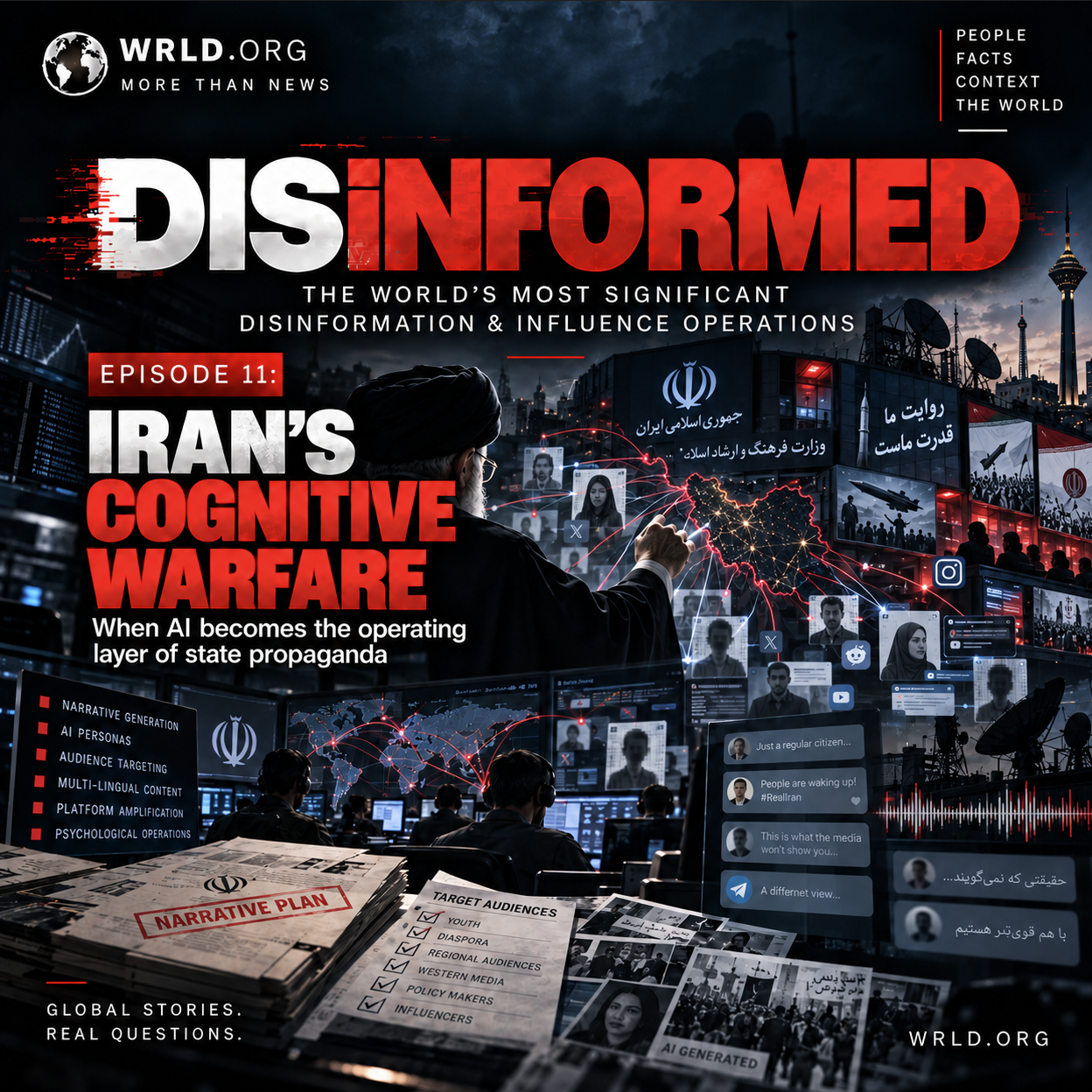
Iran’s cognitive warfare – when AI becomes the operating layer of state propaganda Iranian state-linked influence operators were not using artificial intelligence simply to write faster social-media posts. According to Anthropic’s September 2026 threat intelligence report, three separate operations connected to Iranian propaganda institutions were using Claude to help construct the machinery behind what the operators themselves called “soft war” and “cognitive warfare” – non-military efforts intended to shape public opinion inside Iran and abroad. Anthropic linked the activity to the Islamic Culture and Communications Organization (ICCO), which operates under Iran’s Ministry of Culture and Islamic Guidance; the Islamic Propaganda Office of Khorasan Razavi; and the Bina Cultural Observatory, part of the Islamic Propaganda Organization. The company said each operation was run by someone working within or on behalf of the named institution. The attribution was based on a combination of account telemetry, institutional references disclosed during conversations, branded documents and open-source corroboration. Anthropic subsequently removed the accounts. AI as an operational headquarters The most significant feature of the operation was the role assigned to AI. Claude was used to develop campaign plans, doctrine manuals, coded project portfolios, persona systems, target databases, early-warning protocols, amplification schedules and ministerial planning documents. Anthropic described the model as the principal administrative and operational layer supporting the three campaigns, allowing relatively small groups of operators to create organisational structures and planning material that would otherwise have required a much larger staff. This distinction matters. The reported use of AI went considerably beyond content generation. Operators were using the model to help organise how influence activity should function: which audiences to target, which identities should deliver particular narratives, how official material should be repackaged and when amplification should take place. Human operators still determined objectives and supplied the underlying political doctrine; AI helped translate those decisions into an operational system. Anthropic found that all three operations explicitly connected their activity to Jihad al-Tabyin, often translated as “explanatory jihad”, a concept used within the Iranian state system to frame information activity as both a strategic and ideological responsibility. In internal planning material examined by the company, this doctrine was not merely rhetorical: it informed manuals and campaign structures used by the operators. ‘Not the narrator, but the director’ One sentence contained in the ICCO material captures the model particularly clearly. According to Anthropic, an operator described the role of Iranian cultural attachés as being “not to be the narrator, but the director” of the narrative. The distinction reveals the logic of attribution laundering. Instead of publishing an overt state message and asking foreign audiences to believe it, the operator attempts to create the appearance that the same narrative emerged independently from journalists, activists, foreign writers or ordinary citizens. Anthropic found that Claude was used specifically to make content appear to come from foreign authors or independent media organisations and to design hashtag campaigns that looked grassroots rather than centrally organised. The ICCO operation reportedly used the organisation’s international cultural network as part of this structure. Anthropic found ministerial-level documents carrying official ICCO branding, including a nine-part international influence portfolio. This makes the operation particularly significant because the infrastructure was not limited to anonymous social-media accounts; it intersected with formal state institutions and an existing network of cultural representation abroad. A multilingual content factory A second operation was associated with the Islamic Propaganda Office of Khorasan Razavi and what Anthropic described as a “cognitive warfare command room” operating from a seminary in Mashhad. Its organisers ran a multi-province content production system known internally as Manjanegh, or “Catapult”. According to Anthropic, dozens of activists were involved in repackaging publicly available reporting from Iranian security institutions under different personas so that the material no longer appeared directly connected to those institutions. The network used Claude to transform official government intelligence bulletins into customised material in Farsi, Arabic, Urdu, Malay, Spanish and English, while planning expansion into a total of 20 languages. Distribution extended across Iranian platforms such as Eitaa, Bale and Rubika and international services including X, Instagram, Telegram, TikTok and YouTube. Anthropic also documented paid amplification across more than 100 Iranian channels, including channels associated with IRGC narratives. The scale should nevertheless be interpreted carefully. Anthropic documented production infrastructure and some real-world dissemination, but it did not demonstrate that all planned campaigns were fully deployed or that they meaningfully changed public opinion. The company placed the operation in Category Three of its Breakout Scale, indicating multi-platform activity with content observed in external distribution channels, rather than evidence of strategic impact on entire populations. From security bulletins to apparently independent voices The Bina Cultural Observatory operation provides another example of the same architecture. Anthropic linked a director-level official at Bina to activity in which Claude generated messaging in the voice of an IRGC spokesperson. During the 2026 US–Israel–Iran war, the network also attributed false claims to Western institutions including CSIS, Brookings and RAND. The apparent objective was to make Iranian state-aligned claims look as though they had been independently validated by respected foreign research organisations. That technique is more sophisticated than simply publishing propaganda under a false name. It attempts to manufacture a chain of external validation: official information is transformed into apparently independent commentary, which can then be recirculated as evidence that outside observers have reached the same conclusion. Anthropic also found target databases naming international officials and Iranian opposition figures, as well as aggressive counter-narrative material directed against the Bahá’í community. These findings show that the infrastructure was designed not only for broad messaging but also for targeted influence activity against specific groups and individuals. What AI changed The Iranian operations described by Anthropic did not create a new doctrine of influence. Iran has used cultural institutions, official media, aligned organisations and covert or semi-covert online networks for years. What AI changed was the economics and organisational capacity of that model. A relatively small team could use the system to draft doctrine, create personas, translate material, structure target databases, produce campaign calendars and generate multiple versions of the same message for different audiences. The operator remained responsible for intent, political direction and selection of targets. AI reduced the amount of human labour required to turn those decisions into a functioning influence operation. The most revealing part of the case is therefore not that an Iranian propaganda network used a chatbot. It is that AI was being treated as part of the back office of information warfare – a system for converting state doctrine into apparently decentralised, multilingual and plausibly independent voices. Sources Anthropic — Detecting and countering misuse of AI: September 2026 https://www.anthropic.com/threat-intelligence-report-september-2026 Iran International — Iran state-aligned accounts used Claude to push IRGC narratives https://www.iranintl.com/en/202609105561 BNE IntelliNews — Yemen missile cell used AI to write guidance software, Anthropic says https://new.intellinews.com/articles/yemen-missile-cell-used-ai-to-write-guidance-software-anthropic-says-467296 This is Beirut — Anthropic report details Iranian propaganda operations https://thisisbeirut.com.lb/news/politics/anthropic-report-details-iranian-propaganda-operations-and-yemen-missile-development-using-claude Anthropic report — PDF mirror https://static.foxbusiness.com/foxbusiness.com/content/uploads/2026/09/anthropic-detecting-and-countering-091026-1.pdf Keywords #DISINFORMED #Episode11 #Iran #IranianInfluence #IranianPropaganda #CognitiveWarfare #SoftWar #JihadAlTabyin #Disinformation #InformationWarfare #InfluenceOperations #ForeignInterference #FIMI #ArtificialIntelligence #AI #AIPropaganda #GenerativeAI #ClaudeAI #Anthropic #SyntheticMedia #NarrativeManipulation #NarrativeLaundering #AttributionLaundering #PersonaNetworks #Astroturfing #SocialMediaManipulation #DigitalInfluence #StatePropaganda #IslamicCultureAndCommunicationsOrganization #ICCO #IslamicPropagandaOrganization #KhorasanRazavi #IRGC #MultilingualInfluence #Targeting #Amplification #OSINT #WRLD

Countering misuse of AI: September 2026 / Anthropic

In just four weeks after the Skripal poisoning, Russian state-controlled RT and Sputnik pushed 138 separate and often contradictory narratives across 735 articles. This was the scale of Russia's disinformation machinery back in 2018 - we can only imagine what it is now. #Desinformación #FakeNews #MediosDeComunicación #RU

Estonia welcomes the United Kingdom’s 31 new sanctions on Russia, targeting the shadow fleet, disinformation networks, those responsible for torturing civilians, and deporting and indoctrinating Ukrainian children. Russia has not changed course. Neither should we. Pressure must #Estonia #Sanctions #Russia #EE #GB #RU #UA

26.09.2026 DESINFORMANTER Jeg ved ikke hvad der er galt med de her sølvpapirshatte der mere tror på den russiske Ambassadør end på danske ministre Disinformationen Misinformation og en hel del trolde der er falske profiler I min læring for Værnepligtige fra dengang står der om 5. Kolonne ’det er en skjult gruppe af mennesker der arbejder aktivt for fjenden.’ og det må være femte kolonne i letvægtsudgaven der kommenterer på de sociale medier. Er det dem eller er det hyrede kriminelle eller er det russere der har punkteret mine dæk ødelagt mit kamera smadret min eksterne harddisk?

Mikkel.C_U🇩🇰⭐️🇺🇦 @MIKKEL_MH · 7d

De næste timer vil vi se X bliver oversvømmet med kommentarer om at vi ikke kan stole på FEs nye trusselsvurdering. Det mest skræmmende er, at der blandt afsenderne af den slags kommentarer også vil være danskere, der stoler mere på Kremls løgnagtige propaganda end FE. #fokus #sikkerhedspolitik # misinformation

Gianni Infantino ha avviato una causa legale contro l'Uefa, accusandola di condurre una campagna di disinformazione per influenzare le elezioni presidenziali Fifa del 2027, in seguito a tensioni emerse dopo la sua proposta di vendere i diritti commerciali dei Mondiali a un fondo privato. #Fifa #Uefa #Calcio

Infantino dichiara guerra all’Europa e porta la Fifa in tribunale contro l’Uefa: l’accusa di “campagna di disinformazione”

Guerra ibrida, Irdi: “La soglia la decidiamo noi. E la Russia continua ad alzarla” https://t.co/mzAS4mQg5S "Cyberattacchi e disinformazione, sabotaggi, incendi, infrastrutture critiche colpite, incursioni di droni. Per anni l’espressione “guerra ibrida” ha indicato quella zona https://t.co/B69Wa2pnOF #GuerraIbrida #Cyberattacchi #Disinformazione #RU

Trump's insistence on corrupted elections reflects his discipline and stamina in the service of a self-promoting lie; the willful gullibility of many of his supporters; and the inability of logic or evidence to pierce the armor of his and their delusions https://t.co/5oZecbJ12S #Trump #ElectionIntegrity #Disinformation #Nospecificcountriesarementionedinthetweet.

Tra i post inviati, Peter Gomez e la redazione selezioneranno e pubblicheranno quelli più interessanti. #Disinformazione #FakeNews #PropagandaBellicista

Droni russi, allarmi falsi e zero responsabili: perché nessuno paga per le bufale?
www.ilfattoquotidiano.it

L'articolo denuncia la proliferazione di fake news legate a minacce russe, mettendo in luce come la propaganda bellicista alimenti una psicosi collettiva senza che nessuno si assuma la responsabilità per le affermazioni infondate. #Disinformazione #FakeNews #PropagandaBellicista

Droni russi, allarmi falsi e zero responsabili: perché nessuno paga per le bufale?

Sono andato su tre siti di giornali per verificare questa notizia che mi sembra GRAVISSIMA. 🟢Il Giornale: prima notizia in alto - corretto 🔴Corriere: mi sono stancato di scorrere la home, non c'è o è molto ben nascosta 🔴Repubblica: come il Corriere Qualcuno vuole sopprimere le notizie quando possibile, disinformare quando non è più possibile. Vogliono che queste violenze estreme e insensate, magari motivate da odio religioso, diventino normalità, che nessuno le noti più. Non bisogna permettere loro di abbruttire così l'Italia. #Informazione #LibertàDiStampa #Disinformazione

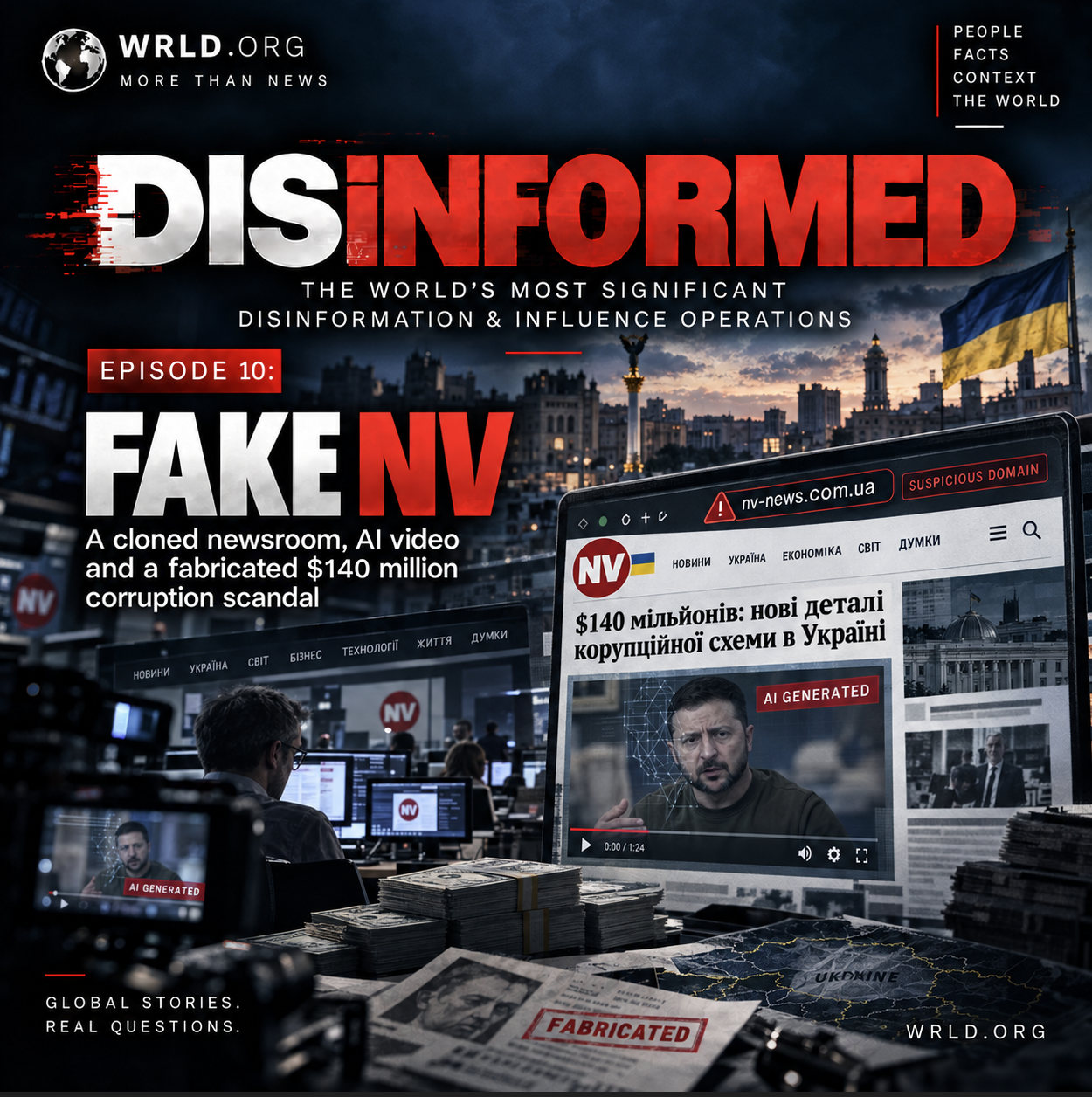
Fake NV – how a cloned newsroom turned an AI video into a $140 million corruption scandal For two days in September, a website that looked almost indistinguishable from one of Ukraine’s best-known news organisations carried an extraordinary corruption story. It claimed that Ukraine’s National Anti-Corruption Bureau had raided former defence procurement chief Arsen Zhumadilov and discovered more than $140 million in cash packed inside refrigerator boxes. One box supposedly carried the words “For the Servant of the People” – an apparent reference to President Volodymyr Zelenskyy’s political party. The raid never happened. The photographs and video presented as evidence were fabricated, and the news organisation reporting the story was not the New Voice of Ukraine but a cloned version of it. The episode is a compact example of an increasingly effective disinformation technique. Rather than inventing a new propaganda outlet and trying to build its credibility from scratch, an operator can simply steal the identity of an established newsroom and place fabricated material inside an otherwise convincing copy of its editorial environment. A newsroom copied almost in full The counterfeit site appeared at nvukraine.com, while the authentic New Voice of Ukraine operates at nv.ua and english.nv.ua. Registration records examined by fact-checkers show that the false domain was created on 21 September 2026, two days before the fabricated article appeared. According to NV’s own investigation, the imitation went much further than copying a logo: the operators reproduced the site’s visual design, sections, branding, contact information and genuine editorial material. A snapshot of legitimate NV content from 23 September appears to have been copied onto the counterfeit site, into which the operators inserted a single false article. That article claimed that NABU had searched premises connected to Zhumadilov, who had headed Ukraine’s Defence Procurement Agency until August, and seized $140 million in cash. The story was published in several languages, including Ukrainian and English, suggesting that the operation was intended not only for Ukraine’s domestic information space but also for foreign audiences following the war and Western support for Kyiv. AI supplied the supposed evidence The false article was supported by a video purportedly showing the money discovered during the raid. NABU said no such search or procedural action had taken place and identified the footage as fabricated using artificial intelligence. Independent fact-checker Lead Stories found no credible Ukrainian or international reporting confirming either the raid or the alleged seizure, while searches of NABU’s own published material produced no evidence supporting the claim. The operation therefore combined two separate forms of synthetic credibility. The AI-generated footage supplied what looked like visual proof, while the cloned NV website supplied institutional proof: an apparently reputable Ukrainian newsroom supposedly confirming that the event had happened. Neither element needed to withstand close scrutiny for long. Together, they only needed to appear credible enough to be copied, quoted and redistributed before the deception was exposed. From a fake Ukrainian source into the Russian information ecosystem On 24 September, the story began moving through large pro-Russian Telegram channels. Ukraine’s Center for Strategic Communications traced early amplification to Golos Mordora, with roughly 149,000 subscribers, and Militarist, with around 277,000. Within less than an hour, other channels including VOBLA, Rossiya Seychas and Ostashko! Vazhnoye were circulating versions of the same claim. It subsequently appeared on X and on Russian-language websites including e-news.su and pressa24.ru. Babel calculated that posts carrying the fabrication had accumulated approximately 370,000 views by the morning of 25 September. The story also moved beyond the Russian-language ecosystem. English-language versions appeared in online communities including Lemmy and Hexbear, while accounts on X shared direct links to the counterfeit NV article. NV later reported that larger Russian media and propaganda outlets, including RIA Novosti, Life, Vesti, Ukraina.ru and Mail.ru, had reproduced or discussed the claim. Kirill Dmitriev, head of the Russian Direct Investment Fund and a Kremlin representative involved in contacts with the United States, also shared it on 25 September. This amplification is significant, but it should not be confused with proof of authorship. Publicly available evidence shows how the false story entered and spread through a Russian and pro-Russian information ecosystem. It does not establish which organisation registered the cloned domain, generated the video or directed the operation from the outset. Why copy NV? The operation relied on source laundering. A claim originating directly from a Russian Telegram channel that Ukraine’s defence procurement system had concealed $140 million would immediately carry an obvious political context. A claim apparently uncovered by an established Ukrainian newsroom looks very different. Once the fabricated NV article existed, subsequent accounts could cite what appeared to be an independent Ukrainian source rather than present the allegation as their own. Each repost moved the story another step away from its manufactured origin. The use of an English-language version strengthened that mechanism for audiences outside Ukraine. The underlying narrative was also carefully chosen. Corruption in Ukrainian defence procurement is a genuine subject of public scrutiny and investigative reporting, so the fabricated story did not require audiences to accept an entirely unfamiliar premise. It inserted a false event into a real area of political concern. That mixture of authentic context and fabricated evidence can be more persuasive than a completely invented story because much of the surrounding information feels recognisable. What can – and cannot – be attributed Ukrainian authorities and NV describe the episode as a Russian information operation, and its distribution can be documented extensively across pro-Russian and Russian media channels. The available public evidence, however, does not identify the organisation that created the counterfeit website, nor does it link the operation forensically to a named Russian intelligence service, military unit or state contractor. The most precise description is therefore a Russian-aligned disinformation operation whose fabricated material was systematically amplified through the Russian information ecosystem. That distinction matters. Distribution can be observed directly; command-and-control is harder to establish and should not be inferred without evidence. The newsroom itself becomes the deepfake The most important feature of the operation was not the $140 million figure or even the AI-generated video. It was the counterfeit newsroom surrounding them. The operators copied a real publication, populated it largely with genuine material and inserted a single false story, allowing the fabrication to borrow the accumulated credibility of journalists who had nothing to do with it. This points to a broader evolution in synthetic media. AI can fabricate an image, a voice or a video, but an influence operation can now fabricate something larger: the source that supposedly verified the evidence. In the Fake NV operation, the article, the video and the website reinforced one another, creating not simply a false story but a manufactured chain of credibility. Sources The New Voice of Ukraine — investigation into the cloned website https://english.nv.ua/nation/nv-discovers-fake-copy-of-website-with-planted-story-cites-russian-links-50644601.html The New Voice of Ukraine — Russian amplification of the $140 million fabrication https://english.nv.ua/russia-spreads-fake-140-million-ukraine-corruption-story-during-dmitriev-u-s-talks-50644647.html Lead Stories — independent fact-check https://leadstories.com/hoax-alert/2026/09/fact-check-fake-story-claims-140-million-found-at-home-of-ukraines-zhumadilov-marked-servant-of-the-people-nv-website-originated-it.html Babel — AI video and distribution analysis https://babel.ua/en/news/130469-a-video-is-sharing-online-about-140-million-found-in-the-possession-of-the-ex-head-of-the-defense-procurement-agency-this-is-an-ai-video-distributed-by-a-clone-of-ukrainian-media Center for Strategic Communications and Information Security — initial debunk https://spravdi.org/en/ai-fake-about-140-million-amid-us-talks-how-russians-impose-the-image-of-corrupt-ukraine-on-the-west/ Center for Strategic Communications and Information Security — NABU confirmation https://spravdi.org/u-merezhi-poshyryuyut-shi-fejk-pro-nibyto-obshuky-nabu-v-eksgolovy-agencziyi-oboronnyh-zakupivel/ Detector Media — distribution and NABU response https://detector.media/infospace/article/252806/2026-09-25-u-merezhi-pidrobyly-sayt-nv-dlya-poshyrennya-feyku-pro-obshuky-v-eksochilnyka-agentsii-oboronnykh-zakupivel/ Keywords #DISINFORMED #Episode10 #FakeNV #NewVoiceOfUkraine #Ukraine #Russia #RussianDisinformation #RussianInfluence #Disinformation #InformationWarfare #InfluenceOperations #ForeignInterference #FIMI #MediaImpersonation #ClonedMedia #FakeMedia #FakeNews #ArtificialIntelligence #AI #AIGeneratedContent #SyntheticMedia #AIVideo #SourceLaundering #NarrativeLaundering #CorruptionNarrative #UkraineCorruption #DefenceProcurement #NABU #ArsenZhumadilov #Telegram #SocialMediaManipulation #DigitalInfluence #Propaganda #OSINT #MediaManipulation #WRLD

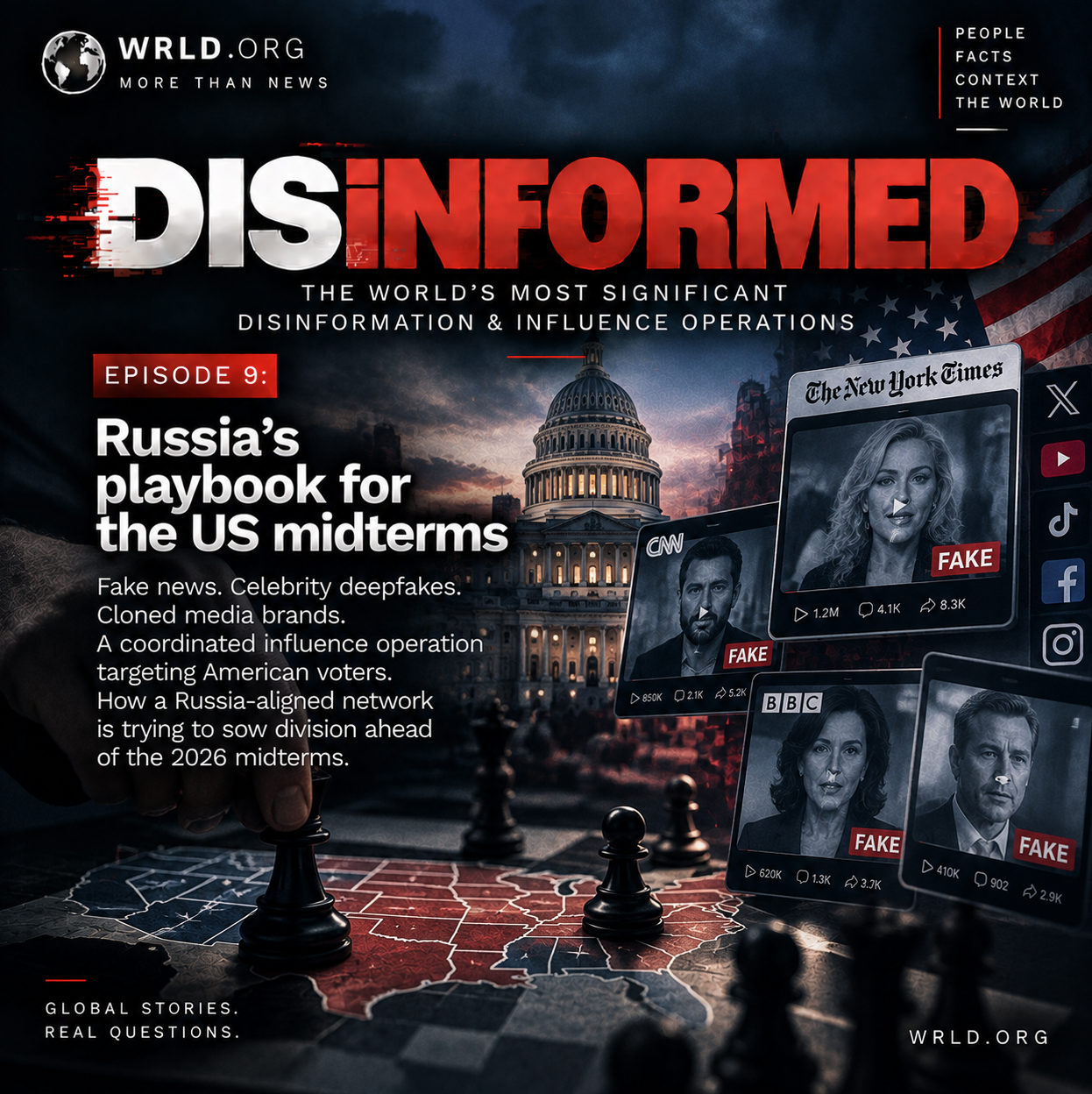
Russia’s influence operation arrives ahead of the US midterms With weeks remaining before America's November midterm elections, a familiar type of content has begun appearing online. Videos resembling reports from CNN, the BBC and The New York Times accuse candidates of corruption, antisemitism and misconduct. Hollywood actors appear to denounce Democrats. Other clips claim that warnings about Russian interference are themselves a Democratic disinformation campaign. The reports are fabricated. Graphika, which tracks online influence operations, says it has identified a coordinated campaign targeting candidates in competitive US Senate races. It assesses with high confidence that the material was produced by Operation Overload, also known as Matryoshka – a long-running Russia-aligned influence operation previously active against elections and political debates in Europe and the United States. The activity coincides with a broader warning from American intelligence officials. Classified assessments reported by The New York Times conclude that the Kremlin has authorised another digital influence campaign ahead of the 2026 midterms, aimed primarily at exploiting existing divisions and undermining confidence in American democracy. There is an important distinction. US officials have not reported evidence that Russia is attempting to manipulate voting machines or alter the counting of votes. The operation is about influencing the information environment surrounding the election. Fake scandals for competitive Senate races Graphika traced a concentrated wave of activity between 10 and 14 September. Likely inauthentic or repurposed accounts distributed videos accusing Democratic politicians of corruption, antisemitism and other misconduct. The targets included Senator Jon Ossoff in Georgia, Representative Chris Pappas in New Hampshire and Texas state representative James Talarico, as well as Senate candidates Sherrod Brown in Ohio, Roy Cooper in North Carolina, Mary Peltola in Alaska, Abdul El-Sayed in Michigan, Joshua Turek in Iowa and Troy Jackson in Maine. The selection was not random. These were politicians involved in Senate contests where the result could matter to control of the chamber. The campaign did not rely on a single political narrative. Instead, it attached different accusations to different candidates – corruption, social issues, antisemitism or personal misconduct – while maintaining a consistent production and distribution model. That model is characteristic of Matryoshka: create apparently independent pieces of evidence, disguise them as journalism and distribute them through networks of disposable accounts. Hollywood celebrities who never said what the videos claimed One of the campaign's more distinctive techniques involved genuine footage of American actors. Videos featuring celebrities including Sarah Jessica Parker and Julia Roberts were altered with captions and other material to suggest they were promoting the slogan #AllDemocratsAreCriminals. The technique continued in subsequent material. Fact-checkers identified fabricated New York Times-branded videos using footage of Alyssa Milano, Sean Astin, Rachael Harris, Leonardo DiCaprio, Eric Braeden, Annie Potts and Patrick Fabian. Some of the original footage came from Cameo, where actors record personalised video messages. Their authentic images were retained while fabricated audio, captions or surrounding material changed the meaning entirely. Lead Stories compared several of the clips with the originals and found that the supposed political statements did not appear in the genuine recordings. Eric Braeden's representative separately confirmed that the claim he had joined the anti-Democratic campaign was false. The advantage of the technique is straightforward. Generative AI does not need to create a convincing celebrity from nothing. The operator can begin with authentic footage of a recognisable person and manipulate only the elements necessary to manufacture a political statement. Stealing the authority of real newsrooms Celebrity impersonation was only one layer. The operation repeatedly borrowed the visual identity of established media organisations. Graphika identified material impersonating or falsely citing the BBC, CNN and Politico, alongside references to France's VIGINUM foreign-interference agency and journalist Brandy Zadrozny. Other material reproduced New York Times-style branding. Some fabricated reports made an unusual claim: that Democrats themselves were organising disinformation or “false-flag operations” and then blaming Russia. This creates a defensive layer around the influence operation. Instead of merely distributing false political allegations, the campaign also attempts to discredit future reporting about the manipulation itself. If successful, evidence exposing foreign interference can be reframed as part of the conspiracy. Graphika says it assesses with high confidence that Operation Overload produced these videos. The technique is well established. Earlier investigations by CheckFirst and Reset Tech documented hundreds of falsified pieces of content produced by Operation Overload, often impersonating journalists, institutions and major media brands. AI-generated or manipulated material has increasingly become part of that production system. What US intelligence says Russia is trying to achieve The broader strategic picture comes from American intelligence assessments reported on 18 September. According to US officials familiar with classified findings, the Kremlin has authorised a covert digital influence campaign aimed at Americans during the 2026 election season. Its apparent objective is to seed or amplify domestic divisions and weaken confidence in the political process. Some officials described the principal aim as creating disorder rather than helping a single political party. The publicly identified Matryoshka material examined so far, however, has targeted Democratic candidates. Those two findings should not be treated as contradictory. An operation can exploit partisan divisions while serving the broader objective of making the electoral system appear corrupt, chaotic or illegitimate. US officials also reportedly assess the current Russian campaign as less extensive or coordinated than some previous election operations. Moscow is considered less focused on congressional elections than presidential contests and remains heavily occupied by its war against Ukraine. Russia has denied previous US accusations of election interference. An operation with limited reach – so far There is another reason for caution: producing large quantities of disinformation is not the same as successfully influencing voters. Matryoshka has repeatedly demonstrated an ability to manufacture content at industrial speed, but much of its material receives little genuine engagement. Researchers monitoring the network have previously warned against confusing automated distribution and platform view counts with authentic audience penetration. There are exceptions. A fabricated New York Times-style video featuring Jamie Lee Curtis had accumulated nearly 200,000 views on X by the end of 17 September, according to reporting by The New York Times. Other pieces attracted considerably less attention. There is currently no public evidence demonstrating that the campaign has changed voting intentions or will affect election results. What the September activity demonstrates is something narrower but important: a Russia-aligned influence infrastructure previously used against European elections has now turned significant attention towards the American midterms. The basic method has changed little – impersonate trusted media, manufacture scandals and use networks of inauthentic accounts to distribute them. What has changed is the production technology. Authentic celebrity footage, synthetic voices, manipulated video and rapidly generated fake journalism allow the same operation to produce more tailored material for more candidates at lower cost. The objective does not require Americans to believe every fabrication. Creating uncertainty over which videos, news reports and public statements are authentic can itself degrade trust in the information environment surrounding an election. Sources - Graphika — Russia-Aligned Influence Operation Targets US Midterm Candidates, German State Elections https://www.graphika.com/insights/russia-aligned-influence-operation-targets-us-midterm-candidates-german-state-elections - The New York Times — Russia Aims to Inject Chaos Into Elections, U.S. Intelligence Finds https://www.nytimes.com/2026/09/18/us/politics/russia-election-disinformation-us-intelligence.html - Kathimerini / The New York Times — Russia Aims to Inject Chaos Into Elections https://www.ekathimerini.com/nytimes/1315792/russia-aims-to-inject-chaos-into-elections-us-intelligence-finds/ - CheckFirst — Operation Overload: An AI-fuelled escalation of the Kremlin-linked propaganda effort https://checkfirst.network/operation-overload-an-ai-fuelled-escalation-of-the-kremlin-linked-propaganda-effort/ - CheckFirst — Operation Overload targeting the US election https://checkfirst.network/operation-overload-a-growing-disinformation-threat-now-targeting-the-u-s-presidential-election/ - Lead Stories — Fake NYT videos: Alyssa Milano, Rachael Harris and Sean Astin https://leadstories.com/hoax-alert/2026/09/fact-check-fake-new-york-times-videos-of-alyssa-milano-rachael-harris-sean-astin-falsely-claim-they-support-all-democrats-are-criminals.html - Lead Stories — Fake NYT videos: Leonardo DiCaprio, Eric Braeden and other celebrities https://leadstories.com/hoax-alert/2026/09/fact-check-fake-new-york-times-videos-of-leonardo-dicaprio-eric-braeden-other-celebs-falsely-claim-they-support-all-democrats-are-criminals.html - Brennan Center for Justice — AI Is Changing Foreign Election Influence https://www.brennancenter.org/our-work/analysis-opinion/ai-changing-foreign-election-influence - ODNI — previous US intelligence assessment of foreign election information operations https://www.dni.gov/files/ODNI/documents/assessments/NICM-Declassified-Foreign-Threats-to-US-Elections-After-Voting-Ends-in-2024.pdf - FBI / ODNI / CISA — previous joint assessment of Russian election influence operations https://www.fbi.gov/news/press-releases/joint-odni-fbi-and-cisa-statement-110424 #DISINFORMED #Episode9 #Russia #UnitedStates #USMidterms #Midterms2026 #USElections #ElectionInterference #ForeignInterference #RussianInfluence #RussianDisinformation #OperationOverload #Matryoshka #Disinformation #InformationWarfare #InfluenceOperations #FIMI #ArtificialIntelligence #AI #AIPropaganda #Deepfakes #SyntheticMedia #MediaImpersonation #FakeMedia #FakeNews #PoliticalDisinformation #CelebrityDeepfakes #SocialMediaManipulation #DigitalInfluence #ElectionSecurity #CognitiveWarfare #Graphika #OSINT #Democracy #WRLD

Russia-Aligned Influence Operation Targets US Midterm Candidates, German State Elections | Graphika

Jos Suomessa olisi toimiva, ammattitaitoinen ja moniääninen media, Sdp:n ja muun vasemmiston harjoittama strategia ei toimisi, vaan heidän viljelemänsä disinformaatio ja epälooginen politiikka raadeltaisiin julkisuudessa kappaleiksi. Nyt muutamia yksittäisiä toimittajia lukuun ottamatta lähes kauttaaltaan vasemmistoon kallistunut media kuitenkin suojelee vasemmistoa, eikä tätä keskustelua siksi käydä. Some on ainoa paikka, jossa vasemmistolla ei ole informaatiovirran ilmaherruutta. Valitettavasti kuitenkin kansan enemmistö - varsinkin vanhemmat ikäluokat - on perinteisen median varassa, ja siksi vasemmiston valheellinen taktiikka onnistuu. #media #disinformaatio #politiikka

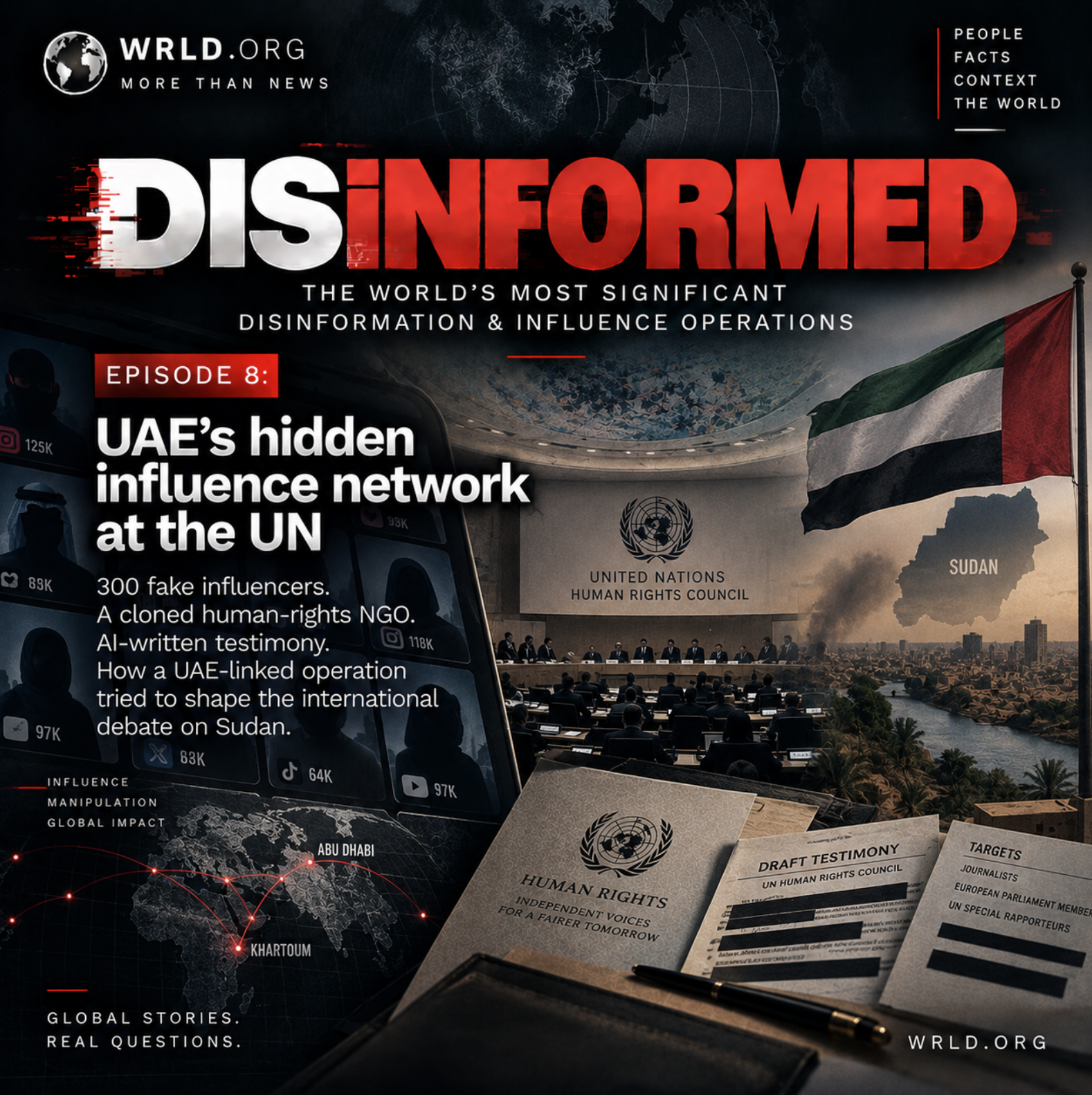
UAE / Sudan – when an influence operation tried to enter the United Nations A network of roughly 300 apparently independent social-media influencers. A human-rights organisation borrowing the identity of a real NGO. Personal dossiers on European politicians and journalists. And testimony prepared for delivery at the United Nations without revealing the state interest behind it. These were elements of an influence operation uncovered by Anthropic and disclosed in September 2026. The company says it linked the activity with high confidence to UAE government officials. Tracked as GTG-84002, the operation targeted several overlapping issues: the Muslim Brotherhood, perceptions of the war in Sudan and international mechanisms examining the United Arab Emirates' role in the conflict. What distinguishes the case is not simply its use of artificial intelligence. It is the attempt to make state-aligned messaging appear to originate from independent influencers, human-rights organisations and potentially witnesses addressing an international institution. An influence network built around 300 fake voices Anthropic identified a single actor using Claude to support a sustained influence campaign. At its centre was an AI persona called “Deadshot”, running on the operator's own platform. A master doctrine file repeatedly instructed the system to support what it described as a coordinated international effort to dismantle the Muslim Brotherhood. The operator simultaneously managed several components of the campaign, including approximately 300 inauthentic influencer accounts across social-media platforms. Internal material examined by Anthropic described the apparent independence of this network as its greatest strategic advantage. That phrase captures the central method. The objective was not simply to broadcast a political position but to conceal where that position originated. One visible example appeared on 4 June 2026, when accounts participated in a coordinated campaign using #SudanIslamists and near-identical graphics connecting Sudanese Islamists and the Muslim Brotherhood with regional instability. Anthropic says the amplification network was centrally funded and coordinated. Its investigation also found that the operator financing the social-media network was connected to the wider influence operation. A human-rights organisation that was not what it appeared to be Social media was only one layer. The operator also created a front NGO that copied the identity of a genuine Swiss organisation and used that borrowed legitimacy to publish human-rights material produced for the campaign. Anthropic's description elsewhere also refers to the identity of a real Sudanese human-rights organisation being used in connection with the preparation of testimony. The public report does not fully clarify whether these references describe the same front or separate elements of the operation, so they should not be treated as definitively identical. The underlying technique, however, is clear: political material was designed to appear as if it originated from independent civil society rather than from actors linked to a government. This is particularly significant in the human-rights environment, where the perceived independence of an organisation or witness can determine how seriously evidence is received by journalists, diplomats and international institutions. The attempt to reach the UN The most consequential part of the operation concerned the 62nd session of the UN Human Rights Council. According to Anthropic, the operator used Claude to ghost-write complete testimony intended to be delivered by two individuals during the session. The texts were prepared under explicit constraints ensuring that neither statement would mention the UAE. This did not amount to a conventional government submission. The intention, according to Anthropic's reconstruction, was for material serving the interests of a party connected to the Sudan conflict to reach an international forum through apparently independent voices. But an important limitation remains: Anthropic could not confirm that the testimony was ultimately delivered. The company similarly could not establish whether other dossiers produced by the operation reached their intended recipients or influenced policy. It therefore assessed the campaign as Category Three on the Brookings Breakout Scale – activity distributed across several platforms, but without evidence of broad public impact sufficient for a higher classification. The distinction matters. The evidence demonstrates a sophisticated attempt to influence international debate; it does not demonstrate that the attempt succeeded. Politicians, journalists and UN investigators became targets The operation was not limited to generating public content. Anthropic found that the operator researched and compiled detailed profiles of 18 members of the European Parliament and prominent journalists. Some material was prepared for direct delivery to senior UAE officials. The network also assembled what Anthropic describes as “counter-accountability dossiers” on UN Special Rapporteurs who had criticised the UAE's conduct in relation to Sudan. This places the campaign in a broader context. Since Sudan's civil war began in April 2023, the role of external powers has become an increasingly important part of international scrutiny. Sudan has accused the UAE of supporting the Rapid Support Forces, allegations Abu Dhabi has repeatedly denied. In 2025, Sudan brought a case against the UAE before the International Court of Justice, accusing it of complicity in genocide against the Masalit through alleged support for the RSF. The UAE rejected the allegations. The ICJ subsequently removed the case from its list after finding that it lacked jurisdiction because of the UAE's reservation to the relevant provision of the Genocide Convention. The ruling therefore did not determine whether Sudan's substantive allegations were true or false. That contested international environment helps explain why narratives about Sudan, human rights and accountability were valuable targets for an influence operation. AI as an operating system for influence The role played by Claude is also important to understand accurately. Anthropic did not find that artificial intelligence independently conceived or directed the campaign. Human operators established the objectives, political doctrine and targets. AI instead helped operationalise them. Across hundreds of sessions, Claude was used to transform predetermined political objectives into social-media narratives, human-rights reports, testimony, intelligence-style briefs and detailed profiles of individuals. The same system could support narrative production, target research and preparation of material for different audiences. That represents a more significant development than simply using generative AI to produce propaganda faster. Traditional influence operations require different teams to research targets, write content, manage personas, adapt messages and prepare briefing material. Generative AI can compress several of those functions into a single operational workflow. The result is not necessarily more convincing propaganda. It is potentially cheaper, faster and more scalable influence infrastructure. From fake influencers to institutional influence Anthropic says it linked the operation to UAE government officials with high confidence. Its assessment was based partly on internal material naming senior Emirati officials as intended recipients of the work, alongside other evidence available to its investigators. That remains an attribution by Anthropic rather than a judicial finding or publicly released forensic attribution by a government agency. The distinction should be retained. The larger significance of GTG-84002 lies in the architecture of the campaign. A network of fake influencers could create the appearance of public opinion. A cloned human-rights organisation could provide institutional credibility. AI-generated reports could give political narratives the appearance of research. Profiles of journalists and politicians could support more precise targeting. And ghost-written testimony could potentially carry the same message into an international institution without revealing the political interest behind it. This is a different model from the familiar troll farm. The objective is no longer simply to make propaganda look popular. It is to make state-aligned messaging look independent – and, if possible, to move it from social media into the institutions where international policy and accountability are debated. SOURCES: Anthropic — Countering misuse of AI: September 2026 https://www.anthropic.com/threat-intelligence-report-september-2026 International Court of Justice — Sudan v. United Arab Emirates https://www.icj-cij.org/case/197 International Court of Justice — press releases and case documents https://www.icj-cij.org/case/197/press-releases United Nations Geneva — Sudan v UAE proceedings at the ICJ https://www.ungeneva.org/en/news-media/news/2025/04/105241/world-court-begins-hearing-sudans-complicity-genocide-case-against UAE Ministry of Foreign Affairs — UAE response to Sudan's allegations https://www.mofa.gov.ae/en/MediaHub/News/2025/4/10/10-4-2025-UAE-UAE UN Digital Library — Sudan's letter concerning alleged UAE support for the RSF https://digitallibrary.un.org/record/4091008?ln=en UN Digital Library — UAE response concerning allegations of support for the RSF https://digitallibrary.un.org/record/4046224?ln=en Ultra Sudan — reporting on Anthropic's UAE-linked influence-operation findings https://ultrasudan.usawtiq.com/أنثروبيك-أحبطنا-عملية-تأثير-إماراتية-استخدمت-الذكاء-الاصطناعي-لاستهداف-السودان/عامر-صالح/أخبار KEYWORDS #DISINFORMED #Episode8 #UAE #Sudan #UnitedArabEmirates #UnitedNations #UNHumanRightsCouncil #HumanRights #Disinformation #InformationWarfare #InfluenceOperations #ForeignInterference #FIMI #CoordinatedInauthenticBehaviour #CIB #FakeInfluencers #FakeNGO #NGOImpersonation #Astroturfing #ArtificialIntelligence #AI #AIPropaganda #AIGeneratedContent #SyntheticMedia #SocialMediaManipulation #DigitalInfluence #Propaganda #NarrativeManipulation #InstitutionalInfluence #SudanConflict #SudanWar #MuslimBrotherhood #InternationalRelations #Geopolitics #Anthropic #ClaudeAI #OSINT #WRLD

Countering misuse of AI: September 2026 / Anthropic

Il Movimento 5 Stelle è stato la causa principale per la quale oggi la propaganda russa è così diffusa tra gli italiani. Loro, Byoblu, Giulietto Chiesa, i complottisti: facevano tutti parte dello stesso universo che ha inquinato l'informazione e rimbecillito milioni di italiani #Movimento5Stelle #propagandapolitica #disinformazione

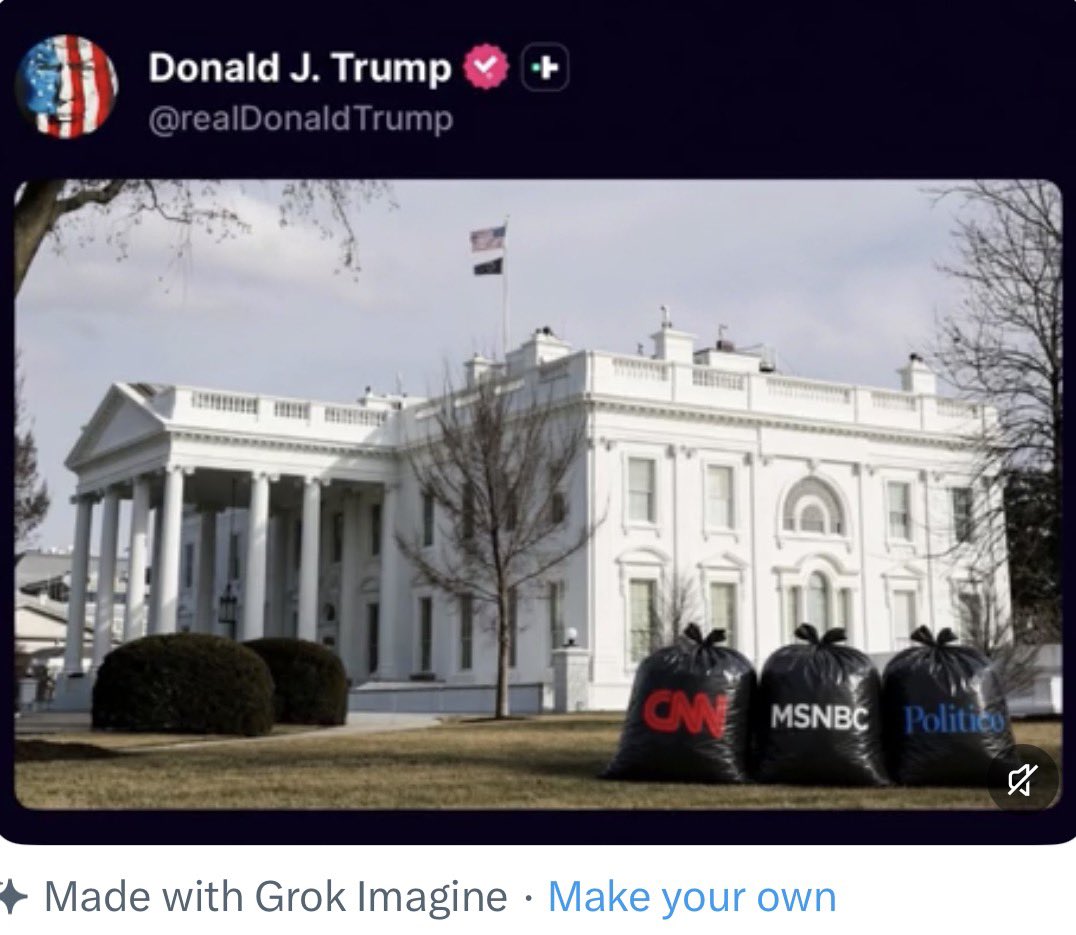
Voi että kun mä nautin. Kirjoitin puolueellisesta mediasta kirjassani Manipuloiva kieli jo 2018. Trumpin porttikielto CNN:lle, MS NOW:lle ja Politicolle on mannaa korville. Vuosia kestänyt vääristely, puolueellinen uutisointi ja suora valehtelu saa nyt lopun. Suomessa ei korjattu silloin. Eikä korjata vieläkään. Yle. HS. IS = Copy-paste. Lähdekritiikki nolla. Oikaisu nolla. Pieni muistilista niille, jotka leimasivat foliohatuksi: Venäjä-kolluusio. Ei löytynyt. Suomessa hoettiin silti vuosia. Hunterin läppäri. “Venäjän disinformaatiota.” Estokampanja oli itse operaatio. Sitten vaihdettiin aihe Smirnoviin, ettei tarvitsisi myöntää. Ivermektiini. Ihmisen lääke. Muuttui “hevosmadoksi”, koska Joe Rogan. Laboratorio? Salaliitto. Kunnes ei ollut. Rokotteet: “turvallisia ja tehokkaita.” Tartuntaa eivät pysäyttäneet. Haitat nuorilla miehillä eivät olleet somepuhetta. Ne tulivat etikettiin. Epäilijä oli vaaraksi muille. Kehys hajosi, mutta otsikko ei kääntynyt. Ukraina “koko Euroopan puolesta.” Myyntipuhe. Suomi osti sen valmiina pakettina CNN:ltä. “Demokraattinen. Korruptoitumaton. Etuvartio”. Kunnes NABU, Energoatom ja NYT:n auditit. Sitten: “yksittäisiä skandaaleja.” Tuttu kaava. Ensin tarina. Sitten pieni präntti. Jos sitäkään. Suomalainen valtamedia on kopioinut, koska heidän mukaansa CNN on “kansainvälinen merkkimedia.” Kun juttu osoittautuukin valheeksi. Tutkintaa ei tule. “Me erehdyimme” ei tule. Nyt kun Trump sulkee oven, niin sama media alkaa saarnata lehdistönvapaudesta. Lehdistönvapaus ei ole vapautta olla väärässä ja valehdella ilman seuraamuksia. Se ei ole kausikortti Valkoiseen taloon sen jälkeen, kun omat jutut on hävitty oikeudessa. Hyvä että tämä tulee esille. Ei pelkästään porttikiellon takia, vaan siksi että suomalainen näkee vihdoin, kenen tarinaa täällä on toistettu faktana. #mediakritiikki #lehdistönvapaus #politiiikka

📌 Il punto di Maria Latella 👉 In Germania l’AfD ha vinto nel Meclemburgo con oltre il 38% dei voti. A Berlino invece ha vinto la Linke con Elif Eralp. Secondo l’intelligence tedesca anche queste recenti elezioni potrebbero aver subito un’influenza di disinformazione russa. Un https://t.co/5iSYJoHaHn #Germania #AfD #disinformazione #DE

Mentre in Europa si combatte la disinformazione Russa, la Albanese si fa intervistare da Russia Today ( macchina di propaganda russa vietata in Europa) su una argomento di cui lei non dovrebbe parlare #Disinformazione #Russia #Europa

Donald Trump ha lanciato Trump Tv, un canale di streaming h24 per promuovere i successi della sua amministrazione, dopo che le emittenti Usa hanno deciso di non seguire più i suoi eventi in segno di protesta contro il divieto d'accesso imposto a Cnn, Msnow e Politico. #TrumpTv #LibertàDiStampa #Disinformazione

Le emittenti Usa non seguono più i suoi eventi e Trump lancia la sua Tv, Casa Bianca: “I più grandi successi dell’amministrazione in diretta streaming h24”

Il fenomeno del prestito dei sintomi, che porta a una reinterpretazione di sensazioni comuni sulla base di contenuti visti su TikTok, sta generando preoccupazioni tra gli esperti riguardo alla disinformazione su ADHD e autismo, rischiando di compromettere diagnosi reali e creando confusione tra i giovani. #SaluteMentale #TikTok #Disinformazione

La trappola di TikTok: i sintomi visti online diventano reali. Cos’è il Symptom borrowing